


Can You Freeze Habaneros? Whole, Chopped & Ready to Use
Aug 03, 2026
Leave a message


Freeze habaneros raw; choose the form by how you will use them
Whole and chopped habaneros both freeze successfully. Whole pods require the least handling and can be grated, sliced, or dropped into a cooked recipe while still frozen. Chopped pieces save preparation time later, but tray freezing is worth the extra step because it prevents a solid mass. A purée or measured paste can also be frozen in small portions when dosing consistency matters more than visible pepper pieces.
Do not expect fresh crunch after thawing, and do not treat freezing as a sanitation step. Freezing slows microbial growth; it does not sterilize a damaged or contaminated pepper. Start with sound raw material, keep the process clean, freeze promptly, and protect the product from air and temperature cycling.
1. Skip blanching
Reliable extension guidance allows hot peppers to be frozen raw. Blanching adds work and is not required for habaneros.
2. Dry before freezing
Surface water becomes loose ice, encourages pieces to stick together, and accelerates quality loss around exposed cuts.
3. Match form to use
Whole pods preserve flexibility. Chopped or portioned formats reduce later labor and make batch dosing more predictable.
4. Judge quality, not just time
At 0°F/-18°C, safety and quality are different questions. Air, freezer burn, thaw cycles, and the original pepper condition decide whether the result is still useful.
Whole, chopped, or ready to dose: which format should you freeze?
The best format is the one that removes work at the moment of use without creating avoidable quality loss. A cook who adds one pepper to a stew needs something different from a sauce factory that doses a controlled weight into every batch. The same rule applies at home and in procurement: define the application first, then choose the form.
| Frozen form | Best fit | Main advantage | Control point |
|---|---|---|---|
| Whole pods | Flexible home use, grating from frozen, small-batch sauces, soups and stews | Least preparation and least direct contact with cut surfaces | Check every pod for soft spots, internal damage, mold, and stem condition before packing |
| Halves or quarters | Faster inspection, optional seed/placenta removal, later chopping | Makes hidden defects easier to see and reduces later prep | Wear gloves and eye protection; dry cut surfaces and tray-freeze if pieces may stick |
| Chopped or diced | Sauce, curry, stew, seasoning bases, foodservice mise en place | Ready to measure and use without thawing | Define cut range and tray-freeze in one layer so pieces remain free-flowing |
| Purée, paste, or portion cube | Hot sauce, marinades, blended bases, controlled recipe dosing | Fast, repeatable portions when visible pieces are unnecessary | Record ingredients and portion weight; never guess pungency from color alone |
For a business order, each row becomes a different specification. "Chopped" needs a target cut and tolerance. "Whole" needs a permitted range for broken pods, stems, seeds, and visible defects. "Ready to use" may mean loose dice, measured cubes, or a formulation that includes salt, acid, or another ingredient. If those words are not defined, two suppliers can quote products that look similar on paper but behave very differently in production.
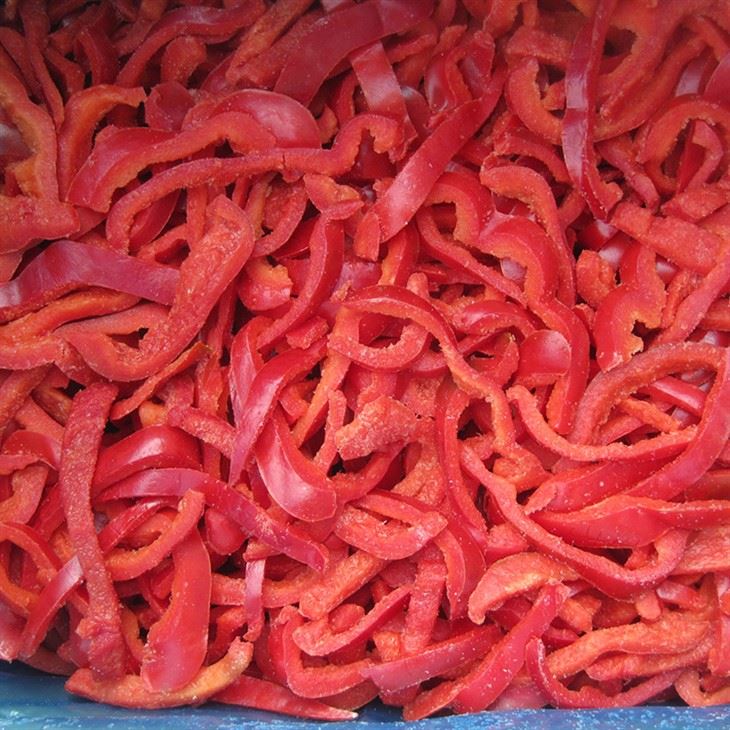
A COMMERCIAL FORM REFERENCE
Cut language must describe what is actually in the bag
This GreenLand-food image shows frozen red bell pepper strips, not habaneros. It is included to make one procurement point visible: commercial pepper form is a measurable part of the product. Strip width, piece length, broken-piece tolerance, seed presence, frost, and clumping can all be checked.
A proposed habanero order needs the same discipline, adapted to the intended form. Variety identity comes first; cut and separation come next. Never treat a general "frozen pepper" photo as proof of a habanero specification.
What freezing changes-and what it does not prove
A fresh habanero is made of water held within plant cells. As water freezes, ice crystals form. Slow freezing allows larger crystals to develop, and those crystals disrupt cell walls. When the pepper thaws, the weakened structure releases moisture and feels soft. That is why a frozen habanero can taste and smell useful in a sauce while failing as a crisp raw garnish. The change is physical; it is not evidence that the pepper has spoiled.
Rapid freezing forms smaller crystals and usually limits structural damage better than slow freezing. A thin layer of individual pieces freezes faster than a deep bag of warm chopped pepper. Commercial IQF equipment goes further by separating pieces in a fast-moving frozen process, but "IQF" should still be verified by the delivered condition. A buyer should see individual pieces that pour or separate as specified, not a carton-sized block hidden behind the label.
Pungency is more complicated than a simple claim that freezing "keeps all the heat." Habanero heat varies with cultivar, maturity, growing conditions, placenta content, cut form, and natural lot variation before the freezer is involved. Freezing does not make a hot pod mild on command, but neither a photograph nor a casual taste test proves a consistent pungency level. If heat consistency matters commercially, define the required sensory or analytical approach with the supplier and test the ingredient in the actual recipe.
Freezing also does not sterilize food. USDA guidance explains that microbes become inactive at freezing temperatures and can become active again after thawing. Reject moldy, leaking, badly damaged, or off-smelling peppers before freezing. Keep hands, knives, trays, and packaging clean. After thawing, handle the pepper as a perishable ingredient and follow the time, temperature, and cooking controls appropriate to the final food.

A single layer shortens the freezing path and keeps chopped pieces separate. Once firm, transfer them promptly to low-air freezer packaging.
How to freeze whole habaneros
Whole freezing is the simplest method when you want flexibility later and do not need a measured cut. It also minimizes contact with capsaicin-rich cut surfaces. Follow the steps in order; most poor results begin with weak raw material, retained surface water, or packaging that admits too much air.
- Select firm, fresh pods. Choose habaneros with the expected mature color for the variety, intact skin, and no mold, leakage, deep bruising, soft collapse, or off odor. Freezing preserves the condition you start with; it does not repair an overripe or damaged pepper.
- Inspect beyond the outside. Habaneros have folds where moisture and damage can hide. Check around the stem and creases. If a batch shows suspicious soft areas or internal browning, cut representative pods open with gloved hands and reject affected material rather than freezing it blindly.
- Wash under clean running water. Gently rub the surface to remove visible soil. Do not soak peppers in a dirty sink or use soap. Keep raw peppers away from raw meat and other contamination sources.
- Dry completely. Drain, pat dry, and allow folded areas around the stem to air-dry if needed. A pepper that looks dry on the smooth face can still hold water in its creases. Surface dryness reduces loose frost and sticking.
- Decide whether to remove stems. Leaving the stem gives you a visible handle, while trimming it saves space. Do not cut deeply into the shoulder unless the planned use requires it; every cut exposes juice and creates another surface that can dry out.
- Pre-freeze in one layer when separation matters. Small whole pods can be packed directly, as extension guidance permits. If you want to remove one pod at a time, space them on a clean tray until firm, then package. This is especially useful when the final bag will be opened repeatedly.
- Pack with little air. Use freezer-grade bags or containers. Press out excess air without crushing the pods, or use a suitable vacuum system if the pepper shape and packaging allow it. Divide a large harvest into practical portions so the same bag is not opened week after week.
- Label and freeze promptly. Record the variety or color, form, freeze date, and portion information. Place new packages where cold air can circulate; stack them only after they are firm. Keep the freezer at 0°F/-18°C or below for long-term frozen storage.
How to freeze chopped or ready-to-use habaneros
Chopped peppers put convenience first. They are a strong choice when the final use is cooked sauce, soup, curry, stew, marinade, or a blended base. The tradeoff is more capsaicin exposure during preparation and more surface area exposed to oxygen. Good protective equipment and quick handling matter.
- Prepare the work area before cutting. Put on disposable gloves and eye protection, open ventilation if available, and keep children and pets away. Use a stable board and a clean knife. Do not touch your face, phone, cabinet handles, or faucet with contaminated gloves.
- Trim and inspect. Remove stems. Halving the pepper exposes internal condition and lets you decide whether to retain seeds and placenta. Most pungency is associated with the inner tissues rather than the seeds alone, so removal decisions should be tied to the recipe and specification, not a promise of an exact heat reduction.
- Cut to the size you will actually use. A rough chop is suitable for blending; a controlled dice is better for visible pieces or measured dosing. Keep the range reasonably consistent so pieces freeze and cook at similar rates.
- Spread pieces in one layer. Place them on a lined or clean freezer tray with gaps where practical. Avoid a wet pile. Freeze until the pieces are firm enough to lift without smearing or sticking into a mass.
- Pack immediately after tray freezing. Move pieces into labeled freezer-grade packaging, press out air, seal, and return them to the freezer. Work in small batches so frozen pieces do not sit on the counter and collect condensation.
- For paste or purée, define the portion. Freeze a known weight or volume in clean food-contact molds, then package the firm portions. Record whether anything else was added. A plain habanero portion is not interchangeable with a paste that contains oil, salt, acid, fruit, or water.
After cutting, remove gloves without touching the contaminated outside, wash hands with soap and water, and clean tools and contact surfaces. Plain water alone may not remove oily capsaicin residue effectively from hands or equipment.
How long frozen habaneros keep: separate safety from best quality
Home-preservation references commonly give roughly eight to twelve months as a best-quality window for frozen peppers held at 0°F/-18°C or below. That range is more useful than a single magic date because freezer performance, raw-material condition, package barrier, trapped air, portion size, and door-opening frequency all affect quality. Write a date on every package and use the oldest sound stock first.
USDA guidance draws an important line: food kept continuously at 0°F remains safe far longer than its recommended quality window, while flavor, color, texture, and moisture condition can decline. That does not mean an old package is automatically worth using. Heavy freezer burn, a failed seal, repeated partial thawing, unusual odor after thawing, or evidence that the freezer warmed can make the ingredient unsuitable. Safety depends on the real time-temperature history, not just the calendar.
Freezer burn is a drying defect caused by air reaching the surface. Look for pale, dry, leathery areas and excess frost inside a weak package. Small quality defects may be tolerable in a fully cooked sauce, but they are still a warning that packaging or stock rotation needs work. A commercial buyer should define acceptable clumping, frost, dehydration, color, and package integrity rather than relying on a generic shelf-life statement.
Commercial shelf life must come from the supplier's product specification and label under stated storage conditions. A 24-month statement used for one IQF bell pepper product does not automatically apply to habaneros. Ask for the proposed habanero specification, production date format, best-before logic, storage temperature, packaging barrier, and evidence used to establish the declared period.
USE FROM FROZEN WHEN POSSIBLE
Thawing is often unnecessary-and sometimes counterproductive
For soups, stews, cooked sauces, curries, and blended recipes, add the needed whole pod or chopped portion directly from frozen. You reduce handling, avoid collecting thaw liquid on the counter, and let the recipe absorb the released moisture. Whole pods can be sliced or grated while still firm if the technique can be performed safely.
If thawing is necessary, use the refrigerator in a covered container and keep the liquid as part of the recipe when flavor matters. Do not expect a crisp garnish. For commercial operations, do not repeatedly soften and refreeze inventory; set portion sizes and handling rules that keep the cold chain intact.
Where frozen habaneros work best
Post-thaw softness is not a defect in every application. It is a poor fit for a crisp raw garnish, but a useful tradeoff when the pepper will be blended, simmered, minced, or dispersed. Application trials should judge the ingredient in the finished food, not on a plate by itself.
Hot sauce and salsa base
Whole pods preserve formulation flexibility; chopped or puréed portions reduce milling time. Check fruit character, color, pungency distribution, seed/placenta policy, and yield after blending.
Soup, stew, curry, and marinade
Loose chopped pieces or measured portions can go straight into the batch. Portion control matters because a small weight difference can be meaningful with a very hot pepper.
Ready meals and foodservice
A verified cut and pack size can reduce knife handling in a busy kitchen. Test heat distribution, label controls, staff PPE, and the point at which the pepper enters the cooking process.
Retail or private label
The consumer promise must match the form. Whole pods, loose pieces, and portioned paste need different instructions, net-weight control, allergen review for added ingredients, and package presentation.
Fermentation deserves separate process validation. Frozen peppers may be used in some fermentation formulations, but freezing changes the living microbial population and raw-material behavior. Do not assume a frozen-only batch will start or acidify like a fresh batch. A processor should control the starter strategy, salt or brine formula, time-temperature program, pH target, sanitation, and finished-product safety through a validated method.

A pilot batch should confirm flavor, heat distribution, color, yield, and dosing before a frozen habanero specification moves into repeat production.
Home freezing and commercial IQF are not the same process
Both processes use low temperature to preserve the ingredient, but the control system is different. A home cook may tray-freeze a few hundred grams and judge the result by convenience. A commercial buyer needs repeatable lots, written tolerances, hygienic processing, documented checks, protected packing, frozen storage, and a reefer plan. "Fast frozen" and "IQF" should describe observable delivery performance, not simply marketing language.
| Decision point | Home tray freezing | Commercial frozen program |
|---|---|---|
| Product definition | Personal preference for whole or cut | Cultivar/identity, maturity/color, form, size tolerance, seed/stem policy, defects, and application |
| Freezing control | One tray in a household freezer | Validated process with loading, product temperature, separation, and cold-storage controls |
| Pack format | Small freezer bag or container | Bulk, foodservice, retail, or private-label pack with defined net weight, material, coding, carton, and pallet plan |
| Release evidence | Visual judgment and date label | Specification, COA as agreed, lot code, packing list, applicable certificates, and shipment records |
| Acceptance | Useful in the next recipe | Sampling against cut, defects, clumping, color, odor, package integrity, temperature, and application performance |
GreenLand-food currently publishes commercial frozen bell pepper forms in whole, diced, strip, cup, and mixed formats. That experience supplies useful specification vocabulary, but it does not prove a habanero program is available. A responsible inquiry starts with feasibility: exact pepper identity, origin expectation, crop window, processing form, pack, volume, destination, and required evidence.

EXISTING GREENLAND PRODUCT CONTEXT
A pepper category can contain very different commercial products
This image is GreenLand-food IQF mixed bell pepper, not frozen habanero. The visible red, yellow, and green pieces show how color mix, cut form, frost, and free-flowing condition become part of a buyer's acceptance check.
For habaneros, identity and pungency risk make substitution especially serious. A quotation should not replace the requested cultivar with a visually similar hot pepper or with bell pepper. Approve the proposed raw material, frozen form, and sample before commercial packing begins.
BUYER CONTROL
Specify the habanero before comparing price
A purchasing team can use this checklist for a feasibility request or sample review. It keeps the conversation tied to an actual product rather than a broad keyword.
- Identity: botanical/common name, cultivar when required, origin expectation, conventional or organic status, and prohibited substitutions.
- Raw-material condition: maturity and color range, soundness, permitted blemishes, decay exclusion, stem condition, and harvest/crop plan.
- Form: whole, halves, specified chop/dice, loose portion, purée, or formulated paste; include cut tolerance and whether seeds, placenta, and stems are retained.
- Frozen condition: individually separated or block, allowable clumps, frost, dehydration, broken pieces, color, flavor/odor, and foreign-matter limits.
- Application test: target recipe, dose, cook process, expected heat distribution, color, fruit character, yield, and acceptable post-thaw texture.
- Packing: inner material, pack weight, units per carton, private-label needs, code format, carton strength, pallet plan, and handling warning where required.
- Quality and food safety: agreed microbiological, residue, contaminant, and foreign-material requirements; metal-detection and other process controls as applicable to the plant and market.
- Documents: signed specification, COA fields, applicable certificates and scopes, lot traceability, packing list, invoice, origin/health/phytosanitary documents when required, and destination-specific files.
- Commercial plan: sample quantity, MOQ, trial-order feasibility, lead time, crop and stock position, loading port, reefer plan, destination, Incoterm, and claim window-confirmed for the proposed habanero item, not borrowed from another pepper page.
Sample and arrival checks that protect the final product
A representative sample should be evaluated frozen, after controlled thawing, and in the intended recipe. Frozen inspection shows piece separation, frost, package condition, and visible defects. Thawed inspection reveals odor, color, softening, drip, and internal condition. The application trial shows whether the supplier's pepper delivers the expected flavor, pungency distribution, yield, and handling performance under the buyer's real process.
Do not approve a sample without connecting it to a written specification. Record the sample lot, production date, form, packing, and test method. If a golden sample is retained, define how long it remains representative and how later shipments will be compared. Natural pungency variation should be handled with an agreed plan, not a vague promise that every pod will taste identical.
At shipment and arrival, check reefer set point, product temperature evidence, carton condition, wet or collapsed cases, broken seals, lot codes, labels, net weight, and visible thaw/refreeze signs. Sample across the lot rather than opening only the easiest top carton. Photograph nonconformities and preserve temperature and packing evidence before the product is redistributed.
GreenLand-food prepares frozen vegetable orders around a confirmed specification, packing plan, documents, and cold-chain arrangement. For a habanero request, we would first review feasibility against the exact form, volume, application, destination, and evidence needed. That review protects both sides from quoting a product that cannot be supplied responsibly.

A ready-to-use frozen format reduces knife work only when the cut, portion, label, PPE, and recipe dose are controlled together.
Common freezing mistakes
Freezing wet peppers
Water in folds and around cut pieces becomes frost and glue. Dry the pepper, then keep new packages away from warm air and condensation.
Bagging a deep pile before it is firm
Chopped pieces freeze into a block and freeze more slowly. Use one layer first, then bag the pieces after they are firm.
Using thin storage bags
Ordinary produce bags allow more air transfer and puncture easily. Choose material intended for frozen storage and protect sharp stems.
Expecting fresh texture
A thawed habanero is usually soft. Direct it to a cooked or blended use instead of a raw crunchy garnish.
Handling hot peppers casually
Gloves are not enough if contaminated hands touch the face or shared equipment. Set up the workstation and cleanup plan before cutting.
Buying by image or product name
A photo cannot confirm variety, cut tolerance, pungency plan, food-safety controls, or cold-chain history. Approve a specification and representative sample.
Frequently asked questions
Can you freeze habaneros without blanching?
Yes. Hot peppers can be frozen raw without blanching. Select sound pods, wash them, dry them completely, and freeze them promptly in freezer-grade packaging.
Is it better to freeze habaneros whole or chopped?
Freeze them whole for the least preparation and maximum flexibility. Freeze them chopped when you want ready-to-measure pieces; tray-freeze the pieces first so they do not form a solid block.
How long are frozen habaneros at their best quality?
Home-preservation guidance commonly uses about eight to twelve months at 0°F/-18°C or below as a best-quality window. Continuously frozen food can remain safe longer, but air exposure, freezer burn, temperature history, and the original pepper condition still determine whether quality is acceptable.
Can frozen habaneros be used for hot sauce?
Yes. Soft post-thaw texture is usually acceptable for cooked or blended hot sauce. Test the pepper in the real formulation for flavor, color, heat distribution, yield, and dosing before scaling a commercial batch.
Do frozen habaneros lose their heat?
They normally remain a pungent ingredient, but an exact heat promise should not be based on freezing alone. Cultivar, maturity, placenta content, natural lot variation, storage, and the final recipe all affect perceived heat. Commercial users should agree on a practical test or specification.
Can you refreeze thawed habaneros?
If they thawed under refrigeration and remained safely cold, refreezing may be safe, but quality will decline further. For commercial use, avoid routine thaw-and-refreeze cycles; use smaller packs, document temperature history, and follow the agreed cold-chain plan.
Reliable preservation references
For safe home handling, consult the University of Nebraska–Lincoln Extension pepper-freezing guide, Utah State University Extension's chile preservation guide, and USDA freezing and food-safety guidance.
For B2B context, review GreenLand-food's frozen vegetable product-form guide, cold-chain buyer guide, and current IQF bell pepper page. Those pages provide category context; they are not proof of a frozen habanero SKU.
Ask us to review a frozen habanero requirement
Send the required pepper identity, maturity/color, whole or cut form, cut tolerance, seed and stem policy, pack size, order volume, application, destination, private-label plan, and document list. We will review feasibility before discussing a quotation or sample. You can also compare our broader frozen range in the GreenLand-food product catalog.