


What Are Mustard Greens? Flavor, Leaf Form and Frozen Use
Oct 19, 2026
Leave a message

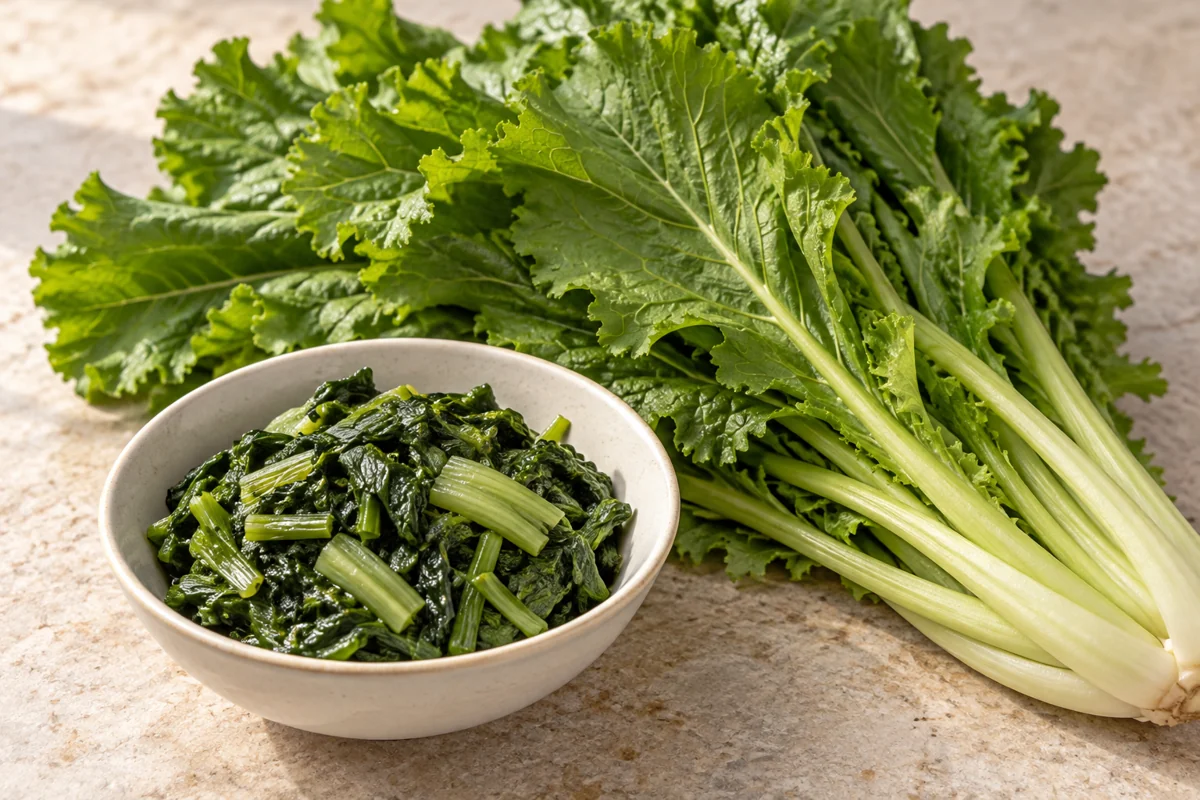
The fresh bunch helps explain the vegetable; the frozen specification tells a buyer what will enter the recipe. Those are connected questions, but they are not the same. A food manufacturer may need finely distributed green pieces in a filling, while a kitchen may want recognizable leaf in a bowl. We use the ingredient's leaf form, flavor and supporting stem to make that first product conversation more useful, without assuming that every variety or cut is available from one supplier.
Understand what the name mustard greens describes
The word greens refers to the leafy vegetable. It does not mean a jar of prepared mustard, mustard powder or a bag of condiment seed. These products may share a familiar flavor association, but they play different roles in food. A spoonful of prepared mustard brings its own formulation, texture and other ingredients. A portion of mustard greens brings leaf tissue, supporting stems and water as well as flavor. Replacing one with the other would change much more than the strength of the mustard note.
NC State's Brassica juncea profile identifies a plant commonly called leaf mustard, vegetable mustard or mustard greens. It describes a hot mustard flavor and variation in leaf appearance. That is a useful botanical anchor, not proof that every product sold under a translated mustard name is identical. Common names travel between regions and cuisines. A purchasing team should match the commercial name with the supplier's product description and botanical information where required, particularly when a customer expects a named regional vegetable or a particular leaf type.
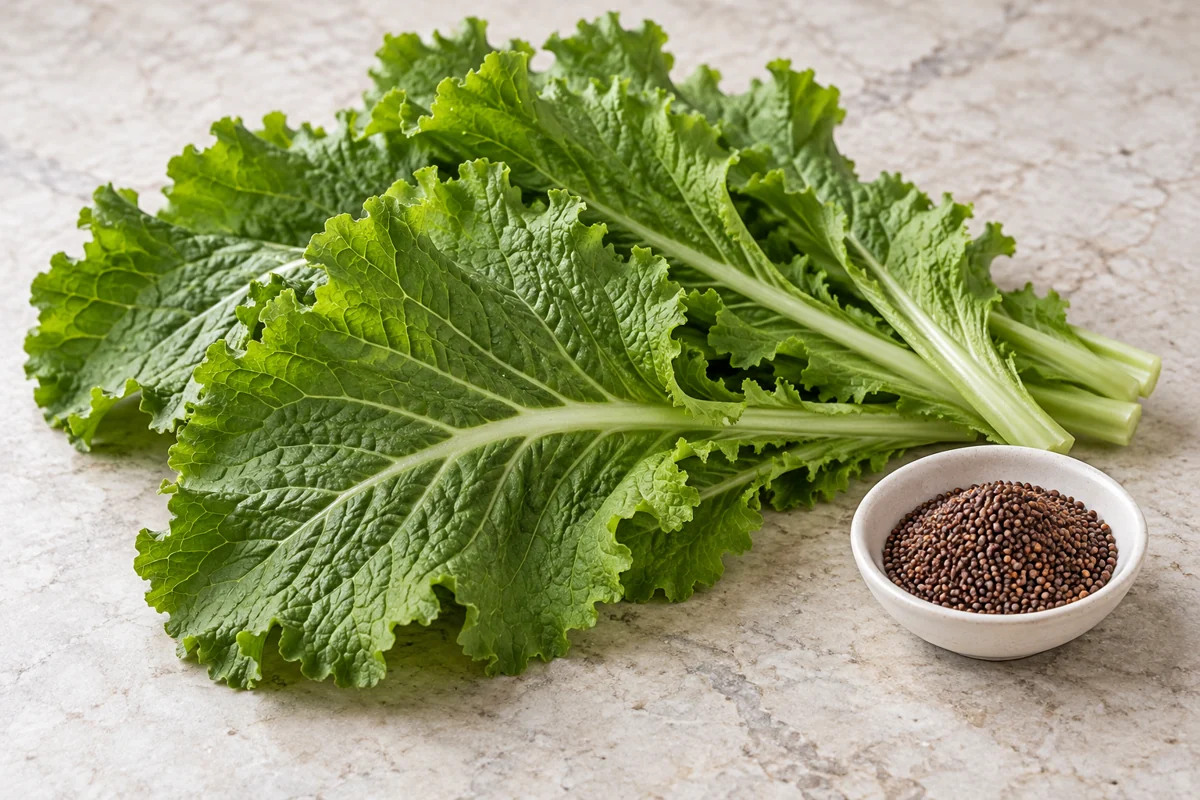
Illustrative leaf and seed forms; the commercial product identity requires confirmation.
Avoid making the category wider merely because another green tastes peppery. A mixed salad leaf, a flowering brassica, a stem vegetable and a leaf mustard can be related in culinary use while remaining different ingredients. The same caution applies to preserved products. Pickled or fermented mustard greens have a preparation history and ingredient profile that plain frozen greens do not automatically share. If a recipe was developed with a preserved product, establish that fact before asking a supplier for a frozen replacement. The intended flavor may depend on the preservation, not just the plant.
For an imported ingredient, align the names across the sample label, specification, quotation and purchasing record. A local-language name can be helpful when it clarifies the intended vegetable, but it should not be the only description. Include the supplied form and whether the product contains seasoning or other ingredients. If the information conflicts, resolve it before an application trial. A successful bowl made with the wrong sample does not establish that the commercial order will match the ingredient the development team approved.
This is also why a fresh-leaf photograph has a limited role in an industrial inquiry. It can communicate the kind of vegetable you mean and reveal a misunderstanding early. It cannot establish the identity or composition of a finely cut frozen bag. Ask for a representative product sample and the relevant documentation. We find that this modest distinction makes the first conversation clearer: the botanical or market description identifies the ingredient, while the specification identifies what the buyer can actually purchase and use.
Recognize leaf form without guessing the supplied variety
Mustard greens do not have one universal silhouette. Familiar cooking types include broad leaves and leaves with visibly curled or ruffled edges. Red or purple coloration can also occur in leaf mustard. The University of Florida's greens guide describes this visible variation alongside other cooking greens. These features help explain why two fresh market bunches may look different even when both are called mustard. They are less useful for identifying a product after trimming, cutting, blanching or other preparation has changed the original leaf outline.
Leaf form matters because it affects what a cook sees and handles. A broad blade provides a continuous area of leaf, while a curled blade creates folds and irregular edges. A thick petiole contributes a different structure from a thin blade. These observations can guide a sample request, but they do not establish a universal tenderness ranking. The maturity of the material, the cut and the preparation all need consideration. A buyer who wants a particular visual effect should describe that effect in the finished food rather than assuming one familiar variety name guarantees it.
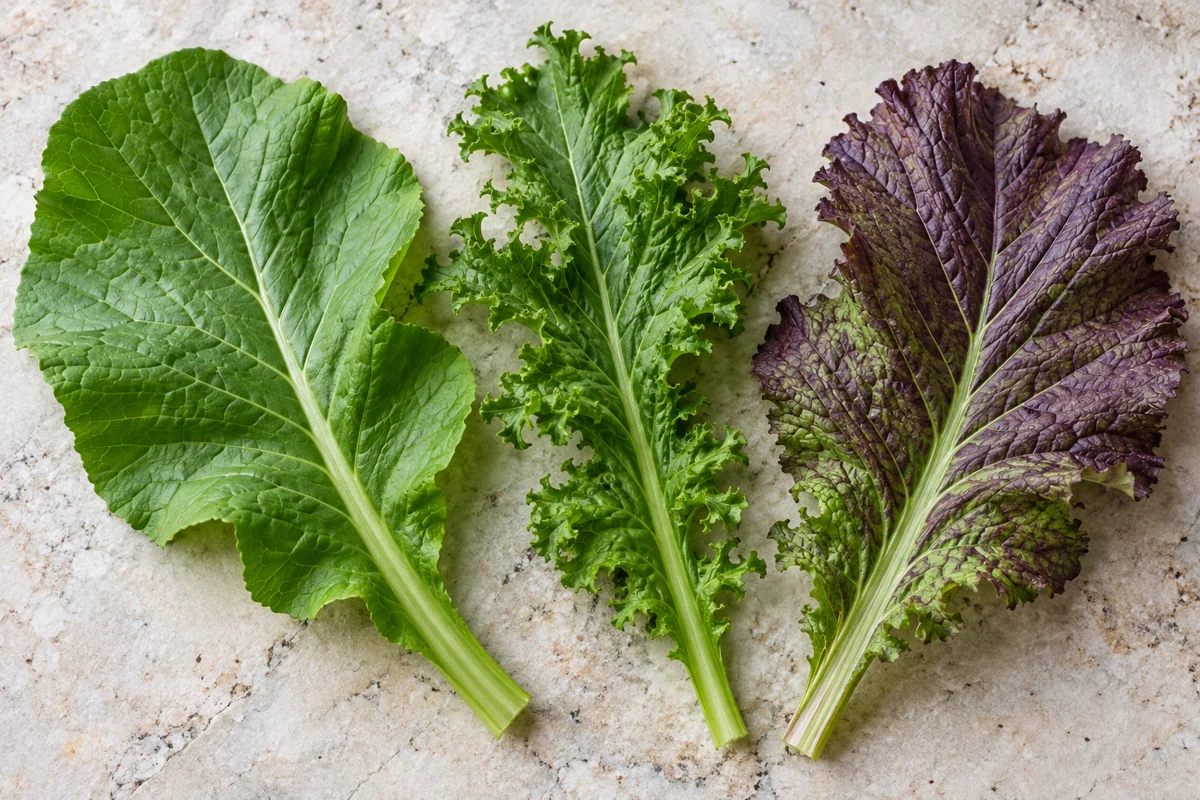
Illustrative leaf forms, not identified cultivars or a list of GreenLand supply options.
On a fine cut, the useful visual questions change. Instead of asking whether the original leaf was broad or frilled, examine the distribution of leaf fragments and paler supporting tissue. Consider whether the pieces are recognizable, whether the cut includes long strands and whether the mixture disperses as intended. These are observations that can be made on the offered sample. Do not infer the complete size distribution from one bag photograph, and do not label a finely cut product as whole leaf merely because the article also shows illustrative fresh leaves.
Color should be described in the condition that matters to the application. A fresh leaf displayed under daylight, a frozen sample and a cooked portion may not present the same appearance. Purple-tinged fresh foliage does not promise the same color after processing and cooking. If a customer is buying a visual accent, approve the prepared ingredient in the actual recipe and under normal serving conditions. Keep that reference tied to its method, so later staff do not compare a cooked product with an unrelated fresh-market image.
Use a leaf-form photograph to open a discussion, then narrow the request to the offered product. If the exact cultivar is commercially important, ask for confirmation rather than assigning it from appearance. If the application only needs a repeatable cut and cooked result, describe those requirements directly. This keeps the inquiry proportionate. It also prevents a catalogue of attractive mustard varieties from implying that GreenLand supplies all of them. The available product, current specification and representative sample are the evidence that should guide the order.
Describe the flavor you want in the finished food
Peppery is a useful starting description for mustard greens, but it is not a specification. Some people use it to mean a sharp mustard-like sensation, others mean bitterness or a general green flavor. During development, distinguish those impressions. Ask whether the desired result is a noticeable mustard character, a gentle background note or simply a leafy vegetable component. A sample can then be judged against a clear role. Without that discussion, one person may praise the same strong flavor that another person considers a problem.
The NC State plant profile notes that growing conditions and maturity can affect flavor. That is a reason to evaluate representative material rather than promise a fixed intensity from the plant name. A general description of the fresh vegetable also does not predict the precise flavor of a prepared frozen cut. The commercial product may have undergone steps that change its sensory character. Confirm those steps where relevant, and taste a properly prepared sample. Do not assume that a sharp fresh leaf and a frozen ingredient will be interchangeable in the same dosage.
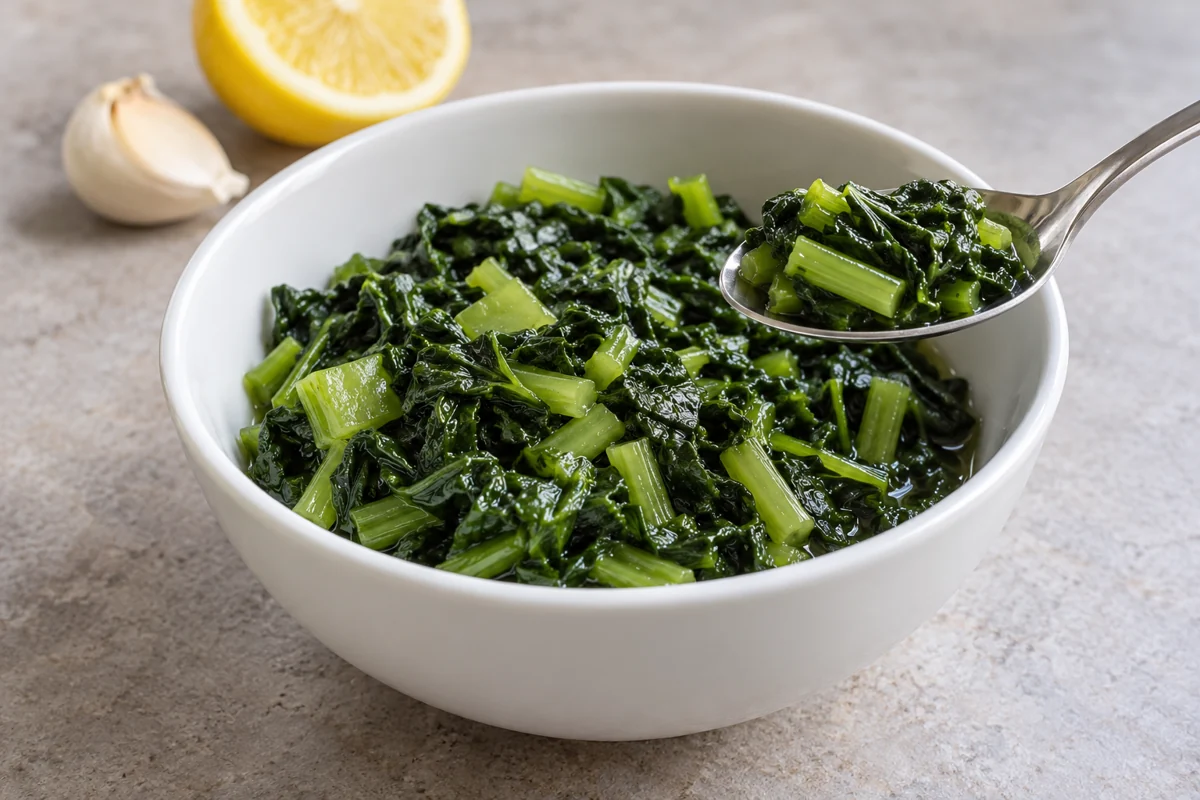
Illustrative tasting setup; no flavor score or performed sensory result is implied.
A useful first tasting keeps the ingredient simple enough to understand. Prepare it according to the confirmed instructions and the site's controls, then record the flavor before a strongly seasoned recipe obscures it. Use consistent preparation across samples and identify what was actually compared. This is a proposed development method, not a claim that every mustard product requires the same plain cooking procedure. It helps the team separate the ingredient's contribution from the effect of garlic, acid, salt, spices or other ingredients added later.
The second tasting belongs in the intended food. Mustard greens in a light broth, a mushroom filling and a richly seasoned sauce can be perceived differently because the surrounding recipe changes the balance. Instead of adding more seasoning until every sample tastes acceptable, make controlled adjustments and record them. If a particular sample needs a substantial recipe change, that change is part of the purchasing decision. It may affect ingredient cost, labeling, customer expectations or how the product fits an existing manufacturing process.
Describe the approved result in ordinary, repeatable terms. A short sensory reference can identify the desired mustard note, acceptable bitterness and any objectionable aftertaste, together with the preparation and serving stage. Avoid invented intensity scores or a claim that a certain color proves mildness. When repeat supply matters, ask how the offered product will be represented by samples and records. A flavor target that the kitchen and purchasing team both understand is more useful than a generic statement that the greens are fresh, premium or delicious.
Separate tender leaf from supporting stem
The leaf blade gives the ingredient much of its visible green surface. The petiole and midrib support that blade and can remain more noticeable in a cooked portion. Both may be present in a mixed cut. The practical question is not simply whether stems exist, but whether the supplied balance and cooked texture suit the food. In a soup, short tender pieces may be welcome. In a fine filling, long or fibrous pieces may interfere with the texture the customer expects. State the intended outcome before choosing the grade.
Do not treat a pale cross-section as proof of an unwanted inclusion. Supporting tissue can look different from the darker blade without being a foreign material. At the same time, the fact that a plant part is edible does not mean every piece will suit every recipe. Define what is expected in the offered cut and examine the prepared sample. If the concern is toughness, assess the cooked bite through a consistent method. If it is visual prominence, record that separately. A single label such as too much stem can hide several different problems.
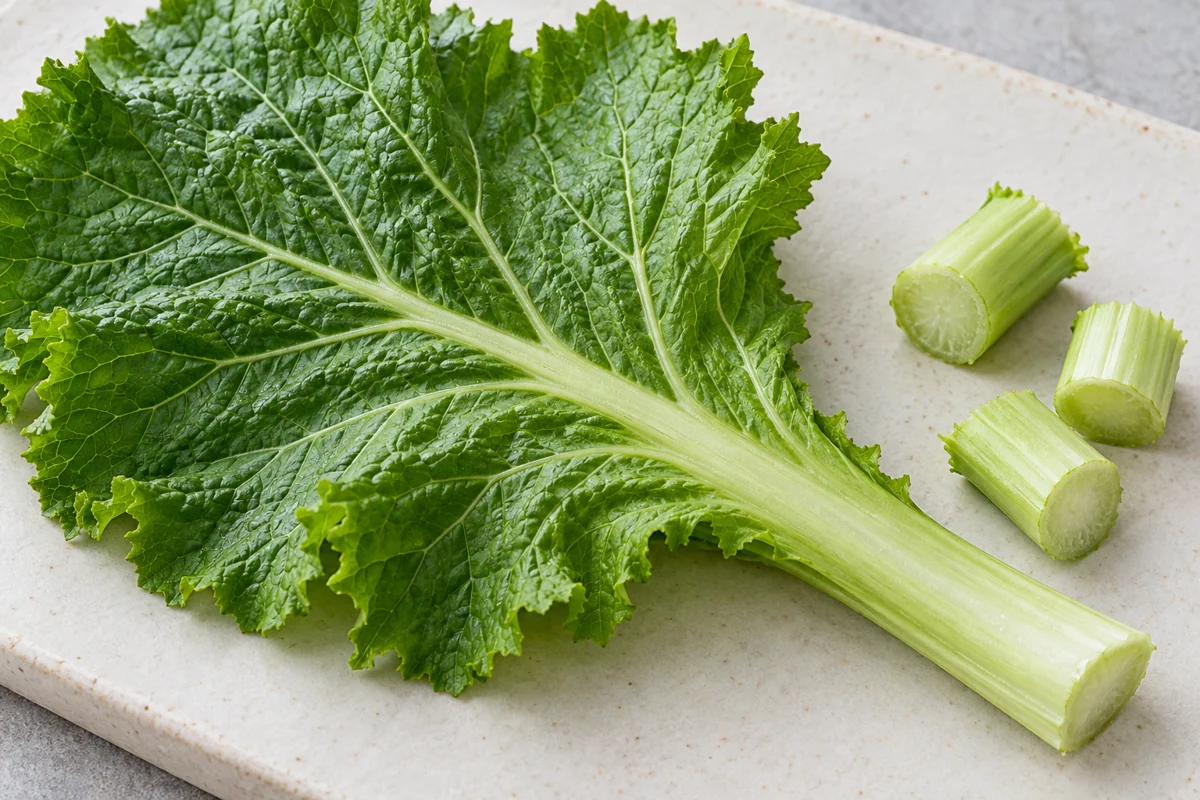
Illustrative leaf anatomy; the pictured pieces do not specify a commercial cut.
A mixed frozen cut generally reaches the kitchen with its components already combined. The cook may not have the option of adding thick stems first and delicate leaves later, as some fresh recipes suggest. That makes the offered cut and preparation state important. Review how the whole mixture behaves in the planned process. Extra cooking intended to soften one component can also change the leaves. The useful trial observes the ingredient as a mixture, including its effect on the surrounding broth, sauce or filling.
For a buyer, leaf-to-stem balance needs a stated basis if it becomes a numeric requirement. A visual estimate through a bag, a count of pieces and a separated mass measurement are different methods. They cannot be used interchangeably without agreement. At an introductory stage, a representative sample and clear descriptive target may be enough to identify the appropriate product discussion. If the project later requires a formal ratio, develop that method with the responsible technical team rather than attaching an unsupported percentage to a photograph.
Retained liquid is another part of the practical result. Prepared leaf and petiole pieces can bring liquid into a recipe, and a draining step changes what is being added. Decide whether the recipe uses the entire prepared ingredient or a defined drained portion. Record the basis of the dosage and any liquid removed or retained. This keeps the discussion tied to the actual food. It also avoids comparing a fresh bunch weight, a frozen pack weight and a drained cooked weight as though all three describe the same usable portion.
Understand what the frozen product description means
Frozen describes a product state; it does not tell the buyer every processing detail. Ask whether the offered mustard greens are supplied as loose pieces, portions or another form, and confirm the stated cut and preparation history. Do not add IQF, blanched, ready-to-eat or a particular size range merely because those terms are common elsewhere in frozen vegetables. Each describes something that needs to match the actual product documentation. A clear inquiry is more useful when it names the requirement and asks for confirmation than when it assumes a capability from the category name.
The USDA frozen leafy greens standard provides a general reference for product styles, including leaf, chopped and pureed forms. Those terms have defined meanings within that standard. A supplier's commercial description may use different wording or a more specific cut specification. Confirm which definition governs the purchase. The existence of a standard does not establish that a particular GreenLand product is officially graded under it, and an image of small pieces is not sufficient evidence to assign a style or grade by itself.
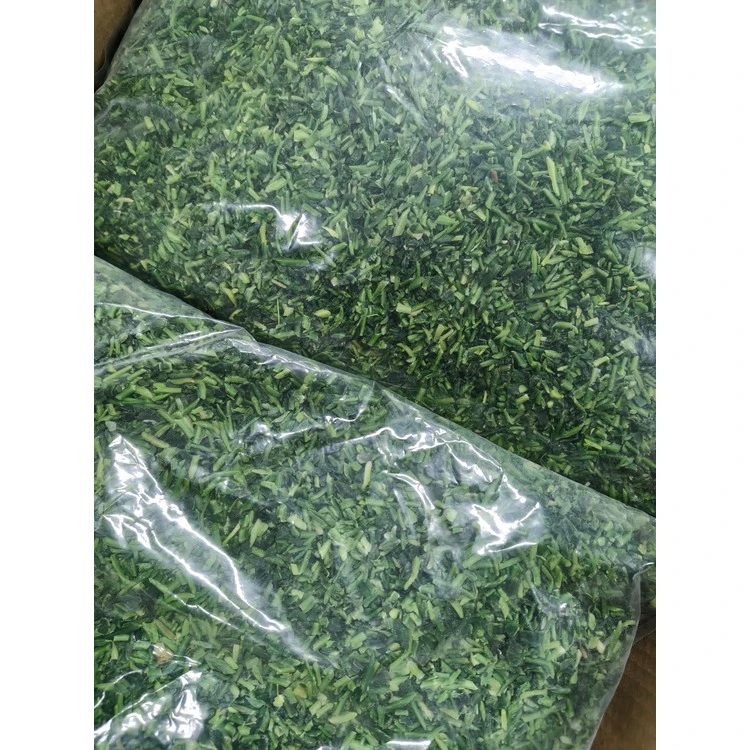
Cut mustard greens pictured in the GreenLand-food product listing; confirm the exact specification for your order.
The real GreenLand product photograph in this section shows fine cut material in a bag. It helps a buyer see the appearance of the listed product, but it does not demonstrate a freezing method, microbial status, numeric dimensions or all available options. Use it alongside a current specification and representative sample. If your application requires large leaf pieces, a particular stem balance or a specific packing format, state that requirement explicitly. We can then discuss whether the offered product matches it and which details need confirmation before a quotation or trial.
Keep the intended preparation clear. A frozen vegetable should not be treated as ready to eat simply because it is convenient to portion. Follow the product's confirmed instructions and the food operation's approved controls. Similarly, a fresh recipe that uses raw young leaves does not establish that a frozen commercial ingredient is suitable for an uncooked application. The development team needs to know the actual supplied state before designing the preparation route. That information belongs in the sample record as well as in the eventual kitchen or manufacturing instructions.
Packing and handling influence how the ingredient fits the operation. A buyer may need to consider how much is used in one batch, how an opened pack is managed, and whether the product can be portioned consistently under the site's procedures. Confirm the storage and shelf-life information for the actual SKU rather than copying a household freezing timeline. These are routine specification questions, but they determine whether a promising ingredient becomes a reliable part of daily production. The right answer depends on the offered product and the buyer's process.
Choose an application that suits the offered cut
Begin with the job the greens should do. A visible vegetable component in broth needs a different evaluation from an evenly distributed ingredient in a dumpling or pastry filling. A sauce may need fine particles, while a plated side may depend on recognizable leaf texture. These are application directions to explore, not claims that one cut will succeed in all of them. Match the first trial to a realistic use, and identify the few characteristics that will determine whether the customer accepts the finished portion.
In a filling, look at distribution and bite together. Fine green pieces can be easy to spread through a mixture, but the team still needs to assess long strands, coarse supporting tissue and released liquid. Prepare the filling through its actual downstream cooking route, because the ingredient will experience more than the initial mixing step. Examine a cut portion rather than judging only the uncooked bowl. The illustration here shows a possible leafy filling; it is not a tested GreenLand recipe or evidence of a particular binding or yield result.
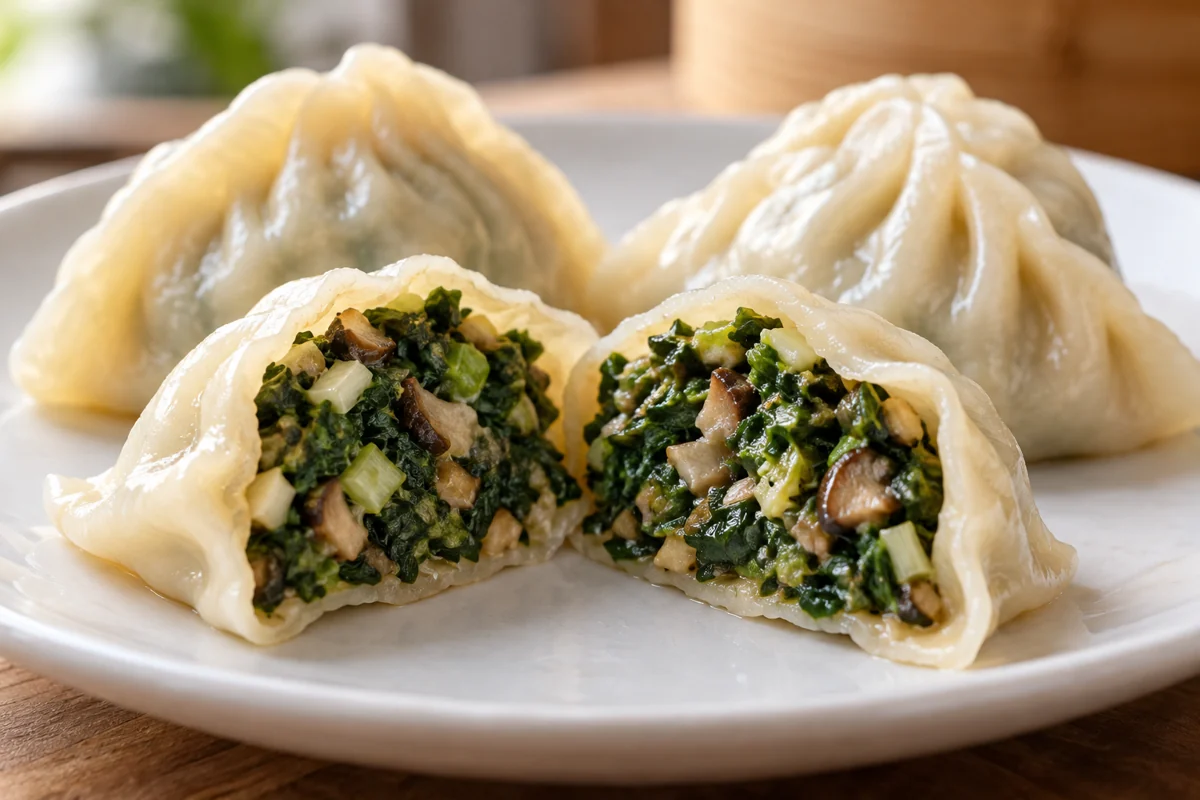
Illustrative mustard-and-mushroom filling concept, not a tested GreenLand recipe.
For soup or a noodle base, consider what appears in a normal spoonful and how it changes through service. The ingredient may need to distribute across portions rather than gather in one part of the vessel. Its flavor should suit the broth, and its texture should remain acceptable at the intended serving stage. Use the actual ladle, mixing practice and holding conditions when the project reaches application testing. A good photograph of one bowl does not demonstrate uniform distribution across a production batch or over a service period.
A cooked side dish puts the ingredient itself in the foreground. Here, the customer may notice color, leaf shape and petiole texture more directly than in a complex filling. Confirm whether the offered cut can create the appearance the menu or pack image promises. If the concept depends on large folded leaves, a fine cut may be the wrong starting point regardless of its flavor. It is better to resolve that mismatch early than to ask the kitchen to reconstruct a visual effect the supplied form cannot reasonably provide.
When replacing another leafy ingredient, treat the change as a formulation decision. Similar color does not guarantee the same flavor, prepared yield or texture. Run the proposed mustard cut through the actual recipe and record any adjustments to liquid, seasoning and dosage. Compare portions at the same serving stage. The objective is not to prove that mustard greens are better than another vegetable; it is to determine whether their particular character serves this food and whether the operation can reproduce the approved result with the offered specification.
Turn an ingredient idea into a useful sample request
A useful sample request describes the finished food before it lists purchasing details. Tell us whether the greens will be used in a soup, filling, sauce, side dish or another application, and whether the leaf should remain visible. Explain the desired flavor and the main texture concern. Then identify any mandatory plant identity, cut, preparation or ingredient requirements. This gives the supplier a basis for discussing the offered product instead of sending a sample that happens to share the common name but serves a different purpose.
Connect the requested sample to a commercial specification. Record the product code or description, sample date, packing and any stated preparation instructions. If the sample is intended only to explore a possible cut, label that purpose clearly. Do not let a development sample become an assumed approval for a later order with different details. When the sample is approved, keep the relevant version of the specification and the application notes together. The purchasing team should be able to identify exactly what the kitchen evaluated.
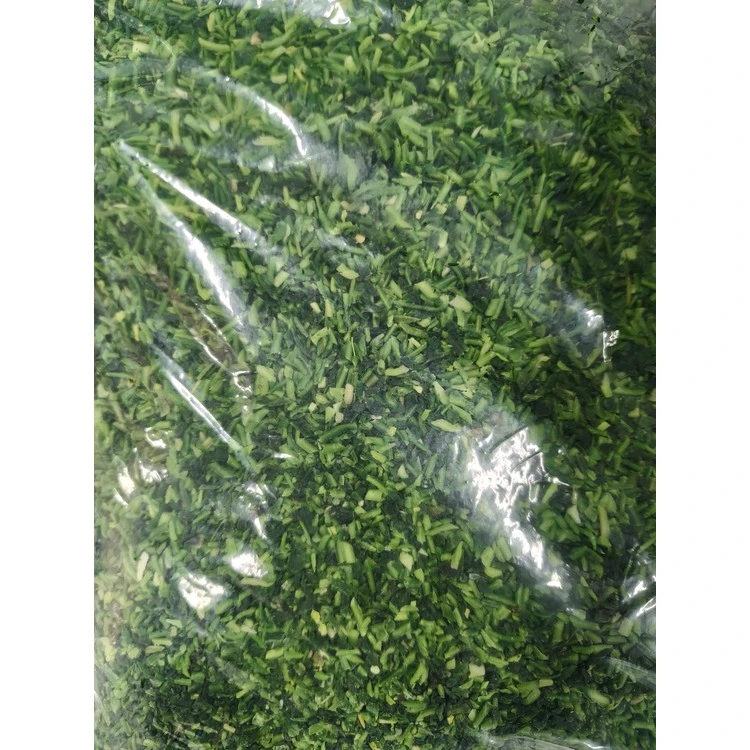
A second view of the cut mustard product. Use representative lot records alongside appearance references.
Plan the trial around a small set of meaningful questions. Does the flavor fit the recipe at the intended dosage? Is the leaf and supporting tissue balance suitable after the full process? Does the prepared material bring the expected amount of liquid into the formulation? Is the cut practical to portion and distribute? Record the method and the observations, including changes made during development. There is no value in an elaborate score sheet if the basic preparation differs from the process that will be used in production.
Discuss quantity, packing, destination and required documents once the product requirement is clear. These details affect what needs confirmation for a quote and for repeat supply. If private-label packing is part of the project, include the intended format and labeling requirements in the conversation. Avoid treating a catalogue image as a commitment to a particular pack or stock position. Current availability and the order-specific specification need confirmation. The aim is to connect a promising ingredient with a purchase that both teams understand.
Mustard greens are easiest to evaluate when their identity, flavor and physical form stay connected. The fresh vegetable explains the characteristic leaf and mustard note; the actual frozen sample shows what your process will receive. Use both types of information for their proper purpose. We recommend approving the prepared result and the written product details together. That gives the next person handling the order a practical reference, and it keeps the decision grounded in the food you want to make rather than a broad description of a leafy-green category.
Continue reading about frozen leafy ingredients
Explore the difference between edible supporting tissue and an unsuitable cooked bite in another leafy ingredient.
Develop the sample-request discussion into a worked application-trial format for prepared solids and liquid balance.
Source frozen mustard greens with GreenLand-food
GreenLand-food is a professional frozen mustard greens supplier and manufacturer in China, providing factory-direct wholesale supply. We help your purchasing team confirm the offered cut and preparation state against the intended application.
Send the product form, specification, packing, quantity, application, destination, private-label needs and requested documents, together with the cooked texture and flavor your team wants to approve.