


Can You Freeze Roasted Peppers?
Aug 03, 2026
Leave a message


Roasted peppers freeze well when the next use accepts a tender texture
Freezing is a sound preservation method for roasted peppers. The product is already softened by heat, so the extra softening caused by ice crystals is usually acceptable in cooked or blended applications. The best results come from rapid cooling, shallow packing, fast freezing and stable frozen storage. Peppers intended for crisp salads or a firm antipasto bite are less forgiving because thawing will not restore fresh structure.
Safety and quality are separate decisions. Freezing stops microbial growth while the product remains frozen, but it does not correct slow cooling or poor handling before freezing. Flavor, color and texture also decline faster when packages contain excess air, frost, free liquid or evidence of thawing and refreezing.
Cool before freezing
Move roasted peppers out of the warm zone quickly. For household batches, chill to below 40°F or 4°C within two hours, then freeze in shallow portions.
Softness is not always a defect
Roasting has already weakened the pepper tissue. A tender thawed strip can be ideal for sauce or a ready meal, yet too soft for a sandwich or visible topping.
Freeze the form you will use
Halves, strips, dices and puree portions behave differently. Portion before freezing so the pack can move directly into production or service.
Raw IQF and roasted are not interchangeable
IQF raw bell pepper offers brighter fresh-pepper character. Frozen roasted pepper supplies char and sweetness. Confirm the treatment instead of assuming one can replace the other.
What happens to red peppers and capsicum during roasting and freezing?
Red bell pepper and red capsicum usually refer to the same mild, thick-walled sweet pepper in different markets. Roasting changes it before the freezer does. Heat softens cell walls, drives off some water, loosens the skin and develops a sweeter, deeper aroma. Blistered or fire-roasted surfaces may also add controlled char. Once that roasted tissue freezes, water inside and between the cells becomes ice. Larger ice crystals can rupture more structure, so the thawed pepper releases liquid and feels softer.
That change is not automatically bad. A sauce factory may value a soft roasted strip because it blends quickly and provides roast character without a separate in-house roasting stage. A ready-meal line may want pieces that stay visible after mixing, freezing, distribution and reheating. A pizza producer may need low surface ice and controlled strip thickness so the topping does not flood the base before browning. A deli sandwich program may reject the same tender product because it wants a cleaner bite and less drip.
Freezing rate matters because faster heat removal generally limits the time spent in the zone where large ice crystals grow. New Mexico State University notes that deep household containers cool and freeze slowly, increasing mushiness. In commercial quick freezing, the objective is to pass rapidly through maximum ice crystallization. The Codex standard for quick-frozen vegetables defines that principle and uses -18°C or colder as the cold-chain reference after thermal stabilization.
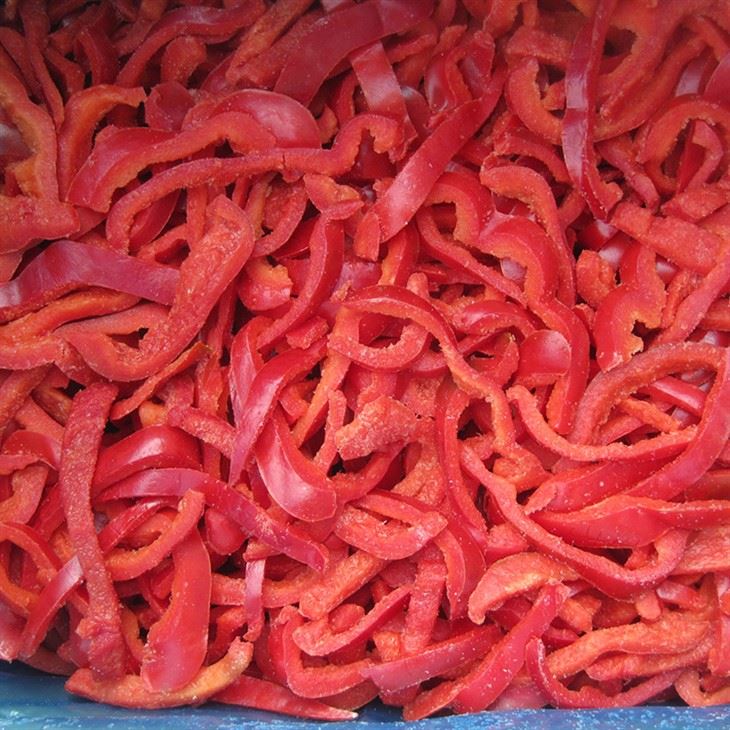
How to freeze roasted peppers safely at home
This method works for sweet red bell peppers, red capsicum, pimientos and many roasted chiles. If you handle hot varieties, wear gloves and avoid touching your face. The sequence is ordered because cooling, portioning and packaging affect both safety and quality.
- Select sound peppers. Start with firm peppers that have typical color and no mold, soft rot, leaking areas or serious damage. Freezing preserves the starting material; it does not improve an over-mature or spoiled pepper.
- Roast to the intended flavor. Blister the skins under a broiler, on a grill or over a suitable flame. Aim for an even roasted character, not uncontrolled burning. Different wall thicknesses and pepper sizes need different exposure, so judge the surface rather than relying on one universal time.
- Steam briefly and peel as needed. Cover the hot peppers long enough to loosen the skins. Remove stem, seeds and loose skin according to the final use. Whole roasted chiles can also be frozen unpeeled and may peel more easily after thawing, but a buyer-facing product specification should state whether skin is retained.
- Cool promptly. Divide large batches so heat can escape. Colorado State University Extension recommends cooling roasted peppers below 40°F within two hours after heat exposure. Do not seal a deep mass of hot peppers and expect a home freezer to remove heat quickly.
- Choose the final format. Keep halves for stuffing or layered dishes, cut strips for pizza and sandwiches, dice for ready meals, or portion puree for soups, sauces and dips. Freezing the usable form reduces handling and avoids thawing more than the recipe needs.
- Control free liquid and trapped air. Drain excessive roasting liquid if the application does not need it. Pack in freezer-safe bags or shallow rigid containers, leave appropriate headspace where needed, remove excess air and seal. Air encourages surface dehydration and frost.
- Freeze in shallow, spaced packages. Lay bags flat or place shallow containers with space around them until frozen solid. A single layer or separately frozen pieces are easier to portion than a thick block. Avoid loading more warm food than the freezer can freeze promptly.
- Label, store and use intelligently. Record the date and format. Keep the freezer at 0°F or -18°C or below. Extension guidance gives up to one year as a best-quality horizon for frozen roasted chile peppers, but flavor and texture depend on package quality, temperature stability and the condition before freezing.
Choose the frozen format by the finished product
Format affects portioning, heat transfer, visual identity and moisture distribution. A long strip creates visible pepper character but exposes more surface area and may tangle or break. Dices mix evenly but can disappear into a sauce. Puree removes appearance as a buying criterion and shifts attention toward flavor, color, roast profile and viscosity.
| Format | Best application fit | Main quality focus | Buyer or kitchen check |
|---|---|---|---|
| Halves or broad panels | Stuffed dishes, layered antipasti, sandwiches | Panel integrity, peel removal, tears, drip | Thaw one portion and test handling without breakage |
| Wide strips | Pizza, fajita meals, pasta, foodservice garnish | Width, length, roast coverage, broken rate | Bake or reheat in the real sauce or topping system |
| Dices or small pieces | Ready meals, soups, salsa, fillings, meal kits | Size distribution, fines, seed and core residue | Check even dosing and visibility after cooking |
| Portioned chopped pepper | Small kitchens, dips, omelets, batch sauces | Portion weight, package seal, freezer burn | Use only the needed portion without thawing the rest |
| Puree or sauce base | Soup, hummus, romesco, dressing, sauce manufacture | Flavor, color, roast intensity, viscosity, separation | Test after thawing, heating and final seasoning |

Home-frozen roasted pepper, raw IQF pepper and commercial frozen roasted pepper are different tools
| Option | Strength | Limitation | Best decision |
|---|---|---|---|
| Home-frozen roasted pepper | Flexible roast level and small portions | Variable cut, cooling rate, air removal and batch consistency | Household or small-kitchen use where each batch can be judged directly |
| Commercial raw IQF bell pepper | Free-flowing pieces, defined color and cut, convenient dosing | No roasted flavor; cooking step remains with the customer | Ready meals, vegetable blends and sauces needing fresh-pepper character |
| Commercial frozen roasted pepper | Roast character with lower kitchen or factory preparation labor | Roast intensity, peel condition and moisture must be specified | Sauces, pizza, prepared meals and foodservice where roast flavor is part of the formula |
Do not treat "frozen red pepper" as a complete specification. It may describe raw IQF dices, raw strips, mixed-color pepper, roasted pieces, a frozen block or a puree. These products differ in flavor, portioning, moisture and behavior under heat. A sample should be evaluated in the actual recipe, not only while frozen on a white tray.
GreenLand-food's verified IQF Bell Peppers page covers raw IQF red, green, yellow and mixed peppers in dices, strips, cups and whole forms. If your formulation requires roasting, state the required treatment in the inquiry so the exact product scope and availability can be confirmed instead of inferred from a raw IQF specification.
Should roasted peppers be thawed before use?
The right answer depends on where the released moisture should go. Direct-from-frozen use is efficient when the product enters a hot sauce, soup, stew or industrial kettle and the formulation can absorb the water. Controlled thawing and draining are better when the pepper sits on bread, pizza, pastry or a cold plate where free liquid would be visible.
Sauces, soups and puree
Add frozen portions directly when the heating stage will melt and disperse them. Measure the extra liquid in pilot runs. If roast flavor drives the formula, compare the sample after the full cook because acidity, dairy, starch and seasoning change perception.
Pizza and savory bakery
Excess water can soften a crust or pastry layer. Test frozen and drained-thawed application. Control strip width, broken pieces, surface ice and dose per unit, then judge browning and water pooling after the actual bake cycle.
Ready meals and meal kits
A frozen dose can enter the tray directly, but the pepper must survive assembly, a second frozen period, distribution and reheating. Check visible piece count, color, tenderness and liquid migration at the end of shelf-life validation.
Dips, sandwiches and cold service
Thaw under refrigeration, drain and assess the bite before use. Sandwiches and antipasti expose defects that a sauce hides: ragged skin, scorched fragments, weak color, excess drip and an overly soft panel.

Buyer control: define acceptance before comparing quotations
A low price cannot repair the wrong roast, a weak cut or uncontrolled drip. Ask the supplier to identify whether the pepper is raw IQF, roasted before freezing, peeled or unpeeled, and individually frozen or block frozen. Then align the sample, specification and purchase order.
- Product identity: red bell pepper or other capsicum variety; sweet or hot; origin and crop information when relevant.
- Treatment: raw IQF, blanched, roasted, fire-roasted, peeled, unpeeled, seeded and cored.
- Physical specification: halves, strips, dices or pieces; width, length, thickness, size tolerance, broken rate and fines.
- Sensory and visual limits: red color, roast intensity, char distribution, scorched or bitter particles, off-odor, skin, seeds, stems and white membrane.
- Frozen condition: free-flowing pieces or block, clumping, surface frost, adhering ice, freezer burn and package seal.
- Application performance: thawed drip, texture after reheating, water release in sauce or dough, visible piece survival and flavor contribution.
Keep the approved sample or clear retained reference linked to the specification revision. At receiving, check reefer condition, product temperature according to the agreed plan, carton integrity, lot codes, clumping, frost and evidence of temperature abuse before the shipment enters normal stock.
Specification, packing and documents for commercial frozen pepper orders
For raw IQF bell peppers, GreenLand-food prepares red, green, yellow and mixed-color options in common dices, strips, cups and whole forms. The verified product page lists diced sizes such as 10×10 mm, 15×15 mm and 20×20 mm, strip widths around 6–10 mm, bulk and foodservice cartons, private-label packing, an MOQ of one 20-foot full-container load with mixed-container discussion, storage at -18°C or below, and common shipment documents. These are product-page reference points, not universal terms for every order; confirm the exact quotation.
A roasted product needs additional fields. "Roasted" alone does not define flame contact, skin removal, char distribution, target tenderness or whether roasting occurs before cutting. If the buyer wants a sauce ingredient, random pieces may be economical. If the product must remain visible on pizza or in a premium ready meal, strip dimensions and broken tolerance become more important.
| Purchase field | What to define | Why it matters |
|---|---|---|
| Treatment and roast | Raw IQF or roasted; light, medium or strong roast reference; skin condition | Controls flavor, bitterness, labor and product identity |
| Cut and tolerance | Dice or strip dimensions, oversize, undersize, broken pieces and fines | Controls dosing, visual consistency and cooking behavior |
| Defects | Seeds, stems, core, membrane, loose skin, blackened fragments, discoloration and foreign matter | Reduces complaints, rework and rejection risk |
| Frozen condition | Free-flowing target, clump allowance, surface frost, adhering ice and package integrity | Affects usable yield, portioning and evidence of cold-chain stress |
| Packing | Bulk liner and carton, foodservice bags, retail weight, private label and pallet plan | Connects the ingredient to storage, handling and sales channel |
| Documents | Specification, COA, packing list, invoice, origin and destination-specific certificates or test reports | Supports clearance, lot release, traceability and complaint handling |
Ask for a representative sample, then run a small application test with recorded weights. Measure frozen input, thawed drained weight when relevant, liquid release, finished yield and the sensory result after the full heat cycle. A sample that looks bright while frozen can still release too much water in a pizza or lose identity in a ready meal.
For a broader sourcing path, review our Frozen Pepper category, the Frozen Vegetable Supply Solutions, and our guide to frozen vegetables for baking and ready meals. These pages help purchasing and development teams connect form, pack and application before requesting a quotation.

Cold-chain checks protect the result after freezing
Commercial quick-frozen vegetables are normally held at -18°C or colder through storage and distribution. That number is a reference point, not a substitute for evidence. The receiving team should compare data logger information when required, reefer settings, seal and carton condition, product temperature method, frost, clumping and lot marks. A pallet exposed to repeated temperature fluctuation may remain frozen yet show more surface ice, dehydration or blocks that no longer portion cleanly.
Keep shipment documents connected to the physical lot. The product name, cut, treatment, net weight, production or lot code and storage statement on cartons should agree with the packing list, specification and COA. If a complaint occurs, photographs of the unopened carton, inner bag, lot code and frozen product condition are more useful than a description written after the product has fully thawed.

Our detailed cold-chain logistics guide for frozen vegetables gives purchasing teams a practical framework for loading, temperature records and arrival checks.
Evidence behind the handling advice
The home-handling recommendations in this guide follow current material from Colorado State University Extension, the National Center for Home Food Preservation, and New Mexico State University Cooperative Extension. These sources support prompt cooling, food-safe packaging, shallow freezing, air removal and frozen storage guidance for roasted chiles and pimientos.
For commercial context, the Codex Standard for Quick-Frozen Vegetables describes rapid passage through maximum crystallization and -18°C cold-chain handling. FAO and WHO are reviewing evidence around alternative frozen holding temperatures, so destination-market rules and the current agreed specification should still be checked for each program.
Frequently asked questions
Can you freeze roasted red peppers after peeling them?
Yes. Cool the peeled peppers promptly, remove excess free liquid if the application does not need it, portion them in shallow freezer-safe packaging, remove excess air, seal and freeze. Peeled halves, strips and dices are convenient because they can move directly into the next recipe.
How long can roasted capsicum stay frozen?
At 0°F or -18°C or below, extension guidance uses up to one year as a best-quality horizon for home-frozen roasted chiles. Package quality and temperature stability matter. A commercial supplier's declared shelf life applies only to that product, pack and validated storage condition; GreenLand's raw IQF bell pepper page, for example, lists 24 months under -18°C storage.
Do frozen roasted peppers become mushy?
They become softer because roasting and ice crystals both weaken the tissue. Slow cooling or freezing, deep packages and thawing can increase drip and softness. This is acceptable for soups, sauces and dips but may be unsuitable for a crisp sandwich, salad or premium visible topping.
Can you freeze jarred roasted peppers?
You can freeze a removed portion if the original product has been handled safely and the container is freezer suitable, but the brine, oil or acid system may change texture and separation. Do not freeze a sealed commercial glass jar unless its manufacturer explicitly says the package is freezer safe. Portion into an appropriate container and follow the label after opening.
Should roasted peppers be frozen with oil?
Plain peppers are easier to portion and adapt to different recipes. If oil is part of the intended formulation, use a freezer-safe container with room for expansion and expect the oil to become cloudy or firm while cold. Do not treat oil as a replacement for prompt cooling, hygienic handling or frozen storage.
Can thawed roasted peppers be refrozen?
Avoid routine thaw-and-refreeze cycles because they increase drip, softness and uncertainty about time and temperature exposure. If a safely thawed product is used in a fully cooked recipe, that finished dish may be frozen under the recipe's normal controls. Commercial programs should follow the agreed food-safety plan and never rely on refreezing to recover temperature-abused stock.
Send your frozen pepper requirements
Tell us the pepper color, raw IQF or roasted treatment, cut size, quality limits, packing, quantity, application, destination, private-label needs and required documents. We will review the brief against available GreenLand frozen pepper options and confirm what can be prepared for the exact order.