


Why Guava Puree Can Feel Gritty: Seeds, Stone Cells and Screening
Oct 19, 2026
Leave a message

GUAVA · PROCESS & APPLICATION
Why Guava Puree Can Feel Gritty: Seeds, Stone Cells and Screening
Guava puree can feel gritty after its visible seeds have been removed because the flesh also contains stone cells, or sclereids. Seed fragments, peel and coarse pulp can add other sensations that are easily grouped under the same word. The useful response is to identify the remaining material, compare the preparation method and judge the puree in its intended product before choosing a finer screen or a different ingredient grade.
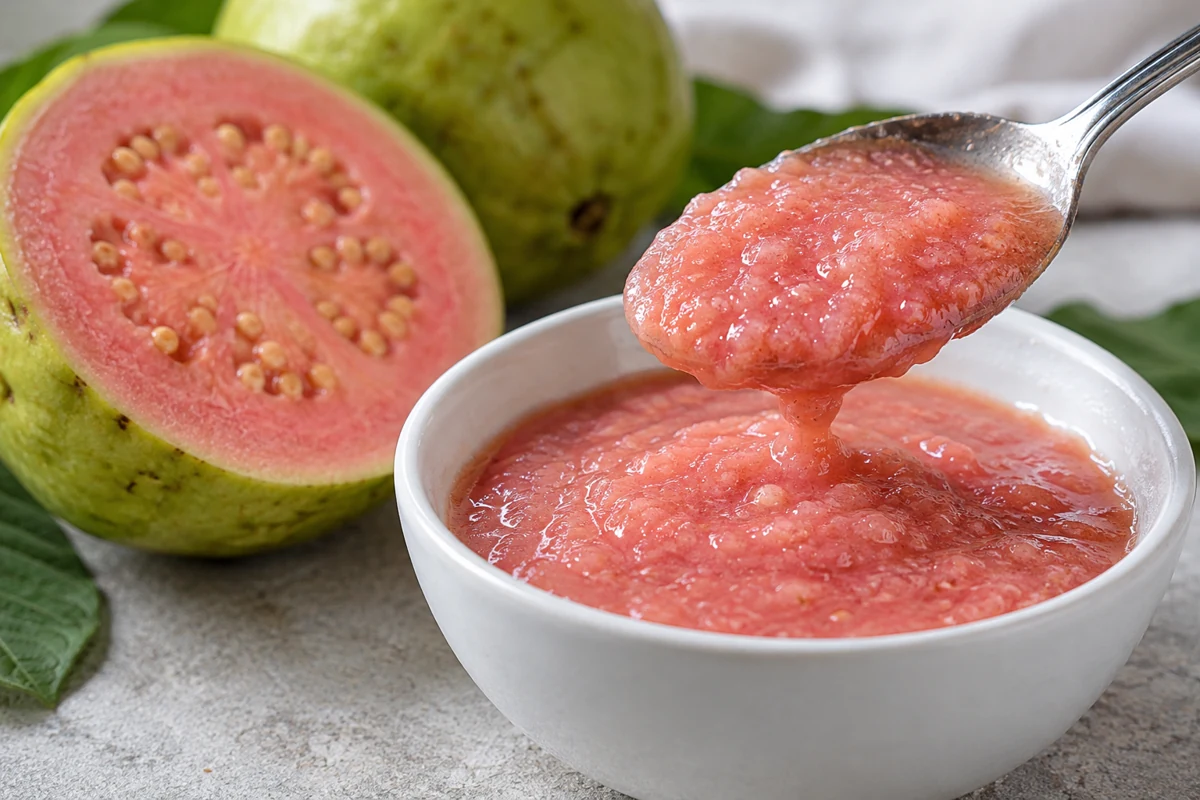
Fine flesh texture and hard seeds require different checks.
For a buyer making puree from frozen guava pieces, smoothness and recovery belong in the same trial. A more selective finishing step may improve mouthfeel while retaining additional useful pulp. GreenLand-food's current photographed guava form is skin-on pink-flesh pieces with a firm central seed area. Its performance should be assessed after the buyer's defined preparation; the photographs do not establish a seedless puree specification or a finished beverage result.
Identify seeds, stone cells and other coarse material
The first distinction is between visible seeds and the fine grain that can remain in the flesh. Guava seeds are discrete structures concentrated in the central area of the fruit. Stone cells are hard plant cells within the fruit tissue. The UC Davis guava quality sheet explicitly associates grittiness with sclereids and lists seed amount as a separate quality consideration. Removing the obvious seeds therefore does not, by itself, answer every mouthfeel complaint.
A thin smear of prepared pulp can help the team describe what it sees. Intact pale seeds, irregular seed fragments, green peel flecks and fibrous tissue have different appearances. Fine hard particles may need a more appropriate examination than a photograph allows. If identification matters to an acceptance decision, ask a qualified laboratory to examine the retained material and state the method. A pale speck in a spoonful should not automatically be named a stone cell.
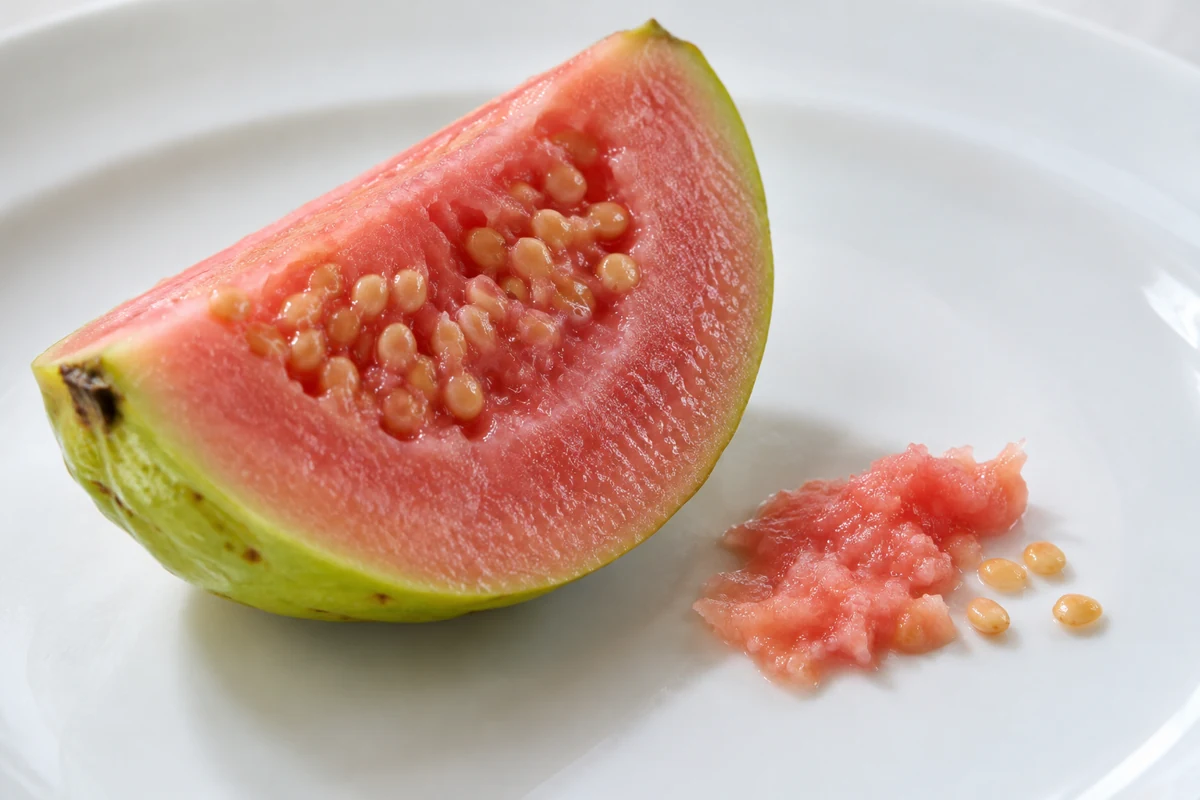
Whole seeds are visible; identifying stone cells needs more than a photograph.
Keep a few intact seeds beside the retained fraction as a visual reference when developing the examination method. This helps operators recognize whole seeds without assuming that every smaller pale particle has the same identity. Record uncertain material separately and retain a sample for examination. An acceptance report can then distinguish an observed seed count from a possible explanation for the finer grain.
Describe the sensation as precisely as the application permits. An occasional hard fragment differs from an even sandy feel. A stringy or fibrous drag differs from a sharp particle, and a peel fleck can be visually objectionable without producing the same mouthfeel. Record whether the concern appears in the neat puree, after dilution, after heating or in the finished product. That location directs the next comparison more effectively than a single overall smoothness score.
Sample preparation can also create misleading clues. A partially frozen puree may contain ice that disappears on controlled thawing. A poorly mixed container may give a coarse lower portion and a smoother upper portion. Sugar crystals in a formulated product are another possible source of roughness, but their presence needs evidence rather than assumption. The investigation should preserve the original sample and compare a defined prepared aliquot, documenting what changed during handling.
Set safety and quality questions apart in the investigation. Naturally occurring guava structures can still be unacceptable for a particular product, while an unidentified hard object may require a different response under the site's foreign-material procedure. Do not taste material that has an unresolved safety concern. The commercial texture specification should operate within the processor's established handling and product-safety controls.
Once the material has a useful description, the team can choose a test that actually observes it. A whole-seed count, a retained fraction on a named screen and a sensory assessment each answer a different question. Combining them can be informative; treating one as a universal measure of grit conceals the distinction that started the investigation.
Read the supplied pieces before pulping

Skin-on pink guava pieces: agree the supplied form before evaluating the prepared output.
The raw form sets the work the processor will have to do. Skin-on pieces carry peel and central seed tissue into the preparation unless the buyer removes them. A prepared pulp, a seed-reduced ingredient and a fully specified puree may enter the line at different stages. The quotation and sample description should identify that stage clearly. Otherwise two suppliers can appear to offer equivalent kilograms while delivering different usable fractions.
The current GreenLand-food guava product page shows irregular pink-flesh pieces with green peel. Read those images as evidence of the pictured form, then use an order sample to establish the actual distribution. A few attractive cut faces do not measure seed-center share across a carton. Draw a representative sample that includes large and small pieces rather than selecting only the easiest material to pulp.
Record the condition on arrival before changing it. Note pack integrity, visible frost, loose ice, clumping and leakage where present. Then prepare the sample under the agreed tempering or thawing procedure. Keep released liquid with the sample unless the normal production method specifies drainage. This avoids comparing a drained, concentrated fraction with a fully recombined sample and attributing their different feel entirely to fruit quality.
Maturity and cultivar can affect the fruit's processing character, but neither should be inferred solely from the word pink. Ask for the identity that the supply lot can support and describe the observed color, aroma and firmness separately. A processor may accept some natural color variation while requiring a tighter particle standard. Those decisions should be visible in the specification rather than bundled into a general premium-grade description.
For a useful starting record, weigh the input and separate the categories that the preparation actually removes. If peel and seeds leave together in a mixed residue, describe that residue honestly. A wet mixed fraction is not a measured seed percentage. If the buyer needs separate peel or seed limits, agree a practical sorting and weighing method that can be repeated by both parties, including the condition in which the material is assessed.
The same fruit can support more than one application, but a sample approved for a textured preparation may fail in a smooth drink. Keep the intended use with the sample identity and ask what happens downstream: dilution, heating, homogenization, filling or freezing. That information helps choose the relevant raw-form limits without assuming every buyer needs the most refined ingredient.
A change to peeled or seed-reduced material deserves a new preparation record and commercial calculation. It can change recovery, handling and price. We should confirm that offered form through a separate sample and quotation, then compare the resulting puree against the same finished-product target. The benefit belongs to the measured result of the proposed route.
Separate seed removal from fine finishing
A preparation route can use an initial step to remove larger seeds and peel, followed by finer finishing to reduce remaining coarse material. Thinking in stages helps identify where an unwanted fraction passes. If whole seeds remain after the first separation, a change to the final fine screen may conceal the earlier issue while increasing its load. Inspect both the feed and the residue at each relevant stage.
The FAO guava-processing chapter describes stone cells as distinct from seeds and discusses refining the pulp. It provides historical guidance on screen size, but a modern purchasing specification needs the actual equipment opening, operating conditions and accepted output. A cited aperture is a starting reference for process development, not proof that every guava lot will give the same smoothness or recovery through it.
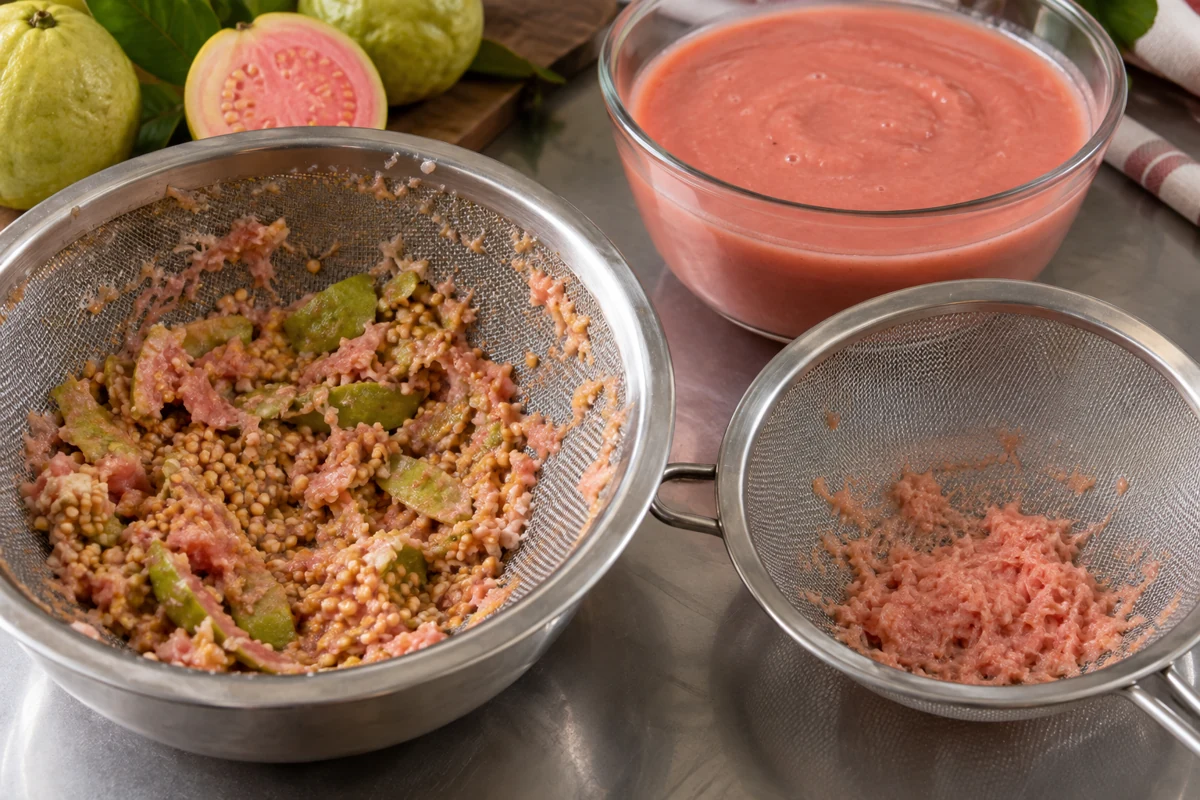
Keep the coarse and fine retained fractions separate during a screening comparison.
Screen opening is only one part of the method. Feed consistency, temperature, loading, working action and the condition of the screen can affect the result. Record the aperture in a clear unit and identify the screen or finisher arrangement. If the supplier uses a mesh designation, ask for the corresponding opening from the equipment documentation rather than assuming that all mesh labels describe the same geometry.
Avoid making uncontrolled blending intensity the only response to grittiness. Mechanical treatment can change particle size and dispersion, but it can also change the fraction presented to the next screen. The trial should show whether it improves the intended product and whether it changes removal, throughput or sensory quality. More blending time is a process change that needs a measured outcome, not an automatic assurance of smoothness.
At development scale, compare the passing pulp and retained material from each stage. A coarse sieve may hold obvious seeds while the finer stage collects a smaller, pinker residue containing more adhering flesh. That visual difference can explain why a later step costs useful pulp. Weigh the fractions and describe their composition instead of treating all retained material as unwanted seeds.
A centrifuge or other separation method may be considered where the processor has a defined reason and suitable technical support. Historical guava research has examined reducing stone-cell content by centrifugation, but equipment choice and performance depend on the feed and intended product. A smoother fraction can differ in body as well as particles. The buyer should evaluate the complete result and avoid turning a paper's outcome into an assumed capability of the ingredient supplier.
Keep process development and routine acceptance at appropriate levels of detail. A research comparison may explore several settings; a release method should describe the agreed preparation precisely enough that a second operator can reproduce it. When a method depends heavily on subjective pressing or repeated passes, record that limitation and improve the procedure before using its result to reject a commercial lot.
Measure what a finer screen removes
The cost of finer finishing becomes clear when the trial follows mass through the operation. Weigh the defined feed before screening and the accepted passing pulp after it. Collect the retained wet material separately, and record transfers, samples or spills that explain the remaining difference. This is a proposed trial structure; it does not imply that a particular recovery has already been achieved for the offered guava.
Use the same basis across the comparison. If one route begins with frozen pieces and another with a diluted pulp, their percentage recoveries do not describe the same starting material. Added water can increase the mass passing a screen without increasing recovered fruit. Keep water and other additions as separate entries, then state whether the reported result concerns fruit preparation recovery, liquid output or final formulated product.
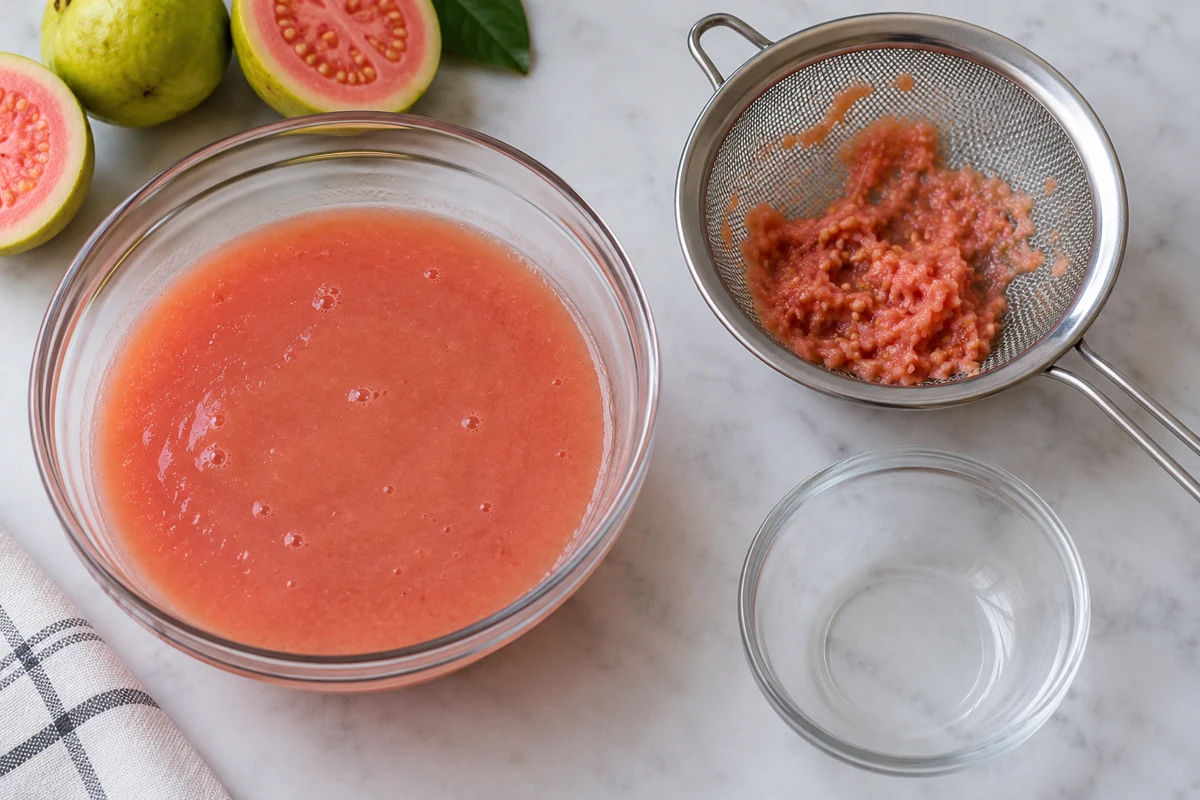
Wet residue contains both retained solids and carried liquid.
Wet residue requires careful interpretation. It contains the structures retained by the screen together with trapped liquid and useful flesh. Its mass depends partly on how long it drains and how it is handled before weighing. Define those conditions when the number will support a purchase decision. A drier residue after longer drainage may appear to show less loss even though the same fruit fraction was retained.
An illustrative comparison can make the calculation transparent. Suppose two matched portions each contain one kilogram of prepared guava feed. One returns eight hundred grams of accepted pulp and the other seven hundred and fifty grams under their specified methods. The second route has retained or lost an additional fifty grams on that basis. Whether the difference is worthwhile depends on the mouthfeel and other output properties; these example figures are not expected performance or supplier test data.
Measure qualities in the passing pulp as well as its mass. The finer route may alter body, visible color or how the pulp disperses in a recipe. Record the sample preparation for soluble solids and any viscosity measurement. A reading taken after removing more insoluble material can describe a different matrix. It should not be interpreted as a direct measure of stone-cell removal or sensory smoothness.
The internal guide to Bostwick and Brookfield measurements explains why method conditions matter when comparing puree flow. Its examples concern another fruit system, so it does not set guava limits. The transferable purchasing lesson is to keep the method with the number and to judge whether that number predicts the behavior needed in the buyer's application.
Include processing time where it affects the decision. A fine screen that produces an acceptable jar very slowly may not suit the required production rate. Record the relevant throughput and interruption observations during a controlled line trial, with the feed and operating conditions attached. The resulting comparison can show whether the preferred mouthfeel is feasible at the intended volume without presenting a bench result as commercial capacity.
Judge mouthfeel in the intended product
The same puree can be perceived differently in a drink, a spoonable preparation and a frozen dessert. Dilution changes the concentration of particles and the liquid surrounding them. A viscous base can alter how the particles are encountered during eating, while a delicate beverage may make an occasional hard fragment more noticeable. These are reasons to test the intended recipe, not reasons to assume that a defect will disappear after mixing.
Begin with the approved use level and process. Record the puree contribution by weight, added liquid, sweeteners and other relevant ingredients. Keep the mixing or heating sequence consistent across samples. If a supplier comparison uses different fruit percentages to reach a similar color, the report should make that choice explicit; it is then comparing complete formulations rather than the ingredients at equal contribution.
Use a sensory description that distinguishes fruit grain from thickness. A dense puree can still contain objectionable particles, and a thin drink can still be acceptably smooth. Ask assessors to record the specific sensation and its frequency under a common preparation. Safe, appropriately processed samples and the site's sensory procedure should govern tasting. A commercial acceptance decision needs more than one person's recollection of how guava ought to feel.
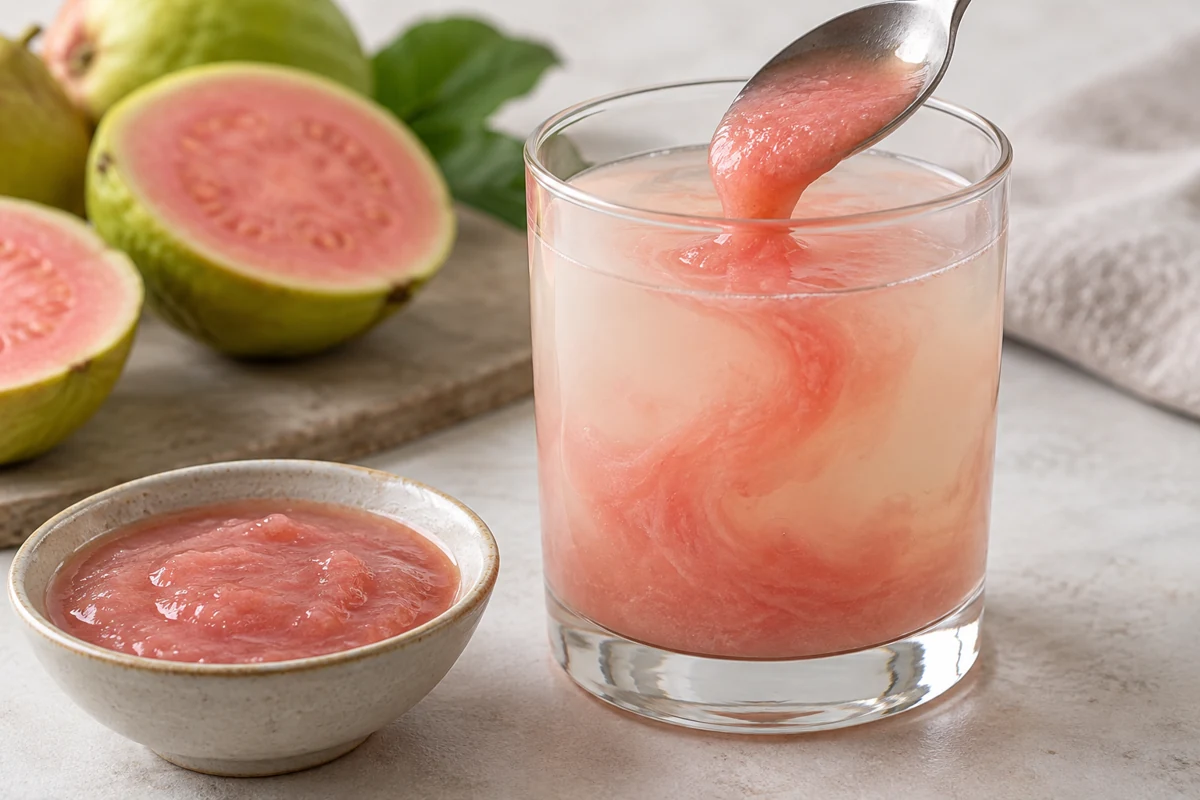
Judge the puree at its intended dose in the finished product.
For a beverage, inspect the sample soon after preparation and after the normal hold. Material that settles can concentrate coarse particles in the final portion even if the freshly mixed drink seems uniform. Define whether the product is intended to be shaken and assess it under that instruction. A suspension issue and a grit issue may interact, but they should still have separate observations so the corrective action addresses the right property.
For a filling or fruit preparation, assess the texture after the actual thermal and cooling route. A puree that spreads smoothly when warm may be perceived differently after it is incorporated and chilled. Check visible peel specks where appearance matters and confirm whether the depositor or nozzle can handle the accepted fraction. Equipment passage and eating quality are related production concerns, but neither alone establishes the other.
For a frozen dessert, compare the base with a controlled melted aliquot when diagnosing roughness. Persistent particles point toward the ingredient or preparation, while roughness that disappears during melting can involve ice structure. Keep formula and storage conditions with the result. Screening the fruit more finely cannot be assumed to correct a later freezing or handling problem.
Agree the finished target before optimizing recovery. The buyer may need a very smooth beverage, a naturally pulpy nectar or a visibly textured fruit preparation. Each can justify a different balance of refinement and retained flesh. The useful specification names the actual product and acceptable result, allowing the supplier and processor to discuss a suitable guava form instead of treating smoothness as one universal grade.
Investigate a sudden change in grittiness
When a previously accepted route becomes gritty, preserve the evidence before changing several settings. Retain the incoming lot reference, a sample before finishing, the accepted passing fraction and the residue where feasible under the site's procedures. Record when the change was first observed and whether it affects all packs, one production period or only a finished-product hold. That scope helps identify a meaningful comparison.
Check the raw material against the approved form. A higher proportion of firm center pieces, a preparation change or a different sample selection can alter what enters the screen. Confirm the lot and pack identities instead of relying on a product name alone. Compare representative material from the new and accepted lots under the same preparation, keeping observations of color, peel, seed tissue and physical condition separate.
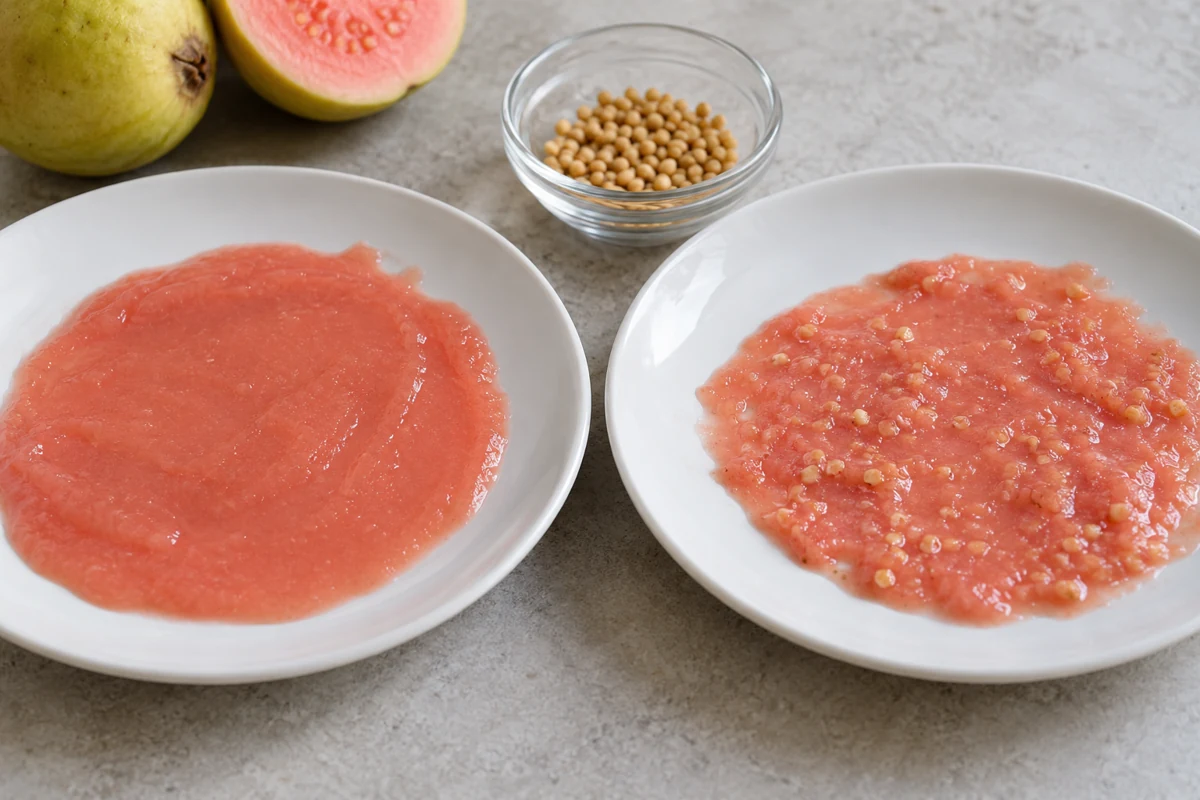
Compare retained material before attributing a texture change to the fruit lot.
Then review the preparation itself. Confirm the screen identity and integrity, assembly, loading and operating record through the site's established checks. Verify whether the feed was warmer, more concentrated or more heavily blended than usual. A small procedural change can matter even when the written recipe is unchanged. The aim is to establish what differed before deciding that the fruit lot caused the complaint.
Prepare comparison smears at equal sample thickness under the same lighting and preserve their identities. A darker smear or a photograph taken closer can make one sample appear coarser. Images are useful supporting evidence when their conditions are controlled, but they do not identify a particle or replace a measured retained fraction.
If the change appears only after storage, examine the whole product history. Settling can redistribute material; processing or formulation can change how a coarse fraction is perceived. Compare the approved sample at the same stage rather than comparing a fresh reference with an aged complaint sample. Record any added ingredient or recipe change that could introduce its own particles, so the investigation does not automatically assign every sensation to guava.
Use a small, defined corrective comparison. If the suspected factor is the first screening stage, compare that stage while keeping the remaining route consistent. If the suspected factor is raw-form variation, test matched lots through the established method. Repeat a result that will support a commercial decision, and preserve any unsuccessful comparison as part of the record. An unexplained improvement after multiple simultaneous changes is harder to maintain.
The resolution should identify what was observed, what the evidence supports and which instruction changes. It may require a revised raw-piece limit, a preparation correction, a different finished-use specification or additional investigation. Keep unproven explanations provisional. This gives the next delivery a clear acceptance basis and prevents the same complaint from returning under a different descriptive label.
Specify a repeatable puree acceptance result
A useful specification combines the delivered form with a defined preparation and an application result. State whether the order is for skin-on pieces, another verified preparation or a separately approved puree. Record the relevant flesh color, peel and seed status, defect limits and sampling method. The phrase smooth guava puree is insufficient if the parties have different ideas about how the supplied pieces will be converted into it.
For a retained-particle test, identify sample mass, preparation, screen aperture, working method, drainage and calculation. State whether the result is a mass percentage, a count of identified structures or another agreed measure. Describe any visual categories that require judgment and provide a reference where useful. A limit becomes commercially meaningful when both parties can obtain comparable results from the same material.
Keep the sensory acceptance with the finished application. Specify the recipe contribution, process stage, evaluation temperature and reference sample or descriptive boundary. A zero visible-seed claim and an acceptable fine grain level are different requirements. If the order needs a seedless declaration, its scope and verification must be established for that actual product; removing obvious seeds during a small demonstration does not justify a blanket claim.

Skin-on pink guava pieces: agree the supplied form before evaluating the prepared output.
Agree how crop or source-lot changes are handled. The buyer may require a fresh functional sample when the raw form or relevant processing character changes. Retain the approved sample identity and results so repeat orders can be compared with the same target. If the buyer changes its own screen or formulation, update the qualification rather than judging the new route against an unexplained historical number.
The quotation should also confirm packing, quantity, timing and destination. A pack suited to a full production run can help the buyer reproduce its handling procedure, while a different net weight may change the way material is tempered and sampled. Confirm liner and carton suitability for the actual pieces, lot marks and requested documents. Analysis reports should identify the represented lot, analyte and method rather than serving as a generic assurance of smoothness.
We can use these details to discuss frozen guava supply around the buyer's preparation. The decisive evidence is the accepted output from a representative sample under an agreed method. When its mouthfeel, recovery and finished-use performance are recorded together, a finer screen or a different ingredient form becomes a practical purchasing choice with a visible cost and benefit.
Discuss frozen guava with GreenLand-food
Send us your intended application, required fruit form, packing, quantity, destination and documents. Include the preparation and acceptance method used in your sample trial.
For factory-direct wholesale sourcing, confirm the supplier and manufacturer named in the order, the offered specification and the representative sample before volume approval.