


Cooked Soybean Sprouts as a Korean Side Dish: Chill-Down and Texture
Oct 19, 2026
Leave a message

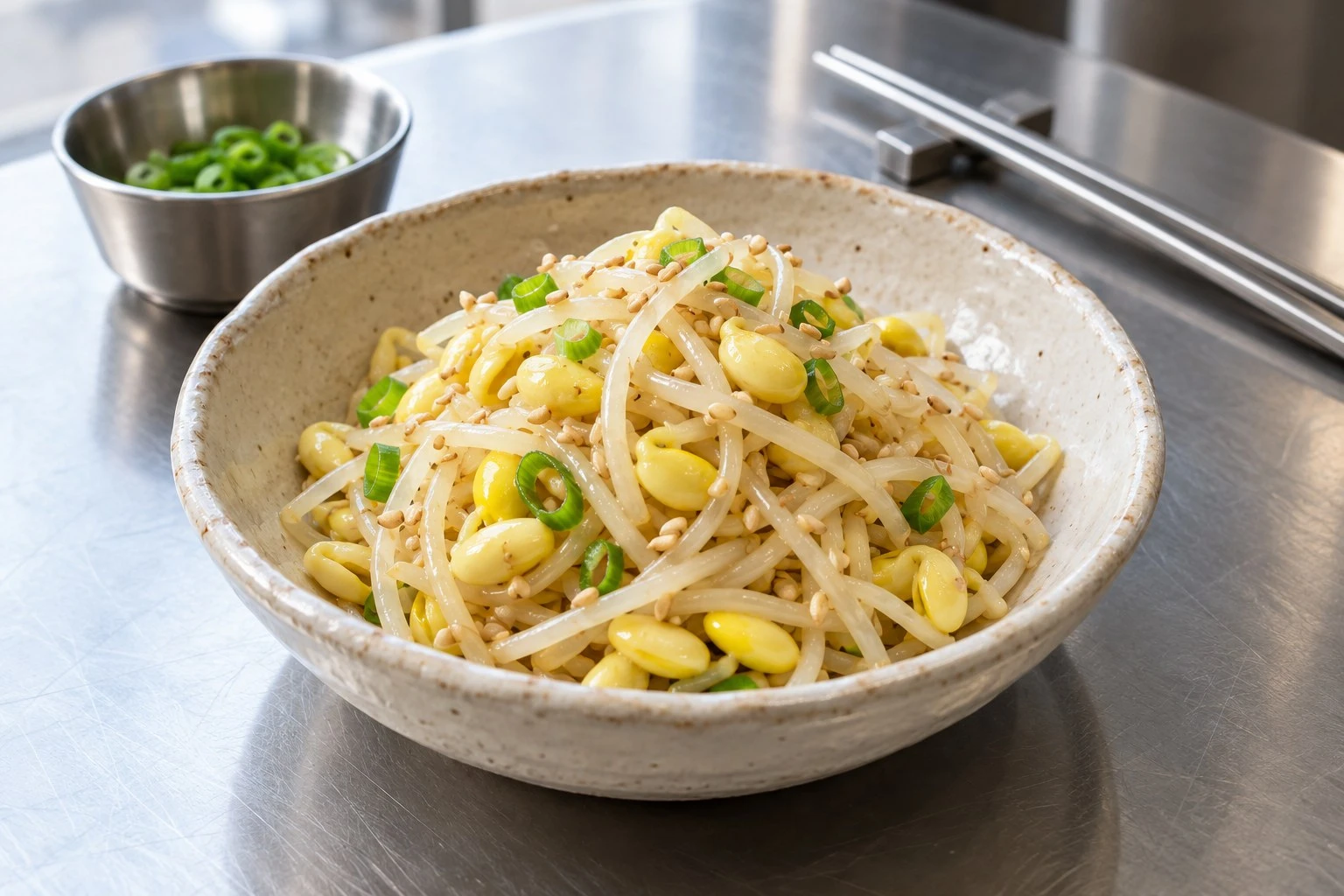
The useful comparison is the finished portion after cooling, seasoning and the intended hold. A sample that tastes good while warm may release liquid in the pack or lose its structure before service. We help buyers define the incoming soybean sprout form and the preparation information needed for that trial. The kitchen or food manufacturer then approves the complete route, including food-temperature monitoring, postcook hygiene, chilled life and portion handling.
Choose sprouts that suit a fully cooked cold side dish
Kongnamul muchim uses soybean sprouts, whose yellow seed heads remain a recognizable part of the dish. Confirm that identity in the specification rather than accepting "bean sprouts" as a complete description. Mung bean sprouts have their own uses, but substituting them changes the ingredient and requires a separate recipe review. A sample photograph helps discuss head retention and stem form; the supplier's source and product records establish what has actually been supplied.
Start with the treatment status of the frozen input. Obtain the preparation instruction for the SKU and clarify whether any prior blanch was a quality treatment or part of a documented cooking process. A frozen bag cannot be assumed ready to thaw, dress and serve. FDA's produce guidance highlights sprout-associated microbial hazards and the value of thorough cooking. Freezing is not a kill step, and vulnerable consumers should avoid raw or lightly cooked sprouts.
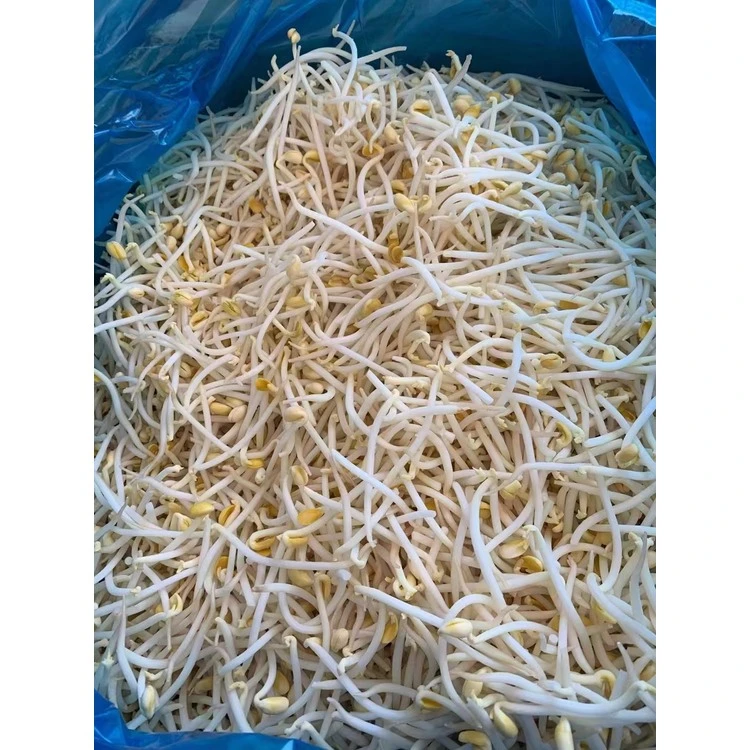
Use the visible form as a reference alongside the product specification.
The cold side dish has a demanding texture target. The head must have an acceptable cooked bite, while the stem should remain distinct enough to lift and portion. Assess those components separately after the approved cook. Do not use a pleasant-looking stem or a nutty aroma as evidence that the required heating has occurred. The process and its monitoring need to cover the actual product, starting condition and batch size before sensory tasting can determine whether the result is suitable.
Frozen form affects preparation. A compact mass may take longer to separate than loose pieces, and aggressive breaking can detach heads before cooking begins. Inspect incoming clumps, short stems and loose heads, then record how the product separates under the permitted method. If the kitchen must thaw the ingredient, that route needs defined conditions. Leaving a bag on the bench until it becomes easy to handle introduces an uncontrolled step into a dish that will later be eaten cold.
Choose a clear appearance reference for the finished side. Some buyers accept a fine root and irregular lengths; others want a more uniform portion with little loose seed coat. Discuss those expectations before treating natural variation as a defect. Removing more material can improve appearance while reducing usable yield and adding handling. The receiving specification should therefore connect the visual limit to the intended portion, rather than demand a costly cosmetic standard that makes no difference to the meal.
Our frozen soybean sprout product information provides a starting point for confirming identity, form and processing status. Ask for a representative sample and carry it through the full chilled-side-dish route. Approval directly after cooking is only an intermediate observation. The final specification should reflect what the customer will actually receive on the plate or in the pack.
Drain for texture and measure the retained water
Draining determines how much free water enters the dressing and serving container. A rushed transfer can leave cooking water between the stems, while heavy squeezing can crush heads and compact the whole portion. Define a draining method that removes avoidable liquid without unnecessary damage. Use suitable clean equipment, an agreed load and a repeatable interval that fits the cooling plan. The interval is a trial variable, not permission to leave cooked sprouts warm while waiting for them to feel dry.
Measure the drained mass consistently. If one trial is weighed immediately and another after a long rest, their yield figures describe different conditions. Record the starting frozen mass, cooked drained mass and any removed material using the same method. A perforated tray over a catch pan can help reveal the amount of liquid leaving the product, provided the equipment is appropriate and the procedure remains hygienic. Do not allow collected liquid to splash back onto the cooked sprouts.
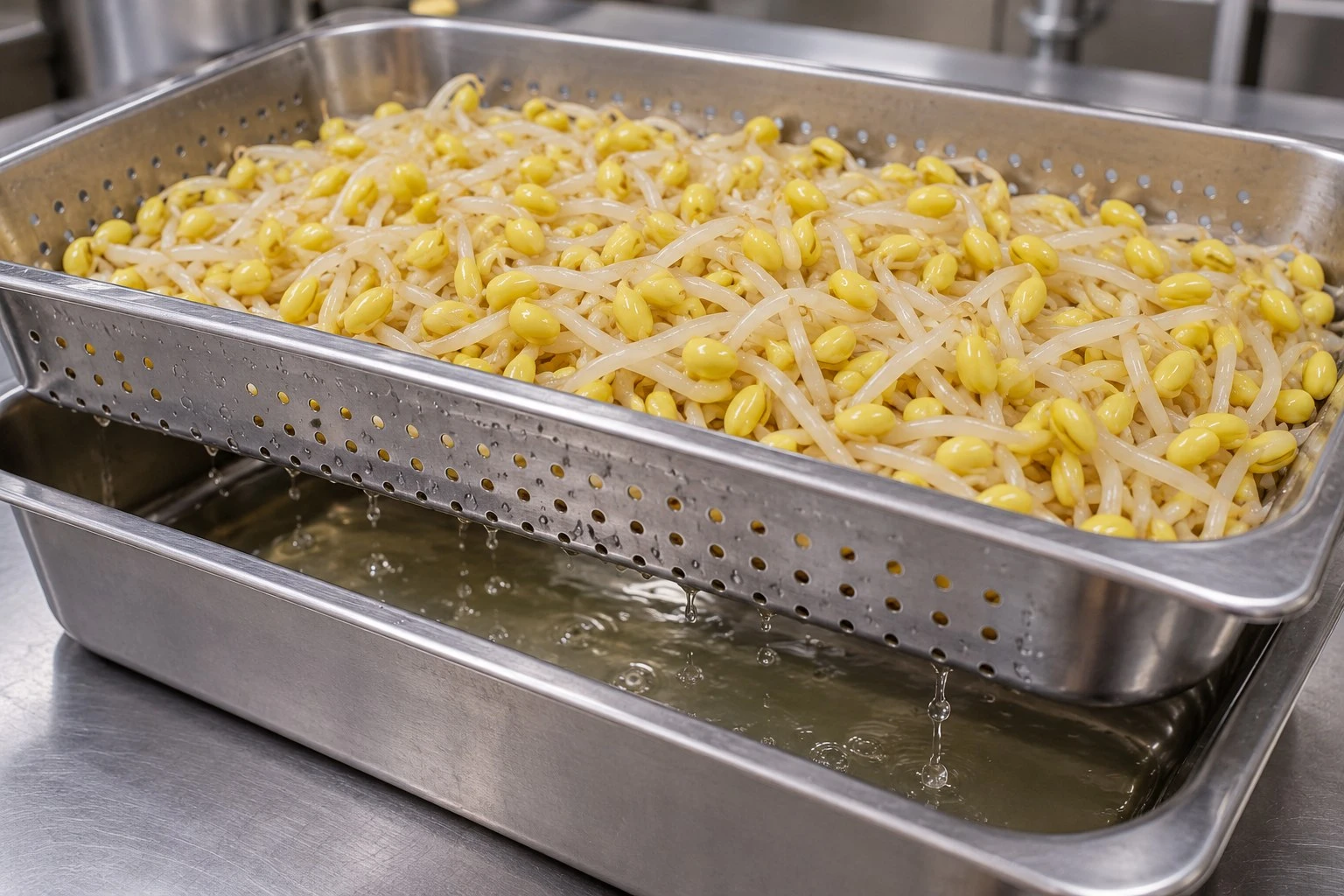
Remove excess water with a repeatable method that protects the whole sprout.
A simple example shows why the denominator matters. If one kilogram of frozen input produces 820 grams of cooked drained sprouts under the chosen method, a 50-gram unseasoned portion gives sixteen full portions with a small remainder. That is a hypothetical calculation, not an expected yield. Add dressing afterward and record its mass separately. Otherwise, a wetter or more heavily dressed product can appear to have a better yield even though it supplies fewer intact sprouts per portion.
Avoid treating a towel squeeze from a home recipe as a universal commercial method. It may be difficult to make the pressure, hygiene and residual moisture repeatable at larger scale. Compare alternatives that suit the site's equipment and food-safety program. Gentle draining, a suitable basket or another approved operation may work better for preserving stems. Any mechanical dewatering proposal should be tested for breakage as well as liquid removal; a dry-looking pile of fragments is not an improvement.
Rinsing after cooking also needs a reason. It can change temperature, flavor and retained water, and it creates contact with water and equipment after the cook. If the recipe requires a water-cooling route, use an approved hygienic procedure and verify the actual food temperature. A brief rinse that cools the outside does not establish that the entire load has reached its cooling endpoint. Keep that distinction clear when a recipe describes rinsing simply as a way to stop cooking.
Review draining and cooling together. A deep pile left in a colander may lose surface water while retaining heat in the center. Conversely, spreading a manageable load can make both operations easier to observe. The most useful trial records the food's condition and temperature through the transition, then measures the liquid appearing after dressing and storage. That connects an early handling choice with the finished side dish's texture.
Design cooling around the warmest part of the load
Cooling should be designed around the warmest food locations and the maximum normal load. A refrigerator display measures air at its sensor; it does not prove that the center of a dense pan of sprouts has cooled adequately. Use a suitable calibrated food-temperature instrument and an agreed measurement plan. Test the pan size, fill depth, rack arrangement and equipment loading that staff will actually use. A successful lightly loaded demonstration cannot approve an overcrowded production day.
As a reference, the 2026 FDA Food Code, section 3-501.14, specifies cooling cooked time/temperature control for safety food from 57°C to 21°C within two hours and from 57°C to 5°C or below within six hours total. The second limit includes the first stage. The Food Code is a retail and foodservice model offered for adoption; the operation must establish its applicable jurisdictional rules and product process. These numbers are not a soybean-sprout cooking schedule or a finished shelf-life claim.
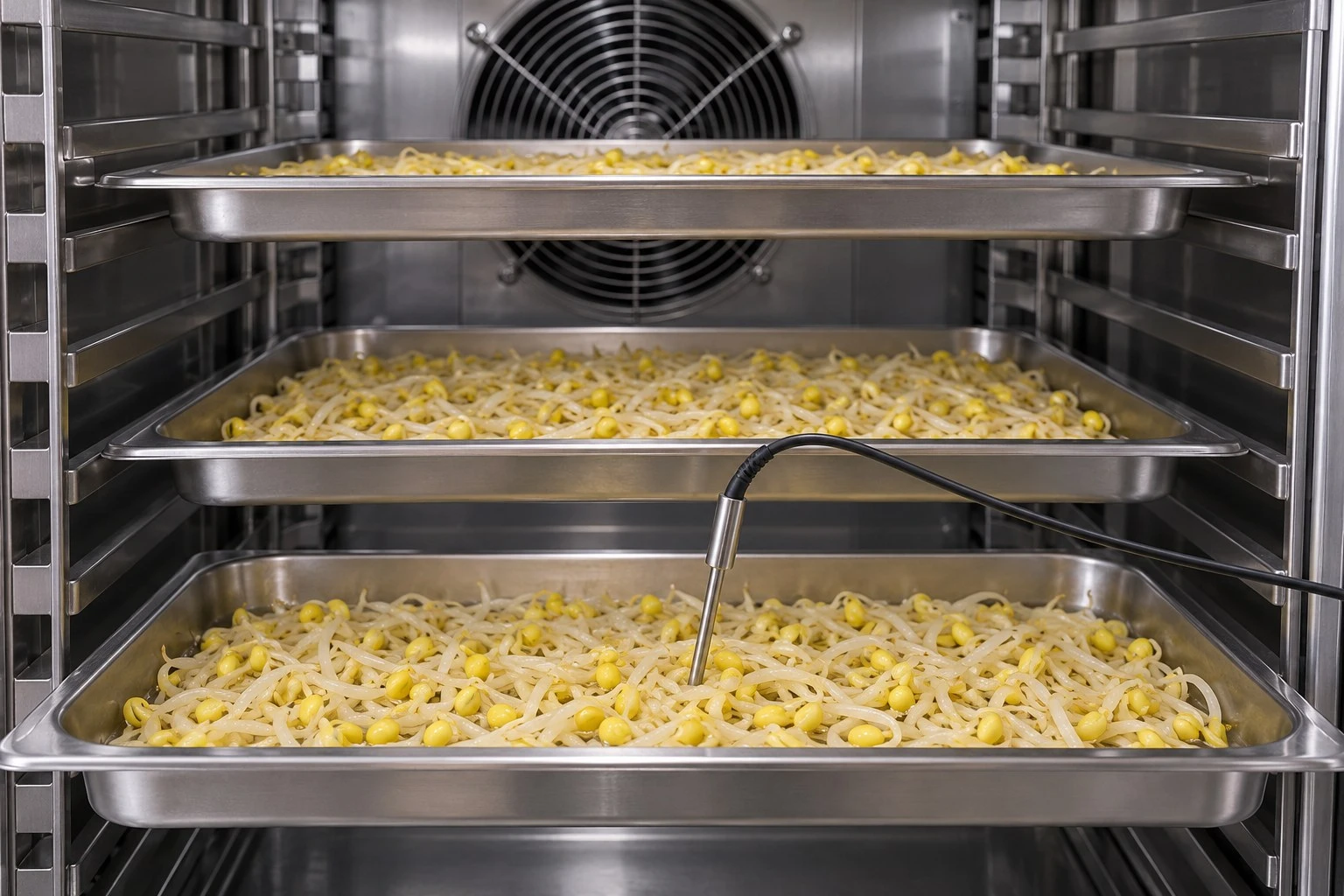
Validate the actual food temperature, load depth and rack arrangement.
The Code also describes methods such as shallow pans, smaller portions and rapid cooling equipment. Their practical benefit depends on the actual arrangement. A shallow pan packed tightly beneath another pan can perform differently from one with good exposure to cooling air. Specify the usable pan depth and spacing from the validated site procedure. Protect the food from contamination while using the covering arrangement that the approved cooling method requires.
Begin recording cooling at the defined process point and retain intermediate measurements. A final cold reading alone cannot show whether the early stage took too long. Use a record that identifies the batch, equipment, food quantity, measurement location, times and temperatures. If several pans cool at different rates, the slowest relevant location controls the decision. Avoid combining a fast pan's early reading with a slow pan's final reading to create a curve that no actual pan followed.
Set corrective actions before the trial. Staff need to know whom to contact and what to do when a cooling limit is approached or missed. The response must follow the site's approved food-safety procedure and applicable rules. Do not invent a universal rescue by reheating, refreezing or adding fresh cold sprouts. A deviation also deserves investigation: extra fill depth, blocked airflow, delayed transfer or a changed container may explain why an otherwise familiar operation failed.
Cooling capacity belongs in production planning. If the cooking line produces more sprouts than the cooling system can handle, the bottleneck will appear as waiting food or crowded equipment. Schedule manageable batches and confirm that other chilled products do not consume the capacity assumed in the sprout trial. The approved route should work during normal operations, with realistic staffing and loading, rather than depend on an empty refrigerator available only for a demonstration.
Add seasoning without undoing cooling or changing the label
Seasoning creates the familiar character of kongnamul muchim, often through garlic, scallion, sesame and salt or another selected seasoning. Fix the formula by mass for a commercial trial. A cook's handful of scallion or splash of oil may be appropriate for immediate home service, but it makes a packed product difficult to compare across batches. Measure the dressing against the defined cooked drained sprout mass so moisture differences in the incoming portion do not silently change the seasoning ratio.
Decide when seasoning is added within the cooling route. Mixing while warm may distribute a dressing differently from mixing after chilling, but the choice must fit the approved temperature and hygiene controls. Compare both only if the process team considers them suitable. Record the temperature before and after mixing, the added ingredient temperatures and the time outside cooling equipment. A large room-temperature dressing addition can alter the conditions of a batch that had already reached its intended cold state.
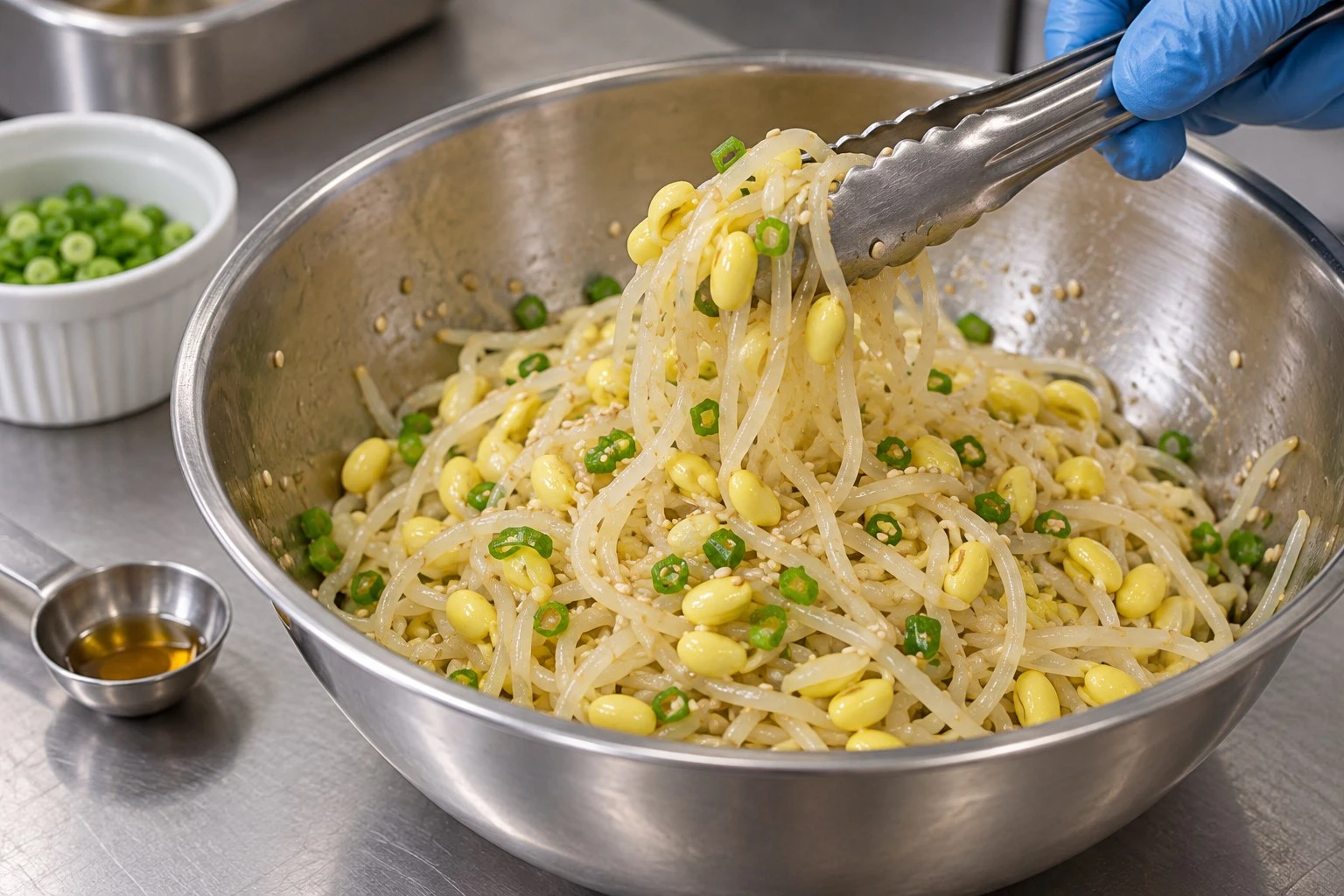
Measured dressing and gentle mixing help preserve the finished texture.
Treat postcook additions as food ingredients with their own controls. Garlic, scallion, sauces and garnish do not become suitable for a cold finished product merely because the sprouts were cooked earlier. Obtain their specifications and prepare them through the approved route. Use clean equipment and protected handling after the heat step. Keep utensils used for uncooked ingredients away from the finished sprouts, and define how mixing vessels and portioning tools are cleaned and stored.
Texture depends on mixing as well as formula. Lift and fold the sprouts gently using suitable equipment so the dressing reaches the portion without breaking the heads or knotting the stems into a compact mass. Observe whether an operator repeatedly presses the product against the bowl. At larger scale, a mixer needs an application trial rather than an assumption that low speed is automatically gentle. Measure the change in attached heads and fragments across the mixing stage.
Review the complete allergen declaration. Soybean sprouts bring soy identity into the food, and sesame or other seasonings can add further considerations. The actual composition of soy sauce, fish sauce or stock must come from its current specification. A salt-only version and a sauce-seasoned version require their own formula review. FDA's allergen information is a useful U.S. starting point; the finished label or menu information must match the destination and sales channel.
Keep tasting observations tied to the intended serving temperature. Garlic intensity, salt perception and oil coating may be judged differently in a warm sample than in the cold dish. Taste only product that has completed the required process and is within its controlled handling period. If the chilled result needs adjustment, change the recorded formula and repeat the relevant assessment instead of allowing each operator to correct it informally at packing.
Test the packed dish across its intended chilled life
A packed side dish should be evaluated in the container, fill and storage conditions intended for sale or service. The container influences how sprouts settle, how dressing collects and how the portion is lifted out. Choose the actual pack early enough to include it in the trial. A wide shallow foodservice pan and a deep single-serve cup can give different eating and handling experiences even when the recipe and total sprout mass are identical.
Look for free liquid after a defined hold. Record its approximate mass or another agreed measurement, along with the method used to separate it from the solids. Do not report liquid loss simply by tilting different packs at different angles. Observe whether the bottom of the portion becomes wetter than the top and whether the dressing remains evenly distributed. These are quality measurements; clear liquid or a pleasant appearance does not establish microbiological acceptability.
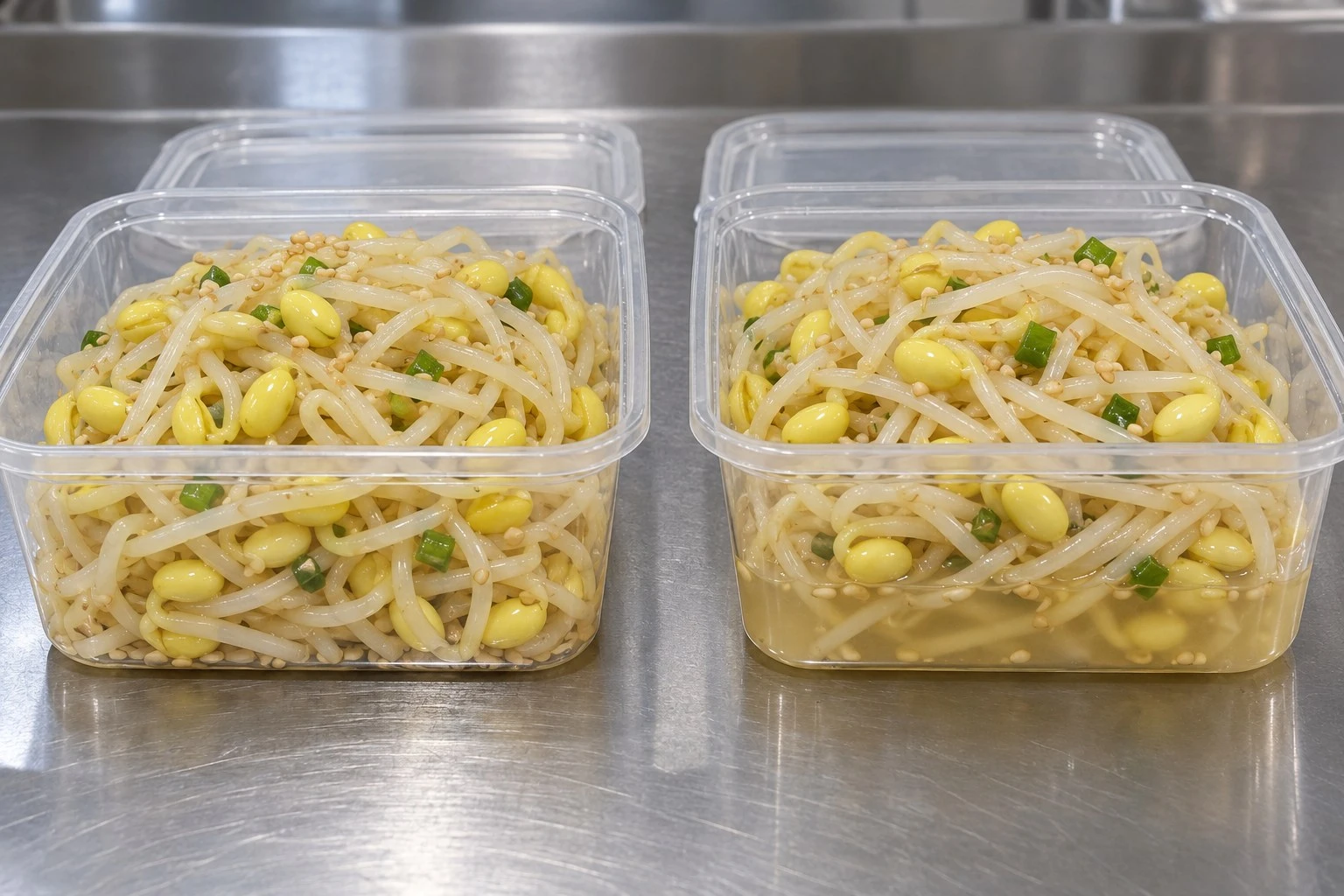
Assess free liquid in the actual serving pack using a consistent method.
Assess stems and heads after normal portion removal. Some samples look intact while undisturbed but break when lifted with tongs or chopsticks. Check whether the serving utensil retrieves a coherent portion without leaving detached heads behind. Compare the same serving method at the beginning and end of the proposed chilled period. A portion that requires vigorous stirring before every service may need a different formulation, pack or handling method.
Set chilled life from the finished product and its controlled process. Household recipe suggestions of several days are not a commercial shelf-life validation. The assessment should consider the ingredients, cook and cooling route, postcook handling, packaging and distribution conditions, with appropriate technical and microbiological input. Sensory acceptability can be the earlier limit, but a good sensory result cannot extend a safety-based limit. Retain the approved use-by and after-opening instructions with the pack.
Condensation and seal condition also deserve attention. Packing at a different temperature or with more residual moisture can change what collects beneath the lid. Inspect the actual package rather than assuming every wet lid reflects a spoiled product or every dry lid reflects a safe one. If a change in packing timing is proposed, assess its effect on both cooling and product quality. Packaging should support the approved process, not be used to conceal an inconsistent draining step.
Our sprout storage guide explains why product state and handling history matter. For the chilled side dish, maintain a separate finished-food record that begins with the actual cooking batch. Repacking or adding fresh garnish does not reset its age. The useful label gives the next handler a clear identity, required storage condition and applicable use limit, with the information traceable to the production record.
Portion and serve without repeated warming
Service can undo an otherwise controlled chilled process through repeated warming and handling. Plan the portion taken to the counter and keep reserve stock under its approved conditions. A small service container is often easier to manage than repeatedly opening a large production tub. The appropriate arrangement depends on the site's rules, equipment and expected demand; confirm those conditions instead of assuming that every cold banchan can remain on a table for the same period.
Use a dedicated clean utensil for the side dish and protect it between uses. Avoid returning food from a served plate to the reserve container. If a portion has entered a customer-facing area, its handling history differs from protected stock in refrigeration. Staff need a simple replenishment and discard procedure that prevents those histories from being mixed. The procedure should be easy to follow during a busy meal period.
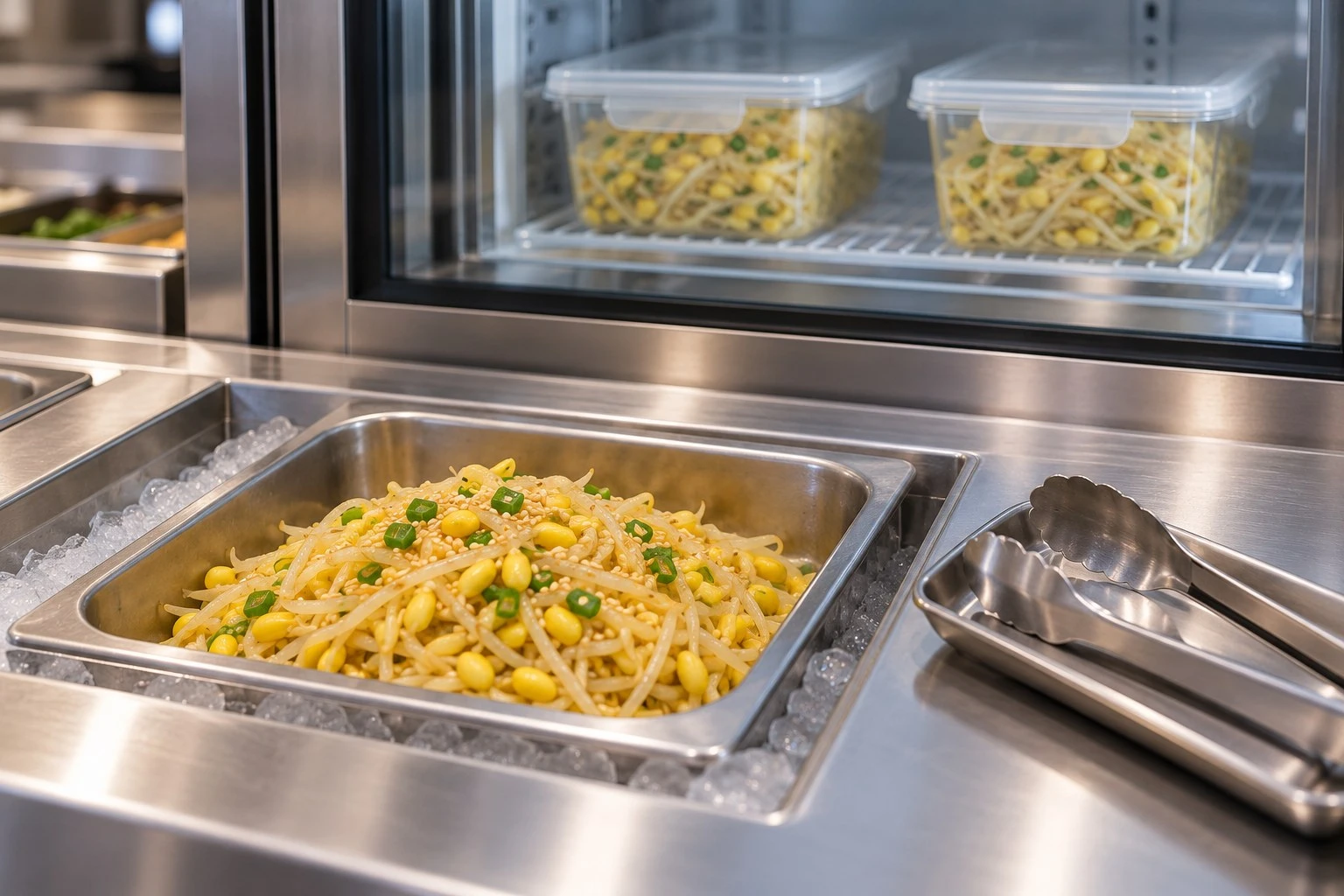
Keep reserve stock protected and manage the portion released for service.
Keep batches identifiable. Adding a new portion to a partly used service pan can obscure age and temperature history, especially when the food is visually similar. Follow the site's approved replenishment method and retain the earliest applicable limit where products are combined. The aim is to make the remaining food's status understandable to the next shift. A label on the original bulk tub does not help if the service pan has become detached from that record.
Check the meal context as well. Soybean sprouts may be served beside hot rice, grilled food or a cold salad. The position and timing can affect their serving temperature and perceived texture. If the product is a component of a packed meal, assess the complete assembly and distribution route. Placing a chilled component next to a hot item changes the conditions compared with storing it alone in a refrigerator, and the assembled product requires its own review.
Transport and satellite kitchens introduce another handoff. Confirm the container, loading condition, route duration and receiving procedure that the customer plans to use. The dispatch record should identify the batch and required conditions, while the receiving team checks that those conditions and package integrity remain acceptable. A supplier's frozen raw-material specification cannot stand in for instructions governing a cooked chilled dish traveling between kitchens.
Use service feedback to locate the stage causing a defect. If the reserve sample remains intact while the counter portion becomes watery and broken, examine portion handling and service exposure. If both fail similarly, look earlier at the input, cook, draining or formulation. Keep the required safety controls unchanged while testing quality improvements. This focused comparison is more useful than automatically adding more seasoning or asking for a different frozen lot without knowing where the result changed.
Approve the ingredient against the complete kitchen route
An effective approval trial follows the whole route from a representative frozen bag to the intended cold serving. Write down the product identity, processing state, incoming form and lot. Record the approved cook, draining method, cooling arrangement, dressing formula, pack and service conditions. These details allow a repeat trial to answer whether a later sample behaves similarly. A single photograph of a finished plate cannot preserve that information.
Choose a few measurements that matter to the buyer. Cooked drained yield helps calculate portions; attached-head retention describes appearance; free liquid after holding describes pack performance; the cooling record documents a separate process requirement. Define the sample and denominator for each measure. Counting detached heads and weighing broken material are different methods and should not be mixed into one unexplained percentage. The acceptance limits must come from the agreed application and process, not an invented industry norm.
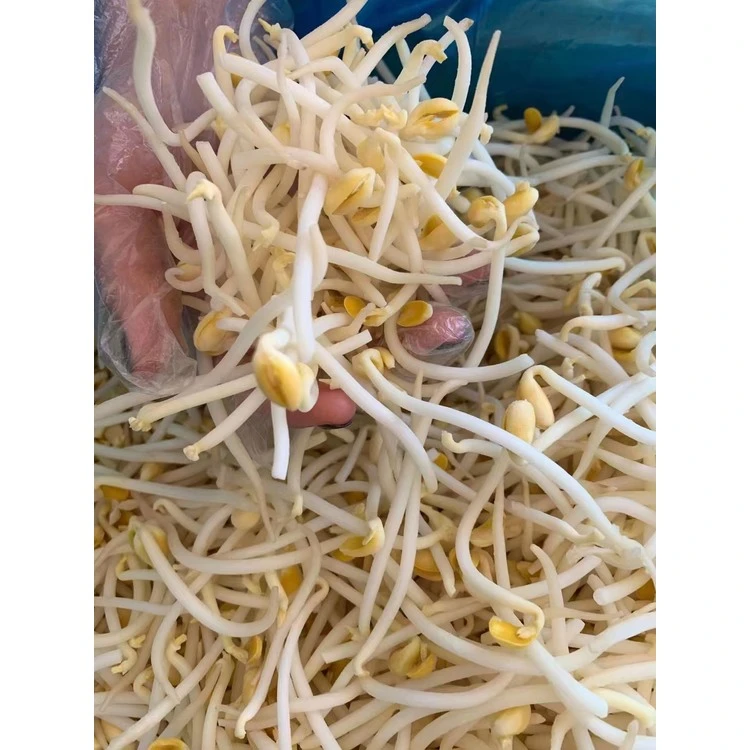
Agree head retention and stem condition against the identified sample.
A proposed comparison could use two representative sprout lots through the same approved recipe and equipment. Keep the seasoning ratio and pack fill constant, then compare the fully chilled portions at the intended service points. If one lot produces more loose heads or liquid, examine its incoming condition and processing information before drawing a conclusion. Repeat where the result is uncertain. This is a practical development design, not a claim that GreenLand has already performed the test for an unspecified customer.
Supply terms should support the kitchen's route. Inner-pack size can reduce partial-pack handling, while carton configuration affects receiving and freezer organization. Tell us the intended batch quantity, order volume, destination and shipment window so the available packing and schedule can be confirmed. A larger bag may reduce packaging cost but create an awkward load for the cooking or cooling equipment. Evaluate that tradeoff against usable portions and labor, not only the invoice price.
The GreenLand-food soybean sprout supply range keeps source identity, visible form and treatment status as explicit order questions. Agree the requested documents before purchase, including the specification, allergen information, preparation instructions, traceability and any applicable reports. A test report must match its scope and lot; a photograph remains a form reference. Confirm any ready-to-eat status separately rather than deriving it from an attractive frozen sample.
For repeat orders, retain the approved application record and identify the changes that require reassessment. A new sprout specification, different seasoning, deeper pan or revised packing route can affect the chilled result. Give the receiving and kitchen teams a clear route for reporting those changes. The purchasing objective is a whole, pleasant cooked sprout portion that the operation can cool, season and serve consistently within its approved controls.
Source frozen soybean sprouts with GreenLand-food
GreenLand-food is a professional frozen soybean sprouts supplier and manufacturer in China, providing factory-direct wholesale supply for importers, food manufacturers, foodservice distributors and private-label programs.
Send your product form, specification, packing, quantity, application, destination, private-label needs and requested documents. We help your purchasing team confirm the sample, order details and supply plan for the intended use.