


How to Cook Bean Sprouts Without Losing Crunch
Sep 07, 2026
Leave a message

Identify the bean before choosing the cooking method
If "sprouted beans" means whole germinated mung beans, chickpeas, kidney beans or another pulse, use the cooking instructions for that specific legume; the short stir-fry method for slender white sprouts does not apply. Soybean sprouts also need separate identification because their large bean heads and product instructions can change the cooking requirement. Preserve some bite through suitable raw material, small cooking loads and prompt service. Keep the required thorough cooking fixed while adjusting moisture and equipment; a short minute count cannot cover every sprout species, product or batch size.
White mung sprouts, soybean sprouts and germinated whole pulses need clear identification before a cooking instruction is selected.
Improve cooked texture through load size, draining and service timing while preserving the required complete heating step.
Approve frozen sprouts in their intended cooked dish and record liquid release, broken stems and the result after holding.
First identify which sprouted bean you have
The phrase sprouted beans covers several ingredients. White mung bean sprouts have long pale stems and small tips. Sprouted whole mung beans still look largely like green beans with short emerging roots. Soybean sprouts have more substantial yellow bean heads. Sprouted chickpeas and other whole pulses differ again in size and structure.
| Ingredient | Typical appearance | Cooking approach to select |
|---|---|---|
| White mung bean sprouts | Long pale stems, small yellowish tips | A thorough cooking method suited to tender sprouts |
| Soybean sprouts | Larger yellow bean heads and thicker structure | Product-specific cooking that includes the bean heads |
| Sprouted whole mung beans | Green seed bodies with short shoots | Cook as the specified sprouted whole legume |
| Sprouted chickpeas or other pulses | Substantial seed bodies remain | Use a reliable method for the actual pulse |
| Unknown mixed sprouted beans | Several seed types or unclear identity | Identify every component before choosing a method |
Check the pack rather than relying only on appearance. A mixture may contain an ingredient requiring a different process. If the name is unclear, ask the supplier what species and form are supplied. The useful first question is what is being cooked, not how quickly it can be moved through a hot wok.
Thorough cooking comes before crunch
Sprout production uses conditions that can also support harmful bacteria. FDA's produce guidance advises thorough cooking to reduce the risk from sprouts and recommends that people at higher risk avoid raw or lightly cooked sprouts. Washing is not a substitute for the required cooking step.
The texture goal is a thoroughly cooked sprout that still has some structure, not an uncooked center disguised by hot sauce. Control batch size, moisture and service timing to improve the result. A larger flame cannot guarantee thorough heating when the pan is overloaded and some material remains in a cool dense pile.
Follow the package's cooking directions and any applicable foodservice process requirements. For home cooking, heat the food thoroughly throughout; the UK Food Standards Agency's cooking guidance explains the importance of complete heating. A photograph of steam or a browned edge is not a validated commercial process. Food businesses should use a cooking procedure suitable for the actual load, equipment and product.

Prepare mung bean sprouts for a hot pan
Choose sprouts in acceptable condition and within the relevant package date. Keep them refrigerated until preparation. Discard slimy, deteriorating or objectionably smelling sprouts; do not rely on a stir-fry to rescue spoiled material. Check whether the pack is ready to cook and whether it gives washing instructions.
When rinsing is required, use clean running water and a clean colander, then drain well. Surface water affects the pan: a dripping load produces more liquid and can prolong the time needed to achieve the desired cooked texture. Drain as part of normal preparation without leaving the sprouts warm on the counter for an extended period.
Measure aromatics and sauce before heating. For a small trial, a restrained combination of garlic, a little neutral cooking oil and a modest amount of sauce lets the sprout texture remain visible. Prepare any meat or other ingredients through their own appropriate cooking steps. Do not let the sprout method become a shortcut for ingredients with different requirements, and keep raw-food utensils away from the finished dish.
A practical mung-sprout cooking sequence
This sequence is for identified white mung bean sprouts intended to be cooked. Follow the product's instructions if they specify a particular method or longer cooking requirement. Use a modest amount that the pan can move and heat evenly. The method is defined by thorough cooking, not a promise that all sprouts are safe after an identical number of minutes.
- Preheat the pan appropriately. Use a wok or broad skillet suited to the heat source and add a small amount of cooking oil. Avoid an overcrowded deep mound of ingredients.
- Prepare the aromatics. Add garlic or other aromatics at a point where they can flavor the dish without burning. If they color too quickly, adjust the heat rather than rushing the sprouts through undercooked.
- Add drained sprouts. Spread and turn them so the load heats evenly. Break up any compacted pile gently and keep the food moving through the heated area.
- Cook thoroughly. Continue until the entire batch is fully cooked and hot throughout, following the pack's directions. A cool center or raw-tasting portion means the batch is not ready.
- Finish with measured sauce. Add the amount needed for flavor and heat the combined dish thoroughly. Too much sauce can obscure a watery result and change the intended texture.
- Serve promptly. Transfer the cooked sprouts to a clean dish and serve under the appropriate hot-food conditions. Avoid an unnecessary long hold that softens the stems further.
For repeat cooking, record the load weight and the pan used. Timing from one small trial should not be transferred directly to a much larger batch. If the equipment cannot heat the load evenly, divide the work into smaller batches or choose a cooking method designed for the volume.
A product-specific timing example helps explain why a universal minute count is misleading. Waitrose's 300 g mung sprout pack gives a short stir-fry instruction after preheating and requires the result to be piping hot. That method belongs to the identified product and stated conditions. It should not be copied onto a kilogram of frozen sprouts, soybean sprouts or sprouted whole chickpeas.
For an original small-kitchen trial, weigh 250 g of suitable mung sprouts and prepare about one tablespoon of neutral oil, one small chopped garlic clove and a modest measured sauce portion. These quantities establish a manageable flavor trial, not a validated safety process. Use the pack's cooking directions and adjust the pan load if it cannot heat the sprouts evenly. Add delicate garlic at a stage where it does not burn before the sprouts finish cooking.
Record the finished weight and texture, then repeat only if needed to adjust sauce or batch size. Keep the required thorough cook unchanged. A useful recipe record includes the product identity and heating endpoint as well as the quantities; otherwise the attractive short ingredient list can hide the most important part of the method.

Why a crowded pan turns sprouts watery
Sprouts contain water, and a crowded pan also traps the moisture released during heating. When a large cold load reduces the pan's effective heat, the food can sit in liquid while the operator waits for the batch to finish. The result may be soft stems and uneven heating rather than the intended stir-fried texture.
Reduce the load and give the sprouts room to move. Drain rinse water properly and avoid adding the full sauce quantity too early without a reason. If other vegetables release substantial moisture, cook or manage them according to the recipe before combining the final dish. A one-pan method can still work, but its sequence should account for the different ingredients.
| Observed problem | Possible process cause | Adjustment to trial |
|---|---|---|
| Large pool of liquid | Wet input, large load or excessive sauce | Drain appropriately, reduce load and measure sauce |
| Some sprouts cool while others soften | Uneven contact and mixing | Use a smaller batch and thorough turning |
| Burnt garlic with undercooked sprouts | Aromatics exposed too early or heat poorly controlled | Change the addition sequence and heat control |
| Good at the pan, soft at service | Excessive holding | Cook closer to service or change the holding plan |
These are quality troubleshooting points. Any adjustment must preserve the required cooking step rather than trade it away for a drier-looking pan.
Soybean sprouts need a separate assessment
Soybean sprouts are not simply large mung bean sprouts. Their substantial bean heads affect the eating texture and the way the product cooks. Use the package or supplier's specific preparation instructions and ensure the whole ingredient, including the heads, receives the required cooking.
Check the product identity in a mixed vegetable order. A substitution from mung sprouts to soybean sprouts can change appearance, flavor, cooking behavior and ingredient declarations. It should be reviewed before entering an established menu or retail formula. Do not let a generic carton description such as "bean sprouts" conceal the species.
For foodservice trials, assess the bean head and stem separately after cooking. A hot stem does not tell the operator whether the larger head has reached the required condition. Keep the approved method with the identified product. If the supplier changes the ingredient, repeat the relevant trial rather than assuming the old mung-sprout process applies unchanged.
Sprouted whole beans are not a quick garnish
Whole germinated pulses retain a substantial seed body. Sprouting does not remove the need to identify the legume or follow an appropriate cooking method. A short toss in a wok that suits slender sprouts cannot be assumed to cook a sprouted chickpea or whole bean adequately.
For a packaged sprouted whole-legume product, follow the manufacturer's cooking instructions. For home-prepared material, use a reliable cooking method for the specific pulse and account for the sprouting stage without inventing a universal time reduction. Simmering, boiling or another prescribed method may be needed before the ingredient is added to a stir-fry or filling.
Hong Kong's Centre for Food Safety discusses natural lectins in beans and the importance of proper cooking. Red kidney beans are a particularly important example; they should not be treated like tender mung sprouts or placed raw into a low-temperature slow-cooking shortcut. If the pulse is unknown, identify it before cooking. A sprout tail is not proof that every original seed hazard has disappeared.
Choose soup, noodles or filling by texture
For noodles, thoroughly cooked mung sprouts can provide a lighter texture among denser ingredients. Add them at a stage that permits full cooking while avoiding unnecessary additional holding. Evaluate the finished noodle portion, because moisture from sauce and other ingredients can soften the sprouts even after the initial cooking step is correct.
For soup, cook sprouts in the hot preparation through an appropriate method. Do not assume that pouring hot broth over raw sprouts in a serving bowl reliably cooks every portion. The volume, starting temperature and time vary too much for that shortcut to serve as a general safety instruction. Follow a method that heats the ingredient throughout.
For fillings, some softening may be acceptable, while excessive free liquid can cause handling or texture problems. Measure the cooked filling's moisture behavior and cool it using the operation's controlled process if it will not be used immediately. The preferred sprout form depends on the final dish, not on an abstract goal of maximum crunch under every condition.
Cooking frozen mung bean sprouts
Frozen sprouts are usually better evaluated for cooked applications than as a replacement for the crispness of raw fresh sprouts. Freezing and subsequent handling can change stem texture and liquid release. The right question is whether the supplied product performs acceptably in the actual cooked dish.
For preparation details, see Can Bean Sprouts Be Frozen?.
Follow the product's cooking and handling instructions, including whether it should be cooked from frozen. Do not thaw a large pack on the counter to make portioning easier. Confirm any blanching or other processing information, but do not assume that "blanched" means ready to eat. An ingredient intended for further cooking still needs that step.
We supply frozen mung bean sprouts and review the intended cooked application before sample approval. Compare the frozen product with the current fresh route using the same final dish, portion and service hold. Record liquid release, broken stems and acceptable output. A raw visual comparison alone does not show the performance of either ingredient after a full production cycle.

Scale the cooking step for foodservice
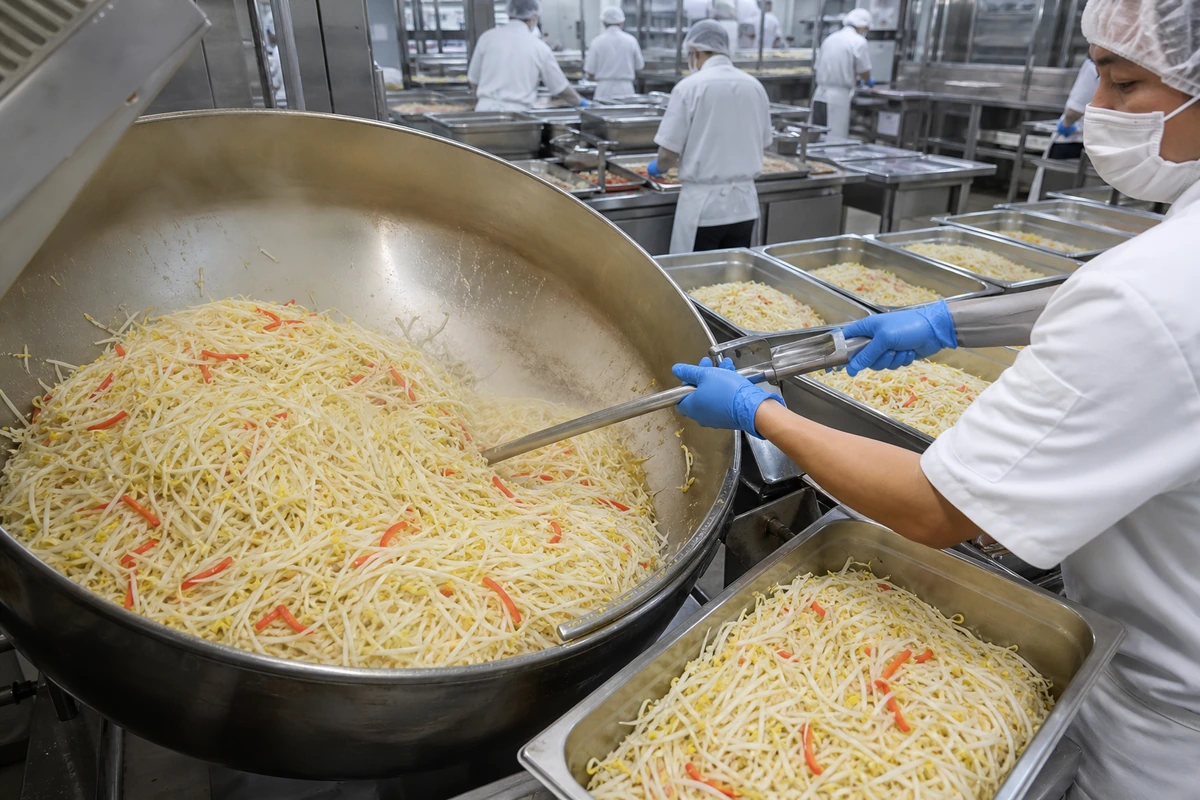
Scaling the ingredient weight does not automatically scale the cooking process. A wok suitable for two portions may not heat a ten-portion load evenly. A central kitchen needs equipment and a procedure matched to the batch, with checks appropriate to the food-safety system. Treat the larger run as a process trial rather than multiplying the small-batch time by an arbitrary factor.
Record load weight, starting condition, equipment, sequence and the method used to confirm complete cooking. Evaluate samples from different parts of the batch. Also record the time between cooking and service or the next controlled cooling step. Texture problems sometimes come from holding and transport, not from the initial cook.
Consider a noodle line that prepares a full tray far ahead of demand. Even a well-cooked sprout may become soft during the wait. Smaller scheduled runs, a different point of addition or a recipe designed for the required hold may produce a better result. Keep those quality improvements within the validated cooking and handling plan; reducing cook severity is not the default solution.
A central-kitchen trial should follow the dish through its actual service route. If the sprouts enter noodles that are portioned, transported and held before service, evaluate them after those stages. A sample taken directly from the wok answers only the first quality question. It does not show whether stems break during mixing or release liquid into the finished tray.
Keep the input weight and record acceptable output at the chosen stage. If the recipe drains liquid before filling, use the same method for each trial and account for the removed mass. If the liquid remains part of a soup, it should not be recorded as a loss simply because it is visible. The yield definition must follow the finished product.
Compare two realistic batch sizes when pan loading is a concern. Use the same identified ingredient and process requirements, then observe heating uniformity, liquid accumulation and the final texture. If the larger batch performs poorly, an equipment or scheduling change may be more useful than demanding a different sprout from the supplier. If both batches show the same unacceptable broken-stem or hull level, the physical specification deserves review.
Send those observations with sample feedback. A photograph of the cooked portion, the preparation method and a measured result allow a much more useful discussion than "not crunchy enough." They also help prevent a quality complaint from leading to an unsafe recommendation to cook less.
Buy sprouts with the right intended-use documents
An inquiry should name the species and form, not just "sprouted beans." For white mung sprouts, describe the required stem condition, seed-hull tolerance, broken material, packing and cooked application. If the product will enter a ready meal, identify the subsequent cooking stage and any customer restrictions that affect the specification.
Review the mung bean sprout product description with the required documents. Ask for the specification, intended-use and storage instructions, relevant lot information and the compliance evidence needed for the destination. A general certificate should not be assumed to describe the exact product's processing or release status.
We confirm sample and packing requirements against the proposed order. Send quantity, destination, delivery timing and private-label needs so MOQ, lead time and loading arrangements can be reviewed. Keep the approved cooking trial with the specification. That gives the purchasing team a clear basis for repeat supply and makes it easier to investigate a change in stem texture or liquid release.
Cool and store cooked batches correctly
Cook only what can be served or moved promptly into the next controlled step. If cooked sprouts will be retained, follow an appropriate cooling and refrigeration procedure and keep them separate from raw sprouts. Use clean containers and utensils, and do not mix a new cooked batch into an older container without an approved process.
For household leftovers, follow current food-safety guidance on prompt refrigeration and reheating, as well as any stricter product instruction. The Food Standards Agency's cooking guidance recommends eating refrigerated leftovers within 48 hours or freezing them and reheating only once. If the original pack says not to reheat, follow that instruction instead.
For commercial production, use the site's defined cooling, storage and reheating controls. A general article cannot set a validated shelf life for every mixed noodle dish or filling. Record the batch identity and relevant times so the next operator understands its status. Good texture begins with cooking well, but acceptable service also depends on what happens after the pan is turned off.

Questions about sprouted beans
Can a timing instruction for a chilled mung-sprout pack be used for frozen sprouts?
Not automatically. The product, starting condition and load differ. Follow the frozen ingredient's instructions and approve the cooking method for the actual equipment. A short chilled-pack example is not a universal process for every sprouted bean.
Should liquid released into soup count as sprout yield loss?
Only if the defined process removes it or the application rejects it. Liquid retained as part of an acceptable soup is different from liquid drained before a filling is portioned. Set the output stage before calculating yield and use the same method in each trial.
Source frozen mung bean sprouts with GreenLand-food
GreenLand-food is a professional frozen mung bean sprouts supplier and manufacturer in China, providing factory-direct wholesale supply for importers, food manufacturers, foodservice distributors and private-label programs.
Tell us the product form, required specification, packing and quantity, along with the application, destination and delivery timing. Include seed or cut preferences where relevant, private-label requirements and the documents your team needs. We will review the sample, MOQ, lead time and loading arrangement for the proposed order.