


Soybean Sprout Soup from Frozen: Bean-Head Doneness and Broth Clarity
Oct 19, 2026
Leave a message

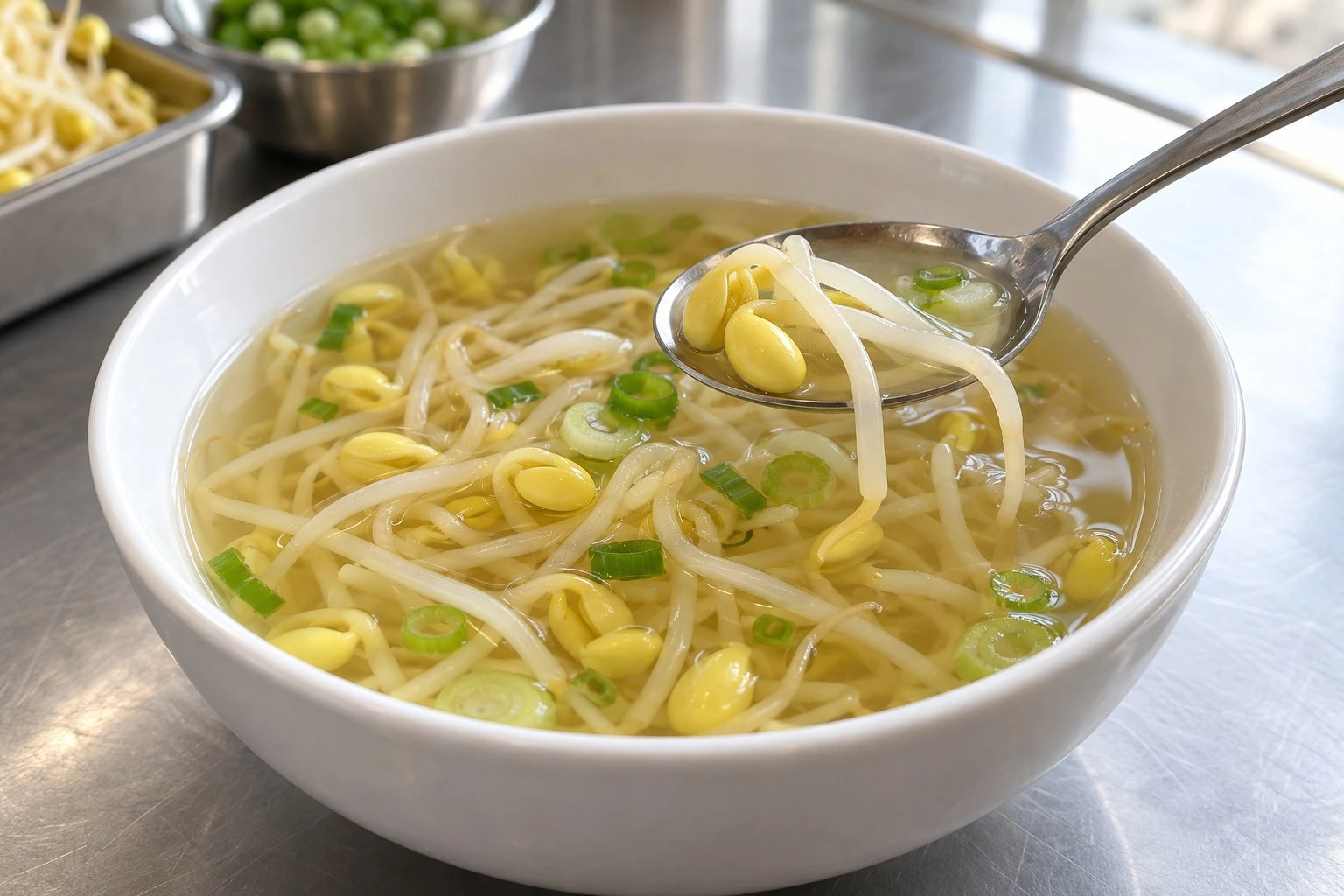
For a restaurant group or prepared-meal developer, the useful starting point is a labeled sample and its preparation instructions. Establish the broth separately, then test a measured frozen load through the actual equipment. Record head texture, stem breakage, broth appearance and usable portions. At GreenLand-food, we use those application requirements to discuss the ingredient specification; the final soup process still needs approval for the buyer's equipment, formulation and destination.
Start with the frozen sprout and its processing record
A bag marked "bean sprouts" leaves too much unresolved for a soybean sprout soup. Soybean sprouts come from Glycine max, while mung bean sprouts belong to Vigna radiata. The large yellow seed heads associated with soybean sprouts contribute a conspicuous part of the finished bowl. Ask for the species, product name and processing state in the specification, and connect that information to the sample lot. The photograph is useful for discussing form, but a photograph alone cannot settle botanical identity.
Processing state changes the trial. A product may have undergone washing and a quality blanch, or it may have a documented cooking treatment. Those descriptions have different implications. Obtain the instructions for the actual SKU and clarify whether it must be cooked from frozen, thawed under controlled conditions, or handled by another approved route. Freezing must never be treated as evidence that pathogens have been eliminated. Our frozen soybean sprout product page explains the information to confirm for an order.
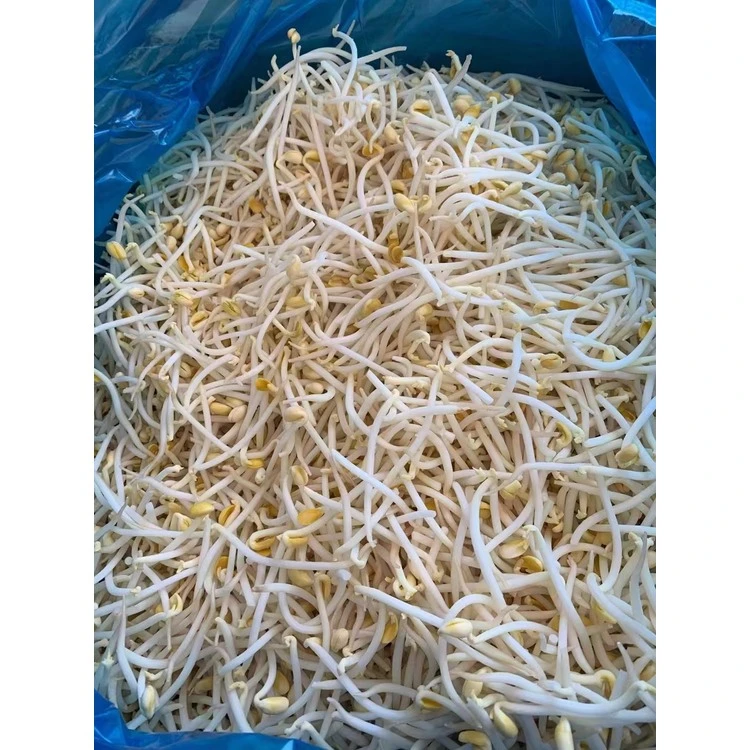
Use the visible form as a reference alongside the product specification.
Inspect a representative sample while its identity is still attached. Note the proportion of heads remaining on stems, detached heads, broken stems, loose skins and compacted clusters. A bowl with many detached heads may look less consistent even if its total vegetable weight matches the recipe. Fine fragments can also change what reaches the ladle and what settles at the bottom of the kettle. Record the condition before cooking so a defect introduced by handling can be distinguished from one already present in the bag.
The frozen format deserves an operational check. Free-flowing pieces and a compact block do not enter the broth in the same way. A block can keep its center cold while the outside separates, and forceful breaking can damage the stems. Specify the acceptable degree of clumping and the method permitted to separate it. Do not leave a frozen bag at room temperature simply to make it easier to portion. The agreed instructions should allow the kitchen to obtain a repeatable load without an improvised warm-up stage.
Choose a sample size that represents the intended purchase. One handful selected from the top of a bag can miss fragments or small detached heads concentrated elsewhere. For an application trial, agree where the portions come from and retain the original lot information. If multiple cases are involved, keep their identity visible until the comparison is complete. This makes a later discussion about broth sediment, head retention or inconsistent cooking much more precise than sending an isolated photograph of a disappointing bowl.
Set the broth character before adjusting the sprouts
Define what "clear broth" means for the dish before trying to correct it. A light anchovy-and-kelp soup, a vegetable stock, and a soup seasoned with darker soy sauce can all be appropriate choices, but they have different color and flavor expectations. Transparency and color are separate observations: an amber broth may still be transparent, while a pale broth may contain fine suspended particles. Write down the intended appearance in a plain bowl under ordinary service lighting.
Make a control stock without sprouts and keep a small reference portion for the trial. This lets the developer see what the base contributes before frozen ingredients are added. Use the same stock batch for comparisons and weigh the liquid rather than relying on an approximate pot level. Differences in evaporation, stock concentration or seasoning can otherwise be mistaken for differences between sprout lots. A simple photograph of the stock against a white background can support the written observation, provided the light and vessel stay consistent.
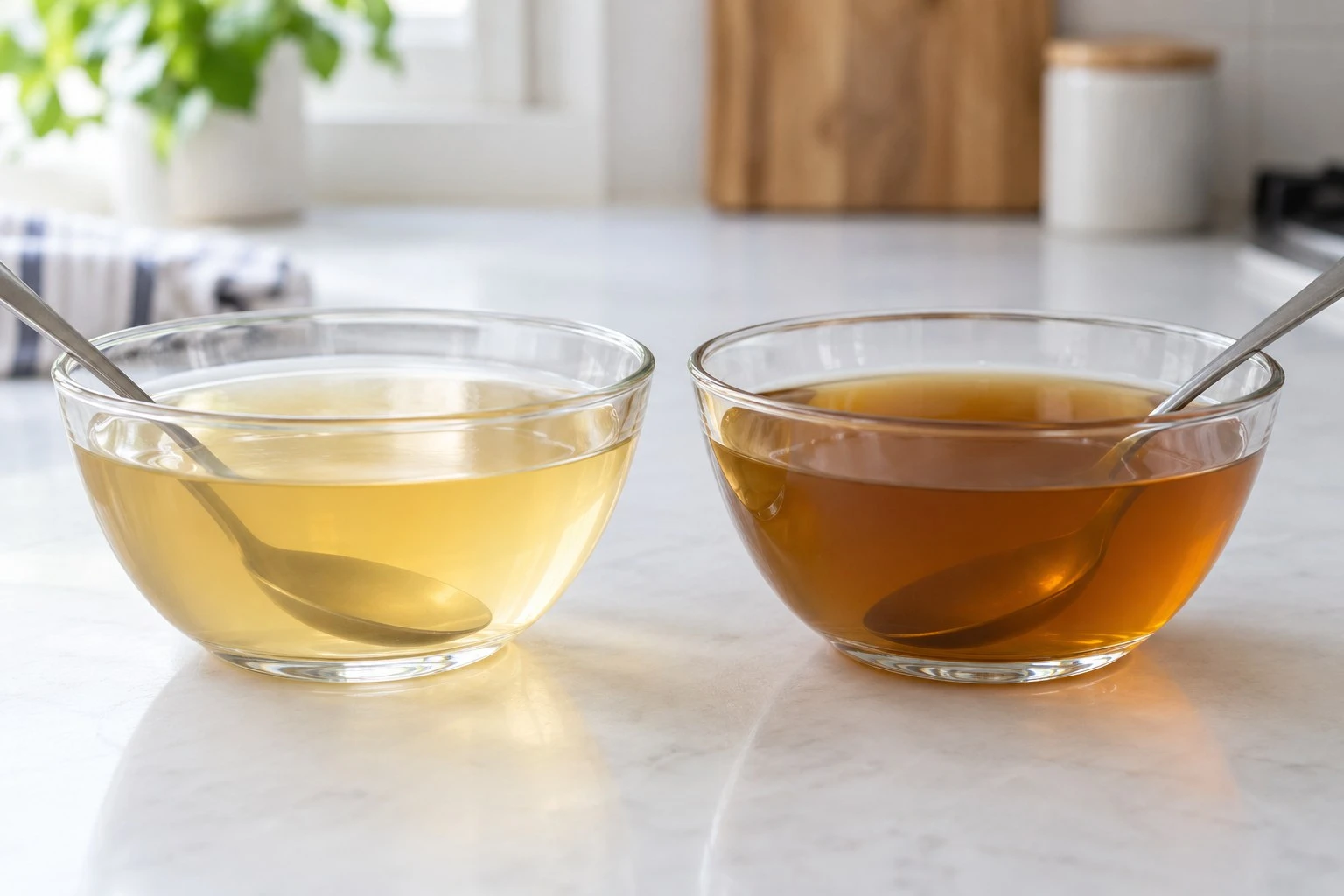
A darker stock can remain transparent; color and suspended particles are separate observations.
Strain stock ingredients to the finish the recipe requires. An anchovy pouch, a suitable sieve or another established kitchen method can limit loose stock particles. This is an appearance operation, not a safety treatment. Garlic fragments, ground sesame, chili flakes and finely broken kelp can remain visible by design. Decide whether they belong in the finished broth before setting a clarity limit that would reject the recipe's own seasonings. A lightly seasoned soup and a spicy version should have separate visual references.
Add measured seasoning when comparing samples. Soy sauce can darken the liquid independently of suspended material, while a sesame finish changes its surface appearance. Taste adjustments made freely from one kettle to another make the experiment difficult to interpret. Establish an initial formulation, prepare a consistent finished quantity, and then record any deliberate adjustment. If a customer wants a particularly pale broth, discuss the seasoning choice directly instead of promising that a different sprout grade will remove color introduced by the sauce.
Broth strength also affects how a sprout's bean character is perceived. A strong stock can hide an ingredient difference that becomes obvious in a lightly seasoned version. It is useful to taste the fully cooked sample in a restrained reference broth before testing the complete commercial recipe. This is a proposed development comparison, not a claim that every shipment requires the same sensory method. Select the approach that answers the buyer's actual question: whether the sprout delivers the required bowl at a workable portion cost.
Keep the broth specification connected to the menu. If rice is added, or the soup is converted into a more substantial meal, the final appearance and liquid behavior will change. Approve that formulation separately. A sprout accepted for a clear side soup has not automatically been accepted for every rice soup, chili soup or frozen ready meal bearing a similar name.
Cook the bean heads through without sacrificing the stems
The yellow head and pale stem should be assessed separately after the required cooking process. The head is a substantial piece of tissue; a stem that bends readily does not prove the head has reached the intended eating condition. For the quality assessment, take representative fully cooked sprouts from different parts of the load, allow the tasting portion to cool safely, and compare the head's bite with the stem's flexibility. Record whether heads are firm but pleasant, chalky, mealy, split or detached.
Sensory assessment comes after the food-safety requirement. FDA produce guidance identifies the particular microbial concerns associated with sprouts and advises thorough cooking; people at greater risk should avoid raw or lightly cooked sprouts. A pleasant smell, clear broth or tender head is not a microbial test. Food businesses need a suitable documented cooking procedure for the actual product and load, with whatever monitoring the process requires.
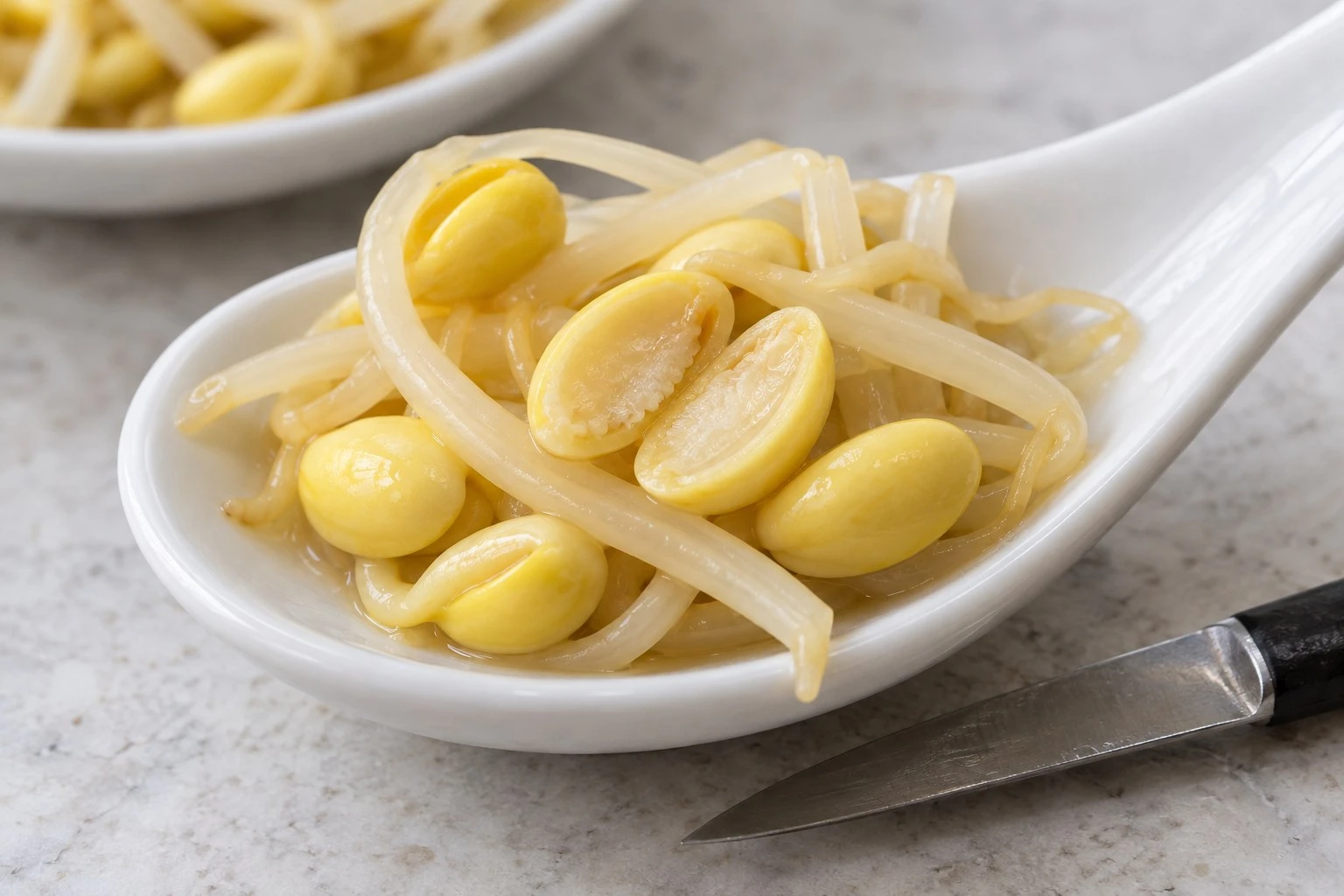
Check the cooked head and stem separately after the required heating process.
Recipe minutes vary because the products, starting temperatures, water quantities and methods vary. Published home recipes include both relatively short boiling routes and much longer soup cooks. None of those numbers establishes the correct process for an unfamiliar frozen commercial bag. Use the supplier's instructions and the site's approved process as the starting point. A frozen load that takes longer to return to the specified cooking condition cannot be evaluated by copying a fresh-sprout timer without checking what that timer measures.
When recording a trial, distinguish loading time, recovery time and the period at the required cooking condition. These are different events. Write down the starting broth quantity and temperature, frozen sprout mass, equipment setting and mixing approach. If the process defines a particular food-temperature endpoint, use a suitable calibrated instrument and measurement plan. Avoid using an arbitrary probe position that measures only hot liquid around an incompletely separated mass. The technical team should define where representative measurements belong.
Once the required cook is established, adjust quality through the variables that can legitimately change. A smaller load, a better-separated input or a shorter unnecessary hold may protect the stems while preserving complete cooking. Reducing the cook merely to retain raw crunch is not an acceptable fix. If the product cannot meet both the required process and the target texture, consider a different accepted raw-material specification or a different soup application rather than hiding the weakness beneath stronger seasoning.
A practical sensory record can use short descriptive anchors instead of a vague score alone. For example, "head remains attached and bites cleanly" communicates more than "texture: good." Record the stem separately as intact, flexible, excessively soft or broken. Keep one approved reference sample or reproducible photographic reference where the buyer's system permits it. This gives the supplier and kitchen a shared vocabulary when a later lot behaves differently.
Trace cloudiness to stock, particles and handling
Cloudiness should lead to an investigation of where material entered the liquid. Compare the stock control, the soup immediately after cooking and the soup at service. If the control was already cloudy, start with stock preparation. If fine particles appear after adding sprouts, inspect loose skins, broken heads and the handling method. If the broth becomes less clear during holding, examine continued agitation, ingredient breakdown and how the kettle is replenished. The observation identifies a possible source; it does not prove a single cause.
Loose skins can be especially visible in a pale soup. Ask how the supplied product is sorted and what level of residual seed coat is accepted. If preparation instructions include rinsing or another removal step, carry it out under the specified hygienic conditions and record any loss. Do not introduce a repeated thaw-and-rinse operation simply to polish the appearance. Extra handling changes the product state and can make both yield and the cooking route less consistent.
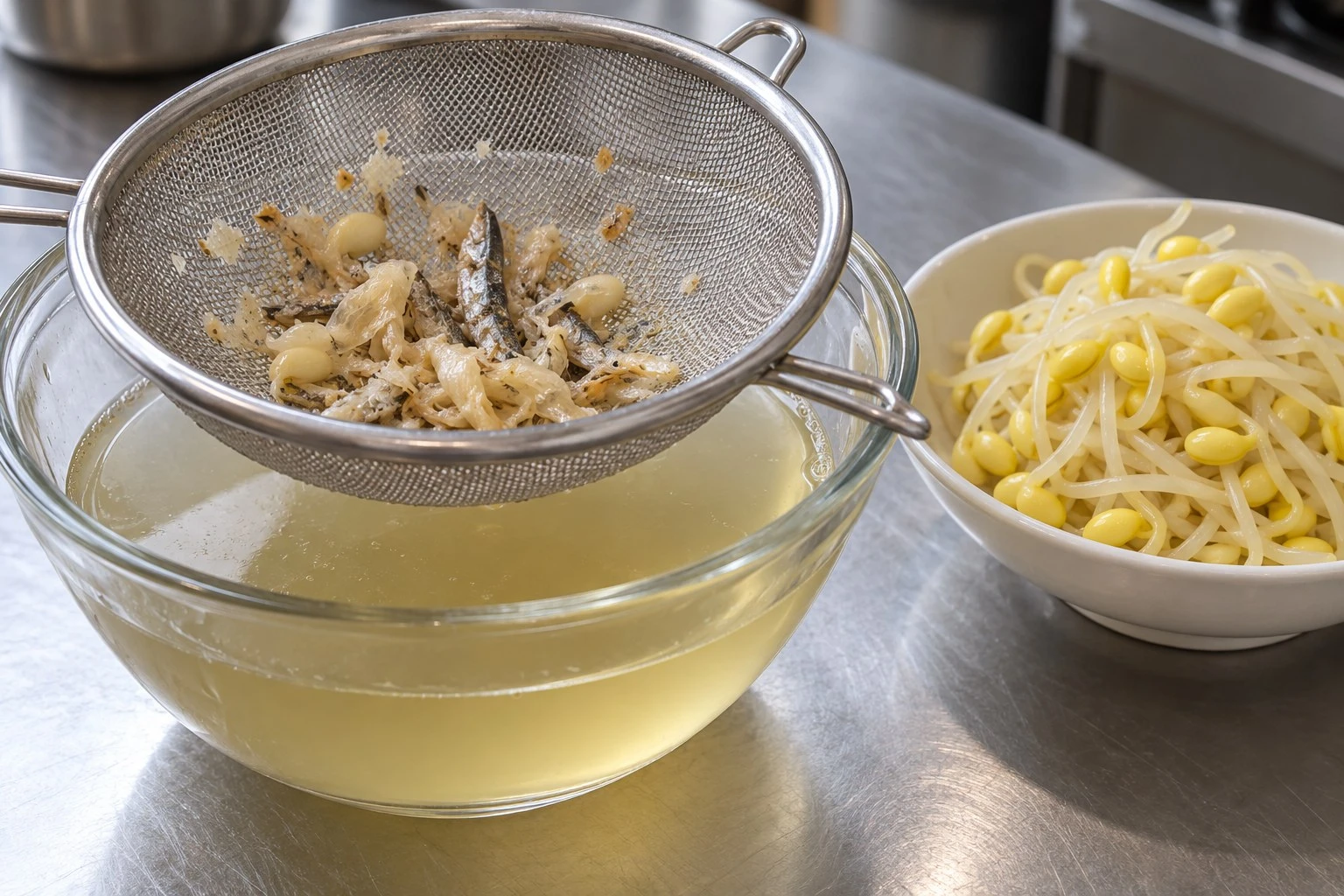
Loose skins and stock particles can change the broth's appearance.
Mechanical damage can create a similar problem. Aggressive stirring, crushing a frozen cluster or scraping a dense load against equipment may detach heads and break stems. During the trial, observe how the product moves through the kettle and ladle. A mixing action that works for a sturdy diced vegetable may be unnecessarily severe for long sprouts. The goal is an evenly heated, manageable load with enough movement for the approved process and no avoidable physical damage.
Use a consistent visual method when comparing broth samples. Place equal volumes in identical clear vessels or the actual serving bowls, use the same light and background, and inspect after the same settling period. Note floating skins, suspended fine material and sediment separately. A photograph taken through a deep, dark vessel can exaggerate differences from one taken in a shallow white bowl. If instrumental turbidity is proposed, define the method and acknowledge that oil, spices and colored stock affect its interpretation.
Clarification also has a cost. Removing fragments can reduce the mass available for portions, add labor and alter the flavor expected from the recipe. Measure what is removed instead of reporting only that the soup looks cleaner. If the kitchen strains the cooking liquid and recombines it with cooked sprouts, the process needs its own handling and temperature controls. There is little value in improving appearance through a transfer step that the service team cannot execute consistently.
Some fine haze may be acceptable in the intended style. Establish the limit from a realistic approved bowl and the customer's expectations. Neither complete transparency nor a small amount of cloudiness is a safety verdict. If an unusual appearance arrives with an unacceptable odor, packaging problem or handling history, follow the site's rejection procedure rather than trying to diagnose safety from the broth alone. Appearance review belongs alongside the required process and ingredient records.
Scale the kettle by load and recovery time
A larger kettle does not behave like a small saucepan with every quantity multiplied. Its heating surface, mixing pattern, fill depth and available energy affect recovery after loading. Define the maximum frozen input for the equipment, including the worst normal starting condition permitted by the specification. Observe whether the sprouts separate promptly or remain as dense bundles. A successful small demonstration is useful for flavor development, but the operating batch must be checked at the size actually used.
Weigh both the stock and sprouts. A nominal bag weight may be convenient for scheduling, yet portion consistency depends on what goes into the vessel and what remains usable afterward. Keep packaging losses, any permitted preparation loss and removed fragments distinct in the record. For a soup specification, the final solids portion and liquid portion matter separately. A larger final soup weight can simply reflect more broth, while the number of acceptable sprout portions remains unchanged.
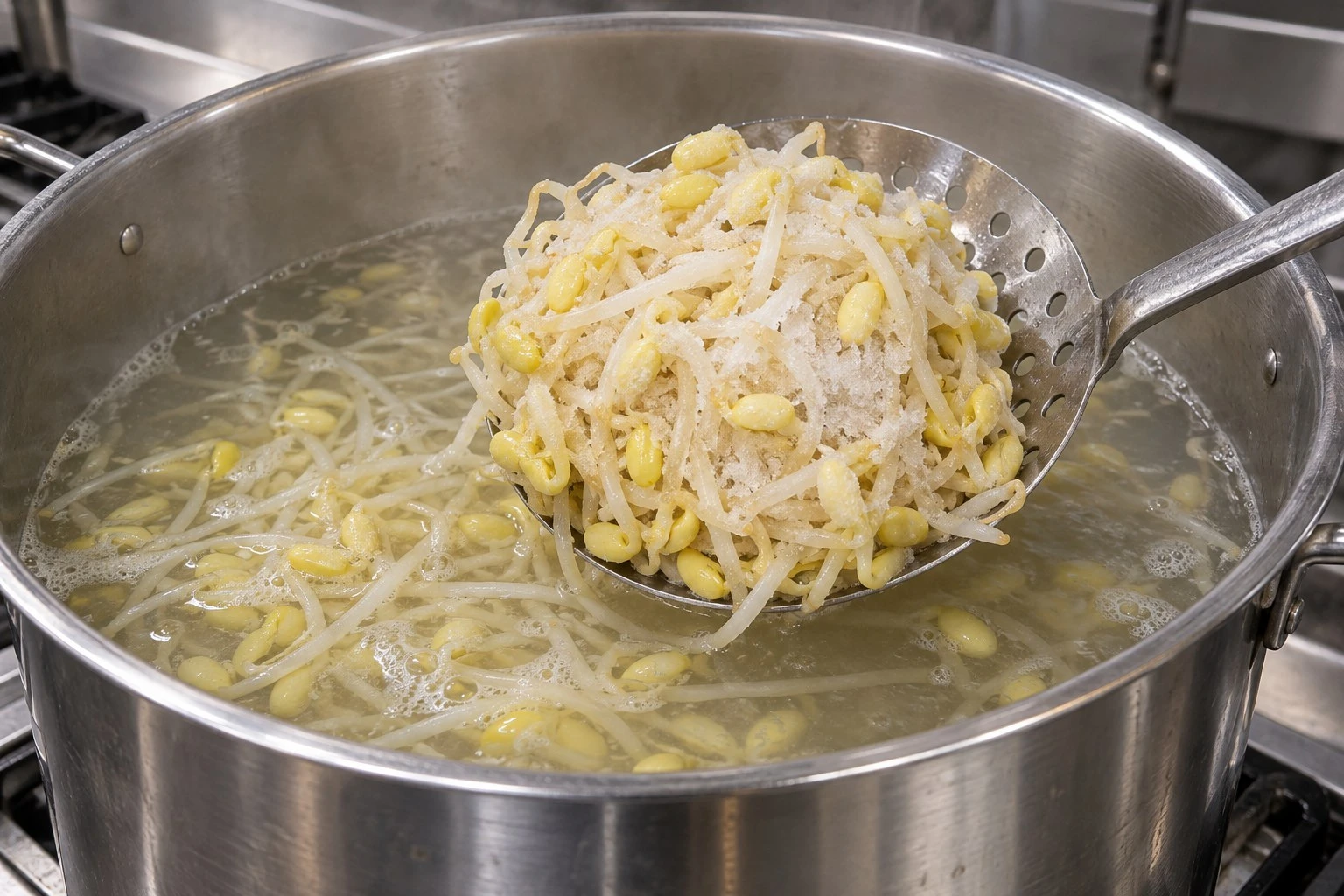
A compact frozen load needs a process that covers separation and heating throughout.
Build a trial around one question at a time. Compare two load sizes using the same lot, broth and equipment before changing the recipe. Then assess whether a different accepted sprout form or preparation condition improves separation. Changing stock strength, mixing speed and load together can produce a better bowl without revealing which change helped. A short, well-defined comparison is easier to repeat during routine production than an elaborate test with uncontrolled differences.
Record the usable finished output with its denominator. As a hypothetical example, if 10 kilograms of frozen input gives 8.2 kilograms of cooked, drained sprouts under a stated assessment method, the measured drained yield is 82 percent. This is arithmetic for describing a trial, not a GreenLand performance guarantee. The result depends on the product, cooking, draining and what counts as acceptable material. The same input may produce a different number when liquid clinging to the sprouts is included.
For a ladled soup, assess distribution across the service period. Long stems can gather around a utensil, while detached heads may settle. Take portions from the beginning, middle and end of a controlled trial and compare their solids content and appearance. A batch that meets the total ingredient target can still serve inconsistent bowls. The remedy may involve the ladle, gentle mixing or the batch size rather than a change in purchased weight.
Finally, check that staff can reproduce the approved route. A procedure dependent on one operator's instinct is difficult to transfer across shifts or sites. State the load, preparation, cooking endpoint, handling and service conditions in a form the kitchen can use. Keep the record specific enough to identify a deviation without turning a sensory preference into an invented universal tolerance.
Protect the result through holding and service
The bowl served to the customer is the meaningful quality endpoint. Sprouts can continue to soften during an extended hot hold, and broken heads or fine material may become more visible as the kettle is stirred repeatedly. Test the planned service interval rather than judging only the first bowl. Evaluate broth flavor, attached heads, stem integrity and portion consistency at the points that represent normal service. Keep safety controls fixed while comparing the sensory result.
Follow the applicable hot-holding rules and the site's process. The FDA Food Code is a model used by jurisdictions for retail and foodservice rules; it is not a universal export specification or a cooking validation for soybean sprouts. A buyer must establish which provisions and local requirements apply to its operation. The supplier's frozen-storage instruction also cannot be reused as a holding instruction for the finished soup.
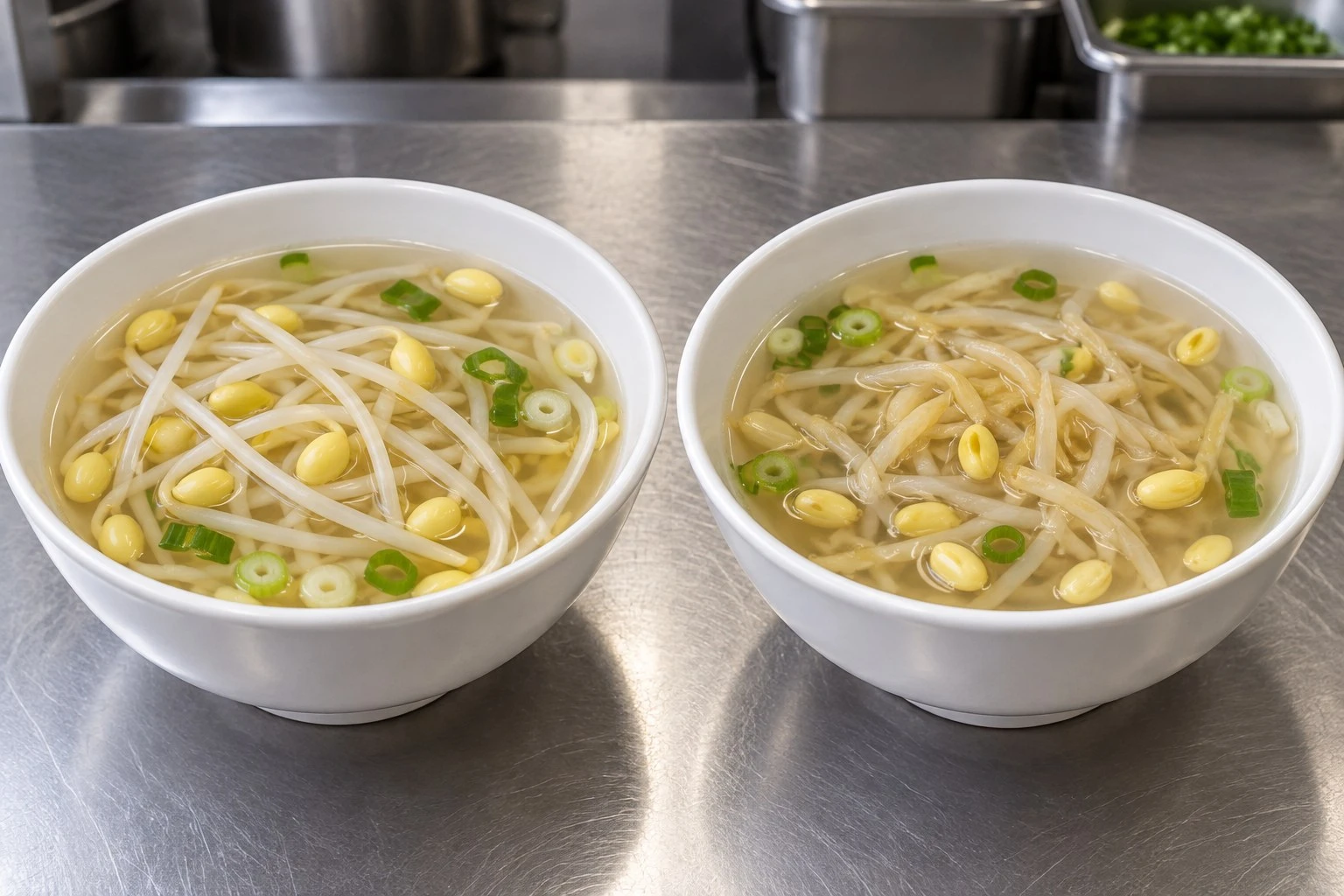
Compare head retention and stem integrity at the intended service point.
Batch planning can improve the served texture. Smaller scheduled batches may reduce the time the earliest sprouts spend in the kettle. Separate handling of broth and cooked sprouts may suit some service systems, but it creates additional transfers and needs an approved procedure. Assess the complete route before adopting it. A method that looks attractive in a demonstration can become impractical when staff must portion quickly while maintaining food temperature and preventing contamination.
Avoid repeatedly adding a new frozen load to a partly served kettle without a defined process. That changes temperature, broth concentration, product age and cooking exposure at the same time. It also makes it difficult to know which sprouts have completed the required cook. Use identifiable batches and a replenishment method that the kitchen's food-safety system can verify. Keep finished-food utensils separate from those used for unopened or uncooked ingredients.
If soup is cooled for later service, it becomes a separate process assessment. The cooling equipment, container depth, storage period and reheating method need approval for that product. A domestic recipe's leftover advice does not establish a commercial chilled shelf life. Our bean sprout storage guide explains why raw, frozen and cooked products require distinct handling decisions. Use it for background while retaining the finished soup's own instructions.
Packaging changes the quality assessment again. A takeaway bowl or sealed meal tray traps the product in a particular liquid volume and may experience transport before eating. Test that intended journey using the accepted conditions, including the actual fill and serving format. A clear soup that performs well at the kitchen pass may arrive with softer stems or uneven solids distribution. Approve the delivered eating experience with the same care used for the initial recipe.
Approve a soup specification with a representative lot
A useful soup specification describes the ingredient and the outcome the buyer is trying to achieve. State soybean identity, processing status, expected head retention, stem condition, loose-skin allowance and acceptable frozen separation. Define how those features are assessed and connect them to a representative application trial. Avoid asking a supplier to guarantee "perfectly clear broth" without specifying stock, seasoning, cooking and handling; much of that result belongs to the buyer's recipe.
For the sample discussion, provide the intended soup style, approximate batch size, equipment type and service route. Include whether sprouts enter frozen and whether the soup is served promptly, hot-held or packed for later use. These details explain why a particular defect matters. A detached head may be less noticeable in a dense mixed meal than in a small clear soup bowl, while long tangled stems may complicate portioning even when their appearance is attractive.
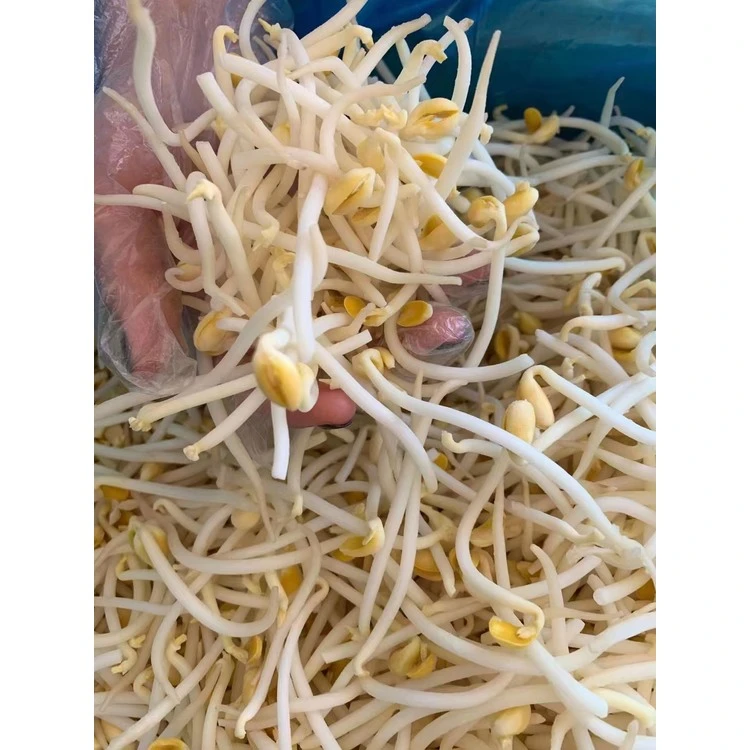
Agree head retention and stem condition against the identified sample.
Agree the acceptance basis before comparing prices. A low cost per kilogram can be offset by removal loss, breakage, additional labor or poor portion consistency. Compare cost per usable portion under the same trial method. Keep calculations transparent and label estimates as estimates. If the buyer has only bench-scale results, retain that limitation until the operating batch is tested. Neither the supplier nor the kitchen benefits from a yield promise built on an unrepresentative handful.
The commercial file should match the technical approval. Confirm inner-pack size, carton configuration, quantity, requested shipment window and destination. Pack size should support the kitchen's planned load and reduce repeated opening or partial-pack handling. Current availability, lead time and any requested private-label arrangement need confirmation for the order. We can use the soybean sprout supply range as the starting point for those discussions, with the signed specification controlling the actual SKU.
Keep relevant documents connected to the lot. The buyer may require a product specification, ingredient and allergen statement, traceability details, preparation instructions and agreed test reports. A report should identify what was tested, which lot it represents and the method used. A microbiological result and a sensory approval answer different questions. Neither should silently replace process evidence or the other part of the receiving decision.
Use repeat orders to check consistency against the agreed reference. When a later delivery produces a different bowl, compare the incoming condition and process record before assigning the cause. Head retention, frozen clumping, stock preparation, load and service time all deserve attention. The strongest purchasing decision is a soybean sprout specification that the kitchen can cook thoroughly and reproduce in the intended soup, with a clear route for reviewing any material change.
Source frozen soybean sprouts with GreenLand-food
GreenLand-food is a professional frozen soybean sprouts supplier and manufacturer in China, providing factory-direct wholesale supply for importers, food manufacturers, foodservice distributors and private-label programs.
Send your product form, specification, packing, quantity, application, destination, private-label needs and requested documents. We help your purchasing team confirm the sample, order details and supply plan for the intended use.