


How to Store Bean Sprouts
Sep 07, 2026
Leave a message
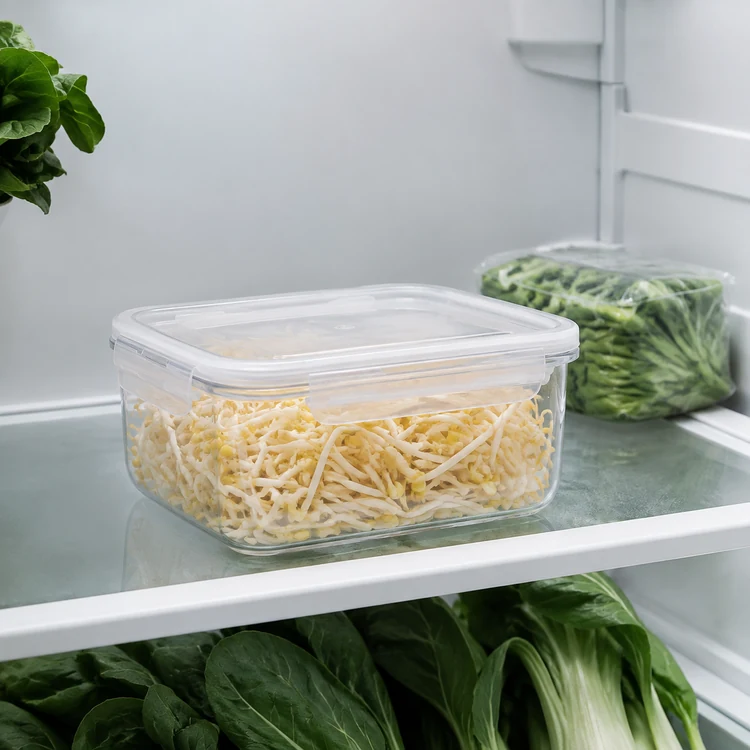
The label and cold history come before a freshness trick
Buy only what you expect to cook soon; do not assume that changing soaking water, adding a paper towel or freezing the pack creates a new safe storage period. Fresh-looking sprouts can still carry harmful bacteria, so appearance cannot replace their handling history or required cooking. Frozen mung bean sprouts need a separate storage plan and are best assessed in the cooked application for which they are supplied. Record opening information when it creates an earlier limit than the printed date. Changing containers does not reset the age. If a large pack repeatedly leaves unused stock, review the pack size before adding more handling steps.
For preparation details, see How to Cook Bean Sprouts Without Losing Crunch.
Follow the earliest applicable package limit and keep sprouts refrigerated; opening a pack does not extend its original date.
Water changes, absorbent material and rinsing may affect appearance but do not establish a new safe storage period.
Evaluate frozen sprouts as a separate cooked ingredient and choose inner packs that reduce unnecessary partial-pack handling.
Start with the package and purchase condition
Storage begins before the sprouts reach the refrigerator at home or at work. Choose an acceptable pack from refrigerated storage, inspect its condition and read the date and instructions. Avoid damaged packaging, objectionable odors, sliminess or visibly deteriorated sprouts. A low price does not make an unsuitable pack a good candidate for a storage experiment.
Identify the product as well. White mung bean sprouts, soybean sprouts and germinated whole beans have different physical characteristics and may have different instructions. A pack described broadly as sprouts should still tell the buyer what it contains. Keep that information with the product if it is transferred to another container.
Plan the journey and receiving process so refrigerated sprouts are not left warm while other errands or unloading tasks are completed. For a business, record the supplier and lot information required by the site's system and check the agreed delivery conditions. The remaining usable period depends partly on what happened before opening, not only on the storage method chosen afterward.
A short raw-sprout storage routine
Use the original packaging when its instructions call for that, or transfer the sprouts to a clean food-safe container where appropriate. The aim is protected cold storage with minimal unnecessary handling. A new container does not reset the product's age or change its original use-by limit.
- Read the instructions. Identify the storage temperature, use-by date, after-opening limit and cooking requirement. Follow the earliest applicable limit.
- Refrigerate promptly. Use 4°C or below as a domestic target and keep the sprouts away from raw-food drips or dirty packaging.
- Keep the pack identifiable. Retain its product and lot information, or transfer that information when using another container.
- Handle only the needed portion. Use clean utensils and return the remaining product promptly to refrigeration. Avoid repeated warm exposure during service.
- Prepare and cook as directed. Rinse when required by the product instructions and drain for the chosen cooking method. Do not confuse washing with a microbial kill step.
- Discard unsuitable stock. Reject spoiled material or stock with an unacceptable time and temperature history rather than trying to revive it.
If the pack is specifically designed for its storage conditions, avoid adding water or changing the packaging without a reason. A household storage tip may alter the environment the manufacturer used to establish its instructions. The safest default is to follow the product information and use the sprouts promptly.

How long do bean sprouts last in the fridge?
There is no dependable universal answer in days for every pack. Use the supplier's date and after-opening instruction, whichever is earlier, and reject unsuitable product before that limit if necessary. Raw sprouts are highly perishable, so plan them as a prompt-use ingredient rather than a vegetable to keep through several uncertain weeks.
For a concrete example, Waitrose's mung bean sprout pack instructs refrigerated storage and use within one day after opening without exceeding the use-by date. That instruction belongs to that product; it is not a universal shelf-life specification for all fresh sprouts. Always check the current pack because product information can change.
| Situation | Useful decision rule |
|---|---|
| Unopened retail pack | Follow its refrigeration and use-by instructions |
| Opened pack | Apply the stated after-opening limit and original date |
| Loose sprouts with little history | Ask the supplier and plan prompt cooking; do not invent a long hold |
| Cooked sprouts | Use a separate cooked-food cooling and storage plan |
| Frozen sprouts | Follow the frozen product's storage and use instructions |
UC Davis's postharvest sprout guidance describes storage potential under defined commercial conditions. Such figures should not be copied as a home-fridge guarantee. Temperature, initial condition, packaging and handling are part of the result, and a household container may not reproduce those conditions.
Consider an illustrative package with a use-by date on Wednesday and an instruction to use within 24 hours after opening. If it is opened on Tuesday morning, the after-opening limit falls on Wednesday morning, not at some newly chosen point later in the week. If it is opened very late on Wednesday, the original use-by date still controls; opening does not grant another full day beyond it. Always apply the actual label and local date convention.
This is why an opening record is useful even when the package already has a printed date. It captures a second limit that may become earlier than the original one. Keep the record attached to the product or its identified container and make the meaning clear to the next person using it.
Loose sprouts require a different information check. Ask the seller about intended use and storage rather than assigning the remaining life of a different branded pack. If the history is limited, buy a small amount for prompt cooking. The absence of a printed date is not evidence that the product lasts longer.
For storage and handling details, see How Long Do Frozen Vegetables Last?.
Dry storage versus water immersion
Some household methods keep sprouts in a container with absorbent material; others submerge them in water and change the water regularly. These methods can affect visible freshness and surface moisture, but neither establishes a new microbiological safety limit. A sprout that remains crisp in water can still have an unsuitable age or handling history.
For routine storage, follow the package rather than automatically adding a water bath. If the product requires rinsing before cooking, rinse the portion at preparation and drain it appropriately. Avoid leaving the entire pack wet and warm on the counter while other ingredients are prepared. Extra handling creates more opportunities for contamination and makes the storage history harder to control.
| Method question | Quality issue | Safety boundary |
|---|---|---|
| Add absorbent material? | It may manage excess surface moisture | It does not extend the use-by instruction |
| Immerse in water? | It changes the storage environment and handling needs | Clear water does not prove safe sprouts |
| Rinse before storing? | It may add moisture if poorly drained | Follow the pack; washing is not sterilization |
| Change containers? | It can improve organization | Preserve identity, dates and cold conditions |
For a commercial operation, any changed storage method should be part of the site's validated or otherwise justified process. A popular online technique should not override a manufacturer's instructions or the operation's food-safety controls simply because it makes the sprouts look better.
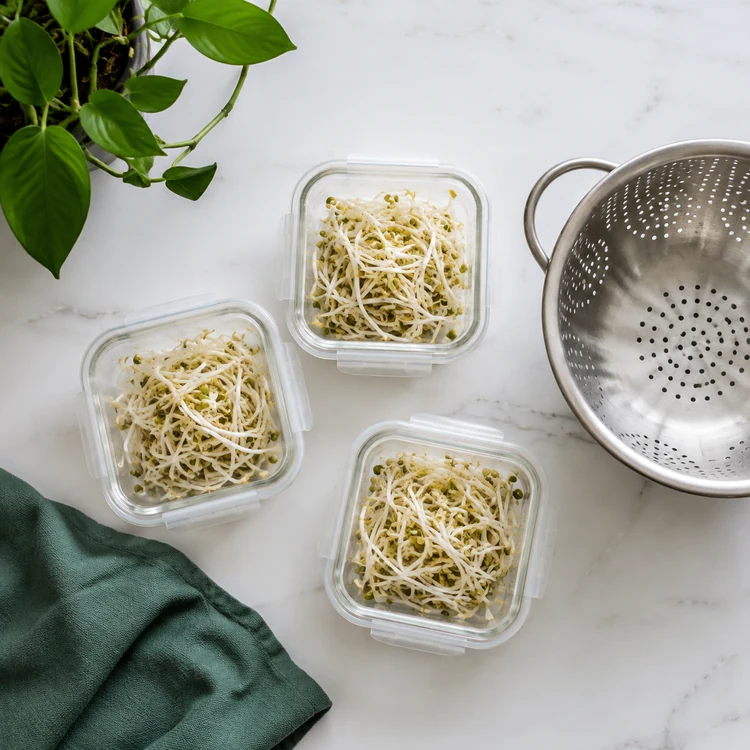
Why appearance cannot certify safety
Sprouts can be associated with harmful bacteria because germination conditions support both the plant and microbial growth. FDA's produce safety guidance explains the risk and advises thorough cooking, with particular caution for people at higher risk. A rinse cannot reliably eliminate that risk.
Use appearance to reject obvious deterioration, not to approve an unknown history. Sliminess, mold, objectionable odor or substantial breakdown are reasons to discard the product. The absence of those signs does not establish that it has been kept cold or remains within its instructed use period. Do not taste a questionable sprout as a test.
Keep the quality and safety decisions connected but distinct. A kitchen may reject a safe, properly handled product because its texture is unsuitable for a premium dish. It should never approve a potentially unsafe product merely because its stems remain white and crisp. A receiving or opening record makes this distinction easier by providing evidence beyond what can be seen in a bowl.
Keep raw and cooked sprouts separate
Use separate clean containers and utensils for raw sprouts and the cooked product. Do not return cooked portions to the raw pack or reuse a raw-food bowl without the appropriate cleaning. The purpose of cooking can be undermined if the finished food is immediately exposed to the raw ingredient or contaminated equipment.
Cooked sprouts need their own cooling and storage decision. If they are not served promptly, follow the applicable controlled process and retain the batch identity. A mixed noodle dish or filling may have additional ingredients that affect its handling requirements. Do not assign it the raw sprout pack's remaining life as though the cooking step simply restarts the same date.
For home leftovers, follow current guidance on prompt refrigeration and thorough reheating, and respect any stricter package instruction. For foodservice, use the site's established cooling, holding and reheating controls. Keep only quantities that the operation can handle properly. The best way to avoid a complicated leftover decision is often to cook smaller batches closer to the time they will be served.
Plan batches to reduce discarded sprouts
Track how much is opened, cooked and discarded. A kitchen that repeatedly throws away half of a large pack may have a pack-size problem rather than a need for a more elaborate storage hack. Calculate the quantity used in a normal service period and compare it with the available inner pack sizes.
For example, a menu using 150 g per batch and preparing four batches per day needs 600 g before any measured process loss. Opening a much larger pack creates a remaining-stock decision that must fit the actual after-opening instructions. This is a planning example, not a suggested portion size or storage allowance. Use the kitchen's own recipe and demand figures.
Schedule preparation around predictable demand and retain flexibility for quieter periods. If two dishes use the same identified sprouts and compatible processes, a coordinated menu can improve turnover. Do not invent a new dish at the end of the storage period merely to avoid discarding unsuitable stock. Waste prevention works best before purchase and opening, while the product is still within a clear plan.
Pack-size planning can be made visible with an opening log. Record the pack size, the amount removed for each batch and what remains when the applicable limit is reached. Repeat over normal busy and quiet days. This shows whether waste comes from excessive purchasing, a mismatch between pack size and recipe use, or a service forecast that routinely overestimates demand.
Suppose a kitchen uses an illustrative 600 g on a normal day but opens a 2 kg pack that must be used promptly under its instructions. The remaining 1.4 kg needs a real approved use plan; it should not be assigned extra days because the kitchen dislikes the waste. Smaller packs, coordinated cooking schedules or a separately qualified frozen route may be more appropriate. Compare the cost of those options with the actual discarded quantity.
Keep quality complaints separate from unused stock. If sprouts are discarded while still acceptable because too much was opened, the remedy differs from a delivery arriving with deterioration. Record both reasons rather than combining them into one waste percentage. The supplier can address an incoming quality issue, while the kitchen controls its opening and scheduling decisions.
Review the result with the people who place orders and the people who cook. A purchasing change that looks economical on the invoice can make the kitchen's daily routine harder. Conversely, a slightly different inner pack can reduce handling enough to justify its cost. The best storage improvement may happen before the refrigerator door is opened.
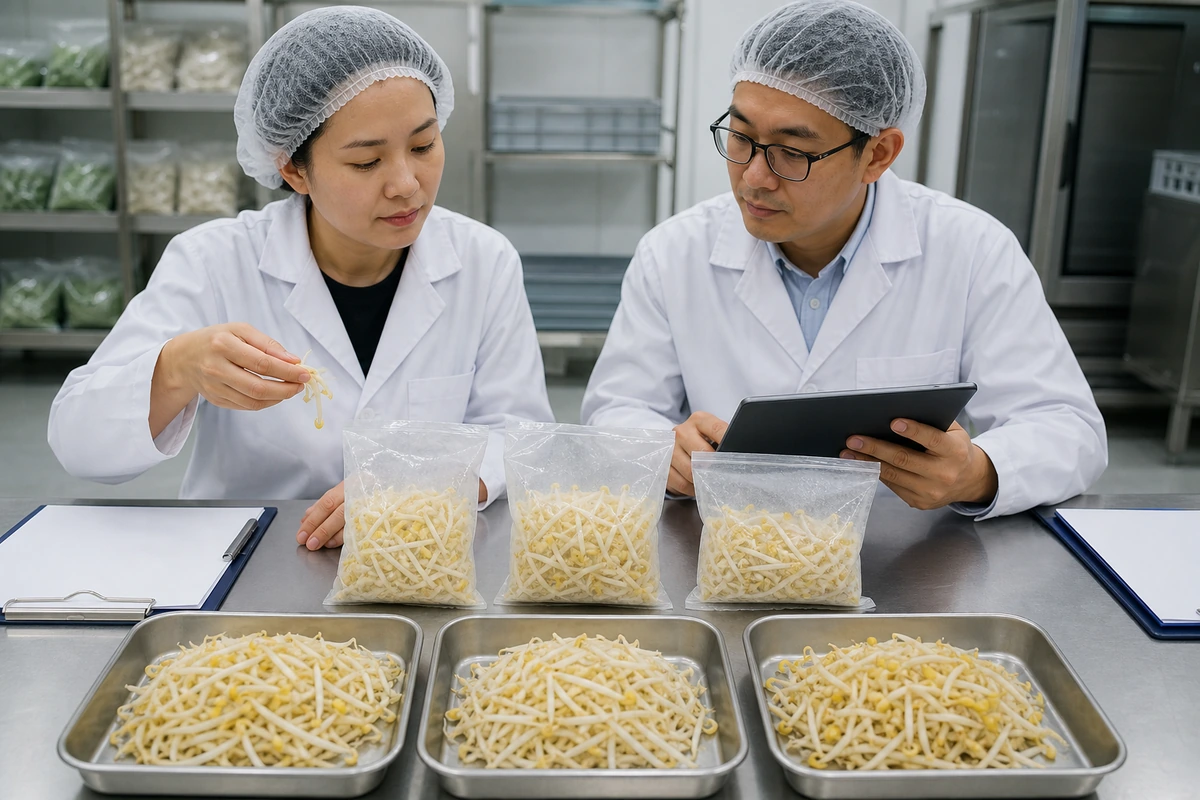
Freezing changes the texture target
Freezing can change the structure and liquid release of sprouts, and the result will not necessarily reproduce the crisp texture of fresh raw stems. That makes the intended application central to the decision. A thoroughly cooked noodle dish, soup or filling may accept a frozen ingredient that would disappoint as a fresh-looking garnish.
Follow the retail pack if it says the product is unsuitable for home freezing. Do not assume freezing resets a use-by date or makes previously mishandled sprouts safe. Commercial frozen sprouts are supplied through a defined process and specification; that is a different purchasing route from placing an aging fresh pack in a domestic freezer.
Our guide to whether bean sprouts can be frozen covers that separate topic. For supply planning, evaluate the commercial product in its intended cooked use and follow its handling instructions. The useful benefit is a suitable ingredient with a manageable stock plan, not a promise that frozen sprouts retain every characteristic of fresh ones.
Receive frozen sprouts against a specification
Check the product identity, lot, packing and agreed temperature conditions when the shipment arrives. Inspect packaging integrity and the condition of the product under the site's receiving procedure. Record abnormal clumping, damage or other observations and review them with the available cold-chain and product information rather than making a conclusion from one visual sign alone.
For physical quality, define the expected stem appearance, length range where relevant, broken material and seed-hull tolerance. Evaluate water release after the buyer's prescribed cooking or handling process. Frozen hardness can hide eating-texture differences, so a frozen visual inspection should be followed by the application test needed for acceptance.
We review frozen bean sprout supply against the cooked application. Confirm whether the supplied ingredient requires cooking and what storage and handling instructions apply. Blanching information is useful, but it should not be interpreted as a universal ready-to-eat claim. The specification needs to describe the product that will actually enter the customer's process.

Keep a useful cold-chain and opening record
A useful record identifies the product and supports a decision. For a fresh pack, that may include supplier, lot, receipt condition, use-by date and opening information. For frozen supply, production and storage information and the agreed receiving checks become more prominent. Keep the record accessible to the staff who release or use the product.
Distinguish the equipment setting from the measured condition. A refrigerator or freezer display may not tell the full story during heavy loading, repeated opening or an equipment fault. Use the site's monitoring method and investigate deviations through its normal procedure. Do not create a new storage allowance simply because the product has been returned to a cold space after an unknown warm period.
Keep records concise enough to maintain consistently. A small kitchen may use clear pack labels and a short log; a distributor needs lot and shipment traceability across customers. Both should be able to answer what the product is, where it came from, how it has been held and whether it is released for use. Missing information should be resolved before the sprouts become a finished meal.
Choose foodservice and retail packing
Pack size affects opening frequency, portioning and remaining-stock handling. A large bulk format can suit a production line that consumes it in one controlled run. Smaller foodservice packs may suit a kitchen with variable demand. Retail packs add customer-facing instructions and artwork requirements that should be settled before production.
Ask how the product is arranged inside the outer carton and what handling is expected after opening. An outer weight alone does not describe the staff's task. Confirm the number and size of inner packs, storage capacity and the quantity that will be removed for each cook. Compare the extra packaging work with the reduction in partial-pack handling.
For a private-label program, align the product identity, intended use, cooking instructions and destination requirements before artwork approval. Do not transfer instructions from a fresh pack to a frozen pack or from mung sprouts to soybean sprouts without review. The packaging should help the customer use the actual ingredient correctly, not merely make the range look consistent on a shelf.
How we review a sprout supply request
Tell us the intended cooked dish, required species and form, shipment quantity and preferred pack. Include the current problems you are trying to solve, such as high fresh-stock waste, excessive broken stems or liquid release in a filling. Those observations help identify an appropriate sample and a meaningful acceptance test.
We confirm the relevant mung bean sprout product, specification and available packing arrangement for the request. Provide the destination, target delivery period, private-label needs and required documents so MOQ, lead time and loading arrangements can be reviewed. Product and lot evidence should be matched to the order and market.
During the sample trial, record the input weight, cooking method, acceptable cooked output and holding result. Compare that with the current fresh process, including discarded stock and preparation work. This gives purchasing and production a shared basis for the decision. A frozen ingredient should be approved because it fits the dish and operating plan, not because it appears to offer an unlimited replacement for short-lived fresh stock.
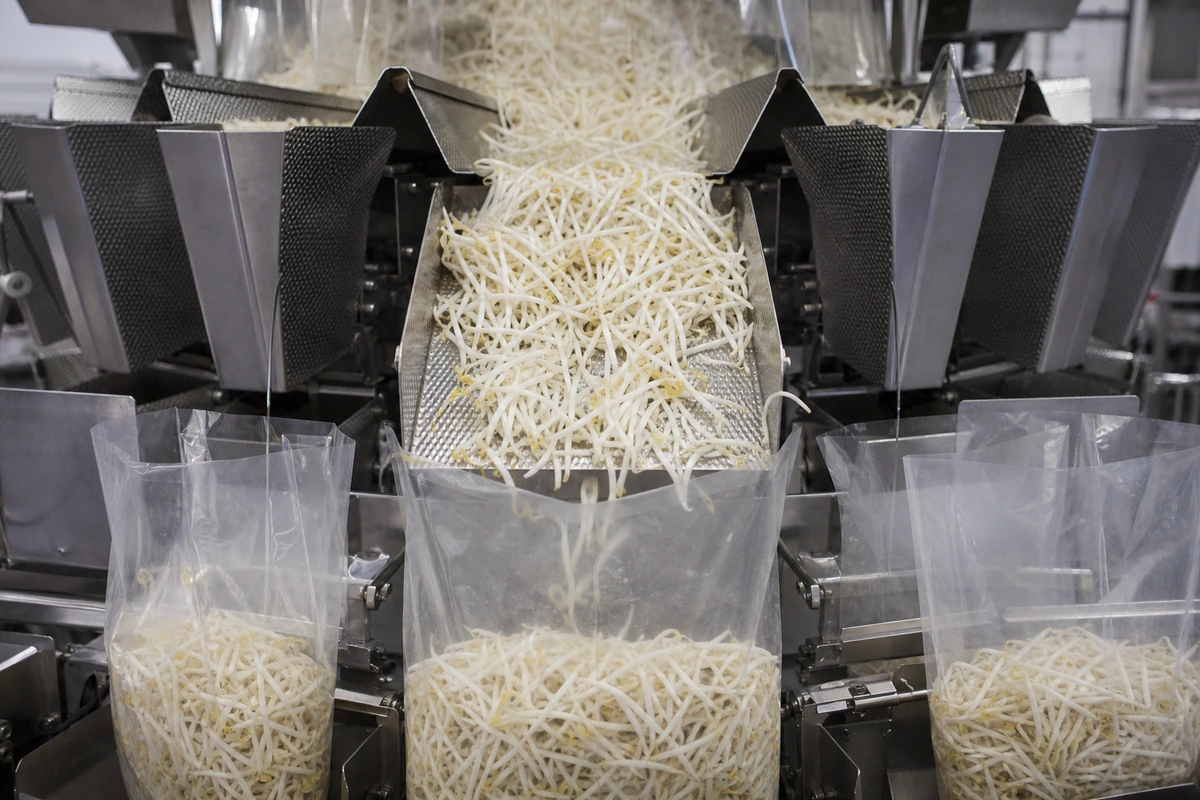
Questions about bean sprout storage
Does moving sprouts into a clean tub restart the opening period?
No. Retain the original identity, use-by information and opening history when transferring the product. A clean container can support handling, but it does not change the age of the sprouts or extend the applicable package instruction.
How can I distinguish a pack-size problem from a supplier-quality problem?
Record why each quantity is discarded. Unused acceptable stock after over-opening points to ordering or scheduling; deterioration on receipt points to incoming quality or handling. Keep those categories separate so purchasing and the kitchen can address the actual cause.
Source frozen mung bean sprouts with GreenLand-food
GreenLand-food is a professional frozen mung bean sprouts supplier and manufacturer in China, providing factory-direct wholesale supply for importers, food manufacturers, foodservice distributors and private-label programs.
Tell us the product form, required specification, packing and quantity, along with the application, destination and delivery timing. Include seed or cut preferences where relevant, private-label requirements and the documents your team needs. We will review the sample, MOQ, lead time and loading arrangement for the proposed order.