


Cutting Hami Melon for Freezing: Rind, Seed Cavity and Piece Size
Oct 19, 2026
Leave a message

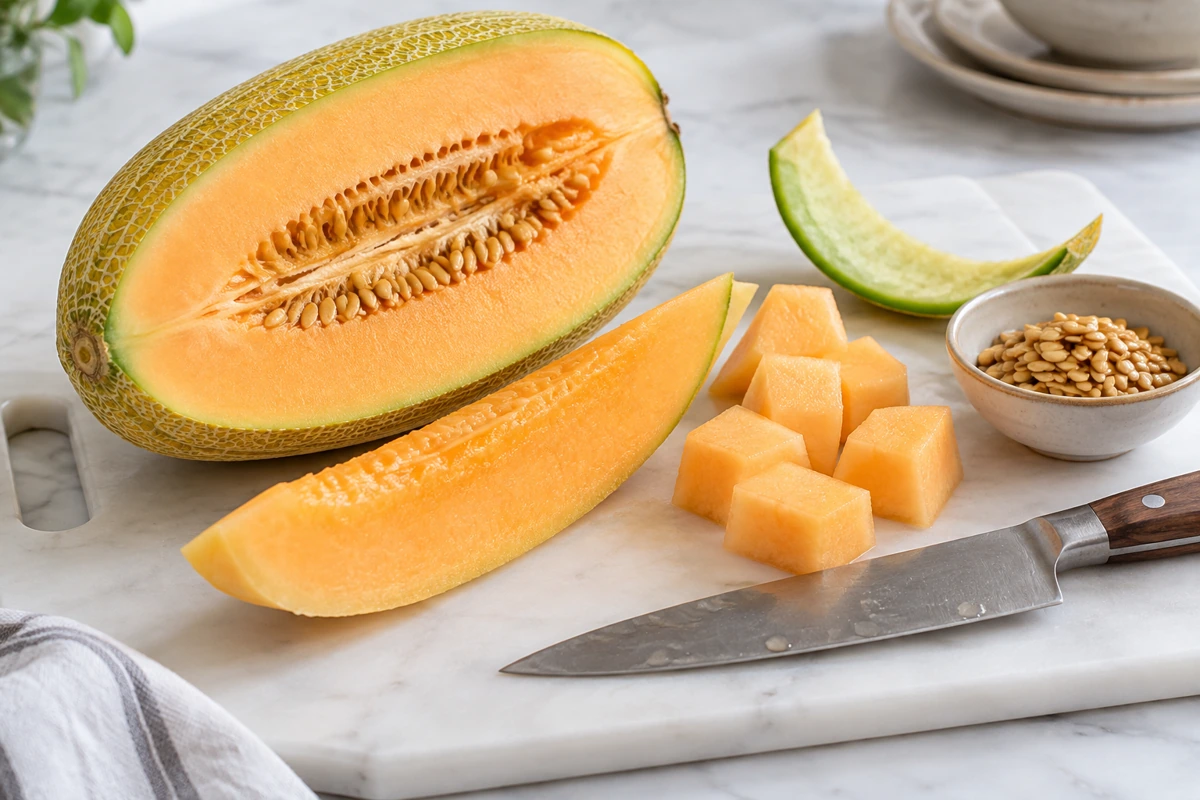
Three decisions deserve separate attention: how much rind remains, how clean the seed cavity must be, and what the stated piece size actually measures. A long wedge, a thin slice and a cube can have similar weights while behaving differently during freezing, packing and thawing. The best cut is the one that works in the customer's application and can be produced and checked consistently.
At GreenLand-food, we discuss wedges and dice as separate frozen Hami melon forms. A photograph of a wedge with rind cannot define a peeled cube, and a sample that looks good while frozen still needs examination through the intended use. The steps below explain the preparation choices and how to turn them into a practical cut specification, with household handling distinguished from a commercial process that needs its own validated controls.
1. Prepare the melon and cutting area
Inspect the fruit before cutting. Select sound material with suitable flavour and flesh condition, and separate fruit with leakage, decay or other unacceptable defects according to the applicable procedure. Freezing does not restore deteriorated flesh or make an unsuitable raw material acceptable. The National Center for Home Food Preservation's melon guidance begins with ripe, firm-fleshed fruit, then removes seeds and rind before preparing the chosen form. That is a useful preparation baseline, while commercial settings require more detailed operating controls.
Set up a stable cutting surface, clean tools and suitable containers for accepted flesh and removed material. Keep the fruit from rolling and choose a knife appropriate for its size. A small awkward tool can encourage repeated sawing and excessive pressure. In a production environment, equipment selection, guarding, operator training and sanitation belong in the site's procedures. The article's photographic examples illustrate preparation choices; they do not establish a safe operating procedure for a particular machine or line.
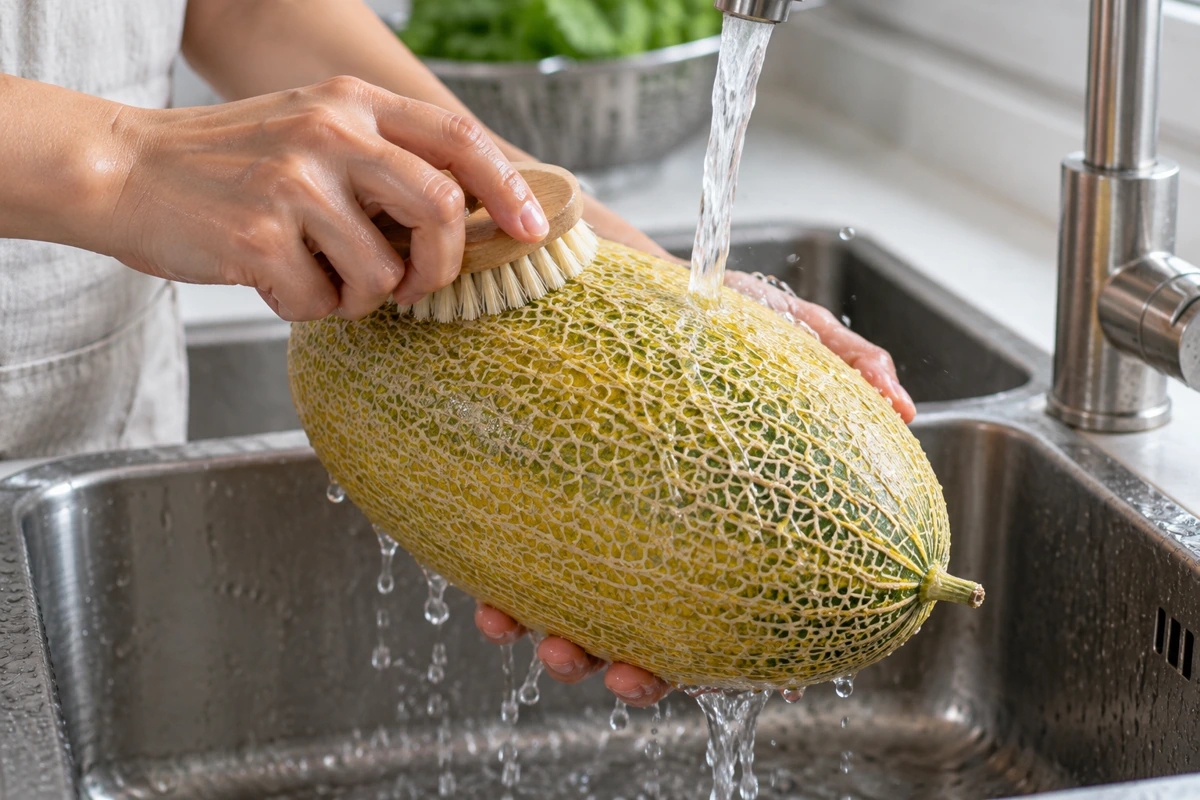
Clean the intact exterior before opening the melon; the scene shows no soap or treatment claim.
Clean the intact rind before the knife passes through it. For household preparation, FDA recommends plain running water, rinsing before peeling and a clean brush for firm produce such as melons. It advises that soap or produce wash is unnecessary. Keep the cleaned fruit and tools away from contaminated surfaces. Commercial wash water, any permitted treatment and its monitoring need to follow the facility's validated programme and applicable requirements rather than a household recipe scaled up by volume.
Organize the work so that peeled flesh does not return to the area holding unwashed fruit or discarded rind. Separate waste collection from the accepted-product container and remove accumulations that interfere with clean handling. If several lots are processed, preserve their identities through cutting and collection. A tray of attractive orange pieces is no longer traceable if its source labels were discarded when the whole melons were opened. Lot control should continue through the prepared and frozen forms.
Consider the time between preparation and freezing before starting a large quantity. Cutting more fruit than the next stage can handle creates unnecessary holding and handling. In a household setting, work in manageable portions and refrigerate cut fruit promptly. In a commercial process, define and monitor the relevant time and temperature limits through the food-safety plan. Avoid using the temperature or duration from a research experiment as an operating recommendation for a production line.
The initial setup also affects quality. A sharp, suitable blade and stable support help create clean faces without crushing the flesh. Keep drainage and transfer arrangements practical so the pieces are not repeatedly tipped, piled and separated. These details become more important when the melon is soft or the specification calls for small dice. They should be included in a preparation trial because a carefully staged sample can otherwise give a misleading picture of routine cutting performance.
2. Open the melon and clean the seed cavity
For manual preparation, opening the melon lengthwise usually makes the elongated cavity easy to inspect and gives access for removing seeds. Stabilize the fruit and use the method appropriate to the equipment and operator. Once opened, examine the flesh and cavity before proceeding. An outside that appeared sound does not guarantee acceptable internal condition. Hold or reject material with unacceptable internal findings under the established procedure instead of trimming automatically and mixing it with accepted fruit.
Use a suitable clean spoon or other approved tool to lift out the seeds and loose fibrous material. The aim is to remove the unwanted cavity contents while retaining sound flesh that belongs in the specification. Repeated scraping far beyond the cavity can sacrifice useful material and make the inner surface irregular. Insufficient cleaning can leave seeds and wet strands that later appear among frozen pieces. Establish the desired boundary with an actual reference sample rather than relying on the word cleaned.
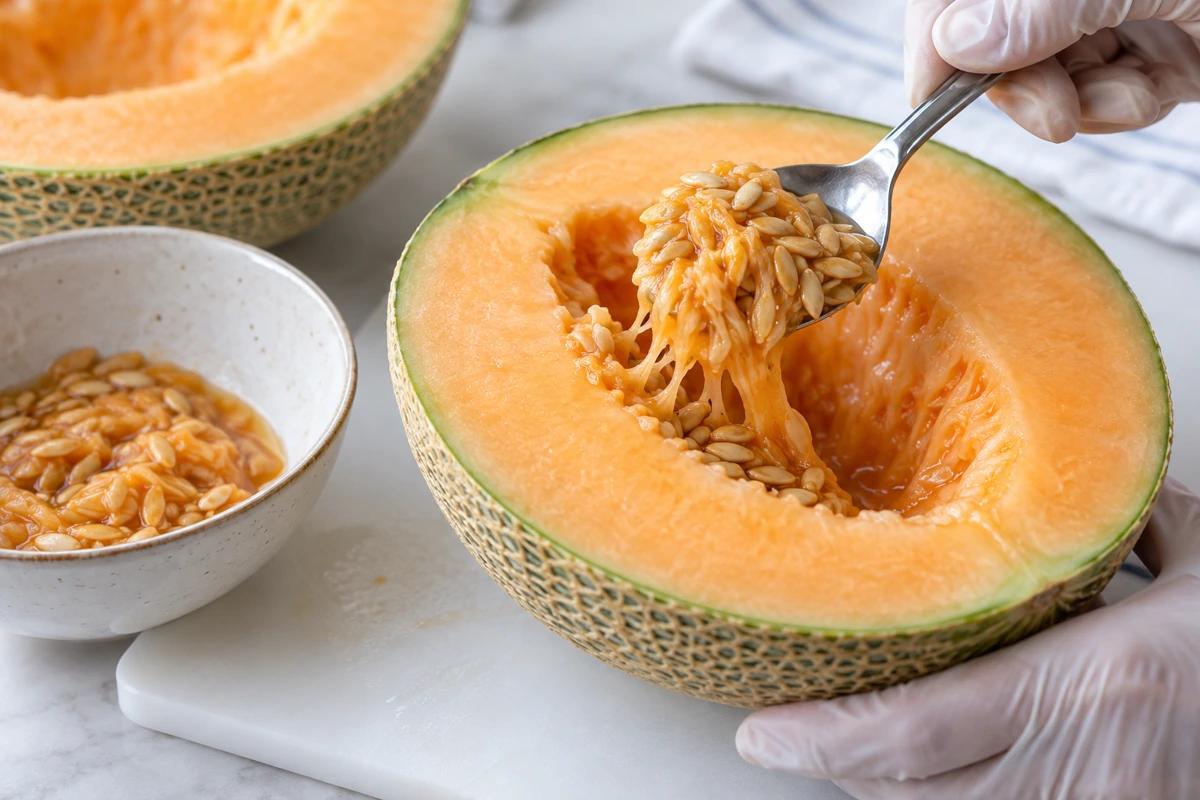
Clear loose cavity material while retaining the sound flesh required by the specification.
Inspect the cavity along its full length. Material can remain near the narrow ends even when the centre looks clear. A quick pass through the widest area may leave remnants that become more difficult to identify after dicing. For a visible wedge, the inner face is itself part of the presentation, so check its appearance as well as the absence of intact seeds. For a blended application, loose seeds or fibrous material can still affect mouthfeel and equipment, even though the original piece shape will disappear.
Define different findings separately. Intact seeds, fragments of seed material, loose cavity tissue and an uneven but clean cut surface are not identical conditions. The customer may assign different significance to them, and the inspection method should reflect that. Agree whether findings are counted per piece, per sample mass or by another suitable method. A broad foreign-material statement should not hide a specific natural-part requirement that the receiving team needs to assess reliably.
Keep removed seeds and cavity material out of the accepted flesh stream. If a utensil or glove becomes contaminated during waste handling, follow the cleaning or replacement procedure before returning to product contact. Reworking a tray to remove scattered seeds adds handling and can damage soft fruit. It is usually more useful to identify why the cavity-cleaning stage leaves material than to depend on inspection after every piece has been cut and mixed together.
For a yield trial, weigh the removed cavity fraction separately when practical. Record whether it includes sound flesh scraped away during cleaning. A heavy removal fraction may reflect cavity size, the agreed cleaning standard or the preparation method, and those causes have different implications. Comparing several lots with the same method helps the buyer understand the usable output. It also provides a concrete basis for discussing a different cut or preparation standard without promising a universal edible-yield percentage for Hami melon.
3. Trim the rind to the agreed edible boundary
Rind removal is more specific than taking off the coloured outer skin. The firm pale or greenish transition toward the edible flesh can remain to different depths, depending on the melon and preparation method. For a peeled ingredient, agree what the accepted cut should look and feel like at that edge. A photograph, physical reference and practical inspection method together are more useful than an undefined instruction to remove all green material, especially where natural flesh colour varies.
With manual wedges, the rind can be separated while the piece is supported securely on the cutting surface. Choose a safe method that follows the curve without forcing the blade toward the hand. Avoid describing one hand-held technique as suitable for every fruit size or operator. In commercial preparation, the equipment and settings should be qualified for the chosen melon and maturity range. Inspect the output rather than assuming that one peeling setting produces the same boundary across all lots.

Actual GreenLand-food product photo: the visible rind-on wedge is distinct from a peeled-piece specification.
The real GreenLand product photograph in this section shows orange wedges with visible green rind. That is a form reference, not evidence that those pieces meet a fully peeled specification. If the buyer's process requires rind-free dice, the order and sample must state that requirement separately. If the programme intentionally uses rind-on portions, the shape, thickness and intended handling need their own acceptance criteria. These are different products with different usable fractions and preparation needs.
Over-trimming and under-trimming have different costs. Removing a broad band of sound flesh lowers recovery and can leave a wedge too thin for the intended portion. Leaving a tough edge can affect eating quality or create coarse material during blending. Assess both the boundary and the application result. A trim that appears visually neat may still leave an unsuitable bite, while an acceptable pale edge should not be discarded merely because it differs from an edited marketing photograph.
Check the outer edge after cutting the first prepared pieces. Rind fragments that are easy to see on a long wedge may become small, scattered inclusions after dicing. Where the process permits, inspect and correct the prepared slab or wedge before making the final small cuts. Keep any rework controlled and traceable. The aim is to produce the required boundary consistently, with inspection confirming the result rather than serving as the only means of achieving it.
Measure trim loss under the same conditions used for the approval sample. If the buyer compares two quotations, clarify whether both prices refer to the same rind status and edible boundary. A rind-on product may appear cheaper per received kilogram while requiring additional preparation. Conversely, a fully prepared ingredient can reduce work at the customer's site if it meets the intended specification. The comparison should include accepted output and required handling rather than relying solely on the product name and net weight.
4. Choose geometry for the intended use
Choose the cut by following the piece into the next operation. A wedge provides a visible portion and retains the curved relationship between cavity and rind edge. A cube is convenient for dosing, mixing and many further-processing uses. A slice offers a different shape and exposed surface. None is universally best for freezing. The practical choice depends on the required appearance, the equipment receiving the fruit, portion size and the texture acceptable after the actual preparation route.
For wedges, measure maximum thickness across the thickest part rather than at the tapered tip, and show the direction on the agreed reference. Record length separately. A damaged thin end needs a different description from an oversized centre. Weight helps with portion control, but a short thick wedge and a long thin wedge can weigh the same. For frozen-lot checks, agree how surface ice and preparation state are handled so the receiver measures the same boundary used for approval.
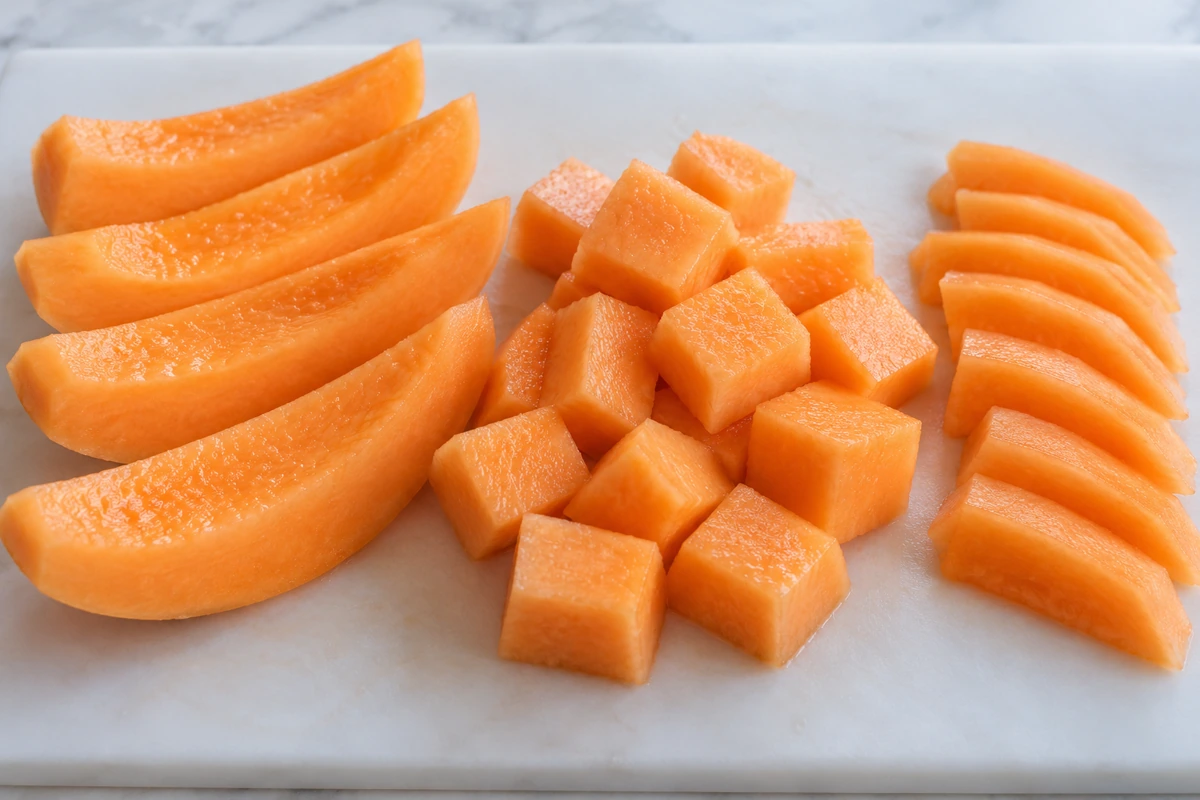
Wedges, cubes and thin slices are different geometries even when portion weights overlap.
For dice, define the nominal cut and an acceptable range for the relevant dimensions. Melon flesh follows a curved natural structure, so pieces taken near an edge may not be perfect cubes. Decide whether such pieces are acceptable as chunks, whether they count within the dice specification or whether they belong in another form. This should be a deliberate product decision. A specification that implies perfect geometry while purchasing natural cut fruit can create repeated disputes without improving the finished application.
Thin cuts expose more surface relative to their volume and can be more vulnerable to handling damage. A published study of fresh-cut Hami melon shapes found that greater cutting injury was associated with larger quality changes under its experimental storage conditions. It studied chilled fresh-cut fruit, so its results do not establish a commercial frozen cut size or authorize its storage conditions. It supports testing the consequences of geometry instead of assuming that smaller pieces are always better.
Smaller pieces may be easier to portion into some equipment, but they also create more cut faces and can yield more fragments during preparation. Larger pieces may retain a more recognizable form while requiring a different freezing and handling programme. Trial the proposed size with the actual process. Do not promise a freezing time from a photograph or a nominal cube dimension alone; loading, equipment, product condition and the required endpoint also matter.
If the buyer needs more than one form, qualify each separately. Wedges for visible portions and dice for a blended base can use different acceptance criteria even when they come from the same raw-material lot. Keep their identifiers, packs and sample records distinct. This makes it possible to discuss a change in one cut without silently changing the other, and it prevents an attractive wedge sample from being used as the only approval evidence for a diced ingredient.
5. Measure the cut and control broken pieces
Inspect the actual prepared output at a defined point in the process. Measuring immediately after cutting answers a different question from measuring pieces after freezing, packing and transport. Both can be useful, but the specification should identify which result determines acceptance. For a frozen purchased ingredient, the received condition matters because that is what the customer must handle. Keep the preparation state and temperature consistent when comparing dimensional observations or texture findings.
Use a suitable ruler, gauge or caliper without compressing soft flesh. State the measurement direction and how irregular pieces are treated. If the customer needs a maximum dimension for a feed opening, measure that maximum directly rather than relying on average cube size. If the requirement concerns a visible portion, include the dimension and weight that control its appearance. A measurement method should be simple enough that different operators can obtain comparable results on the same sample.
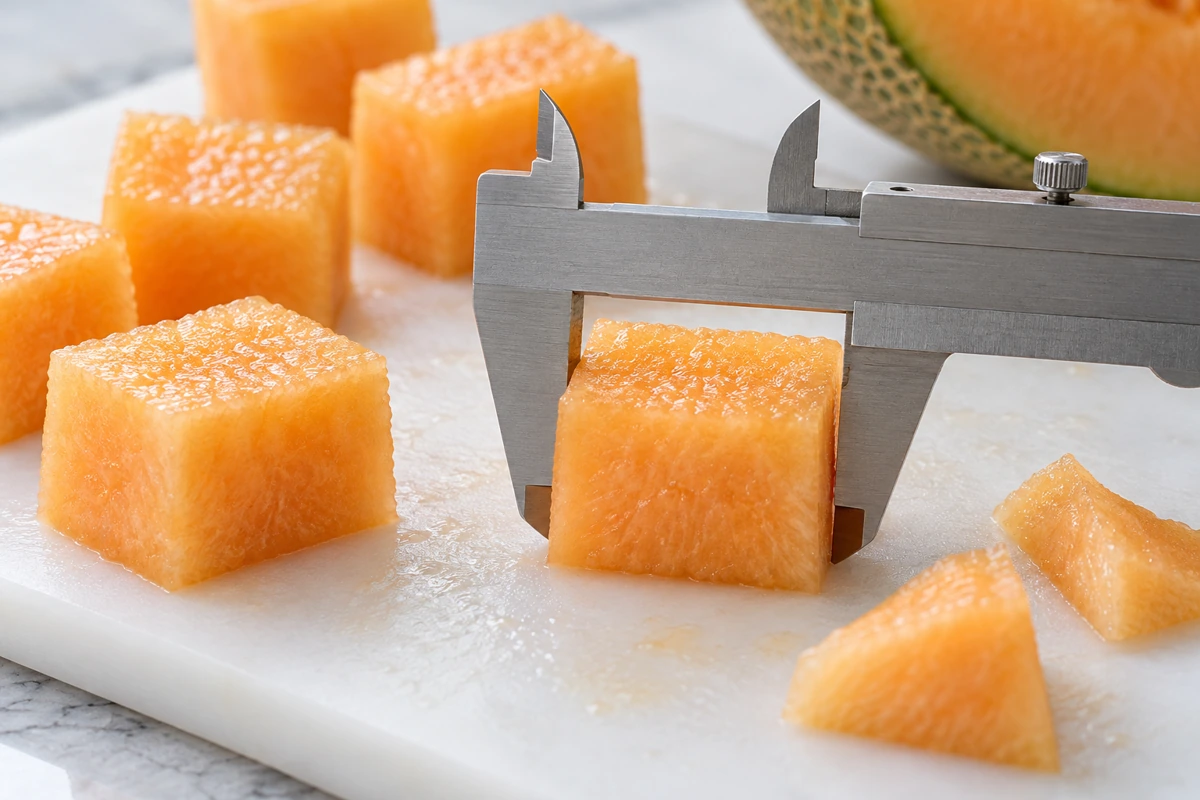
State which dimension is measured and how the piece is supported. No numerical result is depicted.
Take pieces from a representative sample rather than arranging only the most regular ones for a photograph. Record the distribution of dimensions and the proportion outside the agreed range. An average can conceal both undersized fragments and oversized chunks. Depending on the application, the tails of that distribution may cause more trouble than a modest change in the mean. Agree the sampling and decision rule before the shipment is judged so that a disagreement can be resolved with the same method.
Define broken pieces in relation to the required form. A naturally angled edge may be acceptable in a chunk specification, while a crushed cube or thin shard may be unacceptable in a visible dice programme. Use examples that show the distinction and specify how the allowance is assessed. Avoid describing all irregular material as waste. Some forms can be suitable for further processing, but any alternative use still needs its own quality and safety approval and should remain clearly identified.
Look for the stage at which damage appears. If the cut faces are sound before freezing but fragments increase after packing, changing the cutter may not address the cause. Check transfer drops, pack pressure, separation of frozen clusters and the customer's portioning method. The investigation should follow the material through the route. A record of condition at several points helps distinguish a cutting problem from a handling problem and supports a more effective correction.
Keep dimension checks alongside rind and cavity findings. A perfectly sized cube with a tough rind fragment still fails a peeled-fruit requirement, while a clean piece outside the size range may create a different issue. Reporting those findings separately gives the supplier useful feedback. It also helps the buyer decide whether a lot requires rejection, controlled rework or a separately approved application, according to the agreed procedures. One overall defect percentage can hide the specific reason the product does not work.
6. Keep the prepared pieces separated and cold
Plan the movement from cutting to freezing so the pieces receive minimal unnecessary handling. Keep the accepted fruit in clean suitable containers and control the time and temperature through the applicable procedure. Avoid leaving a large pile at room conditions while waiting for freezer capacity. In a commercial operation, the process needs documented limits, monitoring and corrective actions appropriate to the product and intended use. The cut itself cannot compensate for an uncontrolled holding stage.
For household tray freezing, spreading prepared pieces in a single layer with space between them can make later portioning easier. Once frozen, transfer them promptly to suitable freezer packaging and follow reliable storage guidance. The NCHFP melon instructions describe both sweetened and unsweetened packing options. A commercial ingredient order should state whether additions are permitted and how the product is supplied; an unsweetened IQF requirement should not be assumed from a general freezing recipe.
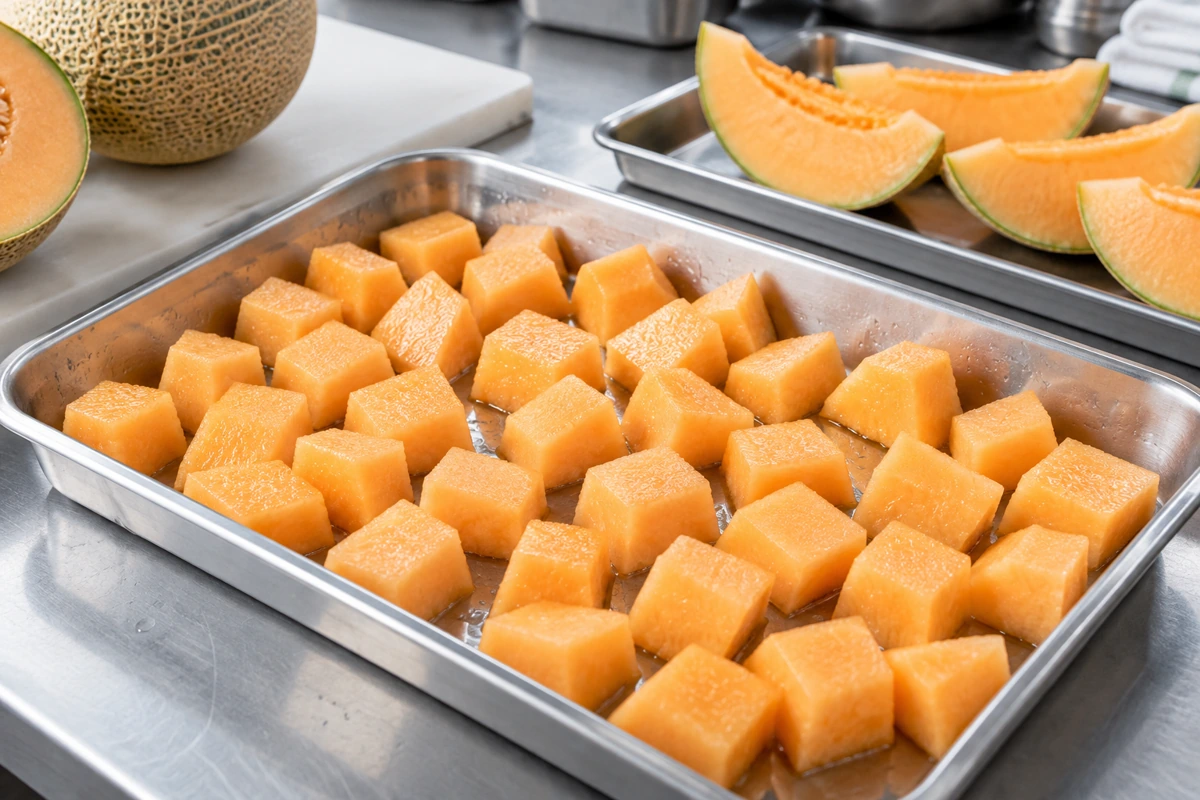
Separation during preparation supports a portioning trial; freezing performance needs its own validation.
In commercial freezing, cut consistency helps define a repeatable load, but the equipment and operating conditions still need qualification. Product temperature, piece thickness, loading depth, airflow or other relevant transfer conditions can affect the outcome. Confirm the required endpoint through the established process rather than assigning a universal number of minutes. A photographed tray is useful for showing separation and geometry; it cannot prove a freezing rate or demonstrate that a particular production line has been validated.
Surface liquid and contact between pieces can affect portioning. Use the appropriate draining and handling method for the process without assuming that drier-looking fruit always gives a better product. Excessive manipulation can damage soft tissue, and an uncontrolled draining step can change the amount of fruit liquid retained. If the customer's recipe uses that liquid, keep the basis visible in the trial. Quality, recovery and practical handling should be assessed together.
Select packing that protects the chosen form. Wedges can suffer edge pressure, while small dice may compact or form clusters under unsuitable conditions. Examine the actual bag or lined carton after representative handling, including material from the lower part of the pack. Confirm net weight, seal integrity, label details and the storage instructions. Changing pack size or fill arrangement can alter how the fruit reaches the customer, even when the cut dimensions remain the same.
Maintain the frozen conditions specified for the product through storage and delivery, and review any temperature excursion under the established procedure. Repeated softening and refreezing can complicate the assessment of piece integrity and clumping. Freezing also does not establish ready-to-eat status or eliminate the need for food-safety controls. The customer's intended use, including any further validated treatment, should be confirmed as part of the supply agreement rather than inferred from the appearance of the frozen pieces.
Approve the cut in the received frozen lot
The receiving sample should connect the specification with the material the customer will actually use. Identify the product, lot, pack and sampling locations, then assess the frozen condition and the relevant preparation endpoint. For a free-flowing ingredient, test normal portioning. For a thawed visible piece, use the agreed thawing and drainage method. For a blended base, run the proposed blending step. Keep these routes distinct so that an easy result in one does not approve a more demanding use without evidence.
Inspect the sample for the three preparation decisions: rind boundary, seed-cavity condition and geometry. Add the damage and pack observations needed for the application. The real GreenLand dice photograph shows a different bulk form from the rind-on wedges pictured earlier. It does not establish an exact cube dimension or a defect limit by itself. The frozen Hami melon specification discussion therefore begins with the selected form and an approved sample for the order.

Actual GreenLand-food product photo: confirm the offered dice dimensions and application with a current sample.
Evaluate texture after the intended handling, rather than only while ice keeps the pieces rigid. Note whether the fruit remains identifiable, how the cut surfaces behave and whether the released liquid is acceptable in the food. A softer piece may suit a blended application while failing a visible portion. Record that result as an application finding. It should not be converted into an unsupported statement that every Hami melon of that cut will perform the same way.
When comparing quotations, use the same cut, rind status, cavity standard and accepted output basis. Include any extra trimming, sorting or draining the customer must perform. A lower price per received kilogram can carry a different usable quantity and labour requirement. Equally, a more regular cut may add little value if the next operation immediately blends the fruit. The purchasing choice should reflect what the customer needs and can verify, rather than an unnecessarily strict appearance standard.
Confirm the practical order details with the technical requirement: packing, quantity, destination, required delivery period, private-label needs and requested documents. Keep the approved sample linked to its specification and any relevant lot reports. If the source, maturity range, cutting method or pack changes materially, review whether the existing approval still applies. A clear change discussion is easier to manage before production than a disputed receiving result after shipment.
The final cut agreement should make ordinary decisions straightforward. Operators know the rind and cavity boundary to prepare; quality staff know how to measure the pieces and count defects; the buyer knows what to expect after normal handling. GreenLand-food can then review a concrete sample and supply requirement for the chosen frozen Hami melon form. The value of the cutting specification lies in that repeatability, from the first prepared wedge to the portion entering the finished food.
Related fruit-processing reading
Compare cavity preparation and accepted cut yield in a stone-fruit example.
Follow raw-material, freezing and cold-chain controls beyond the cutting stage.
Compare direct frozen use, partial thawing and draining in a peach application guide.
Source frozen Hami melon with GreenLand-food
GreenLand-food is a professional frozen Hami melon supplier and manufacturer in China, providing factory-direct wholesale supply for importers, food manufacturers, foodservice distributors, and private-label programs.
Send the required wedge or dice form, rind condition, size specification, packing, quantity, application, destination, private-label needs and requested documents. Include the sample preparation and acceptance conditions so we can discuss the appropriate offered product.