


Do Blueberries Have Seeds?
Sep 04, 2026
Leave a message
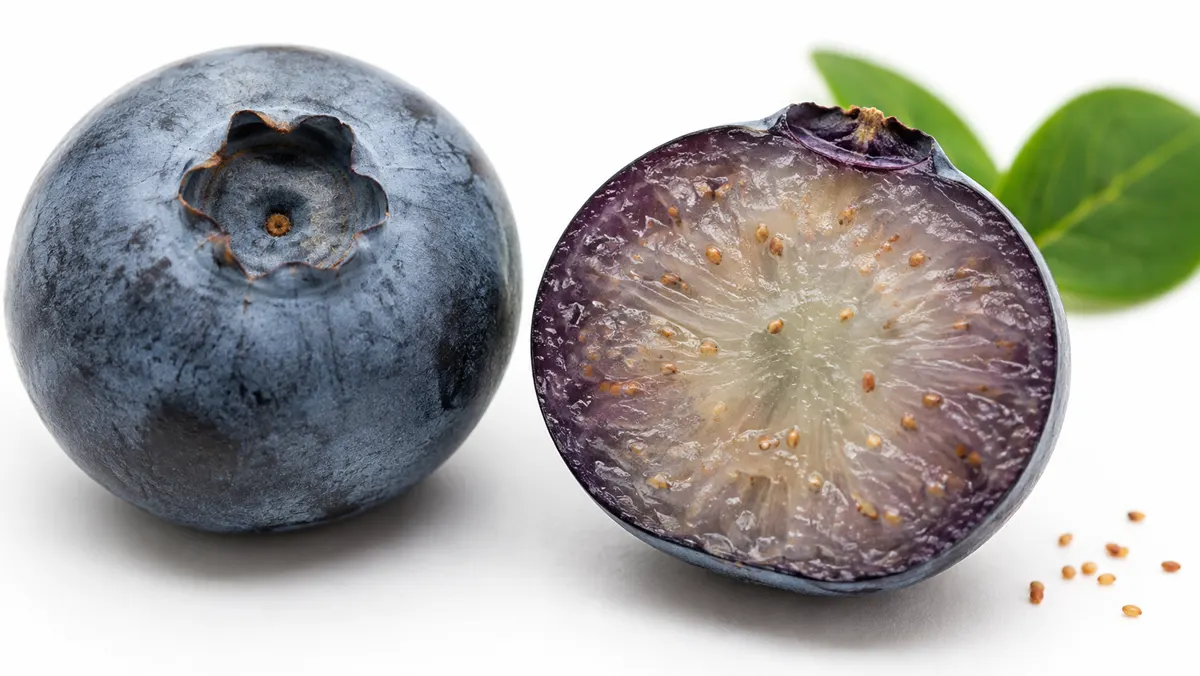
Yes-blueberries contain many tiny seeds inside the pulp.
Blueberry seeds are small, pale tan to light brown and often elongated. A United States Forest Service review describes highbush seeds at roughly 1.2 mm, while cultivar research shows seed count can vary widely; one Powderblue study found about 50–60 seeds per berry. Many are soft or incompletely developed, so people usually notice blueberry skin more than the seeds. In puree, mouthfeel depends on skin fragments, seed particles, screen aperture, viscosity and the final formula.
Where Blueberry Seeds Are Located
A blueberry is a true berry in botanical terms. Its seeds develop inside the fleshy ovary and are distributed through the pulp. Cutting the fruit across its equator reveals tiny pale structures rather than one central stone. Keep that scope beside the relevant blueberry attribute so the purchasing team and the receiving team apply the same meaning.
The crown at the blossom end is not a seed opening. It is the persistent calyx. The stem scar sits at the opposite end. These landmarks matter in visual inspection but do not tell the seed count without cutting the fruit. Natural and process variation remain possible, so confirm the working range on representative samples instead of relying on a single textbook number.
Blueberry skin contains pigments and has more structural resistance than the soft interior. During eating, the skin breaks first and the pulp collapses, leaving the small seeds dispersed in a moist matrix rather than isolated as hard particles. Translate that effect into the intended application, since blueberry that looks acceptable can still give a different yield, texture or flavor balance.
In frozen fruit, ice-crystal damage softens the pulp after thawing. Seeds remain present, but the sensory contrast can still be low because their size is small relative to the released juice and skin pieces. For blueberry seed and puree texture, write the acceptance method, tolerance and evidence type into the approval record before confirming the lot.
How Many Seeds Does a Blueberry Contain?
There is no universal number. A research study of the rabbiteye cultivar Powderblue reported roughly 50–60 light-brown elongated seeds per fruit under its conditions, but that figure should not be applied to every highbush, lowbush or wild blueberry. Record the definition with the blueberry form being discussed; otherwise a correct general statement can become a poor buying assumption.
Pollination affects viable seed set and fruit development. New Brunswick guidance reports that fruit with more viable seeds often grows larger, while poorly pollinated fruit may remain small or drop. Many seed-like structures in a berry may not all be fully viable. Because fruit and process conditions vary, compare several representative units and keep the sample condition with any recorded result.
Species and cultivar affect seed size, number and hardness. Forest Service material describes highbush blueberry seeds around 1.2 mm. Because the seed coat and maturity vary, a laboratory count may separate full, empty and damaged seeds. The application trial should use the proposed blueberry format and inclusion rate, not a convenient substitute with different physical behavior.
Seed count is useful for breeding and pollination research but rarely belongs in an IQF food specification. Berry type, size, flavor, color, defects and processing texture are usually more relevant to commercial food use. Keep photographs, measurements and documents tied to the same sample code; that prevents an attractive image from standing in for traceable evidence.
Why Blueberry Seeds Are Hard to Notice
The seeds are small and surrounded by soft juicy pulp. Unlike a raspberry or blackberry, a blueberry does not have separate drupelets with a seed in each obvious unit, so there is less repeated crunch during chewing. Link the term to the exact blueberry format in the quotation because whole fruit, cut fruit and puree may be judged differently.
Some seeds are flatter, softer or incompletely developed. A person may perceive only an occasional fine particle. Sensitivity also depends on whether the fruit is eaten whole, blended, strained, cooked or combined with dairy, bakery crumb or ice. A useful planning range is not a lot guarantee; sampling method, product temperature and measurement basis still need to be stated.
The skin often creates the stronger texture signal. Whole blueberries pop, while blended skins can appear as purple flecks or create a slightly fibrous sensation. A complaint described as seeds may therefore involve skin or coarse pulp. This point matters commercially when it changes portion control, thaw loss, screen retention, blending time or the finished product's appearance.
Variety, maturity and processing change perception. Very ripe fruit has softer pulp; smaller wild-type berries provide more skin per kilogram; aggressive blending makes smaller particles; fine screening removes a larger share of coarse material. If the point can affect release, name who checks it, when it is checked and what happens when the result falls outside the agreed range.

What Happens When Blueberries Are Blended
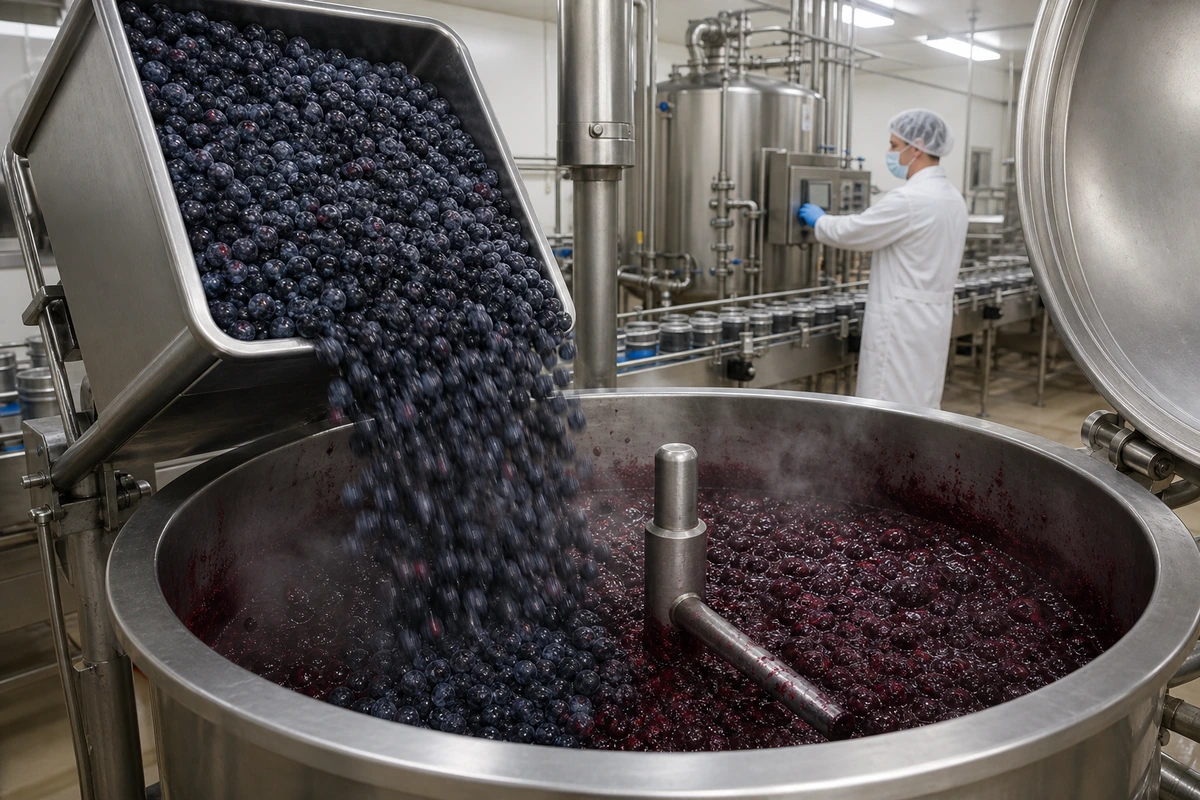
Blending ruptures the skin and distributes pigment, pulp and seeds through the mixture. The result can look dark purple, but color varies with cultivar, pH, oxygen, temperature and the presence of dairy or other ingredients. Put the stated basis into the blueberry specification wherever it changes how the lot will be sampled, compared or released.
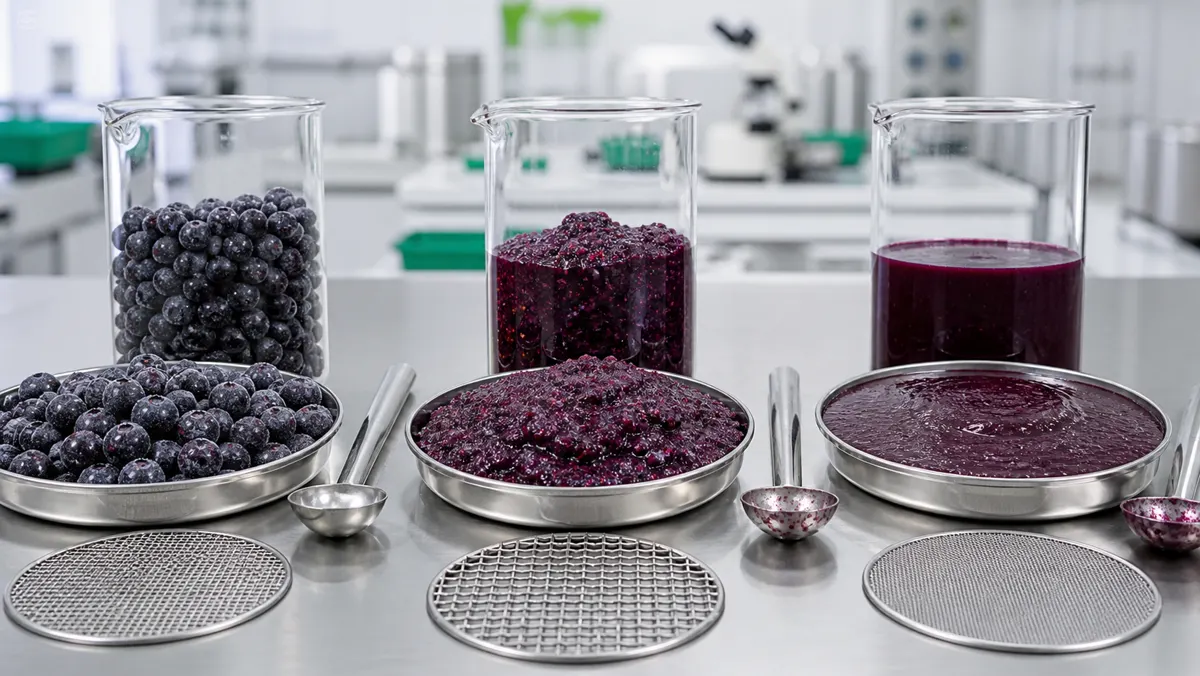
A coarse puree retains more skin flecks and seed particles, giving fuller body and potentially higher yield. A fine puree or juice-style base may use screening to remove coarse tissue for a smoother drink, yogurt or sauce. Use the figure as an early estimate, then replace it with sample data from the proposed origin, variety, grade and processing format.
NC State's seed-extraction method blends fruit and then uses settling and decanting, demonstrating that seed particles can be physically separated from pulp. A food processor may use different equipment and aims, but the separation principle is useful. Ask the product-development team which outcome matters most, then test the blueberry against that outcome in the real recipe or process.
Do not call every screened puree seedless without defining the result. The finished product may still contain fine seed material. State the screen, particle expectation, sensory limit and whether visible sediment is acceptable. A practical control states the limit and the inspection method together, giving the supplier and buyer one reproducible basis for acceptance.

Skin, Seed and Screen Effects in Commercial Puree
Screen aperture is only one variable. Rotor speed, fruit temperature, maturity, feed rate, number of passes and equipment geometry change yield and particle distribution. The same nominal mesh can produce different mouthfeel across plants. Treat the definition as a boundary for the blueberry discussion, then convert the relevant part into a measurable purchase requirement.
Viscosity changes what the tongue perceives. Fine particles can remain suspended in thick yogurt fruit preparation but settle in a thin beverage. Heat and stabilizers may soften or mask some texture while making color changes more visible. Where the observation is sensory, have the same approved method and product temperature used for both the control sample and the shipment check.
For bakery filling or jam, visible skins and tiny seeds can signal real fruit. For clear beverages, baby-food-style products or fine dairy, the same particles may be a defect. The application defines quality. Connect the observation to usable yield and finished-product performance so the decision is based on more than the fruit's incoming appearance.
Approve the puree inside the intended formula and through the narrowest process opening. Pump, nozzle and filter performance can reject a product that seemed smooth during a spoon test. Where a batch claim is required, request the corresponding lot record or test result rather than extending a general article statement to every shipment.
Choosing Whole Berries or Puree by Application
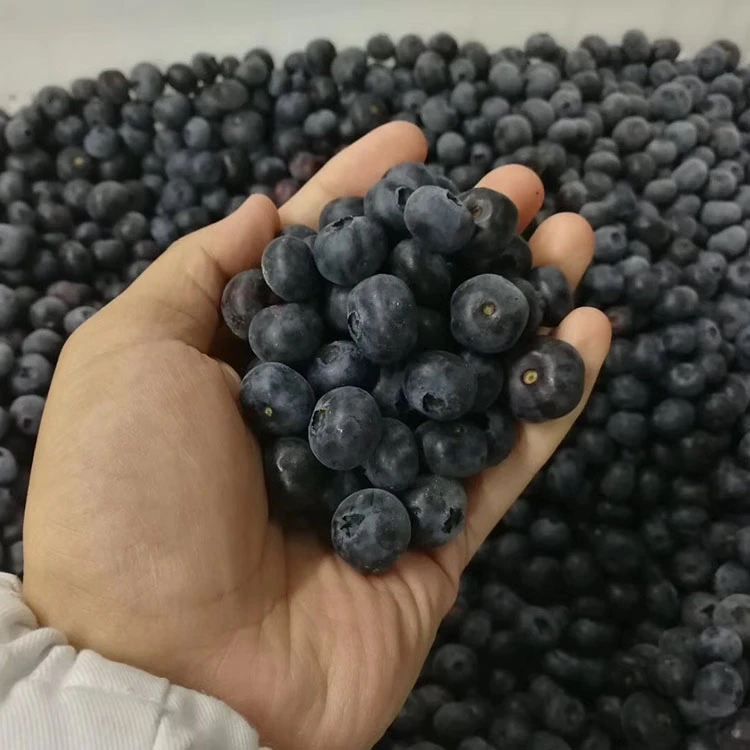
Whole cultivated blueberries suit retail packs, yogurt toppings, muffins, dessert garnish and smoothie programs where visible berry identity matters. Size and whole-berry rate should be linked with drip loss and broken tolerance. Use the explanation to align the blueberry brief before samples are requested, particularly when teams use the same word in different ways.
Smaller or processing-grade berries can suit jam, sauce, bakery filling and puree when appearance is secondary. Smaller fruit brings more skin per kilogram, which can strengthen color and flavor while also increasing skin texture. Variation becomes easier to manage when the range, sample count and test condition are agreed before the commercial lot is packed.
Puree is efficient for beverages, dairy bases, sorbet and fruit preparations, but buyers need Brix, pH, screen, color, viscosity and packing details. A whole-fruit specification cannot be reused unchanged for puree. A small difference can become material at production scale, especially when the blueberry is dosed by weight or must hold its identity after processing.
If the final product must be exceptionally smooth, compare refined puree, juice concentrate or a formulated fruit base rather than expecting ordinary whole-fruit blending to remove every seed and skin particle. Close the loop by carrying the agreed observation into the specification, control sample and pre-shipment record used for final approval.
How Blueberry Seed and Puree Texture Changes a Commercial Frozen-Fruit Decision
A correct factual answer is only the first layer for a commercial order. GreenLand-food supplies whole cultivated blueberries, small berries, wild-origin lots when available, processing grades and puree inputs for smoothies, beverages, muffins, pies, yogurt, ice cream, jam, fruit preparation and retail frozen-fruit programs. The buyer still has to convert the article topic into a measurable requirement. Without that translation, two suppliers may answer the same question correctly while quoting products that behave differently in the buyer's line.
The practical comparison starts with blueberry type, origin, maturity, berry size, Brix, bloom, whole-berry rate, broken tolerance, stem residue, defects, foreign material and drip loss. Some of those points can be checked in a specification or COA; others need a retained sample, batch photograph, thaw test, screen test, cut measurement or sensory panel. We recommend stating the test method and tolerance instead of relying on adjectives such as premium, ripe, smooth or natural.
Format matters just as much as fruit identity. A whole IQF item is bought for piece definition and portioning. A puree is bought for flow, color, flavor and screen condition. Smaller pieces may improve dosing but increase exposed surface. The approval record should therefore name the exact form, not merely blueberry.
Packing and cold-chain details complete the decision. We review totes, bulk cartons, foodservice bags, retail pouches and private-label packs against net weight, carton strength, label, pallet plan, storage statement and destination-market needs. An acceptable pre-shipment sample does not protect the order if temperature, seal integrity or loading practice changes before delivery.
A Repeatable Sample-to-Shipment Approval Process
Use one written comparison sheet for every candidate lot. Record the sample date, product code, crop or production reference, packing, frozen condition on arrival and the method used for each measurement. This prevents a sales sample, laboratory sample and shipped lot from being compared as if they were interchangeable.
Run the application test at the scale that reveals the risk. A visual tray review may be enough to reject serious foreign material or abnormal color, but it cannot predict a beverage screen, bakery bleed, dairy suspension or retail pouch display. Keep the test recipe, temperature, time and pass criteria stable across suppliers.
- Define the intended application and choose from whole cultivated blueberries, small berries, wild-origin lots when available, processing grades and puree inputs.
- Write measurable requirements for blueberry type, origin, maturity, berry size, Brix, bloom, whole-berry rate, broken tolerance, stem residue, defects, foreign material and drip loss.
For inspection and specification details, see White Coating on Blueberries: Natural Bloom, Frost or a Defect?.
- Confirm the sample identity, lot status and whether it represents current commercial supply.
- Test the fruit frozen, after controlled thawing and in the intended formula where relevant.
- Approve totes, bulk cartons, foodservice bags, retail pouches and private-label packs with label, net weight, carton and pallet details.
- Match the final specification, COA, certificate scope, packing record and loading evidence to the shipment lot.
- Retain the approval result and change-control rule for repeat orders.
The sequence is deliberately simple. It gives purchasing, QA and product-development teams the same reference point, while leaving room for market-specific microbiology, residue, allergen, organic or non-GMO documentation. Not every document is required for every destination, so the buyer should name the governing standard rather than request an undifferentiated certificate bundle.
Before repeat production, define what triggers reapproval: a variety change, origin change, new crop, different facility, altered pack material, wider cut tolerance or revised test method. Small wording changes in a quotation can hide a meaningful technical change. A signed specification and documented sample decision make that change visible.
What to Put in the RFQ
| RFQ field | What to state | Why it matters |
|---|---|---|
| Product identity | whole cultivated blueberries, small berries, wild-origin lots when available, processing grades and puree inputs | Prevents a quotation for the wrong physical format. |
| Quality target | blueberry type, origin, maturity, berry size, Brix, bloom, whole-berry rate, broken tolerance, stem residue, defects, foreign material and drip loss | Turns broad quality language into an acceptance basis. |
| Application | smoothies, beverages, muffins, pies, yogurt, ice cream, jam, fruit preparation and retail frozen-fruit programs | Lets the supplier review particle, texture, color and thaw behavior in context. |
| Packing | totes, bulk cartons, foodservice bags, retail pouches and private-label packs | Connects net weight, handling, private label and loading plan. |
| Compliance | Destination market, required certificate scope, tests and shipment documents | Avoids treating one market's file set as universal. |
| Commercial plan | Trial quantity, annual forecast, delivery window, port and Incoterm | Separates sample availability from scalable repeat supply. |
Send the application before asking the supplier to recommend a form. The same fruit may need a visually intact whole piece for retail, a controlled dice for yogurt, a lower-cost broken grade for jam or a defined screen for beverage puree. A recommendation without the use case is mostly guesswork.
Request current evidence rather than generic marketing files. Useful evidence can include a representative frozen sample, product and packing photos, the draft specification, a batch COA, certificate copies with holder and scope, loading records and a change-control note. Availability depends on the order stage and agreed commercial terms.
For a broader product view, use the GreenLand-food frozen-food catalog. For product-specific forms and current order planning, review our frozen blueberry supply page and send the actual specification rather than only the article keyword.
How to Read the Numbers, Pictures and Supplier Claims
Every number in a fruit article has a scope. A weight can describe one fruit, a household cup, a drained sample or a sealed pack. A season can describe flowering, harvest, packing, shipment or arrival. A particle size can describe a screen opening rather than the particle that remains in a finished formula. When blueberry seed and puree texture matters to a purchase, copy the definition and test condition beside the value.
Photographs also need context. Camera distance, white balance, frost, condensation and lighting can change apparent color and size. A photograph is strong evidence for gross product form, visible defects, packing condition and lot coding, but it cannot prove aroma, firmness, Brix, microbiology, residue compliance or a certificate's scope. Ask what the image shows and what it cannot show.
A certificate is evidence only within its named holder, facility, product or activity, validity period and standard. It should not be used as a universal quality badge. If the order depends on organic, non-GMO, food-safety or customer-program status, match the document to the operation producing or handling the shipment and record how the lot is connected to that operation.
A COA is likewise batch-specific. It can report selected analytical results, but it does not replace the full specification, sampling plan or sensory approval. Check the product code, lot, production date, laboratory or method, units and limits. A result without those identifiers is difficult to compare with the delivered goods.
Supplier language should be resolved into tolerances. Words such as sweet, ripe, smooth, firm, premium, seedless, clean or free-flowing can be useful summaries, but two teams may interpret them differently. For blueberry, pair the word with a number, reference sample, defect photograph, sensory scale or pass-fail application test wherever the commercial risk justifies it.
Sampling is the bridge between the specification and the physical product. Take enough increments to represent different cartons or pallet positions, keep the sample frozen until the defined test and record any thawing or preparation. If the lot is heterogeneous, an average alone can hide the very pieces that cause line stoppage or consumer complaints.
Scale-up adds another uncertainty. A hand-selected laboratory sample may show the intended result without representing a full production shift. Before a large private-label or industrial program, ask whether the sample is commercial stock, a pilot sample or a target reference, and define what happens if the production lot falls outside the approved range.
Finally, keep claims proportionate to evidence. This article provides a current technical framework and cites the sources used, but climate, regulation, varieties and market channels can change. Current supplier records, destination-market advice and the signed order specification should take priority when the shipment is approved.
Record disagreements instead of smoothing them away. If a sensory panel, certificate, laboratory result and production photograph point in different directions, pause the approval and identify which question each item actually answers. A clear exception note protects the buyer and supplier from turning an unresolved observation into a repeat-order precedent.
Continue the Product Review
For available formats and order discussions, review our Frozen Blueberry supply page. For related handling and use context, continue with How Long Do Frozen Blueberries Last?.
Frequently Asked Questions
Does a blueberry have seeds?
Yes. Blueberries contain multiple tiny seeds distributed inside the pulp.
What do blueberry seeds look like?
They are usually tiny, pale tan to light brown and somewhat elongated or flattened, often around a millimeter in size.
How many seeds are in one blueberry?
The number varies widely. One cultivar study reported about 50–60, while viable counts and total structures depend on species, cultivar and pollination.
Can you eat blueberry seeds?
Yes. They are normally eaten with the whole berry and are too small to require removal for ordinary food use.
Why can I not feel blueberry seeds?
They are small, surrounded by soft pulp and often less noticeable than the skin. Some may also be incompletely developed.
Do frozen blueberries still have seeds?
Yes. Freezing does not remove seeds. It softens fruit structure after thawing, while seed and skin particles remain.
Is blueberry puree seedless?
Not automatically. Coarse puree contains seeds and skins; fine screening reduces particles but may not remove every fine seed fragment.
What screen should be used for blueberry puree?
There is no universal screen. Choose it through finished-product mouthfeel, yield, sediment and equipment-opening tests with the processor.
Source Frozen Blueberry with GreenLand-food
GreenLand-food is a professional Frozen Blueberry supplier and manufacturer in China, providing factory-direct wholesale supply for importers, food manufacturers, foodservice distributors, and private-label programs.
Send the product form, specification, packing, quantity, application, destination, private-label needs, and requested documents.