


Dried Okra Rehydration: The Pretreatment History Changes the Ingredient You Restore
Oct 09, 2026
Leave a message

Research This Article & Topic with AI
Verify key claims, compare reliable sources, and explore GreenLand-food's practical frozen food knowledge.
Article details and research questions are prepared in the links. Sign-in or sending may be required.
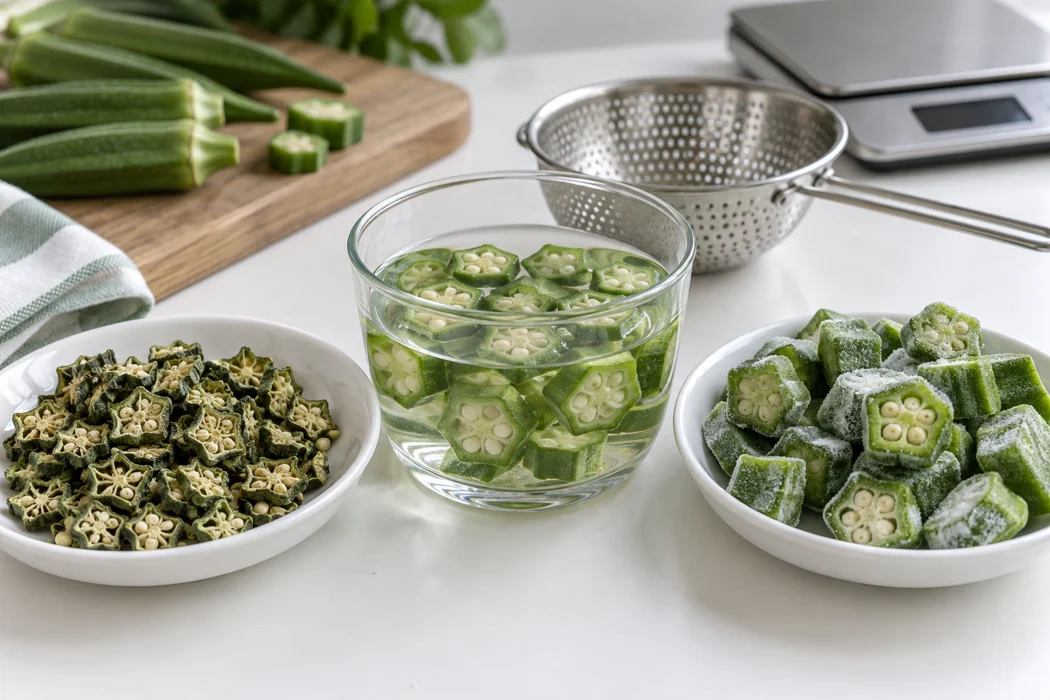
For a soup developer, restored weight is useful but incomplete. Water can increase the sample's mass while pieces lose their identity or contribute differently to the broth. The commercial question is how much usable vegetable material reaches the finished product, with what texture and what preparation requirement. At GreenLand, we supply frozen okra according to the confirmed form and specification. Discussing a customer's dried comparison material does not imply that we supply dried pods, dried powder or an ultrasound-treated ingredient.
Start with the actual dried alternative
Begin with the ingredient description on the sample and its technical sheet. Whole dried pods, dried cross-sectional slices and powder are different inputs. A soup that requires visible pieces cannot assess a powder using the same piece-integrity criterion. A comparison between dried slices and whole frozen pods also changes geometry. Identify species, cut thickness, maturity or size information where available, and any added ingredients before assigning a rehydration target. The name okra does not define the physical state that enters the buyer's kitchen or processing line.
The drying route belongs in the identity. Hot-air drying removes water under one set of thermal and mass-transfer conditions; freeze-drying uses a different process. Their outputs should not be grouped together as a uniform dried reference. Even within one route, pretreatment, cut size, loading and final moisture may differ. A supplier's statement that a product is dried okra leaves too much unspecified for a performance comparison. Request the technical history that is relevant to the intended test, while recognizing that proprietary process detail may require a separate technical discussion.
Plain IQF okra carries its own identity. The verified GreenLand product pages describe washed, trimmed, blanched and individually frozen forms, including whole pods, baby okra, cuts and slices subject to order confirmation. The frozen sample contains water and retains a different structure from a dehydrated sample. Its handling route and added-water requirement are different. Comparing the two on equal purchased kilograms can therefore change the amount of vegetable solids in the formula. That may be commercially useful to calculate, but it does not establish application equivalence.

Hot-air dried, freeze-dried and plain IQF inputs retain distinct process identities.
Confirm whether the dried material received blanching, ultrasound, osmotic treatment or another preliminary operation. Such operations may change both the tissue and the material that reaches the dryer. A pretreated sample may lose soluble components to an immersion medium or gain components from a solution, depending on the process. The buyer needs the ingredient declaration and relevant processing history before assuming that water uptake simply restores the starting fresh vegetable. If that information is absent, keep the trial labeled as a comparison of supplied samples rather than a general conclusion about drying.
The received condition matters as well. Record pack opening date, storage condition, moisture information, visible damage and the amount of powder or broken material. A dry sample that has absorbed moisture during storage may begin the trial with a different starting denominator from a tightly controlled retained sample. Broken edges and small fragments may wet differently from intact slices and alter the amount of solids lost during draining. Keep representative photographs and retain some unopened material when possible, so an unexpected result can be investigated without relying only on memory.
An illustrative GreenLand scenario is a soup manufacturer asking whether rehydrated dried okra can replace its plain frozen slices at the same portion weight. We would clarify the actual supplied frozen form, the dried comparison sample and the customer's soup process before interpreting the claim. This scenario is reconstructed for purchasing discussion and does not report a past customer case. Its value is the material question: what enters each formula, what is measured during preparation and which finished-food properties determine acceptance? The answer cannot be supplied by an ingredient name alone.

Cut okra is a defined frozen comparison form; it is not a rehydrated dried sample.
The comparison sheet should identify uncertainty directly. If the dried supplier confirms hot-air drying but cannot provide the pretreatment history, the buyer can still evaluate that supplied sample in soup. It cannot confidently transfer the result to other dried products or claim that ultrasound caused its behavior. Likewise, an IQF reference from one specification should not represent every cut, maturity grade or processing history. A precise sample identity protects both the commercial discussion and the scientific interpretation, particularly when a trial is later used to negotiate repeat supply.
Pretreatment altered the rehydration response in the study
Tüfekçi and Özkal's original paper, "Enhancement of drying and rehydration characteristics of okra by ultrasound pre-treatment application," investigated fixed-thickness slices before hot-air drying. The accessible publisher abstract describes 5 mm cylindrical slices and comparisons involving ultrasound treatment time, amplitude and drying-air temperature. It reports altered drying behavior, better rehydration properties and microstructural changes observed by scanning electron microscopy. These are the directly supported findings used here. The complete paid protocol was not available for this article, so numerical rehydration ratios and detailed reproduction instructions are not supplied.
The experimental structure is useful even when its full data are unavailable. It treats pretreatment as a factor in the dried material's response and uses more than one outcome. A processor assessing a dried alternative should similarly recognize that the sample has a history before soaking begins. The relevant comparison is between defined treatments of comparable material, with the drying operation retained in the record. It is too broad to say that ultrasound improves every okra ingredient, or that a larger uptake value proves a more desirable texture for every application.
The reported microscopy observations support a relationship between pretreatment and tissue structure. They do not give a customer a visual specification for an untested dried lot. The conceptual diagram in this section illustrates water entering a tissue structure whose internal pathways have changed. It is not a reproduction of the study's microscopy or a claim about measured pore sizes. Its purpose is to show why the same botanical ingredient can behave differently after different processing. A photograph of restored slices and a measurement of uptake should be read alongside the material history.

The diagram illustrates changed water pathways; it supplies no microscopy or pore-size measurements.
Drying speed and rehydration are separate endpoints. A pretreatment that changes the time needed to remove water may also change how the dried material takes water up again, but the purchasing value of each result differs. Drying efficiency belongs primarily to the producer's operation. Rehydration preparation time affects the customer's process. Finished texture affects the food's acceptance. Keep these endpoints separate when reading a technical report. A benefit to one operation cannot be assumed to cover the others unless the experiment actually assessed them under relevant conditions.
Other primary okra research has examined different pretreatments and dryers. The University of Kentucky's research record describes blanching, microwave and pulsed-electric-field comparisons. The Journal of Applied Horticulture paper examines ultrasound before microwave drying. A separate open study concerns ultrasound and freeze-thawing before vacuum freeze-drying. These studies broaden the evidence that processing history matters, but they are different systems. Their settings or rankings cannot be inserted into the original hot-air study as if the experiments used one protocol. A buyer should read the route and sample definition before comparing headline outcomes.
The original experiment did not include a plain IQF equivalence test. That missing bridge is central to the procurement question. Even if a dried slice takes up water more readily after a pretreatment, the restored piece must still be assessed against the frozen reference under the customer's cooking and holding conditions. The word improved describes the study's defined response. It does not by itself mean improved commercial bite, identical mucilage contribution or full restoration of fresh structure. A substitution claim should identify which of these properties has actually been demonstrated.
For a supplier discussion, ask for the report behind the claimed benefit. It should name the sample, control, pretreatment, drying route and rehydration procedure, and distinguish laboratory observations from an application trial. If only an abstract is available, use its bounded conclusion to plan further work. Avoid converting incomplete access into a detailed operating recipe. GreenLand can help confirm the offered frozen ingredient and sample specification, while the buyer or its dried-ingredient supplier establishes the comparison material's relevant history and evidence. This division keeps the discussion concrete.
Write a complete rehydration measurement
A rehydration result needs a denominator and a preparation method. Record whether the starting mass is the received dry product, a moisture-corrected dry-matter mass or another basis. Two reports can use the same term while dividing by different quantities. A ratio of drained wet mass to received dry mass is useful for a defined preparation yield. A water-gain calculation addresses a different question. State the equation in the report and use one basis across the compared samples. Without that information, a larger ratio is difficult to interpret commercially.
Measure the starting sample under a recorded condition. Include the amount weighed, the fraction of whole pieces and fines, and the moisture result if a dry-matter correction is used. An as-received basis includes the water already present in the dried product. A dry-matter basis removes that water mathematically but depends on the measurement used to estimate it. Neither basis should be silently substituted for the other. For formulation work, the buyer may need both received-product yield and the estimated vegetable solids delivered to the soup.
Define the water environment. Temperature, water-to-sample ratio, water composition, agitation and soak duration can affect the comparison. A limited volume of water may behave differently from a large excess, particularly when soluble material enters the liquid. If the customer's recipe begins with seasoned broth, a test in plain water can provide a controlled baseline but may not predict the same response in the product. Record both when needed and explain their different purposes. The article does not set a universal soaking temperature or time for every dried okra.

State the dry starting basis and drainage method beside the rehydration ratio.
Drainage is part of the measurement. Surface liquid and liquid retained between pieces contribute to wet weight unless the preparation controls them. Specify the sieve or separation method, drainage time and any blotting procedure, and apply the same method to all compared samples. A vigorous draining or pressing operation can also damage restored pieces. The method should resemble the customer's intended handling when preparation yield is the objective. Otherwise, identify it as an analytical procedure with its own limitations. A result measured under one drainage condition should not be sold as another condition's usable yield.
Restored mass can rise while solids leave the piece. If material dissolves or fragments into the soaking liquid, a wet-weight result alone may conceal that loss. Retaining and examining the liquid helps identify whether the preparation changes the solids distribution. For a soup that uses all soaking liquid, some transferred material may remain in the finished recipe. For a process that discards that liquid, the same movement can reduce delivered solids. The buyer needs to define which stream enters the food before interpreting uptake as retained vegetable value.
Evaluate structure alongside weight. Photograph slices under comparable lighting and observe whether their edges, central seed pattern and piece identity survive the soak and subsequent handling. A texture measurement can be useful when matched to the application, but the test should specify the preparation state and orientation. The restored sample may be suitable for a blended soup even when it fails a visible-piece requirement. That is an application distinction, not an error in the uptake test. A complete report describes both the mass response and the material that the customer can actually use.
Repeat the measurement using representative material rather than a selected attractive subset. Report variation and unusual pieces as well as an average, especially when breakage is commercially important. A single high ratio may reflect a particular sample condition or drainage practice. Repeated comparisons help the team decide whether the observed difference is stable enough to include in a specification. Retain the method with the result, because an approved number without its preparation conditions cannot be reproduced reliably by receiving staff, another laboratory or a future supplier.
Compare usable material in the intended soup
The soup trial should begin with a clear formulation basis. Equal kilograms of frozen okra and dried okra deliver different amounts of water and vegetable solids. Equal restored kilograms may also deliver different solids if uptake and loss vary. Decide whether the test compares equal vegetable solids, equal visible-piece loading or an economically proposed commercial substitution. Each answers a useful question, but the interpretation differs. Record the basis before cooking so that a thicker broth or larger portion cannot be attributed automatically to pretreatment history.
Balance added water explicitly. The frozen input contributes water within its tissue, while a dried input may require water during restoration and may contribute some soaking liquid to the recipe. If that liquid is included, it belongs in the formula. If it is discarded, record the drained ingredient and any material lost with the liquid. The drawing accompanying this section shows separate piece and liquid regions in two soup portions. It explains the bookkeeping relationship without claiming a tested recipe or a guaranteed equality between the two materials.
Use the customer's real cooking sequence once the initial comparison is controlled. A dried slice soaked separately before addition may experience a different sequence from an IQF cut added directly to a hot soup. The timing of ingredient addition, agitation and heat exposure can change piece survival and broth properties. A baseline preparation trial can isolate uptake, while an application trial establishes usable performance. Both are valuable when their purposes are stated. Neither should replace the other in a report that claims the dried alternative can meet the finished-food requirement.

A soup comparison balances vegetable solids and recipe water, then assesses pieces and broth separately.
Judge piece identity after the full process. A slice that looks acceptable immediately after soaking may break during stirring, filling or the customer's final reheat. Visible seeds, intact edges and the distribution of pieces may matter in a retail soup or foodservice portion. If a product will be blended, those criteria have less weight and the texture of the continuous phase becomes more important. The buyer should state the relevant endpoint instead of treating a general photograph of rehydrated okra as proof of suitability for every soup format.
Broth texture needs its own assessment. The article's subject is tissue rehydration, and it should not be expanded into a claim about isolated okra gum replacing starch. In a real soup, the vegetable material and released components can still contribute to mouthfeel. Measure the finished system at a defined temperature and after the relevant hold, using a method that reflects the product. An increase in water uptake does not directly predict a particular viscosity. Keep piece texture and sauce texture as separate results, then consider whether their combination meets the buyer's brief.
Flavor and appearance can decide whether an otherwise practical substitution works. The dried ingredient may have a different color, aroma or preparation history from the frozen reference. Evaluate the actual supplied material without assuming these differences are favorable or unfavorable. A trial should include the product condition at consumption, rather than only the freshly prepared laboratory portion. If the soup is packaged and reheated, the reheat is part of the application evidence. If it is held for service, assess the agreed hold. State which conditions the approval covers.
Commercial comparison follows usable performance. Calculate purchased material, preparation water, losses, preparation time and the portion yield using the same finished-product basis. A lower ingredient price can be offset by additional handling or a different loading requirement, while a useful dried material may simplify another process. These are customer-specific outcomes to measure. GreenLand's role in the comparison is to define the supplied IQF reference and its specification, so the buyer can evaluate a real frozen input alongside its actual dried alternative. The original study provides no economic equivalence guarantee.
Approve substitution only for the demonstrated use
A substitution claim should name the property and conditions demonstrated. A dried slice might meet a soup's piece requirement after a particular preparation, or supply an acceptable continuous texture in a blended product. A statement that dried okra replaces frozen okra without qualification leaves the form, formulation and process unspecified. The evidence should connect the supplied lots to the tested recipe and describe the acceptance criteria. This allows purchasing to approve a defined use while preserving the scientific limit that the original hot-air experiment did not compare IQF performance.
At GreenLand, we would ask the developer to send the intended soup, the actual frozen form and the two reports or trial conditions being compared. The dry-material description, uptake equation, water conditions, drainage method and final cooked observations make the comparison assessable. Include whether soaking liquid enters the recipe and how vegetable solids were balanced. These questions reflect the illustrative customer scenario, rather than an invented past transaction. They help the team identify whether disagreement arises from the ingredient, the measurement basis or the final cooking operation.
The frozen specification should remain clear during that discussion. Confirm whole, baby, cut or sliced form; relevant length, diameter or thickness; broken-piece tolerance; packing; quantity; and destination requirements. The commercial sample should represent the intended order and remain connected to its lot record. A whole-pod photograph cannot establish sliced performance, and a small laboratory portion does not establish the distribution in a shipment. We help purchasing match the confirmed frozen form to the customer's trial so that its reference is technically and commercially identifiable.

Approve the demonstrated soup use with its identified lot, form and preparation.
The dried supplier's repeatability information is equally relevant. If pretreatment and drying history caused the reported behavior, the future supplied material should remain within the history that the approved trial represents. The buyer may need an agreed received-moisture range, cut definition, fines tolerance and rehydration test, subject to technical discussion. A high uptake result from one development sample cannot be assumed for a later material with another route. Ask which controls support repeat performance and which changes require a new application trial. This is the practical consequence of treating pretreatment as part of ingredient identity.
Keep quality and safety conclusions separate. A soaking procedure that produces acceptable texture does not establish microbiological control or shelf life for a hydrated ingredient. The customer's responsible team should assess the preparation and subsequent process in its own food system. The supplier's dry-storage declaration also cannot be applied automatically after water is added. This article provides an evidence framework for performance comparison; it supplies no universal safe holding time for restored okra. Document the actual food-production controls alongside the quality trial before approving commercial use.
The existing GreenLand whole-okra freezing guide explains form choice, blanching, IQF handling and receiving questions. It provides background for the frozen reference. The article on uses beyond stewing discusses applications for frozen okra. Those pages answer adjacent questions, while this article retains the distinct issue of how pretreatment and drying change the material later restored in water. A buyer can follow them for the frozen supply context without confusing a freezing guide with the original ultrasound experiment or implying that GreenLand offers its dried treatment route.

Whole pods and slices need different application and size specifications.
Approve the actual comparison with a bounded conclusion and retain its method. The report should say which material passed, in which soup, at what loading and preparation condition, and which outcomes were measured. If evidence establishes only better water uptake, keep the conclusion at that level until the finished-food trial is complete. If piece integrity or broth texture fails, use that result to refine the material decision. A defensible substitution follows usable performance in the intended food, supported by the material's processing identity and a repeatable rehydration measurement.
Source frozen okra with GreenLand-food
GreenLand-food manufactures frozen okra in China. We fill factory-direct wholesale orders for importers, food manufacturers, foodservice distributors and private-label programs.
Tell us how you'll use frozen okra and where you need delivery. We'll review the product form and specification with you, then confirm packing, quantity, private-label details and requested documents. Include the actual trial conditions and acceptance criteria for your application.