


Egypt ACI, ACID, NAFEZA and CargoX for Frozen Food
Oct 20, 2026
Leave a message


Reviewed 20 October 2026. Shipment requirements are checked for the actual product, route and filing date.
NAFEZA also tells the importer to instruct the foreign exporter to send the shipment documents through the blockchain network upon vessel departure. That is a distinct event from supplying preliminary ACI data at least 48 hours before shipment. In practice the exporter should ready the final document package before departure where possible, then transmit according to the live CargoX/NAFEZA and carrier instructions and retain the receipt. Do not turn the 48-hour pre-shipment rule into a 48-hour-before-arrival rule or assume that a final issued bill exists at the preliminary-data stage.
Assign NAFEZA, CargoX and carrier responsibilities
The Egyptian importer initiates the ACID request in NAFEZA. The official phase-one steps show the importer logging in, entering foreign-exporter details, shipment and item data, preliminary bill information if available, and invoice information. The platform then issues the ACID and sends a notification to importer and exporter. The importer should verify its own tax and company details and the proposed tariff item with its licensed advisor. The Chinese seller can provide accurate exporter identity, product, invoice and packing facts but should not submit a request in the importer's name without the authorised role.
The foreign exporter uses CargoX, the electronic document-transfer network connected to Egypt's ACI process. CargoX company verification is a real prerequisite. NAFEZA's exporter-verification notice warns that an unverified exporter cannot upload and send the shipment records needed by the importer, even if an ACID has already been issued. Before taking a first Egyptian order, the supplier should confirm its legal entity, authorised user and successful account verification. A colleague's verified account for another company or a draft registration screenshot does not establish that this exporter can transmit the documents for the shipment.
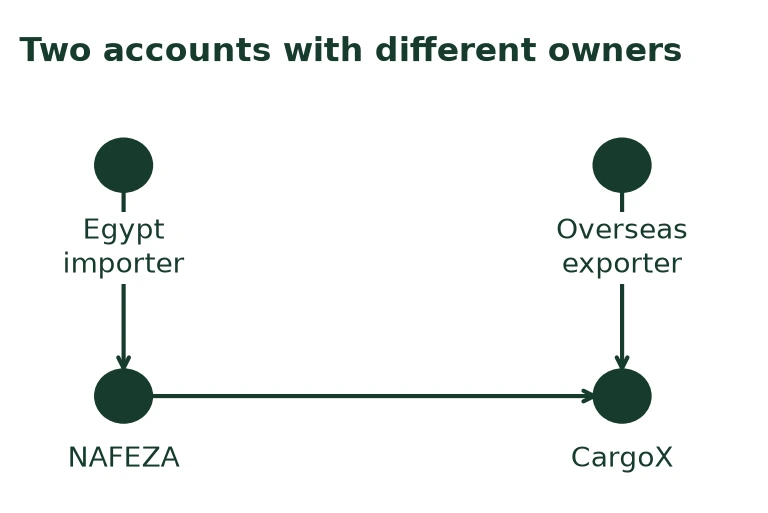
The local import record and the overseas document-transfer account are distinct steps.
The carrier and any ocean forwarder need the correct ACID and associated importer/exporter references in their bill instructions. Maersk's ACI notice describes a carrier's refusal to load when required ACI data are missing or fail validation. Carrier business cut-offs can therefore be earlier than the legal pre-shipment window. Ask the booked shipping line for its current Egypt ACI instruction and check whether a foreign forwarder has an additional verified CargoX role. Do not assume that a freight quote includes every ACI validation step.
The importer, exporter and carrier should agree a single order reference that appears on the pro-forma invoice, final invoice, packing list, booking and document-transmission register. The ACID becomes a critical additional reference once issued. Assign who checks the ACID against the NAFEZA record, who inserts it in the carrier's bill instruction, who sends the CargoX envelope and who confirms receipt on the Egyptian side. A seller's "documents emailed" status covers none of those platform receipts. The buyer should retain screenshots or exportable messages that show actual transaction outcome, date and linked ACID.
If a consignee or exporter entity changes after ACID issue, stop and ask the importer and carrier how to correct the ACI file. The supplier should not erase the prior legal entity from its invoice and reuse the same number on a different relationship. Such a change can affect account verification and carrier validation. Record the old and proposed new values, reason, exact ACID and the platform response. The parties decide whether an amendment is possible or a new request is needed under current Egyptian rules.
Verify the exporter before promising a sailing
Company verification is best handled before the purchase order becomes urgent. The exporter should use its own authorised CargoX account and complete the platform's current identity procedure. Keep a dated proof of verification, the company legal name and identifier the Egyptian importer should use in NAFEZA. The legal name on the commercial invoice and shipment documents should match the registered exporter identity unless a documented, approved structure explains otherwise. The importer can then enter the correct entity when requesting the ACID. A broker cannot repair a mismatch by editing a commercial PDF after cargo is loaded if the system identity remains wrong.
Do not treat the mere existence of a CargoX account as verification. The NAFEZA warning explicitly links incomplete exporter verification to inability to transfer documents and inability to proceed with release. In a first-order readiness check, ask the exporter-side CargoX administrator to demonstrate that the account can prepare the intended Egypt ACI transmission. The check should use platform-approved test or account status methods; it must not expose private keys or credentials in a shared purchase-order folder. Limit access to authorised staff and keep business receipts instead of screenshots of sensitive account settings.

Frozen mango dice: identify the actual form, packing and intended use in the shipment file. Product photograph; not evidence of a filing result.
Frozen mango dice for your import programme
Tell us your destination, intended use, cut or grade, packing, quantity and preferred shipment window. We can coordinate the proposed source, sample specification and origin documents with your importer and appointed filing team. The actual lot, factory and required documents are agreed before dispatch.
View product and supply details
Request Specifications & QuoteThe buyer should also confirm the importer account and authority in NAFEZA. NAFEZA's phase-one form outline shows that the importer supplies its own information, foreign-exporter details, commodity lines, preliminary bill fields and invoice data. A supplier may not know the final Egyptian tariff or importer tax identifier, so it should supply factual product and commercial details and leave classification to the buyer's responsible professional. The importer should return the issued ACID and the validated exporter reference, not ask the supplier to infer the number from an informal chat message.
For a frozen mango order, GreenLand-food should state whether the goods are IQF chunks, slices or puree, whether sugar or any other ingredient is added, the source/production facts supported by the lot file, and the pack. This matters because the pro-forma description becomes the initial ACI item description and later needs to reconcile with final invoice and bill. A broad "frozen fruit" line can conceal a material difference. The buyer separately checks Egyptian food, label, plant-health and import requirements for the exact product. This shipping guide cannot certify those matters from an ACID receipt.
Set an internal document calendar. One checkpoint confirms both companies' platform readiness, another freezes preliminary item and commercial facts for the importer's ACID request, another confirms the issued ACID before carrier instruction, and another covers final CargoX document transfer after loading. The vessel date should be a planned shipping event, not an excuse to postpone company verification. If the exporter cannot complete verification in time, communicate the risk to the buyer and carrier and revise the booking rather than loading a container that cannot be documented.
Build the ACID from truthful preliminary data
The importer does not need every final container detail to begin the ACID request. NAFEZA lists pro-forma invoice or purchase-order information and a draft bill if it exists among the pre-shipment data. Its phase-one sequence requests shipment, item, initial bill and invoice fields. The seller can therefore issue a controlled pro-forma with proposed product, quantity, value, exporter identity and origin, and clearly label any provisional transport fields. When final facts become known, the importer and carrier should reconcile them with the ACI file through the permitted correction route.
The NAFEZA ACI page states that data or documents are required at least 48 hours before cargo shipment from the export country. This wording relates to the advance request and risk review, not a blanket promise that every final bill copy must exist 48 hours before vessel arrival. Some commercial guides confuse these clocks. We plan the preliminary data before the pre-shipment window, then obtain the carrier's own earlier instruction if applicable. The importer should check the latest NAFEZA guidance for the exact ocean route and any official amendment because operational cut-offs can evolve.
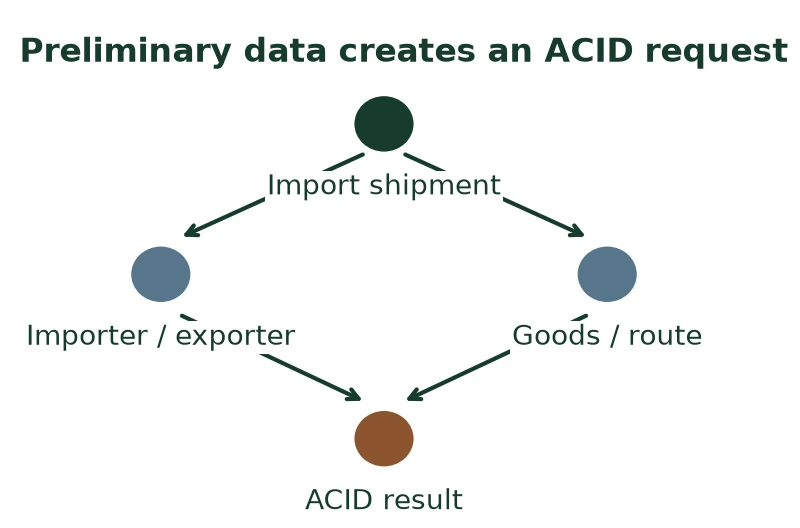
Obtaining the shipment reference does not complete food approval or customs release.
An ACID is a shipment identifier, so keep it with the specific transaction. Do not reuse it for another buyer, vessel or substituted exporter without importer confirmation. On receipt, compare the importer and exporter IDs, product description, HS line as assessed by the importer, invoice reference, loading and arrival ports, package and weight estimates, and intended bill. If a field is wrong, raise the discrepancy before the carrier locks the booking. NAFEZA offers a validation and lock service for shipping lines and forwarders; its own page warns that locking shipment data prevents amendment. Coordinate the point of lock with the importer rather than treating it as a clerical formality.
GreenLand-food should record which provisional values were supplied and when. For example, an initial pro-forma might show 20,000 kg of IQF mango chunks, while the final loaded net weight is 19,840 kg after carton rejection. The change is understandable if it is documented and corrected in the relevant commercial and ACI records. Sending a final invoice with a different quantity but no change note can leave the importer and carrier holding inconsistent instructions. The supplier's pack-out report, final invoice and packing list should form a three-way quantity check before document transfer.
Do not treat ACID issuance as food admissibility. It is part of the advance cargo procedure. The Egyptian importer still needs to verify the current legal status of the product, plant or food certificates if required, labels, tariff, payment and customs conditions. A frozen-mango sample could have different documentation from a commercial reefer. Ask the importer's regulatory advisor about the actual order before production. This article keeps the ACID workflow focused so the shipping team's receipt checks do not hide an unresolved product requirement.
Transfer the final document set through CargoX
Once the ACID and exporter account are ready, the exporter builds the electronic document set as final documents become available. NAFEZA's ACI document list names a commercial invoice, packing list, bill of lading copy and certificate of origin among commonly required records, with additional documents depending on cargo. Keep each file legible, complete and named with the order and ACID. The importer should confirm which cargo-specific official certificates are required; the seller cannot infer them from the ACI document list alone.
The same NAFEZA list specifies the invoice in PDF plus an XLS/XLSX NAFEZA template or conversion, the packing list and bill copy in PDF, and a 5 MB maximum per document on NAFEZA/CargoX. The exporter and importer should test their actual files against the live platform before the carrier's cut-off. Compressing a scan must preserve signatures, stamps and readable item descriptions. If an invoice line changes after the structured file was produced, revise both representations together; a correct PDF paired with an older spreadsheet gives the importer two different quantity records.
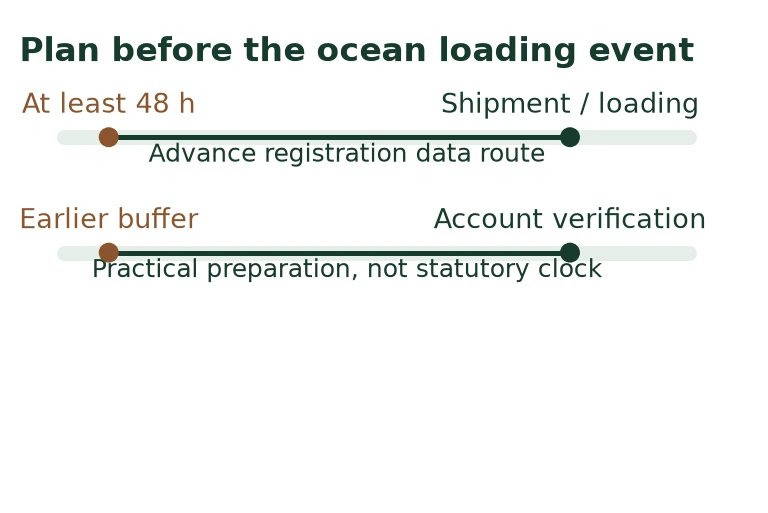
Use the ocean ACI instructions and actual booking event. Do not borrow an old air transition date.
The invoice should identify the real exporter and Egyptian importer, ACID where instructed, product lines, quantities, values, currency and origin. The packing list should connect carton counts, weights, pallet count, lot codes and container to those lines. The bill copy must reflect the actual carrier and bill numbers; NAFEZA says a copy is used for its file, not the original negotiable bill. A certificate of origin must come from the proper issuer when required. If a health, phytosanitary, inspection or analysis certificate is required for this mango product, confirm that specific requirement with the importer. A company COA is not an automatic replacement for an official certificate.
CargoX transfers documents to the importer/NAFEZA workflow. The exporter should check the actual envelope recipient and ACID, send it from the verified company account and save the platform transaction and delivery status. The importer should confirm the documents appear in its ACI file and are usable for its next customs step. A copy of the invoice sent by ordinary email is helpful for coordination but does not establish the required platform transfer. Conversely, a CargoX send receipt does not prove the importer accepted every document's substantive content; questions and rejections still need to be resolved.
Version control is crucial when a bill changes after departure. If the vessel, bill number, package total or consignee changes, the exporter records the old and new data, the reason, and which files were already transmitted. The importer and carrier decide whether the ACI record or bill data must be amended. The exporter sends a revised document through the applicable CargoX route, preserving the previous version and platform receipt. Replacing a local PDF with an identical filename does not remove an earlier document from the Egyptian file or update a locked carrier record.
If the CargoX account, network or payment process blocks transfer, escalate through the platform's official support and inform the importer before the shipping deadline. Keep the error message, time, affected ACID and recovery receipt. Do not ask a third party with an unrelated verified account to impersonate the exporter. A legitimate delegated representative may be possible under platform rules, but the authority and sender identity must be recorded. The cold-chain team should monitor the loaded reefer while the document issue is resolved and account for any changed sailing or terminal dwell time.
| File or data | Source and required format | Owner and receipt to retain |
|---|---|---|
| ACID and exporter identity | Importer-issued NAFEZA ACID, with the verified exporter's registered identity. | Importer returns the ACID notice; exporter checks it against the company account and order. |
| Commercial invoice | Exporter's signed commercial facts in PDF **and** XLS/XLSX NAFEZA template or converted Excel. | Exporter sends both through the verified CargoX account; retain envelope and importer-side NAFEZA receipt. |
| Packing list | Exporter's final lot, carton, weight and container record in PDF. | Exporter sends the same revision used for the carrier bill; importer confirms receipt. |
| Bill of lading | Carrier's bill **copy** in PDF, never the original negotiable bill for this upload. | Carrier supplies the correct copy; exporter transfers it when available and saves the delivery result. |
| Certificate of origin | Proper issuer's PDF certificate for the actual shipment. | Exporter obtains and sends it; importer confirms the file is readable in the ACI case. |
| Conditional product certificates | Issuer's PDF health, phytosanitary, analysis or other certificate only when this cargo requires it. | Importer confirms requirement; exporter obtains the competent issuer's evidence and saves the transfer receipt. |
Reconcile ACID across carrier, invoice and container
The carrier may need ACI references during booking, shipping instruction and bill production. Confirm its current instruction for how ACID and importer/exporter identifiers appear on the master and any house bill. Maersk's Egypt guidance illustrates that a carrier can prevent loading where ACI information is missing or invalid. The particular ocean carrier's current rules govern its booking. Ask for a validated shipping-instruction status rather than relying on a verbal "number received."
Make an identity bridge with ACID, importer ID, exporter CargoX ID, invoice and purchase-order numbers, booking, master and house bills, container, seal, vessel, voyage and lot. Check the values on the pro-forma, final invoice, packing list, bill instruction and CargoX transmission. A one-digit error in ACID may let an invoice look complete to a human reader while failing carrier or NAFEZA validation. A duplicate ACID copied from the previous shipment can connect the new reefer to the wrong importer record. Read the number back from the NAFEZA notice and have a second person compare it before the instruction is sent.

Frozen mango dice: identify the actual form, packing and intended use in the shipment file. Product photograph; not evidence of a filing result.
Use physical evidence to settle a conflict. If the packing list says 1,980 cartons and the bill draft says 1,890, check the loading tally and rejected-carton record. Correct the source document that is wrong, then ask the importer, carrier and CargoX sender to update affected records. The factory quality team separately confirms the released production lots. A corrected bill cannot make rejected cartons part of the shipment. Keep photographs of container and seal where relevant, plus the signed loading report, so the commercial and electronic records can be reconciled to what actually sailed.
The shipping plan should include a final pre-load gate. The importer confirms a valid ACID and NAFEZA file; the exporter confirms verified CargoX access and required document-transfer readiness. The shipping line or authorised forwarder uses NAFEZA's validation-and-lock service to check the ACID, importer tax ID, exporter registry type, foreign exporter number and exporter country before shipping, then records the returned result and the time it locked the shipment data. NAFEZA says that lock prevents further amendment of shipment data. Reconcile provisional quantity, parties and bill instructions before this event. The exact final-document timing follows current official and carrier rules, so the team should not wait for a bill issued after sailing before addressing preliminary data required before shipment. If validation fails, hold the loading decision and route the discrepancy to the importer and carrier; reefer gate-in does not prove load clearance.
At Egyptian arrival, the importer and its broker manage customs, food, documentary and physical release. The supplier can answer product and lot questions and send legitimately corrected evidence. The ACID and CargoX receipts are necessary ACI evidence but do not waive inspection or prove food quality. Retain the carrier's arrival notice, importer's status and cold-store receipt separately. If official action delays pickup, make sure reefer power and temperature monitoring remain arranged. A shipping procedure is successful only when the correct container can be traced and the authorised parties can act on the official outcomes.
Work a frozen-mango ocean example
Suppose an Egyptian juice processor orders IQF mango chunks in bulk 10 kg cartons. GreenLand-food confirms cut size, maturity and quality specification, production lots, pack, quantity, private-label or industrial use, and destination. The importer checks Egyptian food and plant rules outside this ACI procedure. Before production is committed to a sailing, the exporter verifies its own CargoX company status and gives its registered legal details to the importer. The buyer creates an ACID request in NAFEZA from the approved pro-forma and preliminary voyage information at least within the official pre-shipment window.
The buyer returns the ACID notice. The shipping coordinator checks it against exporter and importer IDs, invoice and item description, then enters the number in the carrier's Egypt bill instruction as required. The factory packs the mango, records carton totals and lot-to-pallet mapping, and seals the refrigerated container. The final invoice and packing list are compared with the actual load before the carrier locks the ACI shipment data. The line or authorised forwarder validates the five NAFEZA identity fields, records the result and lock time, and confirms whether the container can load. The exporter sends final documents through CargoX as available and obtains transaction evidence; the importer confirms receipt in NAFEZA.
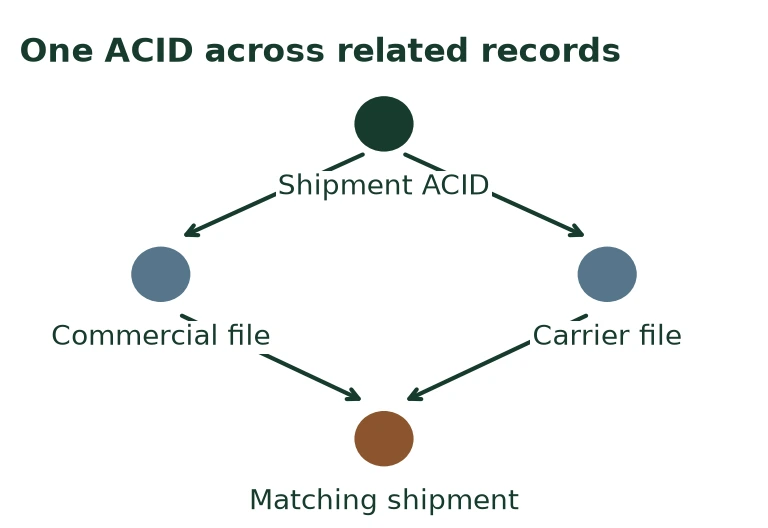
The same reference must belong to the same importer, exporter and physical consignment.
Suppose the final carton count is lower than the pro-forma because one lot did not pass the agreed appearance check. GreenLand-food records the physical count and asks the importer and carrier to reconcile it before ACI validation and lock, then issues the correct final invoice and packing list. If the reduction is discovered after lock, stop treating it as an ordinary editable ACI field: the importer and carrier must obtain the applicable NAFEZA correction direction and decide whether the sailing can still be used. The exporter sends corrected documents through CargoX only in coordination with that decision, preserving old and new versions and receipts. The rejected lot is never represented as shipped. The reefer stays under the agreed temperature controls through any changed departure or arrival plan.
Suppose instead that CargoX reports the exporter company is unverified. The team stops assuming the ACID alone will support departure. The exporter resolves verification through the platform's official process, the importer confirms whether the shipment file remains valid, and the carrier rechecks its loading condition. If the planned sailing cannot be met, communicate a new date and protect the product. Do not use an unrelated company's account or conceal the error by emailing PDFs. At destination, the importer follows the actual customs and food decisions, then records physical release and the received lot for its manufacturing traceability.
Preserve receipts and set a realistic next-order cut-off
The finished shipment file should show a continuous sequence: verified exporter account, approved preliminary data, ACID request and issued notice, carrier validation, CargoX document transfer, importer receipt, amendments, vessel loading and arrival, and destination disposition. Keep the source messages and exact document versions. A green cell labeled "ACI done" cannot explain whether the importer merely requested a number, the exporter sent documents, or the carrier accepted its instruction. These are distinct checkpoints whose timing and owner matter when a shipment is delayed.
For repeat orders, review which event caused extra time. If the ACID request waited for a product description, improve the supplier's pro-forma template. If the carrier rejected a bill reference, update the identity bridge and second-person comparison. If document transfer waited for CargoX verification, complete account readiness before accepting the next sailing. If a health or origin certificate caused delay, ask the importer to confirm that requirement while the order is still being negotiated. Each correction belongs to the team that controls that source step.
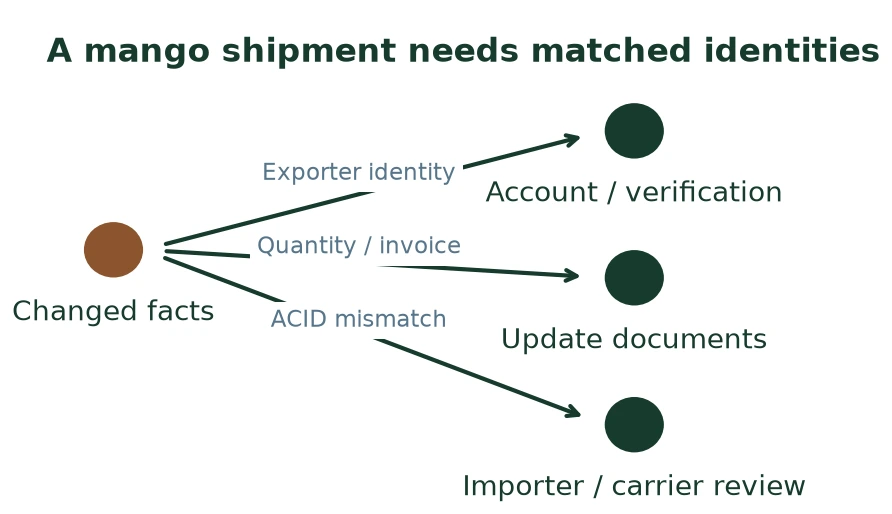
Correct the affected record before shipment rather than reusing another consignment reference.
The purchase contract should state the product and packing, agreed documentary deliverables, who pays for any official certificate and who acts as importer and filer. It should also define a date for preliminary ACI facts and a separate date for final shipping documents. A production completion date is insufficient for Egypt-bound delivery when ACID and carrier validation precede loading. We can provide a batch-linked invoice, packing list, product specification and origin information, but the buyer's importer and logistics parties must approve the Egyptian route and submit the official records.
GreenLand-food acts as a China-based supplier and manufacturer for factory-direct wholesale frozen-food orders. For an Egypt inquiry, share the frozen mango form, cut, quantity, carton or private-label pack, port, intended use, requested documents and target sailing. We can then prepare accurate product and shipment data for the importer to start NAFEZA ACI, and schedule final documents for CargoX and the carrier. The buyer should confirm current Egypt law and carrier rules for its actual transaction; the shipment file should demonstrate each accepted step rather than rely on a single number printed on the bill.
- Importer verifies its NAFEZA role; exporter verifies its own CargoX company account before booking pressure.
- Importer requests ACID using controlled preliminary data within the required pre-shipment window and returns the issued reference.
- Carrier/forwarder validates the required identifiers and records lock status; reconcile changes before locking.
- Exporter transfers actual final documents through CargoX when required; importer confirms NAFEZA receipt and completes separate destination formalities.
Use the existing order worksheets
Use T10 to assign each field or document to its provider, reviewer, due time and returned reference. T12 records changed source, product or transport facts; T11 preserves arrival evidence. Keep the legal deadline separate from the agreed earlier handover.
Build your frozen food order with GreenLand-food
GreenLand-food is a professional frozen food supplier and manufacturer in China, providing factory-direct wholesale supply for importers, food manufacturers and foodservice programmes.
Send your product form, specification, packing, quantity, application, destination, private-label needs and requested documents. We will organise the product and order requirements with your purchasing and quality teams.