


Matching Food Certifications to Factory Changes and Private-Label Orders
Oct 20, 2026
Leave a message

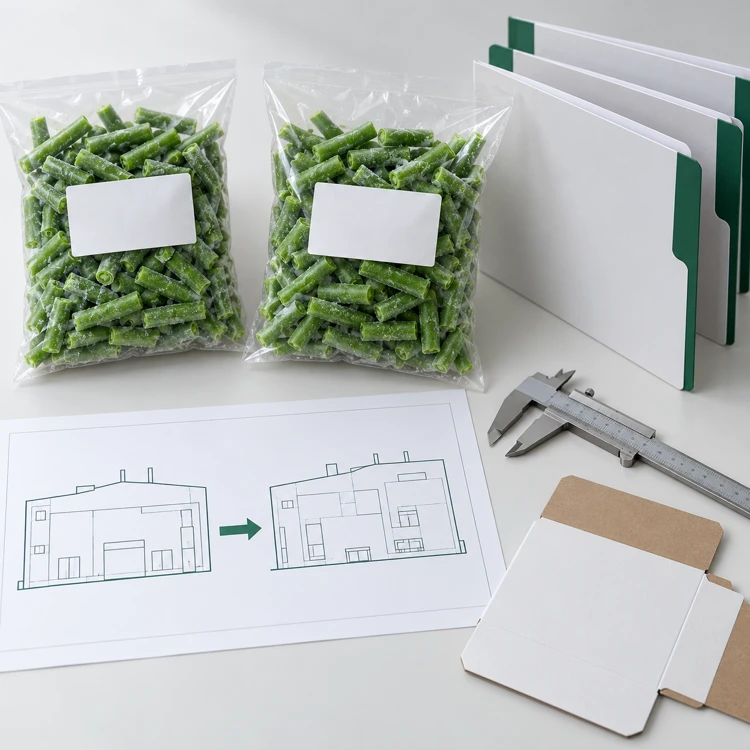
A factory, recipe or brand change needs an order review before certified supply is reconfirmed. Match the actual legal site and activities, check product and ingredient approvals where the scheme requires them, obtain the correct artwork permission, and keep affected stock identified until the authorised reviewers approve it. The evidence differs between management systems, organic programmes and religious certification.
Examples below are demonstrations, not records of a completed GreenLand order. A current certificate, approved plant, production validation and lot result must come from their actual records. Sources reviewed 20 October 2026; use the linked certification and country guides for the full underlying application and import procedures.
Define exactly what changed in the order
Start with a before-and-after product record. Copy the existing approved species, plant part, cut, ingredients, processing, site, pack, brand, destination and intended use into one column, then place the proposed facts beside them. Record the old specification revision and effective date rather than relying on an email subject such as same product, new packing. A different site address or an additional treatment can matter even when the commercial product name and carton weight are unchanged. Keep the buyer's reason for the change with the record so the review resolves a practical supply need.
Separate the commercial question from the approval question. A buyer may ask whether another source can meet a delivery window; we can investigate capacity and a matching sample while quality examines its scope. A possible quotation is not permission to print a certification mark or mix stock. If the buyer requires one named processing site, a technically capable alternative is still a supplier change needing buyer acceptance. The order acknowledgement should identify the accepted source or make the pending decision explicit before production is allocated to it.

Whole green-bean supply form shown; the segment example in this guide requires its own cut specification and approved route.
Match the green-bean form and claimed supply route
For foodservice or prepared-food production, confirm whole pods or the actual cut, cooking use, industrial pack, destination and requested certification. The photo shows whole beans; approval of cut segments needs the defined order and sample.
View IQF green-bean supply forms
Request Specifications & QuoteFor plain cut green beans, an unchanged ingredient list does not establish an unchanged process. The revised route may involve off-site cutting, another blancher, a different freezer or a separate packer. A mango order can keep the same chunk dimensions while changing its cultivar, maturity range or processing aid. A spinach order can move from cook-required filling material to an unheated application. Those changes affect quality, hazards or legal assessment independently of certification. Record them as separate review questions so an accepted certificate does not become the answer to everything.
Our proposed change record identifies the requester, original and revised SKU, affected purchase orders, first intended production date, stock already made, documents needed and each decision owner. It also records which requirements did not change. The buyer confirms application, destination, specification and requested claims; GreenLand coordinates the supply information; factory technical staff describe the route; an authorised quality reviewer determines the evidence needed for release. Send the revised facts to the responsible certifier when its approval is required. A general statement from a trader cannot replace that decision.
Use a short demonstration to test the record. Order GB-A covers plain Chinese-grown green-bean segments for cooking, made and packed at Site A under Brand One. The proposed order GB-B keeps the bean and cut but moves packing to Site B and adds the buyer's Brand Two. Treat packing-site coverage and brand permission as two questions. If a seasoning is then added, create a third formula review and update the label. This example assigns no real factory, certificate, price or approval; it shows why one checkbox marked certificates available is inadequate.
Recheck the legal site and every contracted processing step
Read the legal entity, physical address, scheme, issuer, certificate identifier, scope, status and relevant dates from the actual document. Compare the physical address with the processor that will handle the food, not just the sales company's office. If a site has changed its legal name or address, obtain the issuer's explanation and updated record where required. Keep the original certificate and its applicable annexes together. A directory entry is useful for checking status, but a broad entry alone may not describe every product, activity or outsourced step in the order.
Management-system and food-safety scheme scopes are not interchangeable with a product approval list. IFS Food Version 8 ties certification to a production site and its actual product and technology scope. It distinguishes partly outsourced processes from fully outsourced or traded products; a Food certificate does not automatically cover everything a company sells. Brand names are not part of its scope description. Match the order through the site's activities and product coverage, and retain any separate buyer or product approval rather than demanding that every retail SKU be printed on a system certificate.

Document the physical handover; approval is not implied.
Draw the physical route from raw receiving to final packing. Identify which legal site washes, peels, cuts, heats, freezes, sorts, stores or repacks the food, and whether product leaves and returns. Obtain the relevant scheme treatment of any contracted step from the certificate holder and certification body. For taro dice, outsourced peeling can introduce another traceability and hygiene handover. For lotus slices, moving the wet treatment can change the process record. An existing certificate for the final freezer cannot be assumed to certify another company's earlier operation.
Check a scheme's version against its transition rules rather than the newest headline. FSSC published Version 7 in May 2026. Its official upgrade requirements allow Version 6 audits through 30 April 2027 and schedule Version 7 upgrade audits from 1 May 2027 to 30 April 2028. A buyer should therefore check current status, scope and its contractual requirement instead of rejecting an active Version 6 record solely because Version 7 exists. Record the next audit or upgrade obligation when it affects the proposed supply period.
GreenLand requests the actual certificate and scope, process flow, named contracted sites and the processor's change response before reconfirming a claimed supply route. The buyer checks that this meets its approved-supplier policy. Quality keeps unresolved site or activity coverage on hold and states whether that hold affects the claim, the artwork, the proposed production or all three. A separate food-safety concern can hold the physical lot even when no certification claim is requested. The release record must preserve those different reasons and the person authorised to resolve each.
| Order change | Evidence to obtain | Decision that remains separate |
|---|---|---|
| New processor or packer | Legal site, current scope, process route, contracted-step status | Buyer approval and food-safety qualification |
| New ingredient or processing aid | Full composition, supplier identity, scheme approval where required | Destination legality, hazard and label review |
| New brand or artwork | Approved product/brand record and mark permission where applicable | Mandatory local label and importer review |
| New organic handling step | Certified operator/activity or documented specific exemption | Consignment document and lot traceability |
| Different intended use | Revised product definition, process and validation assessment | Safety suitability and cooking directions |
Separate recipe changes from an unchanged product name
Obtain the complete revised composition and process-input declaration before deciding that a product remains plain or single ingredient. A sauce, glazing formulation, colour treatment or new aid can be absent from a short sales description while changing the review. Record the name, function, manufacturer, source and specification of each input, including those used in an earlier contracted operation. The technical reviewer determines its legal treatment in the destination and whether it needs declaration. Certification review considers the scheme's own approval rules; those two decisions should not be collapsed into a statement that an input is acceptable everywhere.
A useful comparison is plain mango chunks versus mango chunks with a supplied fruit preparation. Both may be sold for a dessert line, but the second formula can contain several ingredients and carriers. The plant should supply the actual preparation specification and the quantities used; the buyer needs enough information to assess composition and labels. If flavour or enzyme manufacture is relevant to a religious scheme, provide its accepted supporting documents to the certifier. Do not infer the origin of a carrier or aid from a friendly product name, or assume a vegetable base settles the entire question.

Review composition, hazard, labels and scheme approvals separately.
Mixing products creates another scope problem. Adding edamame to a vegetable blend introduces soybean identity and the applicable allergen review. Changing a plain shiitake mix to a seasoned product introduces the seasoning supplier and shared-equipment assessment. The signed formula should have a revision, controlled ingredient codes and permitted substitutions. A purchasing shortage must not become an unrecorded replacement in production. GreenLand asks the factory to identify substitutions before use and coordinates the buyer and certification responses, keeping the affected material distinct while those decisions are pending.
Trace the change into the plant documents. Update the bill of materials, process flow, hazard assessment, cleaning or changeover instructions, ingredient approval records, label specification and test plan where affected. Technical staff decide whether the modified process needs additional validation; the laboratory confirms any changed matrix or analyte scope. For example, a broad pesticide method qualified for a plain vegetable may not automatically cover a new oil-rich sauce matrix. A certificate reviewer and a laboratory reviewer answer different questions, and both outcomes may be needed for one release.
For the first revised run, record which input lots were used and reconcile consumption, finished quantity, retained samples and waste. Line clearance should remove superseded labels and material belonging to the previous formula. If an unapproved substitution is discovered, identify the first use, production interval, rework and later lots that received it. Hold that defined scope while quality investigates; seek the relevant certifier and buyer decisions without editing the history. A new document issued afterward does not by itself establish that earlier stock was produced under the necessary approval or controls.
Approve the brand, artwork and permitted statements
A private-label order needs a controlled artwork identity as well as a product identity. Record the brand owner, manufacturer or responsible operator shown on the pack, destination language, product name, ingredients, use instructions, net quantity, dates, lot code and requested claims. Identify which company approves the commercial design and which responsible party checks local food information. Keep an artwork revision and a signed or otherwise controlled approval record. An email attaching a logo does not establish that the logo may be printed on this food at this site.
Ask what the mark actually represents. A management-system certificate, organic product claim and religious certification symbol operate under different rules. Check the scheme's current brand-use instructions for the exact placement, including whether a business carton is treated differently from consumer-facing packaging. Obtain written clarification when the proposed use is uncertain. Our proposed order process does not copy a certificate logo onto the bag as decoration. The packer receives the approved artwork and the permission that supports it, and quality checks a first printed or packed sample against that version.

A logo file is not permission to print it on the order.
OU provides a clear product-specific example. Its private-label guidance explains that a manufacturer's own approved product does not automatically authorise another customer's label. OU uses an approved product schedule and a private-label agreement before the relevant symbol can be used. That is an OU route, not a claim that every Kosher body uses identical document names. Ask the buyer's accepted certifier for its equivalent product, brand and artwork decision. Keep the approval with the actual SKU rather than merely beside a general company certificate.
Separate certification permission from local regulatory label review. The US importer's food-label obligations, Japanese importer instructions and EU food-information requirements do not disappear because a religious symbol has been authorised. FDA confirms that it does not issue food-facility registration certificates; registration is not product approval. A customer's proposed cook-required statement must agree with its intended use and the supplied process. If the buyer later asks to remove cooking directions for an unheated dessert application, reopen the safety assessment before artwork approval; changing words cannot validate the food.
Control obsolete material physically. Record unused bags, cartons and labels by revision, segregate superseded stock and authorise its disposition. During first production, inspect the correct name, mark variant, lot-code readability and destination information on finished packs. Reconcile printed or issued quantities with used, returned and destroyed material. If a wrong claimed label was used, identify all affected packs and subsequent dispatches, hold remaining stock and coordinate the appropriate buyer, certifier and regulatory response. A corrected PDF on the office computer is not evidence that the actual cartons have been corrected.
Keep the organic chain intact through changed handling
Organic review follows the operator chain and the destination programme. Identify the growing source, processor, any separate freezer or packer, storage, trader, exporter and importer, then record what each actually does. The applicable EU, US NOP or Organic JAS route determines which operators and activities need certification and which specific exemptions may apply. A foreign organic logo or a certified farm alone does not establish a compliant processed and traded order. The buyer should state the required destination claim before source selection, so the chain can be checked before organic stock is moved or relabelled.
For the United States, USDA's current certification guidance includes selling, trading, importing and exporting within handling, subject to limited exemptions. Importing and exporting are not exempt activities. Do not reuse older advice suggesting every broker of sealed industrial packs can operate without certification. Check the actual activity against current requirements, not just whether a bag stays closed. GreenLand requests the relevant operator status and the buyer's accepted certification route before reconfirming a US organic order through a changed trader or exporter.

Representative broccoli product appearance; a photograph does not establish organic status or a certified lot.
Read organic status differently from a simple annual expiry box. The operation's current certification status, certified activities, product coverage and annual maintenance matter. A certificate's issue date alone is not proof that it has expired or that its coverage continues unchanged. Check the official operation record and certifier information, including any product addendum needed for this order. Where the chain changes, ask the certifier which update, approval or inspection is required before the new activity begins. An order worksheet should record the actual decision and date rather than automatically marking every older PDF invalid.
Keep transaction and lot evidence with the operator evidence. US organic imports need the applicable NOP Import Certificate associated with the shipment; EU organic imports use the relevant control and electronic certificate-of-inspection route; Organic JAS claims have their own certification and labelling conditions. Our organic import guide explains those routes. For a changed broccoli packer, reconcile the organic incoming lot, processing and packing quantities, cleaning or segregation records, carton codes, invoice and shipment document. A consignment document cannot repair an unqualified operator or unidentified raw material.
Apply a defined response to a break in the chain. Isolate the affected organic-claimed quantity and its labels while the responsible certifier and importer determine the status and permitted disposition. Establish whether other batches share the same handling event or records. If conventional sale is considered, it still needs food-safety, legal, customer and relabelling approval; removing a logo is not an automatic release. Preserve the original trail, decision and any corrected document. The buyer then receives a clear statement of which identified goods may be supplied under which claim, with the corresponding commercial terms reconfirmed.
Resolve Kosher and Halal approval for the revised SKU
Begin with the customer and destination's accepted body and product requirements. A familiar certificate issuer may be accepted by one customer and unsuitable for another programme or legal recognition route. Obtain the current certificate, product or ingredient approval as applicable, relevant site information and mark conditions. The Kosher buyer guide and Halal buyer guide describe the underlying applications. This change review asks which parts of those approvals survive the proposed order and which need the certifier's decision.
The practical questions differ by product. A spinach programme can require an accepted insect-control and inspection approach tied to its source and processing. Replacing that source with another crop lot or factory needs the certifier's relevant review, not a simple copy of the old wash instruction. For mango or blueberry, disclose any aid, coating or treatment and the shared line. For taro, bamboo or shiitake, provide the actual species, process and all inputs rather than relying on a broad vegetables description. These are review inputs; this article does not prescribe a universal religious inspection threshold or industrial treatment.

The accepted body decides its requirements for this operation.
Shared equipment and utilities deserve an accurate process account. Tell the certifier what else is made on the equipment, how production is scheduled, what cleaning occurs, how rework is handled and whether separate contracted sites are involved. Provide requested sanitation, ingredient and production records through the responsible processor. Do not invent a universal cleaning temperature or contact time for Kosher or Halal changeover. The accepted body determines its requirements for the actual operation; the technical team implements the approved procedure and records its execution. Buyer preference alone cannot override a certifier's condition.
A useful changed-order demonstration is plain mushroom slices moving to a line that also makes a seasoned mushroom mixture. The base mushroom may stay identical, but the seasoning inputs, carryover, shared equipment and artwork now require review. Identify whether the plain run remains physically and documentarily separated under the accepted programme. Obtain any required product or process approval before claimed production, and hold labels until symbol use is authorised. If another country is added to the offer, check recognition and any applicable registration or consignment-document route rather than assuming the original destination decision transfers.
GreenLand assembles the order definition, actual facility and supplier contacts, input declarations, flow diagram and proposed label for the accepted body and buyer. The certificate holder and certifier resolve scope and supervision questions; factory staff retain production and cleaning evidence; quality reconciles the approved product and lot. If approval is refused or incomplete, explain the precise gap and proposed action: another qualified route, revised product, additional review or a different claim accepted by the customer. Keep a safety or regulatory hold separate. The commercial team should offer an executable option without presenting a pending certificate as an issued approval.
Control first production, existing stock and shipment release
Approve the transition boundary before the first changed run. List the last old-version batch, first revised batch, raw and packaging stock, open purchase orders, retained samples and any goods already in transit. Record which version each order will receive and obtain buyer acceptance where required. A single effective date may be insufficient when two factories or brands overlap. The traceability map should let quality find all cartons affected by a later discovery, including reworked material or mixed pallets. Keep the approved old and new records available without overwriting their differences.
Run the first-production checks appropriate to the change. For a different green-bean cutter, compare dimensions, ends, strings and cooked tenderness under the approved method. For another taro source, repeat the relevant fully cooked application and yield comparison. For a new packer, confirm code, seal, net weight, claimed artwork and the product's frozen condition. Certification review does not replace these technical checks. GreenLand coordinates the agreed sample and records, while the plant records actual settings and findings and the buyer confirms performance where its application is involved.

Retain both versions and the disposition of affected goods.
Release should assemble a small, coherent decision file: revised specification, change request, approved source and activities, current certificate or status evidence, any required product or brand permission, formula and process review, first-run results, label approval, batch identity and shipment documents. Identify each outstanding question and its owner. The authorised quality reviewer signs only the quantity and claim supported by that file. Logistics matches those released lot codes and pack versions to the invoice, packing list and loading records, then hands the agreed documents to the importer or agent by its filing deadline.
If a mismatch appears after dispatch, use the recorded transition map instead of recalling a whole season by assumption or limiting the issue to one complaint carton. Identify quantities still held, in transit and received; preserve original documents, photos, samples and temperature records. Contact the responsible buyer, certifier and authority as required by the actual event and applicable rules. A revised certificate or corrected label issued later does not erase a historical discrepancy. Record the investigation, permitted disposition and verification of the correction before repeat supply resumes under the claim.
Use the existing T06 certification/SKU worksheet and T12 change-and-traceability worksheet together. The first records what approval covers; the second records what changed and which goods are affected. Keep blank or unresolved fields visible until evidence is obtained, and attach the original decisions rather than replacing them with a green score. Send us your product, revised site or formula, destination, intended use, brand, packing, quantity and required certification. We can work through the actual approval and supply steps and return a matched specification and quotation with the relevant conditions made clear.
- Buyer and sales record the original order and requested change, including claim and affected quantities.
- Factory technical staff provide the revised composition, sites, process and stock boundary.
- Quality and the accepted certifier resolve the applicable scope, product and mark approvals.
- Buyer and responsible label reviewers approve the specification, application and artwork version.
- Production records the first changed run and keeps old, held and revised stock identifiable.
- Quality signs the supported batch/claim decision; logistics and the importer use matching shipment records.
Use the existing order worksheets
T06 records the scope and status evidence. T12 preserves the change, affected lots and dispositions. Attach the original approvals and leave unresolved questions assigned to an owner.
Build your frozen food order with GreenLand-food
GreenLand-food is a professional frozen food supplier and manufacturer in China, providing factory-direct wholesale supply for importers, food manufacturers and foodservice programmes.
Send your product form, specification, packing, quantity, application, destination, private-label needs and requested documents. We will organise the product and order requirements with your purchasing and quality teams.