


Australia ICS, COLS and IFIS: Frozen Food Import Documents
Oct 20, 2026
Leave a message

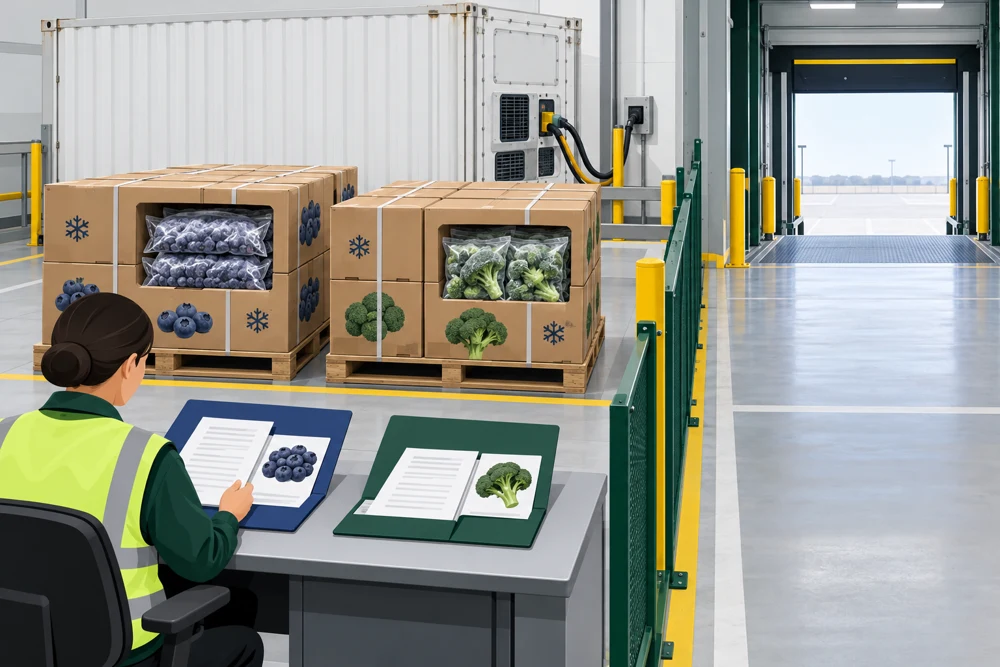
Reviewed 20 October 2026. Shipment requirements are checked for the actual product, route and filing date.
Separate the four decisions and their owners
BICON is the research and eligibility starting point. Its biosecurity case tells the importer whether the exact commodity, source, processing state and intended use are permitted, require a permit, require particular documents or treatment, or are subject to other conditions. BICON now also includes imported-food safety cases. The DAFF food-import guide directs importers to check biosecurity conditions first and then food safety requirements. The supplier can provide botanical identity, production process, ingredients and country of origin, but the Australian importer must select and retain the applicable case for its proposed goods.
ICS is the customs cargo and declaration system. The Australian Border Force import-declaration page says an importer or licensed customs broker can lodge an import declaration in ICS, and explains the distinction between an import declaration, a self-assessed clearance declaration and a warehouse declaration. For ordinary commercial frozen-food consignments with customs value over AUD1,000 (unless a specific exception applies), a full import declaration is expected; the importer or broker decides the legally correct entry. Customs classification, value, origin, transport and importer details belong to that declaration. A packing-list PDF in COLS does not lodge the ICS declaration.
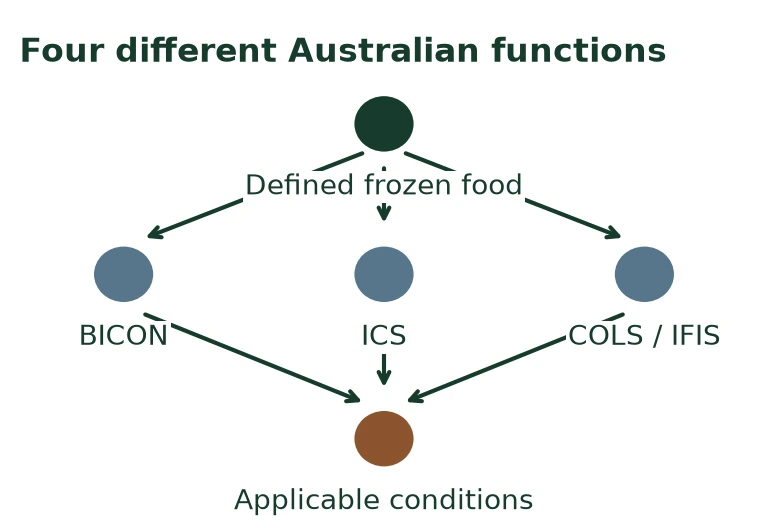
BICON addresses conditions, ICS the customs entry, and COLS/IFIS the applicable document and food control steps.
COLS is DAFF's online route for supporting cargo documents. The DAFF COLS lodging update states that from 10 August 2026 all documents will be lodged through COLS, while describing limited self-assessed clearance categories handled through a stated email route. Frozen reefer cargo should use the process DAFF currently directs for its actual declaration type. The importer or broker uploads the documents requested by the BICON case and by DAFF. The supplier should label each file with a stable shipment reference and make sure it describes the same product and quantity declared in ICS.
IFIS is DAFF's border food-inspection and testing scheme. The department may refer food for examination according to its risk and surveillance framework. Its step-by-step guide explains that a Food Control Certificate tells the importer whether the food needs inspection and any tests, and that referred goods must remain on hold until the applicable decision. The IFIS process is not a form automatically signed for every frozen-vegetable import. A distinct document called the IFIS Importer Declaration exists for limited categories discussed later. Conflating the scheme and that form creates an unnecessary and sometimes inaccurate document request.
Use four rows in the purchase-order control plan: BICON case and permit decision; ICS declaration and customs status; COLS document acceptance and DAFF direction; IFIS/FCC outcome and physical release. Name the owner, reference, date and evidence for each. GreenLand-food can supply and correct factual inputs, including a batch-specific specification, invoice and packing list. The importer and broker make the official submissions and receive the authoritative messages. A freight forwarder can coordinate transport, but a carrier's ETA does not close customs, biosecurity or food inspection.
| Procedure / owner | Required input | Result to request |
|---|---|---|
| BICON / importer | Exact species, source, processing, ingredients, use. | Dated case and answers, permit/certificate decision. |
| ICS / importer or licensed broker | Importer, classification, value, origin, shipment and invoice. | Declaration reference and actual customs status. |
| COLS / importer or broker | Same final shipment records, documents required by actual case and DAFF, AA location. | Lodgement reference, query responses and DAFF direction. |
| IFIS / importer, DAFF and appointed lab | FCC if referred; accepted lab nomination before test-linked booking. | Inspection/test outcome and DAFF clearance or continuing hold. |
Define the frozen product against the exact BICON case
The product definition determines which BICON case and imported-food safety entries are relevant. "Frozen blueberries" could describe cultivated berries, wild berries, puree, a sweetened blend or a fruit ingredient prepared for further processing. The source, species, processing method, ingredients and intended use can change the conditions. The buyer should save the actual BICON case, answers and access date for the proposed goods. A customs HS code is useful for broker classification but does not by itself prove BICON eligibility. If the case requires an import permit or official certificate, the importer should settle that requirement before the goods are packed.
For an IQF cultivated blueberry order, our specification can state fruit identity, origin, frozen whole form, whether any additive is used, bulk carton and liner, quantity, lot codes and intended food-manufacturing use. We can provide process and quality records that correspond to the order. The buyer's BICON review may ask for additional evidence or different wording; we confirm the real process rather than tailoring a document to a desired outcome. A photograph from the IQF cultivated blueberries product page shows a possible supply form, not the biosecurity or IFIS status of the shipped lot.
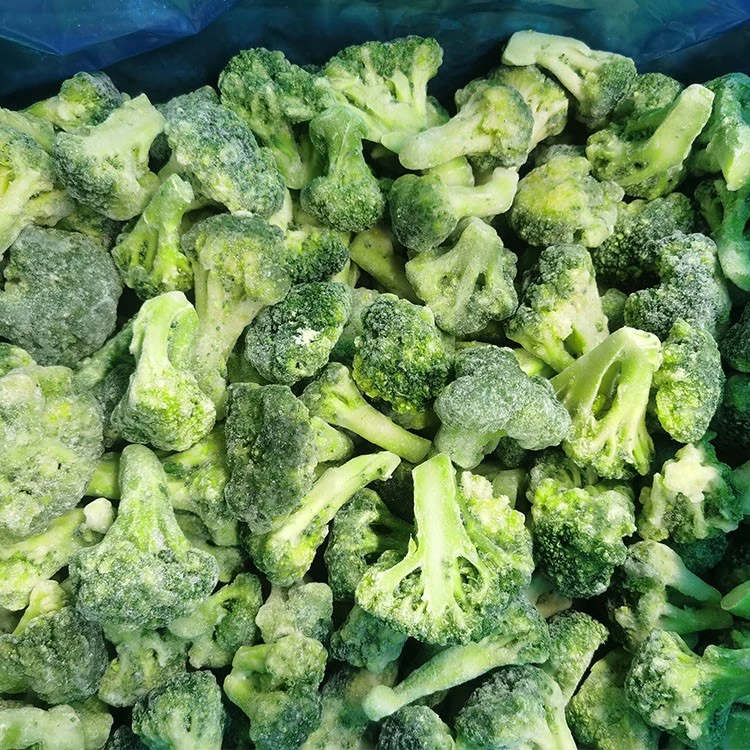
Frozen broccoli florets: identify the actual form, packing and intended use in the shipment file. Product photograph; not evidence of a filing result.
Frozen broccoli florets for your import programme
Tell us your destination, intended use, cut or grade, packing, quantity and preferred shipment window. We can coordinate the proposed source, sample specification and origin documents with your importer and appointed filing team. The actual lot, factory and required documents are agreed before dispatch.
View product and supply details
Request Specifications & QuoteThe same principle applies to vegetables. Frozen broccoli florets may be blanched, while an unblanched or seasoned preparation is a different product description. The importer should verify the exact BICON commodity and food-safety case instead of borrowing conditions from a prior fruit shipment. If a mixed carton contains two products, list both and ask the broker whether separate declaration lines or supporting documents are required. A convenient umbrella phrase such as "IQF vegetables" is not a substitute for commodity-level facts. The factory's lot schedule must show which cartons correspond to each line and production date.
Build a dossier with an approved specification, ingredients and allergen statement if applicable, production process, certificate and test scope as contracted, commercial invoice, packing list, origin evidence, packaging and label sample, and lot traceability. BICON may require additional official documents; do not invent them from a generic import checklist. If a document names a factory, ensure it matches the producer on the order and any importer declaration. If the origin or producer changes after quotation, the buyer needs a new BICON and food-safety check before accepting the substituted lot.
The importer also needs labels and food-standard decisions. DAFF reminds buyers to check Australian food standards, including applicable allergens and labeling. GreenLand-food can share artwork and ingredients for review, but Australian compliance is judged against the final retail or business-use presentation and the current law. Bulk processing bags and consumer retail packs may have different label tasks. A supplier COA does not resolve an incorrect ingredient declaration, and a correct label does not eliminate an official biosecurity certificate. Keep these decisions in the buyer's product approval file while the shipping dossier carries the evidence the border reviewer may request.
Lodge the customs declaration and supporting documents coherently
The importer's broker builds the ICS declaration from commercial and transport data: importer identity, tariff line, origin, value, invoice, conveyance, bill of lading, container and other required fields. The ABF explanation makes clear that the importer remains responsible for the declaration, even when an agent lodges it. The supplier should send a final invoice and packing list before the broker's cut-off, with any later revision clearly numbered and explained. A provisional packing list can help planning; it should not silently become the final import entry if the loaded quantity changes.
DAFF's lodge-document guidance says importers and brokers complete full import declarations in ICS and use COLS for supporting documents. An ICS entry and a COLS upload can be valid individually yet refer to different quantities or descriptions. Give the broker and DAFF document preparer the same approved source packet. Reconcile invoice line, packing-list line, label, BICON case, container, seal and lot. If the reefer holds both fruit and vegetable products, the packet should show the line-by-line carton count and net/gross weights as well as container totals.
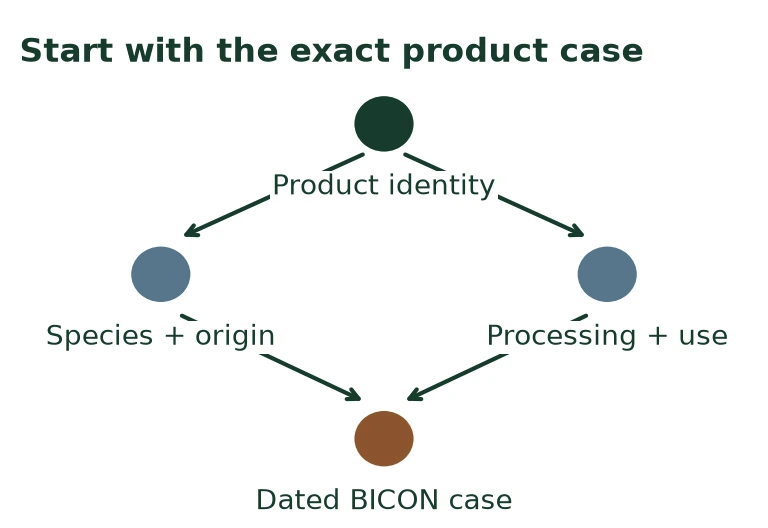
A fresh-food or different-species case cannot establish the frozen product conditions.
The 10 August 2026 COLS change makes current instructions important. DAFF says documents are lodged via COLS from that date, with specified exceptions for certain self-assessed clearance items. An older agency email or a broker's saved workflow may still tell a user to send attachments by email. The importer should use the current DAFF channel for the actual entry and preserve the COLS transaction reference. If a system outage occurs, follow DAFF's current contingency direction rather than sending sensitive commercial records to an unverified mailbox. A screenshot of an upload queue should be followed by a receipt or status that the document was actually submitted.
Plan the COLS packet before vessel arrival. DAFF's current COLS guidance asks sea-freight lodgers to submit complete documents 5–7 days before arrival so assessors can identify and resolve problems before discharge. This is a processing recommendation, not a new statutory filing clock or a guarantee of clearance in that period. Put the target and the actual lodgement time on the broker handover. DAFF also asks the lodger to nominate a valid Approved Arrangement inspection location, preferably with its AA registration number and name, even if the expected assessment is different. Record the nominated site and its cold-storage capability with the COLS reference. A COLS submitted or assessed status still has to be read alongside the actual DAFF direction and any physical inspection requirement.
Documents should be legible and named for a reviewer. A scan that cuts off a certificate number, uses a different factory spelling or shows an expired date can lead to a request for replacement. We can issue a corrected supplier document when a factual error is proven, preserving the earlier version and amendment reason. The Australian importer decides whether its ICS declaration, COLS submission or both need revision. Do not overwrite the invoice file with the same name in a shared folder and assume every recipient noticed the change. Send an explicit change log listing the affected fields and records.
If DAFF requests a certificate or proof from a government authority, the supplier should distinguish official evidence from a private company statement. A manufacturer's letter can explain a process but cannot stand in for an official certificate if the BICON case requires one. Likewise, a laboratory report can support a buyer's verification programme, but the relevant testing method, lot identity and accreditation scope matter. The importer's advisor checks whether DAFF will accept the specific document. We can provide source records and arrange a legitimate document from the competent issuer where the order and law require it.
Apply IFIS without inventing a declaration for produce
IFIS is DAFF's statutory imported-food inspection process. Food intended for sale can be referred for inspection and testing after biosecurity conditions are addressed. The DAFF IFIS page distinguishes risk food, surveillance food and other arrangements. These categories affect referral and inspection frequency. The importer should check the current BICON food-safety case for the product and the actual referral outcome; a supplier should not promise that a frozen vegetable will be automatically waved through because a previous lot was not examined.
The separate IFIS Importer Declaration has a defined purpose. DAFF lists mandatory use for certain unpasteurised-milk cheese and voluntary use for particular foods where Listeria monocytogenes growth is asserted not to be supported, including named cheese, cooked crustacean, processed finfish, heat-treated bivalve and cooked-poultry cases. This is not a general declaration to be signed for every frozen-fruit or frozen-vegetable shipment. A broker should confirm whether an actual product falls in a listed class before requesting it. If it does, the importer supplies the evidence required by DAFF and lodges the form through COLS.
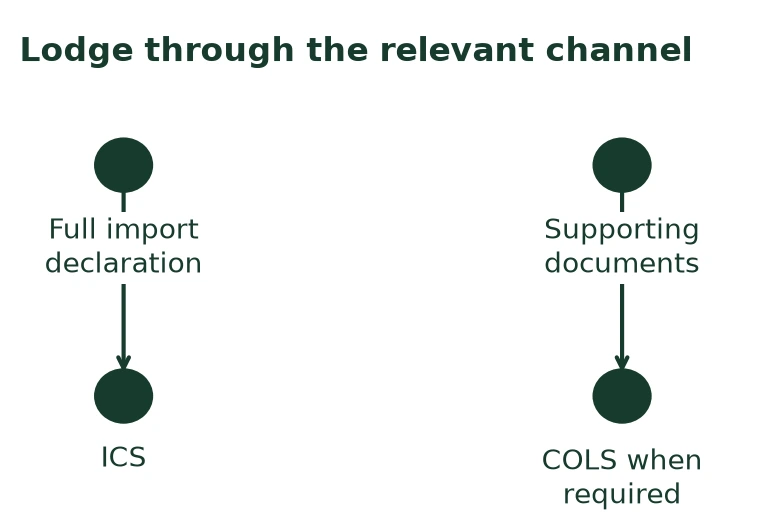
A customs declaration and department document submission have different inputs and outcomes.
For an ordinary IQF broccoli-floret order, the importer should instead focus on the exact BICON food-safety and biosecurity conditions, full import declaration, product and label information, and any actual IFIS referral. Do not pre-fill an irrelevant IFIS importer declaration to make a document pack look complete. It could make a false assertion about a process or microbial-growth property the supplier never established. A buyer may still request its own supplier declaration, product specification or laboratory report under a private contract. Label that as a commercial record, not the named DAFF form.
If DAFF issues a Food Control Certificate (FCC), read it line by line. It identifies the goods for inspection, the inspection direction and any laboratory testing. The referred consignment must stay on hold and must not be distributed until the applicable clearance. If the FCC orders analytical testing, the importer nominates an IFIS-appointed laboratory that can perform the required tests and serve the goods' location. Under DAFF's importer steps, an IFIS inspection cannot be booked until that laboratory has accepted the nomination. The sequence is FCC, accepted laboratory nomination, inspection booking, test result and DAFF direction, then release when all controls are satisfied. Arrange a temperature-suitable inspection location with the department and cold store. The supplier can explain lot and carton mapping and provide relevant production documents; it cannot substitute a private test result for an official direction unless DAFF accepts it under the applicable process.
An FCC or inspection appointment does not automatically mean a failure. It is an official control step. Record the reference, affected container and goods, sampling date, chain of custody, tests ordered, laboratory and final direction. During the wait, keep the reefer powered and monitor product condition. If the result is adverse, the Australian importer follows DAFF's instruction and decides the commercial response with the supplier. Do not relabel a rejected product or divert it to another customer without a new legal and quality assessment.
Read holds and releases in the correct order
Border clearance has at least three practical dimensions: customs control under ABF, biosecurity and food controls under DAFF, and physical release from the terminal or cold store. A message in ICS may address one dimension. The importer needs all conditions satisfied before distributing food. The DAFF step-by-step guide states that goods subject to an FCC inspection remain on hold. The broker should translate the current official statuses for the buyer, while the logistics operator manages storage and temperature. A vessel arrival notice is only an arrival notice.
Build a receipt ladder from booking to warehouse release. Record the BICON case and any permit, supplier dossier approval, ICS declaration reference, COLS document reference, DAFF direction, FCC if issued, inspection/test result if required, ABF clearance and physical pickup authorisation. Some records are conditional; mark them not applicable with a reason. Attach dated source messages rather than a colored spreadsheet cell alone. An auditor or customer complaint reviewer should be able to reconstruct which authority allowed each movement.
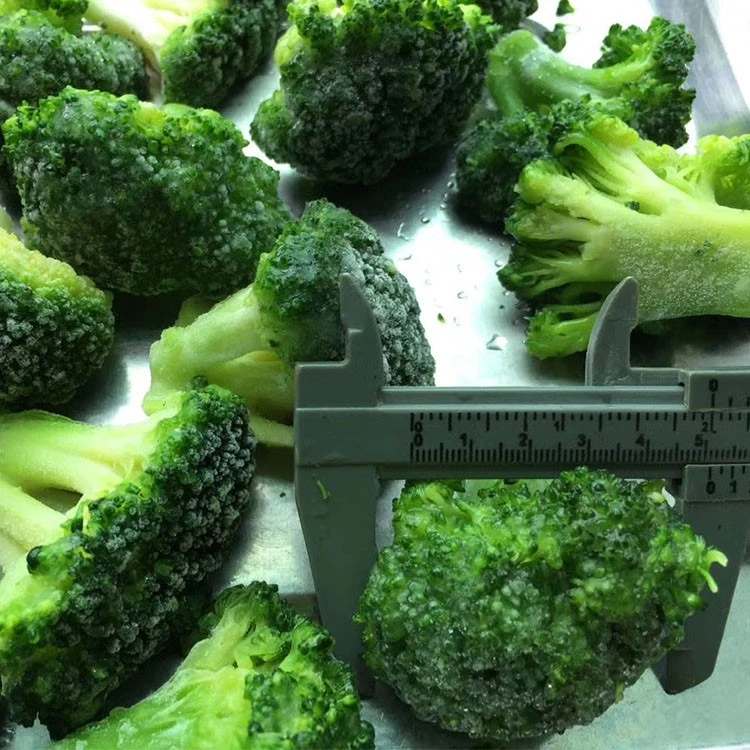
Frozen broccoli florets: identify the actual form, packing and intended use in the shipment file. Product photograph; not evidence of a filing result.
If a hold arises from a quantity mismatch, establish the physical count from the loading report and cold-store receipt. Then compare invoice, packing list, ICS entry and COLS documents. The importer or broker determines the necessary official amendment; GreenLand-food corrects its source documents if they were wrong. Keep the original and corrected versions. If the discrepancy is a damaged seal, stop normal unloading, record photographs and seal number, and let the importer, carrier, insurer and authorities decide the next step. A document correction does not resolve a physical integrity concern.
Temperature is part of the handover even though it is not a customs filing outcome. Log the agreed setpoint, container pre-trip information where available, seal, departure reading, transit logs supplied by the carrier and arrival reading. If an inspection requires cartons to be opened, arrange a suitable cold environment and note the time out of temperature-controlled storage. A clean IFIS result cannot prove the product remained frozen throughout transit, and a clean logger cannot waive an official hold. Keep both evidence paths tied to the same container and lots.
Close the import file after physical availability is confirmed. The buyer should retain the official decision, exact released quantity, any destroyed or re-exported portion, storage charges and a discrepancy report. GreenLand-food can use the outcome to adjust document templates and product specifications for a repeat order. Avoid a generic "Australia approved" label on the supplier master: approval of one shipment and case may not apply to another crop, ingredient, producer, processing state or future date.
Run a frozen-blueberry example from purchase order to cold store
Assume an Australian processor orders IQF cultivated blueberries from China in bulk cartons. Before confirming price and production slot, it checks the BICON case for that exact fruit, source and frozen state and confirms any permit, certificate, treatment, labeling and food-safety requirement. GreenLand-food supplies the real product and process facts and proposes a specification, sampling plan and pack. The importer or broker checks the tariff, value and customs route. This pre-order review prevents the supplier from producing cartons that cannot be supported by the destination's documented conditions.
On packing day, the factory records lot, production date, carton count, pallet range, container and seal. The shipping coordinator reconciles final invoice, packing list, specification and any certificate against that record. The Australian broker receives one controlled packet and lodges the full import declaration in ICS when appropriate. The importer or broker aims to lodge the required DAFF documents through COLS 5–7 days before vessel arrival, retaining the transaction and assessment statuses and identifying the nominated AA inspection site. If an older checklist asks for an IFIS importer declaration, the broker checks DAFF's named categories instead of assuming that a frozen berry requires it.
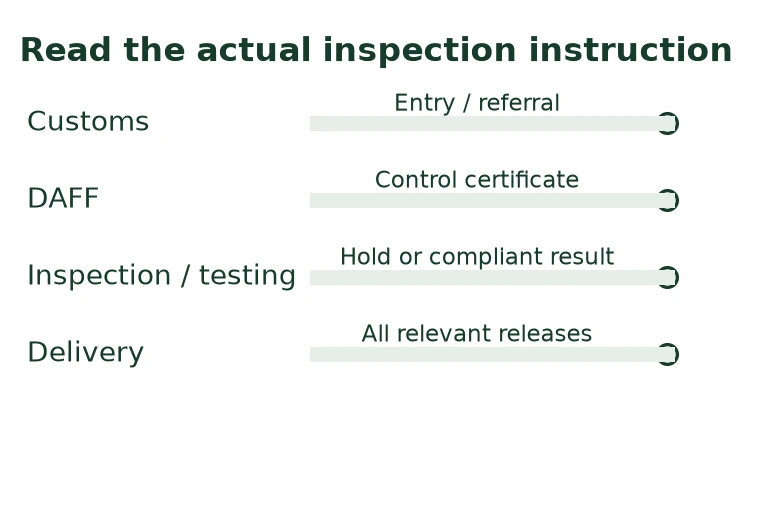
The food control instruction specifies what can move and what remains held.
At arrival, the importer reads the actual ABF and DAFF statuses. If there is no IFIS referral and all other requirements are met, the broker still confirms customs and biosecurity clearance and the warehouse's ability to release the goods. If DAFF issues an FCC, the cold store holds the blueberry lot; the importer books inspection and testing as directed. The supplier can locate sampled cartons and provide batch records, but cannot release the food by email. Once the official outcomes allow movement, the warehouse records the received quantity and temperature condition for the processor.
If the final packed weight is higher than the invoice draft sent to the broker, the supplier issues a numbered revision before the broker lodges or amends the declaration. The importer checks whether COLS attachments need replacement and whether the change affects BICON or test information. The document log identifies both versions and the accepted official outcome. A repeat order can use the same control structure but must re-check the BICON case, current DAFF instructions and the exact product. The buyer can request a quote with fruit or vegetable form, cut, pack, quantity, use, destination, private-label needs and required evidence. GreenLand-food acts as a China-based supplier and manufacturer for factory-direct wholesale frozen-food orders, preparing the factual shipment dossier for the responsible Australian parties.
Keep one controlled decision record for the next shipment
The completed order should yield a short decision record that a purchasing team can read without decoding system abbreviations. It names the exact product and BICON case, the importer and broker, the ICS declaration reference, the COLS document transaction, whether an FCC was issued, the final ABF and DAFF outcomes, and the date the cold store physically released the lot. Attach source messages and versioned documents. This record is useful for a repeat order because it shows what questions were asked and who answered them. It does not grant automatic approval to future goods.
Review exceptions by cause. A BICON mismatch points to an inadequate product definition or an unreported change in processing. An ICS reject points to customs data or declaration mechanics. A COLS query may point to unreadable, absent or inconsistent supporting evidence. An IFIS hold may be an ordinary referral or an adverse finding. Each issue should have its own owner, official reference, immediate action and closure. If all delays are coded as "customs," the buyer cannot improve the step that actually failed. GreenLand-food should amend its specification or document template only when supplier data caused the problem.
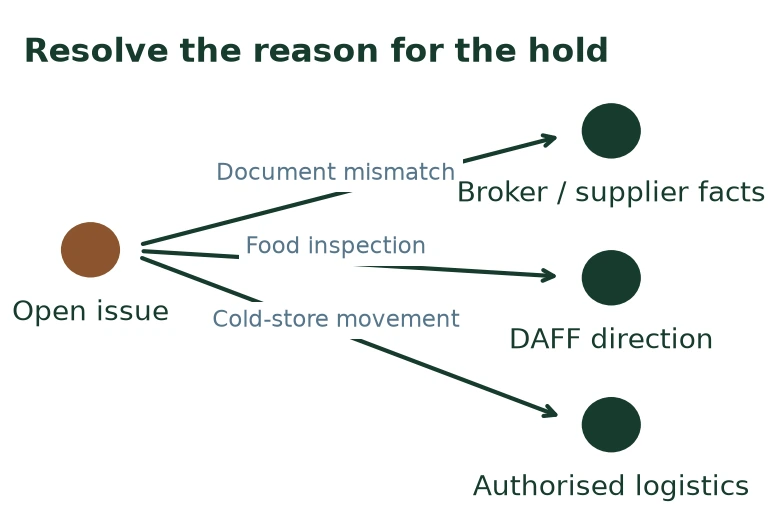
Keep the reefer and held goods controlled while the responsible authority resolves the issue.
For the next contract, state what information must be frozen before production and what can be finalized after stuffing. Product composition, factory and origin normally need early agreement because they drive BICON and food-safety review. Final carton totals, container and seal follow loading. The importer should set document deadlines that respect the actual vessel and broker schedule. If it needs a certificate from an official issuer, plan for its lead time before promising a sailing. A late supplier invoice can cause avoidable storage fees even when the product itself meets every quality criterion.
Finally, ask the importer to verify current official instructions when the goods change. A retail-labeled blueberry bag and a bulk carton for further manufacturing have different information needs. A frozen fruit blend with added ingredients may use a different food-safety assessment from plain IQF berries. A new source farm or producer may alter required evidence. The same four-system map still helps: BICON establishes the product conditions; ICS handles customs entry; COLS carries supporting documents; IFIS and DAFF determine food inspection, while physical release is confirmed separately. The map should make responsibilities clear without reducing a real shipment to a single green status.
- Importer retains exact BICON case and verifies any permit or official certificate before committing the order.
- GreenLand supplies one controlled product, lot and shipment packet; broker lodges matching ICS and COLS records.
- If FCC testing applies, importer obtains appointed-laboratory acceptance, books inspection and retains DAFF directions.
- Confirm all customs/biosecurity/food outcomes and physical release; preserve exceptions and frozen-condition evidence.
Use the existing order worksheets
Use T10 to assign each field or document to its provider, reviewer, due time and returned reference. T12 records changed source, product or transport facts; T11 preserves arrival evidence. Keep the legal deadline separate from the agreed earlier handover.
Build your frozen food order with GreenLand-food
GreenLand-food is a professional frozen food supplier and manufacturer in China, providing factory-direct wholesale supply for importers, food manufacturers and foodservice programmes.
Send your product form, specification, packing, quantity, application, destination, private-label needs and requested documents. We will organise the product and order requirements with your purchasing and quality teams.