


Empty Reefer Inspection Before Loading Frozen Produce
Oct 21, 2026
Leave a message
Reviewed 21 October 2026. Shipment requirements are checked for the actual product, route and filing date.
Read the booking, product and equipment identity
Before anyone judges cleanliness, compare the presented container number with the booking, equipment release, vehicle or yard record, and loading plan. A photograph of an empty box with no readable number is weak evidence: it may be the right box, but a reviewer cannot connect it to the shipment. Record the number in text as well as a legible exterior image, then confirm that the reefer type and nominal capacity align with the booking and volume calculation. The seal number belongs to a later point in the loading sequence; it cannot repair a missing pre-load equipment identity.
The product instruction must also be specific enough to inspect against. A frozen broccoli order, for example, can differ from an IQF mixed-vegetable order in carton size, pallet pattern, labels, loading quantity, and accepted temperature range. Those values are not universal reefer settings. We read the approved purchase specification, pack list or provisional tally, load plan, and carrier booking together before treating an empty unit as available. If two documents disagree, the discrepancy is resolved before cargo moves; the loading team should not infer the governing value from whichever sheet is newest on the table.
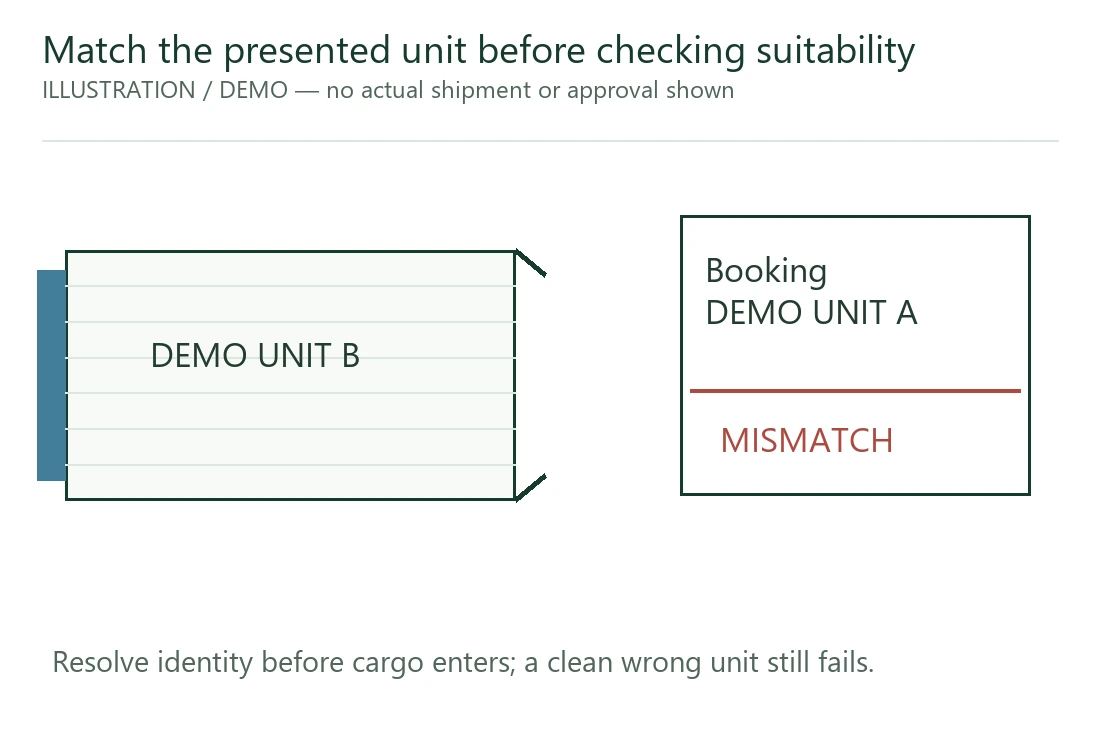
Booking and presented-unit identity must match. Illustrative method / DEMO, not shipment evidence. Swipe horizontally on a narrow screen to read the full illustration.
Verify the planned gross weight against equipment and road limits, and identify who will submit the verified gross mass to the carrier. The IMO VGM guidance makes VGM a shipper-side requirement before stowage, while cutoffs and permitted submission channels depend on the service. A pre-load cube estimate and pallet arrangement do not replace a verified weight, but they help catch a mismatch early. The plan should account for cartons, pallets, dunnage, and the needed clearances; a container that is nominally long enough can still fail when the actual pallet footprint blocks the air path.
Check the timing as well as the hardware. Confirm the local shipping-instruction and VGM cutoffs from the current booking or carrier portal, not a remembered deadline from another voyage. Maersk's Indonesia export information, for instance, publishes service-specific documentation and operational details that require current verification. The loading decision is much harder to reverse after a cutoff passes. If the container number changes, the document owner needs enough time to reconcile the replacement in booking, tally, photographs, seal record, and shipping instruction.
The unit identity also joins the eventual temperature record to the cargo. A controller display with an unreadable unit number can illustrate a setting, but it cannot independently prove which shipment used that controller. Give each evidence item a purpose: an exterior number identifies the unit; the empty interior shows visible condition; the carrier's technical status addresses equipment readiness; a measured product sample addresses cargo condition. None substitutes for all the others.
Inspect the empty interior and accessible structure
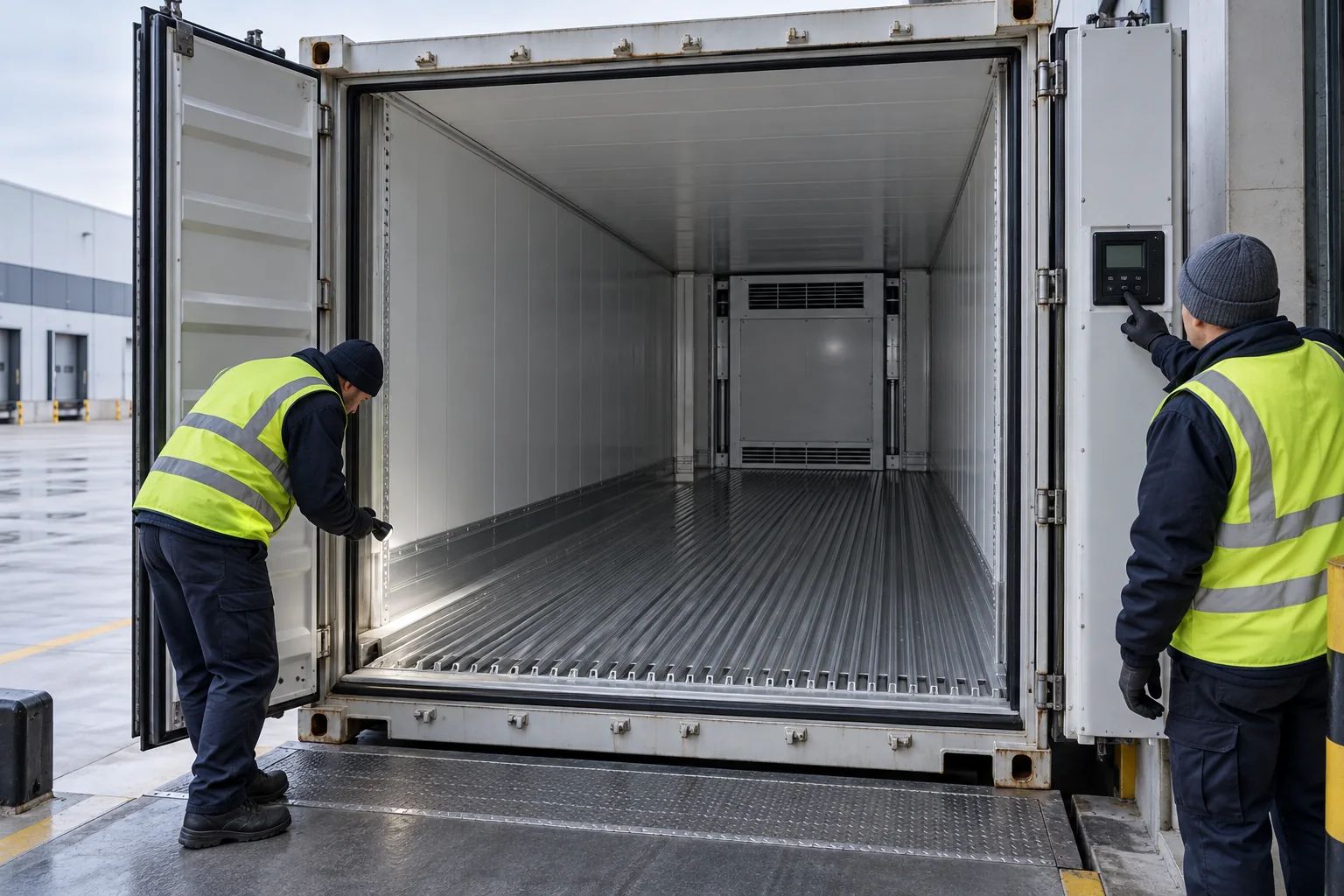
Open the doors before staging cargo at the threshold. Examine the floor channels and T-bars, front bulkhead, roof, sidewalls, corners, door recesses, and accessible drain areas under adequate light. A swept center aisle is not enough. Loose debris in floor channels, residual packaging, standing water, oil, strong odor, or signs of pests can contact cartons or make a product claim difficult to investigate later. Photograph the interior while it remains empty, with the container number captured in an adjacent identity frame and a clear sequence linking the two.
Look for damage that affects the loading operation or the cargo even if the refrigeration plant is technically available. A raised or crushed floor section can destabilize a pallet. A sharp panel edge can puncture a carton or stretch wrap. An exposed or loose interior fitting can snag packaging. Water staining deserves a closer look, not an automatic conclusion: condensation, wash water, an active leak, and historic staining have different implications. If the cause cannot be determined at the dock, hold the box and ask the responsible equipment party for a documented decision.
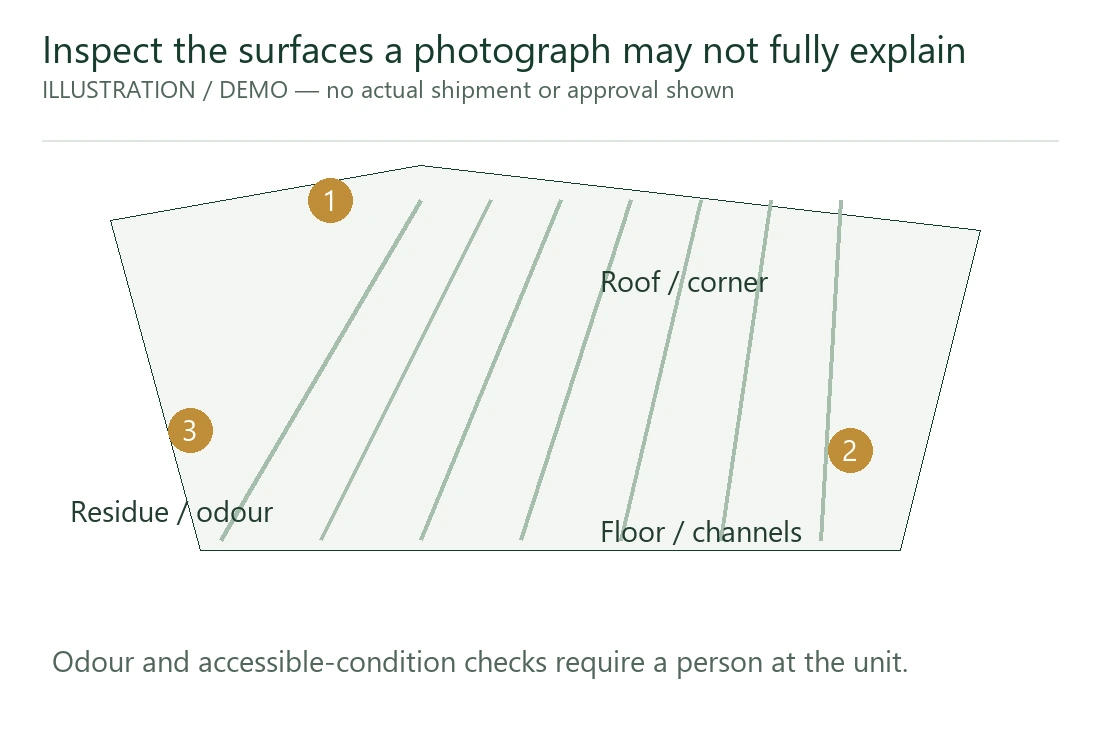
Empty-unit suitability covers surfaces and an on-site odour assessment. Illustrative method / DEMO, not shipment evidence. Swipe horizontally on a narrow screen to read the full illustration.
Confirm the actual frozen-food order
Share the product form, pack, quantity, destination, order-specific temperature criterion and evidence requirements. We can reconcile the loading and quality instructions with the selected product specification.
Review a genuine product example
Request Specifications & QuoteThe inspection should record what a person actually observed. "Clean and dry at visual inspection" is narrower, and stronger, than "sanitized" when no validated sanitation record exists. Likewise, an image of an unoccupied floor does not prove that every drain or insulated wall cavity is sound. The photo set is a view of accessible surfaces at that time. Its value is greatest when it shows the whole interior first and then any defect close enough to judge, with date, time, container identity, observer, and disposition tied together.
Carton condition is a separate gate. Product staged outside the box needs its own measured temperature evidence and packaging check before entry. A spotless empty reefer cannot compensate for softened, wet, torn, or untraceable cartons. Record front-facing product and production-date marks on representative cartons, and reconcile them with the tally before loading. The accepted sample position for product temperature is set per order and measurement method; it is not automatically a door reading plus an inner-carton reading for every shipment.
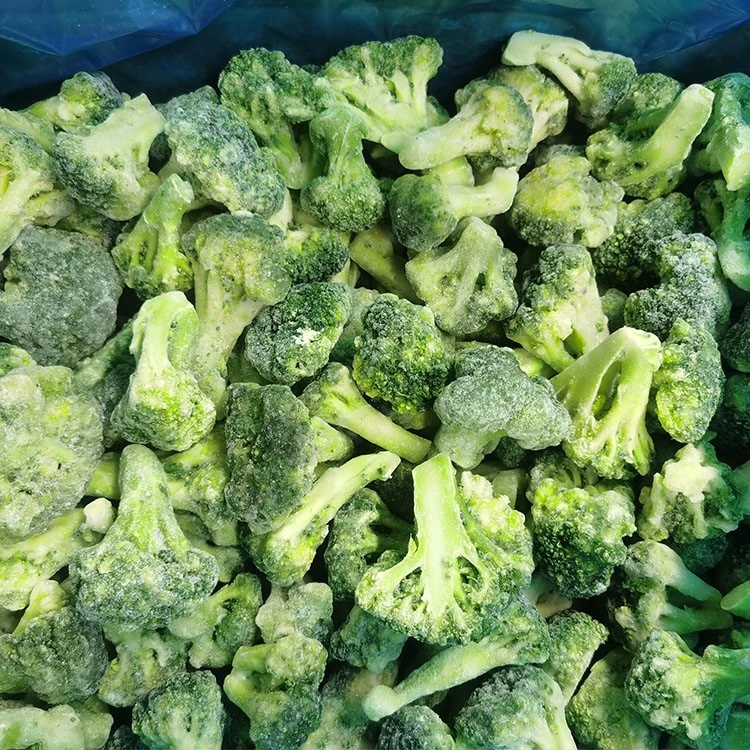
Original GreenLand product photograph; an example of a product form, not evidence from a particular loading or order. This image is not a loading photograph.
If a defect can be cleaned, separate the remedy from the release. The cleaner's statement that work is complete should be followed by reinspection of the affected surfaces and a new photograph, with the before and after records linked. If cleaning creates moisture, allow the surface condition required by the cargo instruction before loading. A repeated odor or unexplained liquid may justify replacement even when the visible residue disappears. The inspector should not hide the original issue by keeping only the final "clean" frame.
Inspect doors, gaskets and air path
The two door leaves and their gaskets are a mechanical boundary, not just a surface for a final seal. Check that hinges, locking rods, cams, keepers, handles, and seals are intact and operable. Close and reopen the doors as permitted to see whether the gasket seats continuously, especially at corners and the meeting edge. A torn or displaced gasket can admit warm moist air; a bent locking rod may let the door appear shut while compression is uneven. Photograph a suspected gap with enough surrounding geometry to show where it is, then refer the repair decision to the equipment provider.
Do not confuse the numbered security seal with gasket integrity. The seal documents access after final closure; it does not make the door airtight. At loading completion, the documented sequence should include open-door evidence, a clear front-facing view at half load, the complete load, half-closed and closed doors, and the applied readable seal number. That sequence begins with this empty-unit inspection. If the door cannot be closed safely or the seal fixture is damaged, resolve it before loading rather than expecting the final photo to settle the question.
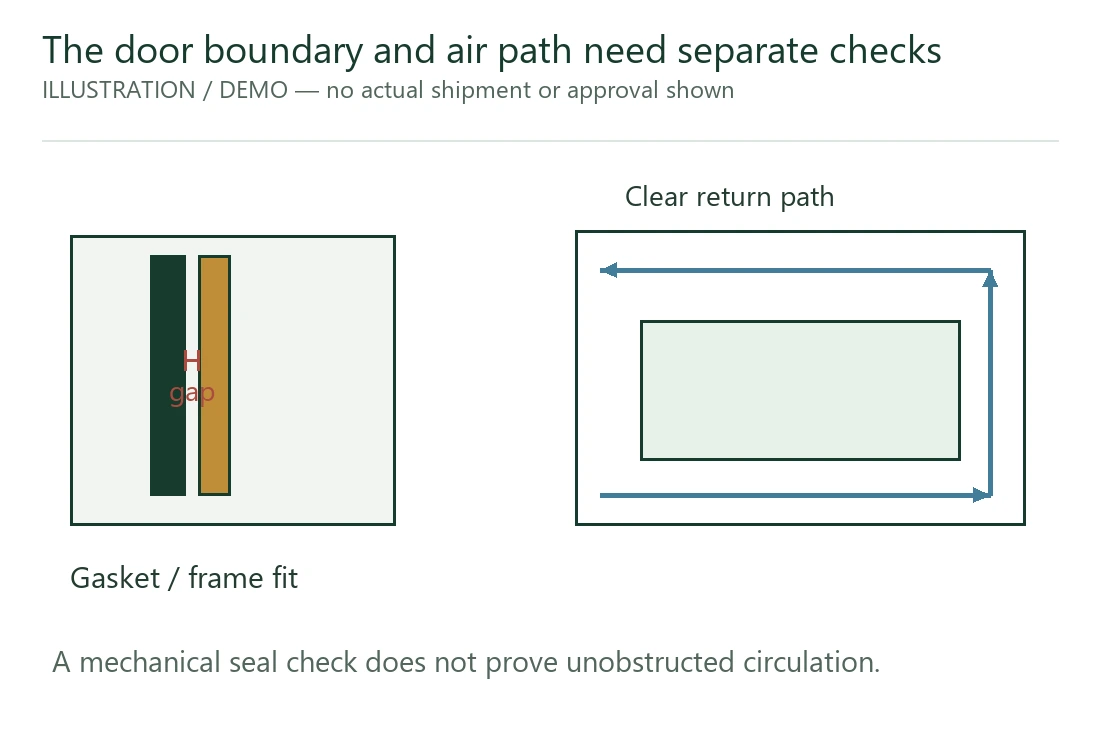
Door integrity and circulation are distinct checks. Illustrative method / DEMO, not shipment evidence. Swipe horizontally on a narrow screen to read the full illustration.
Trace the designed air route. In a typical reefer, conditioned air is supplied through the floor channels, moves through and around the cargo as the load pattern permits, and returns toward the machinery. The exact equipment design and carrier loading marks govern the clearances. Keep the T-floor channels clear of broken pallet parts, stretch-wrap tails, and cartons; keep the front bulkhead and return-air opening unobstructed; respect the marked red load line or carrier maximum height. A useful empty-unit check is to stand at the doors and visually follow the route from floor to front and back without a hidden pile of debris or improvised blocking.
The later load plan must preserve that route. Overhang can cover floor channels. Cartons pushed hard against the front wall can compromise return air. A short stack can shift if no restraint method has been approved. The minimum of five wrap turns in our internal handling instruction is a starting requirement, but the actual wrap method must be checked for film type, overlap, base capture, pallet stability, and whether the wrap obstructs airflow or labels. "Five turns" alone is not a strength certificate. Document any dunnage or restraint that changes the air path and obtain the agreed loading method before closing the doors.
Airflow and package protection can conflict. A pallet pushed apart for a theoretical clearance may become unstable; a tightly blocked pallet can cut off circulation. This is why the floor, cartons, pallet geometry, and carrier load guidance need to be reviewed together rather than as isolated checklist ticks. If the current load plan cannot satisfy both stable cargo and the manufacturer's air path, stop for a revised pattern or equipment decision.
Read carrier PTI, alarms and settings without claiming a fresh technical test
Pre-trip inspection (PTI) concerns the reefer's equipment condition and is generally controlled by the carrier or its equipment provider. Ask for the current unit status or confirmation required by the booking. A loader reading a display is not performing a carrier PTI. The display can reveal the container identity, active alarm, setpoint, supply-air reading, return-air reading, and operating state at that moment, but it cannot demonstrate the full machinery test history. Record those channels separately and quote the source of each reading.
A setpoint is the controller target. Supply air and return air are measurements from different positions in the circulating system. Measured cargo temperature is taken at an approved product sample position with an appropriate calibrated instrument and is a different observation again. None of the four should be copied into the others' fields. A return-air value can rise during door opening without proving that the center of every carton has thawed; a favorable supply-air value cannot prove that warm product was loaded acceptably. The release criterion and sampling method must come from the order specification and quality instruction, with the actual value, time, sample location, instrument, and lot recorded.
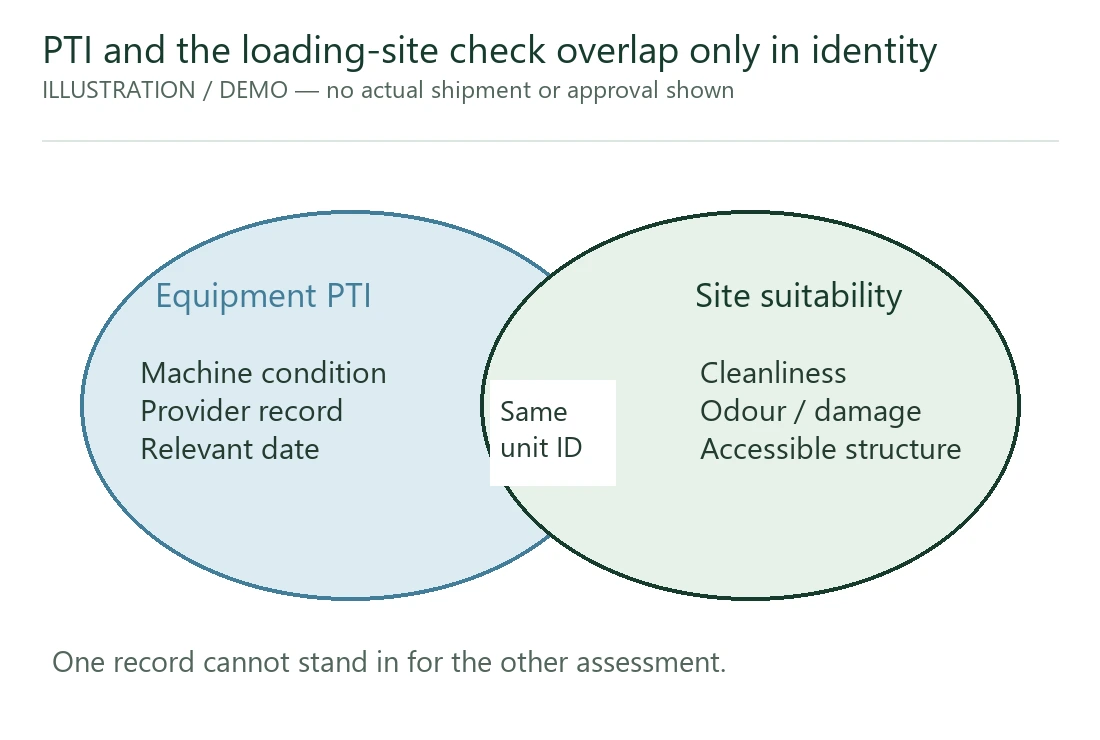
PTI and loading-site suitability have different evidence scopes. Illustrative method / DEMO, not shipment evidence. Swipe horizontally on a narrow screen to read the full illustration.
The Maersk PTI form illustrates why a technical record is a distinct document. If the carrier's status is missing, stale, ambiguous, or tied to another container number, do not convert a photograph of a powered display into a PTI pass. Ask the carrier or appointed equipment party to verify the current unit. An active alarm likewise requires interpretation by someone authorized for that equipment; clearing a code for a photograph is not a release decision.
Match the controller instruction to the booking before cargo enters. Confirm setpoint, ventilation or fresh-air position if specified, humidity mode if relevant, and any controlled-atmosphere arrangement only where the cargo and carrier actually call for it. Frozen vegetables commonly do not need a blanket fresh-air opening, but the governing order and equipment instruction decide. Record any setting change with time and responsible person. A mismatch may be a data-entry error, a changed instruction, or a unit fault; the loading team should identify which before treating the box as ready.
Photographs of the display are helpful when the text is legible and tied to the unit, but they are a snapshot. Keep the carrier record, observed readings, and measured cargo result as separate evidence rows. This makes a later temperature claim investigable. It also prevents a well-intentioned operator from writing "temperature okay" when only the controller target was observed.
Decide pre-cooling from dock and carrier procedure
Pre-cooling the empty container is conditional. It depends on the carrier's reefer procedure, the dock layout, ambient humidity, cargo loading method, and whether the box remains connected to power. Some loading arrangements call for the unit to be brought to the instructed operating condition before cargo arrives. Other carrier or dock methods avoid running a reefer with open doors at a warm, humid dock because the machinery pulls moisture into the container and can cause condensation or frost. The correct action is the documented procedure for this booking, not a universal "always pre-cool" rule.
First confirm that the frozen product itself has reached its specified loading condition. A reefer is intended to maintain a suitable cargo temperature during transport, not to rescue a large block of warm product. Measure product according to the order's approved sample plan, record the actual reading, and keep the product protected while the empty unit is checked. The relevant UF/IFAS refrigerated transport guidance distinguishes proper cargo preparation from the vehicle's temperature-management role. The practical question is whether the load enters at the approved condition and can be moved through the dock quickly enough to retain it.
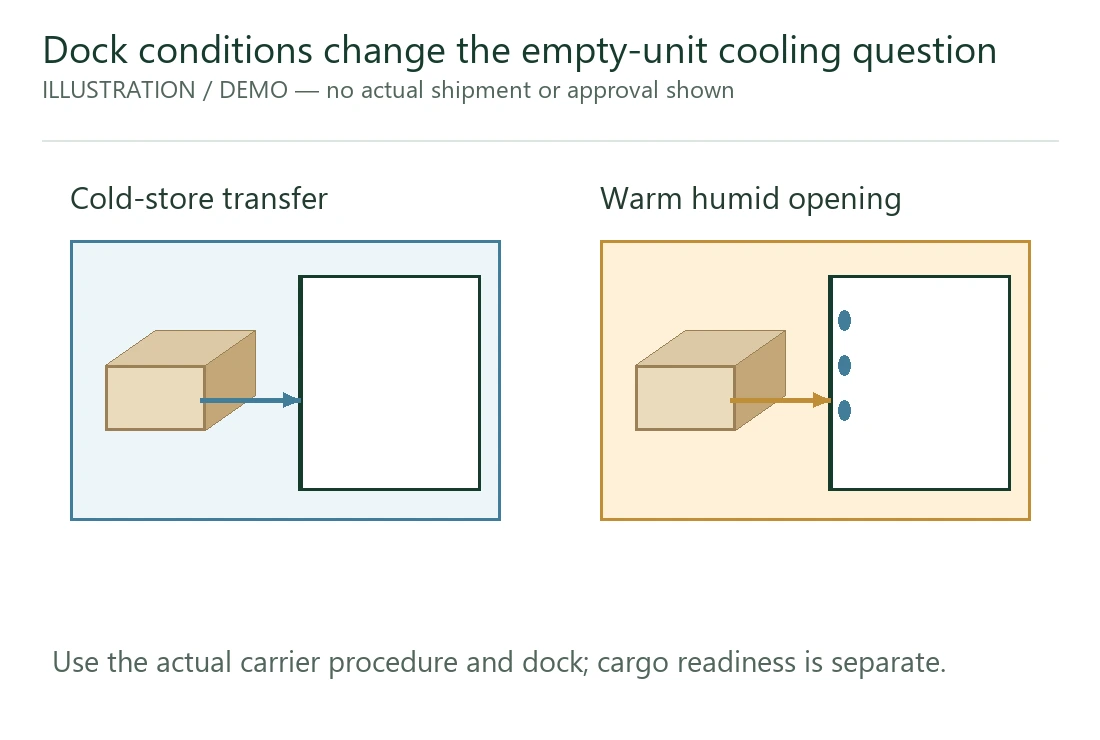
Dock environment affects the carrier procedure for empty-unit cooling. Illustrative method / DEMO, not shipment evidence. Swipe horizontally on a narrow screen to read the full illustration.
If the carrier specifies a pre-cooling step, record the connection and operating state, setpoint, displayed supply and return readings, and the timing of door opening. Do not write that the air reading proves product temperature. If the carrier specifies a different open-door practice, document that practice and follow it. In either case, do not spray water or add ice to "help" an empty reefer unless a specific approved procedure calls for it. Moisture can compromise cartons and increase frost formation.
Plan the dock sequence so that pallets are counted and ready before the doors remain open. Confirm there is room to photograph the empty interior, move the first pallets safely, and keep the loading team out of the equipment's air outlet or moving parts. If loading pauses, the operator needs a local instruction for door closure and power management. A pause that lasts longer than planned can change the observed air readings without changing the product core immediately; record the event rather than silently treating the original pre-cooling snapshot as current.

Original GreenLand product photograph; an example of a product form, not evidence from a particular loading or order. This image is not a loading photograph.
Finally, distinguish pre-cooling from release. The release decision combines the approved cargo temperature result, equipment status, visible interior condition, the loading pattern, and document identity. A unit can be cold yet dirty or damaged. Another can be visibly clean yet unconfirmed by the carrier. Neither case becomes acceptable merely because a single number is on target.
Stop, repair or replace with a recorded decision
The person at the dock should be empowered to stop loading when the unit identity, structural condition, hygiene, door seal, air path, equipment status, or controller instruction cannot be reconciled. That is a temporary hold, not necessarily a rejection of the shipment. Record the exact observation and location: "left door lower gasket detached," "water at front left floor channel," or "controller setpoint differs from booking instruction" is more useful than "container bad." Capture a wide view and a close view where safe, with the unit number linked.
Classify the remedy by ownership. Loose debris may be removed and the interior reinspected under the site's cleaning procedure. A damaged gasket, unexplained leak, unresolved alarm, or disputed PTI belongs with the carrier or equipment provider. A cargo temperature or carton-mark problem belongs with the shipper's quality and order team. The loading supervisor may coordinate these paths, but should not sign off on a refrigeration repair simply because the dock is waiting. Name the person who authorizes the final release, the evidence they reviewed, and the time of the decision.
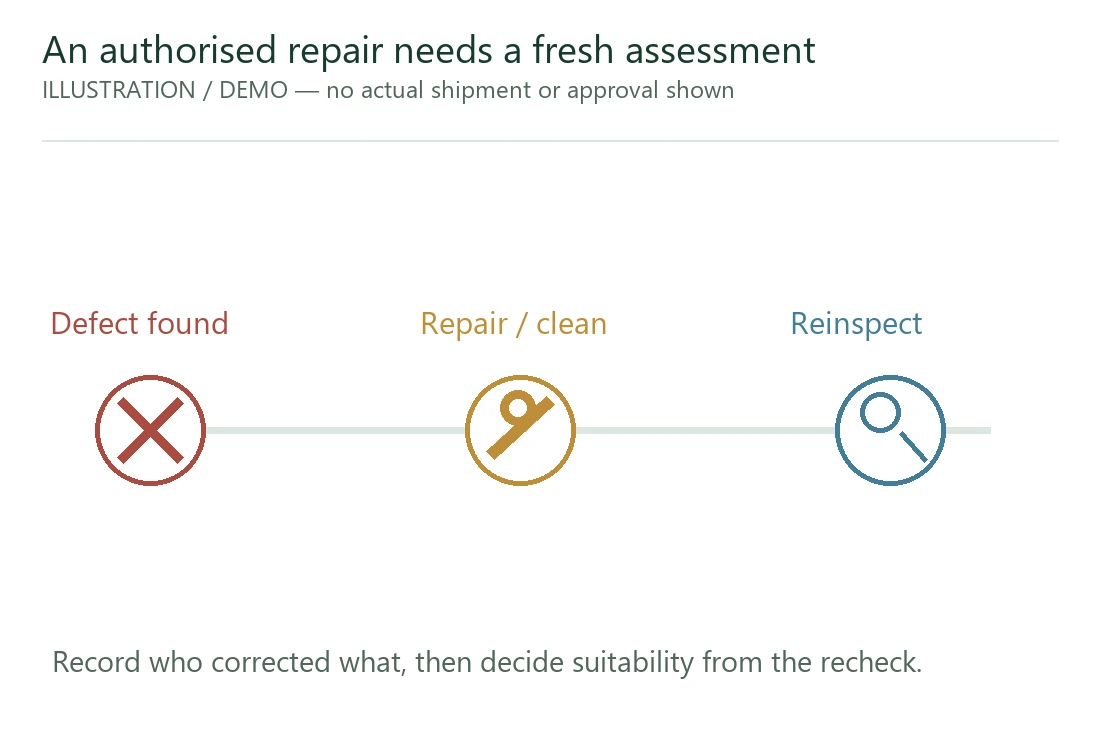
An authorised correction needs a new suitability assessment. Illustrative method / DEMO, not shipment evidence. Swipe horizontally on a narrow screen to read the full illustration.
In a DEMO inspection, the cleaner removes loose pallet splinters from one floor channel, but the lower left door gasket is visibly detached. The debris can be photographed before and after cleaning and marked closed after reinspection. The gasket remains a separate open equipment defect: the loader cannot infer an airtight seal from the cleaned floor or a carrier PTI document. Hold loading, give the carrier the unit number and wide/close defect images, and request its repair decision or a replacement. If a new unit arrives, repeat the empty-box identity and interior checks and revise the shipping documents that carried the old number. The example shows why two findings need two owners and two closure records.
If repair or cleaning is proposed, ask whether it can be completed, verified, and documented before the operational cutoff without rushing the product. A patch that looks acceptable for a static photograph may fail under vibration, water, or door cycling. The appropriate criterion is the approved repair and inspection standard for the equipment. If that cannot be established promptly, replacement may be the cleaner operational choice. Record why a replacement was selected; it helps explain the changed container number later.
Do not load pallets "temporarily" into a questionable unit to save dock time. Moving product in and out creates extra warm exposure, handling damage, tally confusion, and a risk that the first defect is no longer visible. If cargo has already entered when a fault appears, stop, protect the remaining product, count what entered and what came out, and have quality decide any additional checks. The incident log should distinguish cargo condition from equipment condition and identify affected pallets or lots.
For a nonconformity, retain both the initial and final evidence. This allows a reviewer to see that a defect was observed, what was done, and what changed. A corrected box is not an untouched box. If no satisfactory remedy is available, write a clear "do not load" status and request a replacement; do not turn an unresolved exception into a vague pass.
Reconcile the replacement unit before cargo moves
A new container number restarts the identity chain. Inspect the replacement as an empty unit rather than assuming the equipment provider's swap is a pass. Confirm its carrier status, interior, doors, airflow path, and controller instruction; capture its readable number and fresh empty-interior views. The previous unit's photos, PTI status, and readings must stay attached to the rejected unit in the incident record. Copying them forward would create a false evidence trail even if the replacement looks identical.
Update the booking or equipment release, loading plan, weight plan, tally header, temperature log, photo index, and eventual seal record as appropriate. The shipping-instruction and VGM owner must be told immediately so the submission uses the actual unit and remains within the current cutoff. VGM is a verified mass of the packed container; a replacement may change tare weight and requires the compliant process for the actual packed unit. The IMO MSC.1/Circ.1475 guideline explains the mass-verification framework, but the chosen weighing method and submission workflow must match local requirements and the carrier booking.
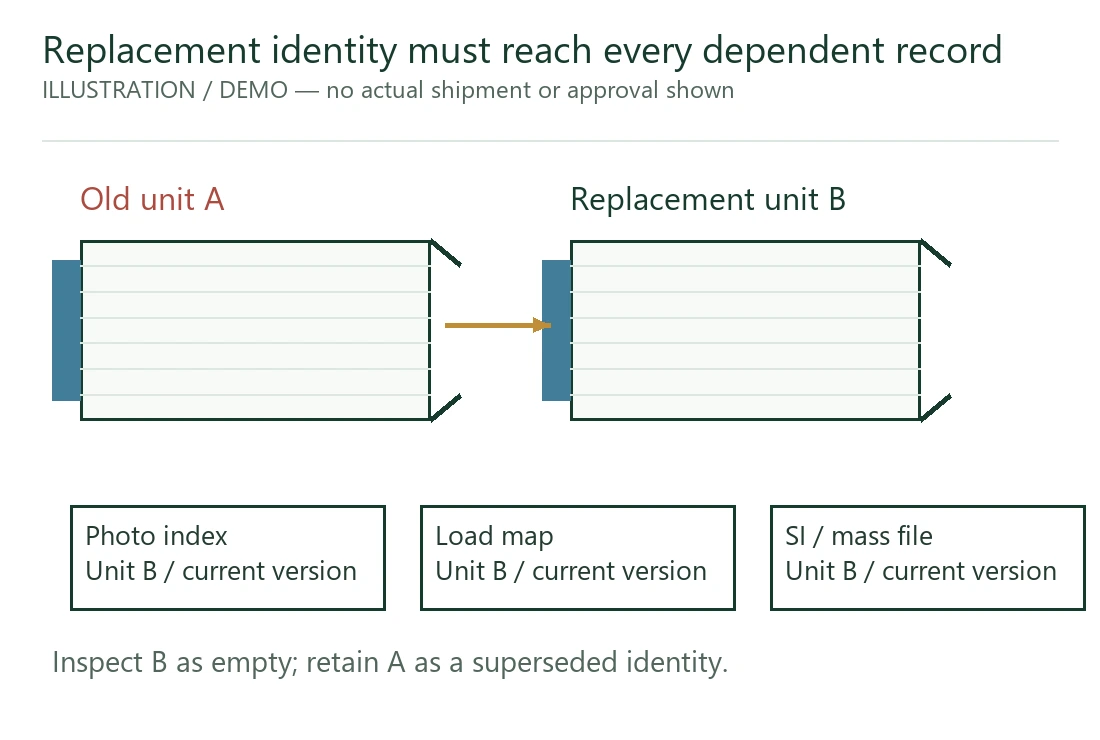
Replacement-unit identity must reach the full handover record. Illustrative method / DEMO, not shipment evidence. Swipe horizontally on a narrow screen to read the full illustration.
When loading resumes, start the photo sequence on the replacement unit: empty interior with readable identity, representative carton fronts and date marks, the order-approved temperature sample position, a front-facing partial load, complete load, half-closed and closed doors, and readable final seal number. The partial-load image should show enough of the pallet pattern and front face to judge the load arrangement; a single close-up of a carton cannot do that. Record any handling interval caused by the swap and assess product condition under the order's temperature criterion if exposure warrants it.
The final release record should say which unit was rejected, why, who approved the replacement, which replacement was used, and what cargo actually entered it. That record is more valuable than a generic "container checked" tick. It connects equipment suitability to a particular frozen-produce shipment while leaving technical PTI, measured cargo condition, and final security seal as separate verifiable facts.
Build your frozen food order with GreenLand-food
GreenLand-food is a professional frozen food supplier and manufacturer in China, providing factory-direct wholesale supply for importers, food manufacturers and foodservice programmes.
Send your product form, specification, packing, quantity, application, destination, private-label needs and requested documents. We will organise the product and order requirements with your purchasing and quality teams.