


Frozen Food Container Loading Photos: Build a Traceable Shipment Report
Oct 21, 2026
Leave a message
Reviewed 21 October 2026. Shipment requirements are checked for the actual product, route and filing date.
Define the shipment report before loading
A camera produces files; the report supplies identity and sequence. Start with the buyer's order number, the shipper's internal shipment reference, the booking reference if available, the approved packing-list revision and the specific reefer being presented. Record the planned SKU and lot rows with cartons per row. If there are two production dates for one product, keep two rows unless the carton marks and receiving rules explicitly permit a combined range. A single label saying "frozen vegetables" cannot identify which finished lots were loaded. The loading lead should have the same row set that the documentation team will use after the doors close.
Name the person who photographs each stage and the person who decides a discrepancy. Those may be the same small team, but the report should still state who observed and who approved. A third-party inspector is not implied by a supplier's own photos. If independent supervision was ordered, its appointment, scope and separate report can be linked; the photographs alone do not certify that independent inspection occurred. General container loading inspection guidance describes empty-container, cargo, stowage and seal images, while the frozen-food file additionally needs lot and temperature references.
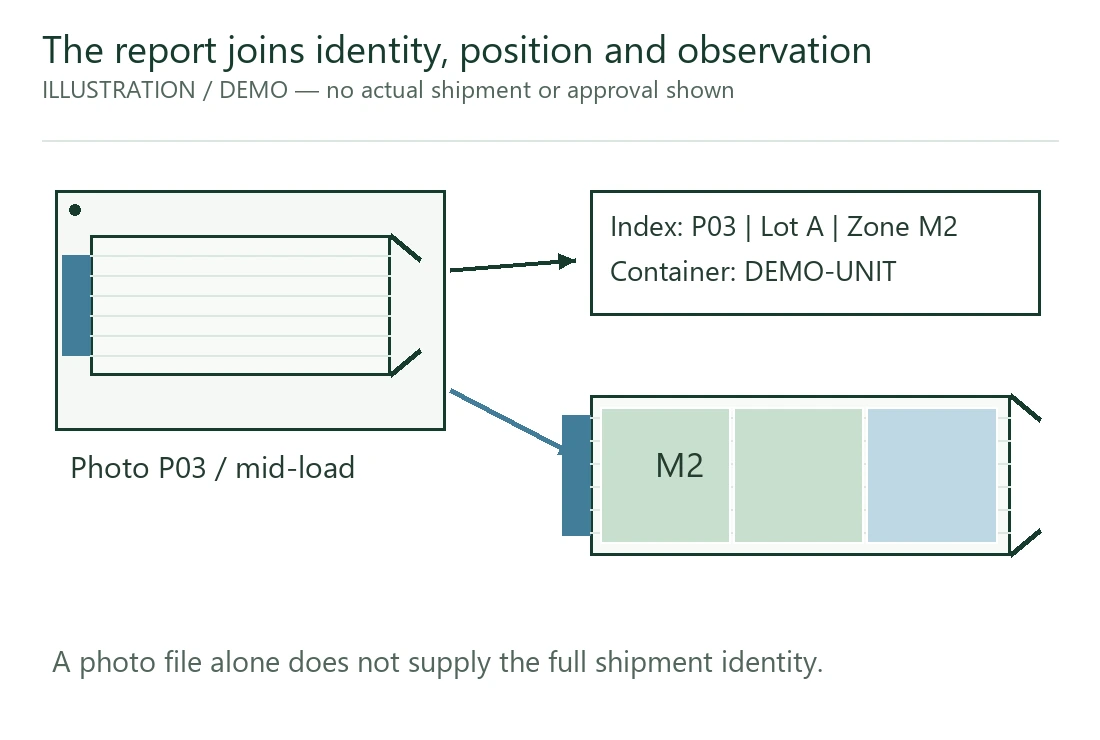
Photo, index and position map supply connected evidence. Illustrative method / DEMO, not shipment evidence. Swipe horizontally on a narrow screen to read the full illustration.
Before the first image, set the capture device's clock and check that the camera can focus on small printed marks. Use original files, not images forwarded through a messaging app that may compress or strip metadata. Agree a consistent file pattern with a sequence number and stage, but do not depend on filenames as the only evidence: export software can rename files. Maintain a simple index with original filename, stage, time, observed container, SKU/lot position, and any issue number. When two phones are used, record their owners and time offset. An image made an hour later must not be silently inserted into an earlier stage because its name sorts conveniently.
The photo plan should be proportional to the load. A one-lot, one-product container may need fewer detail frames than a mixed load with several date codes. It still needs enough images for a reviewer to move from the empty unit through loading to sealed handover. A picture that is too distant to read a carton mark may work as a context frame if it has a companion close-up. A close-up with no context may be technically sharp but impossible to locate. Freight photo evidence guidance makes the same context-and-detail distinction. We use that pairing to answer the buyer's physical question rather than filling a folder with attractive pictures.
Build a cover sheet with planned versus actual fields. "Planned" should never be overwritten when the actual result differs. If cartons are short, a pallet is exchanged or a seal changes, add a dated exception and revised packing-list version. Retain the previous version. A report that consists only of the final photographs can conceal the important part of a loading day: what changed between approval and departure. The report becomes complete when the actual count, location, temperature release and seal identities reconcile with controlled documents, not when the last photo has been taken.
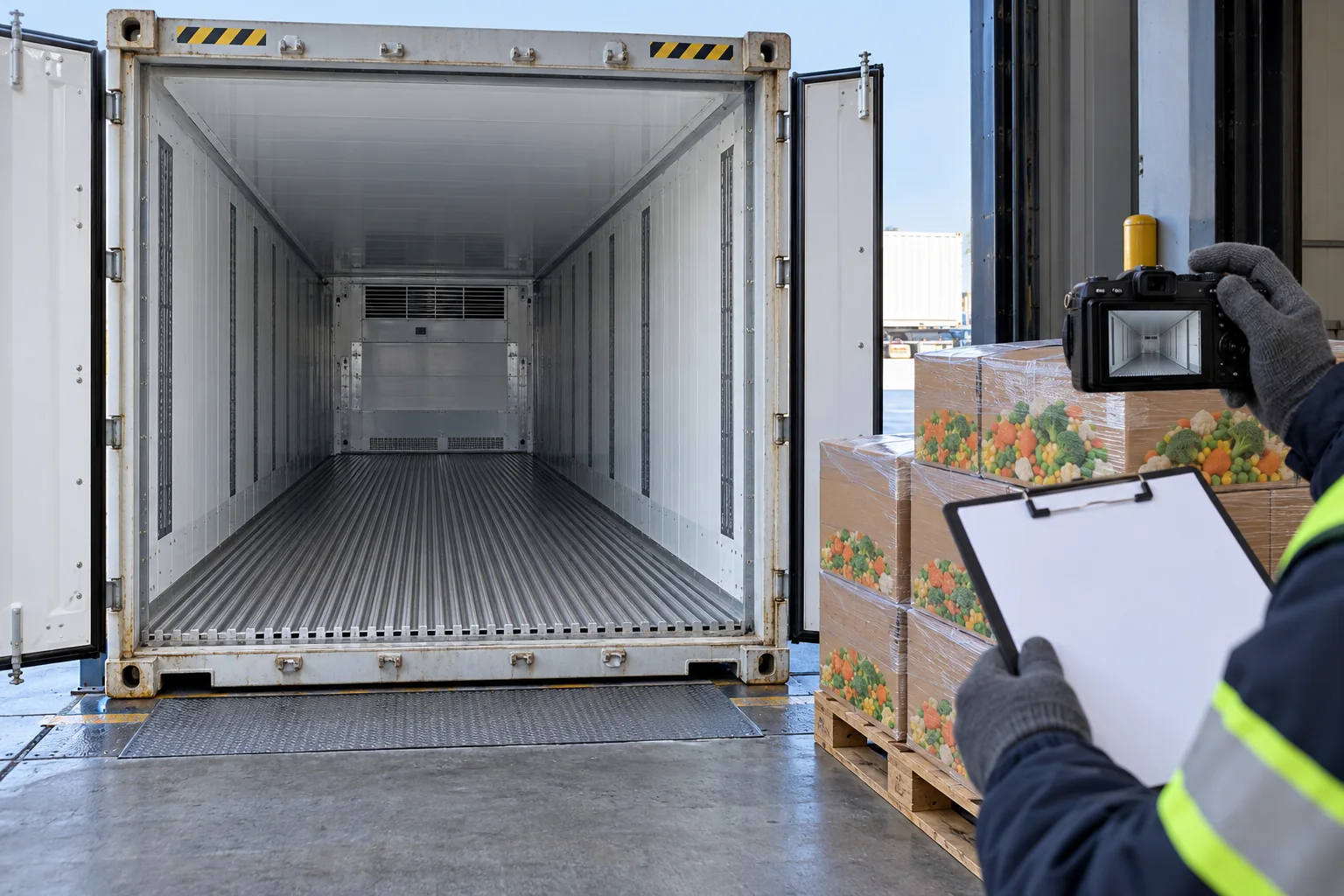
Capture the empty reefer and readable container number
The first photographic stage is the presented unit before cargo enters it. Take a wide exterior frame showing the container-number area, doors and general condition, then a separate close frame in which the number can be read. From a safe position at the doorway, photograph the full empty interior so the floor channels, walls, roof and machinery-end bulkhead are visible. Add targeted details for any concern, such as residue, damage, moisture, odor source, compromised gasket or obstructed T-floor channel. A photograph cannot capture an odor; write the observation, observer and decision on the inspection record and link the relevant picture only if something visible supports it.
This loader's visual check is distinct from the carrier's technical pre-trip inspection. The Maersk reefer PTI form asks for cargo and carriage details; a snapshot of a control panel cannot prove that a given unit passed a full machinery test. Record the PTI status and applicable carrier instruction in the equipment file, then make the separate receiving decision at the dock. If the container is unsuitable, stop before putting cartons inside, report the defect and request a documented remedy or replacement. The old and new container numbers must remain in the log so early photos cannot be mistaken for the loaded unit.
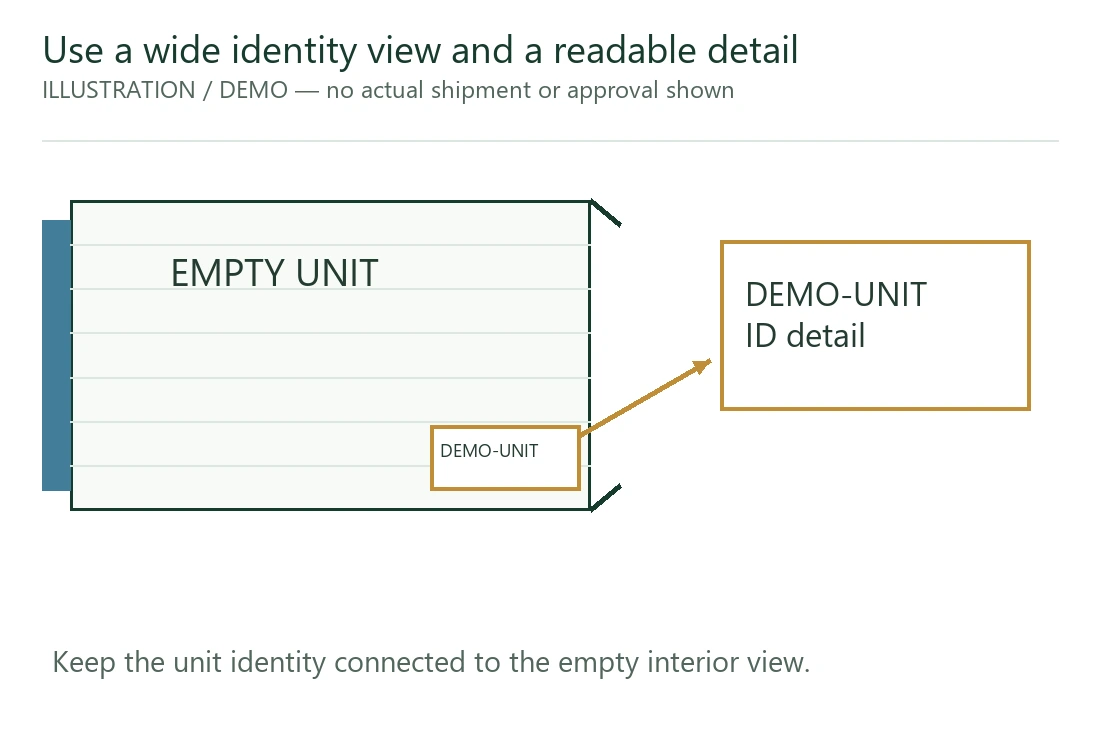
A wide view and readable identity detail belong to the same unit. Illustrative method / DEMO, not shipment evidence. Swipe horizontally on a narrow screen to read the full illustration.
Confirm the actual frozen-food order
Share the product form, pack, quantity, destination, order-specific temperature criterion and evidence requirements. We can reconcile the loading and quality instructions with the selected product specification.
Review a genuine product example
Request Specifications & QuoteThe image set should distinguish an empty, readable unit from an empty unit with an illegible number. A distant three-quarter view may show condition but not identity. A tight plate shot may show identity but not condition. Pair them under one stage and sequence; where the lighting is poor, reshoot before loading. Do not edit characters onto the image. The index can transcribe the number and include a second-person check against the physical unit and booking, while the original frame remains available for an independent read. An outbound-container checklist includes the container number and seal as explicit recording points; for frozen food we also tie the number to the order's temperature instruction.
Pre-cooling should not be inferred from a cold-looking empty image or prescribed as a universal requirement. An open, very cold empty box at a humid dock may collect condensation, while another operating arrangement may call for a controlled empty-unit preparation step. Follow the actual carrier and loading-dock procedure, record its required condition and power status, and measure the product separately. If a display is photographed, label what channel it shows and at what time. "The controller showed the setpoint" does not establish that the cargo itself was at that temperature. The empty-stage report records the unit's observed condition and the decision to proceed; it does not substitute for the cargo release check.
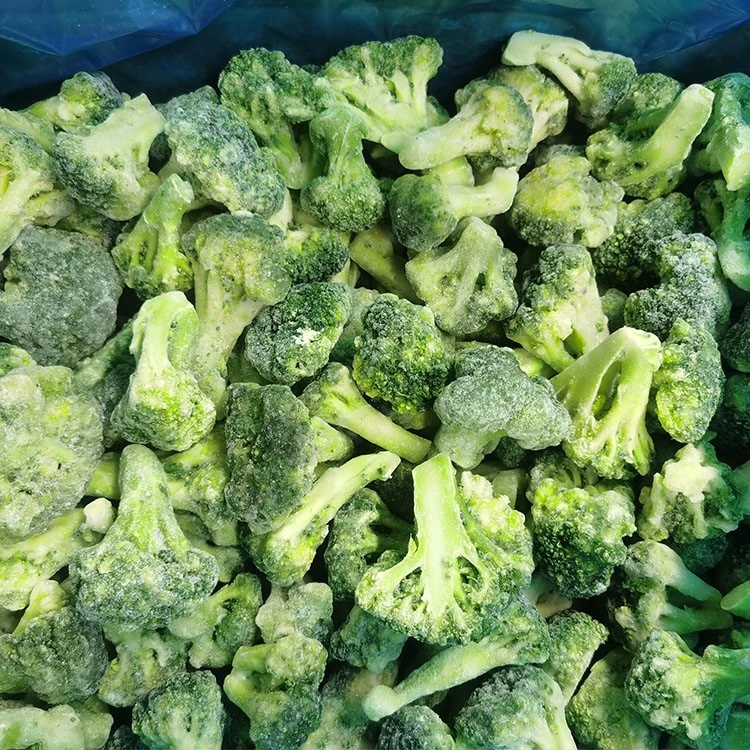
Original GreenLand product photograph; an example of a product form, not evidence from a particular loading or order. This image is not a loading photograph.
Keep a short condition table beside the pictures: container identity, cleanliness, dryness, odor, wall/roof/floor, T-floor path, door gasket and locking mechanism, PTI reference, alarms, responsible observer and disposition. Use "not observed" where access or visibility was limited. A blank cell later looks like a pass. A defect photograph should include a wide locator, a close detail and a scale only when a size matters; the written record states whether the box was cleaned, repaired or replaced and who authorized the next action. The next images should begin only after that disposition is settled.
Show carton faces, date marks and pre-load condition
Photograph representative master cartons before they disappear into the reefer. One frame shows the pallet or carton group, and a companion frame makes the front mark readable. The mark should be checked against the approved product description, SKU, lot or batch identifier, production or best-before date as applicable, net pack and destination language or code specified by the order. A beautifully stacked pallet is a poor identity image if its labels face inward or are hidden by opaque wrap. Turn the appropriate face toward the camera during staging, or capture it before wrapping without disturbing the approved pack.
For a mixed order, do not show only the most visible product. Make a small row for each SKU and lot. Record the photographed carton or pallet number, actual mark, declared cartons in that group and the picture pair that supports the row. If the outer case has a date mark on a side panel rather than the front, include that side clearly. A carton mark is not proof that the inner product belongs to that lot. It is one link in a traceability chain that should also include released production, pallet or cold-store movement and the final loading tally. Buyers who need wider lot controls should request the approved traceability procedure and the specific production-to-pallet records for their order.
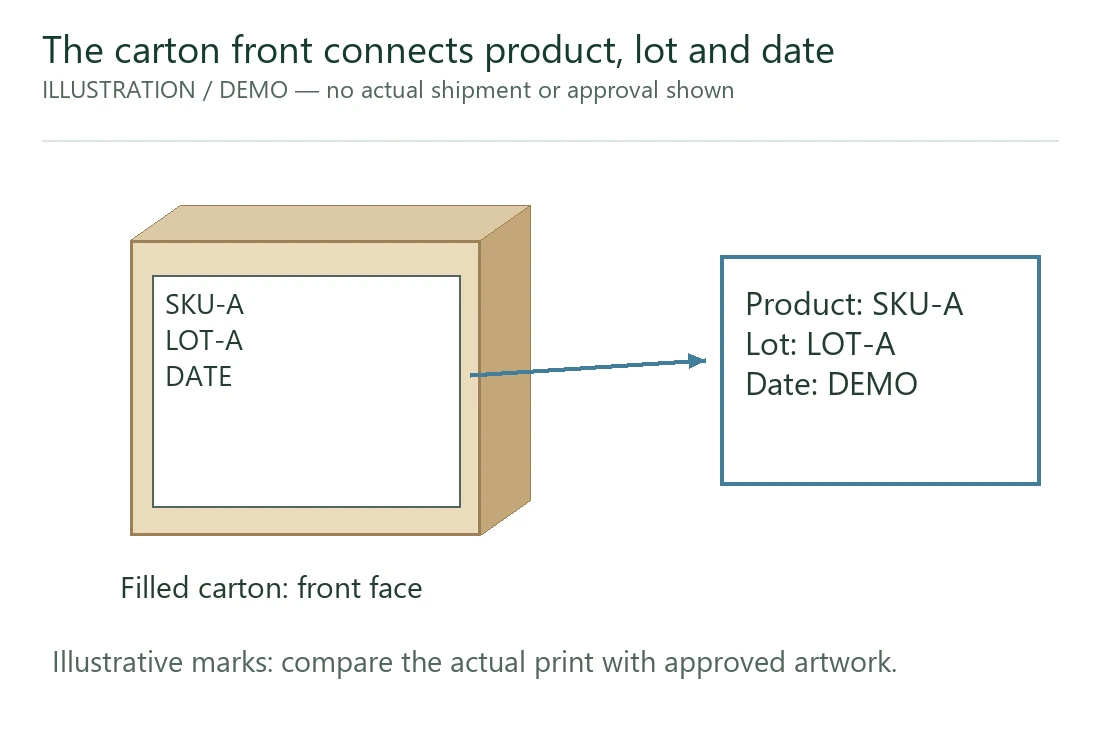
The actual front mark connects product, lot and date. Illustrative method / DEMO, not shipment evidence. Swipe horizontally on a narrow screen to read the full illustration.
Record visible condition, not a blanket "all good." Look for torn or re-taped cartons, wet board, crushed corners, bulging, inconsistent marks, compromised liners where they are legitimately visible and a pallet that cannot be handled safely. A close-up of a single defect needs the group and position in a wide frame so the document team can identify its SKU and lot. If one carton is replaced, photograph the removed carton, the substitute's front/date mark and the updated tally. The report should say whether the affected carton was excluded, reworked under authorization or loaded after inspection. Do not imply that a photo proves microbiological safety or a laboratory result.
Stretch wrap is part of a physical plan, not a number to repeat without knowing how it was applied. The internal minimum of "five turns or more" must be interpreted against the approved wrapping method, overlap, film, load shape and receiving requirement for the order. Record the actual method and point of verification; a single exterior photo rarely proves every turn. Photograph the finished pallet's corners and base, any top or bottom ventilation requirement, and whether the wrap obstructs a designated airflow or label area. The count of turns is useful only when the method and completed unit load can be audited together.
The cold-store release and loading window matter alongside visible cartons. Record when the product left controlled storage, when it reached the dock and when it entered the container, with the separately measured cargo temperature at the agreed locations and the order-specific acceptance criterion. A timer or controller in a photograph is not a complete temperature record. The MSC carrier FAQ distinguishes supply air, return air and actual cargo temperature. This distinction belongs in the photo report whenever a temperature display or probe appears in the frame, otherwise a future reviewer may mistake the displayed value for a measured product result.
Record partial and complete loads without losing lot positions
Take stage images when the arrangement can still be seen, not after cartons hide it. After the first rows are placed, photograph from the door line with the front of a representative marked carton visible; identify which pallet or loose-carton block began the load. At roughly half load, take a wide frame that reveals the loading face, a mark detail for any new SKU or lot, and a note of which rows or positions were completed. The exact percentage is less useful than the recorded boundary: "pallets 1-8, lots A and B in the machinery-end half" is reviewable; "half full" alone is not.
Keep a plan-view position map beside the pictures. It may use simple zones-machinery end, middle and door end-or pallet positions if the load is palletized. For loose cartons, use row and tier references that the crew can actually maintain. The map shows planned allocations in one column and actual placement in another. If the team reverses a pallet to protect a label or changes a row to stabilize the load, mark the change at the time. A later image from the door cannot reliably reconstruct a carton hidden at the front. Mixed-SKU inspection guidance separates container-wide checks from SKU and lot checks; that separation is especially useful when only one part of a mixed frozen load raises a concern on arrival.
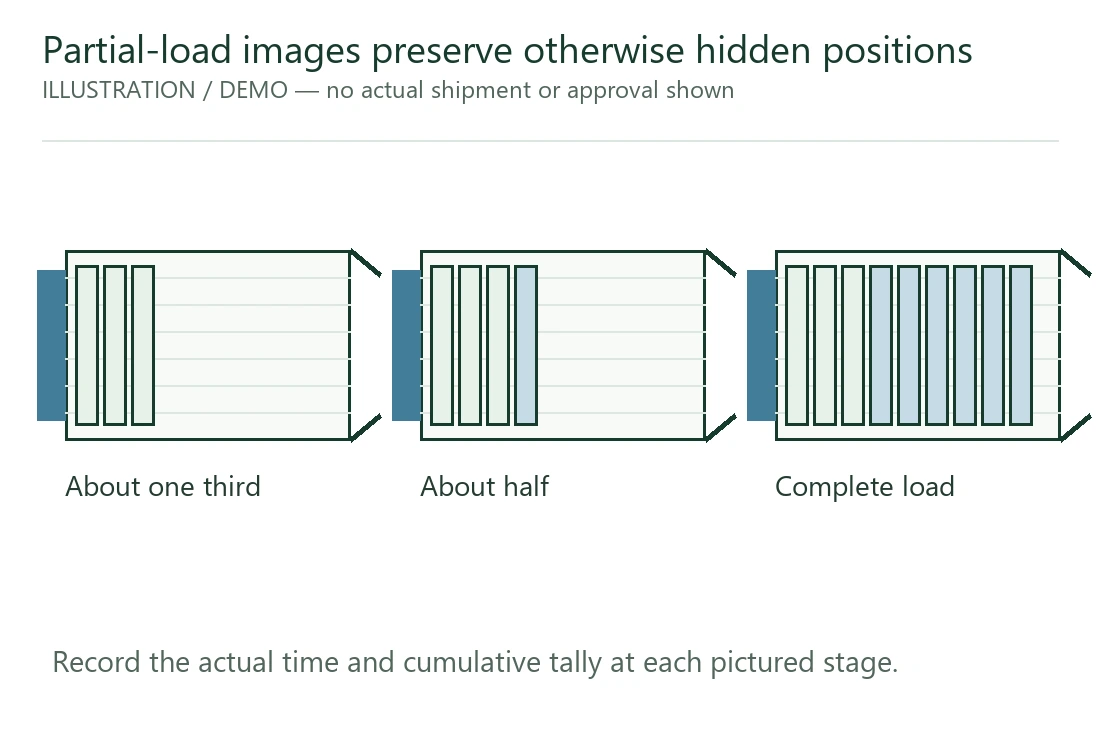
Staged load views retain positions later hidden by cartons. Illustrative method / DEMO, not shipment evidence. Swipe horizontally on a narrow screen to read the full illustration.
Consider a DEMO two-lot load with twelve pallet positions. The plan assigns positions 1-6 to lot A and 7-12 to lot B. The sixth pallet is rejected at the dock, and an approved replacement from lot C enters position 6. The half-load image should show positions 1-6 before the door-side pallets hide them; the tally should read five A pallets, one C pallet and six B pallets. The final photograph cannot establish that internal split. If the report still says six A pallets because the planned map was copied forward, the photo index and tally disagree. Stop document release, correct the as-loaded map, and reconcile carton counts and lot marks before sealing or issuing the packing list. These letters and counts illustrate the check; they are not an actual order record.
At the complete-load stage, photograph the final exposed face, the upper clearance beneath the applicable load line, the visible door-end arrangement and the securing method. The picture does not show every hidden carton or measure air velocity. Compare it with the approved load plan and the actual carton/pallet count. For a reefer, the T-floor, load line and air-return path are functional constraints. A technically neat wall of cartons can still block circulation or extend beyond the floor's intended area. Where the plan changed, ask the loading lead and forwarder to evaluate the changed geometry before closure rather than annotating an unsafe configuration as approved.
Do not let the photograph dictate the tally. Count cartons as they cross the loading boundary by SKU, lot and pack, then reconcile the final number to the revised packing list. If cartons are staged outside and photographed but never loaded, their pictures must not be presented as loaded evidence. A change log should show shortages, replacements, damage exclusions and sample cartons separately. A sequence can be interrupted by a reefer alarm, inspection or equipment change; identify the interruption and what was rechecked before resuming. The report's purpose is to help a buyer reconstruct physical events, so a visible gap is better than a smooth but false timeline.
Finish with the transition that many reports miss: one image of the complete load with doors still open, one with one door partly closed so the last load face and door action remain visible, and a final wide view of both doors closed. The half-closed image is a sequence marker, not a requirement to hold the cold door open for a staged photograph. It should be captured only where safe and consistent with the loading procedure. Do not delay closure to satisfy a picture list. If a frame is unavailable, state that in the index and rely on the actual stage records; do not borrow a frame from another shipment.
Document the approved sample position and exception path
A shipment sample should have a buyer-approved purpose, identity and location. The order may call for a sealed sample inside a named carton or pallet position, a separate accessible sample in an agreed door-end location, an external retained sample at the factory, or no accompanying sample. Do not turn one customer's arrangement into a universal demand for both a door sample and an inner sample. Record the approved choice, specimen identity, quantity, pack and lot, who selected it, whether it is included in commercial carton count, and how the receiving team will find it. If the sample is on the shipment, the load map and picture index should point to its precise position.
The position photograph needs two levels. A close image shows the sample's approved identifier and protection; a wide image shows the adjacent pallet or row before the next layer conceals it. Where the buyer requires a sampling chain, include selection method, tamper protection, seal if specified, custody and date. An attractive unlabelled bag beside cartons is not a traceable sample. Equally, a sample label cannot establish that the sampled product is representative of every lot in a mixed container. Define the sampling population and whether one lot, every lot or a risk-selected subset is covered. The lot map keeps that limit visible to the receiving QA team.
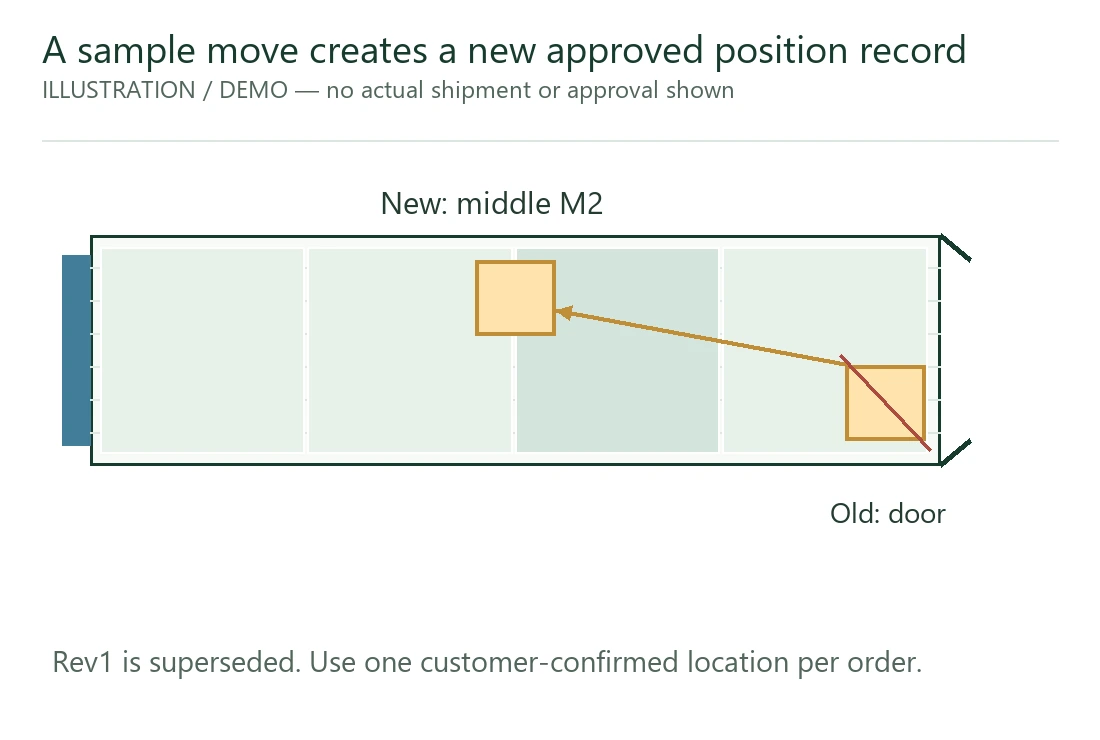
A sample move supersedes its old position record. Illustrative method / DEMO, not shipment evidence. Swipe horizontally on a narrow screen to read the full illustration.
If an unexpected sample request arrives during loading, pause the affected step and ask the order owner to approve the new location and document effect. A door-end location can change restraint or access to the last row; an inner position can make retrieval difficult without disturbing other cargo. Check the cold-chain exposure, carton count and revised packing list before adding anything. Never insert an uncounted box and call it "just a sample." A shipping document can differ from the physical load by one carton and still create a customs, weight or receiving discrepancy. The decision note states who requested, who approved and which record versions changed.
The same exception path applies to visible defects. Stop the affected pallet or zone, record the context photo and close-up, identify the SKU/lot and quantity, and obtain the responsible QA decision. If the affected product is held, show its removal from the loading population and revise the tally. If an acceptable replacement is brought in, its carton mark and date code need their own entry. Do not overwrite the original photo or rename it to look like the replacement. A clean audit trail shows the failed state, the disposition and the accepted state, in order.
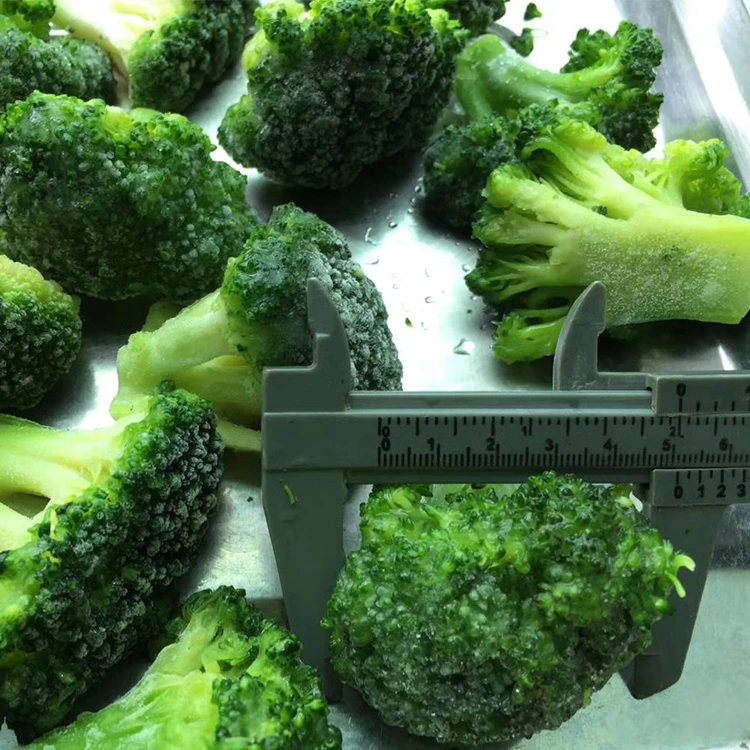
Original GreenLand product photograph; an example of a product form, not evidence from a particular loading or order. This image is not a loading photograph.
The strongest report does not claim every carton was opened or inspected simply because a few marks were photographed. Say what was sampled, what was counted and what was visually observed. If an independent inspector examined selected cartons, attach that separately scoped report. If GreenLand only supplied the frozen product, do not attribute the carrier's PTI, customs action or later terminal reading to our team. A clear owner field for each observation makes the file useful when purchasing, QA and freight staff need to resolve a disagreement without exchanging vague claims about who "checked everything."
Close doors, verify seal and preserve handover
After the actual count and required cargo checks are complete, photograph the last visible load face and the door closure sequence. Inspect both doors, locking bars and gaskets under the site's procedure. Apply the approved seal at the correct locking position, then read its number character by character against the seal issue log and the loading report. Take one close-up showing the number and attachment, and a wide image showing the closed doors, seal position and container identity together. If a close-up is sharp but cannot be tied to the unit, it is incomplete; if the wide frame is too small to read the seal, it needs its close companion.
The seal number should travel with the shipping instruction and the later handover record. It is an identity and tamper-evidence device, not proof of the hidden cargo count, product quality or a continuous uninterrupted cold chain. ISO 17712 classifies mechanical freight container seals; the carrier, security programme and customer terms determine the applicable seal type. If the seal is broken for an authorized inspection or is replaced, preserve the original number, reason, authority, time, location, old-seal image, observed cargo condition and new number. Do not simply edit the number in the original loading report. The Maersk Indonesia export page is one route-specific example of why carrier processes must be checked for the actual shipment.
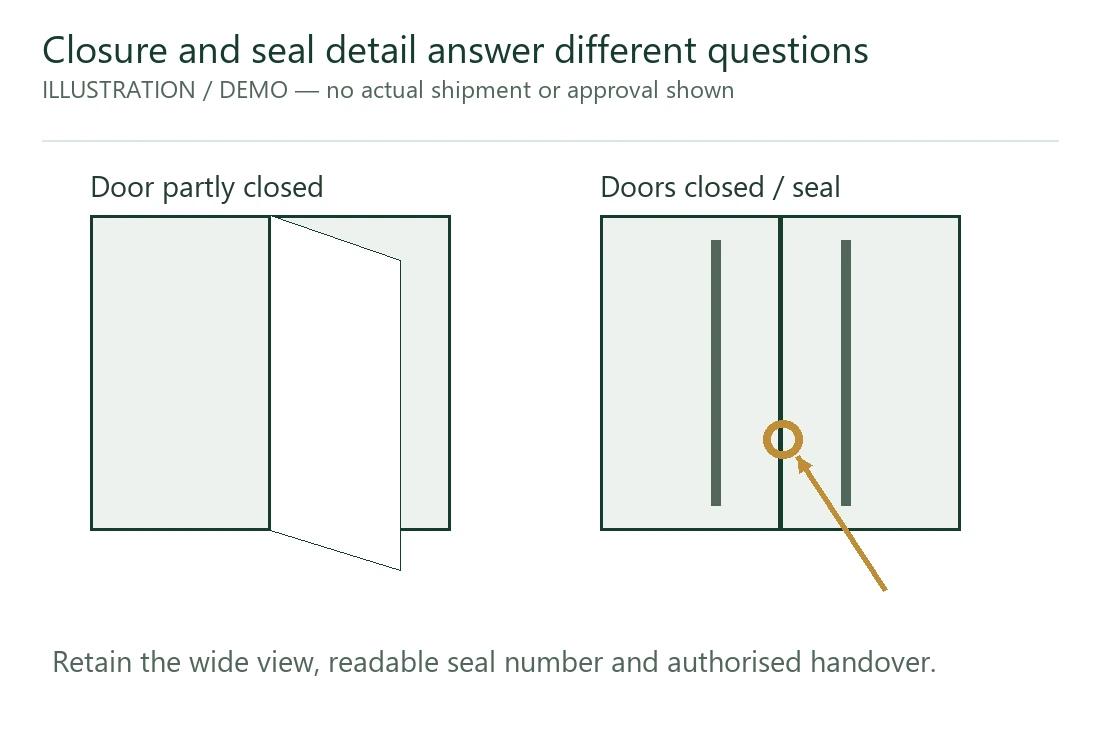
Door closure and seal identity require different views. Illustrative method / DEMO, not shipment evidence. Swipe horizontally on a narrow screen to read the full illustration.
Record the next custody point. Depending on the operating arrangement this may be a driver acknowledgment, gate receipt, equipment interchange record or terminal event. The file should state when the sealed unit left the loading site, who accepted it and what evidence is still pending. Do not call the container "delivered to vessel" because the loading site photographed closed doors. Temperature-related handover fields are equally precise: cargo product-temperature measurement at loading, reefer setpoint, supply-air and return-air readings are separate observations. A snapshot may capture one of them; the underlying record names each channel and time.
Carrier and port cutoff dates belong in the live booking, not a standard article's invented timetable. Arrange enough time to reconcile loaded count, packing list, shipping instructions and VGM before the applicable cutoffs. An image timestamp proves neither that the terminal accepted the unit nor that the ship accepted the documentation. The IMO VGM guidance makes verified gross mass a distinct ship-stowage input. Keep its receipt with the load file, but do not infer VGM from a photo of pallets or from the cargo net weight on the product label.
When a buyer receives the photo pack before vessel departure, show the file status honestly: loaded and sealed, handover received or pending, final packing list issued or pending, SI submitted or pending, VGM acknowledged or pending. This makes review actionable. A missing seal image should be recovered while the unit is still accessible if the procedure allows; a missing temperature measurement cannot be created after the fact. The report may be visually complete while a document field remains open, so keep a separate release status rather than placing a "passed" stamp across every item.
Index originals, reconcile the file and answer buyer questions
Organize originals under one shipment reference with a read-only or controlled archive policy. Keep the native image bytes, capture metadata where available, upload time, uploader and an image index. A hash can help prove that an archived file has not changed, but a hash does not prove the photo's date, location or subject; those come from contemporaneous identifiers and records. If the buyer needs a compressed PDF report for convenience, make it a derivative. Preserve the source JPG or HEIC files separately because a PDF export often resizes images enough to make carton dates and seal characters unreadable.
The index should let a reader navigate from question to frame: "Which reefer was presented?" points to the exterior number and empty interior; "What lot was at the machinery end?" points to the position map and its label detail; "Was the order complete?" points to the loading tally and final packing-list revision; "Which seal left the dock?" points to the close and wide door frames plus issue log. A report with 80 unsorted images makes these answers slower, and a report with five beauty shots may not contain them at all. Choose coverage by questions, then check focus at actual reading size.
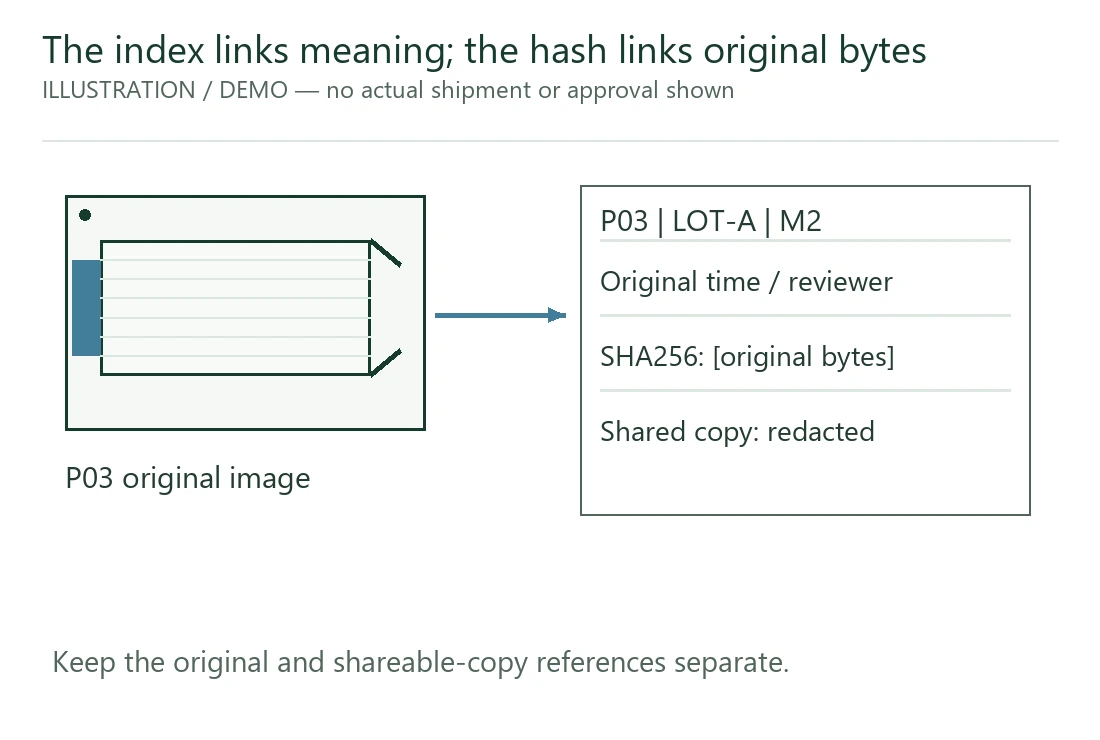
An index links context while a checksum links original file bytes. Illustrative method / DEMO, not shipment evidence. Swipe horizontally on a narrow screen to read the full illustration.
Reconcile the photo index against independent records before sending it. Compare observed container and seal characters with the booking and shipping instruction; compare pictured carton/date mark examples with approved SKU/lot rows; compare loaded stages with the tally and final load map; compare the sample position with its approval; compare product-temperature measurements with the order's release criterion; and compare handover time with the driver or terminal record. When any pair conflicts, preserve both originals and write the resolution with approver and version. Silent correction of one field destroys the reason the evidence was collected.
Protect customer and employee information when preparing a public illustration or sales example. A real order report may contain private buyer names, destinations, lot codes, dates, container numbers, personal signatures and photographs of workers. Obtain the necessary permission and remove identifying data before reuse outside the controlled order file. The images in this article are instructional diagrams and product-form photographs. They are not a GreenLand shipment photo report, and they do not show a verified current cargo, actual seal or loaded container. A buyer seeking order evidence should request the report for the specific production and booking, not infer it from website media.
We can use this structure to discuss photo requirements before the quote is finalized. Send the product form, pack, quantity, destination, approved sample policy, requested documents and any inspection clause. Our commercial and quality teams can then identify which frozen-product records we can prepare and which carrier, loading-site or independent-inspector records must come from their respective owners. The resulting photo report will be narrower than a claim that "everything was inspected," and far more useful: it tells the buyer exactly what was seen, what was measured, what changed, and which original file supports each statement.
Build your frozen food order with GreenLand-food
GreenLand-food is a professional frozen food supplier and manufacturer in China, providing factory-direct wholesale supply for importers, food manufacturers and foodservice programmes.
Send your product form, specification, packing, quantity, application, destination, private-label needs and requested documents. We will organise the product and order requirements with your purchasing and quality teams.