


Importing Frozen Cut Green Beans from China into Indonesia
Oct 20, 2026
Leave a message

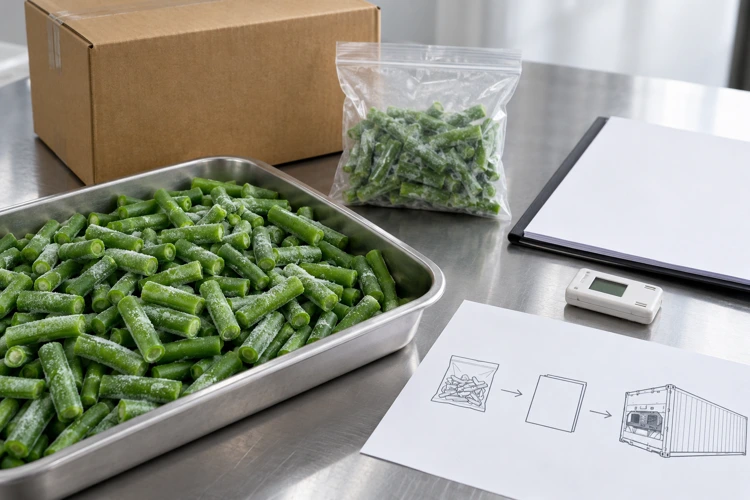
For plain blanched IQF young bean pods, start with the PSAT minimal-treatment route and its actual circulation-permission or narrow industrial-use exception. Frozen-bean code0710.22.00 is also explicitly listed for applicable Halal requirements. Keep the standing certificate/registration, shipment LPPH, quarantine outcome and Customs SPPB separate, supported by one matched product and lot file.
Define the bean and the Indonesian regulatory route
Our example is China-grown and processed *Phaseolus vulgaris*: young edible pods, trimmed and transversely cut, blanched and individually quick frozen, with one ingredient, industrial packaging and a full-cooking instruction. The product identity includes the pod and immature seeds. Dry beans, seed for planting, shelled mature beans and seasoned ready meals require other descriptions. At enquiry we record species, edible part, recipe, process flow, source factory, pack, use and Indonesian consignee. The importer or its customs agent checks 0710.22.00 against that actual description; the statistical heading alone does not prove admissibility or a duty rate.
Indonesia recognises minimal treatment within plant-origin fresh food, or PSAT. Article 3 of Bapanas Regulation 10/2025 expressly includes washing, peeling, chilling, freezing, cutting and blanching. Its heating provision has a defined postharvest purpose and limits. For the stated plain blanched frozen pods, this provides the relevant PSAT starting route. A generic statement that every frozen food needs a BPOM processed-food registration would send this enquiry down the wrong path. Record the actual treatment, rather than interpreting the English word fresh as meaning that the product cannot be frozen.

Actual GreenLand cut-bean product photograph, shown as a representative commercial form; the botanical identity, process and shipment status require the order records.
Prepare the cut-bean specification and Indonesian file
For cooked prepared foods and foodservice, agree the young edible pod, transverse cut, tenderness trial, industrial packing and destination. We can organise the matching sample, source and analytical plan while your importer completes its actual PSAT, quarantine, Halal and customs arrangements. The catalogue photograph represents the cut form.
Request Specifications & QuoteA useful historical BPOM jurisdiction booklet also distinguishes minimally treated plant food from processed recipes. Its 2019 institutional names are historical; current Bapanas and quarantine instructions control the application. If salt, sauce, other ingredients or more substantial cooking are proposed, submit the complete revised food for a fresh classification. The current PSAT rule itself contemplates some additive cases, so an added ingredient is a reason to review the facts, rather than a sufficient rule for assigning every mixture to BPOM.
Keep three questions separate throughout the purchase. PSAT market circulation addresses the Indonesian business and food placed on its market. Barantin administers applicable plant and border food-safety controls. Customs receives the declaration, assesses duties and taxes and releases cargo under its own conditions. Halal compliance adds a further product and shipment assessment where applicable. We can organise the source, sample and technical file for those tasks, while the named Indonesian importer and its authorised representatives make the local applications. A document from one authority should not be relabelled as approval from all of them.
Set up the importer and the PSAT circulation file
The customer first establishes its Indonesian business and customs access. It uses OSS for the NIB and the appropriate importer status and business activities, then follows Customs registration guidance. The NIB used for importing must support the relevant API function; trading and own-production arrangements have different activities and conditions. Appoint a PPJK customs representative where needed and keep its authority with the file. We request the legal importer, tax identity, consignee, warehouse and contact roles before drafting shipment documents, so abbreviations do not create different parties across invoice, label and declaration.
For imported PSAT circulated in its original packaging, Article 20 normally requires the PSAT-PL circulation permission. Article 23 directs the application through OSS, with the central competent food-safety authority, OKKPP, reviewing its scope. The handling premises need the relevant SPPB-PSAT coverage, including any authorised rented facility and the actual cold-storage activity. The circulation permission is generally valid for five years under Article 37, with renewal and continuing handling requirements. Its status is not maintained merely by keeping an old certificate scan on a shared drive; Article 38 also connects validity to the underlying handling certificate.

Both routes require the actual business arrangement. Other safety, plant, Halal and customs duties remain separately assessed.
The current annex lists a concrete application package: product-information form; relevant premises or lease information and handling commitment; SPPB-PSAT for the proposed handling scope; the required safety COA or report issued within the preceding six months; all-sided label and packaging artwork; and the foreign handling flow signed and stamped by the producer/exporter and acknowledged by the Indonesian operator. Add evidence for any organic, genetic, nutrition or other claim and any applicable quality requirement. The rules distinguish a recognised foreign laboratory COA from other accepted accredited test reports. GreenLand coordinates the actual processor flow, source information, samples and supplier documents; the importer selects the legally accepted laboratory/report route.
Article 21 contains an important narrower exception for PSAT used further as an industrial or hotel, restaurant or catering input where the final product requires other permission and the input is not sold directly to the final consumer. The customer must establish that its actual arrangement meets those conditions. A large bag alone is insufficient, and an importer should not stretch an accepted manufacturing use into unrestricted consumer resale. Keep the activity, customer/use evidence and accepted exception in writing. An exception from circulation permission does not itself remove plant, safety, customs, label or Halal duties.
The PSAT-PL annex gives a fourteen-working-day issuance period, with completeness, verification and correction steps. That is a licensing procedure, not a promised container clearance or total qualification time. Ask the competent service for the current official fee, payment channel and actual dossier status; use separate quotations for laboratory work, storage and representation. Bapanas moved the relevant OSS verification work from the Agriculture ministry account to its own account following the 2025 system transition. A new applicant should use the current OSS/Bapanas service, rather than repeatedly submitting through an obsolete ministry login mentioned in an older guide.
Prepare the plant and border food-safety checks
The current commodity list is specific enough to prevent a blanket frozen-food exemption. The plant-import section of Barantin Regulation 5/2025, amending 1/2024, lists frozen beans 0710.22.00 at row 84 with the Indonesian outcome code K-9.2. The export section has different document codes and must not be used as the import checklist. The importer checks the actual restriction record in INSW INTR and the receiving quarantine office before loading. Vietnam has its own treatment-based wording; it cannot be imported into Indonesian law.
Use the links on the official Barantin service portal: the plant requirements/AROPT service identifies existing phytosanitary requirements and the route for a first commodity-origin assessment; PTK handles quarantine applications; Prior Notice handles the advance notification. The plant requirements service also links the PSAT database. Submit species, China origin, edible part, blanching and freezing flow, intended consumption, pack and arrival port. Check whether the exact origin-product route and relevant food-safety system or laboratory are accepted. Do not use approval for fresh produce, another species or another Chinese laboratory as evidence for these pods.

The current frozen-bean plant-import table lists K-9.2. The competent authority determines the actual entry result.
Where the route requires a Chinese phytosanitary certificate or additional declaration, obtain the requirements before requesting the exporting authority to certify. GreenLand assembles the producer and shipment facts and coordinates the lawful application; the competent authority issues the official certificate. A supplier cannot manufacture a missing government certificate in its own office. The importer or authorised user completes the required PTK and advance-notice records with consistent product, source, quantity, shipping and analytical information and retains their receipt/reference numbers. A notification receipt is an intermediate record, not the final quarantine release.
The Chinese source and laboratory choice matter to border food-safety documents. The current licensing standard explains different recognition and test-report cases, while the border PSAT database and quarantine requirements determine the actual entry evidence. The importer should send the accepted laboratory identity, commodity scope, required analytes and notice instructions to us before sampling. QA verifies that the selected lab and report match those requirements. A foreign accreditation logo by itself does not establish that a laboratory is registered for every Indonesian border programme. Missing scope or a mismatched commodity is resolved before dispatch, rather than covered by a generic multi-residue pass.
At arrival the designated office may examine documents, identity and physical goods and take samples under the applicable risk decision. Preserve the official sample codes, seal, test method and result. The importer follows any hold, treatment, rejection or other authorised disposition and obtains the applicable satisfactory outcome. K-9.2 is the listed import-result code for this commodity, not a document GreenLand issues before the inspection. Keep the accepted plant/food result with the customs and receiving records. No article, including this proposed order guide, establishes that a particular unselected Chinese factory or future consignment has already cleared that assessment.
Specify residues, metals and microbiological scope
The Indonesian test list should be set before raw-material procurement. Bapanas Regulation 15/2024 supplies named maximum residues, residue definitions and sample parts. The selected entries below concern fresh legumes or the named buncis pod group, rather than dry bean seed. Azoxystrobin is measured as the parent; cypermethrin uses the sum of isomers; bifenazate includes its specified diazene metabolite expressed as bifenazate. An analytical report covering only one component cannot establish a legally defined sum. The proposed frozen matrix and any effect of cutting or blanching need an agreed method and accepted interpretation; an EU processing factor is not automatically Indonesian law.
Article 2(3) sets a uniform 0.01 mg/kg maximum where a limit is absent from Annex I. That is an actual Indonesian rule, rather than a universal rule borrowed from another country. Check the listed commodity and residue definition first, then document how the fallback applies. Article 3 differentiates quantitative testing of known crop inputs from screening when inputs are unknown, followed by quantitative work on positive findings. We use the actual farm programme and risk information to build the panel and reconcile it against the lab scope. Three examples in a table do not represent a complete pesticide screen.

Schematic pod sections explain the analytical matrix. Seed-only testing cannot silently stand in for a young-pod sample.
Sample preparation must preserve the regulated part. Annex II specifies the whole relevant commodity, with the stated stem removal for fruiting vegetables where that grouping applies. A peeled-out seed sample cannot silently replace the young edible pod. The laboratory and importer should record the classification, sample preparation, homogenisation, analytical method, reporting limits and applicable residue expression. QA requests enough reporting sensitivity to judge the selected limit and keeps the sampling link to the finished lot. A report saying ND without a reporting limit and analyte definition leaves the decision incomplete.
Bapanas Regulation 10/2024 covers minimally treated fresh foods, expressly including freezing and blanching. Its vegetable metal row gives cadmium and lead at 0.2 mg/kg each. Article 7 uses the edible portion; the annex names AAS/ICP-MS principles and listed AOAC methods, while allowing other validated methods. Arsenic marked TD means no value set in that row, not zero tolerance. Confirm the test basis and applicable border requirements for the actual food, rather than substituting lower EU numbers or an Indonesian infant-food limit.
The same regulation's frozen-vegetable microbiological row concerns vegetables ready for consumption without cooking. It lists Salmonella n=5, c=0, negative in 25 g and Listeria monocytogenes n=5, c=0, 100 colonies/g. These are scope examples, not an automatic legal specification for our cook-required pods. The importer and qualified food-safety reviewer establish the applicable product criteria. A buyer can separately adopt five identified units with Salmonella absent in each 25 g under a validated method such as ISO 6579-1; label that as the agreed buyer condition. Do not average away a positive unit or use a negative test to replace the processing and hygiene review.
| Selected item | Indonesian example | Definition and scope |
|---|---|---|
| Azoxystrobin | 3 mg/kg; fresh legumes | Parent azoxystrobin; Annex I, active20; verify actual pod classification. |
| Cypermethrin | 0.7 mg/kg; buncis/long-bean pod group | Sum of isomers including listed alpha, beta and zeta forms; active75. |
| Bifenazate | 7 mg/kg; buncis/long-bean pod group | Parent plus specified diazene metabolite, expressed as bifenazate; active27. |
| Cadmium / lead | 0.2 / 0.2 mg/kg | 10/2024 Annex I vegetables; edible-portion test, not raw dry-bean seed. |
Complete the applicable Halal and shipment conformity path
Halal needs a current code and product review. The original BPJPH Decision 307/2025 expressly includes frozen beans 0710.22.00 at row 340 under heading 07.10. The simple-plant-material exemption list must therefore not be used as a blanket claim that this blanched IQF SKU needs no Halal assessment. BPJPH's 9 October 2026 implementation statement confirmed implementation from 18 October without postponement. Its discussion of special conditions being drafted was not a general exemption already available to every foreign industrial food.
For the applicable certified route, the actual Chinese product and facility need valid coverage from a Halal body accepted by BPJPH for the relevant country and scope, or the applicable BPJPH certification route. The Indonesian importer or official representative registers the accepted foreign certificate through SIHALAL. Confirm holder, Chinese production address, product name, ingredients, process and scope, certificate validity and the authorised brand/logo use. A certificate from a different partner or an unrecognised issuer does not become acceptable because its English title contains halal. We can gather the processor's ingredients, aids, shared-equipment and source records and arrange the requested audit coordination; actual certification follows the accepted body's decision.

The standing certificate and registration do not replace the current regulation's consignment conformity requirement where applicable.
There is also a separate shipment-conformity procedure. BPJPH Regulation 4/2026, promulgated on 10 August and effective after thirty days, provides for Pemastian Produk Halal and its LPPH record. For goods within its scope, the importer applies through BPJPH's integrated electronic service and selects an appointed inspection body. Its documents include NIB/API, tax identity, certificate or registration, HS/product list, authority where represented, purchase/order particulars and truthfulness declaration. The inspection is conducted directly at the loading warehouse in the loading/origin country before shipment, checking product and certificate alignment, pack marks, quantities, production codes and relevant conditions.
An LPPH covers one shipment or import as recorded and must be held when the customs import declaration is filed; it is exchanged with SINSW. It is not the same record as the standing foreign Halal certificate registration. The importer obtains the current integrated-service and appointed-inspector instructions before we schedule loading access. GreenLand coordinates the identified stock, carton/pallet counts, code visibility, approved labels and supplier documents for that inspection. The regulator or appointed body makes the conformity decision; our sales team cannot create its report.
The rule provides full invoice payment and a scheduling-information deadline of thirty calendar days after BPJPH receives payment. It gives an inspection period of up to fifteen calendar days after the scheduling information, with an authorised extension of up to fifteen days. These are conditional procedural clocks, not a freight promise. Obtain the actual fee invoice and any current implementing instruction. If a genuinely unlisted product or exemption question arises, SE 2/2026 provides a classification submission with composition/process and supporting evidence. Our defined frozen-bean code is already listed, so that mechanism should not be used to assume it is absent. Hold a conflicting or incomplete Halal route before loading.
Approve labels and file customs clearance
The importer approves Indonesian artwork for the accepted PSAT route. Bapanas Regulation 1/2023 addresses language, minimum particulars and the point at which the imported label is required. Its minimum particulars include product name, ingredients, net quantity, producer/importer name and address, applicable Halal information, the relevant production/date coding and origin. Add storage information for the food's special frozen conditions and other triggered particulars or registration information. Check the actual scope and any claimed exception. An English-only bag should not be presumed acceptable merely because it is sold business to business.
Our technical pack sheet also records exact cut, young pod identity, one ingredient, cook-before-eating use, batch code, industrial inner packs and carton net weight. The importer signs the final Indonesian wording and market claims. Keep all sides of primary and secondary packaging in the approval file, as the current PSAT-PL annex requires. Packing staff compare the first filled bags with the approved artwork and reconcile unused printed materials at a SKU or market change. A logo or claim goes on the pack only after its actual scope and permission have been checked.

These similarly named records have different owners, subjects and purposes. Carrier collection and receiving acceptance are additional handovers.
Before filing, reconcile invoice, packing list, transport document, truthful origin evidence if a preference is claimed, applicable PSAT circulation result or documented exception, plant/food evidence, analytical reports and Halal shipment records. They must identify the same food, supplier, consignee, quantity and shipment. Send draft supplier documents to the importer before loading, then issue final quantities against the released pallet map. A sample-stage report does not prove a later consignment if the sample identity and production span do not match.
The importer or PPJK files the PIB through the Customs electronic route, accessible from CEISA 4.0 guidance, and self-assesses the applicable duty and import taxes. Check the current tariff, preferences and restrictions for the exact national code at the filing date. Customs may assign documentary and physical examination under its risk channels. Respond to formal queries with a corrected, traceable document version. An invoice payment receipt, a green channel or a supplier COA is not a substitute for another applicable agency's conditions.
The official import-for-use procedure describes SPPB as the customs release outcome and links INSW for restrictions. Do not confuse the Customs SPPB cargo release with SPPB-PSAT, the food handling certificate discussed earlier. Complete carrier and terminal release, payments and reefer collection after the relevant conditions permit it. The buyer then gives the received lot its own quality status. Quarantine, Halal conformity, customs, physical collection and customer acceptance remain separately identifiable decisions.
- Before production allocation: importer confirms NIB/API, national code, actual circulation-permission or eligible exception, quarantine/PSAT route and Halal requirements; GreenLand supplies the fixed food and process file.
- Before loading: complete accepted sample and lot tests, artwork, supplier documents and any required direct loading-warehouse conformity inspection. Record the applicable official outcomes.
- Before/at arrival: complete required advance notice and PTK/agency submissions; importer or PPJK files PIB with supporting records, pays assessed amounts and answers examination requests.
- Obtain the required agency and customs outcomes, then finish carrier/terminal collection and frozen transport. Receiving QA checks the lot and assigns usable-stock status.
Turn GreenLand sourcing into a controlled order
A practical enquiry starts with the customer's recipe and destination. Sales records the required cut, quantity, industrial pack and full-cooking application, while sourcing proposes an identified grower and processor. Quality reviews species and product identity, input history, destination test scope, process and certificate requirements before a commercial lot is allocated. We can arrange the proposed specification, matching samples, analytical commission and document handover. The actual farm records, line validation, certifications and test results must come from the selected supply route. If that route cannot meet a requirement, revise the source or offer with the buyer before promising dispatch.
Receiving staff check source code, harvest/intake timing, pod maturity, decay, soil, insects, foreign material and any mixing of species or grades. The factory segregates doubtful material and records the quantity and reason. Set maturity and string/fibre criteria through the customer's cooked sample, rather than relying on bright green colour alone. The sourcing lead obtains crop-treatment records so QA can request the relevant pesticide analytes. Do not rely on washing to correct an illegal or unknown residue.
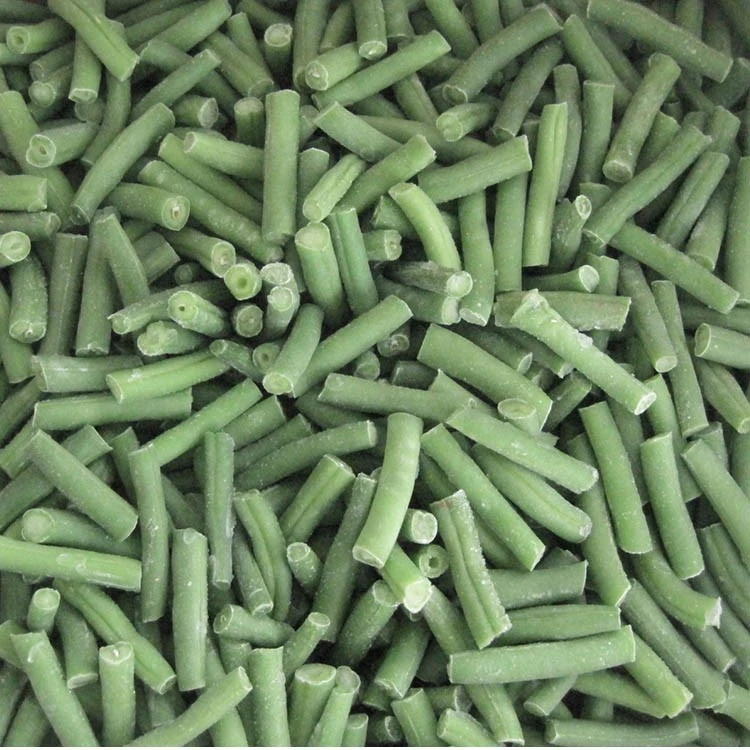
Actual GreenLand cut-bean product photograph, shown as a representative commercial form; the botanical identity, process and shipment status require the order records.
The production instruction defines trim and stem removal, cut length and measurement axis, broken pieces, visible-defect standards and the customer's tenderness trial. The selected processor validates its own blanching and cooling conditions for the product, equipment and control purpose, recording loads and deviations. Water, sanitation, post-blanch exposure and handling must support the hazard review; freezing does not sterilise the pods. Keep the actual freeze endpoint and cold-storage record. Optical sorting controls its specified visible defects, while metal detection or X-ray needs validated targets and rejection checks for the real product depth and package.
QA uses a lot-representative sampling plan and the accepted laboratory route. Preserve sample codes, carton/pallet positions, matrix, custody, required residue components, method and reporting limits. A failed challenge check isolates the production since the last satisfactory check for investigation; a missing critical test or unsuitable method leaves the lot on hold. The designated quality reviewer signs disposition, while sales coordinates the customer response. A new brand, factory, crop source, process or intended use triggers review of the relevant specification, test, certification and registration documents.
For a clearly fictional first-order trial, a customer might inspect 400 identified bean cuts, finding 20 outside its agreed length band, or 5% by count. In a separate 1,000 g portion, 15 g of defined loose stem would be 1.5% by mass. These are demonstration calculations, not Indonesian legal defect limits or GreenLand results. The buyer signs its actual limits, sample plan and method before the order. Compare the approved reference and the first production under the same full-cook, load and drain method, then quote the accepted usable output and pack against that measured specification.
Receive, compare and resolve an affected lot
Before opening or redistributing stock, receiving staff record container and seal, delivery time, logger identity and original data, pallet positions, carton condition, product codes and any official hold. Photograph the load and affected locations before disturbing them. A reefer set point records a setting; it does not reconstruct every product temperature. Frost or one clump also does not establish the cause of a complaint. Keep the time line, product state and original evidence together, with access to any official sampling and release conditions.
Commercial acceptance repeats the agreed state and method. Draw coded cartons across the defined lot, record the selection and custody, and grade length, stems, maturity and damage against the same reference. Keep count and mass results on separate rows and preserve a sealed frozen retain. If a cooked-yield trial starts with 1,000 g and gives 870 g acceptable cooked drained beans, the fictional arithmetic is 87% usable yield. The actual customer must establish its own result with a validated cooking endpoint, fixed load, drainage and reject definitions. Do not compare this figure with a raw field shell-out ratio or a supplier test prepared differently.

Preserve observations, affected quantity and decision authority. Fictional examples explain arithmetic and do not establish actual lot acceptance.
When a border or safety test fails, the importer follows the competent authority's hold and disposition. GreenLand provides the actual source, production, sample, analytical and shipment records and identifies related lots. A supplier retest can support investigation but cannot independently cancel an official result. The customer keeps held stock segregated and obtains the lawful decision on correction, treatment, rejection, re-export or destruction as applicable. A discount or relabelled intended use cannot cure a legal or safety failure.
For a quality disagreement, agree the quantity, comparison sample, inspector/laboratory, method and decision owner in writing. Investigate differences in sample state, denominator, preparation, production and transport before assigning a cause. QA records the affected time window, corrective action and next-lot verification. The importer resolves local filing or permission errors through its authorised channel; GreenLand corrects supplier documents transparently and retains the original versions. Release only the bounded stock for which the relevant external conditions and agreed internal checks are satisfied.
Use T10 to assign the application and document deadlines, and T11 to retain the actual arrival evidence. The combined file should let your purchasing team trace the offered pod from source and sample through processing, laboratory results, carton identity, loading inspection and local receipt. Send the Indonesian channel and application with your cut, pack and quantity enquiry. We can then prepare an order-specific sourcing and evidence plan that the importer, processor and buyer can each act on.
Use the existing order worksheets
T10 assigns application and document handovers to the responsible party. T11 retains arrival observations, samples and affected-stock records. Keep legal agency results separately identified from supplier quality decisions.
Build your frozen green beans order with GreenLand-food
GreenLand-food is a professional frozen green beans supplier and manufacturer in China, providing factory-direct wholesale supply for importers, food manufacturers and foodservice programmes.
Send your product form, specification, packing, quantity, application, destination, private-label needs and requested documents. We will organise the product and order requirements with your purchasing and quality teams.