


Freezing and Thawing Red Currants for Baking and Preserves
Oct 19, 2026
Leave a message

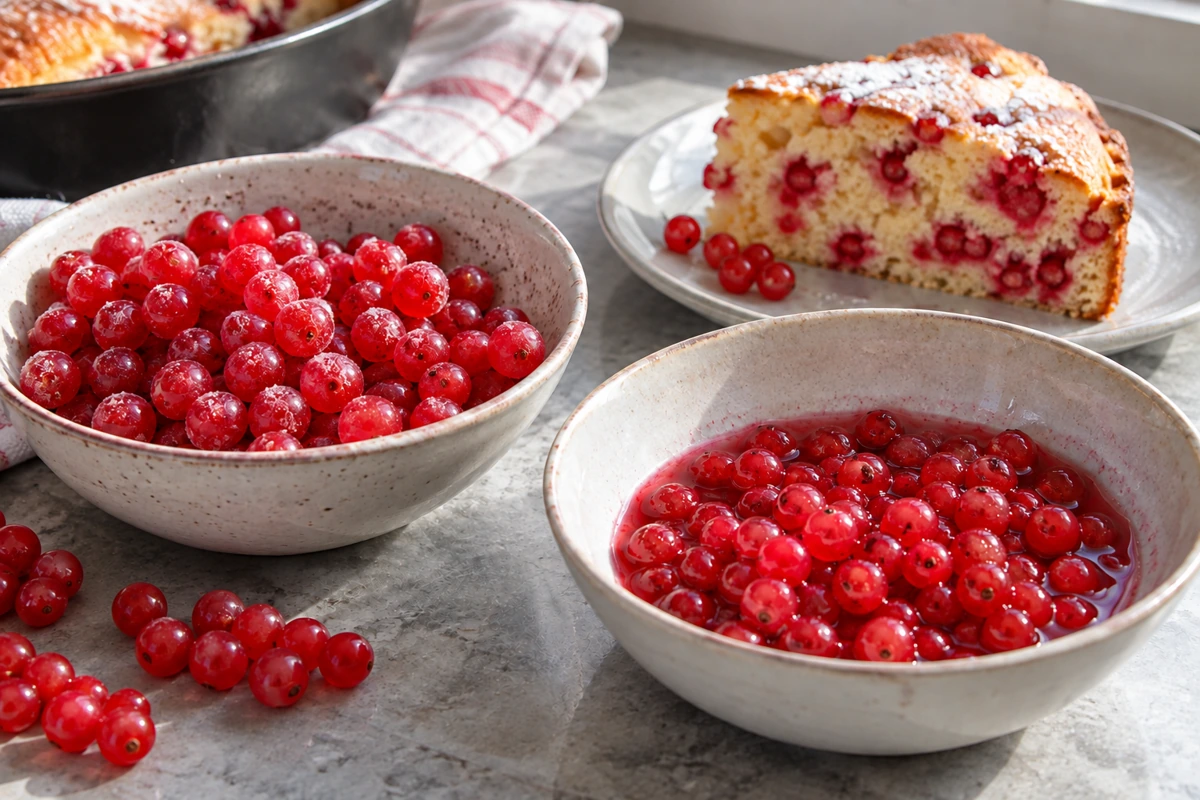
The useful starting point is the intended food. Decide whether you need individual berries, an evenly distributed fruit filling or a measured base for preserves, then choose the freezing, packing and thawing route that supports it. For a commercial frozen-fruit purchase, run the proposed lot through that same route before approving its handling performance.
Begin with berries suited to the intended use
Freezing preserves fruit for later use; it does not improve fruit that was unsuitable at the start. Select sound redcurrants and remove damaged or moldy fruit, leaves and unwanted stalk material. For a home preparation, the National Center for Home Food Preservation currant instructions specify ripe redcurrants, washing and stem removal before packing. The desired starting condition is clean, usable fruit, not a batch that depends on later cooking to conceal poor selection.
Think about the finished appearance while making that selection. A berry that is slightly soft but otherwise suitable may fit a cooked fruit base better than a bake in which intact fruit pockets matter. This is an application decision, not permission to use spoiled fruit. Record the condition you accept so that the freezing method does not get blamed for differences already present in the raw material. Two batches with different ripeness or damage can emerge differently even after similar freezer treatment.
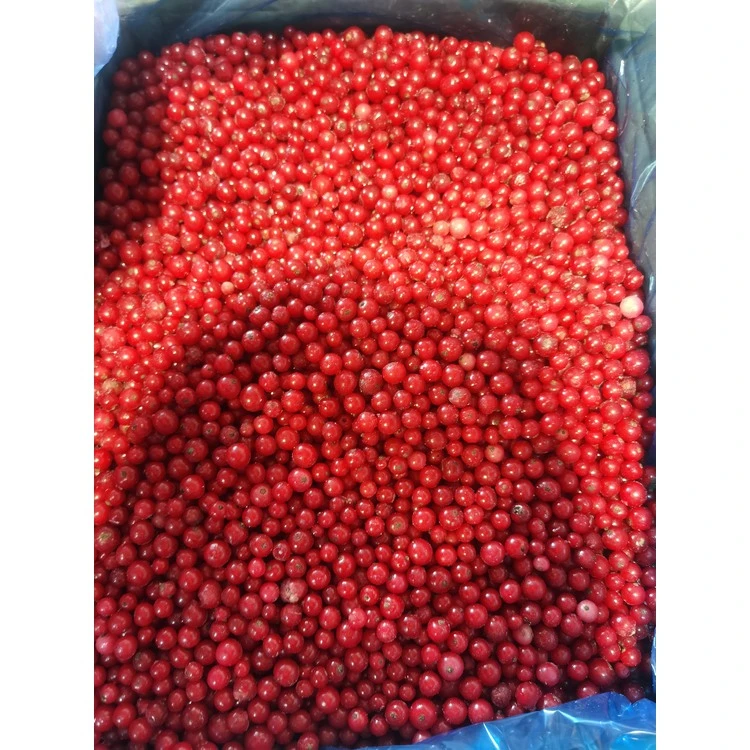
GreenLand product photograph of frozen redcurrants in a lined carton.
Freezing and thawing usually change the texture of delicate fruit. A thawed berry can be softer and release juice that was previously held within its structure. That does not automatically make it unsuitable for baking or preserves, where the fruit will be cooked or broken down further. It does mean that a photograph of firm fresh clusters is a poor promise of how a thawed ingredient will look. Evaluate the fruit at the stage where the product actually uses it.
Keep preparation proportionate to the supply form. Fresh berries that you freeze yourself require the appropriate fresh-fruit preparation. A purchased frozen ingredient needs confirmation of its agreed preparation and handling instructions. Rewashing an already frozen sample may add water, warm it and release juice, making the trial a different process from the one production will use. Do not add that operation simply because it appears in a home fresh-fruit method; establish whether it belongs in the intended process.
We use the GreenLand bulk frozen redcurrant product page as the starting point for a supply discussion, then relate the proposed product to the buyer's application. Whole-fruit appearance, loose handling and performance after thawing are separate questions. A buyer making a cooked preserve may prioritize different observations from a bakery that doses small frozen portions into a pale batter. Naming that endpoint early makes the sample request much more useful.
Freeze a manageable portion in a thin layer
For a small home batch, freezing drained berries in a thin layer before transferring them to a suitable pack helps keep portions manageable. The aim is to avoid creating one large mass that must be thawed just to remove a little fruit. The NCHFP currant guidance includes a tray-freezing option within its unsweetened packing instructions. Use a tray that fits the freezer and arrange the berries so they are not buried in a deep wet pile.
Surface water can undermine that aim. After washing, let excess water drain before arranging the fruit. Water carried between neighboring berries can freeze into bridges, so a batch may become more difficult to separate even if the individual fruit was sound. This is a handling issue rather than a reason to aggressively dry or squeeze the berries. A gentle, consistent preparation gives a more meaningful comparison than treating each small batch differently and attributing every clump to the freezer.
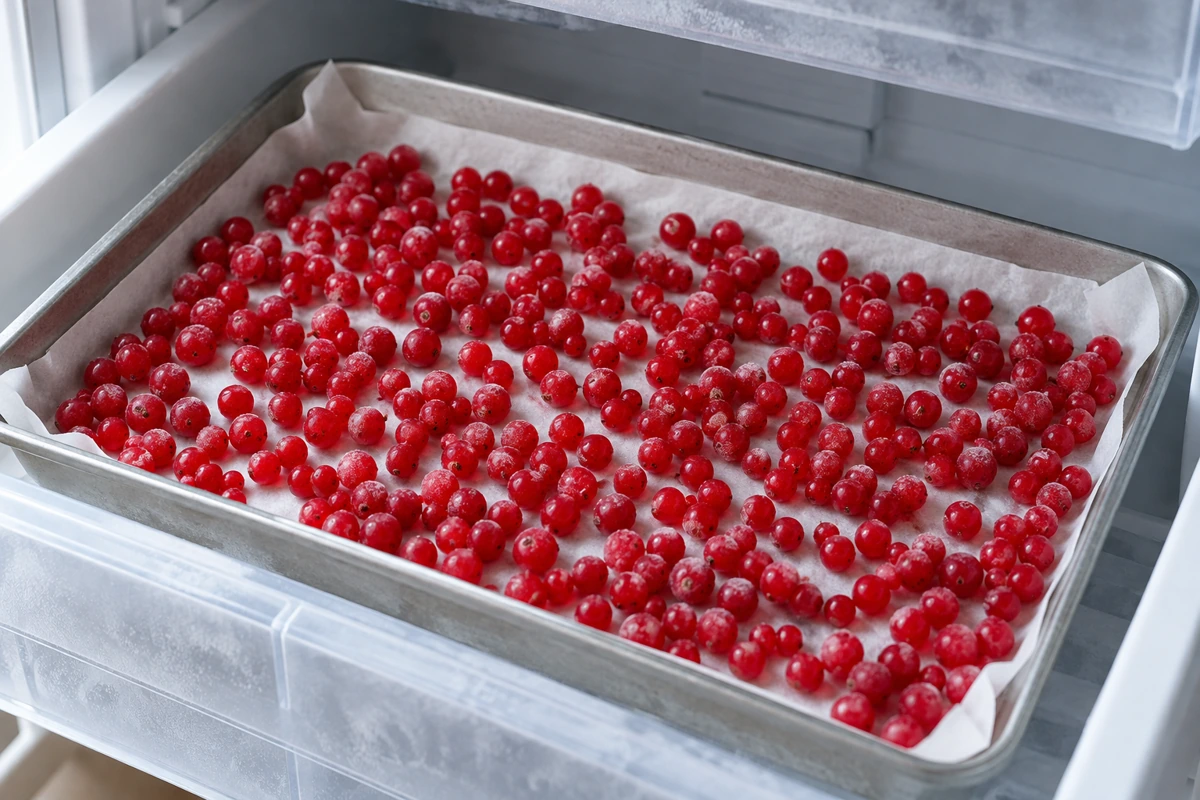
A thin layer helps small portions freeze without becoming one deep mass. Illustrative scene.
Transfer the frozen fruit to its storage packaging once it is firm enough for the intended handling. The tray is a temporary stage, not a protective long-term package. Exposed berries can lose moisture or pick up unwanted odors in storage. Work with portions that can be packed promptly, returning the filled packages to the freezer without leaving the fruit out while the rest of the kitchen work proceeds. Good planning reduces unnecessary warming as well as handling losses.
Do not describe a home tray method as proof of an industrial freezing process. Commercial equipment, product loading and handling conditions differ. For a supplied lot, verify the actual offered product and judge its condition in a representative sample. Loose frozen berries can be convenient to portion, but a bag that looks loose in a photograph does not establish how every delivery will behave. The agreed specification and receiving observations need to support that expectation.
Assess clumping in context. A few berries stuck together, a consolidated block and fruit surrounded by obvious excess ice are different observations. Note what is present and whether the intended process can handle it without excessive force or warming. Breaking a hard mass aggressively may damage berries needed for visible inclusions. A process that cooks the entire portion may be less sensitive to individual separation, while still requiring an acceptable cold-chain history and product condition. Convenience does not replace those receiving checks.
- Sort, rinse and destem sound fresh redcurrants as the method directs.
- Drain surface water and spread a manageable portion in a thin layer.
- Freeze until firm enough to transfer without crushing.
- Pack promptly in suitable freezer packaging and return to frozen storage.
Protect the packed berries from moisture loss
Packaging protects the fruit after freezing and determines how easily it can be used. Choose freezer-suitable food packaging that limits moisture loss, closes properly and suits the intended portion. The University of Minnesota Extension fruit-freezing guidance explains why packing method and protection matter to frozen quality. A shallow, manageable portion is often easier to use consistently than a large container that repeatedly has to be opened and partly warmed.
Remove unnecessary air where the packaging design permits, but do not crush the fruit in pursuit of a perfectly flat pack. Leave the space required for the chosen packing method, especially when liquid is present. A dry pack of loose berries and a syrup pack behave differently and should not share an improvised filling rule. Follow the applicable method and packaging instructions rather than treating every clear bag or container as interchangeable.
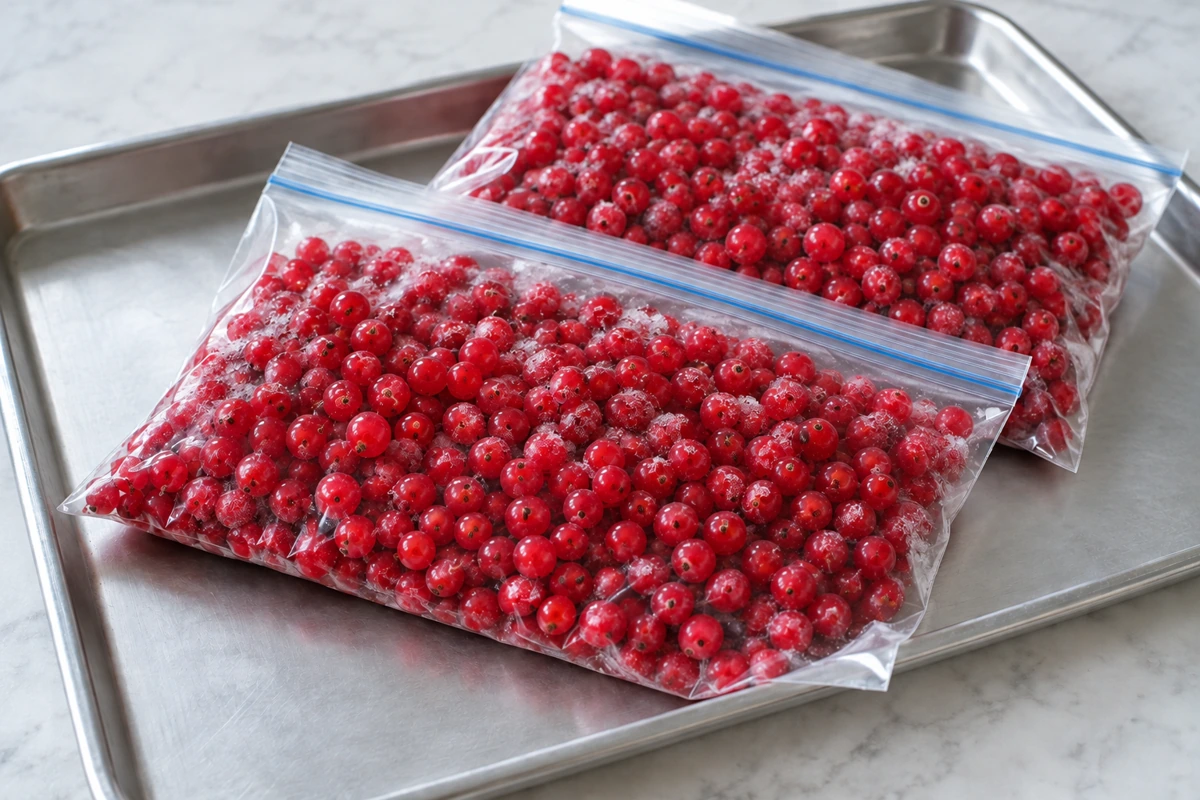
Manageable packs reduce the need to warm a large quantity just to remove a portion. Illustrative scene.
Label the fruit identity, preparation and packing date. If sugar or syrup has been added, make that visible as well. A later recipe needs to know whether its measured portion is unsweetened fruit or a mixture containing added ingredients. Without that distinction, a preserve can begin with the wrong fruit-to-sugar basis and a cake can receive more liquid than expected. A clear label is especially valuable when several dark or red fruits share the same storage space.
Maintain the storage conditions appropriate to the food and facility. A stable freezer is more useful than repeatedly moving packs between warmer and colder locations. Avoid opening a large pack for a small quantity when a portioned system would suit the workflow better. If quality changes are observed, keep the storage record and handling history with the sample. Appearance alone cannot reconstruct the temperature history of a frozen product, and a few visible crystals do not provide a complete diagnosis.
For commercial purchasing, agree pack size around the production batch as well as transport and storage needs. A pack that minimizes packaging cost may still create waste if the line regularly needs only a fraction of it. Confirm whether a proposed pack can be portioned in the intended state and how opened material will be controlled. We would rather compare the offered format with the buyer's actual daily use than imply that one standard pack is automatically efficient for every bakery or preserve operation.
Choose the thaw state for the next operation
Choose a thaw state by the next operation. If a recipe or validated process calls for frozen fruit, keep the berries frozen until that stage. If accurate mixing, crushing or portion measurement requires softened fruit, use a controlled thawing method suited to the ingredient. The NCHFP thawing guidance distinguishes uses of frozen fruit and provides a useful basis for selecting a handling route rather than assuming that every fruit must reach room temperature.
Refrigerator thawing in a clean covered container is a practical option for a small portion when time allows. Use a container that catches the released juice and prevents leakage onto other foods. Allow enough space and time for the particular pack; a shallow portion and a dense block do not thaw at the same rate. Check the actual condition required by the recipe instead of relying on a universal number of hours that ignores portion size, packing method and refrigerator performance.
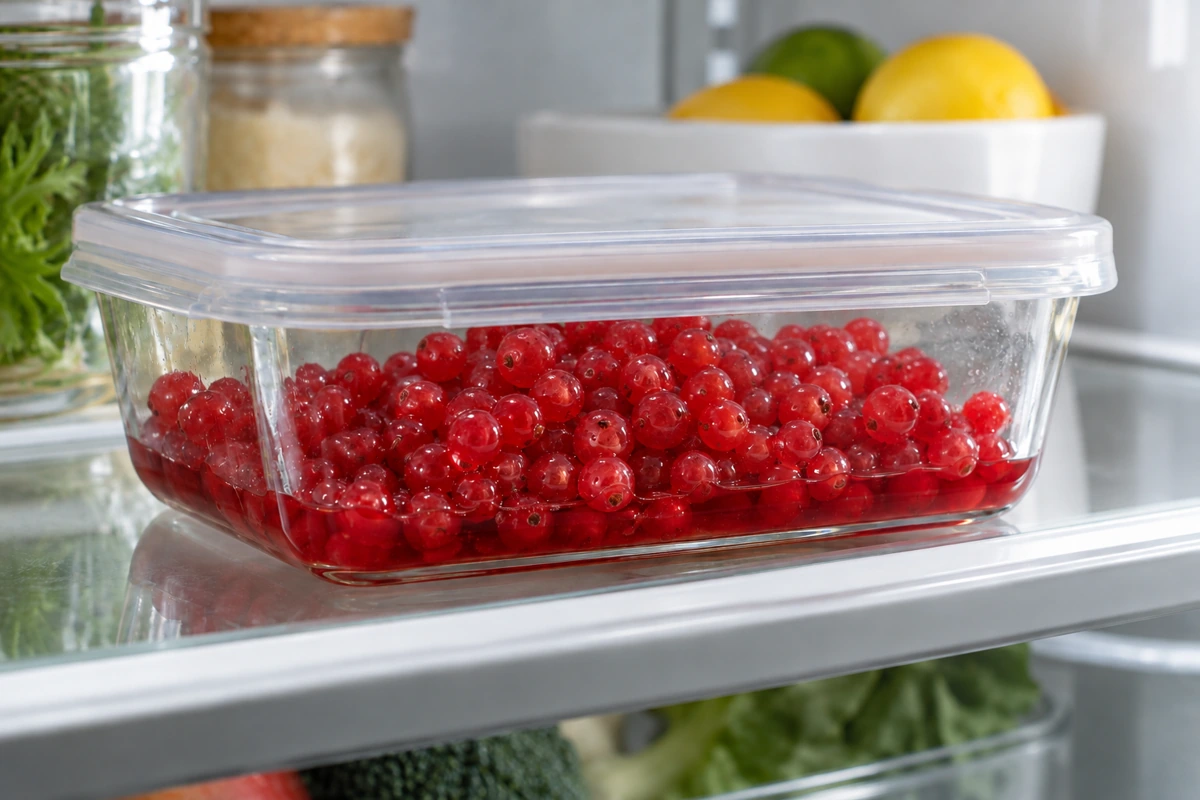
A covered container retains thaw juice for an explicit recipe decision. Illustrative scene.
The released liquid remains part of the fruit portion unless the recipe deliberately separates it. Measure and retain it during a development trial so the team can decide what it contributes. Automatically draining the berries can reduce the liquid entering a batter, but it also removes soluble material and changes the measured ingredient. That may be an intentional formulation choice; it should not happen invisibly between weighing the frozen pack and recording the finished result.
Partial thawing can be useful when the fruit needs to separate or crush but does not need to become warm. It also introduces a condition that must be described consistently. "Thawed" can mean a few softened outer berries around an icy center or a fully softened portion with freely released juice. Those are different inputs to mixing and heating. Record the observable state, the handling method and the time between preparation and use so the comparison can be repeated.
Freezing does not sterilize berries, and thawing is not a food safety treatment. Follow the supplier's use instructions and the applicable food safety process for the product, including any required cooking. A development photograph or pleasant taste cannot establish readiness for uncooked service. Keep that decision separate from the quality question of whether the fruit has softened enough for a recipe. This article focuses on handling and performance; the facility's approved controls determine how the ingredient may safely enter its product.
| Next operation | Possible fruit state | What to account for |
|---|---|---|
| A recipe designed for frozen fruit | Frozen until addition | Cold load, distribution and completed bake |
| Mixing or crushing requiring soft fruit | Controlled partial or full thaw | Actual thaw state and released juice |
| Measured preserve preparation | State required by the tested method | Fruit quantity, juice and any added sugar |
Control juice and temperature in baking
Frozen redcurrants can be convenient in baking because they are easier to portion while firm and can enter some mixtures with less immediate juice release. That does not make "always add frozen" a reliable rule for every bake. The mass of cold fruit, the thickness of the batter and the time available for heating all affect the result. A deep loaf and a small quickly cooked item do not offer the fruit the same opportunity to warm through.
King Arthur Baking's comparison of fresh and frozen fruit in baking illustrates why the recipe and cooking time matter. Its examples are useful development guidance, not a redcurrant-specific guarantee. Likewise, a technique demonstrated for frozen blueberries should not be transferred automatically to redcurrants. Rinsing, flour coating and thawing are possible recipe decisions; each changes handling and should be tested for the actual fruit and product.
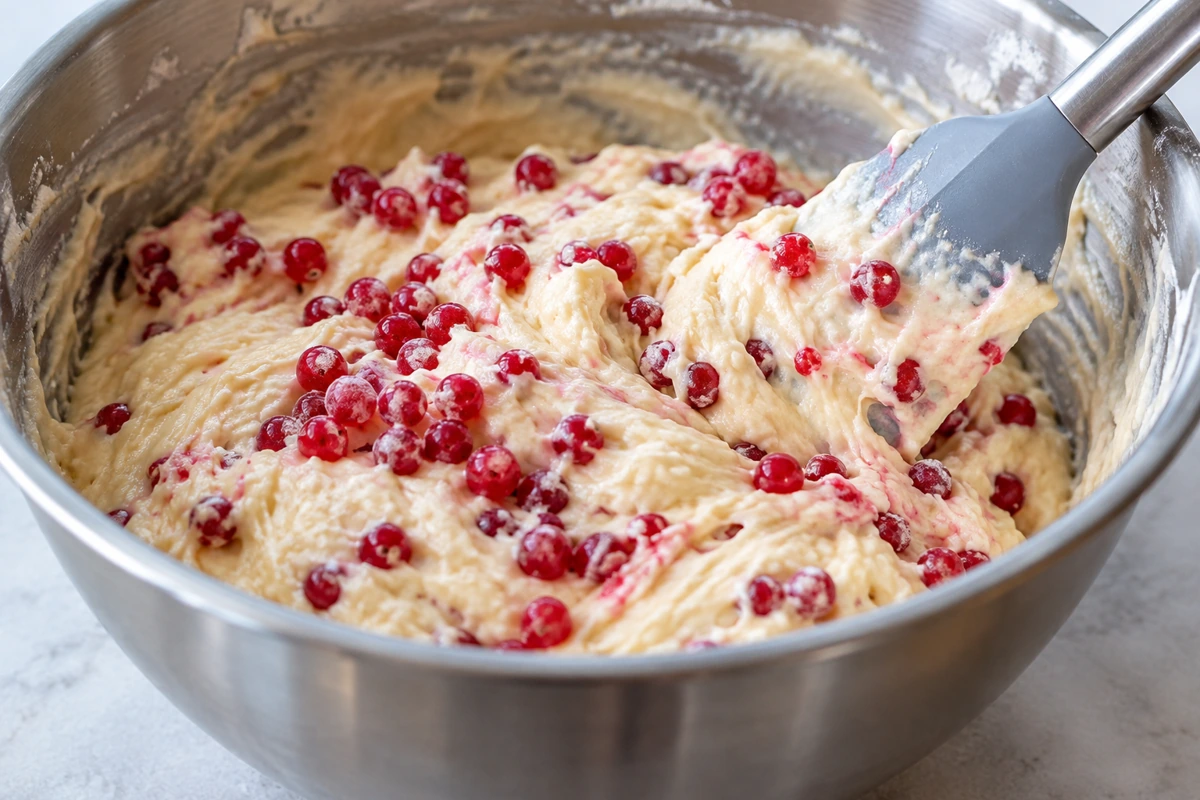
Test frozen fruit in the actual batter, mixing method and bake size. Illustrative scene.
For a cake trial, compare the intended fruit state with the same fruit loading and base recipe. Observe mixing first: does the batter remain workable, do berries distribute evenly, and does excessive streaking occur? Then assess the baked crumb near the fruit, the center of the product and the appearance after cooling. A cake can look attractive at the surface while retaining wet areas around fruit pockets. Conversely, a little color migration may be acceptable in a rustic product and unacceptable in a pale premium slice.
Do not change several variables at once and call the result a fruit-state comparison. If one trial uses frozen berries with all their juice and another uses thawed, drained berries at a different net weight, the team is testing more than temperature. That can still be a useful recipe comparison, but the record should say so. A controlled first comparison helps identify the cause; a later optimized version can then use the handling method that produces the best finished food.
Consider the next day as well as the first slice. Moisture can redistribute during storage, and a crumb that seems acceptable soon after cooling may change in its intended pack. Evaluate the product over the relevant quality window under the intended conditions. Commercial approval should include the actual bake size and line handling, because a small test cake does not reproduce every thermal or mixing condition of production. The right frozen redcurrant lot is the one that supports the approved process and final product, not simply the one that remains firm longest in a bowl.
For a fruit filling, decide whether the released juice belongs in the filling itself or in a separately adjusted liquid component. The answer depends on the recipe. If a developer chooses to drain thawed berries, weigh both fractions and evaluate the resulting fruit loading, rather than treating the drained berries as equivalent to the original frozen weight. If the juice is retained, assess the thickening and cooking route with that liquid present. Neither approach should be concealed behind an ingredient line that simply says currants.
The appearance target also deserves a clear description. Some products benefit from a red swirl through the crumb, while others need distinct berries with a pale background. A mixing method that is ideal for one can be disappointing for the other. Compare distribution and streaking after the normal mixing duration, not only after a very gentle hand demonstration. Then check whether the approved method survives the transfer into pans or depositors. Fruit that looks intact in the mixing bowl may experience more handling before it reaches the oven.
Keep the fruit balance intact for preserves
For preserves, begin with the ingredient basis specified by the tested recipe or validated commercial formulation. Unsweetened frozen fruit is often easier to account for than an unknown sweetened pack because the later sugar addition remains explicit. The University of Wisconsin preservation guide discusses freezing measured portions for later preserve making. Its broader lesson is practical: record what went into the frozen portion so the later recipe starts with known fruit and added ingredients.
Keep the thawed fruit and its juice together unless the chosen method instructs otherwise. A portion weighed before freezing can release a visible pool of liquid during thawing; discarding that pool changes what reaches the pan. If the preserve method calls for extracted juice rather than whole fruit, perform that extraction deliberately and measure the resulting ingredient as directed. "The same bag of berries" does not mean the same recipe input after draining, pressing or screening.
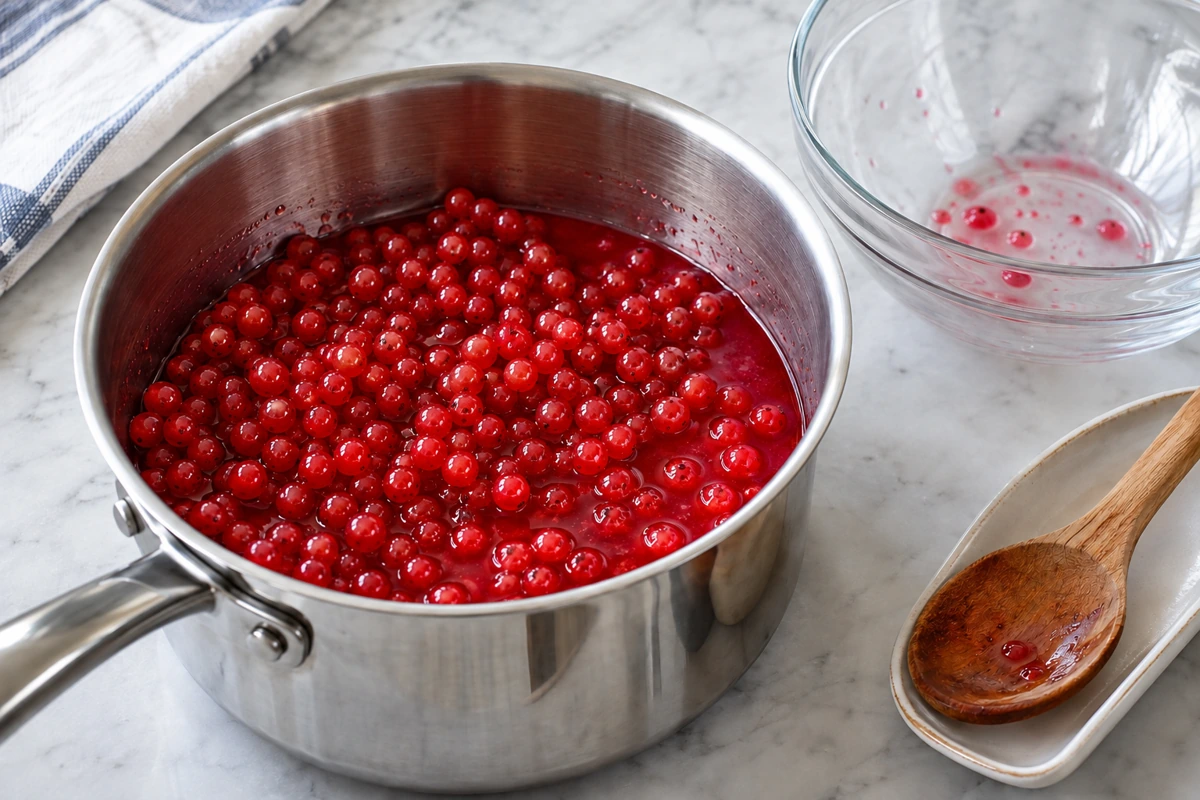
Retain the fruit and released juice unless the tested recipe specifies a different separation. Illustrative scene.
Thaw sufficiently for the required measurement and preparation. A frozen block may be awkward to divide accurately, and adding it to a pan can create uneven early heating if the method was designed for prepared fruit. A recipe that explicitly accommodates frozen fruit may handle that differently. Follow its directions rather than improvising a heating sequence based only on convenience. Smaller measured frozen portions can reduce the temptation to force a large pack into a recipe that needs only part of it.
Freezing does not standardize acidity, pectin behavior or fruit concentration. Those can vary with the fruit and its condition, while the preserve also depends on the recipe and process. If a batch fails to set as expected, investigate the formulation, measurement, extraction and cooking as well as the fruit. Adding extra sugar, boiling longer or changing an acid addition by intuition can alter more than texture. A commercial reformulation needs appropriate validation; a home preserve should stay within reliable tested guidance.
Keep storage claims separate from the attractive appearance of a finished jar. A spoonable redcurrant mixture made in a demonstration kitchen is not evidence of shelf stability. Use the required preservation process, packaging and storage instructions for the actual product. The same applies when moving from a refrigerated sauce to a shelf-stable preserve: the change is larger than reducing the water in the pan. Frozen fruit can be a useful starting ingredient, but it does not remove the need to establish the finished food's process.
Approve a commercial lot after the actual route
Approve a supplied frozen lot after the route it will actually follow. For a bakery, that may mean frozen portioning, mixing and a defined bake. For a preserve maker, it may mean controlled thawing, retaining juice, preparing the specified fruit base and running the formula. The incoming appearance is only the first observation. The application trial connects that appearance to the qualities the buyer will ultimately sell: texture, flavor, color and consistency within the intended product.
Record a few meaningful quantities rather than collecting numbers with no decision attached. Incoming sample weight, liquid released under the chosen thaw method and usable fruit or pulp recovery can help explain performance. State how each was measured. A drained weight means little without the draining method, and thaw liquid from one container shape cannot automatically be compared with a differently handled sample. Consistent measurement lets the team repeat the trial and compare its results.
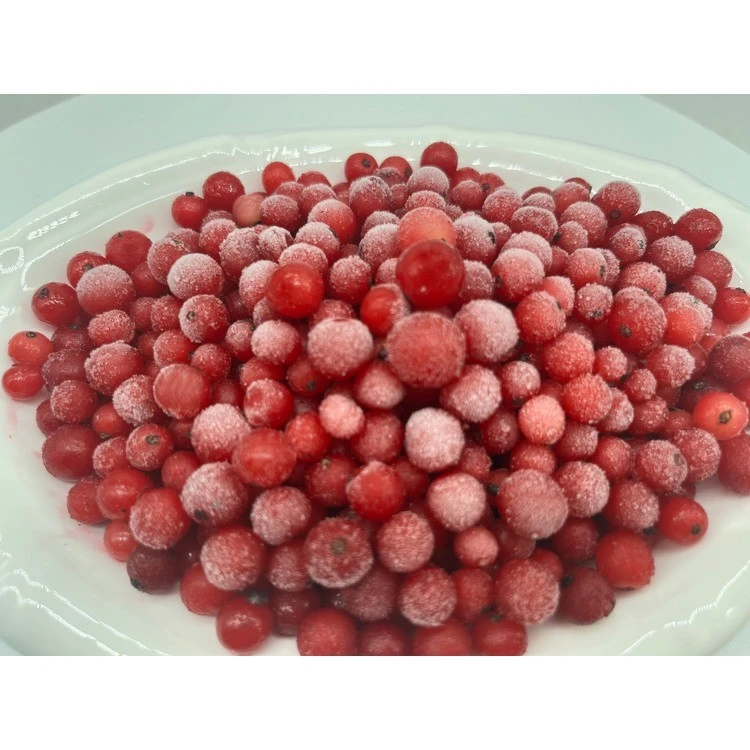
GreenLand product photograph of loose frozen redcurrants on a plate.
Keep the proposed delivery specification close to the sample record. Fruit form, pack format, preparation, storage conditions and relevant quality requirements should describe the product that actually passed. If a later order changes pack size or handling route, consider whether the earlier result still applies. A bigger frozen mass may need a different thawing arrangement even when the berries come from the same source. Operational changes deserve attention before they appear as unexplained variation in the finished food.
We would use a frozen redcurrant enquiry to confirm the buyer's application, market requirements, intended pack and expected order quantity, then discuss the offered product and available supporting information. Exact specifications and supply terms need confirmation for the proposed order. Establish thaw loss and bake performance with representative samples under the agreed handling method. Shelf life requires assessment of the actual product, process, packaging and storage conditions.
Receiving and application checks should answer different questions. At receipt, confirm that the delivery matches the agreed identity, pack and condition, and that the available transport and storage information supports acceptance under the facility's controls. In the application trial, establish whether that accepted ingredient performs as required. A good cake does not erase a receiving discrepancy, and a delivery that passes the receiving checks does not automatically prove that a new recipe will work. Keeping both records helps the team make the right correction.
If an approved product later behaves differently, begin with the recent handling history. Check whether pack size changed, whether the fruit spent longer waiting for the line, whether a different thaw container was used, or whether someone discarded the juice. Compare the formula and bake or cook conditions as well. These are ordinary operational variables that can be investigated before changing the fruit specification. If the incoming lot remains a plausible cause, retain representative evidence and discuss the difference with the supplier using the agreed sample method.
The final handling instruction should be short enough for production to follow and specific enough to prevent improvisation. It should identify the approved lot or product specification, the portion, the required frozen or thawed state, what happens to released juice and the next processing step. Keep the supporting trial record behind it. That combination lets a team use frozen redcurrants consistently without pretending that one thawing rule can serve every cake, filling, sauce and preserve.
Related reading
Compare loose freezing and later handling in a different currant species, keeping the redcurrant recipe requirements separate.
Distinguish standing liquid separation in a prepared puree from the behavior of whole thawed berries.
Follow blackcurrants through clear and pulpy syrup routes, with attention to filtration and pourability.
Source frozen redcurrants with GreenLand-food
GreenLand-food is a professional frozen redcurrants supplier and manufacturer in China, providing factory-direct wholesale supply for importers, food manufacturers, foodservice distributors, and private-label programs.
Send the product form, specification, packing, quantity, application, destination, private-label needs, and requested documents.