


How to Make a Smoothie With Frozen Fruit: Easy Recipe, Ratios and Fixes
Aug 28, 2026
Leave a message
How to Make a Smoothie With Frozen Fruit: Easy Recipe, Ratios and Fixes
Start with a dependable fruit-to-liquid ratio, blend in the right order, then correct the texture one small adjustment at a time.
Key takeaways
- Start with 1 cup liquid and 1½ cups frozen fruit for a thick but drinkable smoothie.
- Put liquid near the blades before frozen ingredients.
- Use more liquid to loosen; use more frozen fruit, yogurt or oats to thicken.
- For repeat batches, weigh ingredients and record fruit form, Brix and portion size.
The Short Answer: Use This Frozen-Fruit Smoothie Ratio
To make a smoothie with frozen fruit, start with 1 cup of liquid and 1½ cups of frozen fruit. Put the liquid in the blender first, add any yogurt or soft ingredients, then add the frozen fruit. Blend on low until the ingredients begin to move, increase the speed, and stop as soon as the drink is smooth. If it is too thick, add liquid one tablespoon at a time. If it is too thin, add another small handful of frozen fruit. You normally do not need ice because the fruit already provides the cold temperature and body.
That ratio is a starting point, not a law. A cup of loose whole blueberries does not behave exactly like a cup of large strawberry halves, dense mango chunks or sliced frozen banana. Blender jar shape, motor power, yogurt thickness and the amount of seeds also change circulation. The useful habit is to begin with a repeatable base, observe how the mixture moves, and make one small correction rather than pouring in a large amount of liquid at once.
For application details, see How to Make a Smoothie With Frozen Strawberries.
For one generous serving, try 1 cup milk or another beverage, 1½ cups frozen fruit, and ½ cup yogurt if you want extra creaminess. If you use yogurt, you may prefer to reduce the liquid to ¾ cup at first. Add a teaspoon or two of lemon or lime juice only when the fruit tastes flat. Taste before adding a sweetener: ripe mango, banana and pineapple may need none, while tart raspberries or blackcurrants may benefit from a small adjustment.
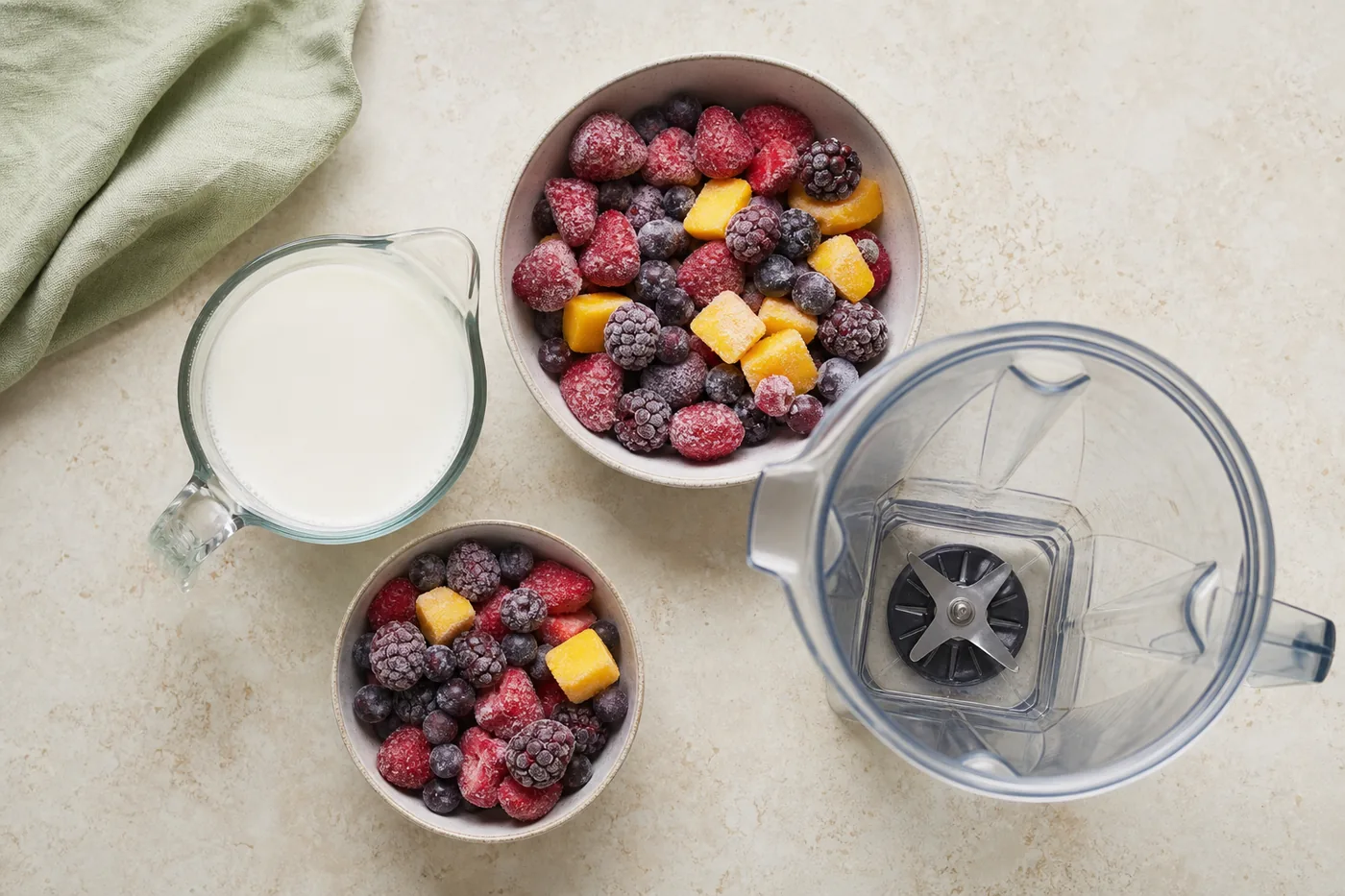
What Each Ingredient Does
A good smoothie is a balance of fluid, frozen solids, flavor and body. Liquid lets the blades create circulation. Frozen fruit chills the drink and supplies most of its flavor. A creamy ingredient gives the mixture viscosity and softens sharp acidity. Optional additions can increase protein, fiber or flavor, but every dry addition also absorbs water and may make the blender work harder.
Milk produces a familiar creamy base. Unsweetened soy or oat beverages are practical alternatives, though their body and flavor differ. Coconut water makes a lighter drink. Juice raises fruit flavor and sweetness but can make an already sweet mango or pineapple blend taste one-dimensional. Plain water works when the fruit is flavorful, but it exposes weak fruit quality quickly. Start with the liquid that suits the finished drink rather than assuming juice is always necessary.
Yogurt is useful, not compulsory. Thick yogurt produces a spoonable texture with less frozen fruit, while a thinner yogurt contributes more free water. Silken tofu can provide a smooth neutral base. Avocado adds body but also changes color and flavor. Oats thicken after they hydrate, so one or two tablespoons are normally enough for a single serving. Nut or seed butter adds richness but can mute delicate berry notes if the dose is too high.
Frozen fruit should remain the main flavor. A practical blend often combines one fruit that creates body with one that creates aroma or acidity. Mango and banana are body builders. Strawberries and raspberries bring a bright red-fruit character. Blueberries and blackberries bring dark color and a noticeable skin-and-seed profile. Pineapple contributes acidity and a fibrous tropical texture. Peach is mild and smooth but can taste flat without a brighter partner.

Numbered Method: How to Blend It Without Stalling
- Measure the liquid instead of pouring by eye. Start with 1 cup for 1½ cups frozen fruit, or ¾ cup when you also use ½ cup yogurt. A measured base makes the next correction meaningful.
- Add liquid to the blender jar first. It should sit around the blade assembly so the first rotation can pull ingredients downward.
- Add soft ingredients such as yogurt, banana, silken tofu, nut butter or sweetener. Dry powders should be placed where they can wet out rather than sticking to the lid.
- Add small frozen pieces, then larger pieces. If whole strawberries or large mango chunks bridge across the jar, let them soften for five to ten minutes or break the batch into two additions.
- Secure the lid. Start on low speed and allow the bottom layer to move. Increase speed only after a vortex or steady circulation appears.
- Use the tamper supplied for your blender if the manufacturer permits it. Otherwise stop the machine before scraping the sides. Never put a loose utensil into a running jar.
- Blend only until smooth. Long blending adds heat, melts the fruit and can turn a thick smoothie into a warm thin drink.
- Check with a spoon. Adjust one tablespoon of liquid at a time if the mixture is too thick, or add about ¼ cup frozen fruit if it is too thin. Blend briefly after each correction.
- Taste last. Temperature suppresses sweetness, so a very cold drink may taste different after a few minutes. Add acid, sweetener or salt only after the texture is right.
The order matters because frozen fruit does not immediately release enough water to form a moving mixture. When frozen pieces are packed tightly against dry blades, the motor may spin an air pocket while the top remains still. More speed is not always the answer. A little liquid at the blade, a lower starting speed and smaller pieces usually solve the problem with less dilution.
Frozen Fruit Smoothie Troubleshooting Table
| Problem | Likely cause | Smallest useful correction | What to change next time |
|---|---|---|---|
| Smoothie will not circulate | Too little liquid, large frozen pieces or an overloaded jar | Stop, add 1 tablespoon liquid, scrape safely and restart low | Use smaller pieces or two fruit additions |
| Too thick to drink | High fruit ratio, thick yogurt or absorbent add-ins | Add liquid 1 tablespoon at a time | Weigh yogurt and dry ingredients |
| Too thin | Too much liquid, thawed fruit or long blending | Add ¼ cup frozen fruit or 1 to 2 tablespoons yogurt | Start with less liquid and blend briefly |
| Icy or coarse | Added ice, freezer-burned fruit or insufficient blending | Blend a little longer after circulation starts | Skip ice and use sound IQF fruit |
| Bitter or overly seedy | Heavy dose of blackberry, raspberry or seed-rich fruit | Blend with mango, banana or yogurt; strain only if the recipe permits | Choose a lower-seed fruit form or refined puree |
| Flat flavor | Mild fruit, too much dairy or low acidity | Add 1 teaspoon citrus and retaste | Combine a body fruit with an aromatic or tart fruit |
| Foamy texture | Long high-speed blending or airy protein powders | Rest briefly and pulse at low speed | Shorten the cycle and standardize powder addition |
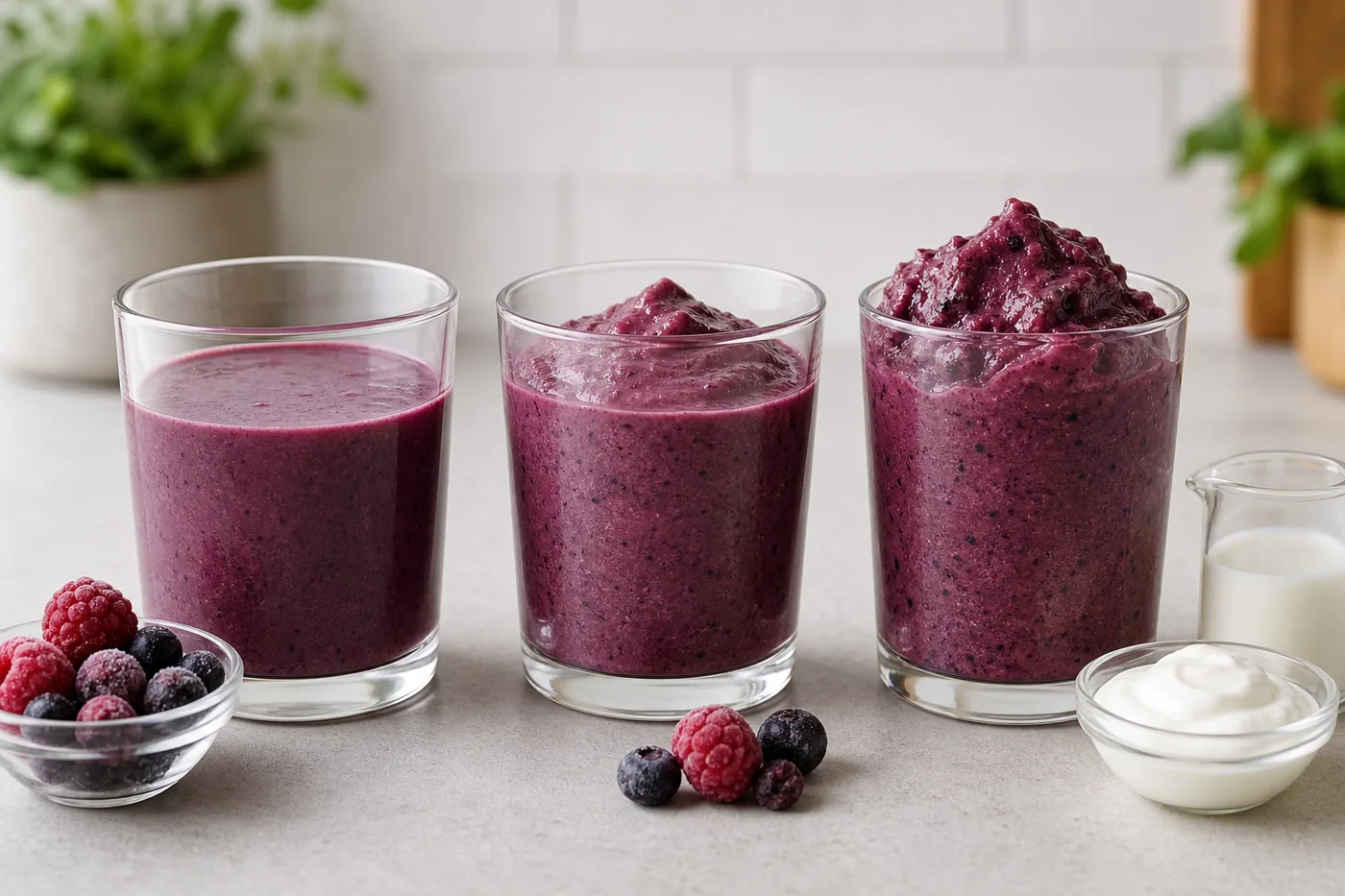
How to Fix a Smoothie That Is Too Thick
The best correction is gradual. Add one tablespoon of liquid near the side of the jar, restart at low speed and watch whether the mixture begins to fold. A large pour can move the drink from too thick to watery in seconds. For a single serving, two to four tablespoons usually create a noticeable change. If the jar is completely stalled, divide the batch rather than forcing the motor.
Large frozen pieces are another cause. A high-power blender may process whole IQF strawberries easily, while a compact personal blender may need strawberry slices, mango dice or a short tempering period. Tempering means allowing the surface to soften slightly, not leaving fruit warm for a long time. Five to ten minutes on the counter during preparation is different from fully thawing a bag and letting it sit through service.
Dry ingredients can quietly absorb the liquid. Oats, chia, protein powder, cocoa and powdered nut products all change viscosity. Add them by weight and do not assume the fruit ratio alone controls the drink. Chia continues to thicken while the smoothie stands; a formula that pours well immediately may become spoonable ten minutes later. For takeaway service, evaluate it at the time the customer will actually drink it.
How to Fix a Smoothie That Is Too Thin
First ask why it is thin. If too much liquid was added, another ¼ cup of frozen fruit is the cleanest correction. If the fruit thawed and released juice before blending, the formula may need less starting liquid. If the blender ran for several minutes, the frozen phase simply melted; add a little frozen fruit and use a shorter cycle. Ice can thicken briefly, but it dilutes flavor as it melts and often creates a coarse finish.
Yogurt, frozen banana and mango can add body without a large flavor dilution. A spoonful of oats thickens more slowly and is better when a cereal note fits the drink. Avocado thickens efficiently but changes flavor and allergen or menu communication. Nut butter contributes density and fat, but it is not a neutral fix. Choose the correction that belongs in the recipe rather than treating every thickener as interchangeable.
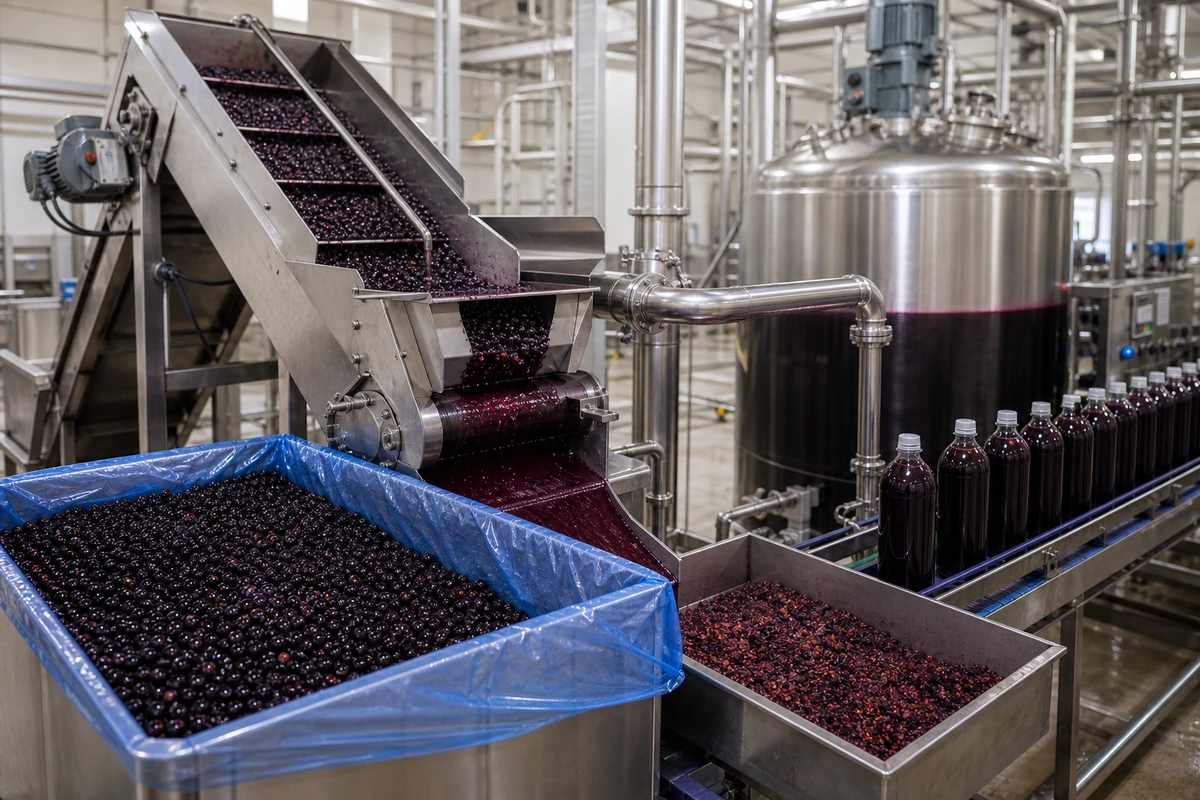
Best Frozen Fruits and How They Behave
Mango creates a smooth, dense drink when the pieces are ripe and not excessively fibrous. It pairs with berry, pineapple, passion fruit, coconut and yogurt. Very large chunks raise blender load; dice are easier for portion packs. Natural Brix and fiber can vary by variety and crop, so commercial formulas should not approve mango on color alone.
Strawberries bring recognizable flavor and color but whole berries occupy a large volume for their weight. Halves, slices or dice can be easier in small blender jars. Strawberry seeds are usually less dominant than raspberry seeds. Very pale or under-ripe fruit can produce a weak drink even when the color after blending looks acceptable.
Blueberries are easy to portion in whole IQF form and often circulate well because of their small size. Skins and seeds contribute texture, while their dark color can dominate a mixed smoothie. Cultivated and smaller berry types do not give identical flavor, diameter or skin-to-pulp ratio. A buyer should confirm which type was sampled rather than treating every blueberry offer as equivalent.
Raspberries and blackberries provide strong berry character and acidity, but seed load is obvious in a smooth beverage. Whole IQF fruit suits many rustic smoothies. A refined or seed-reduced puree may suit a premium drink that needs a cleaner finish. The right choice depends on whether visible seeds signal real fruit to the customer or create an unwanted gritty sensation.
Pineapple sharpens tropical blends. It is fibrous and can create a more aerated texture, especially when blended at high speed. Its acidity can brighten mango or banana, but it may make dairy proteins behave differently in a drink held for a long time. Evaluate the actual service window rather than relying only on the texture at the blender.
Peach, cherry and plum work well when a softer stone-fruit profile is wanted. Pits must be completely removed. Cut size and maturity affect blending, and some fruit darkens or becomes visually muted after thawing. These fruits are useful partners for stronger berries, citrus or spice but may require a clearer acidity target in a commercial recipe.
Smoothies Without Banana, Yogurt or Juice
A smoothie does not require banana. Replace its body with frozen mango, peach, avocado, yogurt, silken tofu or a modest amount of oats. The replacement should be chosen for flavor as well as thickness. Mango keeps the formula fruit-led. Yogurt adds acidity and dairy character. Avocado is neutral only in small doses. Oats make a breakfast-style drink rather than a clean fruit smoothie.
For application details, see What Goes Well with Banana? Flavor Pairings for Bakery, Smoothie and Dessert Products.
You can also make a smoothie without yogurt. Use milk, a fortified plant beverage, coconut water or water as the liquid. If you still want creaminess, use mango, frozen banana, silken tofu or avocado. A no-yogurt formula may need less total liquid because yogurt contributes both water and structure. Start conservatively and adjust after the frozen fruit is moving.
Juice is optional. Water keeps the ingredient list simple but demands flavorful fruit. Milk softens berry acidity. Coconut water makes a lighter tropical drink. Tea can add flavor without much sweetness. When juice is used, choose it deliberately: orange supports berry and mango, apple is neutral but sweet, and pineapple reinforces tropical acidity. Avoid stacking sweet juice, ripe banana, mango and added syrup before tasting the base.
Can a Low-Power Blender Handle Frozen Fruit?
Yes, but the process must respect the machine. Read the blender instructions and maximum fill line. Use smaller frozen pieces, add the liquid first and start with a modest batch. Let hard chunks temper for five to ten minutes. Pulse briefly so the lower layer breaks down, stop to scrape, and avoid holding the motor at full speed while nothing moves.
A personal blender cup is often loaded upside down before it is attached to the motor. In that design, the order you place ingredients in the cup may be the reverse of a countertop jar. Follow the manufacturer's order so liquid reaches the blades after inversion. Leave enough headspace for circulation. A packed cup of whole strawberries, ice, protein powder and very little liquid is a predictable stall, not a motor-strength test.
If the blender smells hot, stops repeatedly or the blade spins without moving food, turn it off. Reduce the load and add a little liquid. The goal is a good drink, not forcing a frozen mass through a machine that was not designed for it. A short temper and a smaller dice normally preserve more fruit flavor than correcting an overheated stalled batch with half a cup of extra liquid.

Scaling the Ratio for Cafes and Smoothie Programs
Volume cups are convenient at home, but weight produces a more repeatable commercial formula. Run a pilot in grams: for example, 240 grams of liquid and 225 to 300 grams of frozen fruit depending on fruit density and target viscosity. Record yogurt, powders, sweetener and ice separately. Measure the finished yield because aeration and residue left in the jar affect the number of saleable portions.
Use a three-batch trial. Batch A is the starting formula. Batch B reduces liquid by about five percent. Batch C increases liquid by about five percent. Blend each batch with the same jar, load order and cycle. Score pour time, straw draw, seed perception, sweetness, acidity, temperature and texture after zero, five and fifteen minutes. This is more useful than arguing about a universal fruit-to-liquid ratio.
Portion packs can control labor and dosing. A pack might contain mango dice, strawberries and blueberries in a fixed weight, while liquid and yogurt are dosed at the station. The fruit must remain reasonably free-flowing so staff can separate portions without striking a frozen block. If a bag contains large clumps from temperature fluctuation, the recipe and service time both change even when the declared net weight is correct.
The blender cycle is part of the formula. Different locations may use different jar sizes, blade wear or motor models. A recipe approved on one machine should be checked on the weakest approved machine. Define when staff may add correction liquid and how much. Otherwise every operator solves a stall differently, and the menu item becomes progressively thinner across a shift.
For cafés planning a new smoothie counter, Funtek's restaurant bar countertop guide discusses surface materials, equipment placement and the separation of guest-facing counters from wet working stations.
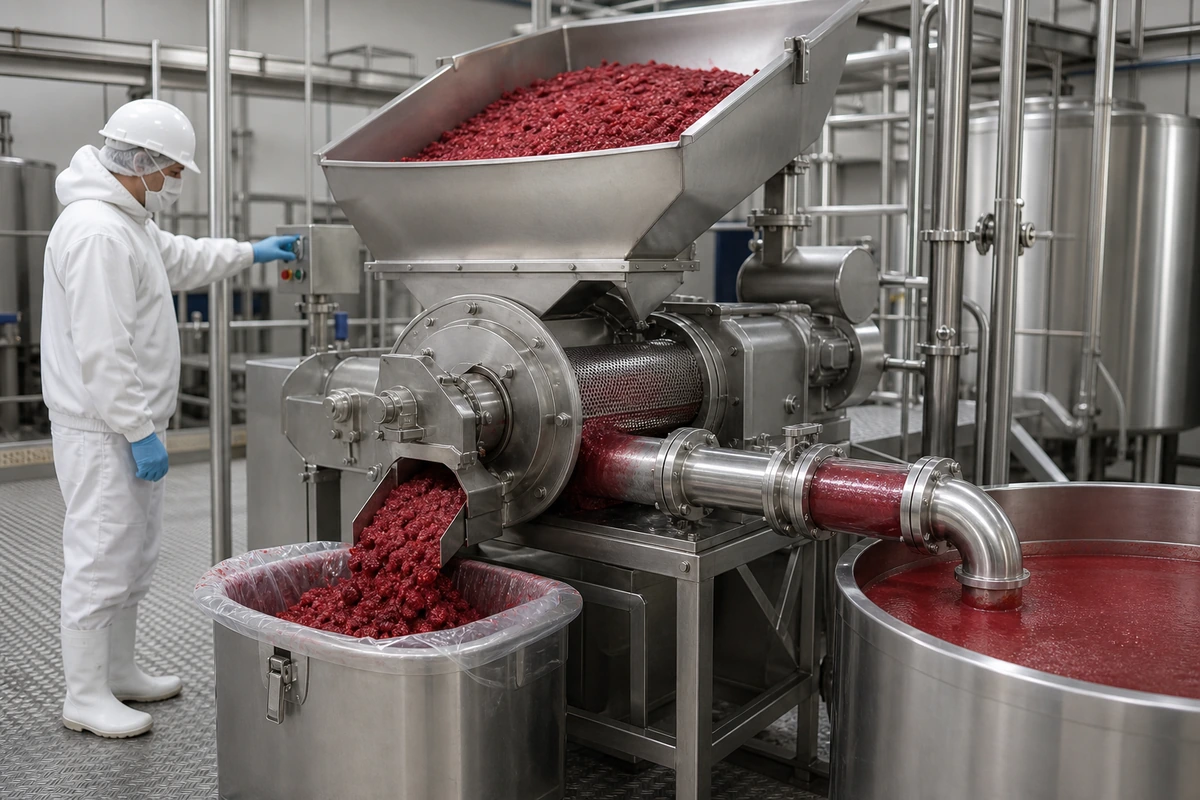
Frozen-Fruit Specifications That Affect a Smoothie
When we review frozen fruit for a beverage or smoothie program, we start with the final drink. The buyer should state whether the fruit will be blended completely, remain as visible pieces, pass through a dispenser, or be portioned in a retail kit. That decision determines whether whole fruit, halves, dice, bits or puree is the useful format.
Cut size is more than appearance. A 10 mm mango dice loads a blender differently from a 30 mm chunk. Whole strawberries vary widely in diameter. Small blueberries pour more consistently than large whole strawberries, but their skin-to-pulp ratio differs. Define a practical tolerance, not only a nominal cut, and inspect the amount of broken fruit and fines because fines thaw quickly and change the liquid balance.
Brix is a useful soluble-solids measure, but it is not a complete flavor score. Two fruit lots with similar Brix can differ in acidity, aroma, maturity and variety. For berry drinks, pH or titratable acidity may help explain why one lot tastes sharper. For mango, fiber and maturity matter. For raspberry and blackberry, seed condition matters. Approve the ingredient against the finished formula rather than buying from one laboratory number.
Free-flowing condition, clumping and ice glaze affect portioning. A small amount of surface frost may be normal, while a solid block can indicate temperature abuse or packaging damage. The specification should also address color, foreign material, peel or pit fragments, stems and leaves, whole-to-broken ratio, defects and intended-use microbiological requirements. Frozen fruit is not automatically ready to eat merely because it is frozen.
Packing should match the operation. Large foodservice bags reduce packaging but may be repeatedly opened. Smaller pre-portioned packs improve dose control but cost more to pack. Retail smoothie kits need label, film and seal specifications as well as ingredient performance. For imported bulk programs, confirm carton weight, inner liner, pallet plan if any, loading quantity, storage at or below the agreed frozen temperature and the documents required by the destination market.
For buyers comparing options, our IQF frozen fruit category shows available fruit forms, while the bulk frozen fruit sourcing guide explains the broader order process. Send the target recipe, required fruit form, annual volume, pack size and destination before requesting a price. A useful quotation must describe the ingredient being priced.
Food Safety, Storage and Make-Ahead Use
Use fruit according to the supplier's intended-use statement and your local food-safety requirements. Freezing preserves the product but is not a universal kill step for pathogens. A commercial ready-to-eat smoothie program needs an ingredient and hygiene plan suitable for a product consumed without a later heat treatment. Home users should follow the package directions, keep work surfaces and blender parts clean, and avoid using damaged packages or fruit with an uncertain temperature history.
Keep frozen fruit frozen until preparation. Close the bag promptly and return it to the freezer so moisture and odor do not enter. Do not repeatedly thaw and refreeze the working bag. If fruit is tempered for a low-power blender, temper only the portion that will be used. For more detail on storage quality, see does frozen fruit go bad.
A smoothie is best consumed soon after blending. It can separate during storage because fruit particles, water, air and fat do not remain suspended forever. If it must be held, refrigerate it promptly, use a covered container and stir before serving. A commercial bottled smoothie is a different product requiring validated processing, packaging, shelf-life work and regulatory review; a blender recipe should not be assigned a retail shelf life by guesswork.
The simple home method and the commercial method share one principle: control the variables. Measure the starting ratio, add liquid first, use a fruit form the blender can handle, and correct in small steps. At larger scale, add ingredient specifications, portion control, hold testing and cold-chain records. That is how a frozen-fruit smoothie becomes repeatable rather than lucky.
Frequently Asked Questions
Do you need to thaw frozen fruit before making a smoothie?
Usually no. A capable blender can process fruit directly from frozen. If the blender stalls, let large pieces soften for five to ten minutes or use smaller fruit pieces rather than fully thawing the fruit.
How much liquid should I use with frozen fruit?
A useful starting point is 1 cup of liquid for 1½ cups of frozen fruit. Add liquid one tablespoon at a time if the mixture will not circulate.
Can I make a frozen fruit smoothie without banana?
Yes. Use mango, peach, avocado, yogurt, silken tofu or a small amount of oats for body. The flavor and thickness will change, so adjust after blending.
Should I add ice to a frozen fruit smoothie?
Usually not. Frozen fruit already provides chill and body. Ice can dilute flavor and make the texture coarse unless the formula is designed for it.
Why is my smoothie not blending?
The common causes are too little liquid near the blades, pieces that are too large, too much frozen material at once or an overloaded jar. Stop the blender, add a little liquid and restart at low speed.
Which frozen fruit is best for smoothies?
Mango and banana create body; strawberries and raspberries add bright flavor; blueberries and blackberries add color and seeds; pineapple adds acidity. Blends work best when each fruit has a clear role.
How can a cafe keep smoothie texture consistent?
Weigh the liquid and frozen fruit, use fixed portion packs, standardize the blender cycle and approve a frozen-fruit specification covering cut size, Brix, free-flowing condition and acceptable defects.
Build a Frozen-Fruit Trial Around Your Application
Tell us the fruit, form, packing, quantity, application and destination market you need. We will review the practical specification, sample route, documents and cold-chain plan for the order.