


Guava Sorbet from Frozen Pieces: Seed Screening and Frozen Texture
Oct 19, 2026
Leave a message

GUAVA · PROCESS & APPLICATION
Guava Sorbet from Frozen Pieces: Seed Screening and Frozen Texture
Frozen guava pieces can become a smooth sorbet when the preparation removes unwanted seeds and coarse material before the final mix is frozen. The useful starting point is the weight and condition of the screened pulp. A bag of skin-on pieces is not equivalent to the same weight of prepared puree: peel, seed-center tissue and pulp retained during screening change both the usable fruit amount and the mix composition.
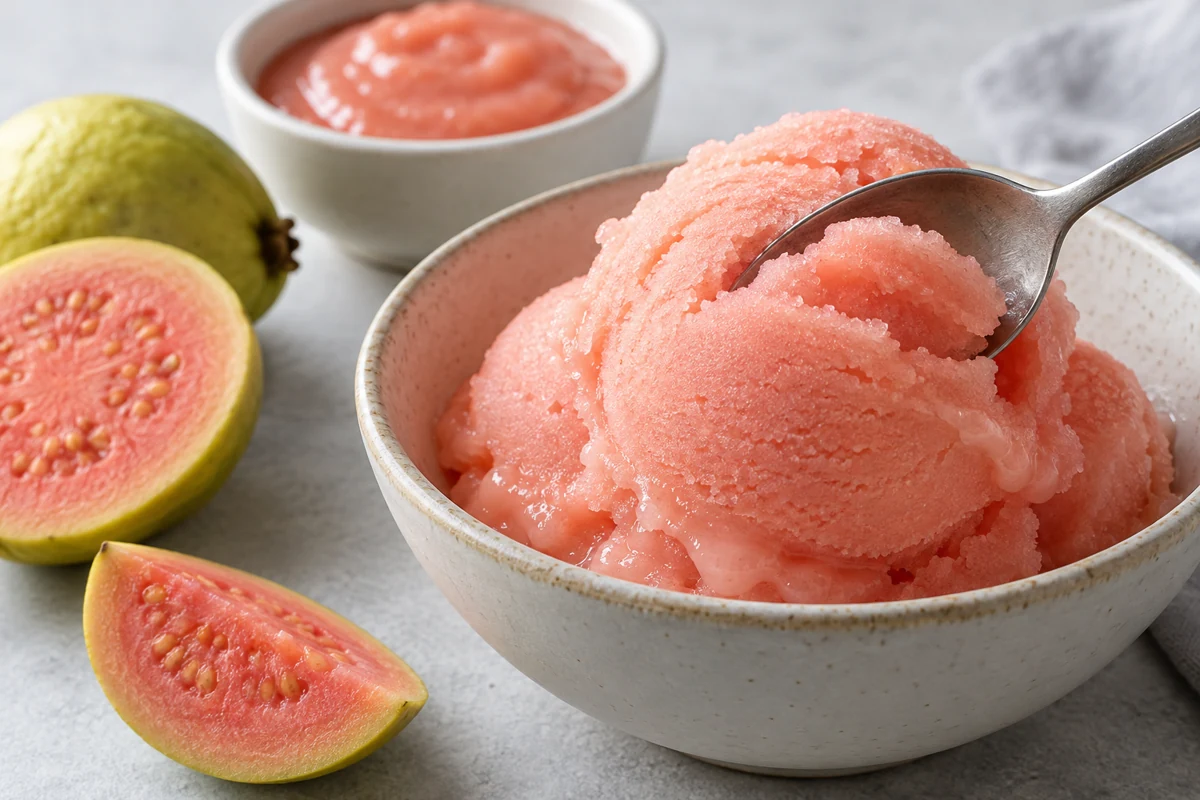
Screened guava pulp is the starting point for a smooth frozen dessert.
For a sorbet that will be stored and scooped, approve two results separately: the smoothness of the liquid fruit base and the texture of the frozen dessert at its intended serving condition. Hard specks that remain after melting suggest a fruit-particle problem; roughness that disappears as the sample melts calls for a closer look at ice structure. GreenLand-food's current guava program is based on skin-on pink-flesh pieces. A sorbet processor should qualify that form through its own preparation and freezing route, with any seed-reduced alternative defined separately.
Choose guava pieces for recoverable pulp
Start by looking at a representative selection of the supplied frozen pieces. The commercial photographs show irregular pink-flesh cuts with green peel and central seed areas. Their appeal comes from the fruit itself, but a smooth sorbet does not retain every visible part. The practical question is how much usable pulp the chosen preparation delivers while meeting the finished texture requirement. This determines the amount of fruit to order and the point at which its composition should be measured.
Piece size matters mainly through handling and preparation. Large firm centers may take longer to disperse than small flesh pieces, while a sample chosen only from the softest cuts can overstate performance. Draw material from the agreed number of packs and positions, preserving the normal proportion of peel and seed-center tissue. Record the packed condition before tempering. If the sample arrives clumped, partly thawed or leaking, keep those observations with the lot identity so the processor can judge whether it represents normal supply.
The fruit description should include flesh color, skin status, seed status and any declared ingredients. A pale pink batch and a deeper coral batch may both be sound guava, but their sorbets can look different after dilution. Confirm the offered lot against a visual reference rather than assuming that the name pink guava fixes one color. The UC Davis guava quality sheet identifies flesh color, seed content, aroma, soluble solids and acidity as distinct quality considerations; it does not provide an acceptance specification for this frozen ingredient.

Skin-on pink guava pieces: agree the supplied form before evaluating the prepared output.
For development, prepare the pieces under the site's controlled handling procedure and keep the released liquid with the sample unless the approved process intentionally removes it. Pouring away thaw liquid changes the material being tested. If drainage is part of the commercial route, weigh and record the drained fraction. The resulting pulp measurement then describes that route, which is more useful than an unexplained claim of high yield.
Compare incoming piece mass with screened pulp mass before adding syrup or water. This simple separation keeps ingredient recovery distinct from finished mix yield. An illustrative batch starting with ten kilograms of pieces and recovering seven kilograms of acceptable pulp has a seventy percent recovery on that defined basis. Those figures are an arithmetic example, not a GreenLand result or expected yield. The retained fraction, spills and samples still need accounting so the calculation can be checked.
The frozen guava product specification is the appropriate place to begin the form discussion. When the buyer wants peeled material or a lower seed level, we should establish the actual sample and quotation before treating that preparation as available for the order.
Remove seeds before final blending
A blender can disperse guava flesh, but extra blending time does not establish that the hard seed fraction has been removed. It can also make a later inspection harder if intact seeds become smaller fragments. For a smooth base, first define how the process separates the unwanted material and then use blending to achieve the required dispersion of the accepted pulp. The sequence should be proved with the actual pieces and the equipment available to the processor.
Whole seeds and fine grittiness need different attention. Guava contains stone cells, also called sclereids, within its flesh. These are distinct from the obvious central seeds. The FAO guava processing guidance discusses both pulping and removal of the grainy fraction. Its historical screen guidance is useful background, but the processor still needs an aperture, feed condition and acceptance method suitable for the offered guava and the desired sorbet.
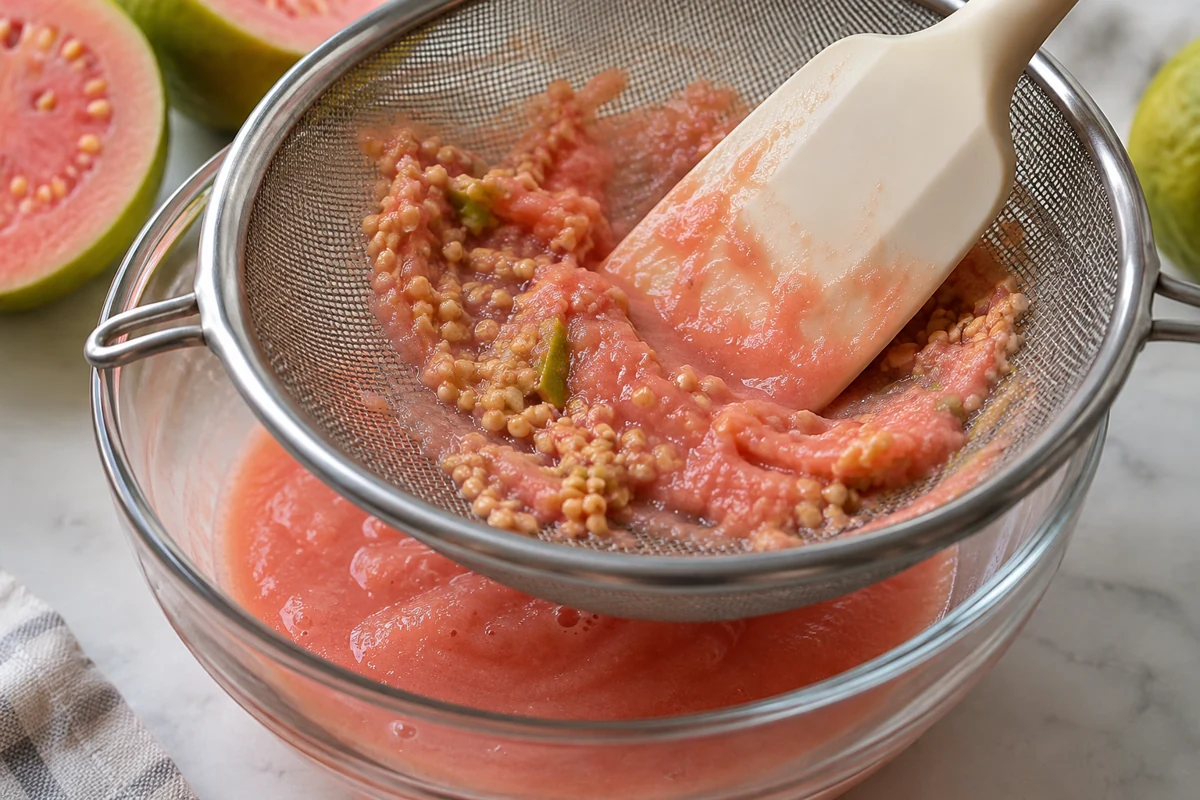
Remove intact seeds while recovering useful pulp through the screen.
At a small development bench, a sieve can show which material remains behind and whether the passing pulp meets the intended texture. Record the sieve opening in a defined unit when known, the sample mass, the preparation temperature and how the pulp was worked. A description such as fine sieve is too loose for a repeat-order specification. Mesh counts also depend on the wire arrangement, so an aperture in millimeters or micrometers is clearer when the equipment documentation provides it.
Gentle working helps the operator observe the retained seeds and peel. Forcing every last smear through may increase apparent recovery while changing the coarse fraction in the passing pulp. The trial should therefore establish a consistent end point rather than relying on whichever operator presses hardest. Keep a photograph and a weighed sample of the residue where this helps explain a result. Wet residue includes water and adhering pulp; it cannot be reported as an equivalent mass of seeds.
After screening, inspect a thin smear of the pulp on a clean contrasting surface and evaluate its feel under the site's approved sensory procedure. Use a safe, appropriately processed sample for any tasting. This check should happen before sugar adjustment, when a coarse fruit fraction is easier to identify. Repeat it after final blending if that step can alter particle distribution or introduce additional material from the vessel.
A commercial finisher can have different feed loading, movement and residence time from a hand sieve. A promising bench sample supports a line trial; it does not prove production throughput or removal efficiency. Where the processor already has a successful guava preparation, use it as the reference and change one relevant factor at a time. Record the accepted pulp and retained material together, so a smoother result can be assessed alongside the recovery it costs.
Balance fruit, dissolved solids and water
Formulate from the screened pulp that will actually enter the sorbet mix. A recipe written for ready-made puree may assume a particular fruit concentration, sugar content and particle level. Substituting frozen pieces by the same starting weight leaves those assumptions unresolved. Once the usable pulp has been weighed and mixed uniformly, the development team can decide the fruit proportion, sweetener system and added water on a consistent basis.
A refractometer provides a useful soluble-solids reading when the instrument and sample preparation are suitable. In fruit material, a Brix reading is not a direct measurement of total sugar alone. It also does not measure the insoluble pulp responsible for body and some mouthfeel effects. Record whether the reading was taken on the prepared fruit, a separated liquid fraction or the final mix, and follow the instrument's procedure for sample temperature and calibration. Comparing different sampled fractions can create an apparent recipe difference that is actually a method difference.
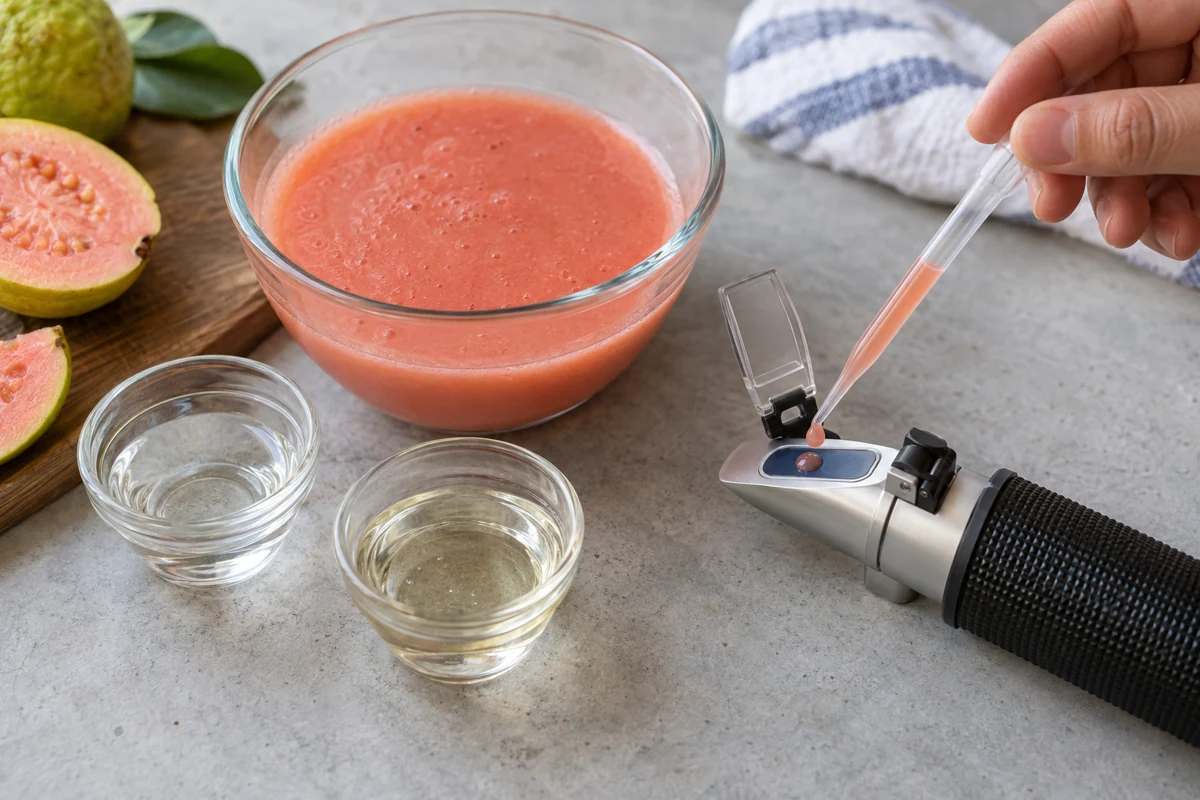
Measure the prepared mix as well as the fruit ingredient.
Sugar contributes sweetness and affects how much water remains unfrozen at a given temperature. Its role therefore extends beyond flavor. The University of Guelph's ice-crystal explanation describes freezing-point depression and progressive concentration of the remaining liquid. Applying that principle to sorbet requires the complete formula: different sweeteners and other dissolved ingredients do not necessarily produce the same freezing behavior at an identical Brix reading.
Acidity deserves its own assessment. Two fruit lots with similar soluble solids can produce different sweetness-acidity impressions. Evaluate the final recipe at its serving condition and record any acidity measurement with its method. A pH reading and titratable acidity describe different aspects of the system, so the buyer should identify which one is needed for flavor consistency and which belongs to the validated process. Adding lime simply until the mix tastes bright cannot replace that process review.
Water added to help a blender turn becomes part of the formula. Keep it in the batch calculation instead of treating it as an invisible processing aid. The same applies to water used to rinse recoverable pulp from equipment when that rinse enters the finished mix. A thinner base may appear easier to handle, yet its fruit concentration and frozen texture can change. Measure the additions before comparing one trial with another.
If a stabilizer system is considered, evaluate its function in the complete guava recipe and follow the supplier's applicable instructions. Natural pulp does not establish that a stabilizer is unnecessary, and adding one does not correct poor seed removal. A useful comparison records scoop resistance, melt behavior and sensory body after storage. Avoid judging a formula solely by how thick it looks before freezing; the chilled liquid and the partly frozen dessert answer different questions.
Separate persistent grit from ice crystals
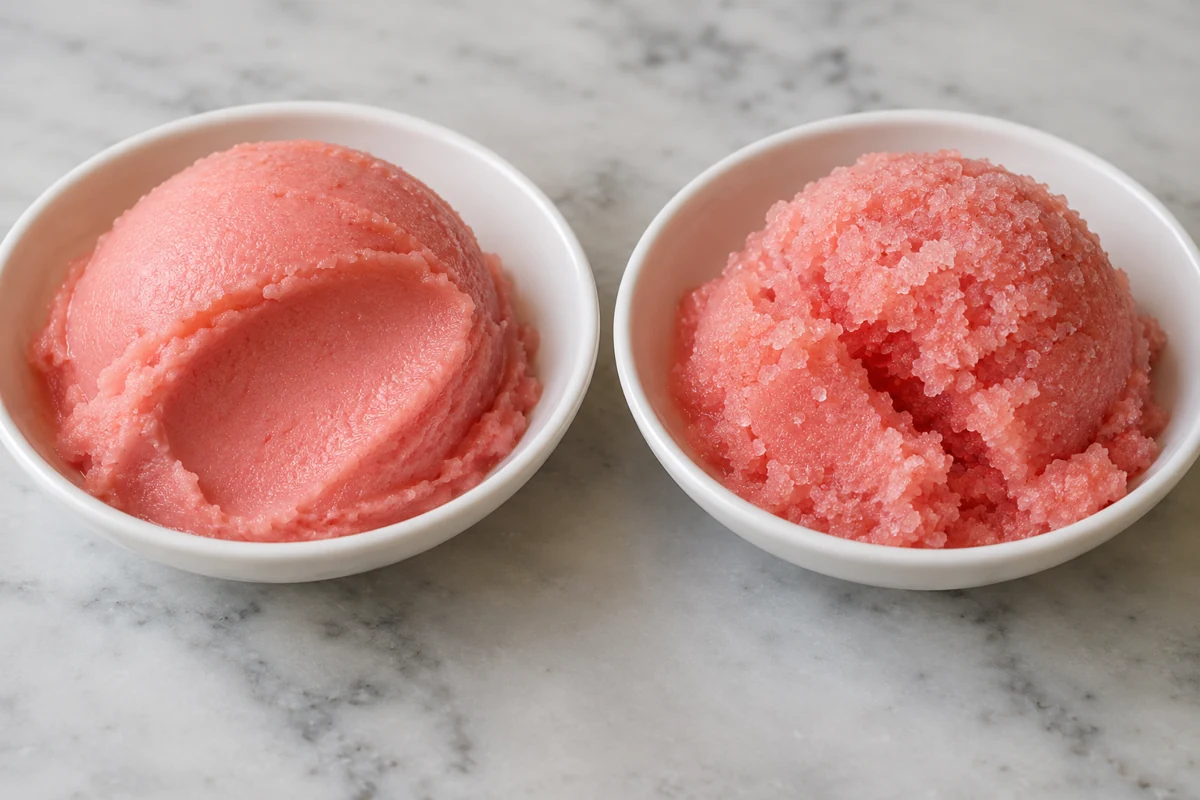
Compare the same serving condition before judging an icy texture.
The word gritty can describe more than one defect. A hard guava fragment, fine grain from the flesh and coarse ice crystals may all interrupt a smooth mouthfeel, but their remedies differ. Before changing the screen or adding more sugar, compare a freshly prepared base with a controlled melted aliquot of the frozen dessert. This gives the team a way to locate when the roughness appears.
If the liquid base already contains detectable hard particles, investigate the fruit preparation first. Examine retained and passing fractions, screen integrity, the blending sequence and the sampled lot. If the base is acceptably smooth but the stored sorbet becomes coarse, review freezing, hardening, formula and temperature history. Both problems can occur in the same dessert; the method should allow two observations instead of forcing one diagnosis.
Use equal sample amounts and comparable temperatures for the evaluation. A very cold sample can feel firmer and release flavor differently from a softened one. A warm spoon can also alter a small surface portion quickly. Record how the sample was conditioned and where it was taken from the container. The top, edge and center can have different handling histories, especially after repeated service.
Photograph a fresh spoon trail and a cut surface under matched lighting. Record whether the roughness is widespread or confined to the exposed edge, and keep the observation separate from the result after melting. A photograph supports a description of visible texture; the sample examination and processing record are needed to establish its cause. Compare like portions before changing a raw-material specification.
For persistent particles, ask whether the complaint concerns occasional large fragments, widespread fine grain or peel specks. Count or weigh an agreed retained fraction where that method is meaningful, and retain the sensory description separately. An average particle result can miss an occasional objectionable fragment. Conversely, a small measured residue may be perceptible in a delicate sorbet even if it is acceptable in a strongly textured fruit preparation.
For icy roughness, compare the first frozen sample with one after the intended storage and service cycle. A softer sample is not automatically smoother, and a very firm sample is not automatically coarse. Scoop resistance, crystal perception and melt behavior should have separate observations. This makes a corrective trial interpretable: a formula change might improve scoopability while the same coarse crystals remain, or a better hardening route might improve smoothness without changing the recipe.
Keep the diagnostic sample separate from saleable stock and follow the site's handling controls. Melting an aliquot for examination is a test preparation; it should not become an informal practice of repeatedly warming and returning the production container to storage.
Freeze the finished mix and protect its texture
The incoming fruit has already been frozen, but a sorbet made by pulping, screening and reformulating it undergoes its own freezing process. The texture of the finished dessert depends on that final mix and its subsequent handling. A free-flowing piece sample cannot by itself establish how the later sorbet will scoop after several weeks in a tub. Approval should follow the actual route from prepared base to packaged dessert.
Distinguish an immediately served blender dessert from a churned and hardened product. A blender can create an attractive spoonable mixture from cold ingredients, yet the same mixture may set differently when stored. A commercial sorbet program needs to define whether the target is immediate service, a display cabinet or distribution in closed packs. The holding and serving conditions belong in the product brief before the recipe is optimized.
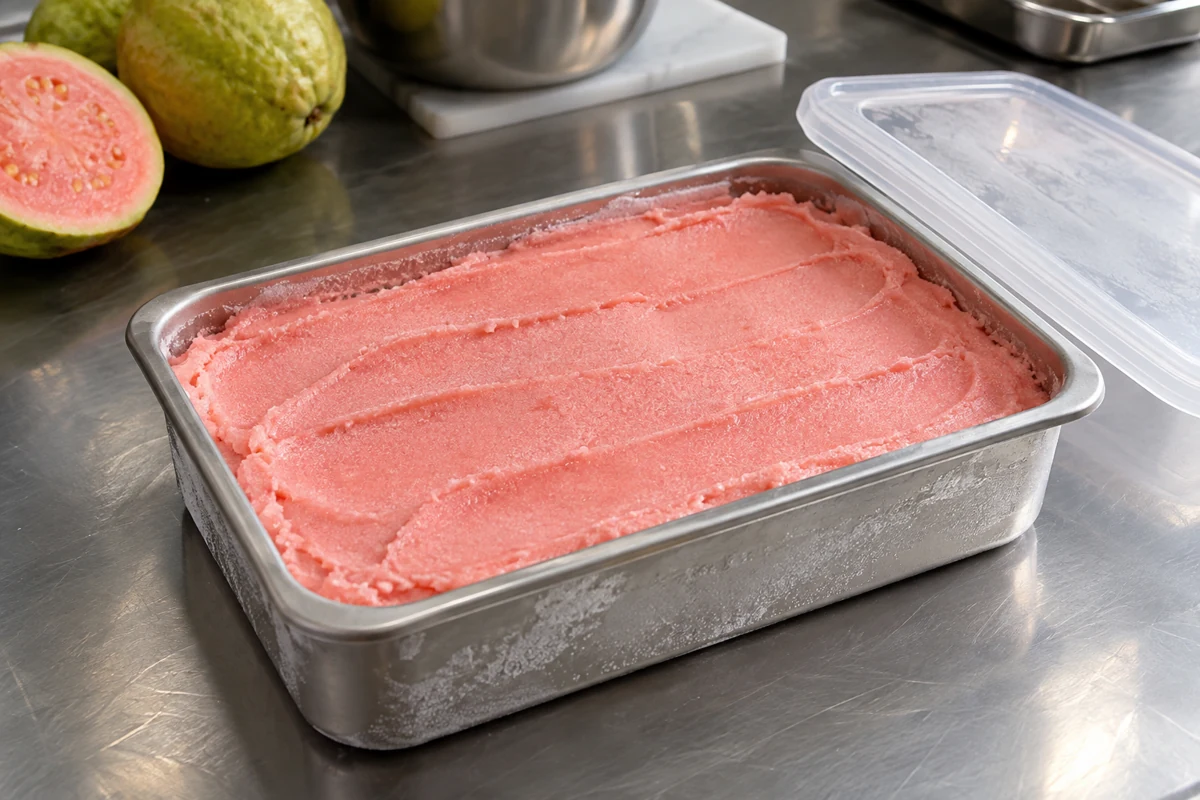
Container depth and handling belong in the freezing record.
During development, keep the mix preparation, batch size and freezing equipment settings consistent enough to compare trials. Record the actual starting condition and the draw or transfer condition using the site's method. A warmer feed or larger batch can change the cooling history even if the ingredient weights are identical. The team should avoid attributing every texture difference to the guava when the process also changed.
Transfer and packing matter because the product continues to change after it leaves the freezing stage. A shallow, evenly filled development container can help make test portions comparable; the final pack still needs its own evaluation. Container dimensions, fill level and loading arrangement affect the route through hardening. Choose the comparison around the intended commercial package rather than assuming that a small laboratory cup represents a large foodservice tub.
Temperature fluctuations can promote ice-crystal growth during frozen storage. The Guelph freezing-process guide explains the distinction between how much ice is present and the size of the crystals. For a guava sorbet buyer, the practical response is to retain the relevant storage and service history with texture observations. A nominal freezer set point alone does not describe the product temperature throughout loading, storage and serving.
Protect the surface with a suitable closed package and define how opened tubs are handled. Compare the first service portion with portions later in the normal use cycle when that is part of the sales channel. Record surface drying, edge softening, ice accumulation and any change in scoop behavior. These observations help decide whether the problem belongs to the formula, package, service practice or a combination.
The frozen ingredient's safety status and the finished sorbet process need separate confirmation. Freezing and screening are not established microbial kill steps. The processor should use a validated route appropriate to its ingredients and intended consumption, and the supply agreement should state the delivered form and required documents without inferring ready-to-eat status from a photograph.
Compare a complete sorbet trial
A useful trial begins with a written question. It might ask whether a finer finishing step improves mouthfeel enough to justify its recovery loss, or whether a different guava lot can match an approved sorbet after the same preparation. Those are manageable comparisons. Changing the fruit, screen, sweetener, water addition and freezing method simultaneously makes the result difficult to interpret, even if one sample is preferred.
For a screening comparison, divide a representative preparation into matched portions before the step being tested. Keep the formulation basis explicit: either compare the resulting pulps at the same fruit contribution, or deliberately compare the complete economic routes. The first design isolates a texture difference more clearly. The second can help a purchasing decision, but the report must explain that recovery and formulation may differ as part of the route.
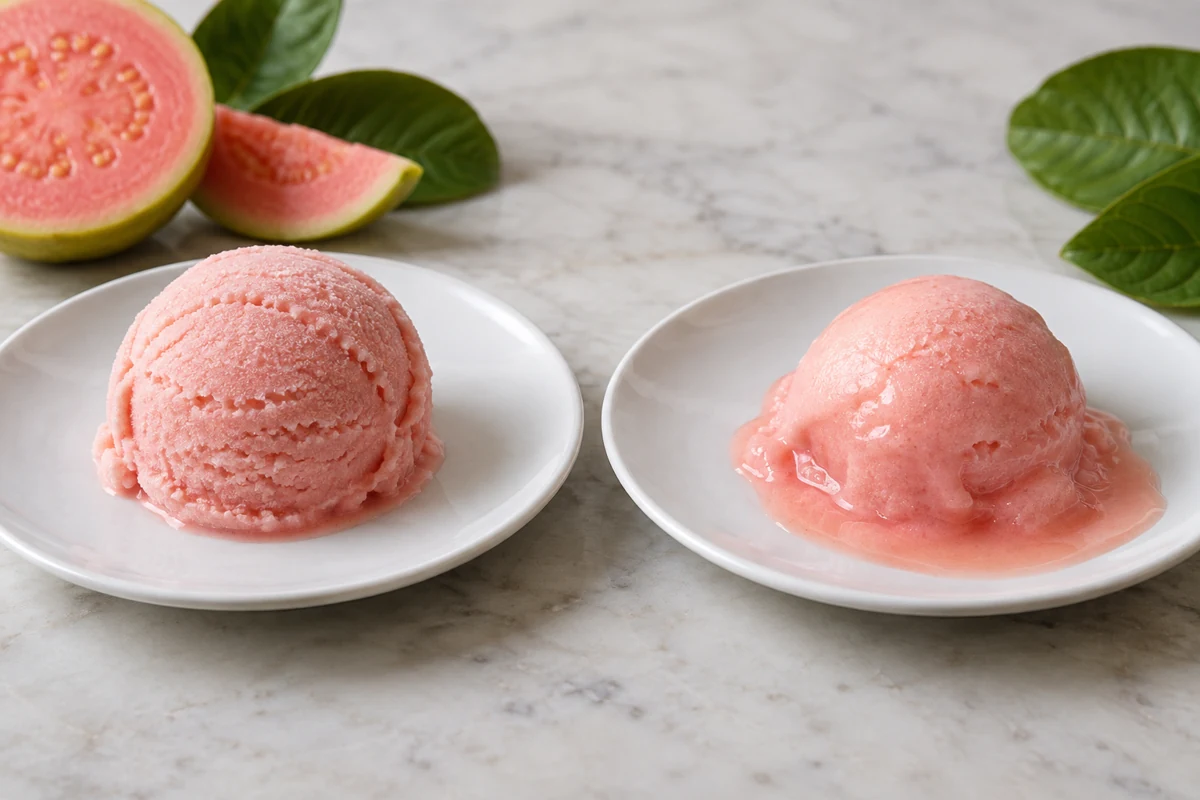
Match portion size and exposure when comparing melt behavior.
Follow each portion through the same stages and keep the measurements in the order in which they were produced. Record incoming fruit mass, acceptable screened pulp, retained wet material and final mix mass. Then record the frozen product amount, pack fill and any process losses. This prevents a larger final mix yield created by extra water from being described as better fruit recovery.
At evaluation, use coded samples and a consistent serving procedure where practical. Agree the important attributes before viewing the result: guava aroma, sweetness-acidity balance, color, persistent particles, icy roughness, scoop resistance and melt behavior. A team can record these in a simple form without inventing numerical precision. If a scale is used, define its anchors so a second assessor understands what each score means.
A melt comparison should control portion mass, starting temperature, plate or collection geometry and observation conditions. Otherwise a warmer scoop can appear less stable for reasons unrelated to the formula. Preserve photographs with the sample identities and conditions; a picture detached from that record has limited value in a supplier discussion.
Repeat the most promising route on more than one representative preparation before making it an acceptance method. A single successful jar can miss the normal range of peel share, seed-center tissue and ripeness in a commercial lot. Where the buyer expects multiple crop lots, include that variation in qualification. The objective is a method that remains useful when the next delivery arrives, not a one-time favorable sample.
Cost the accepted result on the same basis as its quality. Compare fruit required per kilogram of approved pulp or finished sorbet, plus the relevant processing and rejected-material burden. Keep the calculation transparent and separate from the quoted price per kilogram of frozen pieces. This helps the buyer see whether a more prepared input is worthwhile without assuming that the cheapest incoming material produces the lowest finished cost.
Agree the guava order around the sorbet process
The order should describe the guava being supplied and the result that the buyer will verify after its agreed preparation. For the current skin-on pink piece form, record the physical reference, seed-center tolerance, peel condition, defects and sample method. A request for smooth sorbet is a useful application brief, but it is incomplete as a raw-material specification until the parties decide how to connect that result to the delivered pieces.
Keep the approved sample identifiable. Retain its lot code, date, preparation instructions and the screening route used to make the reference sorbet. A photograph of attractive frozen pieces can support the visual standard, while the resulting pulp and dessert observations support functional acceptance. Each has a different role. If the buyer later changes its finisher or recipe, review whether the original qualification still covers the new process.
Any chemistry or microbiological report should identify the material and lot it represents. A fruit-solids result on a prepared puree does not automatically describe a bag of pieces with variable peel and seed-center share. State the analytes, units, methods and preparation where they affect comparison. The documentation request should also distinguish routine supply records from tests specifically commissioned for the destination or finished product.

Skin-on pink guava pieces: agree the supplied form before evaluating the prepared output.
Packing should suit the planned use. The buyer may prefer a pack that can be consumed in one controlled production run, or a larger unit compatible with its material-handling system. Confirm liner, net weight, carton arrangement and lot identification in the quotation. Irregular frozen pieces and firm peel edges make actual pack inspection worthwhile; the final agreement should rely on the offered pack rather than an assumed standard size.
Quantity, crop timing and requested delivery date should be discussed together. A development approval is easier to preserve when the purchasing team knows whether the trial lot and commercial shipment will be the same material or a later production lot. Ask how a changed source lot will be reviewed and which acceptance records travel with repeat orders. Lead time and minimum quantity should come from the confirmed form, packing and shipment plan.
We can use the sorbet application to focus the enquiry on the guava characteristics that matter: recoverable pulp, retained seed material, flesh color and a repeatable preparation. The buyer's finished-dessert trial then supplies the evidence for recipe and service performance. A clear division of those responsibilities makes a repeat order easier to assess and gives both parties a useful starting point if the texture changes.
Discuss frozen guava with GreenLand-food
Send us your intended application, required fruit form, packing, quantity, destination and documents. Include the preparation and acceptance method used in your sample trial.
For factory-direct wholesale sourcing, confirm the supplier and manufacturer named in the order, the offered specification and the representative sample before volume approval.