


Guava Paste for Bakery Fillings: Firmness, Moisture and Portioning
Oct 19, 2026
Leave a message

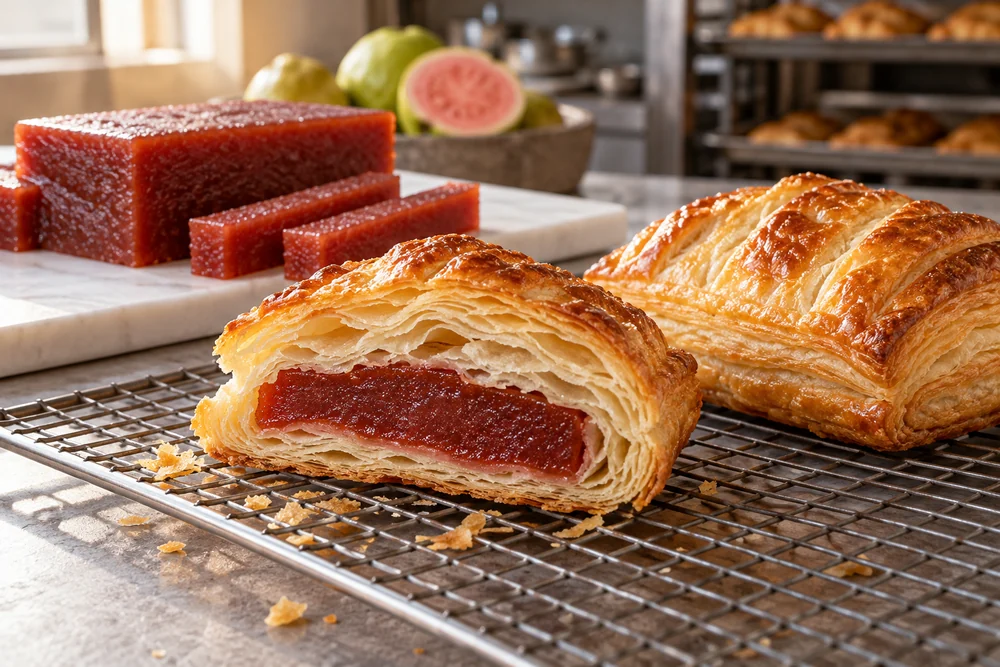
When the bakery starts from frozen guava pieces, seed and peel removal and concentration become part of its own preparation route. GreenLand-food's current photographed guava form is skin-on pink pieces, not a finished bakery filling. We can discuss the fruit ingredient and an appropriate sample; the bakery develops or purchases a defined filling system and validates its finished product. Keep those stages connected in the specification so a raw-fruit quotation is not mistaken for a bake-stability guarantee.
Distinguish sliceable paste from a depositable filling
Sliceable guava paste holds a shape that can be cut into portions. Its firmness is useful for placing a consistent strip or piece into dough, and its concentrated fruit character can remain distinct after baking. A depositable guava filling is prepared to move through a particular handling or dispensing route. It may use a different balance of fruit, sugar, starch, pectin or other permitted ingredients. The product name alone does not establish which of those systems a supplier offers.
The difference matters at the line. A stiff block may require cutting and placement, while a softer filling can be piped, spread or deposited. A paste that becomes easier to handle after warming may also change its portioning behavior or the surrounding dough. Define the intended operation before deciding which texture is desirable. The buyer should know whether it needs a cut insert, a spreadable layer or a pumpable filling and whether the selected equipment can handle the material consistently.
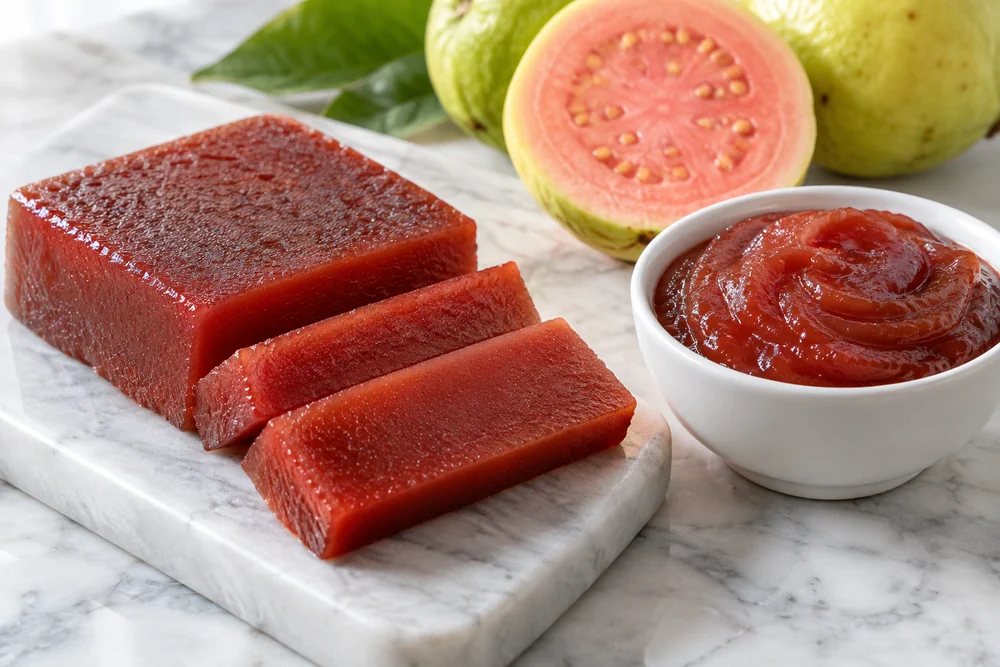
A cut insert and a softer filling require different handling and application checks.
The King Arthur pastelitos recipe demonstrates a specific use of portioned guava paste and warns that ordinary jams or jellies can behave differently in that pastry. It is a useful application example, not a general rule that every jam fails or every paste passes. Commercial suppliers also sell formulated guava fillings with product-specific bake-stability claims. Those claims need to be evaluated against the actual SKU and the bakery's process.
Compare ingredient declarations as well as physical appearance. A guava filling can contain fruit pulp, sweeteners and texture-control ingredients that are absent from another paste. A color difference can reflect the fruit or an addition. Neither a bright red appearance nor a clean cut proves a particular fruit percentage or ingredient system. Request the current declaration, relevant analytical specification and storage instructions, then review them for the destination market and the finished product's intended claims.
Set acceptance in terms of the task. A cut insert needs an agreed portion size, mass and handling range. A deposited filling needs a defined flow behavior through the actual nozzle. Both need suitable fruit identity, seed control, flavor and application performance. Calling the material premium or thick leaves those decisions open. An approved reference sample and a repeatable trial connect the commercial description to a result the production team can recognize.
Prepare the frozen fruit before concentrating it
Frozen guava pieces are an ingredient for a preparation process. The current GreenLand guava page shows skin-on pink pieces with central seed tissue. A bakery or fruit-preparation plant using that form must establish its own acceptable pulp route. A separately offered peeled, seed-reduced or puree preparation needs independent confirmation. The presence of a smooth finished filling in an application photograph should never be read as proof that the incoming pieces are already seedless.
Begin with a representative sample and preserve its lot identity. Check the actual peel and seed-center share, cut distribution and sound-fruit condition. A small outer-flesh selection can make a trial appear easier than the typical carton. If the fruit is softened or thawed before refining, record how it is prepared and how released liquid is handled. The same procedure should be used for later comparisons, otherwise a change in apparent yield may reflect preparation rather than the offered fruit.

The fruit-preparation route must address peel and seeds before concentrating the base.
Remove hard seeds and unwanted peel before judging the finished filling texture. Suitable pulping and refining recover the edible fraction while controlling objectionable coarse material. Excessive grinding can create small hard fragments that remain difficult to separate. Inspect the passed pulp and residue, and evaluate grit in the intended preparation. A thick sweet paste can still contain a few unacceptable particles; its overall smooth appearance is not a substitute for the relevant acceptance check.
Record usable recovery at a defined stage, such as screened unsweetened pulp before concentration. Keep added water identifiable. A larger diluted base does not demonstrate a larger recovery of fruit tissue. If 10 kg of incoming fruit yields 7 kg of acceptable pulp without added water, the fruit cost is allocated over that recovered amount before later cooking and formulation costs. This is an arithmetic illustration only, not a standard yield for guava or a promised result for a GreenLand lot.
The pulp's composition affects the next operation. Where soluble solids and acidity matter, measure them using appropriate sample preparation and a stated method. Taste and aroma still need separate assessment. A fruit lot can have an acceptable Brix reading and an unsuitable flavor profile, or recover well while carrying too much coarse material. The prepared base should pass its own specification before the team invests in concentration, pectin trials and bakery-line testing.
Define firmness at the temperature of use
Firmness needs a test condition. A cold block can feel quite different from the same paste after standing in a warm production area. State the sample temperature, conditioning time, dimensions and assessment method. The relevant question is how the paste behaves when it is cut, conveyed or deposited. A sample approved directly from chilled storage may not represent material handled during the latter part of a long shift.
For a cut insert, assess whether the blade produces consistent portions without excessive sticking, tearing or deformation. Look at the cut edges and the way pieces release from separators or trays. For a softer filling, observe how it moves through the intended depositor and whether the deposited portion keeps an acceptable shape before dough is closed around it. These tests are more informative than a single statement that the product has a firm texture.
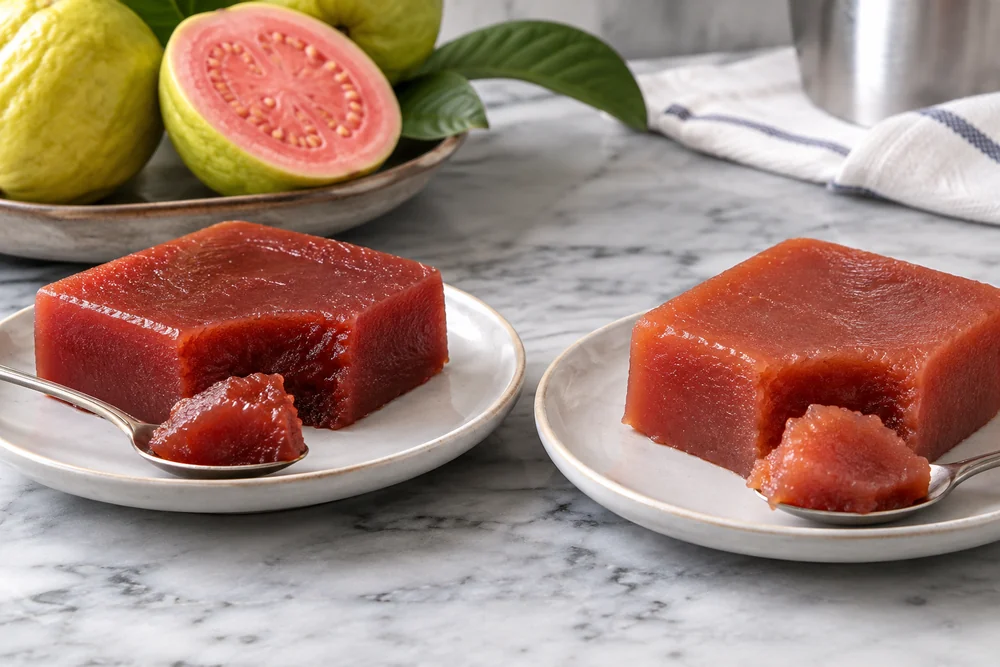
Define the conditioning temperature and test method when comparing firmness.
Moisture content, soluble solids, gel structure and temperature can all influence handling, but they are not interchangeable measurements. Water activity describes water availability rather than simply the amount of water in the product. The FDA water activity guide explains that distinction. A low moisture result alone does not establish microbial stability, and a Brix value alone does not establish a paste's cutting force or bake performance.
If a pectin or other texture system is used, record its exact identity and follow the manufacturer's technical guidance. A high-solids fruit confection and a lower-sugar calcium-set preparation can require different formulation conditions. Their handling should be developed with the actual fruit base. Avoid repairing every soft trial by cooking longer: that may change flavor and color without addressing the underlying gel or ingredient issue. Investigate the full record before selecting a correction.
Keep a reference sample and define the observation interval after manufacture. Texture can develop during cooling and conditioning, while surface behavior can change during handling. A paste assessed immediately after casting should not be compared casually with another assessed the next day. The bakery and filling supplier need a shared test method so a later lot can be accepted or challenged on comparable evidence, especially when ambient conditions vary between seasons.
A simple cutting balance helps set realistic portion expectations. A 600 g block contains thirty nominal 20 g portions before cutting and handling losses. If acceptable portions weigh more, fewer finished units will be filled from the same block. Measure offcuts and sticking losses separately, then decide whether they can be used through an approved route. This example is arithmetic only. The bakery determines its portion size from the product design, and the actual block's usable output should be checked under normal handling conditions.
Match paste geometry to the depositing method
Portion mass and shape influence where the fruit sits inside the dough. A long narrow insert distributes the filling differently from a compact cube of the same mass. A thin layer covers more area and brings more filling into contact with pastry. Choose the geometry around the product's dough thickness, seam position and intended eating experience, then make the trial portions consistent enough that formulation effects can be distinguished from placement variation.
Weigh a sequence of portions rather than approving one attractive piece. Record the spread of masses and inspect the pieces at the beginning and end of the handling run. A cutting method that produces uniform cold strips may become inconsistent as the block warms or material sticks to the blade. The line needs a practical way to maintain the agreed portion range under normal operating conditions. Changes in cutting temperature or equipment should be captured in the trial record.
For deposited fillings, use the actual nozzle and operating arrangement where possible. A sample that spreads easily with a spoon can still resist pumping or string during cutoff. Record product temperature, relevant equipment settings and the deposited mass. Observe whether the filling lands cleanly and remains where the dough-forming operation requires it. A narrow nozzle also makes coarse fruit particles and seed fragments more consequential, so the physical ingredient specification should support the dispensing route.
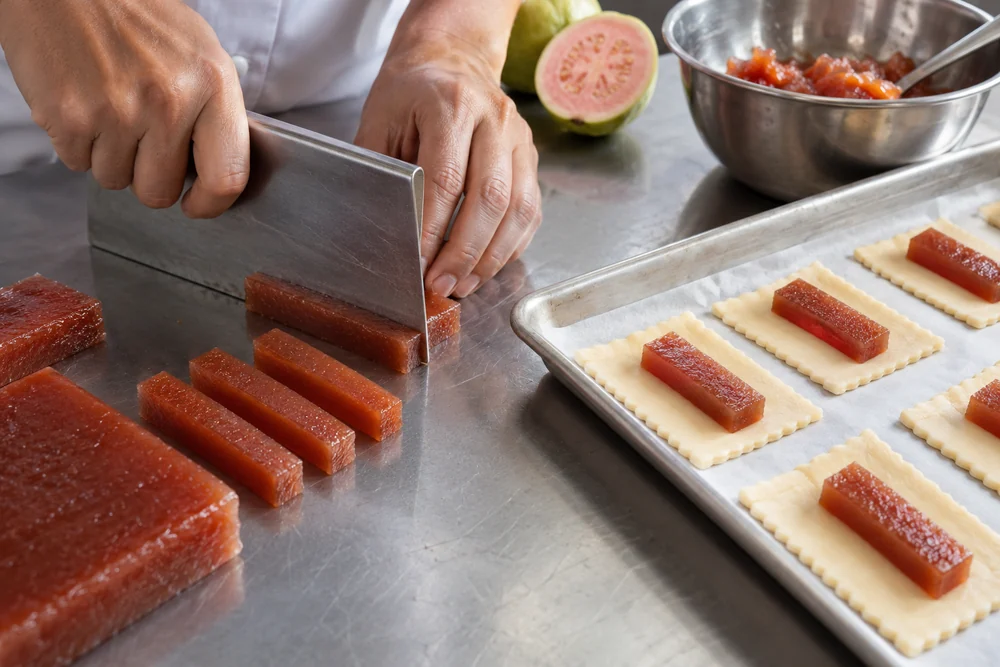
Control portion mass, geometry and placement through the forming operation.
Keep filling away from the intended sealing area according to the product design. Fruit preparation caught in a seam can affect closure, while excessive filling can increase the likelihood of escape during baking. Those are trial questions, not universal dimensions that can be assigned to every pastry. Test the intended dough, portion and forming method together. A change in filling mass should be recorded independently from a change in formula so the cause of any improvement remains visible.
Separate the labor and waste implications of the two routes. Cutting a block creates handling work and can produce offcuts, while depositing may require different equipment and cleaning. A more expensive prepared filling can be worthwhile if it improves an operation the bakery cannot run consistently with a block. Conversely, a cut paste can suit a product that benefits from a distinct fruit insert. Compare acceptable finished output and operating demands rather than assuming one format is always more efficient.
Observe the assembled product before baking as well as afterward. Record whether paste fingers slide during conveying, whether deposited filling spreads into the seal area, and whether the dough can be closed without distortion. A failure introduced at forming can later look like a heat-stability problem. Keeping a short pre-bake inspection beside the oven observations helps the team assign the cause. If the filling or dough is reconditioned to make assembly workable, record that change and repeat the relevant comparison using the agreed production procedure.
Measure what survives the actual bake
A bake trial should reproduce the intended product and process closely enough to reveal the relevant failure. Use the real dough, filling quantity, geometry, forming method and oven arrangement. Record the starting state, including whether the assembled product is chilled, frozen or otherwise conditioned before baking. A successful warm kitchen pastry does not automatically approve a frozen commercial item baked from another state or through a different heating profile.
An orderly comparison can use a controlled sequence:
- Prepare consistent dough pieces and weigh the filling portions for each candidate.
- Assemble them with the same placement and sealing method, keeping the formulation identity traceable.
- Bake through the intended process and record leakage, shape, lift and any product rejects.
- Cool for a defined period, cut representative pieces and evaluate filling position, surrounding crumb and eating texture.
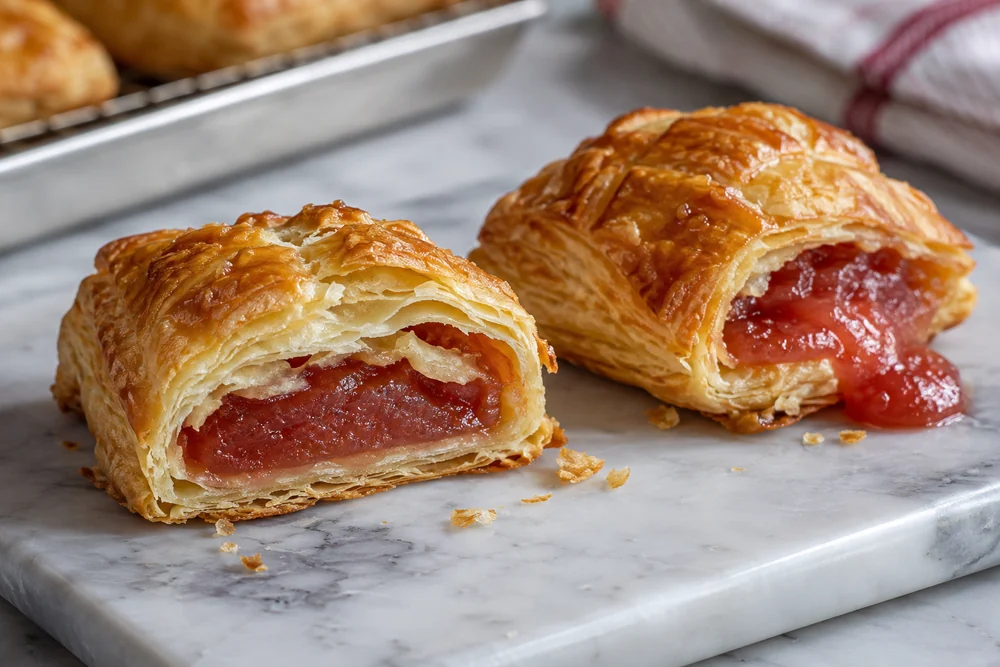
Use the same bake and inspection method to compare containment; the image assigns no universal cause.
Judge leakage with a method that suits the line. That might include the proportion of visibly leaking pieces, the amount left on a tray, seam condition or another defined measure. Distinguish slight staining from a substantial loss of filling. Keep photographs at the same scale and use the same decision rules for each candidate. If a process change is needed to make one filling work, record its operational cost and verify that the resulting product remains acceptable.
Look inside the cooled product. The center may remain contained while the surrounding pastry becomes undesirably wet or dense. Another filling may leave a cavity as it changes shape. Evaluate the amount and distribution of fruit, the pastry's layers or crumb, sweetness and acidity together. A filling that stays perfectly in place can still produce an unpleasant bite if its final texture is too hard, sticky or dry for the product.
Supplier claims provide a starting point for this trial. PastryStar describes a specific guava filling as bake stable, and Kreche lists a formulated guava spread filling. Their claims belong to those products, not to guava fruit in general. Ask the actual supplier for current technical support and test the offered sample in the bakery's own system. Do not transfer another manufacturer's oven instructions or shelf-life statement to a new formulation.
Use enough pieces to see variation across the bake. Sample relevant tray or belt positions, and repeat the trial when the difference will determine a substantial purchasing commitment. Report the actual number inspected and the defined defect count. A photograph of one successful pastry can explain the desired appearance, but it cannot show how consistently the line achieved it. The quality team should choose an appropriate sampling plan and keep mandatory release conditions separate from preferences that can be traded against cost or presentation.
Check moisture movement after cooling and freezing
The first acceptable bite after baking is only one observation. Moisture can move between filling and dough during cooling, holding and storage, changing both the center and its surroundings. The useful trial follows the finished product through the conditions the customer will encounter. Assess it at defined intervals and in the intended package. An uncovered pastry on a development bench can lose moisture differently from one sealed for distribution.
Set the evaluation around likely defects. For laminated pastry, loss of crispness or a wet layer next to the filling may matter. For a softer bun, the desired result may tolerate more moisture transfer but require a pleasant fruit center without a gummy boundary. Cut samples consistently and compare them at the intended consumption temperature. The same filling can be acceptable in one bakery product and unsuitable in another because the dough and moisture relationships differ.
If the product is frozen before baking, test that complete route. Examine handling and closure after assembly, condition the frozen product as intended and use the proposed bake instruction. If it is baked and then frozen, evaluate the actual cooling, freezing, packaging and reheating sequence. Those are different histories. A filling approved for one route should not be described as freeze-thaw stable for every use without appropriate evidence.
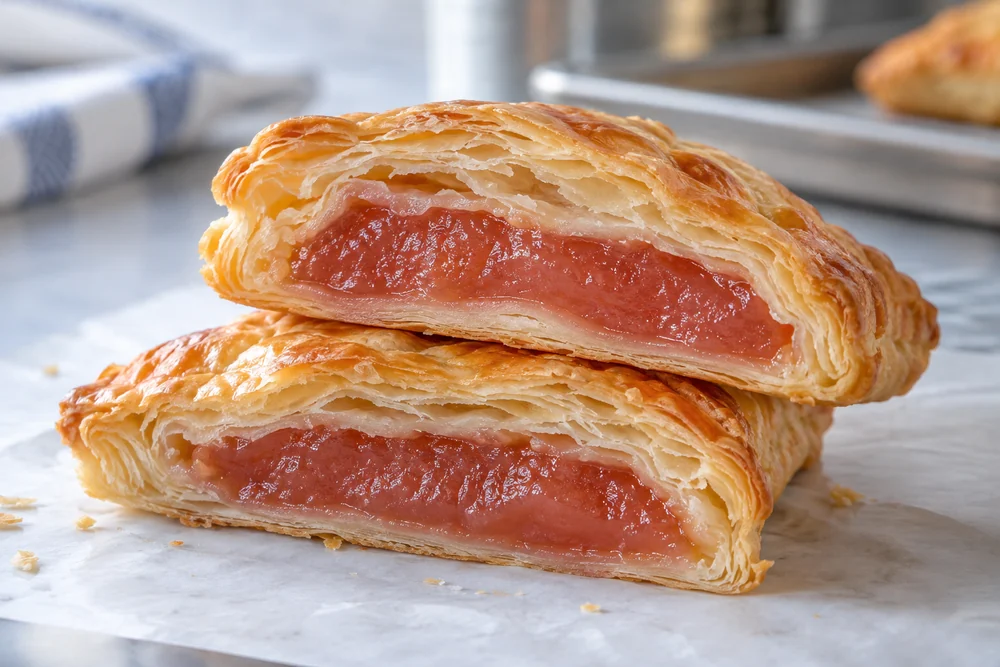
Inspect the filling and surrounding pastry after the intended cooling and storage history.
Commercial storage instructions require validation for the final system. The food-safety team should establish the relevant controls, packaging integrity, microbial criteria and shelf-life program. A concentrated fruit center does not make the surrounding pastry automatically shelf stable. Likewise, adding a dairy component changes the overall formulation and handling requirements. Each finished product needs a supported decision under the applicable rules and the responsible manufacturer's technical program.
Use trial records to distinguish quality change from a process or safety concern. A slightly softer center might be a sensory preference; an unapproved storage history, damaged seal or missing required control record needs a separate disposition. Preserve the sample codes and handling history so the team can investigate the correct material. An attractive cross-section photograph documents appearance at one moment, not a validated shelf life or a complete release decision.
When a dairy layer or another filling shares the center, assess that combined assembly directly. A guava paste approved by itself may interact differently with a cream-cheese preparation, and the total filling mass can alter closure and eating texture. Keep the guava portion and the second component's quantity identifiable in the record. Compare the interface after cooling and the intended storage period, then apply the appropriate allergen, hygiene and label controls to the whole finished product. Approval of one ingredient cannot stand in for evaluation of the combination.
Write the ingredient and the bakery trial together
For a bakery buying finished paste or filling, the specification should identify the actual product, ingredient declaration, intended handling temperature, portioning method and application requirements. Include the relevant quality and safety documents, pack and storage instructions, expected volume and destination. If the plant instead buys frozen guava pieces, state that preparation route and define the incoming fruit requirements separately from the finished filling standard. Both documents can refer to the same application trial without confusing their scopes.
For the fruit input, confirm pink or another agreed flesh color, peel and seed state, cut distribution, defects and sampling. Where solids or acidity affect the formulation, agree the reporting method and sample basis. A product-family certificate or generic puree specification cannot establish every property of a particular frozen lot. Keep the offered sample and its measurements traceable, and define how a meaningful change in origin, crop or preparation will be reviewed.

Keep the raw fruit specification distinct from the finished bakery filling approval.
For the filling, preserve the approved formula identity and the process conditions that produced the accepted result. Record the portion mass and geometry, handling temperature, bake behavior, cooled texture and storage observations. A later supplier sample should be tested against those conditions rather than compared by room-temperature appearance alone. When the line changes its nozzle, dough or oven arrangement, review whether the existing approval still represents the operation.
Commercial value should be calculated through to acceptable finished portions. Include usable fruit recovery, concentration loss, preparation work, cutting or depositing losses, bake leakage and rejects that matter to the bakery. A paste that costs less per kilogram may be valuable when it performs consistently; a formulated filling may justify its price when it avoids costly line problems. Demonstrate the benefit with the actual trial rather than assigning value from the word bake-stable or a smooth marketing photograph.
We can discuss frozen guava pieces and a representative ingredient sample for your fruit-preparation route. Share the final bakery application, expected volume, pack, destination and the peel and seed requirements your process needs. Any request for a separately prepared puree or seed-reduced form requires its own confirmation. A clear handover between the fruit specification, filling development and bakery trial gives the purchasing team evidence for the ingredient it is actually ordering.
Source Frozen Guava with GreenLand-food
GreenLand-food is a professional frozen guava supplier and manufacturer in China, providing factory-direct wholesale supply for importers, food manufacturers, foodservice distributors and private-label programs.
Send your required product form, specification, packing, quantity, application, destination, private-label needs and requested documents. Include the seed and peel tolerance and the preparation route your plant plans to use, so the sample and quotation describe the actual ingredient.
We confirm the offered form and pack for the order; any peeled, seed-reduced or puree request needs its own preparation evidence and approval.