


Making Guava Jam and Jelly from Fresh or Frozen Fruit
Oct 19, 2026
Leave a message

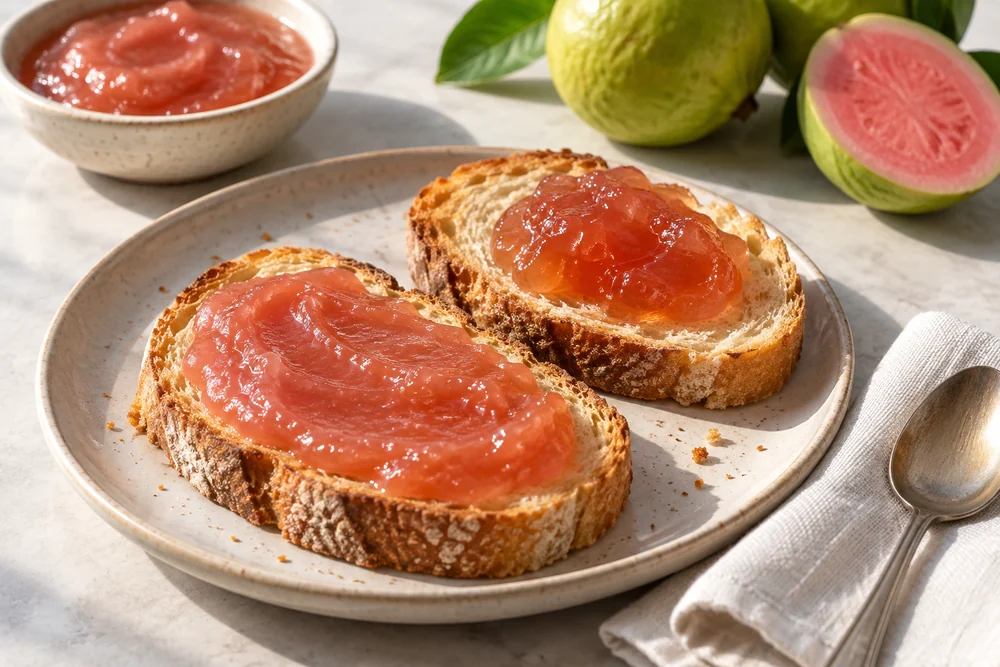
For a household preserve, follow a current tested recipe with its exact fruit preparation, acid, sweetener, pectin and processing instructions. For commercial manufacture, establish the formulation, process, packing and shelf life through the responsible food-safety and technical team. The useful starting point for both is the same: understand what the guava contributes and choose the intended texture before cooking. We supply frozen fruit ingredients; the finished preserve requires its own development and validation.
Choose pulp for jam or extracted liquid for jelly
Jam and jelly use guava differently. A jam carries fruit tissue through preparation into the set product, so its appearance is usually opaque and its mouthfeel depends partly on the pulp. A jelly relies on an extracted liquid that is combined with a suitable gelling system. It is judged for a coherent gel and the intended clarity. The terms do not imply that one requires fresh fruit while the other requires frozen fruit; either starting state can be suitable when the preparation follows the selected recipe.
Choose the finished use before deciding the extraction route. A spread for toast may benefit from recognizable fruit body and a soft spoonable set. A clearer jelly gives a different appearance and eating texture. A bakery that plans to heat the preserve inside pastry has another acceptance question: how does the actual formulation behave during baking? A pleasing set in a jar does not automatically establish suitability as a baked filling, and a sliceable guava paste is a different product again.
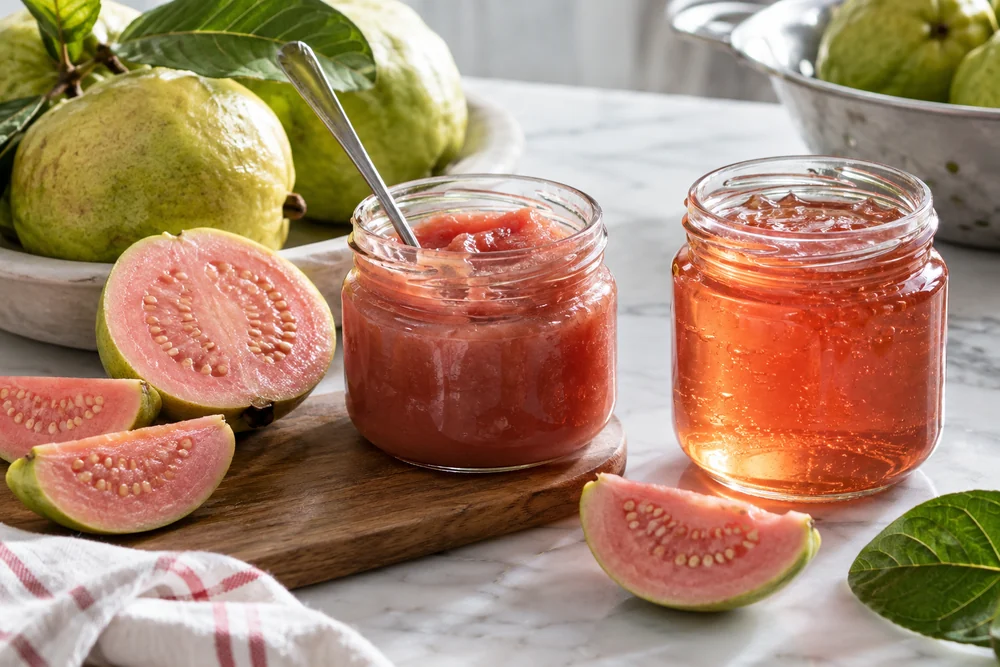
Choose the intended fruit body and gel appearance before preparing the guava.
The National Center for Home Food Preservation's ingredient guidance explains the roles of fruit, pectin, acid and sugar. Those components work together, so the starting decision affects the rest of the formula. A strained guava liquid and a thick puree can contain different amounts of fruit tissue and behave differently during concentration. Use the preparation specified by the recipe rather than treating every pink guava base as an interchangeable cup measure.
Color should be described independently from the product name. Pink guava can give a rosy preparation, while variety, maturity, extraction and cooking influence the eventual shade. A clear jelly can look amber or pink depending on the fruit and route. Do not promise a bright red result from the ingredient name alone. Commercial developers should approve color under consistent lighting and in the intended pack, while keeping any added color within the actual formulation and label review.
A supplier inquiry becomes more useful when it states the intended preserve and its preparation route. If the plant will mill frozen pieces into pulp, the incoming fruit specification should address seed and peel removal and usable recovery. If it buys a prepared puree, its composition and refining state need confirmation. The ingredient choice can simplify the work, but it does not replace the developer's decision about gel texture or the manufacturer's responsibility for the packed product.
Account for flesh, seeds and frozen liquid
The photographed GreenLand frozen guava pieces retain skin and central seed tissue. A kilogram of that form is not a kilogram of seedless prepared pulp. The proportion recovered depends on the fruit and preparation method. For a preserve trial, weigh the incoming sample and then the usable pulp or extracted liquid at a clearly stated endpoint. Keep the result linked to its lot so another delivery can be assessed by the same procedure.
Use sound fruit with the declared identity and preparation history. Natural variation in the pink flesh should be distinguished from brown cut faces, damage or an objectionable odor. Freezing does not restore fruit that was unsuitable before freezing. For fresh guava, inspect the exterior and cut surfaces before preparation. For frozen pieces, check the pack and representative material after controlled preparation rather than judging only the frost-covered surface visible through a liner.

Incoming piece weight differs from the amount of prepared seed-controlled pulp.
Unsweetened fruit is generally the clearest starting point when following a tested preserve recipe. If a commercial ingredient contains added sugar or other additions, account for them using instructions appropriate to that ingredient. The NCHFP guidance specifically discusses frozen fruit and the implications of maturity and added sugar. It should not be interpreted as permission to adjust any recipe by taste alone. The pectin system, acid and preparation quantities still need to remain consistent with the directions being used.
Follow a controlled thaw appropriate to the recipe and food-safety procedure. Preserve released fruit liquid unless the selected preparation deliberately removes it. Draining the pieces, discarding the liquid and then substituting an equal volume of water changes the ingredient. Likewise, measuring a partly frozen coarse heap as if it were a smooth prepared puree can produce inconsistent fruit loading. State whether the quantity is incoming fruit, prepared pulp or extracted liquid; the measurement belongs to that stage.
For commercial work, inspect several representative samples when yield has a meaningful cost impact. Record retained seeds, peel and other losses separately where practical. A change in recovery may reflect the incoming fruit, the preparation state or the equipment setting. Look at the residue before assigning a cause. The approved lot record should explain how much usable preparation was obtained and whether that preparation produced the intended preserve, rather than promising a universal guava yield.
Remove seeds before setting the texture
Guava seeds are hard and should be addressed before the gel is set. For a pulp route, a suitable food mill or sieve can separate unwanted coarse material from softened fruit. The preparation should recover acceptable flesh without creating troublesome fragments. A powerful blender can reduce fruit quickly, but crushing the hard seeds into smaller pieces may make the final texture harder to correct. Inspect the passed pulp and retained material instead of assuming that smooth appearance proves complete removal.
For jelly, extraction has a different endpoint. The fruit is prepared so that its liquid can be collected according to the chosen recipe. A jelly bag or an appropriate filtering arrangement separates more tissue from the liquid than a typical jam pulp route. Follow the source instructions about extraction and handling. A change intended to increase liquid recovery can also affect clarity or composition, so a larger collected volume is not automatically a better preparation for the same formula.
The SURE.JELL guava jelly recipe starts with a measured amount of prepared juice and gives a specific sequence for that product's pectin. Pomona's guava jam directions describe seed-removal alternatives for a pulp preparation. These are two different products with different formulations. Their preparation ideas explain the distinction, but the developer should use one complete set of directions rather than combining a convenient extraction step with unrelated gel and canning instructions.
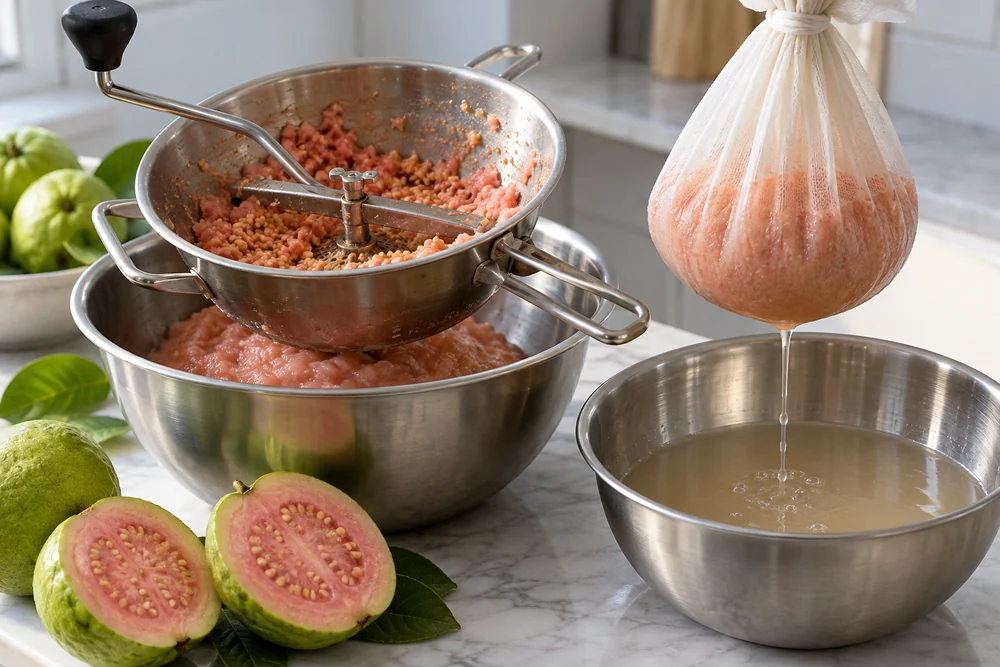
Pulp preparation and jelly-liquid extraction have different endpoints.
Peel retention deserves its own decision. Some preparation routes process softened unpeeled fruit and remove unwanted coarse material afterward; another route begins with flesh separated from peel and central seeds. The chosen recipe or plant specification should determine what enters the prepared fruit. A very green-speckled pulp might be acceptable for one rustic preparation and unsuitable for a smooth preserve. Judge the intended result and confirm that the equipment can produce it consistently.
Commercial refiners need an outcome specification as well as an equipment setting. A nominal screen aperture does not establish that every retained fragment has been removed or that all passed particles are below that size. Compare the finished pulp's coarse material, grit and application behavior with the approved reference. When screening removes substantial fruit tissue with the seeds and peel, include that loss in the ingredient cost. Keep any reworking of the residue within the defined trial so the result can be repeated.
For a jelly route, distinguish extracted liquid from any water deliberately used during preparation. Follow the selected directions and record the amount of prepared liquid that actually enters the formula. A pulp route needs a different balance because more fruit tissue is retained. Comparing the two solely by jars produced per bag of fruit can hide differences in dilution, sugar addition and concentration. A commercial team should calculate the fruit preparation and finished output separately, then assess whether each preserve meets its own approved quality standard.
Choose one pectin system and follow its formula
Pectin systems are designed around particular conditions. A conventional high-sugar preserve and a low-sugar calcium-set preparation do not use the same logic simply because both contain fruit pectin. The supplier's directions govern the pectin type, fruit quantity, sweetener, acid and method. Replacing the pectin while retaining the rest of an unrelated recipe can change the set. Ask the pectin manufacturer for guidance when a commercial formulation falls outside its established directions.
The Pomona guava jam example uses its calcium-based system and a specified range of sweetener. The SURE.JELL jelly example uses a different formulation. That comparison is useful because it explains why reducing sugar in a conventional recipe is not the same as selecting a pectin developed for lower sugar. It does not establish that either household recipe can be scaled directly into a factory. Commercial development should record the exact pectin grade, supplier, lot and technical instructions used.
Fruit maturity affects the starting material, and freezing does not create a fixed pectin content. Extension guidance explains why ripe commercial frozen fruit often needs an added pectin system when used for jellied products. The buyer should therefore avoid approving a preserve process on the assumption that guava always sets by itself. Measure and develop the actual fruit preparation, especially when crop, maturity or extraction changes. A successful batch made from one fruit lot does not define every later lot.
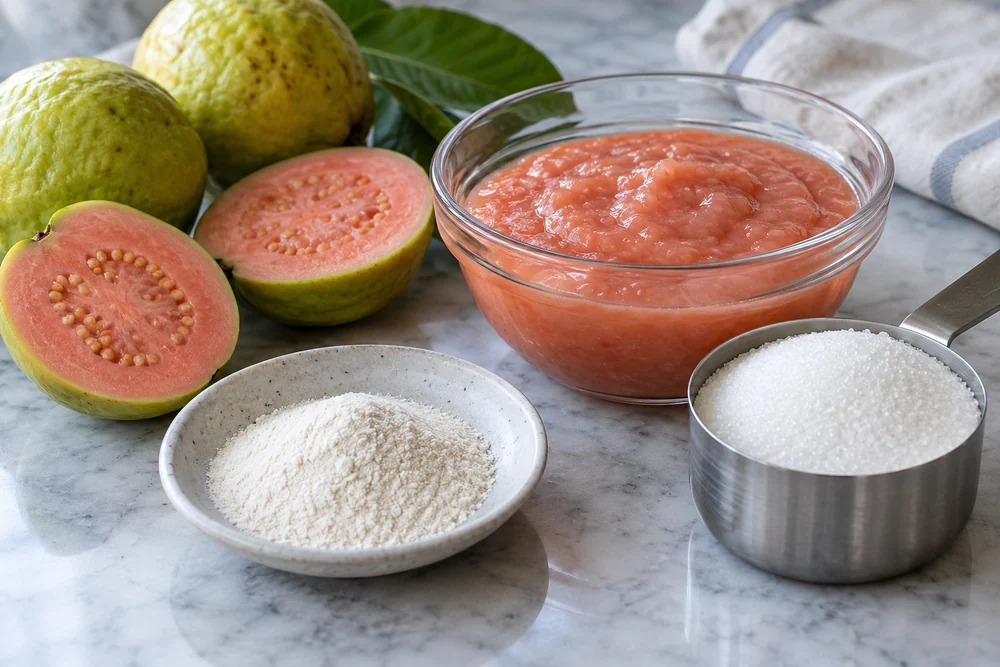
The exact pectin system determines the formulation and addition instructions; the image supplies no dosage.
Acidity has both flavor and gel implications, while the safety requirements depend on the actual product and preservation route. Follow tested acid additions for household recipes. In commercial development, use appropriate measurements and qualified process advice rather than treating sour taste as a pH test. Titratable acidity and pH answer different questions, so the technical team should specify which results it needs and how the sample is prepared. A label such as sweet guava is not an analytical report.
Dispersion and addition order matter too. A pectin that clumps during mixing may not behave as intended even if the total weight is correct. Follow the manufacturer's sequence for blending dry ingredients, hydration and acid addition. Keep the batch record clear enough to distinguish a formulation issue from a weighing or mixing error. This helps the team repair the actual cause of a weak or uneven set instead of adding more pectin without understanding what happened.
Use a consistent small-sample method when measuring a viscous fruit preparation. The technical team should define how a representative portion is collected, cooled if required and mixed before testing. A skin formed on an uncovered hot sample or a separated liquid fraction may not represent the kettle contents. Record the measurement conditions beside the result, and use suitable calibrated equipment. This makes a concentration or acidity comparison useful across batches and prevents an operator from chasing a number that changed because the sampling method changed.
Control concentration and gel formation together
Cooking changes water content, aroma, color and the conditions under which a gel develops. The operator needs an endpoint appropriate to the formula and equipment, rather than a universal number of minutes for guava. A shallow kitchen pan and a commercial kettle remove water differently. A larger load can alter heating and agitation. The time in a tested household recipe belongs to that complete method; it should not become an industrial process specification by multiplying the batch size.
For a home batch, use the quantities, pan and sequence required by the selected tested directions. Avoid doubling a recipe unless its source supports the change. For a commercial trial, record the preparation weight, additions, equipment, heating pattern, mixing and measured endpoint. Where soluble solids or another measurement is used, agree the method and sample condition. Do not claim a precise product concentration from appearance alone, because a hot, viscous fruit preparation may still set differently after cooling.
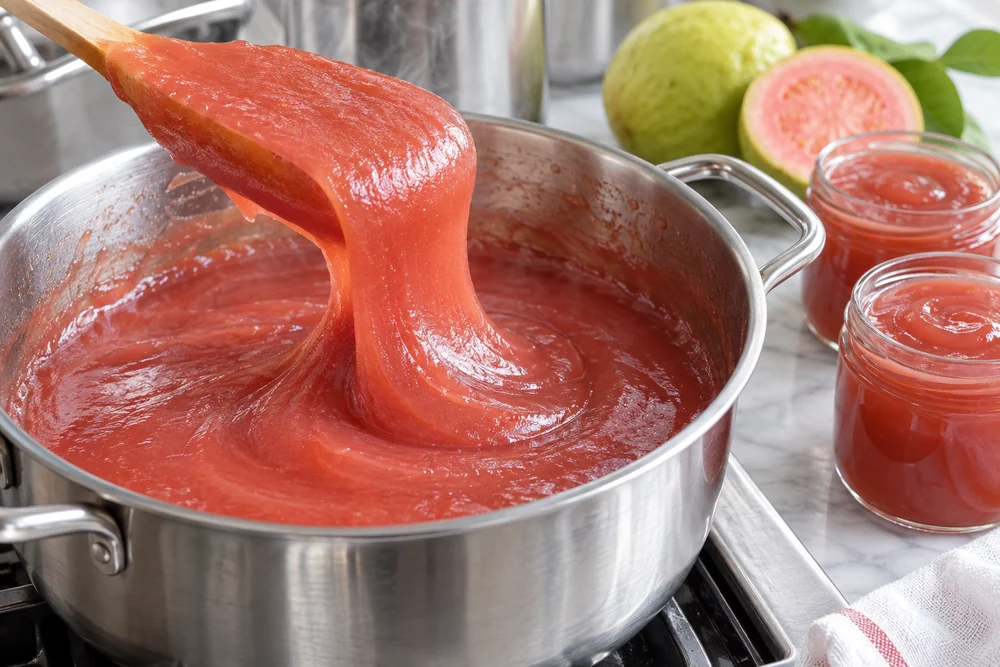
Judge the selected process endpoint and the later cooled set together.
A practical development sequence links the observations:
- Prepare and measure the seed-controlled pulp or extracted liquid required by the selected formula.
- Add ingredients in the pectin manufacturer's stated order and control the cooking operation.
- Record the relevant concentration and acidity measurements using the agreed methods.
- Evaluate the cooled set at a defined time, then confirm the product in its intended pack and use.
Judge flavor after cooling as well as during cooking. A very hot sample can obscure the way sweetness, acidity and aroma will be perceived at serving temperature. Concentrating further may create a firmer preserve while also changing its color and cooked flavor. The desired endpoint is the combination the customer accepts. If the product is intended for another heat exposure, such as a pastry bake, include that later operation in the development trial.
When a trial fails, examine the whole record before changing the formula. A loose set may relate to the pectin system, acidity, preparation ratio, concentration or handling. A stiff or sticky result needs a different investigation. Record any remaking procedure separately and follow appropriate technical guidance; repeated reheating can change quality. For commercial manufacture, the process authority and quality team should decide whether an affected lot can be reworked, held or rejected under the plant's system.
A mass record can reveal concentration differences without pretending to replace the required process controls. Weigh the prepared fruit and additions, then the collected finished preserve and identifiable losses. If two trials use the same formula but produce substantially different finished masses, investigate evaporation, equipment hold-up and transfer losses. A firmer result accompanied by lower output may reflect more concentration rather than a stronger starting fruit. Keep the quality assessment alongside the balance so the developer can choose a desirable product and understand the cost of making it.
Judge the cooled set and the packed product
A preserve should be evaluated at a defined time after cooling and at a stated temperature. Compare spoonability, spread, clean gel behavior, visible pulp and any liquid separation using the same method for each sample. A hot spoon test gives useful process information, but it is not the final texture assessment. Retain a reference from the approved formulation so later trials can be judged against a real target instead of a memory of the previous batch.
The intended use changes what a good set means. A breakfast jam can be softly spreadable, while a portioned foodservice pack may need to release and spread consistently. A jelly used as a glaze has another functional requirement. If the preserve will be piped or deposited, test it through the actual equipment at the intended temperature. A firm jar sample can behave differently under shear or warming, and the plant needs evidence for that operation.
Packaging and storage must be validated for the finished formula. A sealed jar and a pleasant gel do not by themselves establish ambient stability. For home preservation, follow the complete tested process and storage directions from a recognized source. The Wisconsin Extension preserve guide discusses ingredient measurement and frozen fruit within tested methods. It does not validate another recipe, a different container or a commercial filling line.
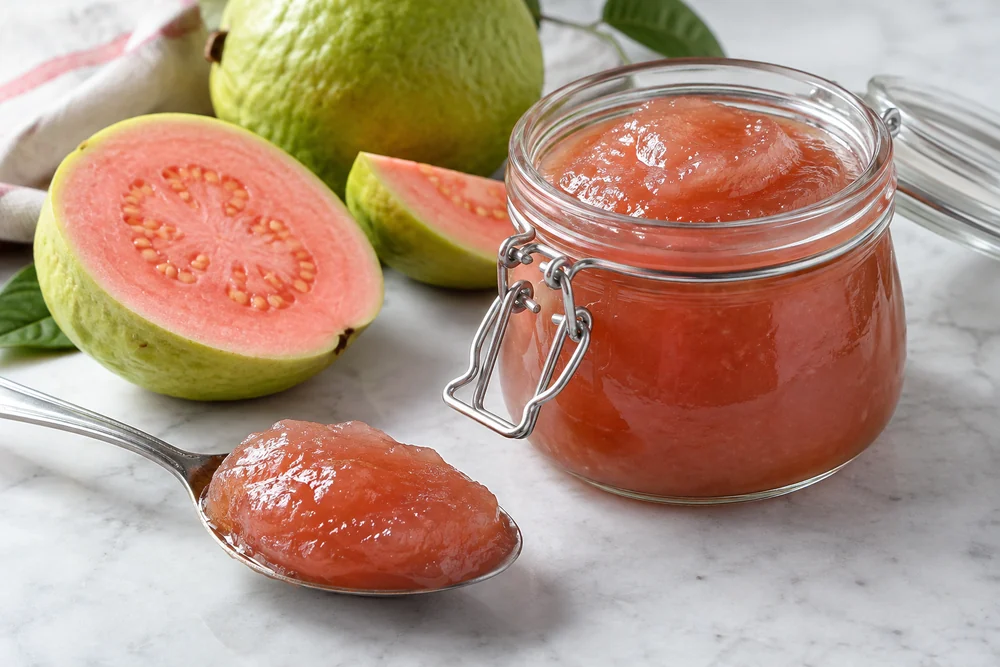
Assess the cooled texture under consistent conditions; a photograph cannot validate storage life.
For a commercial product, assess the relevant microbiological controls, seal integrity, water activity where appropriate, sensory change and distribution conditions through the responsible technical program. Refrigerated, frozen and ambient products need their own supported instructions. An opened container also has a different handling history from the original sealed pack. Keep the declared shelf life and use instructions tied to the product that was actually manufactured and tested.
Observe quality through realistic handling. Inspect for weeping, darkening, crystallization, loss of aroma or an objectionable change in spread. Use agreed observation intervals and the intended package. A small uncovered sample on a development bench can lose moisture differently from a sealed jar. If a frozen finished preparation is planned, assess it after the intended freeze and thaw cycle; approval of the frozen guava ingredient does not automatically approve the finished gel for freezing.
For texture comparison, use the same utensil, sample depth and observation time. Spread a measured portion over a similar surface or examine a gel sample prepared in the same container. Photographs should include the same scale and lighting. These simple controls help a development team distinguish a meaningful difference from the way a sample was presented. They are particularly useful when several operators share production, because descriptions such as softly set or easy to spread can otherwise drift between shifts without an obvious change in the written formula.
Specify the guava input for repeat batches
Start the sourcing specification with the actual fruit form. Include guava identity, flesh color, skin state, seed-center allowance, cut distribution, pack and intended further preparation. Explain whether the plant will make jam pulp or extract jelly liquid. The same carton may have different usable values for those routes. A quotation becomes easier to assess when both buyer and supplier understand which fraction is expected to become the prepared fruit.
Agree the attributes that matter to repeat production. Color and defects need an approved reference and a sampling method. Where solids and acidity influence formulation, define the reporting basis and test method. Ask for the offered lot's relevant records rather than copying a generic analytical range from an unrelated guava puree. The purchase standard should describe the incoming ingredient; the preserve formula and finished-product limits belong in the processor's own specification.

Specify the fruit input and its usable preparation for repeat preserve batches.
Connect the sample trial to the order. Preserve the lot code through preparation, cooking and the finished evaluation. Record usable yield, seed and peel residue, sensory result and any formulation adjustment. If a later lot changes origin, variety, maturity or preparation, the team can determine whether a comparison is needed. This approach keeps a seasonal change manageable without claiming that natural fruit is analytically identical throughout the year.
For costing, compare the price per usable prepared kilogram and then the cost per acceptable finished kilogram. Include screening loss, concentration loss, labor and packing rejects where they matter. A less uniform piece grade may suit a milled preparation if it meets the agreed quality and safety requirements. A more prepared input can be worthwhile when the plant avoids work it cannot perform consistently. Demonstrate the result through the agreed route instead of assuming the cheapest delivered kilogram wins.
We can discuss frozen guava pieces, a representative sample and packing for the proposed preserve operation. Send the application, fruit preparation required, quantity, destination and requested documents. Any peeled, seed-reduced or puree proposal needs its own confirmation. When the ingredient record and finished preserve trial stay connected, the purchasing team can approve a supply plan that supports the actual recipe and gives future batches a clear reference.
Source Frozen Guava with GreenLand-food
GreenLand-food is a professional frozen guava supplier and manufacturer in China, providing factory-direct wholesale supply for importers, food manufacturers, foodservice distributors and private-label programs.
Send your required product form, specification, packing, quantity, application, destination, private-label needs and requested documents. Include the seed and peel tolerance and the preparation route your plant plans to use, so the sample and quotation describe the actual ingredient.
We confirm the offered form and pack for the order; any peeled, seed-reduced or puree request needs its own preparation evidence and approval.