


How Long to Boil Eggplant?
Sep 24, 2026
Leave a message

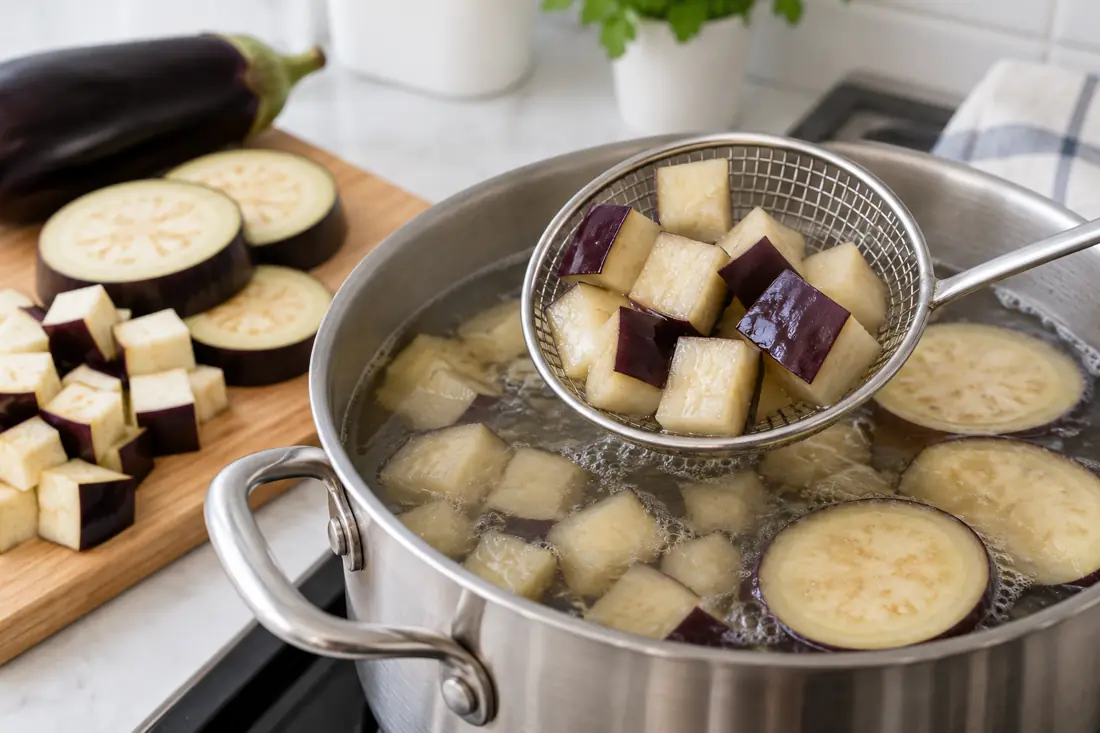
These times assume gently boiling water and a modest amount of similarly sized pieces. A large cold load takes time to return to a boil, and a rolling boil can break tender pieces before their centers are ready. For foodservice and processing, the useful instruction pairs time with cut size, load, and an observable texture. We supply frozen eggplant forms for prepared foods, where those details are more valuable than a generic minute count.
Boiling time by fresh cut size
Begin with the shape in the finished dish. A small dice presents more surface to water and heats quickly, but it can lose its edges if held too long. A larger cube protects its center for longer and is easier to drain intact. A thin strip may cook rapidly yet become tangled and fragile. Whole eggplant has the longest path for heat to reach the center and makes the skin and flesh reach different textures. Do not apply one timing line to all four forms.
For peeled or unpeeled cubes around one to two centimeters, start checking at five minutes after the water returns to a gentle boil. Many reach a soft but still defined texture within five to eight minutes. Larger chunks around three to four centimeters can take roughly eight to twelve minutes. Very thin slices or strips may need only a few minutes, so test early. These are practical trial ranges, not fixed guarantees: variety, maturity, cut geometry, pan load, and whether the pieces were salted or cooked earlier can shift them.
Use a table as a starting protocol and let the test piece decide the stop point:
| Fresh form | First check | Texture target |
|---|---|---|
| Small 1–2 cm cubes | 5 minutes | Knife enters center easily; edges remain visible for a mixed dish. |
| Large 3–4 cm chunks | 8 minutes | Center becomes tender without the outside collapsing. |
| Thin strips or slices | 3–4 minutes | Bendable and tender; remove promptly if they need to keep their shape. |
| Whole small eggplant | 15 minutes, then frequent checks | Flesh soft through the thickest part; time varies widely with size. |
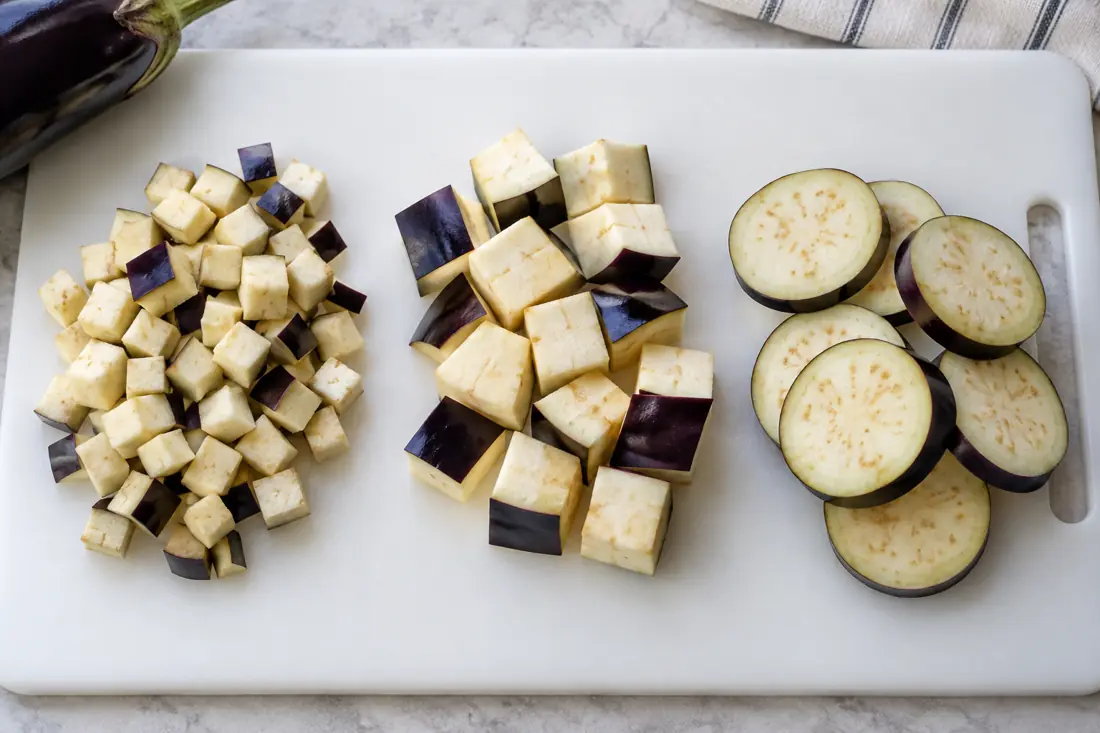
Boiling time by fresh cut size visual explanation.
A whole large eggplant can require substantially longer than cubes. If the eventual recipe calls for pieces, cutting before boiling is usually a better way to control the result. Whole boiling can suit a dish that will be scooped or mashed, but the cook should pierce the thickest part and check more than one location. A soft outer layer can conceal a firm central section. Avoid promising that every whole fruit is done at twenty minutes; size changes that answer considerably.
Published guides reflect different cuts. BoilingTime gives separate short ranges for cubes and thicker pieces, while LEAFtv discusses thin slices, chunks, and whole eggplant with different times. Their variation is useful evidence that "how long" has to be answered with a form and a texture target. Treat the first check as the time to start observing, not as an automatic drain signal.
Use the cooked piece in context. Eggplant boiled for a spread can be very soft because it will be blended. A piece intended for a curry that simmers another ten minutes should come out firmer. If the recipe requires crisp edges or concentrated flavor, boiling may be the wrong primary method. That judgment should be made before the timer starts, since a waterlogged cube cannot later regain its original structure by a brief pan finish.
Prepare and simmer eggplant evenly
Wash fresh eggplant, remove the stem end, and cut to a consistent size. Keep the peel or remove it according to the dish; peel thickness changes the bite but does not create a universal boiling rule. Put cut pieces into the pot soon after preparation. Eggplant can darken where exposed to air, which is mainly an appearance issue. If the kitchen prepares large batches in advance, it should set a holding practice that preserves quality without leaving the pieces soaking indefinitely.
Bring a generous pot of water to a boil before adding the eggplant. Lower the pieces in carefully and stir once to wet them evenly. Eggplant can float and crowd the surface, so use a wide pot, a suitable basket, or a gentle push to keep the load evenly heated. There should be enough water that the added vegetable does not turn the pot into a cool, densely packed mass. For a large production load, measure the return-to-boil time and start the cooking timer at a consistent point.
Reduce a violent boil to a steady simmer once the water has recovered. Rapid agitation can knock soft pieces together and abrade their edges. At the other extreme, barely warm water lengthens cooking and can leave a dull, sponge-like texture. A controlled simmer moves hot water around each piece without crushing it. Stir only enough to prevent the top layer from sitting partly out of water.

Prepare and simmer eggplant evenly visual explanation.
Salt can season the cooking water, but it does not remove the need to judge texture. Some recipes salt raw eggplant before cooking to draw moisture or alter flavor; others cook it directly. If the product will be used in a seasoned sauce, the amount of salt added at this stage should be part of the recipe, not an isolated habit. For commercial food, taste the cooked piece in the finished seasoning system. A plain boiled sample can seem bland even when its texture is correct.
Drain as soon as the target is reached. A colander works for sturdy chunks; a perforated basket is gentler for small dice. Let free water leave without pressing fragile pieces hard. If the next step is a puree, a deliberate drain helps keep the mix from becoming thin. If the next step is a hot sauce, excess water can dilute it. The amount released during a brief hold is part of the yield, so record it when evaluating an ingredient for batch production.
Keep batch size consistent. Doubling the vegetable without increasing water and pot capacity changes heat recovery and circulation. A result from a small trial pot is a useful first approximation, but the kitchen should repeat it at its real service load. Record the cut, batch weight, water volume, first check, final time, and texture after draining. Those simple details make a timing instruction transferable between shifts.
Judge tender versus waterlogged texture
The easiest test is a knife tip through the thickest representative piece. It should enter without a hard raw center. Then lift and bite the piece. For a chunk intended to stay visible, the exterior should not dissolve while the center still feels firm. For a mash, uniform softness matters more than sharp edges. A single visual glance at the pot is not enough because eggplant's pale flesh can look similar before and after it becomes very soft.
Check several pieces from different locations. A floating top layer may heat differently from pieces held under water, and uneven cuts will show different endpoints. If the largest pieces still resist while small ones are collapsing, the fix is more consistent cutting next time, not simply a longer boil. For the current batch, remove the ready pieces with a skimmer or accept that the dish will have mixed texture if separation is impractical.
Eggplant flesh acts like a sponge in cooking, but "sponge" is a culinary description rather than a precise water-uptake rate. Extended boiling and holding in hot water make pieces softer and wetter. Once the center is tender, drain promptly. Letting the pot sit off heat with the eggplant submerged still continues the cooking and absorption. The clock should include that hold if it occurs in the real production process.
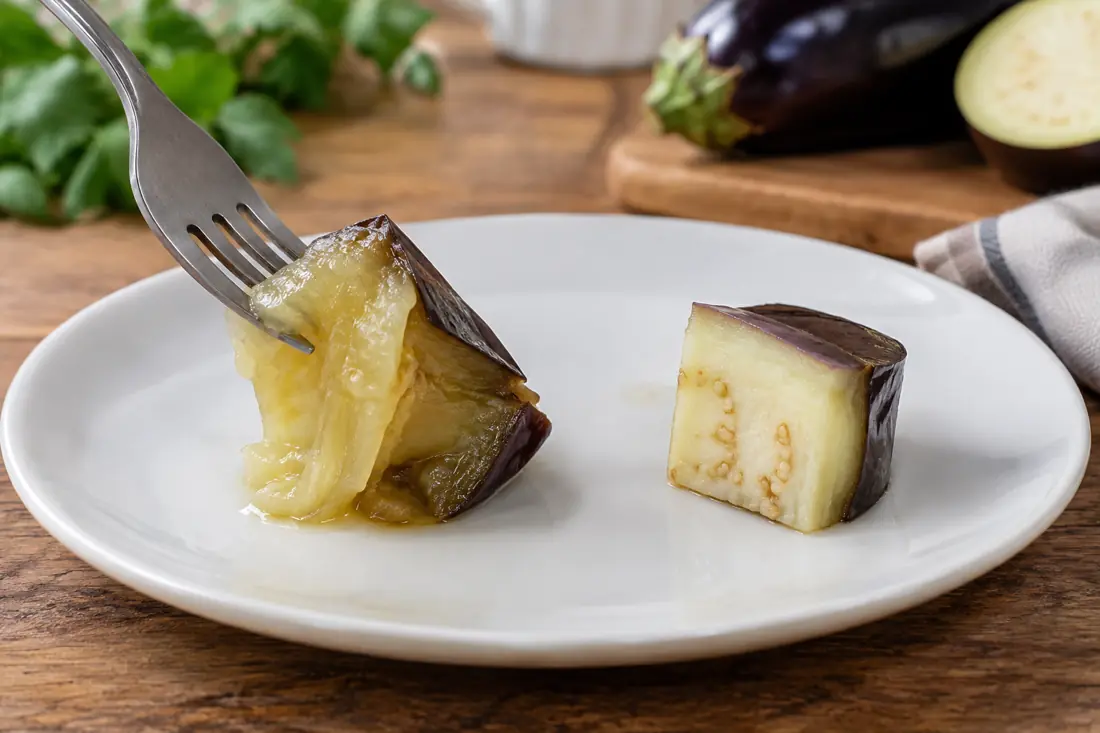
Judge tender versus waterlogged texture visual explanation.
Waterlogged pieces may break when folded into a sauce, release liquid on a plate, or weaken a layered dish. Those effects become clearer after a short drain and hold than in the boiling pot. When selecting a target, place a sample in the actual sauce or service pan for the expected hold time. If it disappears into the dish, stop earlier or use larger pieces. If it remains firm at the table, cook a little longer or reduce the cut size.
Skin can remain more resistant than the flesh. A thick-skinned mature eggplant may have a tender interior yet a chewy peel. Longer boiling may soften that peel somewhat but can sacrifice the flesh. If the dish demands a delicate uniform bite, choose a suitable variety, remove the peel, or use a thinner cut. The decision should follow a sample trial rather than a blanket rule that eggplant must always be peeled.
Differentiate blanching from fully cooking
Blanching is a short heat treatment followed by prompt cooling, often used before freezing. Its goal is different from boiling eggplant until it is ready to eat. A four-minute blanching instruction can be appropriate for a particular cut and preservation process without meaning that a hearty chunk is fully tender after four minutes. Readers sometimes compare those numbers as if they describe the same endpoint; they do not.
The Hmong American Farmers Association guide and Colorado State University Preserve the Taste of Summer guidance discuss short blanching stages in preservation contexts. Those methods also account for cooling and later cooking. A home cook seeking a soft boiled side dish should follow a full-cook texture check instead. A buyer of frozen eggplant should ask whether the product was blanched and how it is intended to finish in a recipe.
Blanching time also depends on size and process equipment. It should not be borrowed casually for a new factory line, because a preservation process needs validated controls for its particular cut and packaging. In a purchasing conversation, ask for the declared pretreatment and a sample rather than inferring it from the word "IQF." Individually quick frozen describes the freezing format; it does not, by itself, say that the vegetable has been cooked to a ready-to-eat texture.
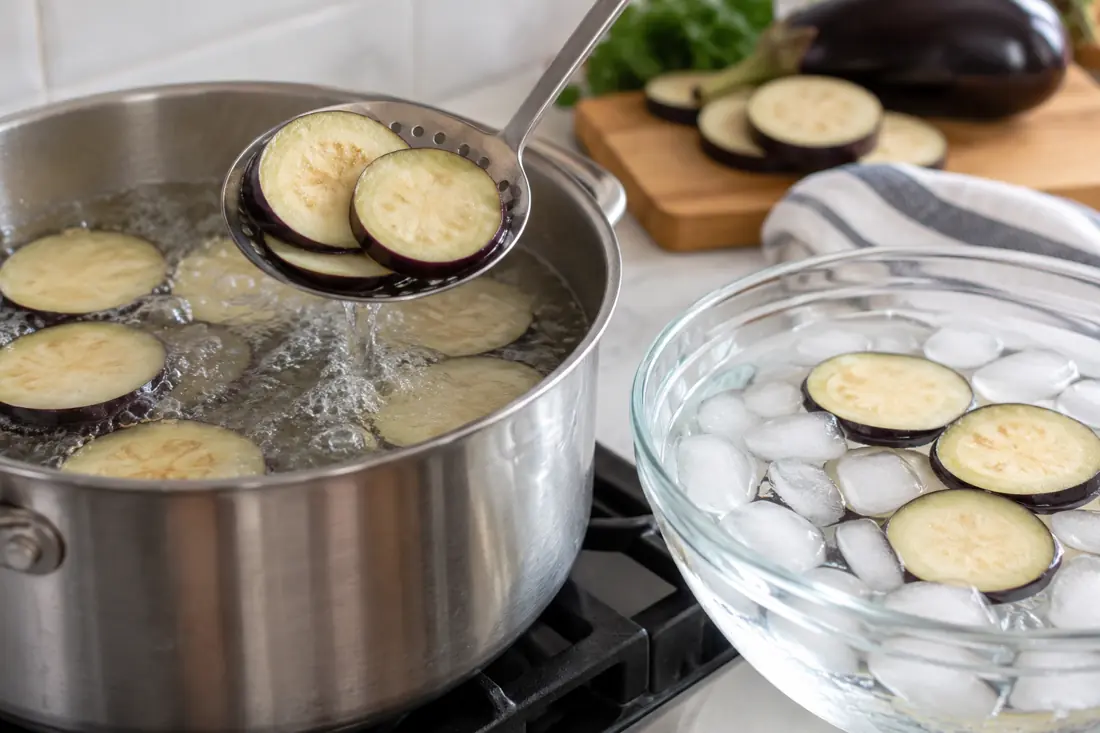
Differentiate blanching from fully cooking visual explanation.
If a recipe first boils and then fries, bakes, or stews eggplant, the initial boil may be a partial cook. Define the expected firmness before the next step. A very soft piece may absorb sauce and break apart; a firm piece may need the second step to finish its center. The same cut can therefore have two reasonable boiling times for two different workflows. Write that purpose into the instruction so another cook does not treat the partial cook as a serving endpoint.
Cooling changes the apparent texture. A hot blanched cube can feel pliable but firm up slightly when chilled, then soften again on reheating. Test the full sequence if the product is prepared in advance or frozen. The important question for a production buyer is how the eggplant behaves at service, after all heating and holding stages, not only when it first leaves boiling water.
Handle frozen eggplant in hot dishes
Frozen eggplant can be added to a suitable hot dish without a separate thaw when the pieces are loose and the recipe has enough heat and time. This avoids a bowl of released water before cooking. However, a wet sauce, boiling water, and a hot skillet affect the frozen product differently. There is no honest universal instruction to "add two minutes" to the fresh boiling time. Form, pretreatment, ice load, and batch size must be checked.
For frozen cubes or chunks that will be boiled, add a modest loose load to hot water, let the boil recover, and begin checking near the first-check time for the equivalent fresh cut. A blanched product may need only heating and finishing; a raw frozen center may take longer. Test the center of the thickest piece. Drain promptly when the desired texture is reached. If the pack is frozen into a single block, separate or handle it by a validated process instead of assuming every piece is receiving equal heat.
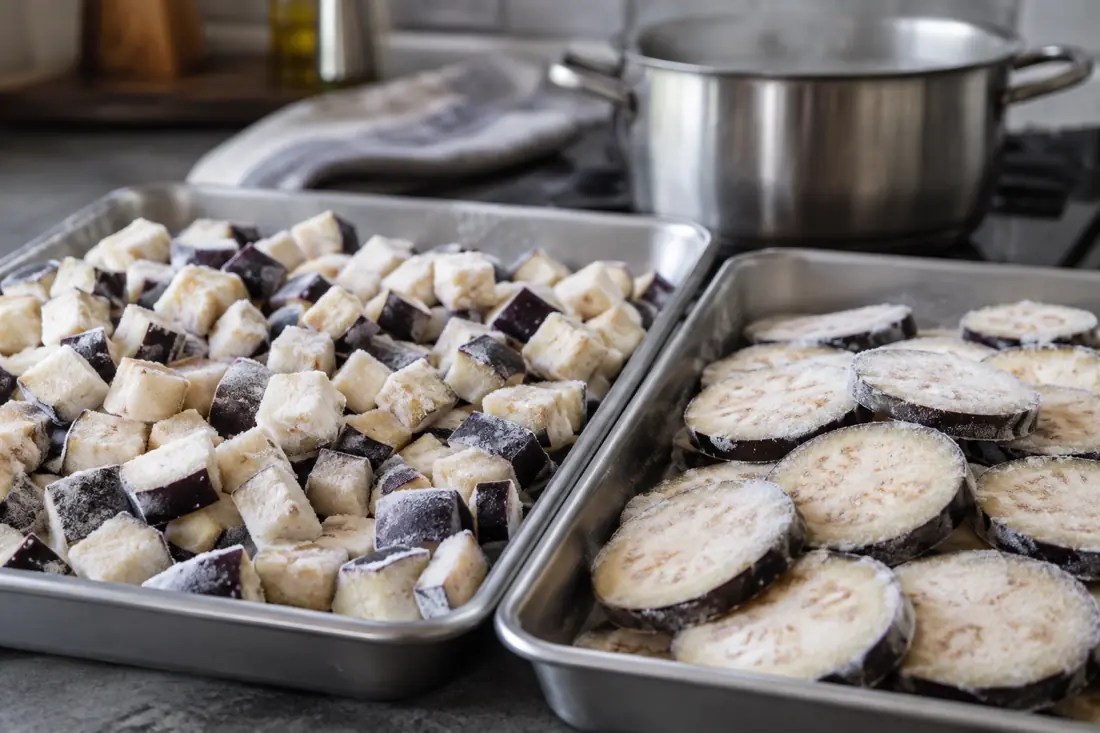
Handle frozen eggplant in hot dishes visual explanation.
Frozen slices intended for a layered preparation may be better finished by another method than boiled, because boiling adds water to a structure that already releases moisture on thawing. Test the actual recipe. For a soup or smooth puree, boiled frozen eggplant may be convenient, and extra softness can be welcome. For a casserole with visible layers, the same softness can be a problem. The application should drive both the product form and heating method.
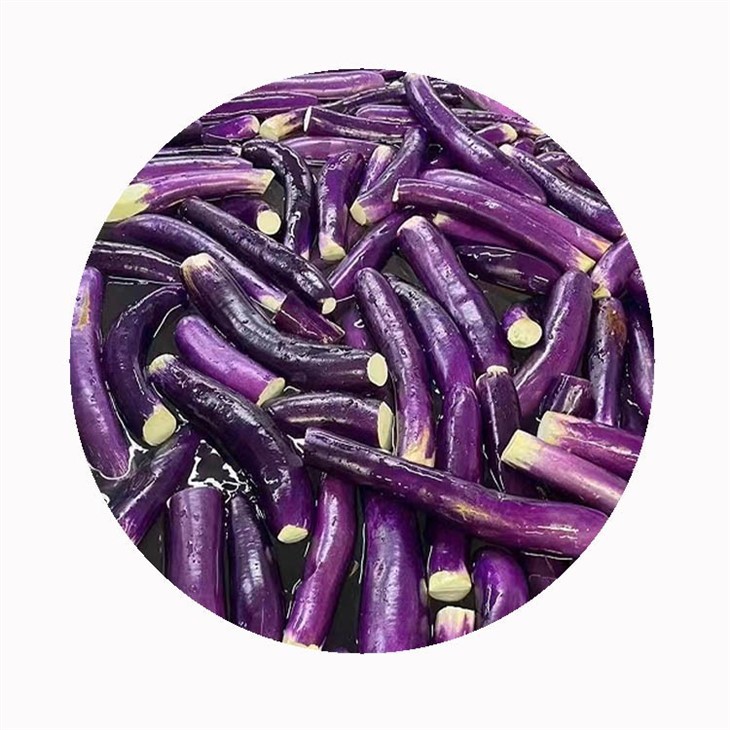
Frozen eggplant strips with skin.
Ask the supplier for cut dimensions, peel status, pretreatment, pack weight, and expected broken-piece allowance. A product described only as "frozen eggplant" could arrive as cubes, slices, or another form with different performance. GreenLand-food's IQF frozen eggplant page is a starting point for a specification discussion; the approval decision should use the actual sample and agreed written details.
Measure drained yield when comparing suppliers or forms. Two equal frozen weights may deliver different usable weight after cooking and draining, depending on cut size and moisture release. A lower price per frozen kilogram does not automatically mean a lower cost per finished portion. For a prepared-food plant, compare texture, portion integrity, and finished weight under one common process before committing volume.
Set a cut and texture specification for buyers
Start with the dish and state what the customer sees. A soup may accept a soft, irregular piece; a diced vegetable side needs pieces that remain identifiable; a puree needs smooth flesh with no coarse peel fragments. From that outcome, choose dimensions, peel status, and acceptable breakage. An instruction such as "boil ten minutes" belongs after those decisions, because the minutes are only meaningful for the chosen cut and load.
Run a small reference trial using the intended cooking equipment. Weigh the frozen or fresh load, note its starting condition, bring water to a controlled simmer, and record the first check and final removal. Drain under a consistent method, then evaluate immediately and after the expected hold. Photographs of a spoonful and a cut center help the supplier understand an approval or a complaint. Record both the pass result and a specific failure, such as "centers remain firm" or "edges disintegrate after service hold."
If the product enters a second heat step, include that step in sample approval. A cube that looks perfect after boiling can disappear after twenty minutes in sauce. Conversely, a slightly firm piece may finish well. The buyer and supplier should agree on whether the ingredient is intended for direct service, partial cooking, or further manufacturing. This avoids comparing samples at different endpoints and reaching a misleading quality judgment.
For bulk frozen eggplant, send us the target cut, skin requirement, application, packing format, expected volume, and destination. We can discuss available forms and a representative sample against the finished dish. The most reliable answer to boiling time is then specific: a chosen cut, a controlled load, a first-check time, and a texture that still works after the complete recipe.
A small reference trial with clear endpoints
To establish a useful kitchen time, cut a representative lot into the exact shape the recipe will use. Weigh the load, measure the water, and use the intended pot or steam-jacketed vessel. Note when the water returns to a gentle boil after loading. At the first-check time, remove a piece from the center and one from the edge. Cut both open, feel the resistance with a knife, and taste. Continue in short intervals until the thickest pieces reach the target. Record the total time and drained yield.
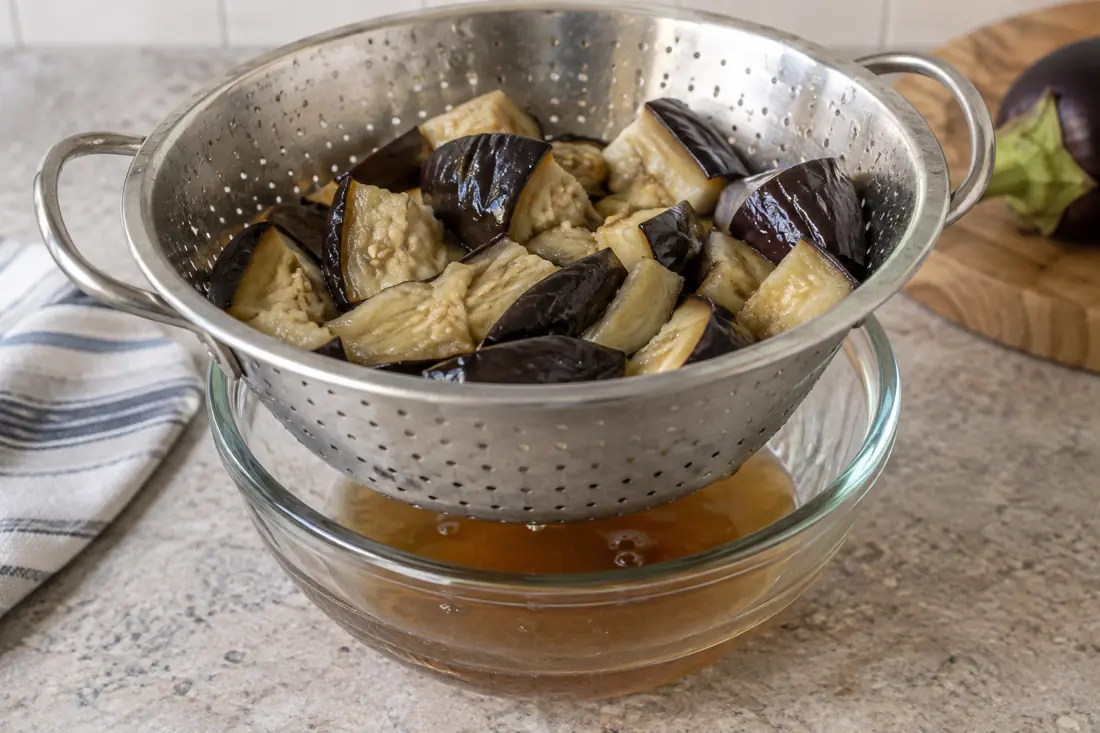
Set a cut and texture specification for buyers visual explanation.
Repeat the trial with the usual production load. Large batches often recover heat more slowly than a sample pot. A timer started at loading may therefore include several minutes during which the water is below its target temperature. Decide whether the operation will time from loading or from return-to-boil, then use one method consistently. Neither convention is inherently wrong, but an instruction that changes between shifts will create uneven results.
Assess a second portion after the following cooking step and after the planned hold. A cube that is tender when lifted from water may disintegrate in a hot sauce; another that seems slightly firm may finish perfectly. If the dish is chilled and reheated, test that whole sequence. The correct boiling endpoint is the one that leaves the final meal at the intended texture, not the one that looks most appealing in the pot.
When boiling frozen eggplant, compare it with a fresh reference only if the cuts and endpoints are genuinely comparable. A blanched frozen cube can soften differently from a raw fresh cube. Record the product's declared pretreatment and starting state. Do not thaw half the trial and cook the other half from frozen unless the comparison is deliberate. If thawing releases water, include the handling and yield of that water in the result.
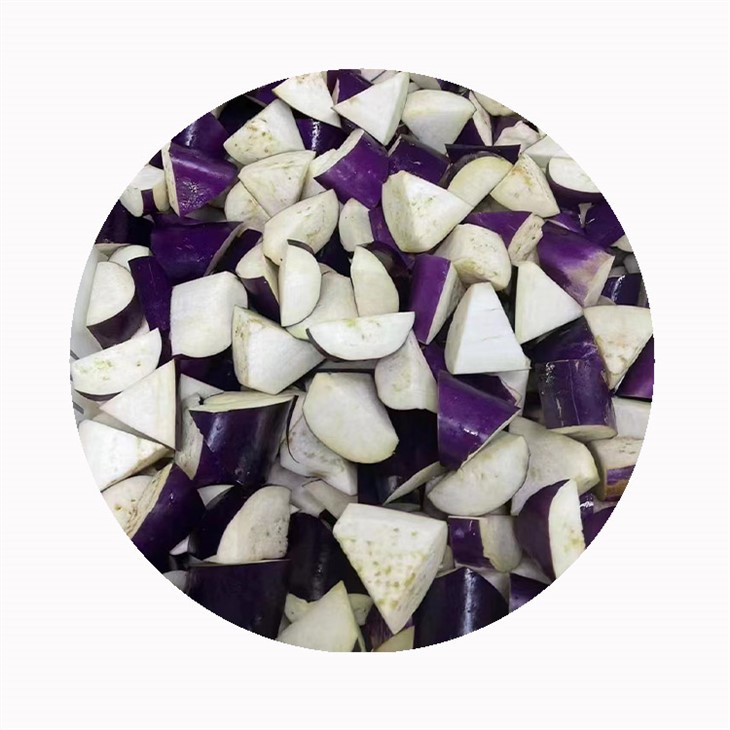
Frozen eggplant cubes with skin.
Common reasons a timing estimate fails
Uneven cuts are a primary cause. The smallest pieces finish first and may break before the largest centers soften. A second cause is a crowded pot that returns to a boil slowly. A third is vigorous agitation that damages already tender edges. These are process problems, not evidence that all eggplant needs a different universal minute count. Correct the geometry, load, or simmer first, then adjust the time.
A particularly mature or thick-skinned eggplant may show a different pattern: flesh softens while the peel still resists. More time can make the flesh watery without creating a pleasant peel. Peel a sample or select a different raw material for a delicate recipe. The same principle applies to frozen skin-on cuts. A supplier's consistent grade and peel treatment can reduce the need for last-minute adjustments in a busy kitchen.
When a batch seems watery, check the removal and drain procedure. Eggplant left in hot water after the timer is done continues to soften. A colander filled deeply can retain hot water among the pieces, extending that effect. Lift the product out promptly and spread it enough for water to escape. If the recipe needs a dry layer, a different cooking method may suit it better than boiling. Method choice is part of the answer to texture, not an afterthought.
Finally, describe the endpoint in language that an operator can observe: "largest cube has no firm white center, edges stay distinct after a two-minute drain," for example. Pair that with the cut dimensions and a first-check time. Such a specification can be verified on a new lot. A bare instruction to boil eggplant for ten minutes cannot tell a cook whether a thin strip, a large cube, or a frozen pretreated piece is ready.
Source frozen eggplant with GreenLand-food
GreenLand-food is a professional frozen eggplant supplier and manufacturer in China, providing factory-direct wholesale supply for importers, food manufacturers, foodservice distributors, and private-label programs.
Send the product form, specification, packing, quantity, application, destination, private-label needs, and requested documents.