


How to Julienne Zucchini: Cut Size, Tools and Foodservice Prep
Sep 24, 2026
Leave a message

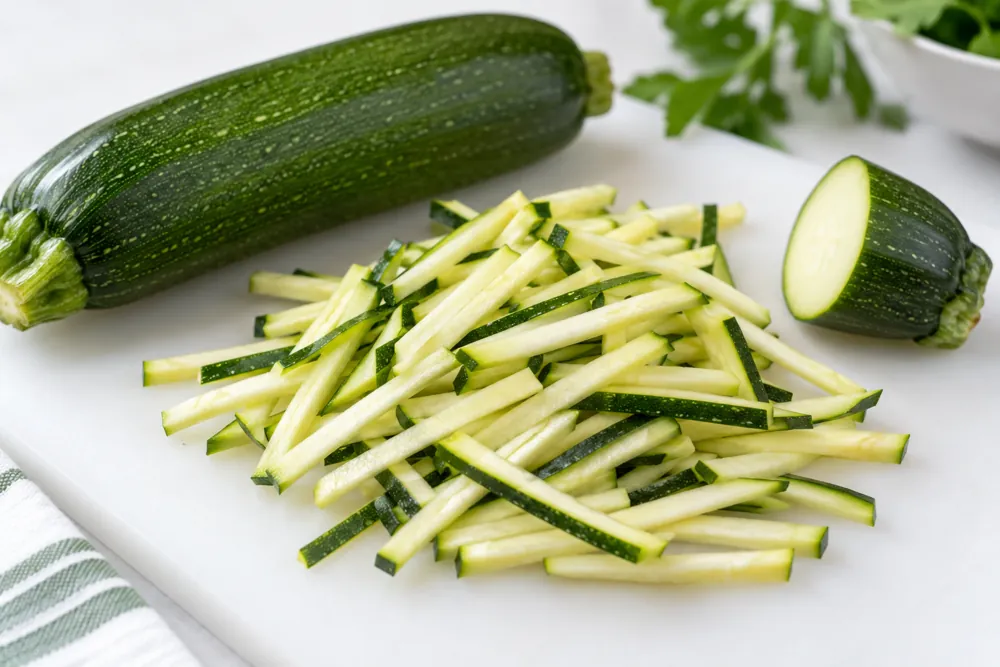
For foodservice, "julienne" alone is a weak purchasing instruction. One supplier may mean fine, long, flexible strands; another may mean short, square matchsticks. A chef may accept variation in a dressed slaw yet reject it in a clear soup where every piece is visible. The following method therefore connects the cut to a measurable batch standard and shows when a frozen zucchini cut can serve a cooked application. GreenLand-food supplies frozen zucchini in established sliced and diced forms and can review customized strips against an order specification. Fresh julienne remains the sound choice when the dish depends on a crisp raw bite or precise garnish appearance.
What a zucchini julienne looks like and when the cut works
A classical julienne is a straight matchstick with a nearly square cross section. Culinary references commonly put it near 1/8 inch, or about 3 mm, thick and roughly 2–2½ inches long. That convention is a useful starting point for a recipe trial, not a universal legal or commercial grade. Zucchini bends more readily than carrot, and a wide, soft seed channel can prevent a long strip from staying straight. For a raw garnish, a narrower strip can look delicate. For a hot stir-fry or meal component, a slightly broader strip may retain visible shape after it releases water. Set the target after seeing the finished dish, then keep it steady through the batch.
The distinction between julienne and a zucchini noodle matters in production. A noodle made with a spiralizer may be long, curved and flexible. A julienne strip is cut to a defined length and cross section. The two may be interchangeable in a sauced skillet dish, but they are not interchangeable in a measured salad topping, a ready-meal compartment or a packaged vegetable blend. If a kitchen writes "zoodles" on the prep sheet and receives matchsticks, portion appearance changes even when the vegetable and weight are the same. Name both the cut and its target dimensions in the recipe.
Think about the intended exposure to heat. A thin strip heats quickly because it has a high surface area relative to its mass. That is useful in a brief sauté, an omelet filling added near the end, a vegetable garnish placed into hot broth, or a salad where the dressing should coat every piece. It is less useful in an extended boil. Over a long hold, the strip loses definition and can make the plate or pan wet. A thicker cut, slice or dice may fit such a process more reliably. The cut should be chosen from the expected eating texture backward, rather than copied from a generic knife chart.
Visible skin can help a zucchini julienne keep its green identity. If the recipe calls for green-edged strips, cut outer flesh with a narrow skin border; if it calls for a pale uniform filling, skin treatment can be agreed separately. Do not assume all strips from one fruit will show the same green fraction. The outer planks carry more skin, while inner planks are paler and often softer. A blend may look balanced in a pan but inconsistent in a clear package. For a menu photograph or private-label product, prepare and approve a representative reference sample before setting the written color description.
A useful kitchen trial starts with a small measured portion. Cut one zucchini, weigh the acceptable strips, weigh the excluded ends and seed core, then cook the strips in the actual pan, sauce or broth. Record whether the width is still visible at service, how much free water appears, and whether the intended portion weight refers to raw cut weight or cooked drained weight. Repeating the trial with a second maturity or diameter shows whether the specification is robust enough for ordinary incoming variation. That gives the buyer a more practical target than an attractive cut photographed once under ideal conditions.

The strip has a defined cross section and length; agree on a target before setting a production tolerance.
Choose zucchini and set the target strip specification
Young, firm zucchini with a relatively small seed core is easier to cut into intact strips. The skin should be sound, the flesh should resist light pressure, and the cut surface should look clean rather than spongy. Large fruit may be suitable for grated fillings or cooked sauces, but its developed seed cavity produces fragile, wet inner strips. The effect becomes more obvious when the strips are handled in volume: the outer flesh stays recognizable while material near the seeds smears or breaks. A receiving standard based only on whole-fruit length misses this difference. Examine a cut sample from the incoming lot.
Wash the fruit using the kitchen's approved produce procedure, drain it, and remove the stem and blossom ends. A dry exterior helps a knife or peeler grip cleanly. If the green skin is part of the desired appearance, leave it in place after cleaning; if a smooth pale cut is required, record a peeling instruction and account for the extra trim. Keeping the skin is common for zucchini julienne because it supplies color and reduces unnecessary loss, but thick or damaged patches should not be hidden inside the finished strip. Decide skin treatment before preparing the reference sample.
Set length from both the vegetable and the application. Pieces around 5–6 cm sit neatly in a forkful, spring roll or plated garnish, and the short length is easier to reproduce by hand. A long noodle-like strand may be attractive in a pasta bowl but can tangle in a filling depositor or create large clumps in a frozen pack. For a salad, a consistent visual length matters; for a cooked sauce, cross section and the proportion of broken pieces may matter more. Write the priority into the specification instead of demanding unrealistic perfection on every dimension.
Width should be described with a target and an agreed tolerance. A 3 mm square strip is one sensible trial, while a 2 mm cut will cook and soften faster and a 4 mm cut will be more substantial. These are application choices, not GreenLand standard stock sizes. A buyer might inspect a measured sample to decide what portion falls within the agreed width band, how broken ends are counted, and whether skin-only ribbons or seed-heavy pieces are defects. Avoid quoting a tight tolerance before an actual line or kitchen sample demonstrates that it can be produced and used consistently.
Yield also needs an explicit basis. A raw whole-fruit weight includes stems, ends and any seed core removed. The usable strip yield changes with fruit diameter, maturity, peeling choice, blade setting and the decision to exclude central flesh. For planning, conduct three or more incoming-lot trials instead of using a single internet conversion. Record whole input weight, acceptable julienne weight, trim weight and any later drained or cooked weight. If the kitchen purchases pre-cut product, compare prices on the weight that reaches the recipe, including preparation labor and loss, rather than only on the carton price.
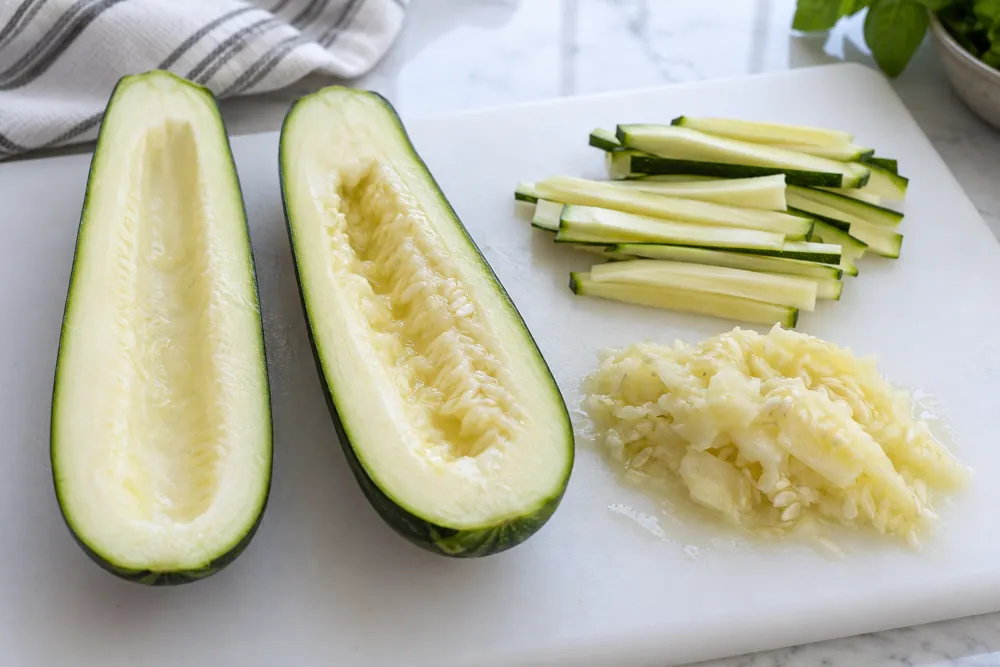
Firm outer flesh gives a cleaner strip than the soft seed core of a mature zucchini.
The seed core is a practical decision point rather than a rule that every zucchini must be hollowed out. A small, tender core may cut and cook acceptably in a soup. A wide soft core often fragments under a julienne peeler, adds free water to a garnish and increases short-piece counts. At the prep bench, make a few trial passes, inspect the strips, and stop when the tool begins to pull wet seeds rather than stable flesh. Use the remaining core in a suitable cooked preparation if it meets the kitchen's quality and food-safety standards. Separate routing preserves yield without compromising the julienne batch.
Cut zucchini with a knife, peeler or mandoline
For a knife cut, use this sequence with a sharp blade and a stable board:
- Trim the zucchini to the chosen strip length and make one flat side so it cannot roll.
- Lay that side on the board and slice lengthwise into even planks at the target thickness.
- Stack only as many planks as can be held securely, then slice down through the stack at the target spacing.
- Compare the strips with the reference sample and route soft seed-core pieces separately.
This method is slower at scale, but it allows the cook to adjust for an irregular fruit, separate poorer flesh and protect the final visual grade.
A julienne peeler gives fast, long passes over the outside of a firm zucchini. It may be suitable for a small restaurant run or an informal vegetable topping. Its teeth and pressure determine the strip profile, so the actual cut can be thinner or more curved than a square knife julienne. Most peelers do not offer a precise width setting. Inspect the first several passes against the reference sample, rotate the fruit as needed, and stop before the exposed seed area produces mushy material. A peeler is a useful tool when speed matters and the dish tolerates modest shape variation. It is less dependable when a contract calls for a measured cross section and controlled short length.
A mandoline with a julienne insert can provide faster repeated cutting when the product and blade setting suit each other. Fix the equipment on a stable surface and use the manufacturer guard or an appropriate protective system. Verify the blade setting with a test piece, then check actual strips. A numbered dial is only a machine setting; the finished zucchini may vary as the flesh softens or the blade wears. Keep the last piece out of the operator's fingers and route undersized remnants separately. A sharp clean blade cuts; a dull or overloaded blade crushes cells and increases free moisture and short pieces.

A flat plank and a small stack make the knife spacing easier to repeat.
For central kitchens and factories, a mechanical cutter may be appropriate when throughput is the main constraint. Its capacity does not by itself establish quality. Feed orientation, fruit diameter, blade geometry, screen size and line speed all affect length distribution, skin fraction and fines. Validate the machine with the actual zucchini grade and a real downstream cooking trial. A food processor with a generic shredding disc may create strands rather than square matchsticks. If the finished recipe can use those strands, name them accordingly. If the brand promise says julienne, test and document the observed dimensions.
Cleaning and changeover have direct product effects. Zucchini fragments trapped around a blade can become soft and mix into later batches; a worn edge can tear instead of cut. Follow the kitchen's sanitation procedure, check blade integrity before a run, and remove product fragments at the frequency needed for the process. For a large run, record the equipment or blade setting with the batch. When a second operator takes over, the reference sample and a short test cut are more useful than a verbal instruction to "make it thin."
The choice of tool should reflect volume and required precision. A knife is flexible for a dozen portions and for a visible premium garnish. A peeler is quick for small, less tightly specified quantities. A guarded mandoline helps repeat the same cut across a prep session. An industrial cutter supports volume when the product grade, machine and acceptance method have been validated together. Compare tools using actual acceptable yield and labor time from the same raw material. A faster machine that creates more fines may cost more at the serving stage than a slower method with clean strips.
Keep a foodservice batch consistent from first strip to last
Consistency needs a reference that cooks can see. Before a production run, prepare a small approved sample showing the target length, width, skin proportion and acceptable core condition. Photograph it with a ruler if the kitchen needs a durable record, but retain a physical sample during the shift where food-safety controls permit. Check the first cuts against it. If the batch will be cooked, keep a cooked reference too. A strip that looks right when raw may collapse in a sauce; a slightly broader strip may meet the plated appearance more reliably.
Measure at several points rather than only at startup. The first fruit may be unusually firm, while later incoming boxes may have different diameters or maturity. A peeler blade can clog, a mandoline setting can move, and an operator can gradually change knife spacing. Pull small samples from the beginning, middle and end of the run. Look at representative dimensions, broken ends, skin distribution, seed fragments and free liquid. The sample size and allowable variation belong in the kitchen or buyer specification; there is no universal zucchini julienne acceptance percentage.
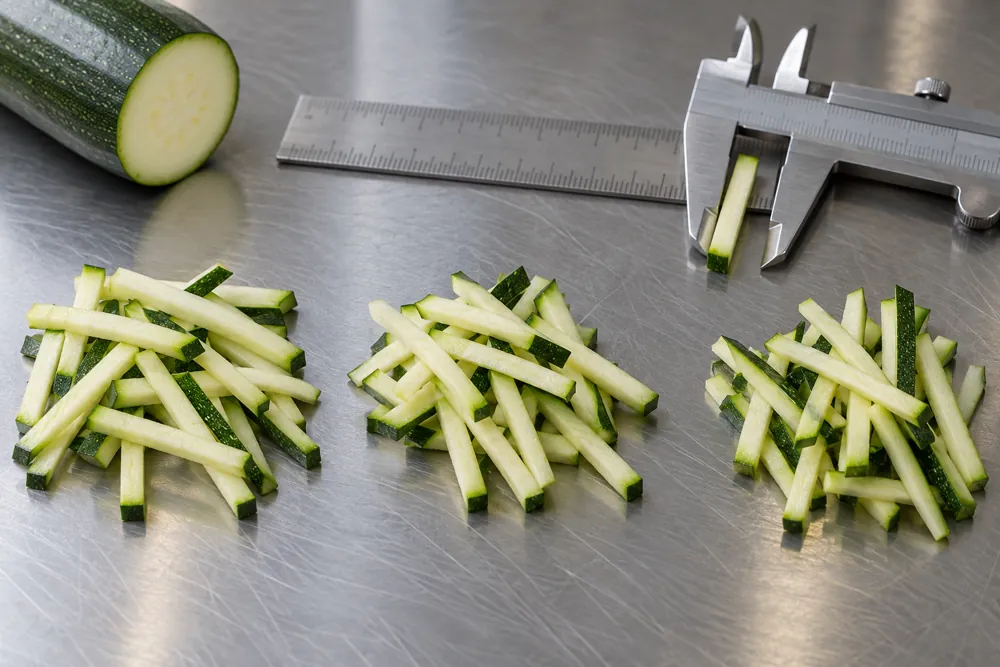
Check samples throughout a run because fruit and tool conditions can change.
Record what will happen to off-size material. A short strip may still be sound for soup or a cooked filling, while a wet seed fragment may need exclusion from a raw garnish. If the line mixes all cuts together, the final bag may look less consistent than a startup sample suggests. A separate trim route can improve the main grade without wasting usable food. It also makes the yield calculation honest: acceptable julienne, alternative-use material and discard are different outputs, and each has a different economic value.
For a multi-site restaurant program, standardize the unit of work. Specify whether one prep batch is a carton, a box of whole fruit, or a measured number of kilograms. Define the cutting tool or approved alternatives, sample frequency, chilled holding container, and portion measure. If one site portions by loose cups and another by weight, their plate appearance and food cost will drift. Weight is generally more reproducible than a packed volume for long strips, but the final service portion should still be tested visually because tangled strands can make equal weights look different.
Temperature and time during preparation matter because cut zucchini exposes moist surfaces. Keep washed whole fruit and prepared strips under the kitchen's established cold-holding plan, minimize time on the worktop, and use clean equipment and containers. The article cannot assign one holding-life number for every market or recipe; local food-safety rules, intended use and the facility's validated procedure control that limit. Label batches so older material is used in the planned sequence. Do not combine a fresh, firm batch with an older wetter batch merely to make a nominal quantity.
For a food manufacturer, agreement between a written specification and the test method prevents later disputes. State whether cut-size conformity is judged by count or weight, how to handle pieces with one side of skin, and what counts as a broken piece. State whether a sample is measured frozen, chilled or after cooking, since the form can change. Add the intended application to the purchase order. We help buyers define cut form and tolerances for frozen zucchini orders against an actual sample and production plan; a photo or broad phrase such as "fine strip" is insufficient for a priced specification.
Manage moisture, holding and cooking behavior
Zucchini naturally contains considerable water, and cutting it into narrow strips exposes more wet surface. After washing and cutting, let free surface water drain in a clean perforated container or another approved system. Do not press so hard that the strips bruise and break. The aim is to prevent wash water and cut-surface liquid from accumulating under the product before it reaches the recipe. A paper towel can be practical for a small home batch; a foodservice kitchen usually needs a repeatable drained-pan or measured-spin procedure that meets its sanitation plan.
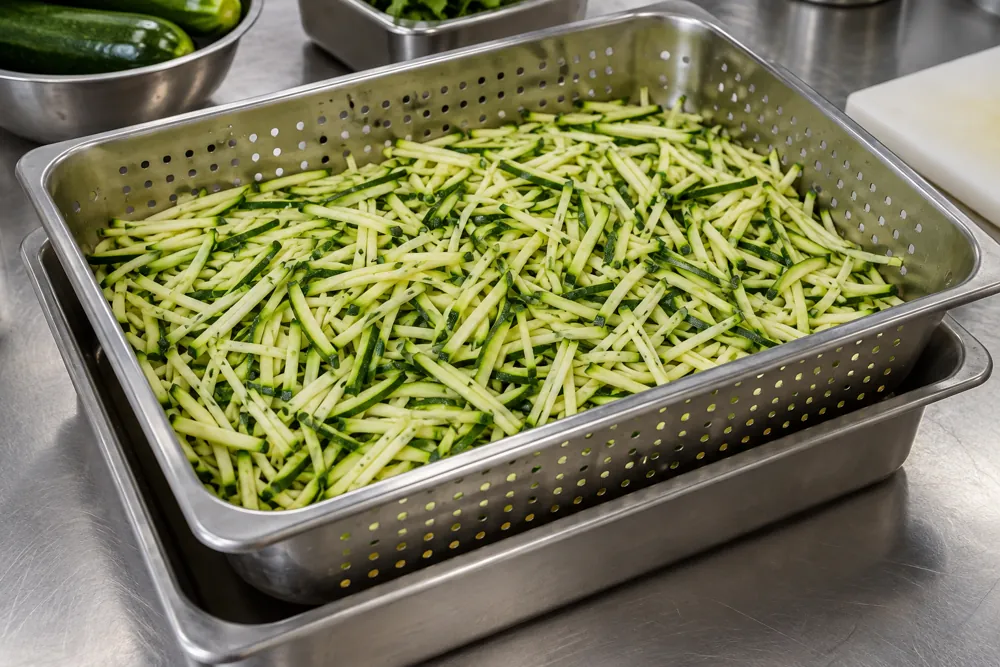
A perforated pan lets surface liquid drain before the cut enters the recipe.
Salt draws water from zucchini, which can be useful before a cooked filling or sauce. It also changes flavor, seasoning calculations and raw texture. Use it when the recipe intentionally calls for a salted, drained ingredient, and define the salt dose and drain step. Do not salt a batch automatically if it will become a lightly dressed raw garnish or if the customer expects an unsalted vegetable component. Where salt is used, measure both the input and drained weight so the recipe does not receive a variable amount of zucchini solids from day to day.
For a brief sauté, heat the pan before adding the strips and work in batches that allow moisture to leave rather than pool. A crowded pan cools and steams the vegetable. Add delicate julienne after denser ingredients are nearly cooked, then stop while the strips still have recognizable form. Sauce can follow once excess water has reduced, depending on the dish. For a soup garnish, a short late addition or controlled blanch may preserve a clear-looking vegetable strip. An extended hold in hot liquid softens it and can make a 3 mm cut disappear among other ingredients.
Raw service has a different test. A slaw or salad needs strips that remain visually separate and pleasant after dressing. Trial the actual dressing, its salt and acid level, and the expected time from assembly to serving. A strip that looks dry immediately after cutting may release water after fifteen or thirty minutes in a salted dressing. A tight specification on cut size will not solve a recipe that sits too long. Consider dressing at service, reducing batch size or using a sturdier cut if the operation has a long display period.
If the julienne is packed as an ingredient for a central kitchen, inspect free liquid in the container, broken ratio after transport, and performance after the expected holding interval. Include the receiving temperature and use-by basis required by the local plan. The goal is not to make zucchini behave like carrot. Its tender tissue is part of the ingredient's value, and the process should use that character in a dish where a light, quick-cooking strip is welcome. If the menu needs a firm raw crunch after hours of holding, reformulate the cut or the vegetable component rather than promising that technique alone will overcome the material.
The same moisture reasoning informs frozen supply. Freezing damages some cell structure and thawing releases liquid. Individual quick freezing can help separate pieces for portioning, while draining, cut selection and cooking method determine the final plate. GreenLand's frozen zucchini use guide covers cooked applications in more depth. For this cut decision, the practical test is narrow: compare the fresh julienne and a proposed frozen cut in the actual dish after the actual holding or reheating step. Judge visible shape, water release and acceptable yield, not only convenience at receiving.
Compare fresh julienne with frozen zucchini supply

This genuine GreenLand product photo shows frozen green zucchini slices, not julienne.
Fresh-cut julienne serves dishes where straight narrow strips, a crisp bite or raw presentation define quality. It requires on-site labor, blade control, trimming, cold holding and same-day scheduling. Frozen zucchini is a different input with different strengths. It reduces preparation work and helps stabilize portioning for cooked soups, sauces, casseroles, ready meals and some foodservice programs. The exact frozen form still matters. A slice, dice or strip will not behave like a fresh matchstick after thawing. A buyer should test the cut in the final process before changing a recipe or pack description.
GreenLand-food's frozen zucchini range includes sliced and diced forms and describes customized strips subject to confirmed specifications and order planning. The two genuine product photographs here show green slices and green dice. They are evidence of those actual forms, not pictures of a stocked julienne product. If your project requires frozen short strips, send the target width, length, green-skin proportion, seed condition, pack and quantity for a capability and sample review. Availability, minimum quantity and final tolerance should be confirmed before a menu or label commits to that form.
For frozen strips, identify whether the intended use is a sauced cooked vegetable, a quick stir-fry component, a filling or a visible garnish after reheating. Request a sample and cook it under the same thermal and holding cycle as the final food. Measure drained weight if free liquid affects the formula. Look at shape after handling, surface ice, clumping, broken pieces, color and any seed-heavy material. A frozen sample that looks attractive in a bag can still soften too much during a long cook. Conversely, a modestly softer strip may be fully suitable in a sauce or filling where fresh crunch is not part of the eating experience.
Packing changes how the kitchen uses the product. Free-flowing IQF pieces can be weighed from a larger bag and added in stages; a compact block requires a different tempering or portion process. The required pack size should match a normal production batch so repeated opening and temperature exposure are limited. For retail or private-label supply, confirm whether the target visual appears through the pack window and whether the label describes the actual cut. For wholesale foodservice, confirm carton and inner-bag weights, receiving checks, lot identification and storage at the agreed frozen temperature. These decisions are more useful than a broad promise that any frozen zucchini can replace hand-cut julienne.

This genuine GreenLand product photo shows frozen green zucchini dice, not julienne.
Fresh and frozen comparisons should use equivalent recipes. Weigh the vegetable entering the process, weigh the drained or cooked yield where relevant, and taste the finished dish at the real service time. Include labor, trim, free water and consistency in the calculation. A fresh cut may be justified by visible raw texture. A frozen cut may be justified by stable cooked performance and lower prep burden. If neither delivers the required long, firm garnish, revise the application or keep fresh cutting. Our team can review a proposed frozen zucchini specification, packing plan, application, destination market and requested documents against current production capability.
The main purchasing lesson is to specify the result, not just the word "julienne." Send a reference photograph with a ruler, target dimensions, tolerance proposal, acceptable skin and seed condition, intended cooking method and required pack. After sample approval, keep the same evaluation method for production lots. A clear cut specification helps the chef, quality team and supplier discuss the same piece of zucchini. It also makes substitutions transparent: slices and dice can be excellent cooked inputs, but they should be purchased and described as slices and dice when that is what the product actually is.
Source Frozen Zucchini with GreenLand-food
GreenLand-food is a professional frozen zucchini supplier and manufacturer in China, providing factory-direct wholesale supply for importers, food manufacturers, foodservice distributors and private-label programs. We review proposed strip cuts against the application, sample and production plan.
Send the product form, dimensions and tolerance, packing, quantity, application, destination, private-label needs and requested documents so we can confirm available options.