


Can You Freeze Zucchini Noodles? Texture, Packing and Best Uses
Sep 24, 2026
Leave a message

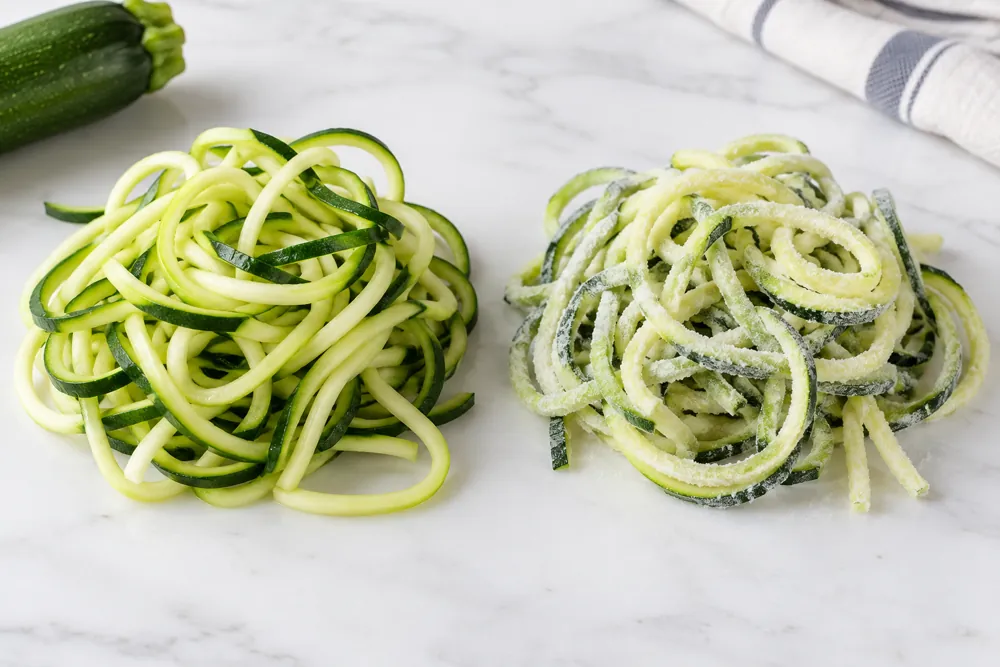
For a foodservice or prepared-food buyer, the decision is broader than whether a bag can go into a freezer. Strand diameter, seed-core inclusion, portion size, pre-treatment, loose versus compact packing, thawed drip and heating time all affect the food served. Published extension guidance covers freezing zucchini slices and grated zucchini; it does not establish one universal noodle process. GreenLand-food supplies frozen zucchini in verified sliced and diced forms and can review customized cuts against a specification. A frozen zucchini strip should be called a noodle only if its geometry and cooking performance actually fit the intended product. This guide keeps the noodle texture question central and shows how to test a proposed supply format honestly.
What freezing does to zucchini noodles
Zucchini has tender tissue and a high water content. As its water freezes, ice formation stresses cell structure; during thawing or heating, some water separates from the flesh. A long, narrow spiral has much more exposed surface than a thick slice, so it can lose its fresh spring quickly. The practical result is a noodle that may remain recognizable but feels softer and can leave liquid in the pan. How much liquid appears depends on the fruit, cut thickness, pre-treatment, freezing rate, packing and the way the noodle is cooked. That is why a fixed promise such as "never soggy" is a poor quality standard.
The change is visible before cooking. A newly spiralized strand holds a round or ribboned profile and separates from its neighbors. A thawed strand often bends, sticks or breaks more easily. If it sits in its thaw liquid, it continues to soften and can transfer water to the sauce. This does not make it unusable. In a tomato sauce, egg bake, soup or vegetable filling, some moisture can become part of the recipe. In a plated noodle substitute with a light oil dressing, the same moisture may dilute flavor and leave a puddle. The acceptable texture belongs to the final dish.
Thin noodles and broad ribbons behave differently. A very fine spiral warms fast and can become limp after only a brief cook. A broader noodle may be more robust, but it brings more zucchini mass and can alter the portion appearance. The seed core also matters: strands pulled through a soft core often break and release more water than strands from sound outer flesh. For a buyer evaluating frozen product, record the actual strand width or blade profile, length distribution, proportion of core fragments and broken pieces. "Spiralized zucchini" alone does not tell a kitchen how it will perform.
Freezing also changes how portions separate. A tray-frozen loose nest may be weighed or removed as one unit. Wet strands packed immediately into a bag can set into a dense mass. The latter may be acceptable for a sauce base that will be cooked down, yet inconvenient for a foodservice station that needs small portions on demand. A rapid commercial freezing process can improve separation and handling, but it cannot prevent the cellular changes that make a thawed strand softer than fresh. Judge samples after the full intended storage and cooking path, not only as they leave the freezer.
Color and aroma deserve attention as well. Young green zucchini with intact skin produces a recognizable green edge; blanched strands may appear a different shade from raw frozen strands. Excess storage exposure or poor packing can cause dehydration and dull appearance. A clear, mild zucchini aroma is expected; a sour or abnormal odor is a rejection signal. Freezing does not repair poor incoming produce or make a spoiled raw material safe. Use sound zucchini, sanitary equipment and a controlled frozen chain, then check the product against the agreed quality plan before use.
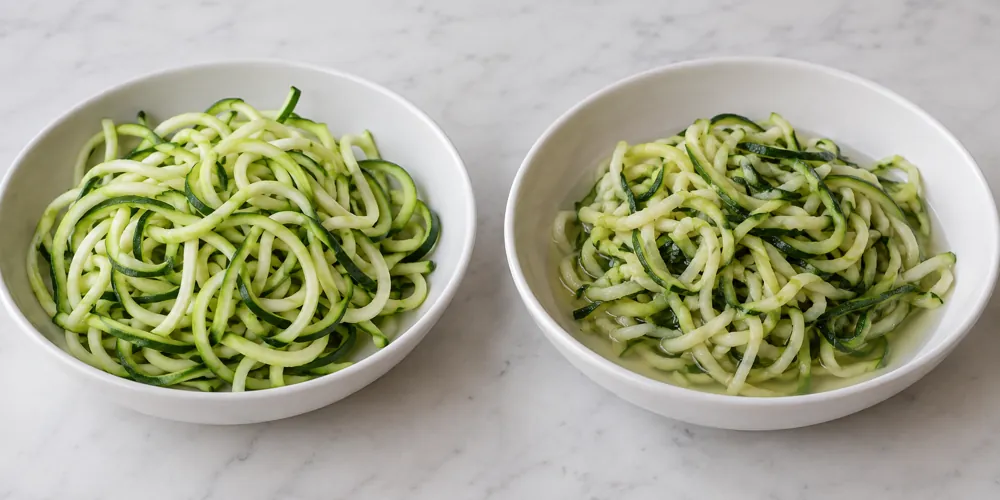
The thawed portion may release water and soften compared with freshly cut strands.
The most useful trial compares two equal weighed portions: freshly cut noodles and noodles frozen under the proposed method. Cook both in the same pan with the same sauce and hold them for the normal service time. Record drained water, final weight, visible strand integrity and a simple sensory judgment. That comparison tells a chef whether the frozen version fits a particular menu item. It is more informative than a freezer-life claim or a photograph of a frosted noodle nest.
Prepare strands for freezing
Start with firm, young zucchini that has a sound skin and a relatively small seed core. Wash it under the applicable produce procedure and drain it before cutting. Trim the ends, then spiralize with a clean sharp blade. The blade profile should match the intended dish: thin strands give a lighter eating texture and warm rapidly, while thicker strands may hold a little more shape in cooking. Cut exceptionally long coils into manageable lengths if they will be portioned into small packs. Keep the preparation consistent so a later cooking trial reflects the freezing method rather than a mixture of cuts.
Inspect the strand stream as you work. If the spiralizer begins to pull loose seeds, watery fragments or soft central tissue, set that material aside for a suitable cooked use instead of mixing it into the noodle grade. A tender small core may be acceptable, but the decision should follow the dish. Strands for a tomato sauce can tolerate more variation than strands presented prominently in a retail pack. Do not force an overgrown fruit through the spiralizer just to protect whole-fruit yield. The result can be a large amount of short wet material that costs more to drain and handle.
Surface water is the first controllable variable. After washing and cutting, spread the strands loosely in a clean colander or perforated pan and allow free water to drain. A clean towel can blot a small home batch; a commercial process needs a documented drainage or dewatering step appropriate to the equipment and sanitation program. Avoid aggressive squeezing if long strands are the product promise. It may remove liquid but also crush and break the noodle. For a cooked filling, a more assertive dewatering step may be acceptable because strand appearance matters less.
Salting is a recipe decision, not a universal preservation requirement. Salt encourages water to leave the zucchini and can make the later pan less wet. It also adds sodium, changes flavor and may further soften the strand before freezing. If the finished product has a specified salt level, the pre-salting dose and drain loss must be included in the formula. For a simple home experiment, compare a lightly salted, drained portion with an unsalted drained portion in the same recipe. For commercial supply, a salted ingredient needs explicit declaration and acceptance criteria; do not assume the buyer wants it.

Keep blade profile and strand length consistent before comparing freezing methods.
Blanching briefly heats the tissue to slow enzyme activity during frozen storage, followed by rapid cooling. The public extension methods for sliced and grated zucchini are useful evidence for those forms, but a fine noodle needs its own validated time because it heats much faster than a half-inch slice. Over-blanching leaves a soft cooked strand even before freezing. If a kitchen trials blanching, use a small batch, cool it promptly, drain thoroughly and compare its frozen result with the unsalted and salted alternatives. Keep the actual time and cut profile in the record rather than publishing one number as a universal noodle rule.
Whatever route is chosen, do not pack warm or visibly wet strands. Cool any blanched portion before freezing, remove surface water, and move promptly into the freezer system under the local food-safety procedure. A shallow layer or separate nests freeze more evenly than a thick pile. Record the raw input weight and the prepared weight. This gives a buyer a way to interpret later drip and portion yield rather than hiding water loss inside an imprecise "one cup of noodles" measure.
Choose blanching, salting or direct freezing by use
Direct freezing is the simplest home route: cut, drain, portion and freeze promptly. It keeps the ingredient list as zucchini and avoids pre-cooking the fragile strands. It may be suitable when the noodles will go straight into a hot, strongly flavored sauce or filling soon after freezing. Quality can deteriorate during longer storage because enzymes remain active, and a direct-frozen raw strand can release considerable water. Its convenience should be weighed against the actual dish result. A short home freezer trial is more honest than assuming that "raw" means "fresh-like" after thawing.
Salting and draining before freezing may reduce the liquid that appears later in a skillet dish. It takes time and requires a careful rinse or formula adjustment if the resulting salt level is too high. The strand may be more pliable before freezing, and its apparent volume can shrink. A buyer using this route should measure salt in the finished food, drained yield and strand integrity. A claim that salting alone makes zoodles crisp after thawing would misrepresent the vegetable. It changes the water balance; it does not restore the unfrozen cell structure.
A brief blanch-and-cool route is often considered for vegetable quality during frozen storage. For zucchini noodles, its main risk is overcooking. A few seconds too long can matter to a fine strand, especially when the hot noodles are left in a deep pile before cooling. Use a basket or another method that handles a small even load, transfer immediately to cold water or approved cooling equipment, then drain very well. Test the result after freezing and final cooking. The blanch time for slices in an extension guide should not be transferred automatically to noodles.

Draining and brief blanching are distinct preparation trials; compare them in the final dish.
Some recipes benefit from cooking the noodle into the dish before freezing the finished meal. A tomato or curry sauce can hold the vegetable and absorb part of its moisture; the customer reheats one complete portion. In that case the noodle texture is judged as part of a ready meal, not as a separate frozen raw vegetable. The formulation should account for water release during the first cook, freezing and reheating. If the sauce is too thin after reheating, either reduce it before packing or use a different zucchini cut. Do not solve the issue by adding an undefined amount of starch without testing the finished flavor and label.
These methods answer different questions. Direct freezing favors speed and a simple ingredient declaration. Salting favors water reduction when the flavor system allows it. Blanching favors enzyme control when a delicate thermal step can be validated. Freezing a finished dish favors convenience at the service end. None is automatically "best" for every noodle. A practical decision table in the kitchen should use the final application, prepared yield, thawed drip, cooked shape, sensory result and labor cost. This keeps the choice grounded in production rather than in an isolated preservation trick.
For a professional buyer, request the processor's actual pre-treatment description and test it against the product. "Blanched" can cover a range of heat exposure and water removal. "IQF" describes a freezing approach, not whether the noodle has the texture a menu needs. Ask for the cut profile, ingredient declaration, portion format and sample history. Keep a retained reference from an approved lot, and review a new sample when the fruit grade, blade or process changes. The best written specification is one the kitchen can verify at receiving and after cooking.
Portion, pack and maintain frozen quality
Portioning begins before the strands are fully frozen. A shallow tray can hold small loose nests apart while they firm; once frozen, move them into a moisture-resistant freezer package with minimal trapped air. A home cook may use a freezer bag or lidded container sized to one meal. A foodservice operator may prefer an inner bag with a measured number of portions, while a ready-meal producer may dose frozen strands by weight into a line. The right pack prevents unnecessary thawing of the unused remainder and matches the normal production batch.
Keep the strands dry enough to separate. Water on the surface forms bridges between coils and can create a solid mass. That affects weighing, portion speed and later water release. A dense frozen block is not inherently unsafe or unusable, but it should be described and handled as such. If the application requires a free-flowing or separable nest, test actual bags after storage, transport vibration and normal handling. Inspect clumps and loose surface ice, not only the individual strand image taken immediately after freezing.

A shallow tray helps freeze portions separately before transfer to a close-fitting pack.
Pack against dehydration and odor pickup. Thin strands present a large exposed area, so poor seals or excessive headspace can lead to dry pale edges and loss of fresh vegetable character. Use food-contact packaging suitable for the intended freezing and distribution temperature. Mark the product identity, batch or date as required by the kitchen or market. For retail packs, the consumer instructions should match the validated cooking route; directions to thaw fully and boil for a long time may yield a very different result from a quick cook from frozen.
Keep frozen stock under the approved cold-chain plan. GreenLand's frozen zucchini range is specified for frozen storage at or below −18°C, but the exact life of a newly developed noodle form would need its own validated shelf-life and packaging review. Do not transfer a 24-month figure from a sliced or diced product to a thin spiral solely because both are zucchini. Temperature cycling can increase clumping and ice on a delicate strand. At receiving, inspect the pack seal, lot identification, obvious thaw-refreeze signs and product condition before using it in a recipe trial.
Define the weight basis. A 200 g frozen pack contains the vegetable and any surface ice or retained water. A kitchen may need the cooked drained yield to formulate a sauce. Weigh a representative portion frozen, then after the approved cooking and draining step. Calculate how much usable vegetable the recipe receives and whether the liquid is retained in or removed from the dish. This matters for meal labels, portion appearance and cost. Two suppliers can quote the same frozen net weight but deliver different after-cook results if cut and water management differ.
For commercial purchase, agree on a receiving sample and the condition in which it is evaluated. Strand length cannot be measured reliably from a solid tangled block. A thawed sample may be more fragile than a frozen sample. Set a method: identify sample size, temperature or thaw procedure, how broken pieces are counted and whether free liquid is measured separately. A small amount of normal water release should be expected. The decision is whether it remains within the recipe's tolerance and the buyer's agreed product standard.
Cook or thaw frozen noodles for the right dishes
Cook-from-frozen handling is often the most useful route for separate noodle portions. Add a modest amount to a hot pan or a nearly finished sauce, separate gently as the strands loosen, and stop once they are heated through and the extra liquid is managed. Avoid a crowded pan that traps steam and turns the noodle into a wet tangle. If the sauce is already thick, it can receive a little zucchini liquid; if it is a light oil sauce, drain or evaporate excess water before final seasoning. The exact cooking time depends on strand thickness, pack size and heat, so watch the product rather than a universal minute count.

A thick sauce can accommodate softened zucchini strands better than a raw noodle salad.
Full thawing has a place when the recipe needs the separated water removed before assembly. A casserole, egg bake, dumpling filling or formed vegetable mixture may become loose if frozen strands go in with all their drip. Thaw under the facility's approved refrigerated procedure, collect the liquid, then weigh or lightly press the strands to the formula's target condition. The more the strand is pressed, the less it will resemble a long noodle. That is acceptable when the product is a cooked vegetable component; it is undesirable when the menu promises a distinct pasta-like presentation.
Soup can accept frozen zucchini noodles, but timing matters. Add them near the end so the broth heats them without prolonged boiling. In a thick vegetable soup, soft strands may contribute body. In a clear broth, broken fragments and released water are more visible, so a wider or shorter cut may perform better. A prepared-food producer should test the complete reheating cycle, including any hot hold after filling. The noodle may look good immediately after cooking and lose shape after another fifteen minutes in a service pan.
Tomato sauces, curries and other substantial sauces can carry softer noodles well because the vegetable integrates with the dish. A thick sauce also makes the released liquid easier to manage by brief reduction. For a restaurant entrée whose main appeal is long firm strands dressed lightly with pesto, a fresh or refrigerated spiralized input is more dependable. A frozen noodle can still be offered if the menu and sensory test match its softer result, but it should not be evaluated against the bite of wheat pasta or freshly cut zucchini.
When a batch is cooked for service, hold it only for the time supported by the kitchen's food-safety and quality plan. Reheating and extended hot holding are separate stresses. Measure appearance and water at the end of the expected hold, not just at the stove. If the noodle breaks down, reduce batch size, shorten holding, change cut thickness or move the vegetable into a different recipe component. Repeatedly reheating a fragile zucchini strand is unlikely to protect the texture a buyer wanted from the cut.
An application trial can be simple and rigorous. Prepare two equal portions from the same lot, one fresh and one frozen under the intended process. Cook with a weighed quantity of sauce, measure free liquid after the normal service interval and observe how many recognizable strands remain. Taste for zucchini flavor, salt balance and sauce dilution. Record the result with a photograph at normal plate size. This gives a menu team a decision it can repeat across sites and helps a supplier understand which product form would actually solve the buyer's problem.
Specify commercial noodle or strip inputs honestly

This real GreenLand product image shows frozen zucchini slices, not spiralized noodles.
GreenLand-food's frozen zucchini product range lists established sliced and diced forms and allows discussion of customized cuts according to specification and production plan. The genuine product photographs in this section show green frozen slices and dice. They are not zoodles. A buyer seeking long spiralized noodles should request a specific capability review rather than infer availability from a broad zucchini page. If a shorter strip would work in the cooked application, define that alternative in the RFQ and validate it in the finished food before changing the menu name.
The RFQ should identify the exact form: spiral, straight julienne, shred, slice or dice. Add target strand or strip width, length distribution, skin-on condition, seed-core tolerance, blanched or unblanched route, ingredient declaration, individual-freezing or block format, pack size and intended cooking method. Describe how the product is used after receiving. A noodle for a quick pan service has different priorities from zucchini for a soup plant. Share the expected order quantity and destination market so the feasibility, packing and document plan can be assessed against the actual program.
Ask for samples with a clear test method. Examine the frozen condition for large ice masses, clumps, color and pack damage. Weigh a portion, cook it in the target recipe and record free liquid, broken strands, final yield and eating texture. If a supplier proposes a customized cut, confirm which features are production targets and which are merely visual examples. A signed specification should state measurable tolerances and inspection basis. Do not accept "pasta cut" as the only dimensional description; that phrase can mean a long spiral, a flat ribbon or a straight strip.
The current GreenLand guide to frozen zucchini uses expands on slices, dice and shreds for soups, sauces, casseroles and other cooked foods. Use it as background when a noodle format is not essential. A diced form may give a ready meal better portion consistency; a slice may give a soup visible vegetable identity; a shred may suit bakery or filling applications. The ingredient should be named by the cut actually shipped. This prevents a buyer from paying for a difficult custom spiral when another confirmed form performs better in the recipe.

This real GreenLand product image shows frozen zucchini dice, not spiralized noodles.
Documents and cold-chain expectations belong in the order review. Confirm the manufacturing site and applicable certificates for the specific product, current specification and COA requirements, pack weights, lot traceability, storage condition and destination-market needs. If a private-label retail pack is planned, validate the consumer directions and product photograph against the actual frozen cut. A label that promises crisp fresh zoodles after thawing would set an expectation the ingredient cannot reliably meet. Test a consumer-style cooking method with the packaged portion before approving artwork.
The practical answer remains yes, with a defined use. Freeze zucchini noodles when the labor saving or inventory convenience helps a cooked dish and the softer texture is acceptable. Keep fresh strands for raw salads and prominent firm-noodle presentations. For commercial supply, confirm whether a true spiralized product is feasible, then approve the actual sample, pack and after-cook performance. A clear distinction between noodles, straight strips and GreenLand's existing slices and dice protects the buyer's recipe and gives the supplier a specification it can responsibly quote.
Source Frozen Zucchini with GreenLand-food
GreenLand-food is a professional frozen zucchini supplier and manufacturer in China, providing factory-direct wholesale supply for importers, food manufacturers, foodservice distributors and private-label programs. We review proposed noodle or strip cuts against the application, sample and production plan, without implying that a stocked frozen noodle SKU exists.
Send the strand or cut specification, packing, quantity, application, destination, private-label needs and requested documents so we can confirm available options.