


How to Microwave Frozen Broccoli Without Getting Soggy
Aug 03, 2026
Leave a message


Microwave frozen broccoli with trapped steam, not a bowlful of water
For most loose IQF florets, place the frozen broccoli in a shallow microwave-safe bowl, cover with a vented microwave-safe lid or plate, and cook on high. Start with the shortest time that fits your portion and wattage. Stir or rearrange the florets, check the thickest stem, and continue in 20–30 second increments until the broccoli is hot and tender to your preference.
Do not thaw first unless the package or recipe calls for it. If the florets carry visible frost, begin without extra water; the melting frost creates steam under the cover. If the product looks unusually dry or has very little surface ice, add only 1 tablespoon of water for about 2 cups. Drain immediately after cooking. Package directions take priority because the manufacturer knows the pack weight, cut, blanching condition and bag design.
Four decisions that control the result
Wattage sets the pace
A 1,100 W oven can finish a small serving much sooner than a 700 W model. Treat every time as a starting range, not a guarantee.
Less water protects bite
Frost-covered florets normally make their own steam. Extra water can be useful for a dry product, but too much encourages softer, wetter broccoli.
Load depth matters
A shallow layer heats more evenly than a deep mound. Stirring becomes more important as quantity and cut-size variation increase.
Stop before carryover wins
Covered broccoli continues softening briefly after the microwave stops. Check early, vent carefully, and drain without delay.
How to microwave frozen broccoli in 7 steps
This method is designed for loose frozen broccoli florets or cuts in an ordinary bag. If you have a steam-in-bag product, follow its printed instructions and leave the package sealed or vented exactly as directed. Do not put a conventional storage bag into the microwave just because it contains frozen vegetables.
- Read the package first. Check whether the broccoli is ready-to-cook, whether the bag is microwaveable, and whether the manufacturer gives a wattage or timing range. Frozen vegetables are not automatically ready-to-eat. Use the directions for the actual SKU when they differ from a general guide.
- Measure the portion while it is frozen. One cup is a small side serving; two cups suit one large serving or two smaller portions. Break apart only loose pieces. If the bag has frozen into a solid block, that can signal temperature fluctuation or excess surface moisture, and the block will heat less evenly.
- Choose a shallow microwave-safe bowl. Glass or ceramic works well when it is labeled microwave-safe. Leave headspace for steam and stirring. FDA guidance notes that microwave-safe containers should be used as instructed; metal and unlabeled materials do not belong in a standard microwave cooking setup.
- Decide whether water is needed. Start with no added water when the florets carry normal visible frost. For unusually dry pieces, add about 1 tablespoon per 2 cups. Avoid submerging the broccoli. The goal is a small steam environment, not boiling.
- Cover and vent. Use a microwave-safe lid or plate that traps most steam but allows controlled venting. A tightly sealed container can build pressure. Keep the cover in place during the first interval so the frost can melt and distribute heat.
- Microwave on high, then stir. Use the table below for a conservative starting range. After the first interval, stir or turn the florets so cold centers and thicker stems move to a different position. Continue in 20–30 second increments instead of adding several minutes at once.
- Check, drain and season. The broccoli should be hot throughout, bright green to olive-green depending on the product, and fork-tender at the stem without collapsing at the crown. Open the lid away from your face, drain free water immediately, then add salt, oil, lemon, spices or sauce. Seasoning after drainage prevents released water from diluting the finish.
Starting microwave times by quantity and wattage
Use these as first checks for covered loose florets cooked from frozen on high power. The ranges assume no added water or only 1 tablespoon when the product is dry. A deep bowl, large stems, dense clumps or a cold turntable can require more time. A higher-powered oven, small florets or a warm container can require less.
| Frozen broccoli load | 1,000–1,200 W | 800–900 W | 600–700 W |
|---|---|---|---|
| 1 cup / about 90–120 g | 2–2½ min | 2½–3 min | 3–4 min |
| 2 cups / about 180–240 g | 2½–3½ min | 3½–5 min | 4½–6 min |
| About 450 g / 1 lb bag | 4–5½ min | 5½–7 min | 7–9 min |
Stir at the first check for 2 cups or more. Continue only in short increments. USDA FSIS notes that higher-wattage ovens cook faster, which is why copying a time without knowing the oven power can produce either a cold center or over-soft broccoli.

The cut in the bag changes the clock
A bag labeled "frozen broccoli" can contain medium florets, small florets, broccoli cuts, chopped broccoli or a mixture of crowns and stems. Those forms do not heat at the same rate. Small crowns lose firmness quickly. Thick stems need longer for heat to reach the center. Chopped broccoli has more exposed surface and can release water faster.
Use the thickest stem-not the smallest crown-for the first doneness check. If the bowl contains visibly different sizes, move the larger pieces toward the outer part of the dish after stirring. The microwave does not magically heat every piece at the same speed, and a deep mixed load exaggerates the difference.
For a commercial pack, the size range belongs in the specification and in cooking-instruction validation. A consumer should not have to compensate for uncontrolled variation by extending the time until every delicate piece has collapsed.
Should you add water to frozen broccoli?
There is no useful one-size-fits-all answer. Some directions add one-quarter to one-half cup; others add none. The better decision is based on the product in front of you. Frozen broccoli already contains water inside its tissue, and loose IQF florets usually carry enough surface frost to create steam in a covered bowl. Adding a large volume turns the lower layer into a brief boil and can soften it before the upper layer is evenly hot.
| What you see | Water decision | Reason |
|---|---|---|
| Loose florets with visible frost | Start with no added water | Melting frost supplies steam under the cover. |
| Very dry pieces with little surface ice | Add about 1 tablespoon per 2 cups | A small measured amount supports steam without submerging the lower layer. |
| Steam-in-bag product | Add nothing unless the label says to | The pack and venting pattern are part of the validated cooking system. |
| Heavy loose ice or a wet clump | Do not add more water | Excess ice already raises the risk of uneven heating and a watery finish. |
Water is only one variable. Even a no-water method can produce a wet bowl if the product has loose ice, temperature-abuse clumping, weak tissue or an unnecessarily long cooking cycle. Drainage is part of the method, not an admission that the product failed.

Why microwaved frozen broccoli becomes mushy
Freezing, blanching and cooking all affect plant tissue. Ice formation can weaken cells, and heat softens the structure further. Once the tissue cannot hold water as well, liquid moves into the bowl and the remaining floret feels softer. The microwave did not create every part of that change, but an overlong cycle can finish it.
The practical control is to limit unnecessary exposure. Cook from frozen, use the shortest workable time, keep the load shallow, stir once, and drain promptly. Do not chase the texture of raw fresh broccoli; frozen broccoli has already been through a different process. The goal is a hot, intact, pleasant floret-not a raw snap and not a collapsed crown.
If the result is consistently watery across careful tests, review the product as well as the method. Our deeper guide to why frozen vegetables turn mushy after cooking covers blanching, dewatering, cold-chain fluctuation, drip loss and application mismatch.
Troubleshoot the bowl before adding more time
| Result | Likely cause | Next adjustment | Buyer check |
|---|---|---|---|
| Cold stems, hot crowns | Mixed size or no mid-cycle stir | Rearrange thick stems and add 20–30 seconds | Review floret-size tolerance and stem ratio |
| Large puddle after cooking | Too much water, excess ice or weak water-holding | Use no added water and drain immediately | Record loose ice, clumping, drip loss and cold-chain condition |
| Mushy crowns | Cycle too long or pieces too small | Reduce first interval and use short increments | Test the approved size under the printed instruction |
| Dry edges, cold center | Uncovered bowl or deep frozen block | Cover correctly, separate pieces and reduce load depth | Check free-flow condition and package sealing |
| Dull color after holding | Overheating or long covered hold | Stop earlier, vent, drain and serve promptly | Include post-cook hold in application testing |
What a microwave test can reveal about frozen broccoli quality
Microwaving is fast enough to expose variation that a long soup or casserole process may hide. Two samples can look similarly green while frozen, yet one stays intact and the other releases more water or loses its crown structure. The cooking result reflects both the test method and the history of the product: raw-material maturity, blanching, dewatering, freezing, packing, storage and temperature control all contribute.
Blanching is normally used before commercial freezing to help control enzyme activity, but it also begins softening the vegetable. Too little process control can affect storage quality; too much heat can leave less texture available for the final cook. After blanching, surface water should be controlled before freezing. During frozen storage and distribution, warming and refreezing can enlarge ice crystals, create clumps and add tissue stress. None of these causes can be diagnosed from one wet bowl alone, but a repeated, controlled microwave test helps a buyer decide where to investigate.
| Observation | What it may indicate | Evidence to request |
|---|---|---|
| Many clumps and loose ice before cooking | Surface moisture, package damage or temperature fluctuation may be involved. | Receiving photos, storage records, pack integrity and lot traceability. |
| High free liquid across repeat tests | Dewatering, tissue condition, blanching, cut mix or the approved cooking method may need review. | Agreed drip-loss or cook-yield method, production lot data and sample comparison. |
| Wide texture differences within one bowl | The size range or stem-to-crown balance may be too broad for one instruction. | Size distribution, broken-piece tolerance and cooked sample photos. |
| Good first cook but weak reheated texture | The product may suit a side dish but not a ready meal with a second heat cycle. | Full application trial through sauce contact, freezing, storage and final reheat. |
Keep one variable constant when comparing samples. If wattage, load, bowl, water and time change together, the result cannot identify a product difference. A useful approval test weighs the same frozen amount, uses the same container, follows the same stir and drainage procedure, and records results immediately and after the intended hold.
At GreenLand-food, we treat cooking performance as an application question, not a marketing adjective. We can prepare samples against a confirmed broccoli form, size and pack, then discuss which checks belong in the specification or approval record. For broader sourcing, our IQF frozen vegetable range covers retail, foodservice and processing formats that require different cooking and handling tests.
Use the package and container as part of the cooking system
Only microwave the original bag when it specifically says it is a microwave steam bag. A normal freezer bag, shipping liner or retail pouch is not automatically suitable. Follow the printed orientation, venting and standing instructions; do not pierce or reseal the pack unless directed.
For bowl cooking, use cookware labeled microwave-safe. Keep metal and foil out of an ordinary microwave setup unless the appliance manufacturer gives a specific approved use. The bowl and lid can become hot even when the container material does not absorb microwave energy directly, because the food and steam transfer heat to it.
Open every cover away from the face and hands. Steam burns are the immediate hazard. If the broccoli is part of a prepared meal with meat, dairy, eggs or sauce, validate the finished meal under the relevant food-safety plan; a vegetable-only time cannot substitute for the full product's cooking instruction.
Season after draining, then match the final use
Microwaving gives you a steamed result. It does not brown the surface like roasting or high-heat sautéing. That is an advantage when the broccoli is a quick side, a component for pasta or rice, or a preheated ingredient for a casserole. It is a limitation when the target is a crisp, roasted edge.
Simple side dish
Drain, then add a small amount of olive oil or butter, salt, pepper and lemon. Acid added after heating keeps the finish brighter and avoids diluting the steaming liquid.
Pasta, rice or sauce
Stop while the stems are still slightly firm, drain well and let the final dish finish the heating. This limits double-cooking and keeps released water out of the sauce.
Roast or air-fry finish
Use a short microwave interval only to remove the frozen core, then drain and dry thoroughly before high heat. The second method-not the microwave-creates browning.
If a recipe already contains a long bake, simmer or reheating step, adding fully microwaved broccoli too early will usually produce a softer result. Decide whether the microwave is the final cook or only a controlled preheat.
For retail packs, the cooking instruction is a product specification
A private-label microwave direction should not be copied from another bag. Pack weight, bag dimensions, vent design, broccoli form, floret-size tolerance, surface ice and target consumer wattage all affect the result. "Microwave for five minutes" is incomplete if the trial did not define those conditions.
A useful validation plan tests the exact sellable pack at more than one wattage, follows the proposed instruction, and records cold spots, hot spots, free liquid, color, stem tenderness, crown integrity and standing-time change. Repeat the test across multiple production lots. The goal is not to find one perfect second count; it is to write a range and check point that works for the approved product.
For a wider brand-risk framework, review our guide to frozen vegetables for retail private-label programs, including specification, artwork, traceability and change control.

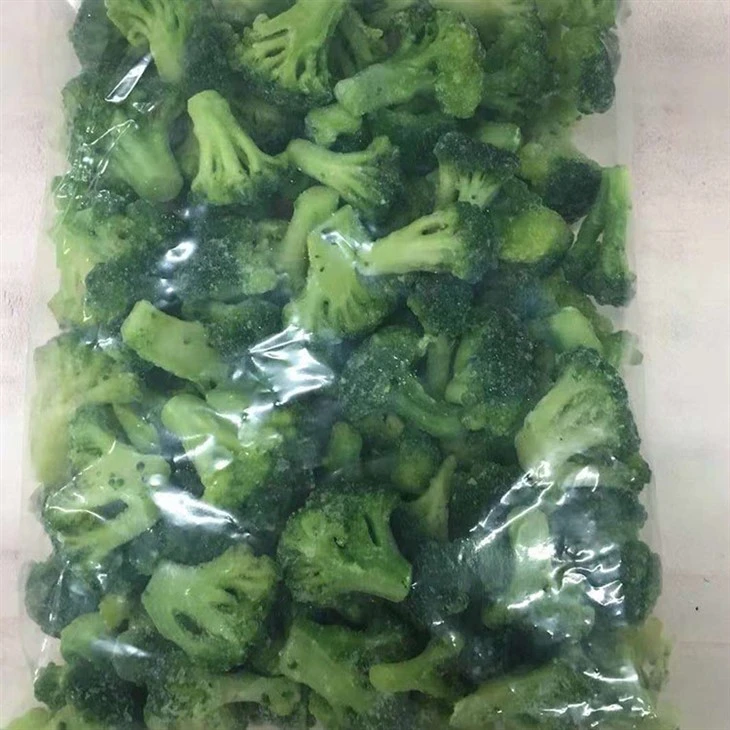
Pack weight and product-size consistency should be tested together with the proposed microwave instruction.
What B2B buyers should approve before scale-up
A frozen sample can look excellent in the bag and still fail after heating. Approval should include frozen-state inspection and a defined microwave test. We recommend agreeing the product form, floret-size range, stem proportion, broken-piece limit, color, free-flow condition, loose ice, packing weight and intended application before comparing repeat orders.
Then write the test: sample weight, container or sellable bag, microwave wattage, power level, cooking interval, stir point, standing time and drainage method. Record cooked texture, piece integrity, free liquid and usable cooked weight. A vague statement such as "good cooking performance" cannot protect the buyer or the supplier during a complaint.
GreenLand-food's current frozen broccoli product page shows IQF broccoli forms and reference size options. We confirm the relevant specification, packing and application test for the actual order rather than assuming one cut fits every microwave, meal or market.
Microwave-performance buyer checklist
- Product: confirm florets, cuts or chopped broccoli; size range; stem ratio; broken pieces; color; free-flow condition; surface frost and loose ice.
- Pack: confirm net weight, retail or foodservice format, bag material, seal, steam-vent design, printed instruction and storage statement.
- Test: define wattage range, load, container, water addition, cover, stir point, increments, standing time and drainage.
- Acceptance: record heat distribution, stem tenderness, crown integrity, color, free liquid, drip loss or cook yield and post-cook hold.
- Documents: request the product specification, COA or test results as agreed, microbiological direction, packing details, traceability, certificates needed for the market and cold-chain shipment records.

In prepared meals, the broccoli must be tested through assembly, freezing, storage and the consumer's final reheat.
Foodservice and ready-meal rules are different
A household bowl often goes straight from freezer to table. A central kitchen may heat a larger load, hold it, portion it and reheat it again. A ready meal may combine broccoli with sauce, starch and protein before a final consumer microwave step. Each extra heat exposure changes the target.
For foodservice, validate the real batch depth and service hold. Larger loads need better steam distribution and a defined stir or pan rotation. For ready meals, test the broccoli inside the actual tray and formula, not in isolation. Sauce can slow or redistribute heat while also softening the vegetable during storage and reheat.
Our article on frozen vegetable cooking performance explains how drip loss, cook yield, texture and piece integrity can be turned into measurable approval points.
Frequently asked questions
Do you need to thaw frozen broccoli before microwaving?
No for most loose IQF florets. Cook them directly from frozen unless the package or recipe instructs otherwise. Thawing adds handling time and can release water before the heating step, which may make the final texture softer.
How long should frozen broccoli be microwaved?
For 2 cups in a 1,000–1,200 W microwave, start with 2½–3½ minutes in a covered microwave-safe bowl. Stir, check the thickest stem, and continue in 20–30 second increments. Lower wattage, larger loads and thick stems need more time; package directions take priority.
Can you microwave frozen broccoli without water?
Yes. Loose broccoli with visible frost usually produces enough steam in a covered bowl. If the pieces look unusually dry, add about 1 tablespoon of water for 2 cups. Avoid submerging the broccoli because excess water can soften the lower layer.
Can frozen broccoli be microwaved in the bag?
Only when the original package is specifically labeled for microwave cooking. Follow its instructions for orientation, venting, time and standing. Transfer broccoli from an ordinary freezer or storage bag to a microwave-safe bowl.
Why does frozen broccoli get watery or mushy in the microwave?
Common causes include too much added water, an overlong cycle, mixed cut sizes, excess surface ice, a deep load, weak tissue after freezing or blanching, and cold-chain fluctuation. Start shorter, stir once, drain promptly and review the product if careful tests remain inconsistent.
How should a retail or foodservice buyer validate microwave instructions?
Test the exact product and pack across the intended wattage range. Define load, container or bag, water, cover, stir point, standing time and drainage, then record heat distribution, texture, color, free liquid and piece integrity across multiple lots before approving the instruction.
Build a frozen broccoli pack that cooks as promised
We supply IQF frozen broccoli for importers, distributors, foodservice, ready meals, retail packs and private-label programs. Send your target broccoli form, floret size, pack weight, microwave or kitchen application, annual quantity, destination market, private-label needs and required documents. We can discuss samples, cooking-performance checks, packing, MOQ, lead time and shipment planning for the actual project.