


How to Ripen Plums and Know When They Are Ready
Sep 03, 2026
Leave a message
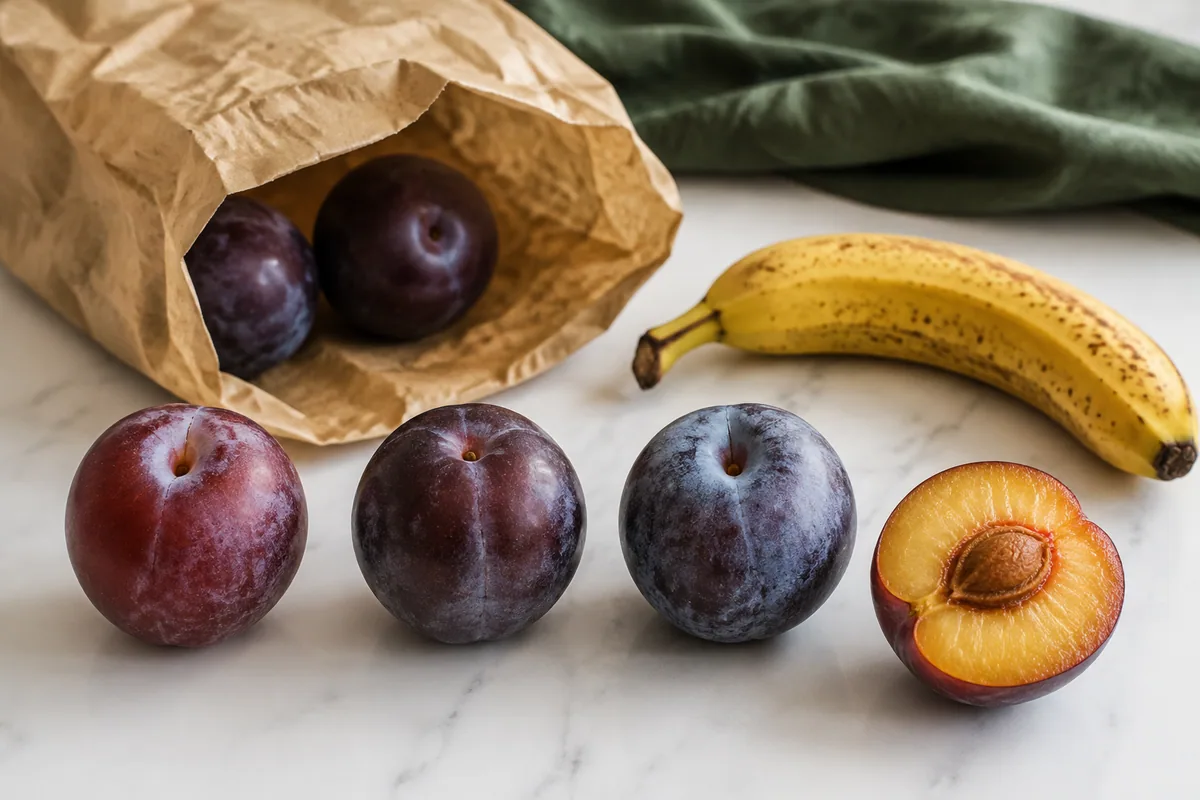
Ripen mature plums at room temperature; use a paper bag only to speed the process
Set mature, undamaged plums in a single layer away from direct sun. To speed ripening, place them loosely in a paper bag, optionally with a ripe banana or unwaxed apple, and check at least daily. Move ready fruit to the refrigerator. A ripe plum yields gently near the shoulder, smells fruity and has juicy, flavorful flesh-not watery collapse.
Most plum cultivars are climacteric, but ripening speed varies and some slow types respond weakly. Very immature fruit may never develop satisfactory sweetness or aroma after picking.
Key takeaways
- Use undamaged mature plums; postharvest ripening cannot rescue fruit picked far too early.
- A paper bag concentrates natural ethylene while allowing more gas exchange than sealed plastic.
- Judge readiness by gentle give, aroma, juicy flesh and flavor rather than skin color alone.
- Refrigerate ripe plums to slow further softening.
- For freezing, maturity must be balanced with firmness so fruit can survive pitting and cutting.
Quick comparison
| Stage | Touch and aroma | Best action | Processing meaning |
|---|---|---|---|
| Immature | Very hard, weak aroma, undeveloped flavor | Do not expect a bag to fix it | Low flavor and poor maturity risk |
| Mature-firm | Full size, firm, begins to show cultivar color | Ripen at room temperature | Can finish softening; watch cultivar speed |
| Ready to eat | Gentle shoulder give, fruity aroma, juicy flesh | Eat or refrigerate | Good sensory reference, may be soft for cutting |
| Overripe | Mushy, leaking, fermented or collapsed | Discard or use only if sound for immediate cooking | High breakage, drip and decay risk |
| Freezing maturity | Mature flavor with handling firmness | Process promptly | Balance Brix/acidity with cut integrity |
Choose mature plums before you try to ripen them
A mature plum has reached nearly full size and begun the physiological changes needed for normal ripening. Skin background color, firmness and days from bloom help growers judge this stage. A supermarket plum can be firm yet mature; a very small rock-hard fruit may have been picked too early.
Plums often develop attractive red or purple skin before their flavor is ready. That makes color a weak single test. Look for full shape, natural skin bloom, freedom from shriveling and the first hint of give or aroma.
For a closer explanation, see Are Red or Black Plums Sweeter?.

The simplest method is a single layer at room temperature
Place the fruit stem-side up on a clean tray away from direct sun, ovens and heaters. Moderate room temperature allows ethylene-driven softening without the moisture and heat buildup of a sealed container. Turn or inspect fruit gently so bruises do not develop unnoticed.
Check once or twice a day. Remove any fruit that leaks, molds or develops a fermented odor. Ripening rates differ within the same bag because size, cultivar and maturity are not identical.
A paper bag speeds ripening by concentrating ethylene
A loose paper bag traps some of the ethylene produced by climacteric fruit while remaining breathable. Adding a ripe banana or apple can raise ethylene exposure. Fold the top lightly rather than sealing the fruit in airtight plastic.
The method can shorten the waiting period, but it also concentrates moisture and makes daily checking important. Separate bruised pieces so one leaking fruit does not damage the rest.
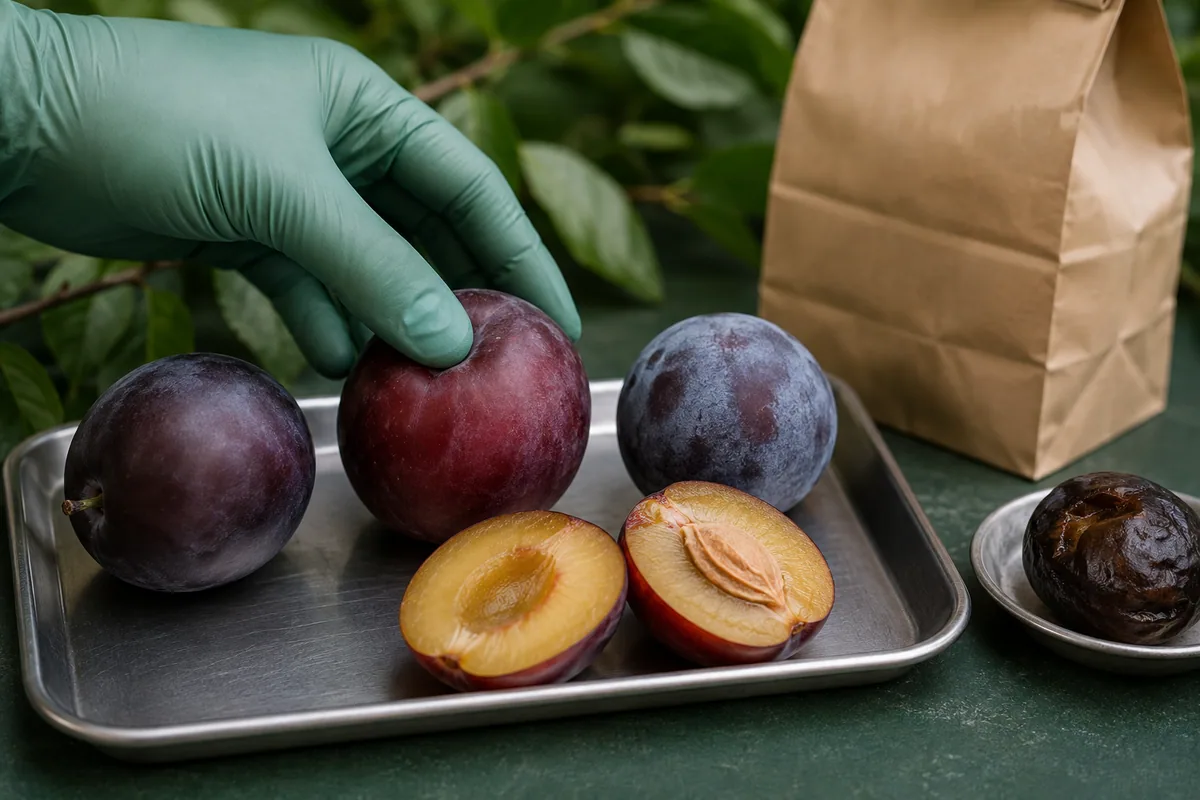
Know when the plum is ready
Press near the shoulder, not the softest cheek. A ready plum gives slightly and springs back enough to hold shape. Aroma becomes more noticeable, and a cut fruit should be juicy with cultivar-appropriate sweetness and acidity.
Softness alone is not proof of good ripening. Water-soaked flesh, collapse, sour fermentation or mealy texture indicates deterioration. Taste one representative fruit before serving or processing a whole group.
Cold storage belongs after ripening, not before it
Low temperature slows ripening. Placing a hard mature plum directly into the refrigerator can delay the result, while some plum cultivars are sensitive to chilling disorders during unsuitable storage. Ripen the fruit first unless the goal is deliberate commercial storage.
Once ready, refrigeration can hold eating quality for a short period. Let the fruit warm slightly before sensory evaluation so cold does not mute aroma and sweetness.
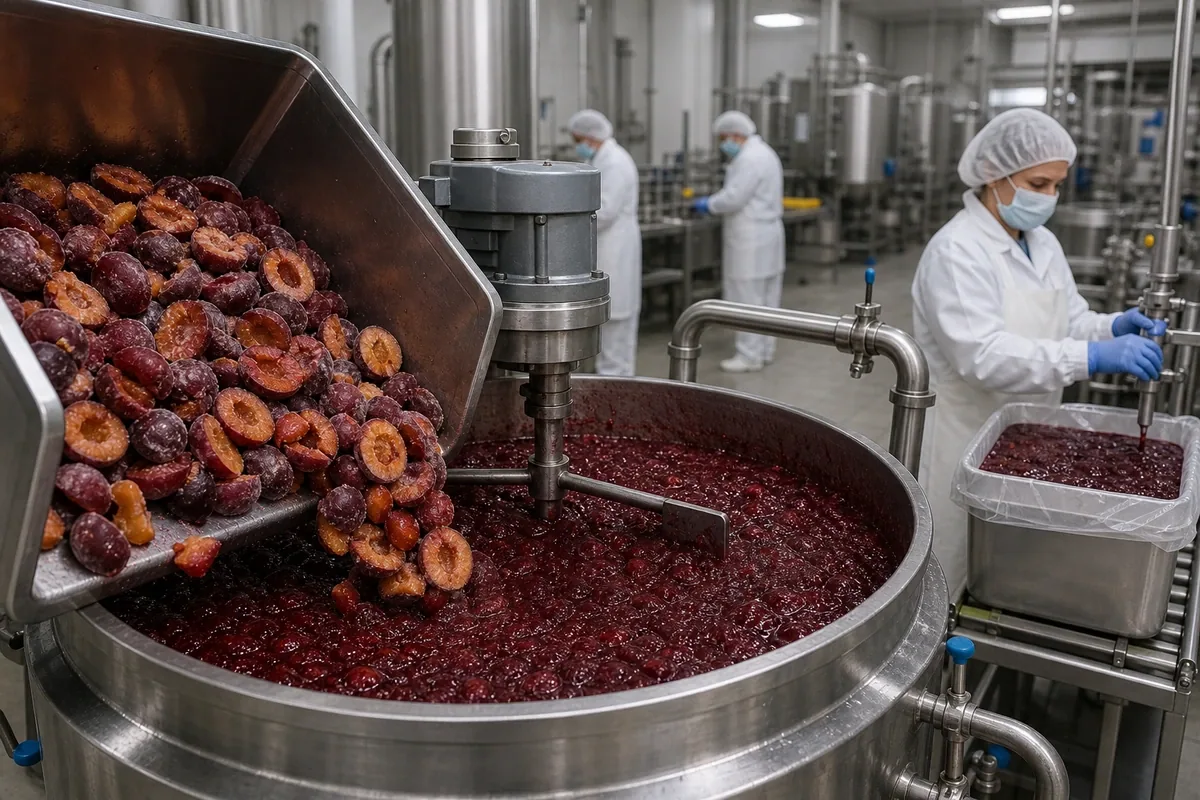
Cultivar explains why one plum changes faster than another
Early Golden-type fruit can soften rapidly, while Shiro and several slow-ripening cultivars produce or respond to ethylene differently. Commercial postharvest protocols therefore use cultivar-specific temperature and ethylene management.
At home, the practical response is observation rather than a fixed number of days. A bag may bring one cultivar to readiness quickly and leave another firm for longer.
Tree maturity and eating ripeness are different decisions
Growers need fruit mature enough to develop flavor but firm enough to survive harvest, packing and transport. Consumers want a softer eating texture. The interval between those points is the postharvest ripening window.
Picking too late increases bruising and drop risk; picking too early produces disappointing flavor and storage problems. Good supply begins with a cultivar-specific harvest standard.

Fruit for IQF processing needs flavor plus cut strength
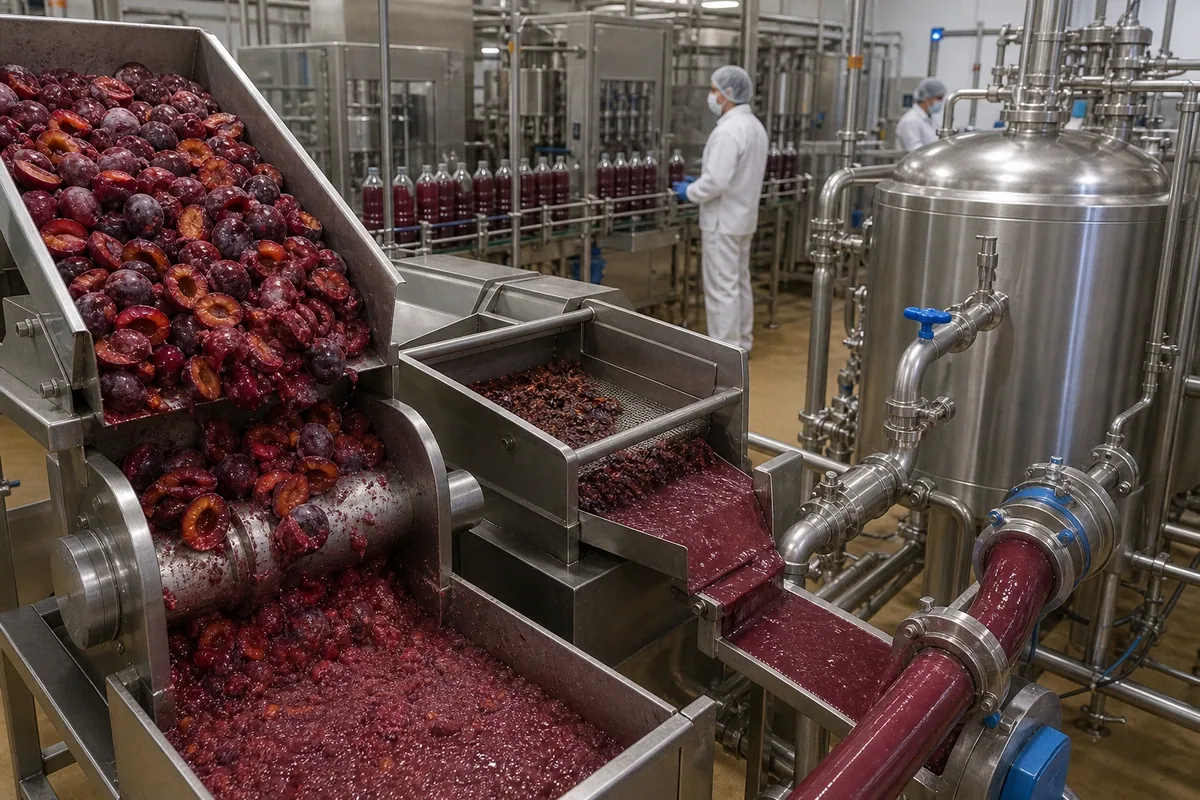
A fully soft table-ripe plum may smear during pitting and dicing. A mature-firm plum can offer better halves and dice if its Brix, acidity and color are acceptable. The processing target is therefore not simply the softest possible fruit.
Inspect a current raw-material lot for maturity, decay and pit behavior, then review the frozen cut for breakage, color, frost and thawed texture. Freezing preserves the selected stage; it does not finish ripening.
Worked decisions that a short answer cannot cover
Name the ingredient before comparing quotations
The useful starting identity for this buying exercise is IQF whole pitted plums, halves, slices or dice, with cultivar and stone-removal method identified when they affect yield. That wording matters because a quotation for one form cannot be compared fairly with another. A whole piece, a half, a dice, a segment, a puree input and a controlled broken grade may all come from the same fruit family, yet they create different yields, handling steps and presentation results. Write the commercial name, process form and intended use on the first line of the inquiry. Then keep cultivar or origin language only where it changes the result that the buyer needs.
This discipline also keeps an informational answer from becoming an accidental purchasing specification. The article explains how to think about how to ripen plums and tell when they are ready, but an approved order still needs a named product and a current-lot reference. Ask the supplier to repeat the identity on the offer, sample label and specification. If those descriptions drift, pause the comparison and reconcile them before discussing price, because a lower quotation may simply describe a different product.
Translate useful cues into measurable acceptance language
For IQF frozen plums, the acceptance conversation can cover mature flavor, appropriate Brix-acid balance, handling firmness, clean flesh color, controlled bruising and decay, pit-fragment limits, cut uniformity and thaw performance. Each item should have a method, a unit or a visual reference whenever the distinction affects release. "Good color" is too open to interpretation; a retained approved sample, color range or defect definition gives both teams something they can use. "Sweet" is equally incomplete when acidity changes the way the same soluble-solids value tastes. The goal is not to make the longest specification. It is to name the few characteristics that decide whether the ingredient works.
Separate three layers in the approval file. Identity says what the product is. Condition says how the received lot must look, smell, separate and perform. Contract limits say which deviations trigger rework, claim review or rejection. That separation makes discussions faster when a lot differs from the sample. It also prevents a consumer cue in this article-such as color, softness or size-from being treated as the only commercial decision.
Use a representative sample and a recorded thaw method
A practical sampling plan for this subject is to test raw maturity and pitting behavior at intake, then inspect a frozen sample and a controlled thawed portion before volume approval. One convenient top-carton sample is useful for orientation, but it cannot show pallet-to-pallet variation. Record carton and pallet positions, batch codes, dates and product temperature. Photograph the frozen condition before pieces are handled. If the product is free-flowing, note separation and clumping before thawing; once water and gravity have changed the sample, that evidence cannot be reconstructed.
Thaw only the amount needed for the agreed examination and keep time, temperature and container the same between samples. Weigh the sample before and after the test if drip or yield matters. Examine aroma and flavor at a comparable serving temperature, not directly from the freezer in one test and after a long warm hold in another. A short method written beside the score sheet often prevents more argument than a long list of adjectives.
More detail for a repeatable decision
Test the ingredient in the actual application
The application boundary for IQF frozen plums is clear: jam and beverage can use softer or broken fruit within safety and flavor limits; bakery and visible fruit preparations need stronger cut integrity. A bench sample should therefore be used in the buyer's real formula or service process. Check the point at which the fruit is added, the mixing force, heating or hold time, serving temperature and the time between preparation and evaluation. A piece that looks excellent in a white tray can disappear in an opaque beverage or break under an industrial mixer. Conversely, a visually imperfect piece may be fully suitable when it is intentionally milled.
Record what success means before testing. It may be visible piece identity, clean flavor, color retention, a target count per portion, puree yield, controlled drip, texture after baking or ease of dispensing. Compare the proposed lot with the retained control under the same conditions. If the new sample fails, describe the observed result rather than writing only "not good." That description tells a supplier whether the next sample needs a different cut, maturity, firmness, grading tolerance or process route.
Read frozen condition as evidence, not decoration
Cold-chain handling for the proposed item should follow this boundary: process mature fruit promptly and hold finished product continuously frozen to avoid clumping, drip and texture damage. Frost on a bag or carton can arise from more than one event, so it should trigger a closer review rather than an automatic conclusion. Check product temperature, carton condition, liner integrity, piece separation and signs of a partial thaw. Compare multiple pallet positions and retain photographs with time and location.
The same appearance may have different consequences by application. A small cluster may be inconvenient for automatic dosing but harmless for a puree kettle. Heavy clumping, crushed pieces or large ice deposits may change portion control, drip or usable yield. State the operational consequence in the receiving report. This connects evidence to the specification and gives both parties a clearer basis for investigation.
Keep guidance, sample approval and contract limits separate
An article can explain typical signs and useful ranges, while a sales sample shows one available lot at one point in time. Neither should silently replace the signed specification. The approved file should identify the reference sample, test method, tolerances, pack format, storage condition, shelf-life basis and required documents. Any value that matters commercially should be confirmed for the offered product and order.
This boundary is especially important when the search question invites a single answer. Fruit varies with cultivar, origin, crop window, maturity and process. A useful supplier response acknowledges that variation and then narrows it through a sample and written agreement. That approach is more reliable than promising that every lot will match an unqualified adjective such as "ripe," "sweet," "small" or "premium."
Build a short RFQ that can be answered accurately
For this product, send plum form, cultivar or color direction, maturity and Brix target, cut size, pit-fragment tolerance, pack, quantity, destination and application. Put those inputs in one message or worksheet and mark which points are essential, preferred or open to recommendation. Include the annual or trial quantity separately, because the right packing and supply route for a small evaluation may not be the right route for a repeat program. Destination and required delivery window help the supplier review crop, stock and transport options without guessing.
Ask the reply to identify what is confirmed, what is a current indication and what still depends on sample approval or production scheduling. This makes commercial comparison more honest. It also reduces the chance that an attractive unit price hides a different cut, pack, glaze condition, tolerance or document scope. A precise RFQ is not bureaucracy; it is the shortest path to a sample that answers the buyer's real question.
Prepare a claim and change-control path before the first shipment
Agree how the teams will handle a material deviation before volume starts. The file should name the notification window, evidence required, sample-retention practice and contact route. Useful evidence includes unopened pack photographs, label and lot code, temperature records, pallet position, representative defect counts and the application result. Do not discard all affected material before the supplier has had a reasonable opportunity to review it unless food-safety controls require immediate action.
Change control matters as much as claim handling. A new crop, origin, cultivar, cut, packing material or processing facility may alter the result even when the sales name stays the same. Decide which changes require notice, documents, a fresh sample or full reapproval. This protects continuity for the buyer and gives the supplier a clear standard for communication.
Four buyer scenarios, four different definitions of "right"
An importer reviewing IQF frozen plums first needs an offer that survives document and receiving checks. The importer should align product identity, origin, pack, labeling, destination requirements and the evidence used to release the lot. The consumer question in this article is still useful because it identifies the physical cues behind maturity, condition, size or variety. The importer's job is to turn those cues into a repeatable inspection rather than rely on one attractive sample.
For ingredient format details, see How Big Is a Plum? Size, Weight & Frozen Cuts.
A food manufacturer starts from formula performance. The development team should run the proposed form through the real sequence and record yield, visible piece retention, color, flavor and handling. The purchasing comparison should then use the approved performance window, not merely the lowest price per kilogram. If a controlled broken grade performs equally in a blended application, that can be a rational cost decision; if pieces remain visible, form and defect limits become more important.
A foodservice distributor needs consistency at the portion and pack level. Operators may open, reseal, scoop and hold the ingredient under conditions that differ from a factory test. The distributor should check pack convenience, separation from frozen, portion count, preparation instructions and the condition after a realistic service period. A product that requires excessive sorting or creates unpredictable portions can cost more in use even when its invoice price looks competitive.
A private-label buyer has one additional layer: the product must fit a declared consumer promise and a finished retail pack. Artwork, ingredient statement, claims, net weight, coding and case configuration need approval alongside the fruit. The buyer should make sure marketing language does not promise a characteristic that the specification cannot support. A retained finished-pack sample is often more useful than a loose ingredient sample because it shows appearance after the intended packing and storage process.
Putting the answer into practice
For a first enquiry about IQF frozen plums, begin with the intended application and the result that matters most. Then name the form, pack, quantity, destination and review method. This order gives the supplier room to suggest an appropriate option while keeping the buyer's non-negotiable requirements visible.
For a sample review, use a simple score sheet with identity, frozen condition, thaw method, appearance, aroma, flavor, texture, usable yield and application result. Add photographs and the lot code. Record "accept," "accept with agreed adjustment," or "reject with reason." A clear decision is more valuable than many unranked comments.
For repeat supply, compare each received lot with the approved specification and retained reference at the agreed frequency. Trend the few defects or performance measures that affect production. A trend can reveal crop or handling changes before they become a large claim, and it gives both teams a factual basis for improving the next order.
The final practical rule is simple: use the article to understand the fruit, use the sample to understand the offered lot, and use the specification to define the purchase. Keeping those three tools separate makes the answer useful to both curious readers and professional buyers.
What to confirm before approving volume
A useful inquiry describes the ingredient and the job it must do. Send the product identity, form, target application, packing, quantity, destination and the quality points your team will measure. We will review current availability and an appropriate supply route where possible. Final size, process, ingredients, limits, microbiology, documents, shelf life, lead time and commercial terms remain subject to the approved specification and order confirmation.
- Separate physiological maturity from ready-to-eat softness.
- Agree on a raw-material maturity check.
- Match firmness to pitting and cut format.
- Set Brix, acidity, color and pit-fragment limits.
- Review frozen and thawed pieces in application.
- Confirm crop timing, pack, volume and cold-chain plan.
Frequently asked questions
Do plums ripen after they are picked?
Most mature plum cultivars can continue to ripen, but speed varies and some slow-ripening types respond weakly.
How do you ripen plums quickly?
Place mature plums loosely in a paper bag with a ripe banana or apple and check daily at room temperature.
Can I ripen plums in a plastic bag?
A sealed plastic bag can trap too much moisture. A breathable paper bag is a safer common method.
How can I tell when a plum is ready?
Look for gentle give near the shoulder, fruity aroma and juicy, flavorful flesh without collapse or fermentation.
Will a hard green plum become sweet?
Only if it was physiologically mature when picked. Very immature fruit may soften without developing good flavor.
Should plums be refrigerated while ripening?
Usually ripen them at room temperature, then refrigerate when ready to slow further softening.
Is table-ripe fruit best for freezing?
Not always. IQF cutting often needs mature flavor with enough firmness to pit and cut cleanly.
Does freezing continue the ripening process?
No. Freezing greatly slows change and does not create the missing flavor of immature fruit.
Reference points
- Plum | UC Davis Postharvest Center
- Harvesting and Postharvest Handling of Stonefruits
- The Role of Ethylene in Fruit Ripening
- To Pick or Not to Pick?
- From meh to mmmm: More pleasing plums
- Fruit: harvesting | RHS
These sources support the classification, method or supply boundaries used above. The applicable product label, specification, food-safety plan and destination-market rules still control a real batch.
Source IQF Frozen Plums for your real application
GreenLand-food is a IQF frozen plums supplier and manufacturer in China, providing factory-direct wholesale support for importers, food manufacturers, foodservice distributors and private-label programs. Send the required form, specification, packing, quantity, destination, application and documents. We will review available order options and the next practical step.