


Shimeji vs Enoki in Noodle Portions: Shape, Bite and Dosing
Oct 20, 2026
Leave a message


Neither mushroom name supplies a universal cooking time. Enoki in particular needs thorough cooking and careful separation from ready-to-eat food before that step. A hot broth poured over a frozen bundle does not establish that its center has been adequately heated. Keep the food-safety process fixed while comparing the texture and appearance that remain within it.
For purchasing, define the mushroom form as carefully as the noodle. Shimeji supplied as loose capped stems behaves differently from connected clusters. Long enoki bundles behave differently from shortened loose strands. We help buyers describe the offered ingredient, the intended serving and the trial conditions before an approved sample becomes a repeat-order specification.
What shimeji contributes to a noodle portion
Shimeji has a useful visual distinction from the noodle itself: a small cap sits above a relatively substantial stem. In a broth bowl, these pieces can remain individually recognizable among thick udon or finer wheat noodles. Their contribution depends on the actual cap size, stem length, separation and cooking result. A photograph of a cluster cannot define the form that a frozen carton will dispense.
The current shimeji supply page uses a raw-material photograph of loose small capped mushrooms. Its commercial naming remains subject to source records. Do not automatically turn that image into a claim for a particular white variety, brown cultivar or botanical species. An approved purchase description needs the accepted identity and the form in the offered finished sample.
Producer guidance can clarify why the form matters. Hokuto's bunashimeji page discusses separating its mushrooms and preserving larger pieces for texture. Those are observations about that producer's product. They support testing separation as a variable, while GreenLand-food's offered form and performance still need their own confirmation. Keep unrelated brand health or cultivar claims outside the specification.
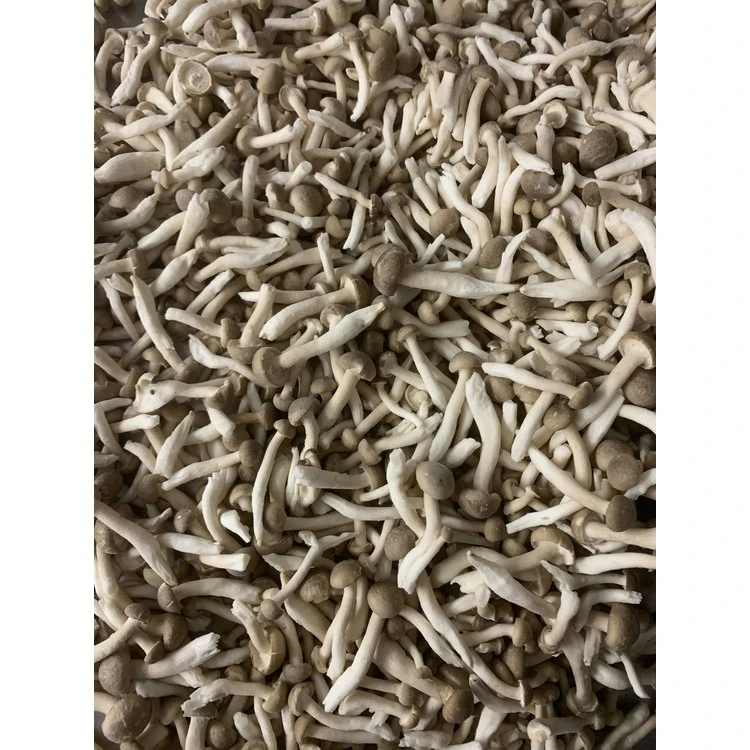
Loose small capped mushrooms and slender stems shown on the shimeji product page. This raw-material reference does not establish frozen state, botanical identity or an agreed finished grade.
Look for the ratio of capped pieces, loose caps and bare stems in a normal portion. A grade with many long bare stems may meet an incoming weight target but fail the intended bowl appearance. Detached sound caps may remain useful in another recipe. Describe those fractions separately so the buyer can decide whether a form difference changes its menu promise or simply the distribution of edible material.
Assess how the mushroom sits with the noodle and utensil. A spoon-based broth service may favor short capped pieces that remain easy to lift with liquid. A chopstick service may accept longer stems. Neither preference is a universal quality ranking. Use the bowl, cutlery and portion arrangement that the customer will receive, including the actual broth depth and other toppings.
Check the form after any frozen separation step. A compact clump that must be forced apart can introduce fragments before cooking, while very loose small pieces may scatter during dosing. Record the required handling rather than evaluating only a carefully arranged thawed sample. The development team needs to know whether ordinary staff can obtain the intended serving consistently during service.
Ask for a form photograph taken from the representative finished sample rather than selecting a single large mushroom as the specification image. Include a size reference when the quality team measures the material, and keep that measurement separate from promotional photography. The useful reference shows the accepted range of pieces, including ordinary small caps and stems that the customer will actually see.
What enoki changes in the same bowl
Enoki contributes many very fine stems with tiny caps, often supplied in connected groups. That structure can create a distinct strand-like eating experience, but it can also mingle closely with noodles. Use a close view of the actual cooked bowl to decide whether customers can recognize the mushroom or mainly experience the added texture. Appearance changes with strand length and how tightly the base remains connected.
The enoki product page shows the offered raw-material reference and describes the need to confirm base trim, strand form and processing state. A long neat bundle in a reference photo does not prove that every frozen serving will have a specified count or length. The buyer needs representative finished material and an agreed way to describe the usable bundle.
Distinguish the tough growing base from an intentionally connected edible portion. Excess base can affect bite and conceal material that the specification should exclude. Removing too much can reduce yield or leave loose strands that dose differently. Agree the trim and connected portion on the sample, and record what the product will look like after the buyer's necessary preparation.

Trimmed long white enoki stems and tiny caps in a bulk raw-material container. This raw-material reference does not establish frozen state, botanical identity or an agreed finished grade.
Fine strands can cling together when wet, bridge across a scoop or pull adjacent material from a container. These are practical possibilities to test on the actual product rather than assumed defects. Observe how the operator separates one portion, how much remains attached to the next and whether the serving tool changes the bundle. A nominal bundle count is weak evidence if bundle sizes vary widely.
Consider strand length in relation to the noodle. Long enoki can become difficult to distinguish from thin noodles, whereas short strands may disperse through a thick-noodle soup. The preferred effect depends on the menu, the customer's utensil and the desired bite. Shortening is a product-form decision that needs a cooking and portioning trial, because it changes connectedness, appearance and handling together.
Avoid treating fine stems as permission for minimal heating. The center of a dense frozen group and the surrounding broth may follow different heating paths. Follow the actual product instructions and the food business's validated preparation. Enoki should reach the bowl through a controlled cooking route, with raw handling and utensils kept separate from food that will receive no further effective heating.
Write a practical bundle definition if the menu uses that word. For instance, identify whether it means one deliberately prepared serving group, a naturally connected section of the supplied cluster or a mass of loose strands placed together. Those descriptions can look similar in a bowl while requiring different staff handling. The definition should survive being communicated to a new operator without relying on intuition.
Compare bite after cooking and service holding
Begin with two acceptable cooked products. Comparing raw enoki with thoroughly cooked shimeji would answer a different question and create an unsafe tasting exercise. Establish the required preparation for each actual SKU, then assess the qualities that remain after those conditions are met. A shared service format does not require identical cooking schedules where the products or processes differ.
Describe bite in terms the team can recognize. Useful observations include the resistance of a stem, the ease of separating a mouthful, the tenderness of caps and the way a strand group moves with noodles. Avoid a single score called texture without descriptors. Two candidates can earn the same overall preference for different reasons, making the score difficult to use in a repeat order.

Compare the actual cooked mouthful using the utensil and noodle format intended for service.
Test the service interval that matters. A noodle bowl eaten immediately after assembly can differ from one held before collection or transported for delivery. Use the real container, lid and normal waiting conditions under appropriate food-safety controls. Compare defined service points instead of leaving one sample on a counter while the other is photographed and tasted.
| Attribute in the cooked portion | Shimeji observation | Enoki observation |
|---|---|---|
| Visible shape | Count recognizable capped stems and loose caps | Assess fine strands, connected bundle size and separation |
| Eating behavior | Check stem bite and cap attachment with the intended utensil | Check mouthful separation and interaction with noodles |
| Change through service | Review cap damage, softening and distribution | Review strand cohesion, softening and bundle dispersal |
Keep broth and seasoning suitable for the comparison. A strong chili oil or very thick sauce can change perceived bite and make visual differences harder to inspect. If that is the commercial recipe, it belongs in the final approval. A simpler diagnostic recipe can help explain a difference beforehand, but its result should be labeled separately from the actual menu trial.
Use appropriately trained assessors and only safely prepared samples. Record whether observations concern preference, a defect or a required product characteristic. One customer may prefer the strand-like effect while another wants distinct mushroom pieces. The team should agree which outcomes matter to its application before choosing the winning sample, rather than rewriting the target around whichever lot happens to arrive.
If mixed mushroom portions are being considered, approve the mixture as another formulation. Combining the ingredients changes their ratio to noodles and can change how they are lifted, distributed and perceived. A successful separate trial of each does not establish the best blend. Specify the mass basis and preparation of the proposed combination, then examine its actual bowl and service behavior.
Choose a dosing unit that reflects the serving
Incoming mass is a useful purchasing quantity, but the served bowl may need additional controls. Shimeji can be described by capped pieces and their mass distribution; enoki may require bundle mass, strand length and connectedness. Count alone works only when the counted units have a sufficiently consistent definition. A large connected enoki group is not equivalent to a few loose strands counted as another bundle.
For hand service, examine the actual scoop, tongs or spoon. Repeat normal portions without selecting the best mushrooms for each bowl. Record mushroom mass using a defined drainage condition where liquid is present, then assess the visible result. A spoon can carry a variable amount of broth; weighing the combined load without accounting for that liquid can obscure the ingredient difference.

Fine mushroom strands and thicker noodles can move together during portioning.
For a fixed frozen noodle kit, define the filled portion and where it sits in the pack. Small capped shimeji may spread across a compartment, while connected enoki can occupy a compact area. Check the seal area and the ease of removing the frozen contents as instructed. Shape can affect filling and preparation even when both ingredient options meet the same nominal net weight.
Use repeated portions to understand variability. A development example might compare several independently dispensed portions from each of several bags, recording their individual mushroom mass and appearance. The exact count should follow the decision's risk and observed variation. This is a proposed trial design, not a prescribed sampling standard or an assertion about an automated line's capability.
Separate average dose from consistency. Two products might average the same mushroom mass but produce very different light and heavy servings. Keep the individual results and the reasons for any discarded portion. An operator deliberately adding pieces to repair a light serving changes the work required, so include that correction in the handling observations and labor assumptions.
As a hypothetical planning example, ten servings alternating between 15 g and 25 g average 20 g, just as ten identical 20 g servings do. The purchasing consequence differs if the menu requires consistent coverage. These invented figures show why an average alone is insufficient; they are not measured mushroom data or suggested portion sizes. Use the buyer's actual target and recorded portions for a commercial calculation.
Cost the acceptable serving using actual measured results. Consider the usable material after agreed trim, preparation yield, required dose and rejected portions. A lower incoming price can be useful, but it does not demonstrate a saving by itself. Show the quantities and assumptions behind any comparison, and avoid using a hypothetical yield as though it had been measured on the proposed order.
Build the heating route around the full portion
Identify whether mushrooms enter the operation raw frozen, blanched frozen or already cooked under a documented process. Freezing does not establish that a product is ready to eat, and a brief pretreatment description cannot replace instructions for the actual SKU. Confirm the intended subsequent cooking and the controls for any ready-to-eat claim with the supplier and your technical team before approving service.
Enoki has been associated with Listeria concerns. FDA's imported specialty mushroom prevention strategy provides the relevant hazard background. Use qualified current preparation and hygiene controls. A texture preference, a clean-looking bundle or a satisfactory raw odor cannot demonstrate that the ingredient is safe to serve.
For broth service, validate the actual loading and cooking sequence. Adding frozen mushrooms changes the pot's thermal load, and a dense connected group can be the difficult part of the portion to heat. The amount of broth, starting condition, batch size and equipment matter. A photograph of boiling liquid at the surface cannot establish the history of the center of every mushroom portion.

Visible surface simmering does not establish adequate heating through every portion.
Separate noodle preparation where the recipe needs it. Kikkoman's original kinoko udon method illustrates cooking noodles apart from mushroom broth before serving. That household sequence is a culinary example; its minutes do not validate a commercial frozen product. A business can use separate preparation to control quality only after establishing adequate cooking for its actual ingredients and serving system.
Where a consumer reheats a complete kit, test the proposed instructions on the complete pack. Include relevant starting conditions and the intended appliance range in an appropriately designed validation. Mushroom bundles, noodle blocks and broth portions can be distributed unevenly. Stirring, separation and standing instructions must be practical enough for the consumer to follow and effective for the process they support.
Keep raw enoki handling from contaminating cooked noodles, garnishes, bowls or service utensils. Design the preparation area and staff sequence around that separation, then protect cooked food afterward. Heat validation and hygienic assembly are connected parts of the serving route. Neither a successful laboratory result on a sample nor an attractive finished photograph replaces those operating controls.
Make preparation instructions visible to the staff who dose the product. A purchasing specification stored only with the quality department will not control how a temporary operator handles a frozen bundle during a busy service. Show the accepted form, the permitted separation and the required cooking route in the operation's own instructions. Confirm that the routine serving can be produced without staff improvising an unsafe shortcut.
Run a portion trial across the actual service sequence
Write the question in terms of the menu decision. For example, a buyer may need to know which form gives a recognizable mushroom portion after cooking, a defined service wait and ordinary chopstick use. Another may be deciding whether a fixed frozen kit can be filled consistently. Select observations that answer that question instead of collecting many unrelated mushroom scores.
Use identified product lots and record the independent packs selected. Keep the approved reference, candidate and recipe inputs traceable throughout the trial. Evaluate more than one independent preparation when the purchase decision depends on repeatability. Repeat measurements of the same bowl can examine assessor agreement, while new bowls from separate preparations show a different kind of variation.
Compare portions at the same defined eating stage. Photographs should show normal assembled bowls without rearranging mushrooms into an even decorative layer. Record bowl size, broth amount, noodle mass and other toppings. If one candidate needs substantially more sorting or repair before service, document that work as part of the result rather than presenting only the improved final bowl.

Use ordinary assembled servings to compare shape and distribution after the defined preparation.
Capture handling observations as they occur. Note bridged strands, clumps, spills, detached caps and corrections, alongside the corresponding portion identity. These observations can explain why similar average weights deliver different servings. A video of the relevant dosing action may be useful for internal process review, provided it shows ordinary handling rather than a rehearsed demonstration chosen for appearance.
Review the observations with the operator and the person approving the meal. A material change may improve filling but weaken the eating experience, or improve cap visibility while increasing manual sorting. Agree the tradeoff explicitly. Where the trial reveals an unresolved problem, change a defined form or process variable and repeat the relevant comparison before extending the conclusion to future orders.
When photographs are used for approval, include the bowl after ordinary eating or serving movement where that helps the decision. Long strands that look orderly at assembly may pull together when lifted, while capped pieces may separate from the noodle portion. This observation should use safely prepared food and a repeatable action. It adds practical evidence about the mouthful without replacing the original weight and distribution records.
Keep illustrative development figures separate from measured data. Proposed bowl counts, target portion masses and service intervals help a team plan work; they become results only after the described trial is performed and recorded. We can help your purchasing team specify those questions, but a sample discussion does not establish a guaranteed performance range for an unidentified future lot.
Set a decision rule before examining the final results. The rule might require acceptable eating quality, practical dosing and a specified range of visible mushroom distribution after service, with food-safety controls already satisfied. If no candidate meets the target, preserve that outcome and revise a defined part of the product or process. Selecting the least disappointing bowl would not establish an approved commercial standard.
Order the form that delivered the approved bowl
Use the approved sample to describe the ingredient precisely. For shimeji, confirm the accepted source identity, cap and stem form, separation, base removal and relevant broken-piece allowance. For enoki, confirm trim, strand length, connected portion size and permitted loose material. A generic mushroom name leaves too much room for two suppliers to quote visibly different products.
Connect the physical specification with the processing state and required cooking. The order description, product instructions, label and technical documents should describe the same material and intended use. If a product is offered for further cooking, the downstream process must be designed accordingly. Do not assume a ready-to-eat status from the convenience of a frozen portion or the word blanched.

Confirm the actual separation and base trim of the form proposed for the order.
Check the commercial packing that will actually be supplied. Bag size, liner arrangement and compression can affect separation and dosing. A successful small laboratory pouch should be followed by representative production packs where those conditions differ. Agree how an opened bag is handled during service and how the remaining frozen ingredient is protected between uses.
Confirm the destination and current import requirements through the responsible importer and technical team. Enoki origin and processing details can matter to market access; a broad claim that every frozen format is permitted would be unreliable. Request the relevant lot identity, specification, processing declaration and documents for the proposed shipment, then assess their applicability to that exact product and route.
Retain the bowl approval alongside the ingredient specification. Include the recipe, normal preparation, dosing tool, serving arrangement, photographs and acceptance descriptors. A menu or equipment change can justify a new trial even when the supplier's product remains consistent. This gives both teams a practical reason for revalidation and a common reference if a later serving differs.
Agree how substitutions are reviewed during a supply interruption. A different strand length, cap grade or treatment can affect both the serving and its preparation instructions. The replacement should be identified and assessed against the relevant approval conditions before use. A purchasing description that allows substitutions without a form or process review can undermine the consistency established by the original trial.
Send GreenLand-food the noodle format, desired mushroom effect, cooking route, target portion, packing, forecast quantity and destination. We review frozen mushroom supply options against the form and sample requirements your application needs. Approving the served bowl gives the order a useful purpose: a recognizable ingredient, manageable dosing and an eating result that survives the actual service process.
Source frozen mushrooms with GreenLand-food
GreenLand-food is a professional frozen mushrooms supplier and manufacturer in China, providing factory-direct wholesale supply for importers, food manufacturers, foodservice distributors and private-label programs.
Send your product form, specification, packing, quantity, application, destination, private-label needs and requested documents. We help your purchasing team confirm the offered form, sample and order requirements.