


Cooked Spicy Enoki Sauce Packs: Water Release and Chili Distribution
Oct 20, 2026
Leave a message

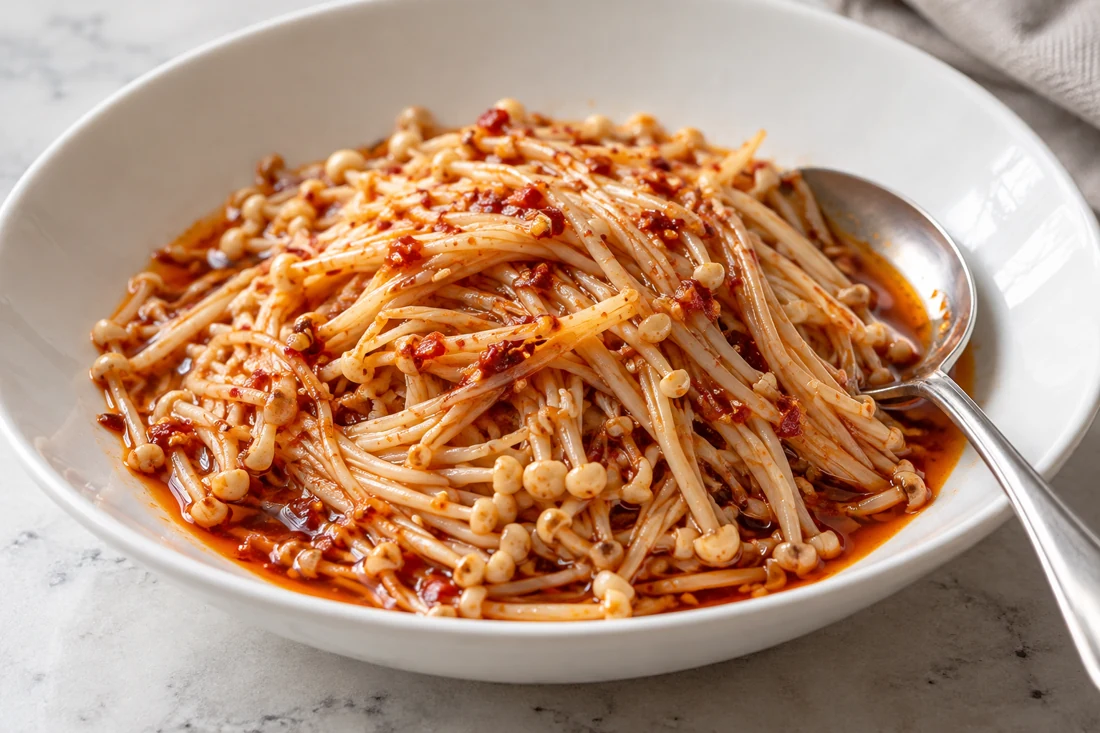
Define the cooked product and its storage route
Start the specification with a plain description of what the customer receives and what happens before eating. "Spicy enoki" could mean raw mushrooms supplied with a separate sauce, a cooked frozen ingredient for further processing, a chilled side dish or a commercially processed ambient product. These descriptions imply different responsibilities. A buyer and supplier should resolve that identity before discussing a shared shelf life, carton or preparation picture.
State whether the enoki arrives at the sauce processor raw, blanched or otherwise heat treated, supported by the actual production documentation. The word frozen describes a storage condition; it does not document a microbial kill step. Likewise, a brief blanch should not be described as complete cooking without evidence for that purpose. The finished sauce process must account for the supplied state and the product's intended use.

The supplied form needs a separate check of length, base removal and processing state.
The visible mushroom form also needs definition. Long connected portions can give a distinctive appearance but may be difficult to distribute evenly between pouches. Shorter separated stems can fill more readily, although cutting changes the eating texture and the proportion of loose caps. An illustrated product page cannot establish that every cut is an available commercial grade. Ask for the proposed form in a representative pack and assess it under the intended cooking method.
For a frozen finished pack, the buyer should identify the freezing, frozen storage, transport and final heating conditions that the processor will validate. For a chilled pack, the controlled cooling, storage period and temperature become central. A retorted or otherwise shelf-stable pouch requires a competent process authority and appropriate regulatory compliance for the actual formulation and packaging. Chili, salt, oil and a sealed film do not independently establish a safe ambient product.
Keep the scope of the enoki purchase visible within the wider project. An ingredient supplier's specification may cover trim, strand length, packing and microbiological acceptance, while the sauce manufacturer owns mixing, filling and the finished process. The parties should agree which samples, documents and responsibilities belong to each stage. A finished pack failure cannot be understood reliably if the original ingredient state and downstream treatment are undocumented.
The GreenLand frozen enoki page is a starting point for those ingredient questions. Its authentic image shows pale stems and small caps in a packed form; the photograph alone does not confirm frozen condition, a cooked state or a particular packing specification. We would use the actual sample and records to define those points before treating it as suitable for a cooked spicy application.
Measure mushroom water before balancing the sauce
Enoki can release liquid as it is prepared and cooked. Some liquid may already be present as free water or ice around a supplied frozen portion, while more can emerge during heating. The sauce receives the combined effect unless the process removes or separately accounts for it. A recipe that works with one drained sample may become thin with another lot if the preparation method or initial condition changes.
Create a defined measurement point before comparing lots. Record the mass of supplied enoki, the preparation method, any removed free liquid and the mushroom mass transferred into sauce. If cooking and draining are separate stages, use the same equipment, load and draining condition for each comparison. A deep pile held in a strainer will not drain like a thin layer. Keep the handling within the approved food safety process throughout the measurement.
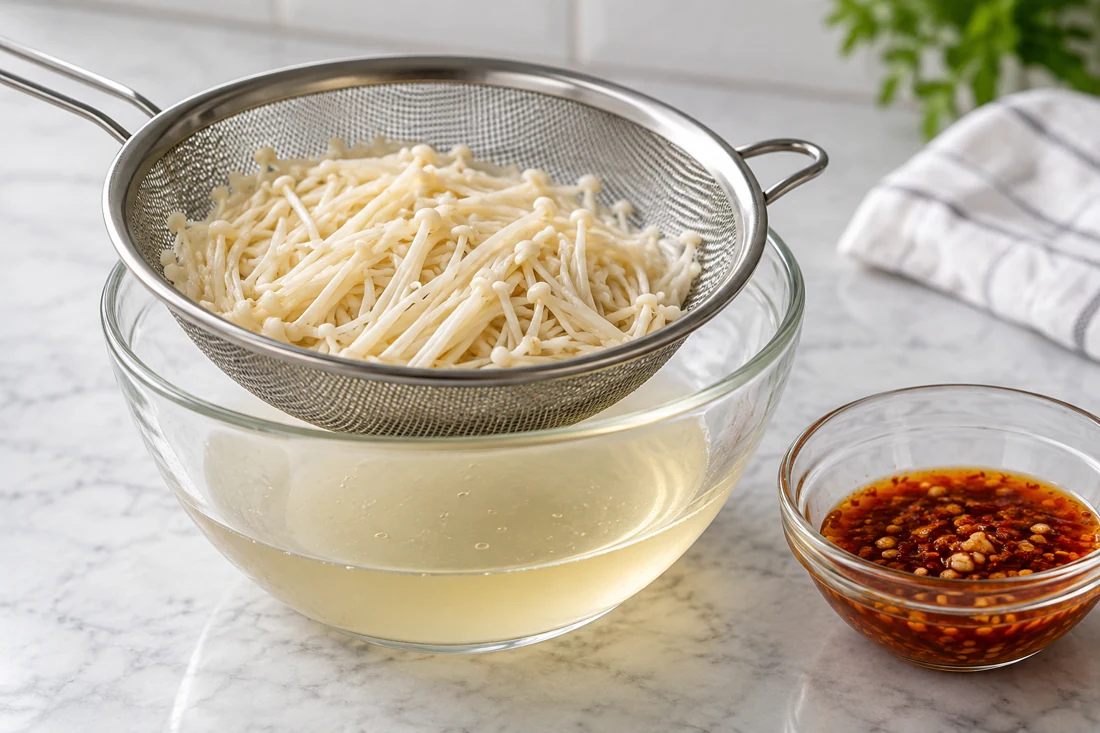
Separate collected mushroom liquid from the sauce dose during development.
Separate the water streams in the trial record. Water deliberately added to the sauce, thaw liquid removed before cooking, mushroom liquid retained during cooking and evaporation from an open vessel have different consequences. Measuring only the finished pouch weight cannot show which stream changed. The process may deliberately retain mushroom cooking liquid for flavor, but it should then be included in the formulation basis rather than appearing as an unexplained addition.
Consider a simple illustrative balance. If a trial combines one thousand grams of prepared mushroom with four hundred grams of sauce, the mushroom share at mixing is about seventy-one percent of that combined mass. If an additional one hundred grams of liquid enters before filling, the share becomes about sixty-seven percent and the sauce is diluted. These figures demonstrate the denominator; they are not product targets, analytical values or evidence of a supplier trial.
Taste and appearance can respond differently to that dilution. The pack may look generously filled while delivering less chili intensity or a thinner liquid around the stems. Conversely, removing more water than the approved method may concentrate salt and heat and reduce fill yield. Adjusting sauce by eye after every batch makes repeatability difficult. Establish the acceptable ingredient variation and a documented formulation response, reviewed by the responsible processor where it affects the safety process.
Review unusual water release as a possible ingredient or handling change before adding more thickener. Inspect the temperature history, surface ice, portion compression and preparation record, then compare a retained reference under the same method. Thickener can change mouthfeel and flow, but it cannot explain a changed starting material or validate an uncontrolled process. The trial should reveal whether the problem begins with the mushroom, the preparation step or the sauce operation.
Distribute chili through the whole portion
Uniform red color on the top of a mushroom cluster can conceal uneven seasoning between the stems. Enoki creates narrow spaces and overlapping layers where sauce can collect or fail to enter. Large chili flakes, fine chili powder and a smooth chili paste distribute differently. Decide what the customer should experience in one normal mouthful and one complete portion before defining an acceptable appearance.
Prepare the sauce as a controlled mixture before it reaches the mushrooms. Check ingredient identity, quantities and the mixing sequence appropriate to the formulation. A concentrated paste added directly onto a compact mushroom mass may remain in local pockets. A well-mixed sauce offers a more consistent starting point, although it still needs to reach the inner surfaces of the enoki during the actual cooking and mixing process.
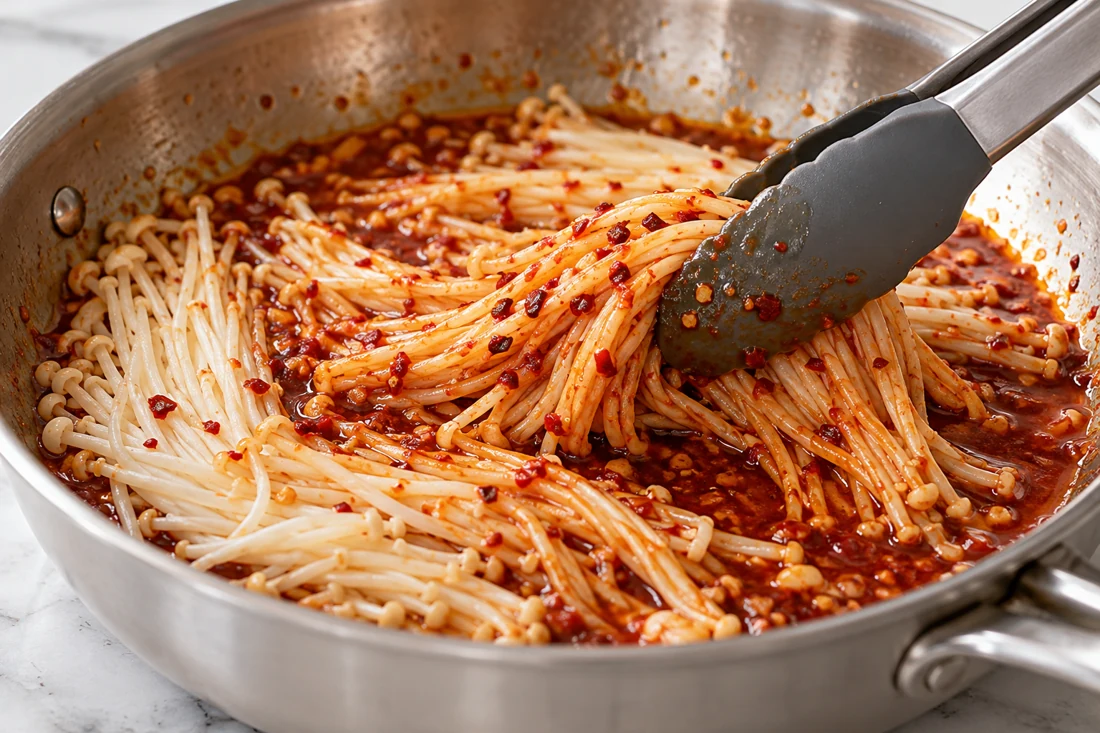
Turning the strands exposes inner surfaces to the chili mixture.
The mushroom form influences how that happens. Small separated portions may turn over readily, while long tangled stems can travel through the vessel as a single mass. Mixing more aggressively may separate the mass but also break stems and detach caps. The useful setting balances distribution and physical integrity. Evaluate the actual equipment rather than assuming that a small hand-stirred pan predicts a production kettle or a filling hopper.
Take samples from locations and times that can reveal variation. For a batch vessel, compare portions from different areas after the specified mixing stage. For filling, examine the beginning, middle and end of the run, including restart behavior after a normal interruption. Keep each sample identifiable. A single composite sample may hide differences that the customer encounters in individual packs, so it should not be the only sensory evidence.
Assess sauce on both outer and inner strands. Open a representative clump after the required cooking and compare its interior with the exposed surface. Record visible flakes, sauce coverage and the balance of heat, sweetness and salt at a consistent tasting temperature. Color is a useful observation but is not a direct measurement of capsaicin or proof of equal pungency. If a numerical heat specification is needed, agree a suitable analytical method and sampling plan.
Chili ingredients themselves can vary. A replacement paste may have a different salt level, sugar content, particle size or allergen declaration even when its trade name sounds similar. A new lot of dried chili may change the perceived heat. Keep the formulation tied to approved ingredient specifications and evaluate meaningful substitutions. A label such as mild or hot should reflect the finished product and the target customer's expectation, supported by a repeatable assessment rather than a promotional adjective.
Match sauce consistency to filling and reheating
The sauce has to work at several stages: during cooking, while the product waits for filling, inside the pack and after final preparation. A mixture that coats a spoon attractively when hot may thicken excessively when cold or release liquid after freezing and reheating. Evaluate consistency at the stages that the customer will actually use. One warm viscosity observation cannot represent the whole product route.
Describe the desired behavior in practical terms before choosing a measurement. The sauce may need to cling lightly to the stems, leave a small pourable pool or mix easily into a rice bowl. Those are different products. A very thick sauce can make filling stringy mushrooms difficult and can obscure the ingredient's delicate form. A thin sauce may fill easily but separate from the mushrooms when the pack is emptied.
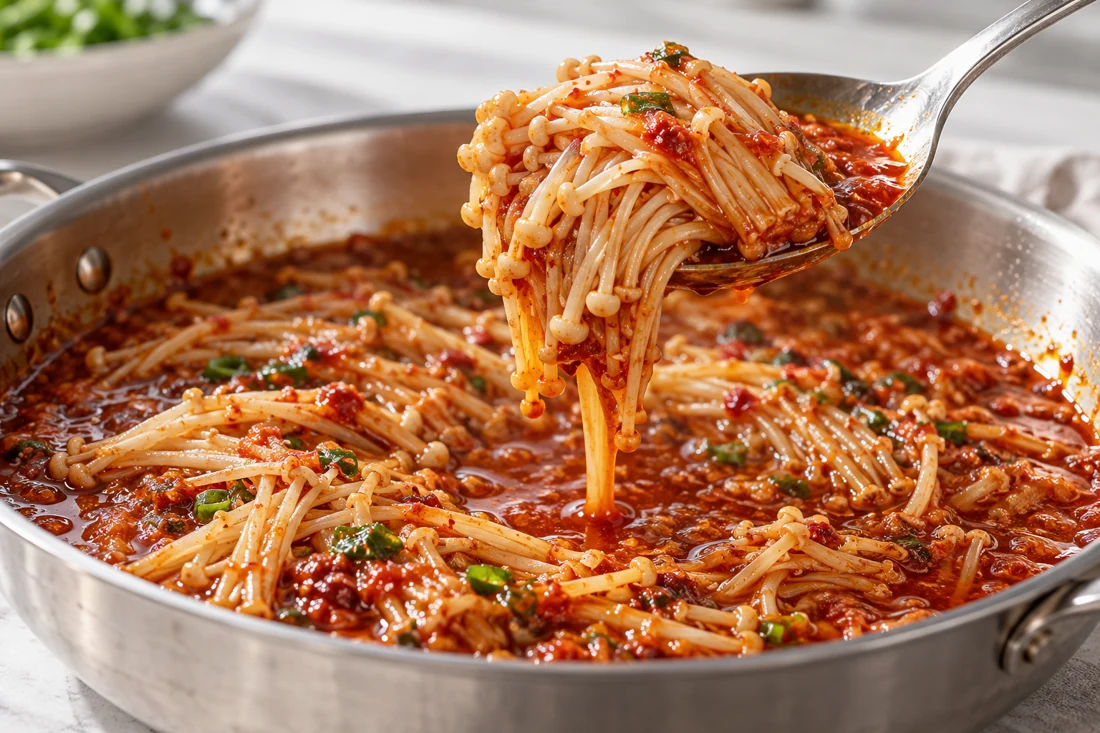
Sauce retained between strands affects the portion delivered by a spoon.
Where viscosity is measured, record the method, sample temperature, preparation and relevant instrument settings. Sauces containing particles and long mushroom strands may not suit the same measurement used for a smooth sauce base. Measure the base separately when appropriate and assess the complete food by a defined flow or serving test. Do not compare numbers from different methods as though they were interchangeable product properties.
Observe separation as well as thickness. Oil collecting at the surface, watery liquid around a dense mushroom mass and settling chili particles may indicate different issues. Some oil separation may be an intentional feature of a chili condiment, but the expected amount and remixing instruction should be agreed. A customer should not need to guess whether a pack is behaving normally. A photograph taken immediately after stirring can hide what happens during a routine wait.
If a thickener is used, assess it within the actual formulation and process. Hydration, heat exposure, acidity, shear and the freeze-thaw route can affect performance, with the result depending on the ingredient system. The processor should choose and validate a suitable formulation rather than borrowing a universal starch percentage. A change that improves cold appearance may also change filling, heat transfer or the texture after final reheating, requiring further review.
Include the way the customer empties the pouch. Long enoki strands can pull sauce behind them or remain at the opening while liquid pours out first. Test the intended cut opening, serving utensil and portion size. Examine the residue left inside the pack and whether the last portion differs from the first. The accepted consistency should support the actual meal preparation, not merely look stable while the sealed pouch lies flat on a sample table.
Keep cooking, cooling and packing under control
FDA's enoki guidance advises thorough cooking and careful handling to prevent contamination of foods that will not be cooked. A red sauce can hide visual changes in the mushrooms, making color an especially weak cooking endpoint. The processor needs an established process for the full mixture and its least-heated locations. A bubbling sauce surface does not prove that the center of a dense mushroom mass has received that process.
The validated conditions must match the formulation, mushroom load, vessel, batch size and starting state. Record how ingredients enter the process and how uniform heating is achieved. A change in sauce thickness, portion density or fill mass may alter the heating behavior and should be reviewed by the responsible technical team. A consumer recipe's short simmer instruction cannot be transferred directly to a commercial pouch or a large kettle.
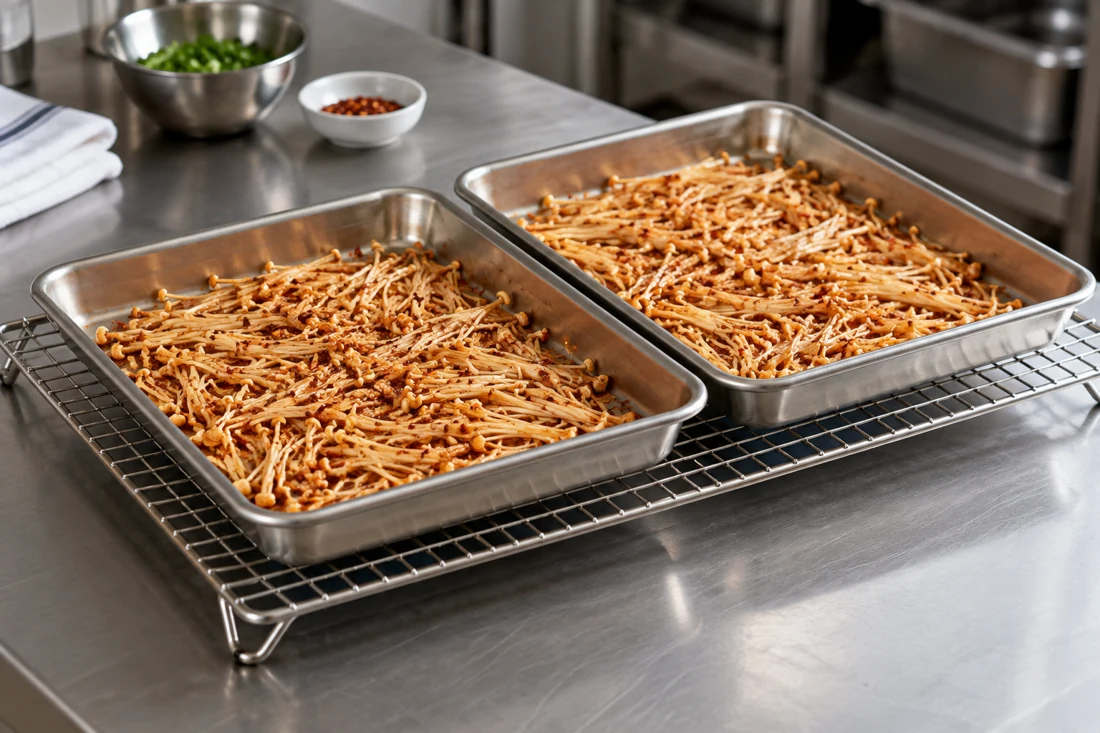
Shallow layers and space around pans are features to assess in a cooling process.
Prevent recontamination after cooking through the facility's established hygiene and sanitation controls. Raw enoki containers, utensils and contact surfaces must be managed separately from cooked food handling. Adding a raw garnish or an untreated ingredient after the established cooking stage can change the finished product's risk. The relevant ingredient and process review must include everything that enters the pack, including sauce additions and decorative toppings.
For a chilled route, cooling needs to be demonstrated for the actual product and load. As a retail and foodservice model, the 2026 FDA Food Code includes cooling cooked time/temperature control for safety food from 135°F to 70°F within two hours and to 41°F or below within a total of six hours. Local adoption and the operation's applicable rules must be checked; these figures are not a factory shelf-life validation or permission to improvise a pouch process.
Shallow layers, smaller portions and suitable cooling equipment can improve heat removal when used within an approved method. A photograph of shallow trays illustrates geometry only. Measure the actual product conditions at the identified slow-cooling location, including a representative maximum load. Stacking warm filled packs or crowding a cold room can change the result. The final process must include the transfer and waiting periods between cooking, cooling, filling and frozen or chilled storage.
Packaging requires its own technical review. A clean seal area helps avoid trapped strands and sauce contamination of the seal, but an intact seal is not evidence of safe preservation. Reduced-oxygen packaging and ambient shelf-stable products can involve additional hazards and regulatory controls. Confirm the appropriate process authority, packaging suitability and required approvals for the intended route. The finished label should reflect the documented product, storage conditions and preparation instructions established for that route.
Compare packs after the intended distribution cycle
A meaningful acceptance trial follows the product beyond the mixing vessel. For a frozen pack, include the proposed freezing condition, storage period appropriate to the trial, transport handling and final preparation. For a chilled pack, use its intended refrigerated route and assessed shelf-life program. Do not deliberately abuse temperature in a routine tasting exercise. Any challenge study requires suitable professional design and controls, with unsafe samples excluded from sensory evaluation.
Use samples that represent the beginning, middle and end of packing, and retain their lot and process identities. Evaluate pack weight, visible mushroom share, sauce distribution and seal condition before opening. Then prepare the food according to its proposed instructions. A sample reheated gently in a test kitchen may not represent a customer's microwave, water bath or meal assembly process, so select methods that match the intended market and can be validated.
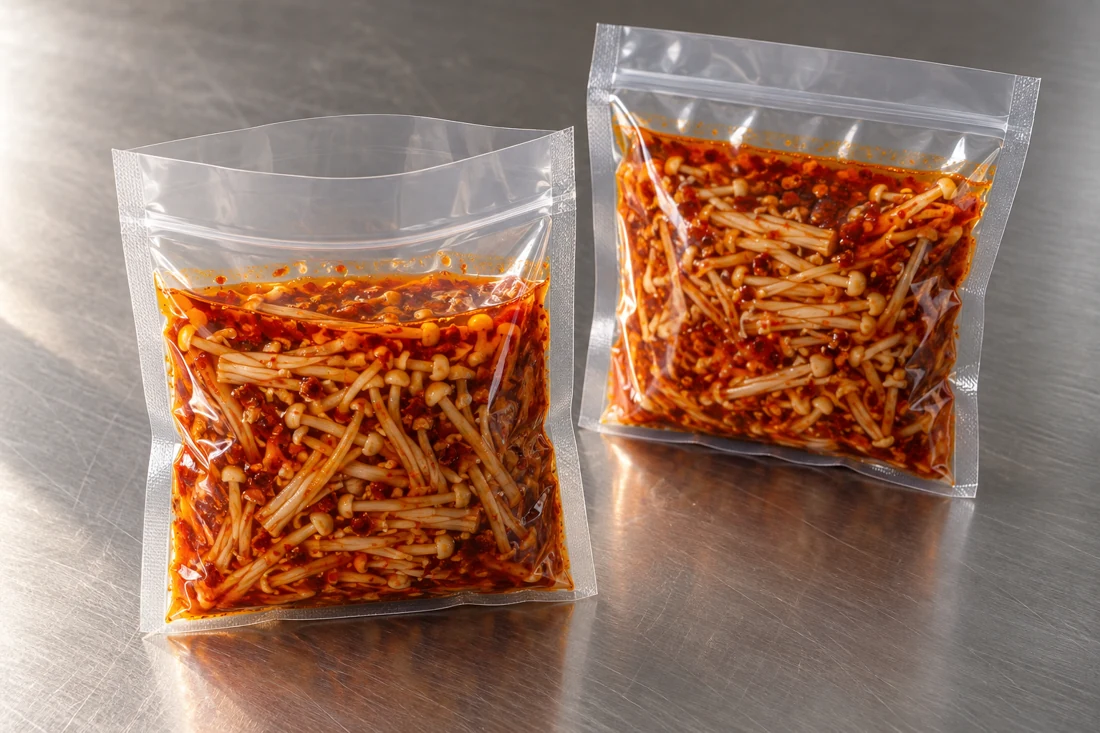
Keep mushroom strands and sauce below the clean sealing margin.
Compare the same attributes at each stage. Record how much free liquid appears, whether the sauce clings or separates, how the stems release from the pouch and whether caps remain recognizable. Assess salt and chili intensity at a consistent serving temperature. Note any excessive stringiness, softening or compacted mass that makes a normal bite difficult. These observations should describe a defect precisely enough for a later reviewer to recognize it.
Separate ingredient loss from pack residue. A pouch may meet net weight while leaving a meaningful amount of sauce or mushroom inside after normal emptying. That affects the usable serving and the customer's perception of value. Weigh the residue under a defined emptying method when it matters commercially. Avoid scraping one sample completely clean while treating another as a normal pour; the comparison then measures the operator's effort rather than the pack's behavior.
Include a realistic interruption in the filling trial when the operation normally experiences one. A sauce that distributes well during continuous filling may settle while the hopper waits. The first packs after restart can then differ from later packs. The approved restart method should restore the intended distribution without damaging the mushrooms or introducing uncontrolled holding. Record the conditions so that the result can inform an operating procedure rather than remain a one-off observation.
Acceptance limits should follow the product brief and actual evidence. There is no universal acceptable percentage of free liquid or chili coverage for every spicy enoki dish. A pourable meal component and a coated side dish will have different targets. Agree the test method, reference sample and decision rule before approving commercial volume. If a defect appears only after the distribution cycle, adjust the relevant ingredient, process or pack and repeat that part of the trial.
Write an acceptance specification for the finished dish
The purchase specification should state what is supplied and how suitability is determined. For the enoki ingredient, identify the form, trim, length range, cap retention, breakage allowance and documented processing state. Confirm packing, frozen handling conditions and the required customer cooking. For the finished sauce product, the responsible manufacturer must separately document formulation, processing, storage, shelf life and label requirements. Keeping those responsibilities explicit prevents a generic ingredient description from becoming an unsupported finished-product claim.
Define the mushroom proportion on a stated basis. A percentage calculated from supplied frozen weight differs from one calculated after cooking and draining. Both may be useful, but each needs a clear purpose. The formulation record should show added sauce, retained cooking liquid and any adjustment allowed under the approved process. A comparison between quotations becomes more meaningful when the usable mushroom content and the serving method are understood.
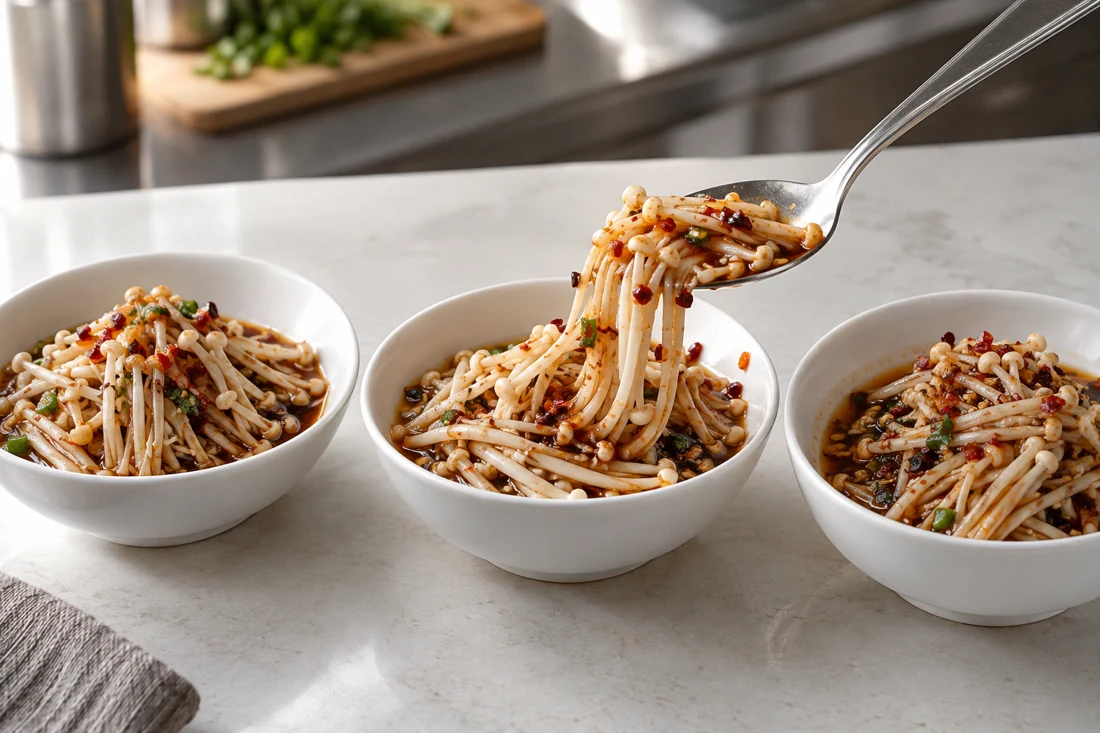
Sample several portions to examine sauce pooling and chili distribution.
Describe sensory acceptance with a reference that can be reproduced. State the final preparation, serving temperature and attributes to assess, such as stem separation, sauce cling and the distribution of chili. Use ordinary descriptions alongside any agreed instrumental measurements. A broad instruction to match a photograph cannot establish pungency, salt balance or texture. Retain a suitable reference and record how it was prepared, stored and approved.
Document substitutions and changes that require review. A new chili paste, different enoki cut, larger fill weight or thicker sauce can affect more than flavor. The change may alter mixing, thermal behavior, filling or labelling. The processor's technical review should determine the necessary verification before routine production resumes. An informal substitution made to solve a short-term supply problem should not silently become the new standard for an existing customer.
Traceability should connect the mushroom lot and other ingredients to the finished batch and its distribution records. Agree the relevant microbiological testing, methods and limits for the product and destination, together with applicable certifications and supporting documents. A report has value only when its scope and identity match the material being accepted. Test results supplement an established safety system; they do not replace validated processing or hygienic handling.
For an enquiry, send the intended storage route, mushroom form, target portion, sauce character, final preparation method and destination. Include the main defect that needs control, such as watery packs, uneven chili, excessive breakage or difficult emptying. We can then discuss the enoki ingredient against that requirement and confirm which capabilities and documents are available. The useful commercial outcome is a specification supported by the actual sample and the processor's approved finished-product process.
Related reading
Compare ingredient forms, clumping, breakage and the supplier records needed before an application trial.
Separate fresh, frozen, opened and cooked storage decisions before setting a finished-product shelf life.
Understand the mild flavor and distinctive stem texture when balancing sauce, coating or meat.
Discuss your frozen enoki specification
GreenLand-food is a supplier and manufacturer of frozen enoki mushrooms for wholesale projects. For factory-direct supply, send the destination, volume, packing format and intended cooking application so we can confirm the offered product and supporting order records.