


Importing Frozen Mango from China to the UAE: A Dubai-First Food Release Guide
Oct 19, 2026
Leave a message
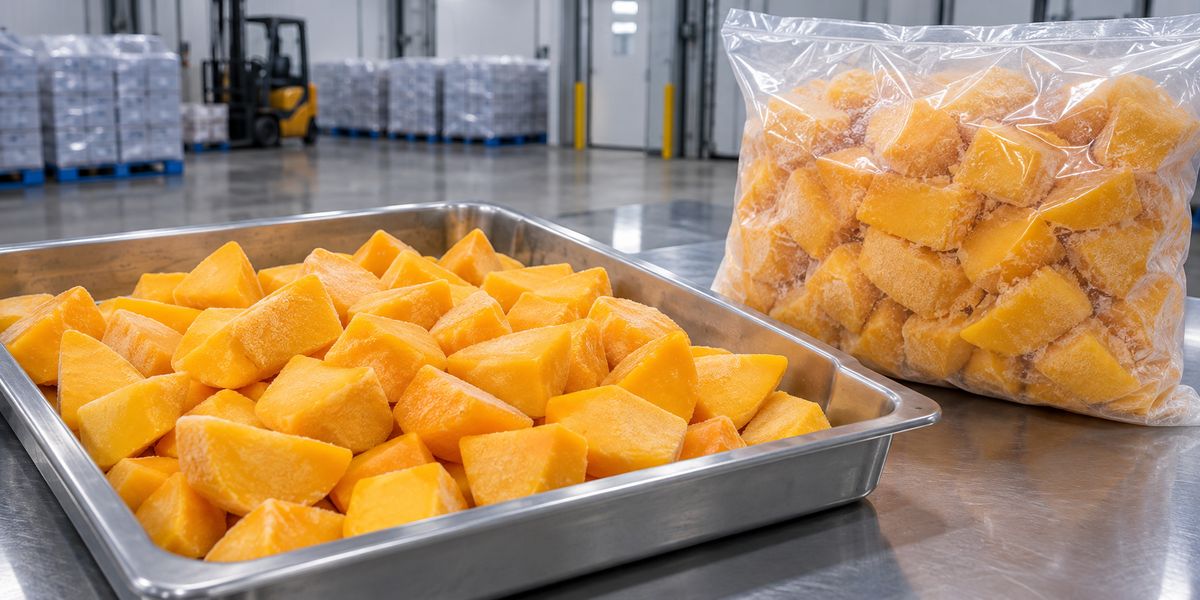
Explanatory illustration: the proposed bulk frozen product form and cold-chain handling context.
Reviewed: 19 October 2026. The route and product scope below should be checked again before a commercial shipment.
A Dubai buyer bringing China-grown and China-processed frozen mango chunks into an industrial kitchen should clear two related records before the reefer arrives: the food item and its label through the competent food service, and the shipment through Dubai's food-release and customs channels. Dubai Municipality lists separate services to register and assess a food item and to release imported food consignments for local sale. Dubai Customs' 2025 service guide describes a food-entry approval package during customs declaration. The operational case in this guide is plain mango chunks for a subsequent validated heat step in an industrial recipe. A smoothie, frozen dessert topping or other direct-consumption use changes the hazard analysis and needs a separate ready-to-eat decision. The Dubai sequence is an emirate-specific example; import through another UAE emirate requires checking that emirate's competent authority and port workflow.
Assign the Dubai importer and register the exact food item
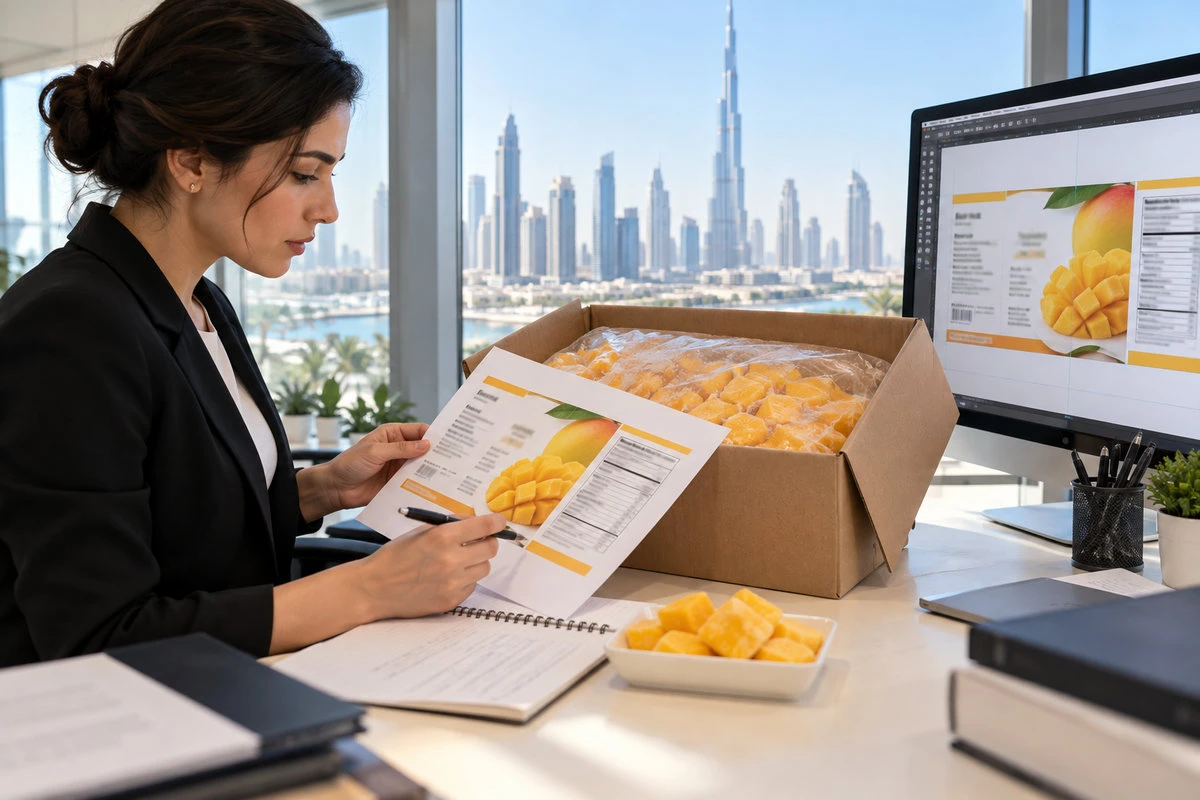
Explanatory illustration: industrial mango carton and label artwork reviewed together.
The Dubai-based food trading establishment should identify the company and licensed activity that will hold the food item record, the account user who can submit it and the broker who will declare the consignment. Dubai Municipality's current service directory offers "Register and Assess a Food Item"; it describes conformity assessment and food-label review against local and GCC specifications. The buyer should confirm whether the exact industrial mango SKU, pack size, producer details and Arabic label fields belong in a new item or can be linked to an existing approved record. A pre-existing registration for puree, sweetened mango or retail pouches is not necessarily the same item as unsweetened chunks in bulk cases.
Make the registration pack with a clear product name, one-ingredient composition, production country, processing and packing addresses, intended use, net content, storage instruction, production/expiry data and proposed label images. A statement that the mango is "ready to eat" should not be copied from a generic fruit page into this industrial heat-step case. The local importer should return the item or application reference and any label comments. Supplier and buyer should resolve the language, dates and origin line before printing thousands of cartons. If a private label is planned, check whether the label identity and brand alter the registered item.
Dubai Municipality's service pages are public entry points, but they do not by themselves prove the chosen mango item has been approved. Keep the actual transaction outcome in the lot file. When dealing with Abu Dhabi, Sharjah or another emirate, appoint the corresponding local import party and check its food approval and customs process rather than treating the Dubai service name as a UAE-wide permit.
Prepare Dubai food release and Customs as two linked tasks
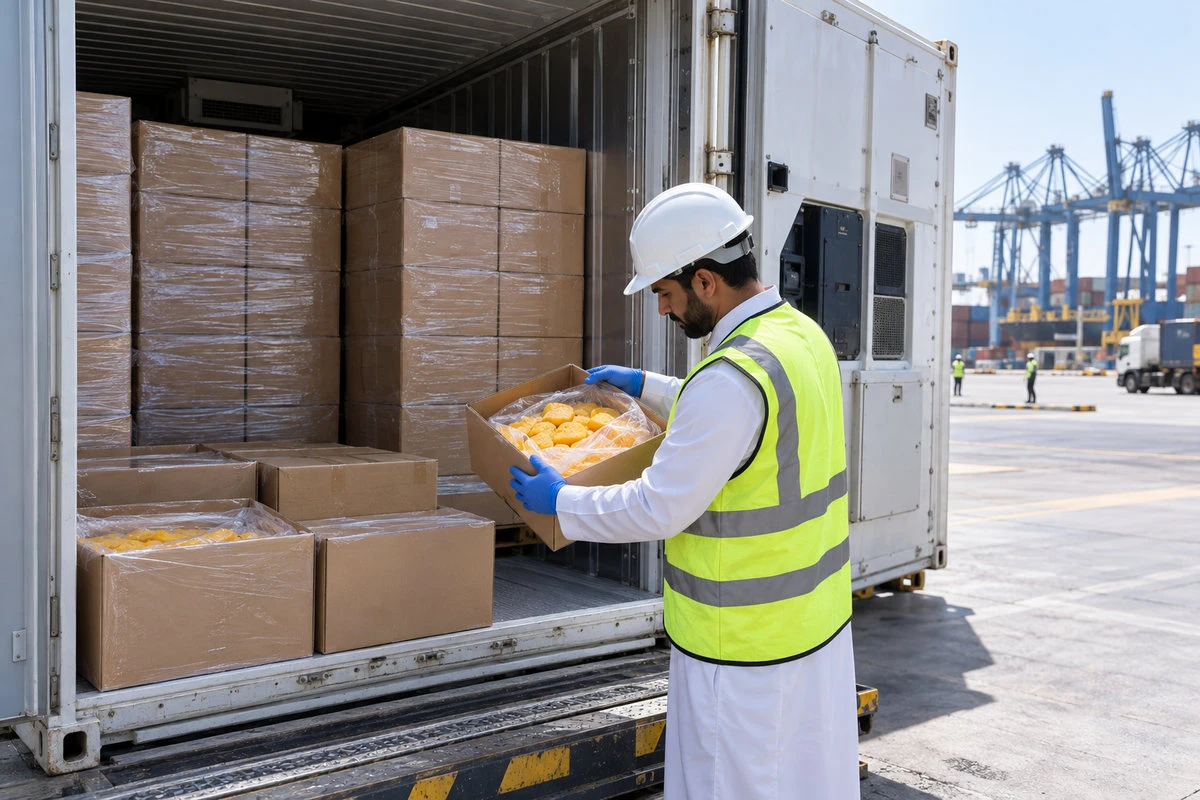
Explanatory illustration: frozen mango cartons checked at a Dubai import handover.
Dubai Municipality lists a separate service for release of imported food consignments for sale in the local market, including consignments arriving through Dubai ports or transferred from other emirates. The local food establishment should file the shipment with the item registration reference, shipping documents and any documents the current service requests. The service may lead to document review, inspection, sampling or a condition before release. The importer should agree who will be present to arrange a refrigerated examination and who can authorise movement to an approved cold store if the authority requires it.
Dubai Customs' 2025 service guide describes the Zadi food approval package during customs declaration and lists invoice, packing list and certificate of origin as required documents for that package. This is a customs service description, not a substitute for the Municipality's product registration and food-consignment approval. The broker should confirm the current declaration type, tariff line, required permits, fees and supporting transport documents with Dubai Customs for the actual port and mode. A shipment moved through a free zone or intended for re-export follows a different declared path from local-market import. Do not book a local-market sale using a re-export approval.
Capture the Municipality application/result, customs declaration/result, shipping-line delivery order and terminal gate record separately. Where a digital interface connects services, the importer should still read each final status. A customs "approved" message may leave a pending food sample; a Municipality approval may precede payment or container availability. Name the cold-store address and truck before both approvals arrive so the reefer can move promptly once legally released.
Define the mango chunk and acceptance method
Frozen mango chunks for a heated industrial recipe
Confirm the larger chunk distribution, peel or pit and fibrous-piece defects, ripeness or Brix basis, then trial drip and texture after the customer's heat step.
A purchase order for frozen produce becomes a regulatory file as soon as a product description is copied into the invoice, label, laboratory request and import entry. We propose starting with one signed identity sheet. It should state the botanical or ordinary commodity identity, China as the growing and processing origin where supported, whether there is one ingredient, the actual cut, blanching or other heat history, freezing method, package format, intended industrial use and the customer's later heat step. Calling the shipment merely "frozen fruit" hides the mango chunk grade, industrial use and label version that Dubai reviewers will compare. The importer should approve the description in its own language and tariff system before the first commercial shipment. Our sales team can supply product evidence; the local importer and its broker make the destination filing.
Classification must follow the goods that actually cross the border. A frozen plain fruit is generally explored under Chapter 08 and a frozen vegetable under Chapter 07, but the national tariff suffix, any process distinction and the applicable import controls require the importer's current tariff ruling or broker review. An invoice code copied from a different market is not a decision. Record the proposed code, authority search date, description relied on and the person who confirmed it. If the proposed code changes after a sample has been approved, recheck every registration, permit and label tied to that code before loading.

Existing GreenLand product photograph: larger frozen mango chunks; this image illustrates form, not the current shipment lot.
The same identity also protects the use claim. Peeling and cutting mango expose fruit surfaces during processing, and freezing is not a microbial kill step. A hygienic cut-and-freeze route still needs its own validated food-safety controls. For these example shipments, we write "industrial ingredient; cook or otherwise apply a validated subsequent heat process before consumption" into the technical exchange and verify that the customer's manufacturing instructions actually implement it. If a buyer wants direct use in a smoothie, dairy topping or other no-heat application, pause that route. It needs its own hazard analysis, raw-material and process validation, microbiological specifications, handling plan and label review. Do not convert an industrial sample into a ready-to-eat sale by changing only the marketing description.
Define the mango chunk, not just its orange colour
The working offer is one-ingredient, peeled and pitted frozen mango in a larger chunk grade for a Dubai industrial recipe that receives a validated heat step. The GreenLand gallery also shows smaller dice. Use the larger-piece photograph to discuss the intended grade, then obtain a retained sample and cut-distribution agreement; a picture does not set a dimensional tolerance. Define how the buyer will count undersize dice, oversize pieces, fibrous strips, peel remnants, pit fragments, browning, freezer clumps and damaged bags.
Ask the food manufacturer to run the proposed chunk through its heated sauce or filling at the intended inclusion rate. Measure usable fruit after thawing and cooking, soluble solids and acidity if they affect the recipe, fibre perception, colour shift, breakage and finished-product fill weight. A smoothie or chilled topping is a different no-heat project. Do not use a good heated trial to validate direct consumption or copy its food-safety statement onto retail artwork.
The buyer's contract can distinguish a negotiable size defect from a food-safety hold. The Dubai importer then maps the actual frozen mango commodity and intended use to current UAE/GCC contaminant, pesticide and microbiological standards. Record the standard edition, table, analyte, units, sampling plan and laboratory reporting limit in the purchase file. A supplier COA should show the tested lot and method; it cannot replace a missing item registration or an official release decision.
Set Dubai testing and label decisions around the actual use
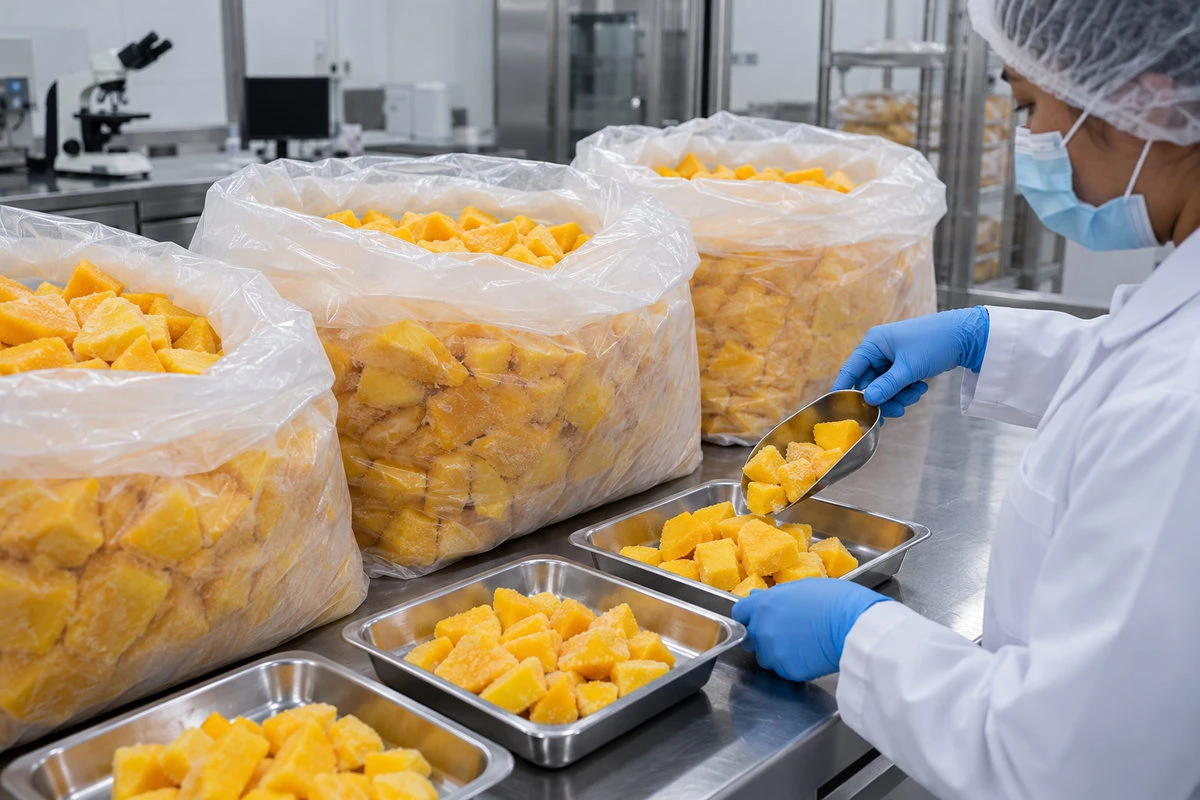
Explanatory illustration: mango chunk sample retained for lot-specific testing.
Mango chunks pose different quality questions from mango puree. The industrial buyer may care about piece-size distribution, variety or colour, soluble solids, fibrous pieces, browning, frost, clumping and thaw drip after its recipe heat step. A 1 kg bench test helps compare formulations, but a scaled production trial should measure finished-product texture and fill weight after the actual cooking cycle. The supplier's production lot should retain its cut and packing evidence, while the buyer signs the agreed tolerances and sample method.
For legal testing, ask the Dubai importer to supply the current UAE/GCC standard numbers, editions, product mapping and numeric rows for relevant pesticide residues, contaminants and microbiological criteria. Dubai Municipality can assess conformity against local and GCC specifications, but its public service listing does not give a general mango threshold. Dubai Municipality lists a current Test Food Samples service in its public service directory. The importer should ask the responsible laboratory which sample quantity, test panel, analytical method and estimated turnaround apply to this frozen mango lot, then retain the service result and sample identifier. Neither the service listing nor a private quotation establishes a legal limit or a food-release time.
For an industrial recipe with subsequent heat, agree who validates the heat treatment and what pre-heat microbiological controls still apply. If the mango instead goes into a smoothie without further treatment, pause and commission a separate RTE safety assessment, including agricultural and wash-water hazards, environmental controls, process validation, pathogen criteria and shelf-life conditions. Frozen fruit can carry contamination through freezing. A COA with a small negative sample does not validate an absent kill step.
Handle origin, halal and temperature evidence without shortcuts
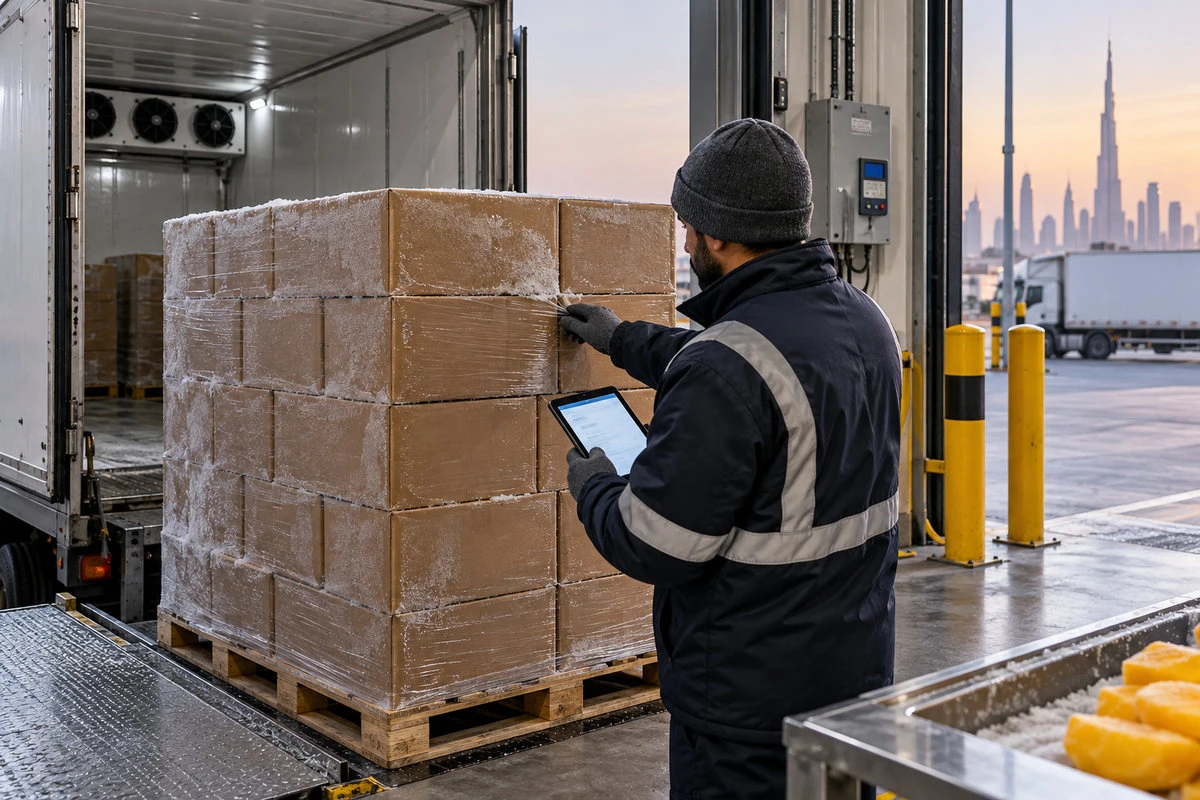
Explanatory illustration: frozen mango cartons handled at a refrigerated warehouse.
China-grown and China-processed mango needs consistent origin evidence across the invoice, case and origin certificate requested by the broker. If fruit is sourced in one country and only cut or packed in another, ask the broker for an origin assessment before the artwork is locked. The country of packing is a useful trace field but should not be used as a substitute for legally determined origin. Keep source farm or collection records, processing lots and packed pallet IDs available if a customs or food officer asks for a trace explanation.
Plain mango with no animal ingredient is a relatively simple composition, but a requested halal logo or certified supply promise still requires scope and label verification. The buyer may need a recognised certificate for its finished product or retail channel. Ask it to specify the claim and accepted certification body before adding a logo to an industrial carton. Also review any processing aids or shared-line concern the buyer identifies. Do not claim certified status from the fruit's plant origin alone.
Dubai heat increases the cost of an avoidable cold-chain delay. Agree a reefer set point and receiving tolerance in the contract, verify the container and cargo condition at loading, retain continuous transit temperature evidence and arrange a refrigerated receiving slot. At arrival compare the seal, pallet and carton count with the bill of lading and packing list. If the data show an excursion, keep affected pallets on hold while the importer and food-safety owner assess the evidence. A truck delivering a released consignment is not itself proof that the mango passed the buyer's sensory and application criteria.
Build the source, processing and document file
Our proposed source-to-delivery record starts at the field and receiving dock. Identify the mango cultivar or supplied variety, growing area, ripeness acceptance, harvest window and fruit intake lot before peeling and pitting. Record the produce identity and any crop-protection declarations against the agreed residue screen. Incoming acceptance should document condition, damage, foreign matter and the link between field lot and production lot. The mango processing record should show fruit washing, peel and pit removal, cut-size check, hygienic freezing and packing controls under the actual site hazard plan. We do not claim that a specific camera, metal detector, blancher logger or certificate is installed for this proposed shipment; the applicable line records must be reviewed during supplier qualification.
At packing, reconcile the production lot with carton count, net weight, label version and retained sample. A practical master list has one row per final lot and joins field source, processing run, lab sample ID, packaging batch, pallet IDs and seal number. Before booking freight, another person compares that list with the invoice and packing list. A late change to pack size or net weight creates a new label and registration check. A repacked pallet needs its own trace entry rather than a handwritten correction that hides the original lot. Retained samples should be stored under a documented policy that allows a later investigation into identity, appearance and laboratory results.

Existing GreenLand product photograph: smaller frozen mango dice shown to explain cut choice; confirm the ordered chunk grade separately.
Cold-chain evidence begins at release from storage. Agree the transport set point and the buyer's receiving tolerance as contract values, then record loading product condition, vehicle or container pre-cooling where relevant, seal and handover time. Ask the forwarder for the journey temperature file and exception notes; ask the carrier for bill of lading and arrival notice. A reefer set point is not proof that every carton stayed at the same temperature. At destination the buyer should check seal, carton integrity, surface frost or thaw signs, product core or representative temperature under its procedure, and data gaps before accepting stock into its freezer. A deviation report connects the time interval, affected pallets, temperature evidence, disposition owner and signed release or rejection.
Reconcile the document pack before the vessel sails
A useful document matrix names the issuer, reviewer, shipment reference and deadline. GreenLand prepares the agreed commercial invoice, packing list, product specification, lot and production trace, label artwork and testing evidence that its actual source can support. The carrier or forwarder issues the transport document. Any official health or phytosanitary certificate must come through the competent authority and the importer should first establish whether that document is required for the exact product and port. We should not promise a certificate that has not been requested, issued and linked to the final lot. The local importer owns its establishment and product registrations, permit applications and import declaration, usually with a licensed broker or agent.
Match the commercial name, botanical identity where used, Chinese origin, gross and net weights, case count, lot, production and expiry dates, consignee, port and container number across the invoice, packing list, certificate application, registration and declaration. A mismatch can consume more port time than a laboratory result. Make a pre-dispatch comparison file with highlighted fields and an approval date. If an Arabic label line, mango cut description or Dubai food item identifier is amended after approval, repeat the cross-check; do not assume a cosmetic edit has no regulatory consequence. The buyer should receive readable drafts before the carrier cut-off, and final signed documents through the agreed secure channel.
Commercial documents also need a real handover plan. Record which party books the reefer, buys cargo insurance, pays demurrage, manages any authority sample and instructs the cold store during a hold. The Incoterm belongs in the contract, but it does not automatically make the exporter the local importer of record or transfer statutory filing duties. A named destination contact needs authority to answer a regulator's document question while the shipment is still at the port.
Sequence a Dubai first order
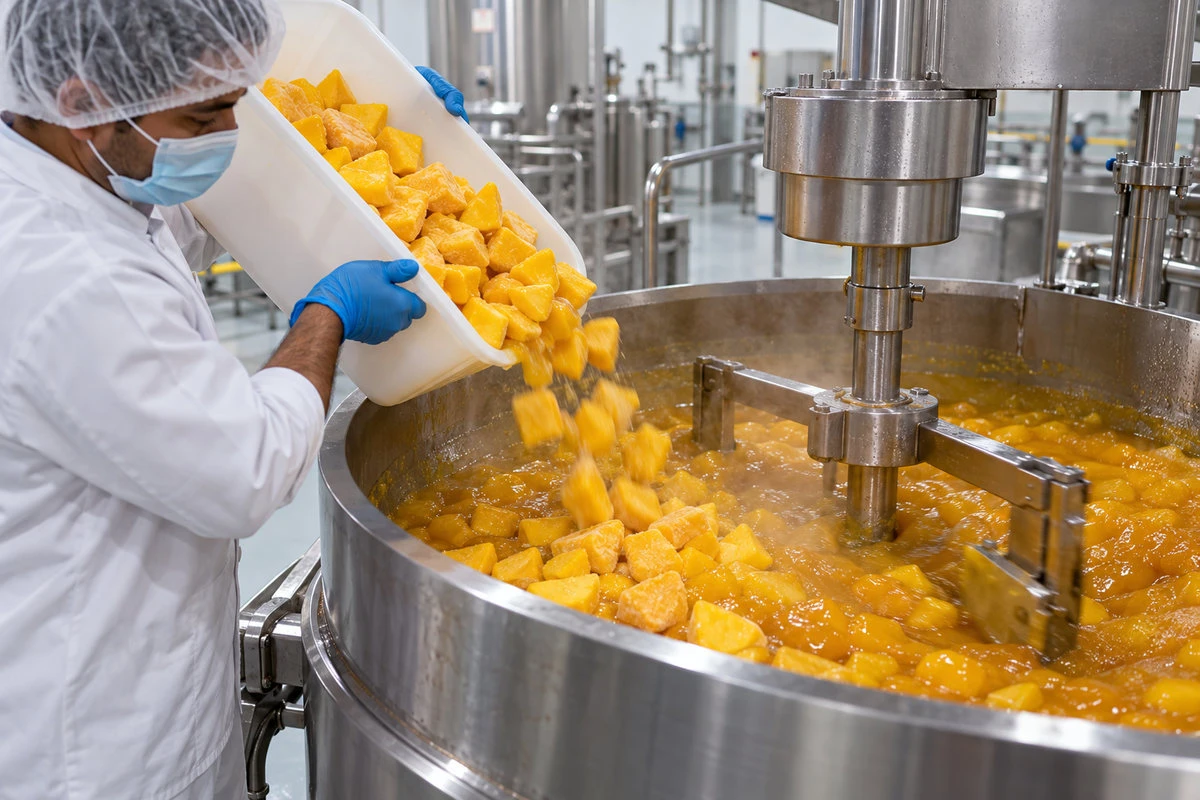
Explanatory illustration: mango chunks tested in a heated food application.
The practical order sequence starts with a technical sample and a signed industrial-use statement. The Dubai buyer tests the cut in its intended heated formulation and approves packaging and label. In parallel, it checks the food item application and the current import-release documentation, while the broker confirms the customs code, origin documentation and declaration path. GreenLand then prepares a lot-specific specification and agreed testing plan. Draft invoice, packing list and case art are compared against the registered item before printing and vessel cut-off.
For the first reefer, the importer reserves cold storage and names a person who can answer an inspection or sampling query. The food authority, Customs, carrier and warehouse statuses are recorded separately. The buyer receives the lot, checks condition and runs a defined sample under its acceptance plan. The first route review should capture actual registration and release references, customs code used, inspection outcome, days in hold, temperature deviations and any label corrections. Those facts support the next quote; a general promise that frozen mango clears every UAE port on the same schedule does not.
Manage release, delivery and exceptions
At arrival, distinguish at least three decisions. Dubai Municipality decides the registered-item and food-consignment conditions, including any inspection or sample. Dubai Customs assesses its declaration, Zadi food-approval package, tariff and duties. The carrier or terminal releases the container or cargo only after its own delivery-order, charges and operational steps. A screenshot from one system is not evidence that the other two processes are complete. The buyer then performs its own contract acceptance after receiving the goods. Keep the individual transaction references and timestamps in the shipment file.
If an inspector takes a sample, identify the sampled lot and quantity and ask whether the consignment may move to a designated cold store while results are pending. Any movement under control must follow the authority's written direction. A release after sampling can still be followed by an adverse laboratory result or recall instruction; it is not a promise of final marketability. In an adverse result, stop onward use, preserve temperature and custody evidence, notify the importer and exporter contacts, assess related lots and follow the authority's disposition. For documentary holds, submit a corrected document only through the official route and retain the original and amendment history.
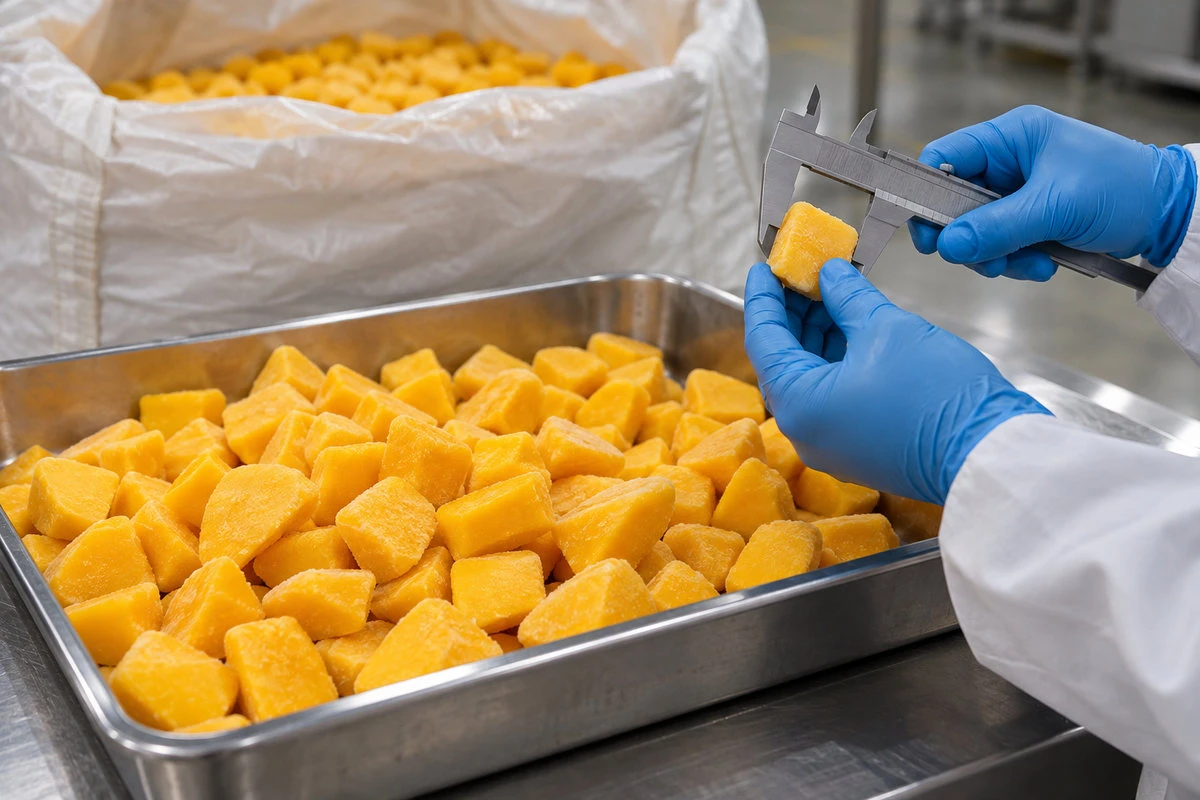
Explanatory illustration: mango cut pieces spread for size and defect inspection.
Customer acceptance is a separate commercial decision. The buyer should sample according to the agreed plan, inspect the actual cut and condition, run the application trial if reserved, and document acceptance or a claim within the contract window. A customs release cannot force a buyer to accept a wrong cut. Conversely, an attractive production sample cannot override an official food hold. Keeping these distinctions explicit lets the sales team give a realistic delivery date and protects the buyer's production schedule.
Plan an exception route before quoting a delivery date
The first trial shipment should have a decision tree for predictable exceptions: a mismatched Dubai registered food item, Arabic label change, Customs/Zadi query, missing origin document, sampled mango lot, reefer excursion, wrong chunk grade or a switch to an unheated use. Name the decision owner for each. A sales colleague can coordinate evidence, but a local broker must resolve customs codes and a qualified food-safety or regulatory owner must decide whether a lot can be released to its intended use. A laboratory result alone cannot explain a broken cold chain, and a revised invoice cannot repair a food-safety failure.
For a suspected thaw event, quarantine the affected pallet IDs, collect independent receiving observations and the complete reefer data, and calculate the time and severity against an agreed product-specific assessment. Do not casually refreeze and reoffer stock as unchanged. For a residue result above a claimed limit, first confirm the commodity mapping, residue definition, unit, sampling and laboratory uncertainty, then keep the food on hold while the authority and buyer decide its fate. For a rejected consignment, record whether destruction, return or re-export is permitted and who carries each cost; never imply those are automatic alternatives.
The order file closes only when it contains the released status, final transport and temperature records, receiving report, customer disposition and any corrective action. Review the first shipment with the importer before repeating the route. If the country's service entrance, list of restricted products or standard edition changes, refresh this file. These checkpoints make the next quotation faster because uncertainty is resolved with an owner and a record, rather than a claim that every frozen product follows one universal path.
Official starting points
The importer should verify the current rule, product mapping and portal status at these official pages before each first order or material change:
Plan your frozen mango shipment
GreenLand-food is a professional supplier and manufacturer in China offering factory-direct wholesale supply. Tell us the product form, specification, packing, quantity, application, destination, private-label needs and requested documents. We can prepare a lot-specific proposal for your import team to review.