


What Is Shoepeg Corn? Kernel Shape, Sweetness and Frozen Product Fit
Sep 27, 2026
Leave a message


For a frozen-food buyer, the practical question is often less romantic than the name sounds. Will a white or yellow IQF sweet-corn kernel look, taste, and behave the way the recipe requires after thawing, heating, draining, and holding? A sample can answer that. A catalog photograph cannot. GreenLand-food lists frozen sweet corn and corn kernels, but the pages we reviewed do not establish a verified shoepeg SKU. We would therefore discuss a particular frozen-corn specification and an application trial rather than relabel ordinary corn as shoepeg.
Recognize a shoepeg ear before judging the kernels
The distinctive feature is easiest to see on an intact ear. Traditional descriptions of Country Gentleman shoepeg corn show long, relatively narrow white kernels set in a somewhat irregular, crowded arrangement. Many familiar sweet-corn ears show cleaner longitudinal rows and broader kernels. The old name is useful because it points to a real visual pattern, but pictures of one ear do not define the whole crop. Ear development, pollination, maturity, and handling still affect what a grower or processor sees.
This distinction becomes important when the corn is removed from the cob. A bag of kernels no longer shows the original row pattern. Cutting depth changes the visible face of each piece. A shallow cut may leave smaller, cleaner kernels; a deeper cut can carry more of the base and alter shape. Broken kernels and detached fragments add another layer of variation. A customer might call a small white kernel "shoepeg" because of its appearance, even when there is no evidence of the actual corn type. For a buyer with a label or a menu claim at stake, that shortcut is risky.
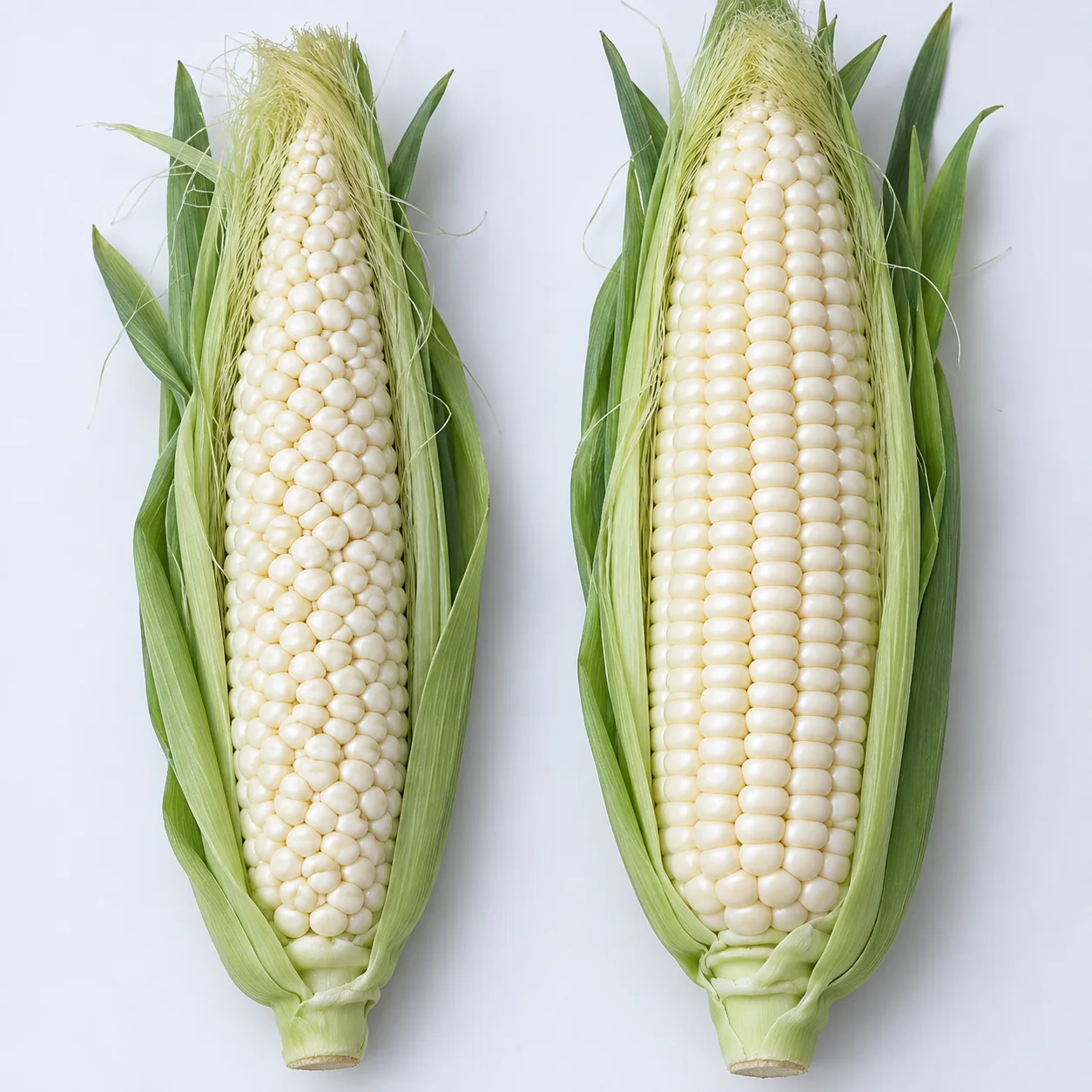
Compare ear-level row pattern before inferring anything from loose frozen kernels.
Ask the person requesting shoepeg what the name is meant to secure. Some recipes want a delicate-looking white kernel against a dark dressing. Others want a pleasantly sweet bite in a relish or a vegetable blend. A heritage-corn product may require documented varietal identity, where an ordinary white sweet-corn substitute is unacceptable regardless of eating quality. These are three different purchase decisions. We start with the intended claim and the finished dish, then write an ingredient requirement that can be checked.
For varietal identity, request the grower or supplier's written designation and traceability supporting that designation. A sales adjective or a photograph of a white ear is not the same evidence. For visual equivalence, review an actual lot or representative production sample after the same processing steps used in the food. For functional equivalence, judge the food after cooking, holding, and serving. These paths may lead to different answers from the same sample, which is why a single question such as "Is this shoepeg?" is often too blunt for procurement.
We use the historical description as an identification aid, not as a secret quality grade. The Royal Horticultural Society associates the shoepeg name with Country Gentleman; seed suppliers show the characteristic irregular ear. None of those sources establishes a standard industrial IQF cut, sugar level, or defect tolerance. Those still need to be agreed between the buyer and the supplier. A processor can deliver excellent white sweet corn that is useful in the recipe while still not supplying a verified shoepeg crop.
Separate kernel shape, color and sweetness
White is a color observation. Shoepeg is a type description. Sweetness is an eating property. Keeping the three apart prevents a surprisingly common specification error: "white shoepeg corn, sweet" looks precise on a purchase order, yet leaves the person receiving the lot with no measurable rule for deciding whether it matches the intended product. Two white kernel samples can differ in length, width, broken rate, tenderness, aroma, and cooked sweetness. A yellow sample can outperform a white one in a formula where color is unimportant.
Color can be checked under agreed lighting against a retained standard or a practical range, but it should not be used as a proxy for sugar. Sweetness reflects cultivar, maturity at harvest, conversion of sugars after harvest, processing, and storage conditions. A soluble-solids reading may help compare samples, but it is not a complete sensory score: perceived sweetness also depends on acidity, seasoning, kernel tenderness, and the base food. Use the measurement as one data point, then cook the corn in the actual system.
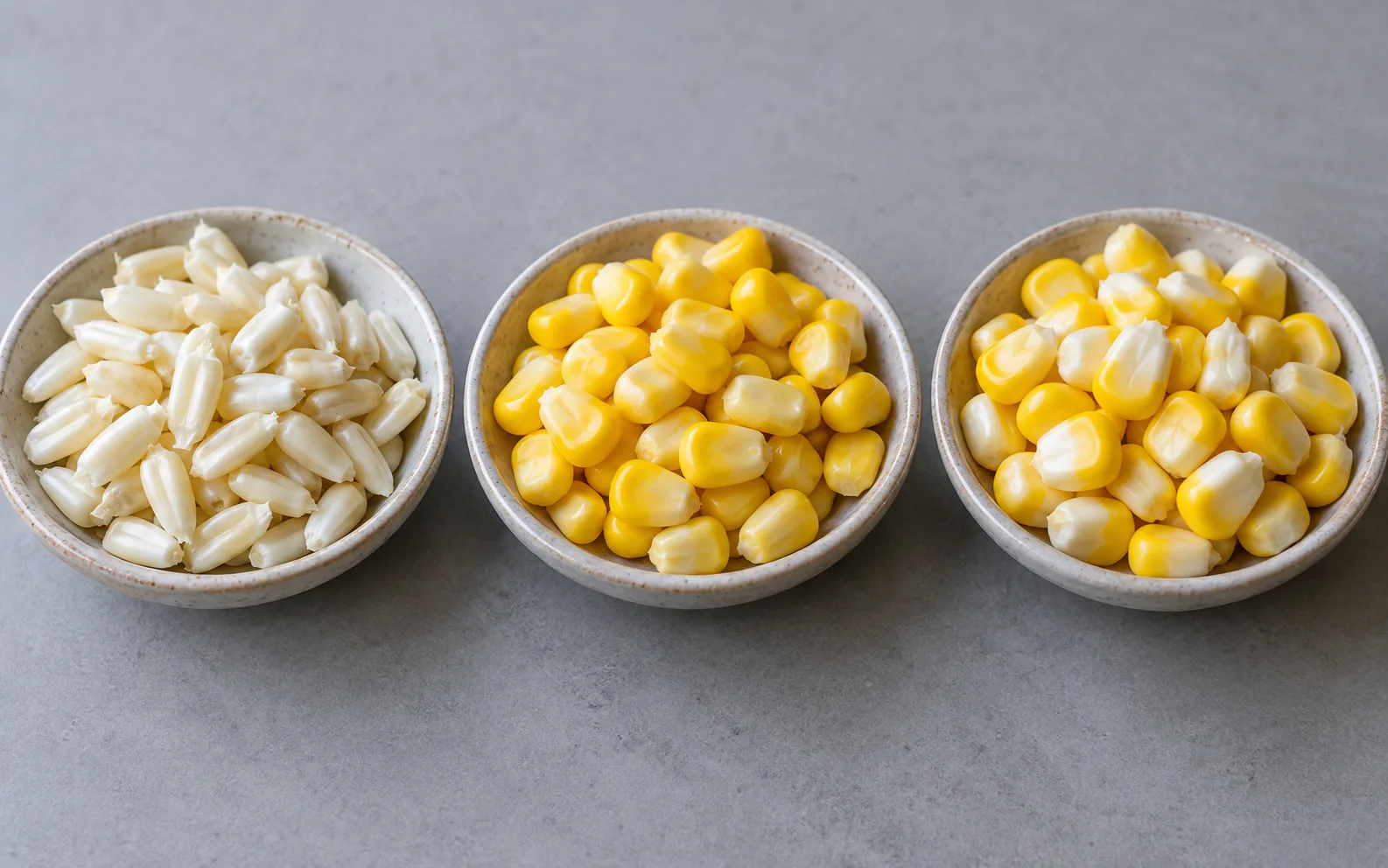
Kernel color alone cannot establish cultivar or measured sweetness.
Kernel size needs a similarly careful description. A sieve result or size distribution can help a manufacturer control appearance and dosing. It cannot prove that the kernels came from a shoepeg ear. Shape after cutting may be more useful in a visible cold salad than in a finely chopped filling. If the dish is served in clear packaging, compare the corn at the end of its expected display period, not only in a fresh pan. Surface moisture, mixed-vegetable color contrast, and distribution through the pack may dominate what a shopper notices.
Texture is often the hidden variable. A small kernel may feel crisp and tender, or it may be tougher than expected if maturity and processing differ. Heating method matters: a short sauté, a retort process, and a long hot hold impose different stresses. A buyer who approves raw frozen kernels by bite will miss what happens after production. We normally test tenderness after the same heat exposure and rest period planned for the finished food. A spoonful straight from the freezer is not a fair trial.
For a useful sample comparison, keep the recipe, portion weight, pan load, liquid addition, heating endpoint, and holding time constant. Change only the corn. Record what changed, rather than saying one sample is "better." An ingredient can be superior for a creamy soup but inferior for a lightly dressed salad. This is also why a specification should state the intended application. The supplier can then understand whether color, intact-kernel rate, sweetness, flow from the bag, or post-cook bite deserves the tightest control.
What cutting and IQF freezing can change
IQF means individually quick frozen; it describes the frozen format rather than the botanical identity of the corn. In a suitable process, separated kernels freeze as individual pieces that a kitchen or factory can portion from the pack. The important visual and functional outcomes still depend on how the corn was harvested, cut from the ear, handled before freezing, and packed. Freezing does not restore a crushed kernel or turn a broad yellow kernel into a narrow white one.

This real supplier photo documents frozen sweet-corn form, not a verified shoepeg cultivar.
Cutting can alter both appearance and yield. If the blade takes too little, usable meat stays on the cob. If it takes too much, the sample can contain hard tip material, irregular bases, or more fragments. A processor has to balance yield against the quality target. For a buyer, the practical check is to spread a measured frozen sample on a contrasting tray and sort intact kernels, partial kernels, loose fragments, and any unwanted material. Record the percentages or counts in the same way each time. That provides a better basis for negotiation than an unspecific request for "nice kernels."
Frozen condition affects what happens after the pack is opened. Clumps may indicate temperature abuse, surface moisture, or a product style that does not flow as expected. Ice crystals or visible frost can be a quality warning, although their meaning must be judged in context. Thaw drip tells us something about handling and cellular damage, but it is not an identity test. When the corn enters a hot recipe, water released from the frozen ingredient can dilute sauce, interrupt browning, or change fill weight. Measure those effects with the intended cooking method rather than extrapolating from an isolated defrost test.
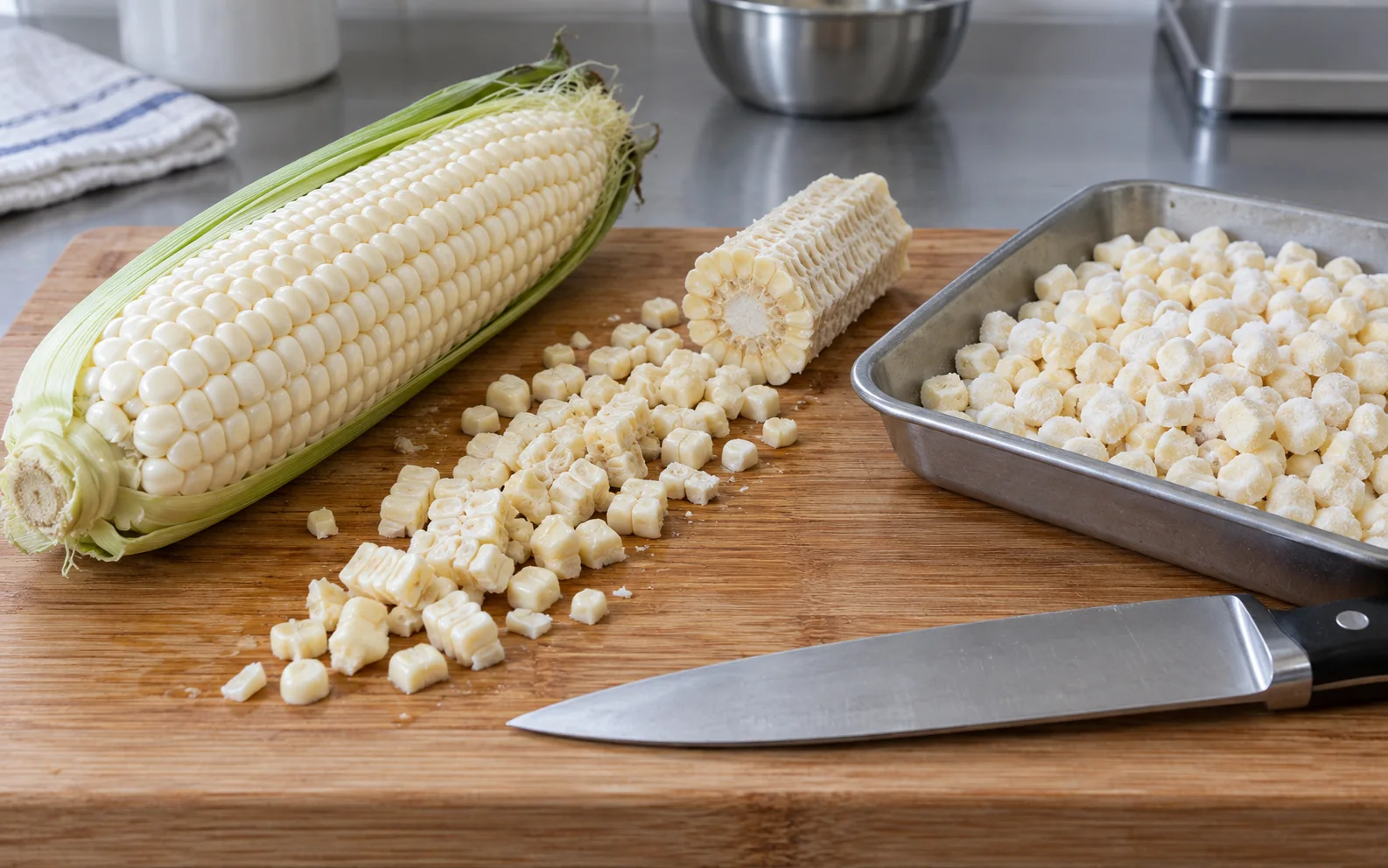
Cutting and IQF handling affect the shape seen by a buyer.
The photographs on GreenLand-food's frozen-corn pages are useful to show the form of an available frozen sweet-corn offer. One shows kernels presented in a tray; another shows a measured kernel sample. They do not show a verified Country Gentleman ear or certify a shoepeg product. We make that boundary explicit when a buyer is comparing a historical type to a contemporary IQF ingredient. Product-page images can support a discussion of cut form and appearance, but approval has to rest on the current specification and sample.
If a processed food uses a declared shoepeg ingredient, obtain written assurance that the supplied lot satisfies that claim. If the product only needs corn with a particular look and bite, write those observable requirements instead. This is especially helpful when a line runs year-round. Agricultural materials change; a repeatable specification and reference sample can control the result more reliably than a nickname. The frozen format may help operational consistency, but it does not remove the need to verify lot condition and the actual cooking outcome.
Compare a frozen sample against the target dish
A trial works best when it reproduces the stresses the ingredient will face. Start with a clear target: perhaps a white-kernel corn salad, a chilled relish, a soup, or a ready-meal side. Set a reference sample and a small number of candidate lots. Keep everything else constant. The tasting team should know which attributes to score, but blind identification can reduce the influence of an attractive product name or sales story. A few deliberate tests are more informative than repeated casual tastings.
Agree the acceptance rule before the team sees the samples. If the required product is a salad component, decide how many broken kernels can be tolerated and whether a minor yellow cast is acceptable. If the food is a thick soup, decide whether added water can be accommodated without changing the declared portion or the rest of the formula. A trial that waits until after tasting to invent its pass mark tends to reward the most persuasive person in the room. A written target makes the result portable from product development to purchasing and receiving.
First, examine the unopened pack and frozen material. Confirm the stated cut, pack size, lot identification, temperature condition, apparent flow, color range, and presence of clusters. Weigh a representative portion. Spread it before cooking to observe intact and broken pieces. Use a simple photograph setup with the same tray, lighting, camera position, and scale for each sample. This gives quality and procurement teams a record that can be revisited when a later lot looks different.
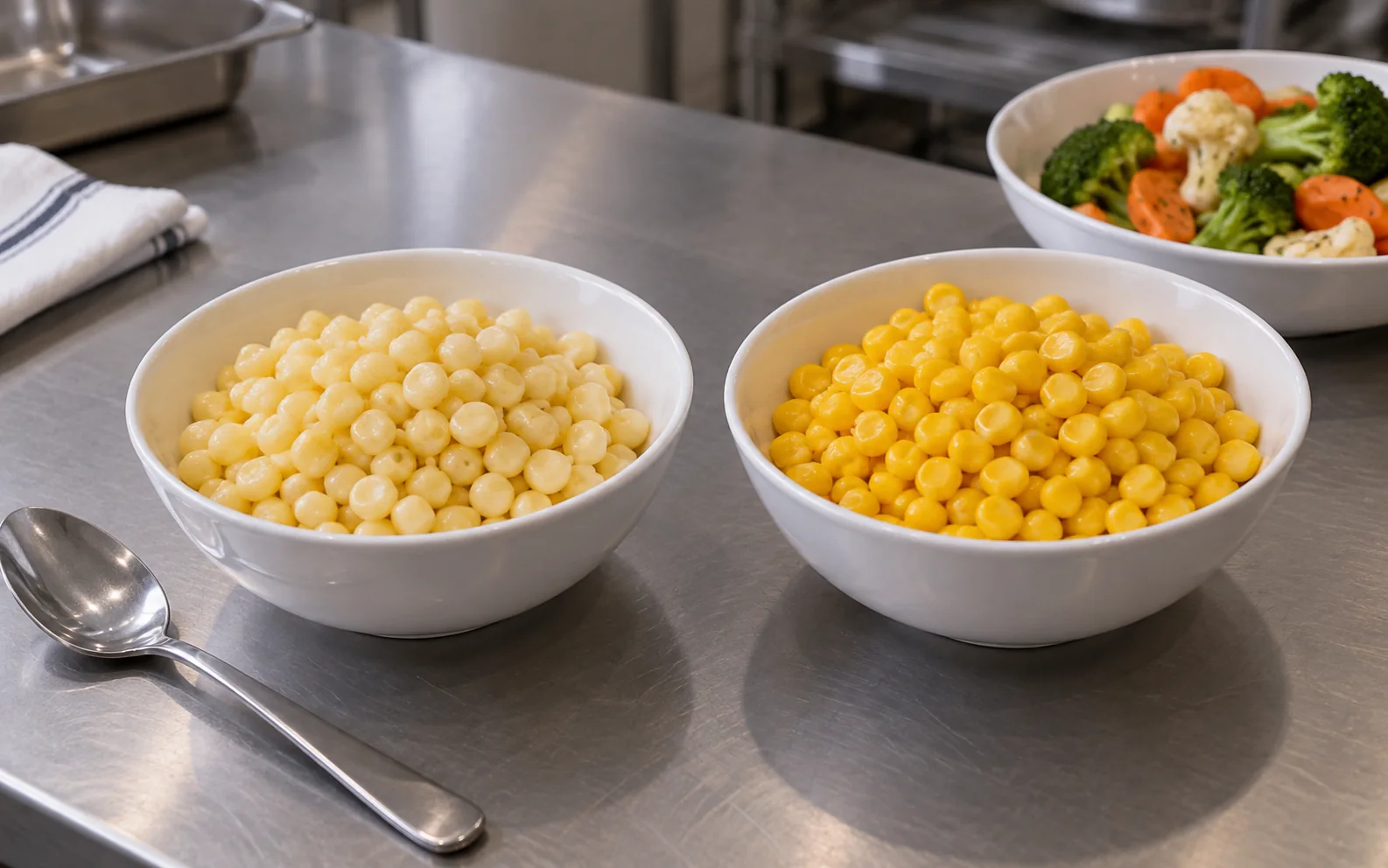
A matched sample test should examine the cooked result, not infer quality from a color name.
Second, cook each candidate in the intended recipe. If the corn goes into a heated mix, add it at the same stage and use the same heat input. If it is used in a chilled salad, follow the validated cook and cooling procedure before dressing; do not substitute a raw frozen taste test. If the food will be held hot, packed, reheated, or distributed chilled, include that step in the trial. A sample that looks good at the initial cooking endpoint may release more water or lose bite after a hold. Note the final serving temperature and time since cooking.
Third, compare the result through several lenses. Visual reviewers can score color contrast, size uniformity, and the share of intact kernels. Sensory reviewers can score sweetness, corn aroma, tenderness, and any tough pericarp sensation. Production staff can record pan water, sauce thinning, portioning speed, and fill-weight variation. Cost should be calculated from usable ingredient and finished yield, not only from price per frozen kilogram. If a candidate requires extra draining or has a higher rejection rate, that operational cost belongs in the decision.
An approval record should end with an explicit outcome: accepted for this application, accepted with a recipe adjustment, or rejected. Include the sample lot, specification revision, recipe version, test conditions, and retained benchmark. Without those details, a later supplier switch can silently change the food. If a menu or retail label uses the word "shoepeg," resolve the identity and labeling basis separately. A successful sensory substitution does not by itself justify a botanical or varietal claim.
Write a specification that does not assume a shoepeg SKU
The strongest specification translates the desired result into information a supplier can confirm. Start with the actual product name. If verified shoepeg identity is required, make it a documentary requirement and do not let a generic "white sweet corn" offer satisfy it by implication. If the requirement is functional, state "IQF sweet-corn kernels" and define the attributes that the finished food depends on. This keeps the purchase order honest and gives both sides a practical acceptance test.
Describe color and form with a reference sample or agreed tolerance. Include kernel size distribution, cut style, intact-kernel percentage, fragments, foreign material, and any special sorting need when they affect the recipe. These should be measurable by a method the supplier can reproduce. An excessively narrow cosmetic rule can raise cost without improving the dish; an overly vague rule leaves the receiving team unable to challenge a poor lot. We use a small production trial to decide which limits are worth writing down.

A real supplier detail photo helps discuss size and cut, without establishing shoepeg identity.
Then document process and logistics. Confirm whether the kernels are raw, blanched, or otherwise treated and what cooking instruction applies. Ask for ingredient declaration, allergen information where relevant, pack weight, packaging format, storage conditions, shelf-life basis, lot coding, origin information, and the documents your market requires. Do not infer ready-to-eat status from the word "blanched." Ask for a formal intended-use statement. On receipt, compare lot code, pack integrity, temperature condition, and a sample of actual kernels to the approved reference.
The supply conversation should include scale. A food manufacturer may need a repeatable size distribution across shipments; a restaurant group may care most about portioning and cooked texture; a private-label program may need packaging and claim review. State anticipated monthly volume, destination, target pack, and application when requesting a quote. That helps GreenLand-food propose an available frozen corn form and the documents it can actually provide. It also prevents a generic catalog item from being mistaken for a custom named variety.
GreenLand-food's frozen corn page is a starting point for that conversation. We can discuss the published frozen-corn formats, arrange a specification exchange, and compare a sample to the target dish. We would confirm any special cultivar or color requirement in writing before using it in a label or buyer-facing claim. That is a reasonable route whether the answer is a suitable standard IQF sweet corn, a separately sourced white product, or a decision that the particular shoepeg requirement cannot be met by the samples offered.
Choose a substitution only after the intended application works
Substitution is not one yes-or-no question. For a visible cold salad, the customer may care about pale color, small kernel profile, and intact pieces. For a soup, sweetness and texture after reheating may matter more than exact shape. In a strongly seasoned filling, corn aroma might be less prominent while water release can be decisive. Write down that priority order before asking a supplier to match a name. It saves time and makes disagreements about a sample easier to resolve.
If the product name itself matters, stop at identity. A verified shoepeg or specified Country Gentleman ingredient requires traceable supporting evidence. A generic IQF sweet-corn kernel may be tasty and useful, but it should not silently inherit that description. If the product does not make an identity claim, the buyer can test alternatives by finished-food performance. In that case a white-kernel sample may offer the intended appearance, or a yellow sample may win on flavor and availability. Let the finished product decide within the documented specification.
Scale-up is a separate gate. A tabletop sample can behave differently when a large kettle, continuous line, or full tray changes heat transfer and holding time. Run a pilot at a meaningful batch size, then inspect product from the beginning and end of the production run. Check whether the kernels distribute evenly, whether sauce separates, and whether the pack still looks right after its normal distribution path. Retain both ingredient and finished-product benchmarks so later lot checks have a useful comparison.
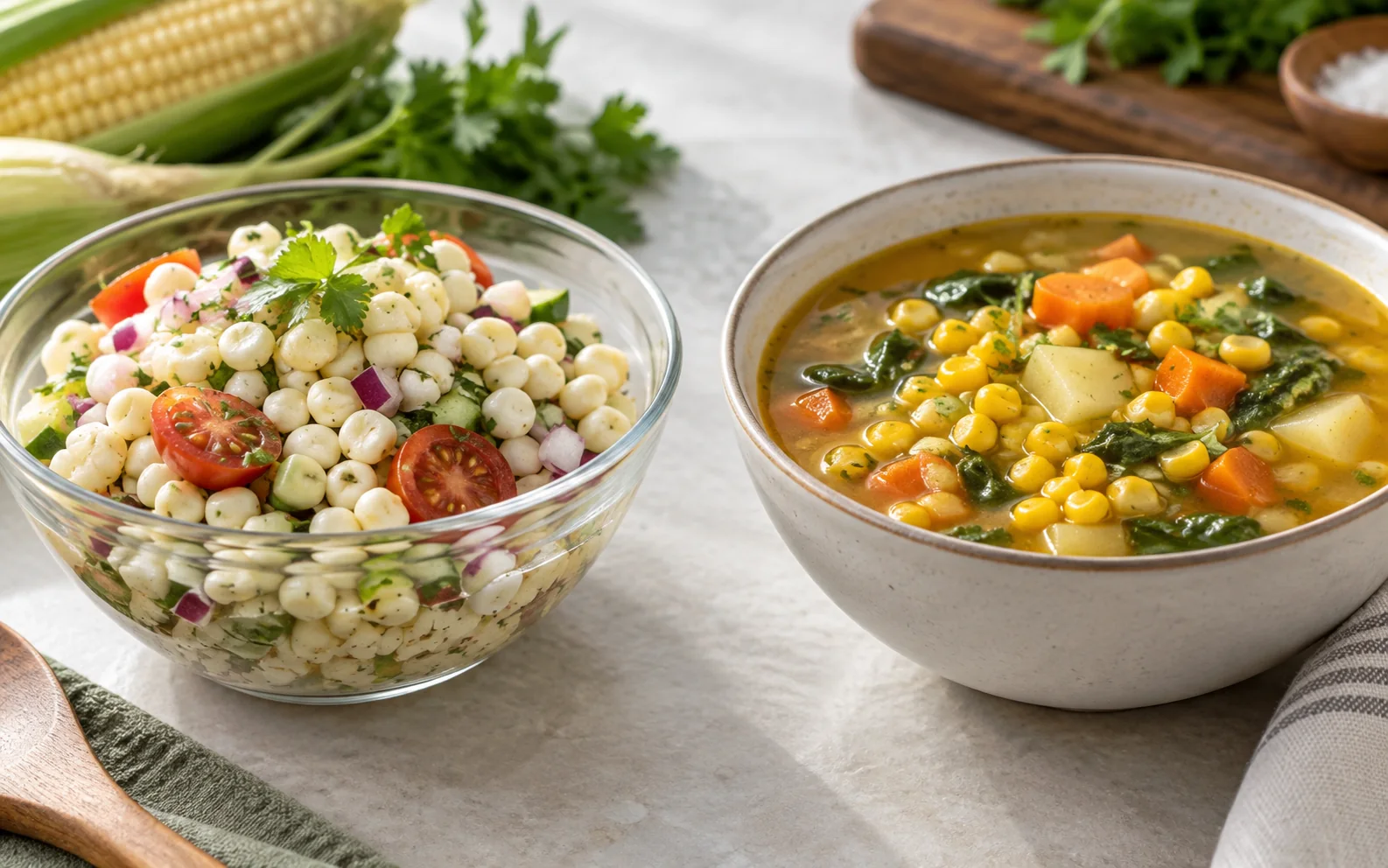
Different dishes prioritize visible color, bite and water release differently.
Commercial availability also matters after the sensory result. Ask whether the approved cut, color, and pack are a regular offer or a one-time sample, and how seasonal raw-material changes are handled. Record lead time, minimum order, possible replacement rules, and what happens if a shipment falls outside the agreed visual range. This does not require a rigid contract for every restaurant test, but a manufacturer planning a repeat retail product needs to know whether the approved ingredient can be repeated. A technically excellent substitute with an uncertain supply path may still be the wrong production choice.
The most defensible outcome may be a conditional approval. For example, a buyer might approve an IQF white sweet-corn kernel for a frozen vegetable blend after a cooked sensory test, while leaving a shoepeg-labeled relish on hold pending cultivar evidence. That is not indecision; it reflects two different promises to the customer. Procurement, product development, quality, and labeling can each see the same boundaries and avoid turning a helpful sample into an unsupported claim.
When we discuss frozen corn with a buyer, we therefore ask for the application, required appearance, texture target, origin and identity claims, pack format, annual volume, and destination market. We can then compare the available GreenLand-food corn specification with the actual need. The central lesson is simple: shoepeg begins as an ear description, while frozen product approval ends with a documented ingredient and a successful use test. Keep both parts visible, and the purchasing decision becomes much clearer.
Buyer questions before approval
Is every white sweet-corn kernel shoepeg? No. White describes color; shoepeg refers to a traditional type associated with a particular ear and kernel form. Ask for traceable identity evidence if the name is a formal requirement.
Can IQF corn replace shoepeg in a recipe? Sometimes. Test the candidate after the same cooking, holding, and serving steps used for the final food. Approval for one application does not establish equivalence for every dish or a shoepeg label claim.
What is the first useful sample test? Compare a measured frozen portion for intact-kernel rate and cut form, then cook it beside the current benchmark in the target recipe. Record water release, sweetness, texture, appearance, and usable yield.
Does GreenLand-food advertise a shoepeg SKU? The frozen-corn pages reviewed for this article show frozen sweet corn and corn kernels, not a verified shoepeg product designation. Any special identity requirement should be confirmed with the supplier before purchase or publication.
Source Frozen Corn with GreenLand-food
GreenLand-food is a professional frozen corn supplier and manufacturer in China, providing factory-direct wholesale supply for importers, processors and foodservice buyers.
Tell us the target dish, color and kernel requirements, pack, quantity, destination and any identity claim. We can discuss available frozen corn and a sample against your specification; a shoepeg variety would need separate written confirmation.