


What to Do with Leftover Mushrooms
Sep 24, 2026
Leave a message

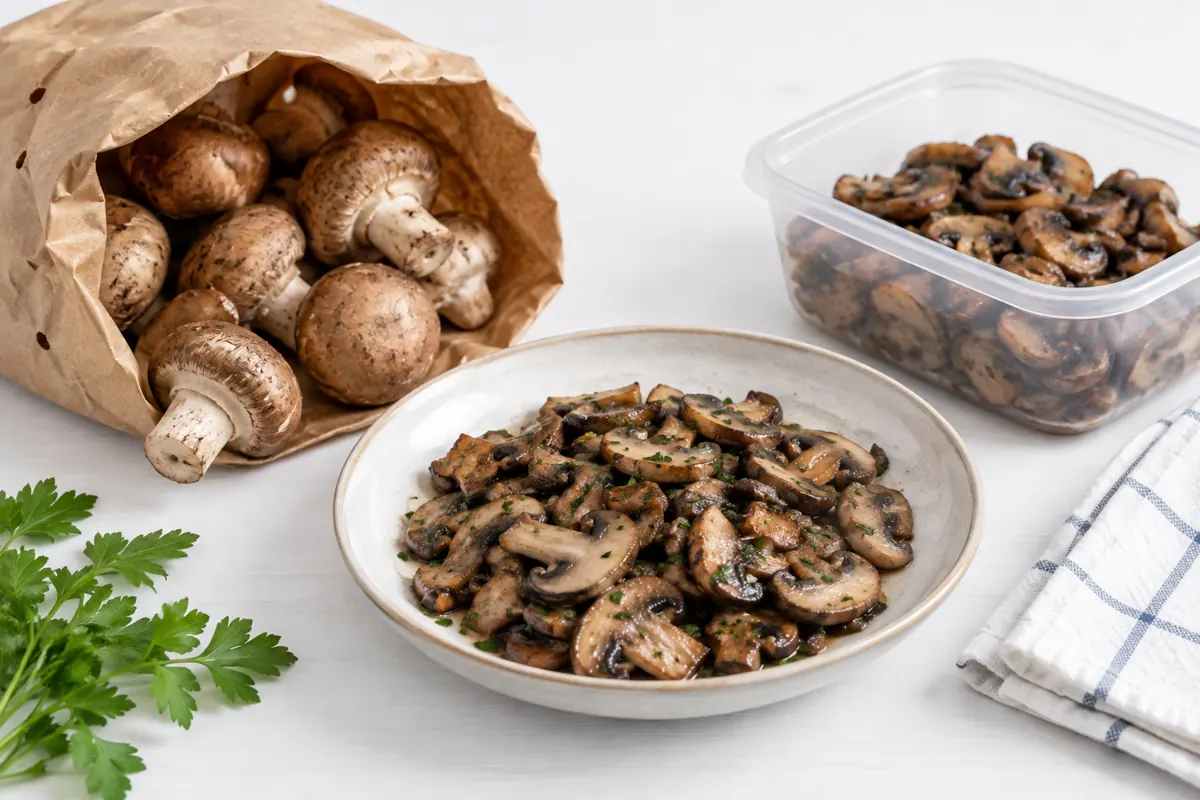
For a household, the benefit is less waste and an easier next meal. For a restaurant or prepared-food producer, the same decisions affect yield, food safety, portion consistency, and whether a surplus can be used in a controlled production cycle. This guide focuses on storage and reuse of excess mushrooms rather than listing every possible mushroom application.
What to do first with leftover mushrooms
Sort the leftovers before deciding on a recipe. Separate fresh, uncooked mushrooms from cooked mushrooms, and keep any unopened or still frozen commercial product in its own category. Look at the surface, smell, and firmness. Fresh mushrooms should generally feel reasonably firm and smell earthy. A few dry marks are different from a wet, sticky coating; the latter is a reason to stop and examine the batch closely. If mold, an unpleasant odor, or extensive sliminess is present, discard the affected mushrooms. Cooking is not a way to restore spoiled produce.
Next, establish when and how the mushrooms were handled. A whole mushroom kept cold and dry has a different practical window from pre-sliced mushrooms exposed to air and moisture. A cooked mushroom mixture must be handled as a cooked leftover: cool it promptly, refrigerate it in a shallow covered container, and follow the applicable food-safety rule for your kitchen. Do not assume a cooked dish has the same storage life as the raw ingredient. Its other ingredients may be the limiting factor.

What to do first with leftover mushrooms
Use the oldest sound stock first. That simple rotation rule often prevents the decision from becoming urgent. If a case arrives on Monday and a partial case remains on Wednesday, make the next prep plan visible to the team. An unlabelled tub at the back of the refrigerator can be overlooked until it is unusable. Labels should include the product, preparation state, date, and, in a commercial kitchen, the responsible batch or lot.
Quantity matters as much as condition. A handful of sound mushrooms might be folded into eggs or a pan sauce. Several kilograms call for a deliberate batch process: cook them down, chill them safely, portion them, and assign a later menu use. Scale does not justify leaving a large warm mass on a counter. Large batches need equipment and procedures that cool food quickly enough for the local food code and the operation's hazard controls.
Finally, decide whether the mushrooms need to remain visible in the finished dish. A mushroom that has lost a little firmness can still work chopped into a filling or minced into a sauce, provided it is sound. A visually appealing whole or halved mushroom can take a more prominent role. Matching the ingredient's condition to the dish produces a better result than forcing every leftover into the same recipe.
Store fresh mushrooms according to their condition
Fresh mushrooms manage moisture poorly when they are sealed wet. Trapped condensation can make a sound batch deteriorate faster. Keep unwashed fresh mushrooms refrigerated in a breathable package such as a paper bag or their original ventilated packaging, following the supplier's handling instructions. Clean them close to use. If they have already been washed, drain and dry them well, then plan to cook them soon. Washing is not itself a preservation step.
Whole mushrooms usually offer more flexibility than sliced ones because their cut surfaces are less exposed. A case of whole button mushrooms can be allocated across several prep tasks. Pre-sliced mushrooms are convenient but should be scheduled for prompt use and checked more often. Do not mix a fresh arrival into an older open tray. That erases stock rotation and makes it difficult to know which portion needs attention first.

Store fresh mushrooms according to their condition
Keep raw mushrooms away from drips, uncovered ready-to-eat food, and strong odors. Refrigeration and clean containers matter more than a clever storage hack. In a professional kitchen, follow the receiving temperature, cold-holding, and date-marking rules in the local food code and your own food-safety plan. Suppliers can provide product-specific shelf-life guidance, but the actual clock begins with your handling and storage conditions.
Consider whether the quantity can realistically be used while still fresh. If the mushrooms are already near the end of their best eating quality, do not store them another day merely to postpone the choice. Cook them while they are still sound. If the planned menu requires attractive intact slices, reserve the best pieces for that use and redirect smaller or less uniform pieces into a chopped application. This is a sensible grade allocation, not permission to use spoiled material.
There is no single visual test that proves an item safe. A few darker spots can reflect normal handling or oxidation, while discoloration together with slime, mold, or odor is a clear reason for rejection. When the history is unknown or the assessment is uncertain, the cautious choice is to discard. A small reduction in waste is not worth serving a questionable ingredient.
For procurement teams, fresh inventory problems may indicate a mismatch between pack size and consumption. If a restaurant regularly discards the final part of a case, compare smaller case sizes, shorter order intervals, or a frozen format for the portion of demand that is unpredictable. That decision starts with actual weekly usage, not with an abstract preference for one format.
Cook surplus before it loses quality
Sautéing is a practical first step because mushrooms release moisture and shrink. Slice or chop sound mushrooms to suit the intended later use. Cook in batches that let moisture evaporate rather than piling them so deep that they stew unevenly. A broad pan or suitable kettle, adequate heat, and occasional stirring produce a concentrated ingredient that can be divided among several dishes.
Choose a neutral base if the final destination is undecided. Mushrooms cooked with a little oil and modest seasoning can later enter a soup, pasta filling, grain bowl, omelet, or sauce. Heavy garlic, cream, or wine narrows the options and may shorten the usable life of the completed mixture according to its other components. If an operation plans to freeze the cooked base, a plain preparation is often easier to standardize.

Cook surplus before it loses quality
Roasting is another way to handle larger quantities when oven space is available. Spread pieces in an even layer, allow steam to escape, and turn as needed. Roasting concentrates flavor and can create browned edges, but the resulting pieces will be smaller and less moist than fresh mushrooms. That makes them suitable for fillings, pizza toppings, and blended sauces. Keep the tray load and cut size consistent so one batch resembles the next.
Cooking surplus does not reset the age of unsafe raw mushrooms. Begin with material that passes the kitchen's normal receiving and prep checks. Once cooked, cool promptly and refrigerate or freeze under the applicable food-safety procedure. A deep container of hot mushrooms may cool slowly in the center. Shallow pans or small containers make handling easier. Label the finished ingredient with its cook date, batch identity, and intended use.
A simple yield measurement can improve the plan. Weigh a typical raw batch, cook it by the chosen method, then weigh the cooled result. The difference tells you how much moisture the process removed and how many portions it will produce. If 5 kg of raw mushrooms yields much less cooked filling than the menu assumed, the purchasing and costing sheet should reflect that. The precise yield depends on species, cut, pan loading, and endpoint; a trial with your own process is more useful than a universal number.
If the surplus is mixed species, check whether a mixed mushroom base suits the menu. A strong porcini note can dominate a mild button mushroom sauce. Conversely, a small amount of flavorful mushroom may make a blended filling more interesting. Record what went into the batch, especially when customers or buyers expect a named species. A generic leftover blend must never be labelled as a specific mushroom that it is not.
Freeze cooked mushrooms in usable portions
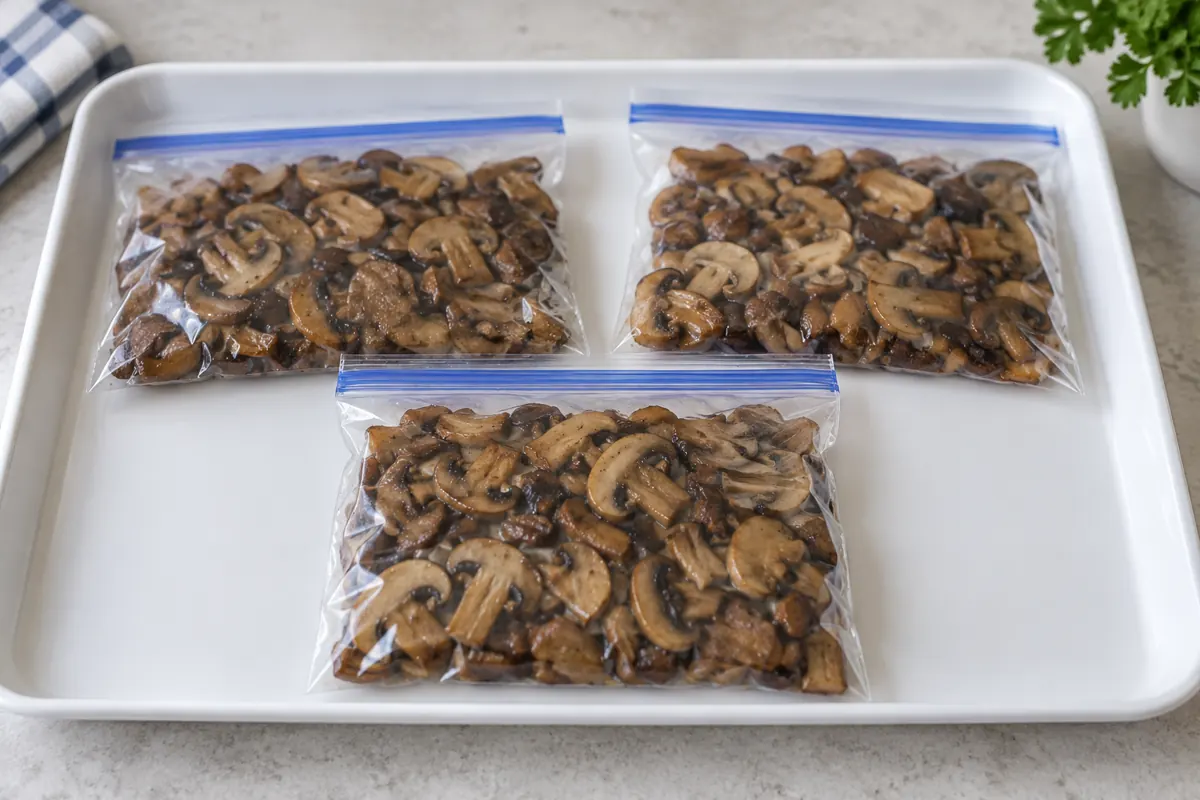
Cooked mushrooms can be frozen for later use when they have been handled safely. Cool them according to the kitchen's procedure, then pack them in quantities that match a real recipe. A thin, flat package freezes and thaws more evenly than a large block. If the next production run uses 500 g of cooked mushrooms per sauce batch, 500 g packs remove guesswork and reduce repeated opening.
Label each package with species or mix, preparation, net weight, cook date, and lot or internal batch reference. A label reading only "mushrooms" leaves the next cook to identify a frozen brown mass. It also weakens traceability. In a household freezer, a date and description are enough to make a useful difference. In foodservice, the label belongs within the operation's inventory and food-safety system.
Freeze cooked mushrooms in usable portions
Freezing changes texture. Water inside mushrooms forms ice; after thawing, pieces may release liquid and feel softer. This is why cooked frozen leftovers are excellent in a soup, sauce, stuffing, or casserole and less suitable as a crisp garnish. The liquid is not automatically a defect; it can be incorporated into a cooked dish if quality and handling are satisfactory. But a recipe that depends on dry browning needs the water managed before final assembly.
Avoid a cycle of thawing a large package, removing a little, and refreezing the rest. Small portions prevent that pattern. For best control, move a sealed portion from freezer to refrigerator for thawing, or use a method allowed by the kitchen's food-safety plan and immediately cook as required. Keep the cold chain intact. Freezing slows quality loss; it does not undo earlier temperature abuse or spoilage.
Frozen commercial mushrooms are a different starting point from home-frozen cooked leftovers. IQF pieces may be portioned directly from a properly managed bag, and some dishes work best when those pieces go into a hot pan or kettle without a full thaw. Follow the supplier's instructions and the site's controls. If the bag has thawed or been held improperly, do not treat refreezing as a repair.
For a buyer, the choice between freezing leftover cooked mushrooms and purchasing frozen mushrooms is a workflow question. If demand fluctuates, a specified frozen product may reduce the labor of cooking, chilling, and repacking an unpredictable surplus. The value depends on pack format, cut, species, price, yield, and the appearance required in the finished dish. Trial both options in the actual recipe.
Choose a reuse that fits texture
Start with the most visible use for the best-looking mushrooms. Firm slices can top pizza, finish a stir-fry, or accompany a protein. Smaller pieces can be chopped for a filling. Soft cooked pieces belong naturally in a blended soup, gravy, risotto base, or pasta sauce. The objective is not to hide poor quality; it is to use sound ingredients where their current texture is an advantage rather than a problem.
For a quick home meal, sautéed leftovers can be added to eggs, folded into a quesadilla, or mixed through a warm grain bowl. If they are already seasoned, taste the dish before adding more salt. Raw leftovers can be cooked with onions and then added to a sandwich filling. These uses require little additional inventory and work well for a small amount. They are also a reminder that an exact recipe is often less important than a repeatable handling decision.

Choose a reuse that fits texture

GreenLand frozen button product sample
For a foodservice kitchen, a controlled mushroom base has several routes. A finely chopped batch can enter a dumpling or pastry filling. A medium dice can go into a prepared sauce. Larger pieces can be part of a frozen meal or a hot bar dish. Set a standard for cut size, moisture, seasoning, and inclusion rate. Otherwise the same nominal menu item may vary whenever a different leftover lot is used.
Soup is a forgiving destination for cooked pieces, but it still needs a flavor plan. Some mushrooms are mild, some earthy, and some have a more pronounced dried-forest note. A blend can be delicious, but the species mix changes the aroma. If the commercial label calls out a particular species, formulation and records must substantiate it. A soup described simply as mushroom soup may allow more flexibility, subject to the company's ingredient and allergen controls.
Sauce offers a useful way to manage the released cooking liquid. Reduce the liquid to concentrate flavor, then add a thickener or emulsified base as the recipe requires. Do not simply pour in all the liquid without testing viscosity and salt. A pizza application is less tolerant of free water because excess moisture can soften the crust. Pre-cooked, well-drained mushrooms are often easier to control there.
Where appearance matters, make a small trial plate or production sample. Compare the leftover preparation with a fresh or specified frozen ingredient after the same cook. Evaluate color, bite, water release, and flavor at service temperature, not just when the package is opened. A practical test protects both quality and margin.
When leftover mushrooms should be discarded
Discard mushrooms with visible mold, a strong unpleasant odor, extensive sliminess, or a condition that your food-safety procedure rejects. Also discard a batch whose time and temperature history cannot be established when that uncertainty affects safety. Do not trim mold from soft mushrooms and assume the rest of the container is sound. A recipe, a high cooking temperature, or an expensive purchase price does not make compromised produce acceptable.
Darkening alone needs context. A cut surface may brown with exposure to air. Some wild or cultivated species naturally have dark caps, pores, or gills. Cooked mushrooms darken as they brown. None of those observations is the same as an assessment of the whole batch. Check firmness, odor, surface moisture, storage history, and the expected appearance for that species and format.

When leftover mushrooms should be discarded
For cooked leftovers, follow the operation's local food code and documented hold-time rules. The US Department of Agriculture's general consumer guidance commonly frames refrigerated cooked leftovers as a short, several-day window, but a particular professional kitchen may have stricter rules. Use the stricter applicable rule and account for ingredients added to the mushrooms. Do not invent a longer life because the mushrooms look acceptable.
For frozen product, reject packages that show signs of compromised integrity or a cold-chain break according to the purchase specification. A little frost on the outside does not alone prove failure, but heavy internal ice, clumped pieces, leakage, or a documented temperature excursion calls for investigation. If the product has thawed and sat warm, return it to the site's disposition process rather than quietly putting it back in the freezer.
Waste records can reveal whether the issue is purchasing, prep, or menu planning. Track the quantity and reason for discard: quality on receipt, storage failure, overproduction, or a menu change. "Mushrooms wasted" is less useful than "1.8 kg sliced mushrooms discarded after an unplanned menu cancellation." The latter points to a practical correction.
In any setting, prevention is easier than rescue. Store sound mushrooms properly, cook a surplus before it declines, freeze safe cooked portions in usable sizes, and reject material that no longer meets quality and safety checks. These steps turn leftover handling into a routine process rather than a last-minute judgment call.
Reducing mushroom waste in a foodservice program
The most effective waste control starts before the order. Compare forecast demand with the pack size, lead time, and shelf-life performance you actually observe. If fresh mushrooms are needed only for a few garnishes but a case minimum drives surplus, a mixed fresh and frozen purchasing plan may fit better. Fresh can serve appearance-critical dishes, while a specified IQF product covers soups, sauces, and variable demand.
Agree on acceptance criteria with the supplier. Specify species, whole or sliced form, cut range, packaging, and the defects that trigger a claim. For frozen pieces, ask how free-flowing they should be, what amount of ice or fines is acceptable, and how the product performs after cooking. An ambiguous description such as "mushrooms, good quality" does little to prevent waste at receiving. A small trial shipment is more informative than an attractive catalogue photograph.

GreenLand frozen shiitake product sample
Make the reuse route visible in production planning. If a recipe can accept a cooked mushroom base, state the allowed species, maximum hold time, cut, and required cook or chill steps. The chef should not have to improvise whether yesterday's sauté belongs in today's sauce. Record batch identity so the final dish can be traced. If the menu uses a named species, prevent an unlabeled mixed batch from substituting silently.
Measure three numbers over several weeks: amount purchased, amount used in saleable food, and amount discarded. Include the labor and energy required to rescue surplus. A cheaper fresh case may cost more than a frozen option once trimming, spoilage, and extra prep are included. Equally, a high-volume kitchen with steady demand may use fresh cases efficiently. The decision is specific to the menu and operation.
At GreenLand, we would evaluate a frozen mushroom alternative against the intended dish rather than promise that one format eliminates all waste. For a soup base, piece appearance may matter less than flavor, clean handling, and reliable yield. For a pizza topping, slice size and water release can matter more. A trial should use the same inclusion rate and cooking process as the live menu.
Leftover mushrooms remain useful while they are sound, correctly stored, and assigned to a realistic next use. Assess them early, cook or portion them before quality slips, and select a dish that accepts their texture. When a recurring surplus appears, change the purchasing and production pattern that created it. That is the durable way to cut mushroom waste without compromising the food served.
For a variable-demand kitchen, the GreenLand frozen mushroom range provides a concrete category to compare with fresh purchasing. Ask for the actual species, cut, pack and sample before using any frozen item as a planned substitute for a leftover cooked base.
Source frozen mushrooms with GreenLand-food
GreenLand-food is a professional frozen mushrooms supplier and manufacturer in China, providing factory-direct wholesale supply for importers, food manufacturers, foodservice distributors, and private-label programs.
Send the product form, specification, packing, quantity, application, destination, private-label needs, and requested documents.