


When to Harvest Snow Peas: Maturity Signs That Affect Quality
Sep 23, 2026
Leave a message


Harvest Snow Peas When Pods Are Full Length but Still Flat
Working decision. The central harvest rule is full length without seed filling. The pod should look complete for the variety yet remain broad and flat, with only faint seed outlines rather than rounded bumps. The eating test should follow the intended application, not an abstract idea of quality.
Length alone is not enough because short varieties and weather-stressed plants differ. Flatness shows that the edible pod wall is still the main product. A tender pod bends slightly and snaps cleanly without a coarse membrane dominating the bite. These differences are most useful when they are observed in a controlled sample. Keep sample weight, preparation, temperature and evaluation time consistent; otherwise an ingredient may appear better simply because it was served warmer, cooked less or selected more carefully.
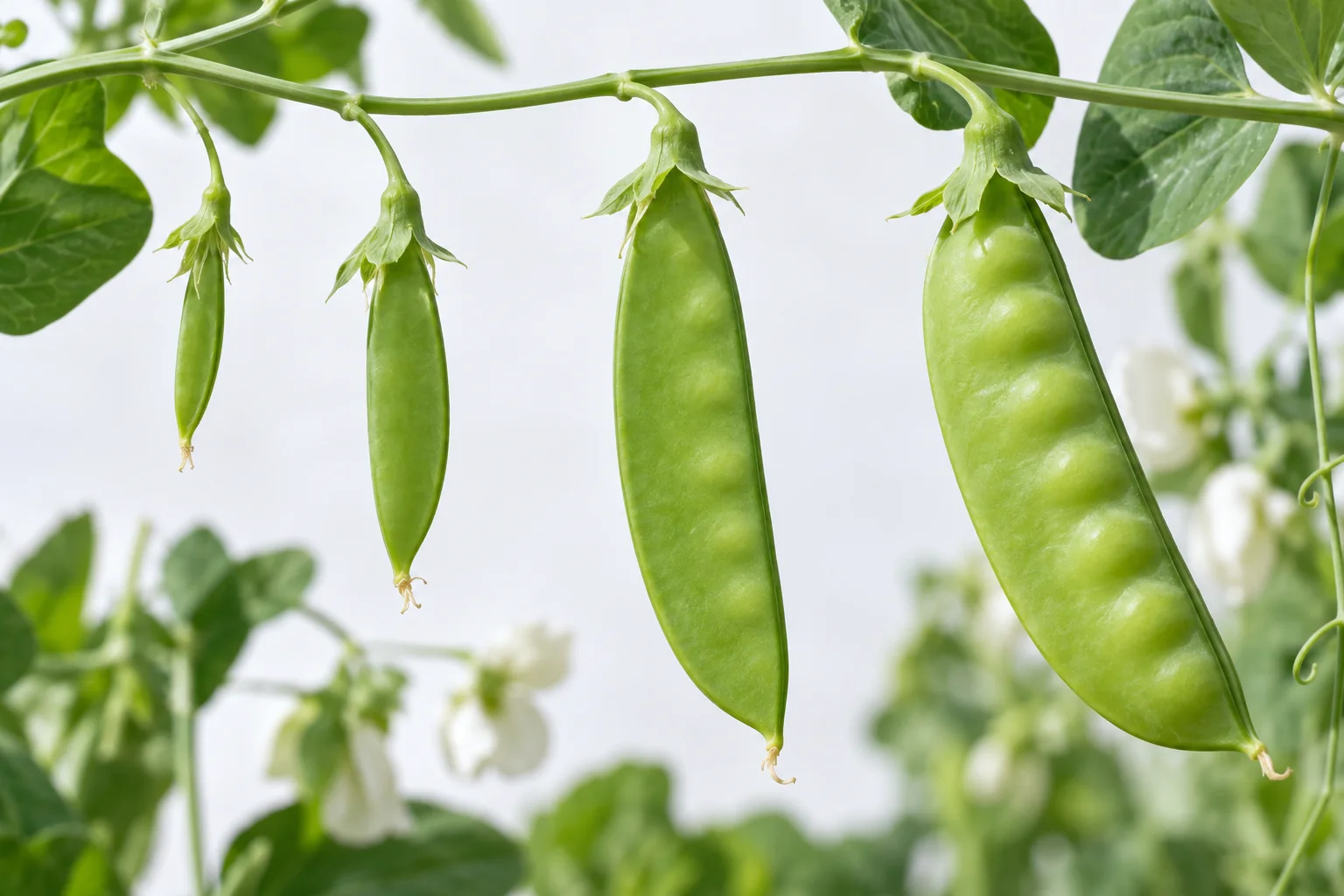
A botanical progression of snow pea pods from too small to ideal flat full-length to overmature swollen pod, accurate seams and seed bulges, no labels.
A repeatable way to evaluate it
Walk several representative rows in cool conditions and inspect pods from different canopy positions. Compare length, width, seed outline and seam. Open and taste a small sample under the farm's food-safety practice, then cook a second sample if the crop is destined for freezing. Include more than one unit or handful from the lot. Frozen and field products are distributions, not identical objects, so a single attractive pod or pea cannot represent the shipment. Compare an accepted control where possible and separate appearance, aroma, flavor and texture in the notes.
Where quality is usually lost
Waiting for pods to look heavy improves gross weight but changes the product category toward mature peas in a fibrous shell. Picking too early protects tenderness but sacrifices yield and produces undersized packs. Correcting the process after the raw material has crossed its useful maturity or texture window is rarely efficient. Sorting, trimming or stronger cooking may change appearance, but it can also reduce yield and damage the parts of the lot that were already suitable.
Application and purchasing implications
Processors should align field teams around a visual maturity reference, not a date printed once on the crop plan. The preferred window must reflect the finished frozen specification and acceptable size distribution. Cost should be compared on usable finished performance. Include preparation loss, cooking yield, labor, storage and defect removal rather than reading the invoice price as the complete answer.
What to put in the record
Record variety, field, picking date, pod length range, seed bulge score and tender-pod percentage. Photographs beside a ruler and an accepted sample give crews a clearer target than verbal instructions. Add the date, operator, supplier lot and formula or process version. A concise record backed by photographs and a retained sample gives the next purchasing or production discussion a factual starting point.
Use Pod Shape, Seed Bulge and Surface Condition as Maturity Signals
Working decision. Use several signals together: pod dimensions, flat profile, seed bulge, surface gloss, color, seam development and flexibility. No single sign is reliable in every variety or weather condition. A side-by-side control makes this change much easier to recognize.
Ideal pods are generally smooth and bright, but gloss can change with surface moisture and light. Seed bulge is more direct: increasingly rounded bumps show that the seeds are filling and the pod is moving beyond its premium edible-pod stage. These differences are most useful when they are observed in a controlled sample. Keep sample weight, preparation, temperature and evaluation time consistent; otherwise an ingredient may appear better simply because it was served warmer, cooked less or selected more carefully.

Close inspection of an ideal flat glossy pod beside an overmature pod with visible seed swelling, tougher seam and dull surface, no text.
A repeatable way to evaluate it
Create a field card with real samples or accurate photographs representing early, target and late maturity. Inspect both sides of the pod, flex it gently and pull the seam on a sample. Repeat at several times during the harvest period. Include more than one unit or handful from the lot. Frozen and field products are distributions, not identical objects, so a single attractive pod or pea cannot represent the shipment. Compare an accepted control where possible and separate appearance, aroma, flavor and texture in the notes.
Where quality is usually lost
Avoid rejecting pods only because they curve slightly or carry minor harmless surface variation. Conversely, a bright pod can still be late if the seeds are swollen. Cosmetic and maturity defects should be separated. Correcting the process after the raw material has crossed its useful maturity or texture window is rarely efficient. Sorting, trimming or stronger cooking may change appearance, but it can also reduce yield and damage the parts of the lot that were already suitable.
Application and purchasing implications
A buyer specification can use length and width ranges, but it also needs qualitative maturity language. Define the maximum allowed proportion with pronounced seed development, tough seams, yellowing, decay, damage or dehydration. Cost should be compared on usable finished performance. Include preparation loss, cooking yield, labor, storage and defect removal rather than reading the invoice price as the complete answer.
What to put in the record
Record defect categories separately rather than one total rejection number. The breakdown reveals whether a lot is late, heat stressed, mechanically damaged or simply outside the preferred size. Add the date, operator, supplier lot and formula or process version. A concise record backed by photographs and a retained sample gives the next purchasing or production discussion a factual starting point.
Late Harvest Increases Fiber, Strings and Starchy Flavor
Working decision. As snow peas mature, the pod wall and seam become more structural, strings are more noticeable and developing seeds contribute a starchier pea flavor. The crisp-tender eating window narrows quickly. Agricultural variation is normal, but the useful range can still be defined.
The change affects both raw inspection and cooking. Heat softens cells but does not remove a fully developed seam fiber. An overmature pod may become limp around a string that remains tough, creating a particularly poor bite. These differences are most useful when they are observed in a controlled sample. Keep sample weight, preparation, temperature and evaluation time consistent; otherwise an ingredient may appear better simply because it was served warmer, cooked less or selected more carefully.
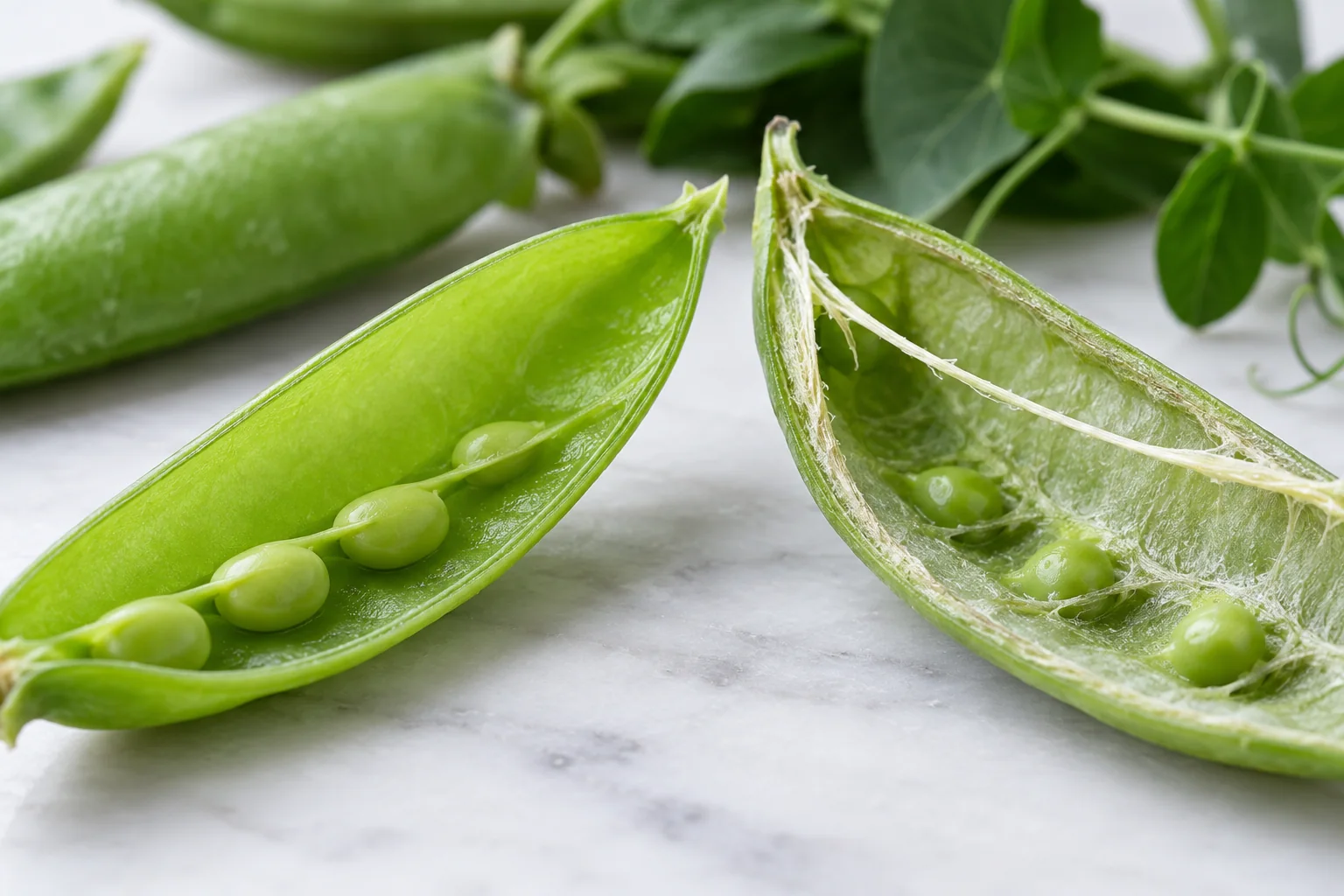
Macro cutaway comparing tender thin pod wall with a late fibrous pod wall and pronounced string, scientifically plausible and without labels.
A repeatable way to evaluate it
Compare target and late pods after the same blanch or stir-fry. Pull the seam, cut cross-sections and count pods that require trimming. Taste sweetness, fresh-green aroma, seed mealiness and fibrous residue after chewing. Include more than one unit or handful from the lot. Frozen and field products are distributions, not identical objects, so a single attractive pod or pea cannot represent the shipment. Compare an accepted control where possible and separate appearance, aroma, flavor and texture in the notes.
Where quality is usually lost
Do not expect longer blanching to rescue late maturity. Extra heat may soften the pod surface, dull the color and increase moisture loss while the structural string remains. Trimming strings after harvest adds labor and yield loss. Correcting the process after the raw material has crossed its useful maturity or texture window is rarely efficient. Sorting, trimming or stronger cooking may change appearance, but it can also reduce yield and damage the parts of the lot that were already suitable.
Application and purchasing implications
For frozen supply, late pods can raise sorting cost and reduce usable pack yield. If the market accepts a more mature style, state that deliberately; otherwise field selection is more efficient than relying on factory removal. Cost should be compared on usable finished performance. Include preparation loss, cooking yield, labor, storage and defect removal rather than reading the invoice price as the complete answer.
What to put in the record
Record string incidence, seed-bulge category, blanch yield and sensory rejection. Link those results to field date and interval since the previous pick to improve scheduling. Add the date, operator, supplier lot and formula or process version. A concise record backed by photographs and a retained sample gives the next purchasing or production discussion a factual starting point.
Pick Frequently and Protect the Vine
Working decision. During active production, snow pea pods can pass through the ideal window quickly. Frequent picking captures pods at similar maturity and encourages the team to remove hidden older pods. The field or kitchen method must be simple enough for another shift to repeat.
Harvest technique also matters. Pulling one-handed can tear vines, break growing tips or dislodge flowers. Supporting the vine while pinching or clipping the stem protects future yield and reduces plant debris in field containers. These differences are most useful when they are observed in a controlled sample. Keep sample weight, preparation, temperature and evaluation time consistent; otherwise an ingredient may appear better simply because it was served warmer, cooked less or selected more carefully.
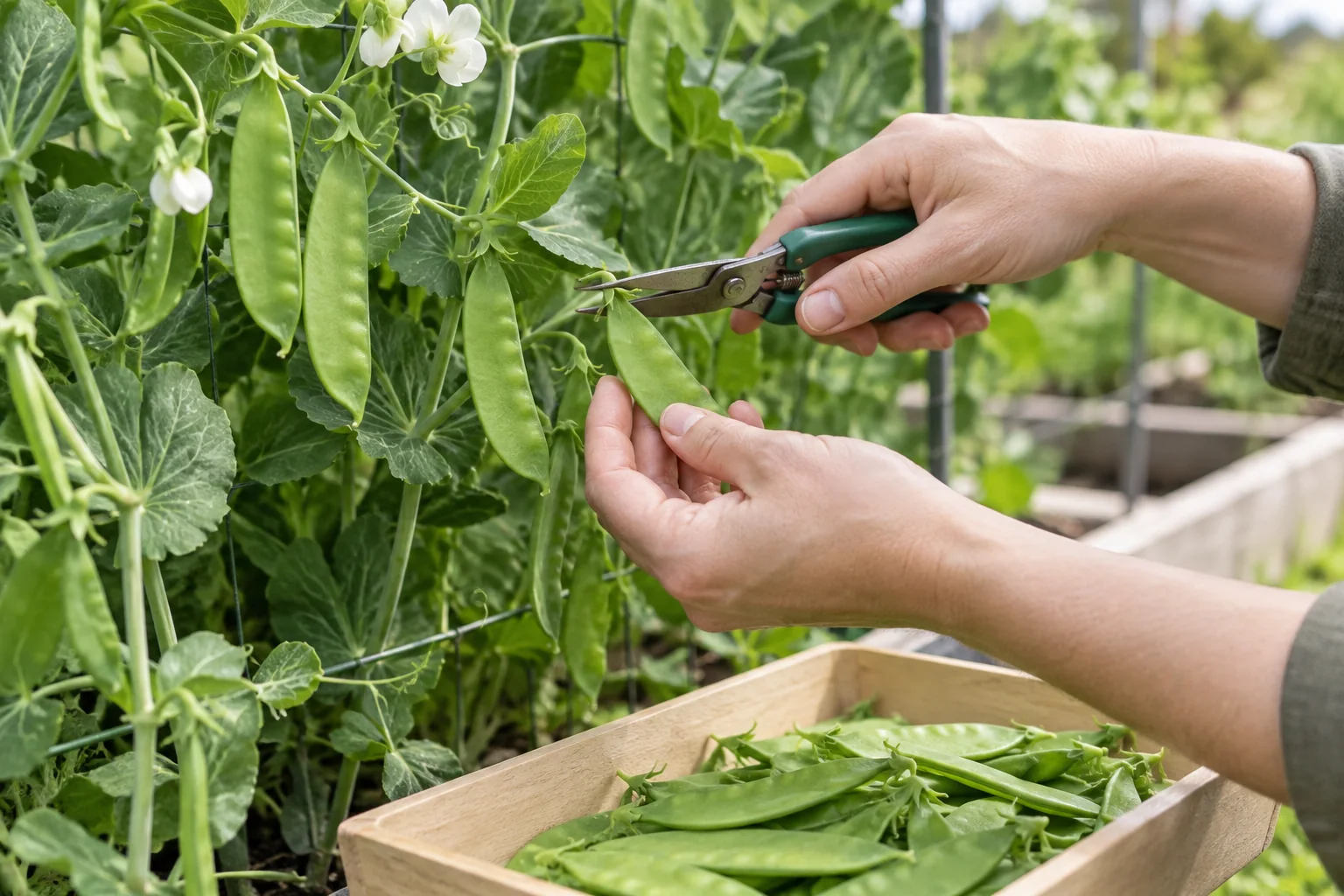
Hands harvesting snow peas with one hand supporting the vine and the other clipping a pod into a shallow field tray, no faces or branding.
A repeatable way to evaluate it
Set the picking interval from observed crop development rather than habit. Work in the cool part of the day where practical, move systematically through both sides of the row and use shallow, clean containers that limit compression. Include more than one unit or handful from the lot. Frozen and field products are distributions, not identical objects, so a single attractive pod or pea cannot represent the shipment. Compare an accepted control where possible and separate appearance, aroma, flavor and texture in the notes.
Where quality is usually lost
Deep sacks, overfilled bins and rough tipping bruise pods and trap field heat. Leaving overmature pods on the plant also confuses later picks and can divert plant resources toward seed development. Correcting the process after the raw material has crossed its useful maturity or texture window is rarely efficient. Sorting, trimming or stronger cooking may change appearance, but it can also reduce yield and damage the parts of the lot that were already suitable.
Application and purchasing implications
A commercial harvest plan should connect crew pace with receiving and cooling capacity. Harvesting more than the cooling system can handle simply transfers a field scheduling problem into postharvest quality loss. Cost should be compared on usable finished performance. Include preparation loss, cooking yield, labor, storage and defect removal rather than reading the invoice price as the complete answer.
What to put in the record
Record crew, block, start and finish time, container depth, gross yield and reject reason. Use spot checks during the shift so corrective feedback reaches pickers before the field is finished. Add the date, operator, supplier lot and formula or process version. A concise record backed by photographs and a retained sample gives the next purchasing or production discussion a factual starting point.
Remove Field Heat Before Quality Slips
Working decision. Snow peas continue respiring after harvest. Shade and prompt cooling slow moisture loss, yellowing, wilting and flavor decline, preserving crispness before processing. The result should be judged after the full holding or processing step.
Tender edible pods have a high surface-area-to-mass ratio and lose water readily. A short delay in sun or warm air can change flexibility and appearance even when no decay is visible. These differences are most useful when they are observed in a controlled sample. Keep sample weight, preparation, temperature and evaluation time consistent; otherwise an ingredient may appear better simply because it was served warmer, cooked less or selected more carefully.

Postharvest cooling scene with shallow crates of snow peas moving from field shade into forced-air cooling, no facility logo or fabricated measurements.
A repeatable way to evaluate it
Move full field containers out of direct sun, avoid unnecessary waiting at row ends and begin the validated cooling route promptly. Use clean shallow containers and airflow appropriate to the operation. Monitor product temperature rather than judging the room alone. Include more than one unit or handful from the lot. Frozen and field products are distributions, not identical objects, so a single attractive pod or pea cannot represent the shipment. Compare an accepted control where possible and separate appearance, aroma, flavor and texture in the notes.
Where quality is usually lost
Do not wet pods casually to create a fresh appearance; uncontrolled water can spread contamination and complicate decay management. Cooling and sanitation methods must follow the site's food-safety and postharvest program. Correcting the process after the raw material has crossed its useful maturity or texture window is rarely efficient. Sorting, trimming or stronger cooking may change appearance, but it can also reduce yield and damage the parts of the lot that were already suitable.
Application and purchasing implications
For a freezing line, the objective is not merely cold raw material. It is a predictable starting condition for washing, trimming, blanching and freezing. Warm, wilted pods behave differently and may show lower finished yield. Cost should be compared on usable finished performance. Include preparation loss, cooking yield, labor, storage and defect removal rather than reading the invoice price as the complete answer.
What to put in the record
Record harvest temperature, time to shade, time cooling begins, product temperature after cooling and visible dehydration. These data identify whether quality drift began in the field or later in processing. Add the date, operator, supplier lot and formula or process version. A concise record backed by photographs and a retained sample gives the next purchasing or production discussion a factual starting point.
Maturity Changes Blanching and Freezing Performance
Working decision. Uniformly tender pods blanch more evenly than a mixed-maturity lot. Late pods with thicker walls and larger seeds need more heat, while tender pods in the same batch can overcook. Raw appearance and finished eating quality must be considered together.
Blanching controls enzymes and prepares texture, but it cannot reverse field maturity. The process window should protect green color and a crisp-tender bite, then rapid cooling and freezing should limit further softening. These differences are most useful when they are observed in a controlled sample. Keep sample weight, preparation, temperature and evaluation time consistent; otherwise an ingredient may appear better simply because it was served warmer, cooked less or selected more carefully.

Flat snow pea pods and small seeds showing edible-pod anatomy.
A repeatable way to evaluate it
Run maturity groups separately through a pilot blanch. Measure time, temperature, weight change, color, seam tenderness and texture after freezing and final cooking. Test the complete use cycle rather than evaluating only the freshly blanched pod. Include more than one unit or handful from the lot. Frozen and field products are distributions, not identical objects, so a single attractive pod or pea cannot represent the shipment. Compare an accepted control where possible and separate appearance, aroma, flavor and texture in the notes.
Where quality is usually lost
A longer universal blanch can hide underprocessing risk in thick pods at the cost of limp tender pods. Mixed maturity also creates uneven ice and water release during cooking because tissue structure differs. Correcting the process after the raw material has crossed its useful maturity or texture window is rarely efficient. Sorting, trimming or stronger cooking may change appearance, but it can also reduce yield and damage the parts of the lot that were already suitable.
Application and purchasing implications
Processors benefit from a defined incoming maturity range and a clear reject or diversion route. Pods outside the whole-pod specification may suit chopped applications only if food safety and quality requirements are still met. Cost should be compared on usable finished performance. Include preparation loss, cooking yield, labor, storage and defect removal rather than reading the invoice price as the complete answer.
What to put in the record
Record incoming maturity score, blanch setting, frozen free-flow condition, broken-piece level, color and post-cook bite. Link the retained frozen sample to its field lot and process record. Add the date, operator, supplier lot and formula or process version. A concise record backed by photographs and a retained sample gives the next purchasing or production discussion a factual starting point.
Translate Harvest Maturity into a Buyer Specification
Working decision. A useful buyer specification converts harvest judgment into measurable and observable acceptance rules without pretending agriculture has no natural variation. Commercial language becomes useful only when it points to a shared test.
Include variety or type where relevant, pod length and width, flatness, maximum seed bulge, color, tenderness, string incidence, broken pieces, foreign material, defects, blanching status, packing and intended use. State how the sample will be prepared for texture assessment. These differences are most useful when they are observed in a controlled sample. Keep sample weight, preparation, temperature and evaluation time consistent; otherwise an ingredient may appear better simply because it was served warmer, cooked less or selected more carefully.

Frozen snow pea pods showing flat pod condition and color.
A repeatable way to evaluate it
Agree on sampling across cartons and positions, then inspect frozen appearance and a standardized cooked sample. Use an approved reference lot for sensory comparison and define which defects trigger re-sorting, price discussion or rejection. Include more than one unit or handful from the lot. Frozen and field products are distributions, not identical objects, so a single attractive pod or pea cannot represent the shipment. Compare an accepted control where possible and separate appearance, aroma, flavor and texture in the notes.
Where quality is usually lost
Avoid phrases such as young and tender without a method. Avoid tolerances so tight that a supplier cannot assemble a realistic agricultural lot. The specification should protect the application and remain workable at commercial scale. Correcting the process after the raw material has crossed its useful maturity or texture window is rarely efficient. Sorting, trimming or stronger cooking may change appearance, but it can also reduce yield and damage the parts of the lot that were already suitable.
Application and purchasing implications
Share whether pods will be stir-fried, steamed, packed in meal kits or reheated after frozen storage. A visible whole-pod application needs tighter flatness, string and breakage controls than a chopped mixed-vegetable product. Cost should be compared on usable finished performance. Include preparation loss, cooking yield, labor, storage and defect removal rather than reading the invoice price as the complete answer.
What to put in the record
Record sample approval, lot identity, maturity distribution, cook method, defect results and finished-product feedback. A specification improves when field, factory and buyer observations return to the same evidence trail. Add the date, operator, supplier lot and formula or process version. A concise record backed by photographs and a retained sample gives the next purchasing or production discussion a factual starting point.
Source frozen snow peas with GreenLand-food
GreenLand-food is a frozen-food supplier and manufacturer supporting factory-direct wholesale programs. We match the requested product form and coordinate the commercial details. Send your pod size, maturity, string tolerance, pack, destination and processing use. We will review frozen snow pea options against those requirements.