


Can Cabbage Be Frozen? Shreds, Cut Leaves and Cooked Uses
Oct 19, 2026
Leave a message

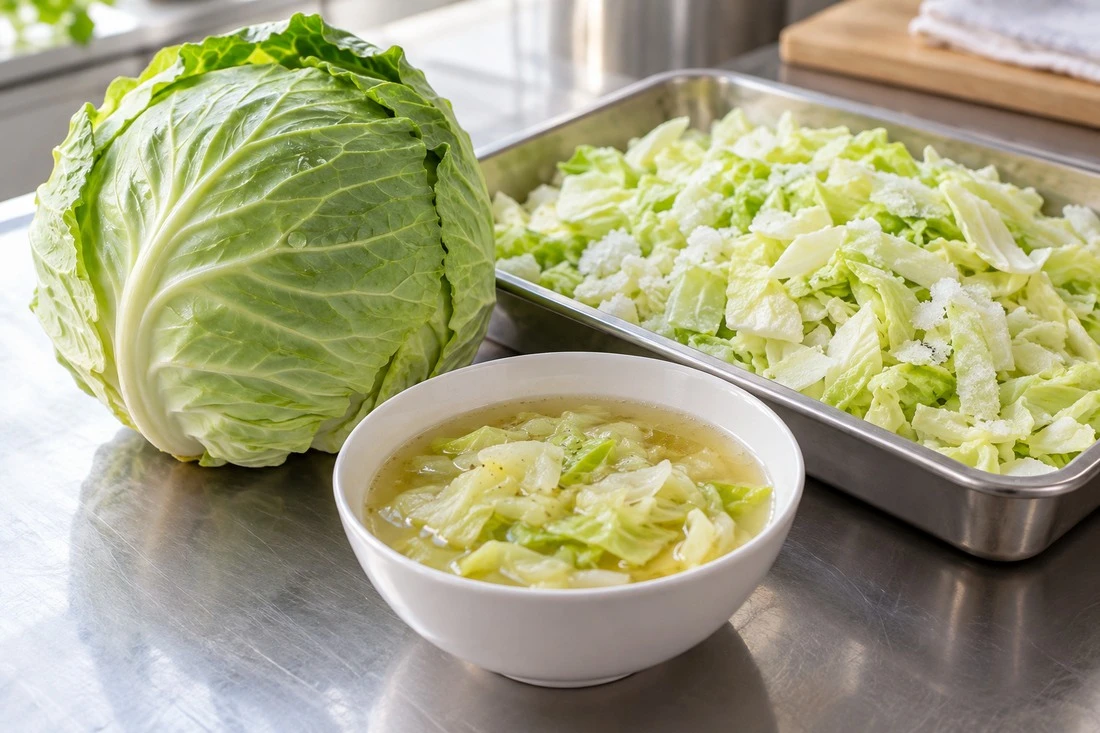
For a household batch, the National Center for Home Food Preservation recommends trimming sound heads, preparing the cut, water blanching for 1½ minutes, cooling promptly, draining and packing. That advice concerns home preservation. A food manufacturer buying frozen cabbage needs the actual SKU's preparation, heating instructions and shelf-life evidence, together with a sample tested in the finished dish. At GreenLand-food, we begin that discussion with cabbage identity and the result the buyer needs after cooking.
Identify the cabbage and the form you intend to freeze
Start with the cabbage name rather than the freezing method. Round green or white heading cabbage has tightly layered leaves around a compact central stem. Napa cabbage has a different head structure and a prominent white rib. Bok choy is another distinct vegetable. Their names sometimes become interchangeable in informal recipes, but a food specification should identify the actual ingredient. A recipe developed for thin Napa leaf cannot automatically establish the performance of a coarse round-cabbage cut.
Choose the form around its later use. Medium or coarse shreds disperse through soup and filling mixtures. Larger leaf cuts remain more visible in a prepared vegetable side. Separated whole leaves are useful when an intact wrapper is required, provided their size and condition suit the recipe. Freezing an entire unprepared head postpones trimming and portioning and makes it harder to inspect the material that will enter the dish. A manageable cut is usually more useful than a large frozen object.
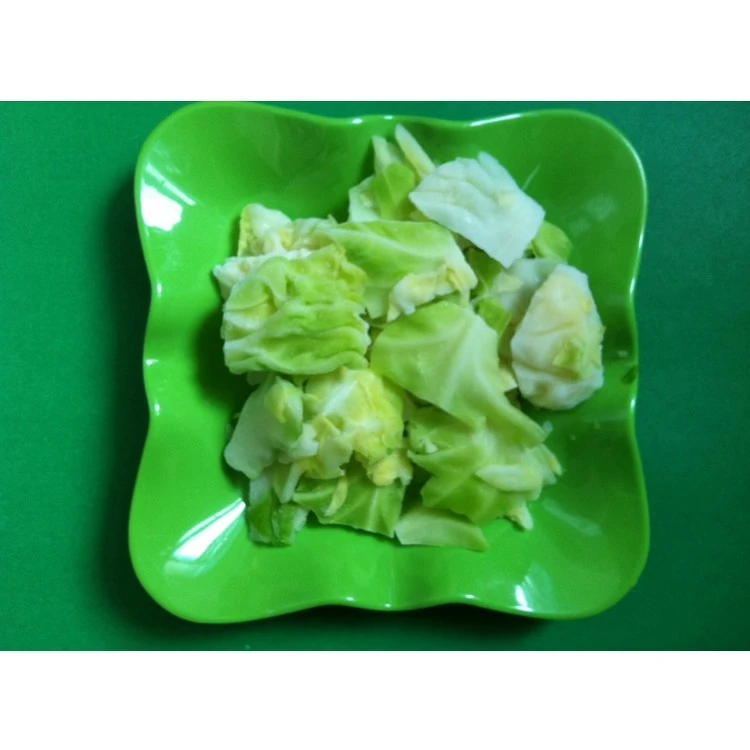
The genuine cut-leaf reference clarifies form; a specified shred program requires its own approval.
The difference between a leaf cut and a shred deserves a written description. An irregular square of leaf may be attractive in a soup yet look wrong in a dumpling filling. A long narrow strip can bridge a small dosing opening or pull filling away from a wrapper seam. A photograph helps explain the intended form, but a few attractive pieces cannot define the full size distribution. For commercial orders, retain the approved sample and describe the size range and inspection method alongside it.
Our frozen cabbage supply page shows genuine cut-leaf product references. Those views illustrate a form that buyers can discuss; they do not establish a particular shred width or prove the treatment of an individual shipment. Where a line needs fine shreds, confirm that form separately, then assess it after the normal customer heating step. This keeps the visible product reference consistent with the order being placed.
Before preparing a home batch, remove damaged or deteriorated material and work with sound cabbage. Freezing preserves the condition entering the freezer; it does not restore old leaves. For purchasing, the corresponding questions are how incoming material is selected, which outer leaves and core portions are removed, and how the supplied cut is represented in the sample. Resolve those points before comparing prices for supposedly equivalent cabbage.
Expect softer leaves and a different water balance
Fresh cabbage owes much of its crunch to its intact plant structure and water distribution. Freezing and subsequent thawing change that structure, so thawed leaves can bend more readily and release liquid. The effect depends on the original cabbage, cut, preparation, freezing conditions and later handling. A bag marked IQF describes an individually frozen form; it does not promise that thawed cabbage will behave like a freshly shredded head in every recipe.
Separate three observations when evaluating a sample: loose ice that arrives with the product, liquid released during a defined thaw, and water leaving during cooking. They affect the kitchen differently. Loose ice adds to the load being heated. Thaw liquid may be drained, retained or incorporated according to the process. Evaporation changes finished weight and concentration. Combining everything into a single description such as watery makes it difficult to decide whether the problem belongs to incoming condition or preparation.
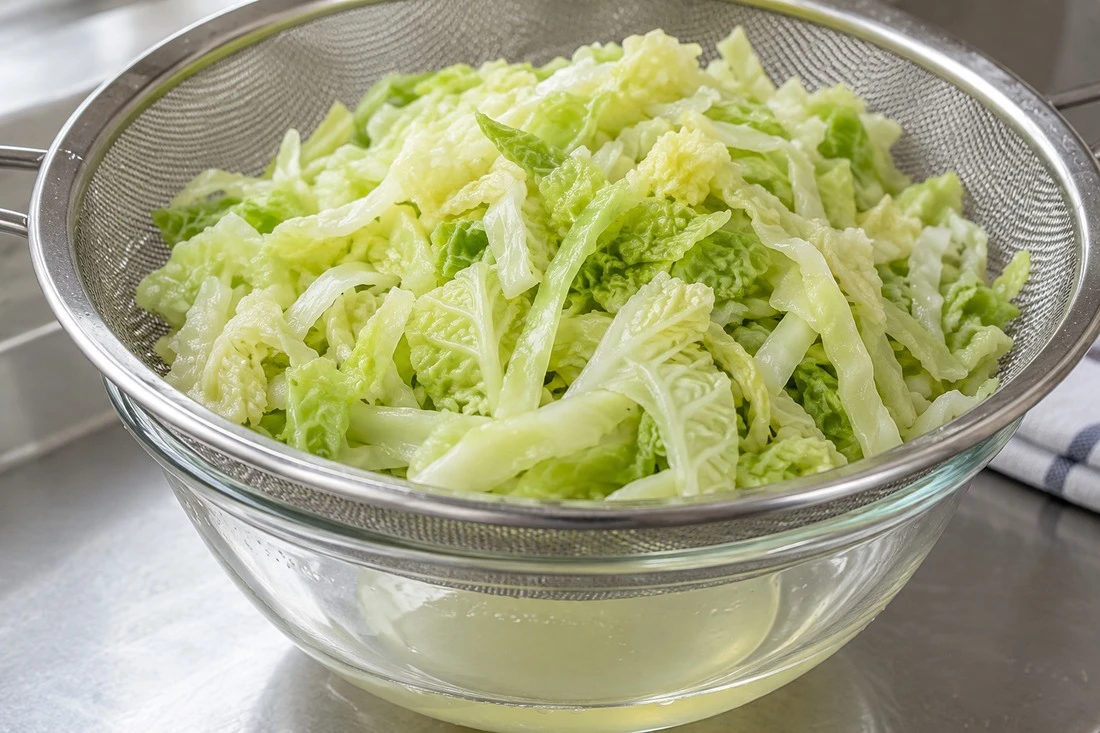
Thawed cabbage and collected liquid remain separate during a drainage assessment.
A small sieve over a collection bowl can make the thawed state visible. Use a defined portion, protected refrigerated thawing where appropriate, a fixed draining period and the same support for each comparison. Do not press one sample firmly and let the other drain freely. Record the starting weight, drained cabbage and collected liquid separately. This is a proposed quality comparison; the operation must also follow the product's safe handling instructions and its own food-safety procedure.
The amount of liquid alone does not decide whether the cabbage is useful. In soup, retained liquid can form part of the broth budget. In a filling, the same liquid may migrate into dough or collect after holding. Excessive squeezing can remove useful ingredient mass and make the remaining cabbage compact or uneven. The correct endpoint is the state needed by the application, with a repeatable preparation method, rather than the driest handful someone can produce.
Taste and appearance should be judged after appropriate cooking. Check whether thin leaves disappear, thick ribs remain intrusive, or the cabbage becomes stringy after holding. A flexible cooked leaf can be acceptable in a soup and unsuitable as a visible side. Approve that distinction explicitly. It is more useful than asking for good texture without naming when and how the texture will be assessed.
Prepare, blanch and cool a household batch
The NCHFP cabbage freezing guidance provides a concise household method and directs the frozen vegetable toward cooked uses. Prepare freshly picked, solid heads by removing coarse outer leaves, then cut medium to coarse shreds or thin wedges, or separate the leaves. Wash using clean equipment and suitable water. Consistent preparation helps the batch heat and cool more evenly than a mixture of very fine strips and thick compact pieces.
For that home method, water blanch for 1½ minutes, then cool promptly. Follow the preservation guidance's procedure and loading conditions rather than interpreting the time as permission to crowd an oversized mass into a small pan. Blanching is used to manage quality changes during frozen storage. It also softens the cabbage, which is why adding a long preliminary cook and a long later cook can leave very little useful leaf structure.
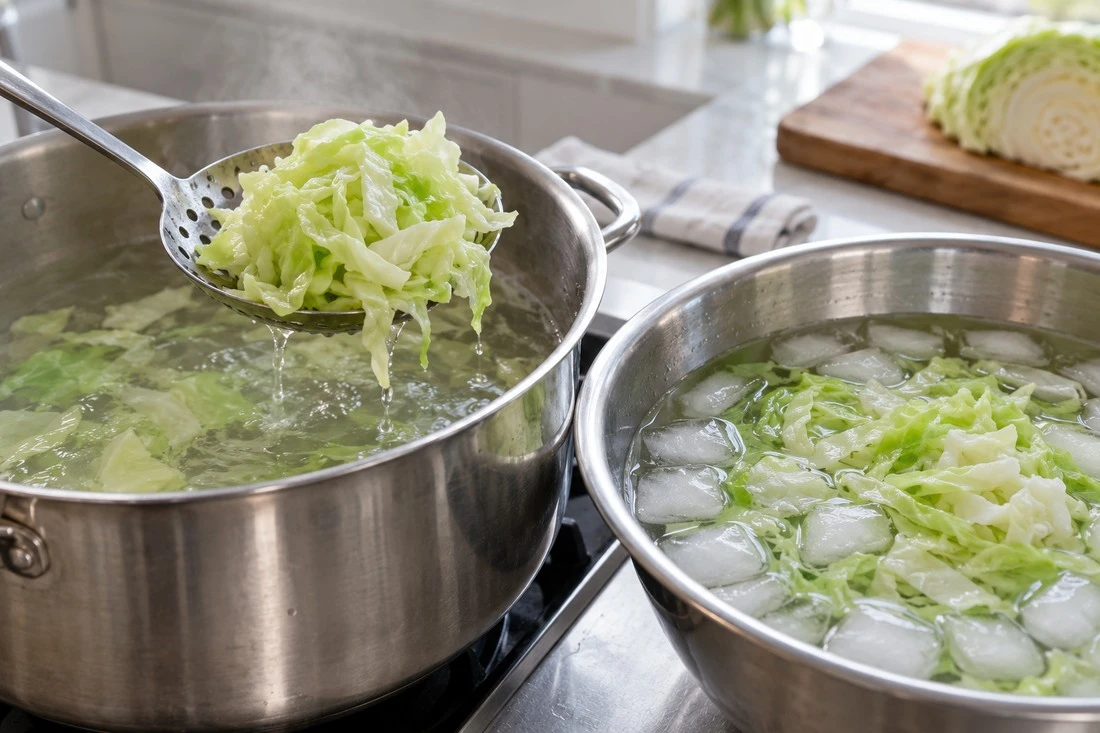
Prepare cooling water before transferring cabbage from the blanching stage.
Arrange cooling before heating begins. A prepared cold-water or ice-water cooling setup, clean transfer utensil and draining support reduce the delay between stages. Move the cabbage promptly and avoid leaving a hot heap in a deep bowl while another task is completed. After cooling, drain it so the frozen pack does not carry unnecessary surface water. Handle the cooled material with clean utensils and protect it from contamination during packing.
The household blanch time must remain within its stated scope. It is not a validated commercial kill step, a universal cooking instruction for every cabbage cut, or proof that a frozen ingredient is ready to eat. A manufacturing process needs controls appropriate to its product, equipment, load and intended use. Buyers should obtain the actual treatment statement and preparation instructions rather than infer them from a photograph of a blanching operation.
For a purchased frozen product, repeating the home preparation sequence may be unnecessary and damaging. The supplier may already have applied a quality treatment. Ask what was done and how the ingredient should enter the customer's process. Our guide to blanching in frozen vegetables explains the broader specification questions. For cabbage itself, the approved sample still needs to survive the complete intended cooking cycle.
When comparing home methods, hold the cabbage cut constant. A thin shred in one batch and a thick wedge in another create different heating and cooling loads before the freezing step is even considered. Mark the portions so they remain identifiable after packing, and compare them in the same cooked recipe. A useful observation is whether a leaf remains distinct after the full cook, rather than whether it feels firm while still partly frozen. The latter can make a weak sample appear stronger than it is.
Drain and pack shreds, leaf cuts and whole leaves
Packing begins with the way the cabbage will be used. A home cook who needs a small quantity for soup benefits from portions that can be removed without thawing the whole supply. A foodservice kitchen needs an inner pack compatible with its usual cooking load. A manufacturer may prefer a bulk format for a continuous process, but only if that format can be opened, fed and identified without repeated warming or unnecessary handling.
Shreds have many contact points where retained surface water can bind pieces together. After suitable cooling and drainage, a thin layer on a clean tray can help a household batch freeze in smaller separable portions before final packing. Transfer the frozen material into a suitable freezer container or bag and close it properly. A tray-freezing demonstration should not be described as equivalent to commercial IQF equipment or used to assign an industrial shelf life.
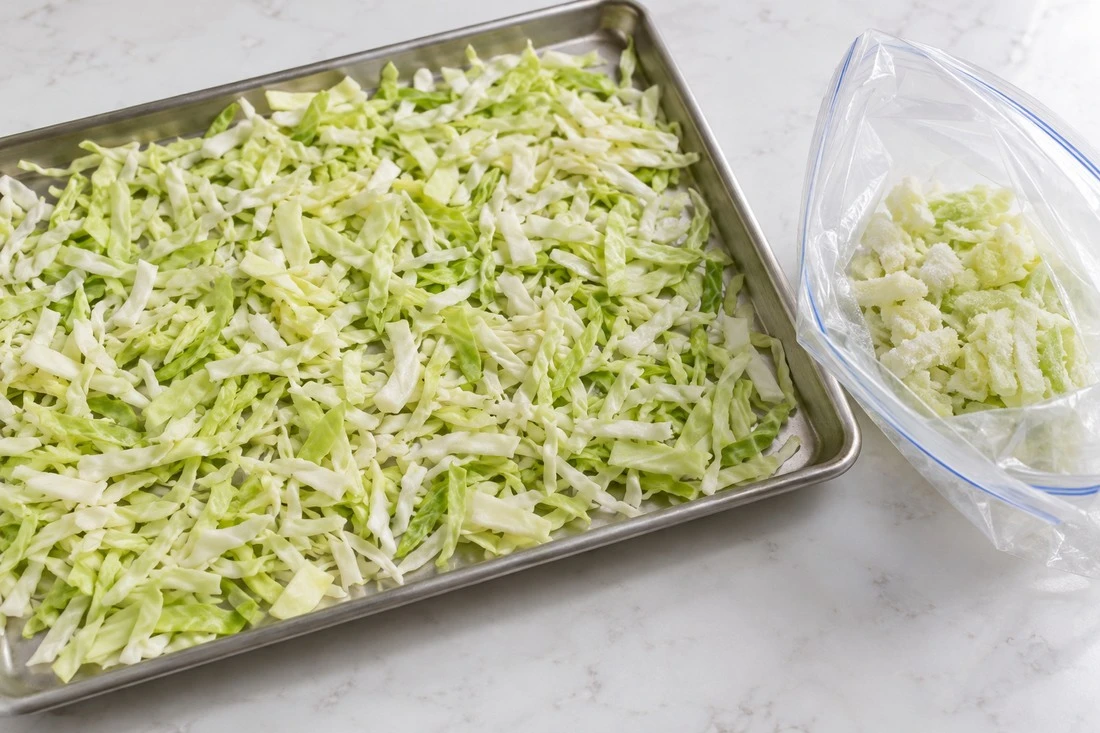
A thin tray layer and suitable freezer packing support practical portioning.
Leaf cuts need enough protection to avoid being crushed into small fragments. With separated leaves, the practical question is whether individual portions can be removed in the condition the recipe requires. Handle them without unnecessary folding or tearing and use a suitable arrangement for the intended wrapper size. The later trial should check usable intact leaves, including any tearing during separation and filling. The weight of the closed pack cannot answer that question by itself.
Use packaging intended for freezing and keep the seal area clean. Remove unnecessary air where the packaging method permits it, label the contents and date, and leave the headspace specified by the applicable preservation guidance. Packaging reduces exposure and handling problems; it cannot compensate for slow cooling, unsuitable raw material or an uncertain temperature history. Follow the freezer and food guidance relevant to the batch rather than applying one internet storage period to every format.
For commercial supply, confirm net weight, liner or inner bag, carton configuration, date coding and lot identification. Product should remain traceable after the outer case is opened. Shelf life belongs to the approved SKU, packaging and storage conditions and needs the supplier's supporting basis. We confirm those fields with the order rather than infer them from a general category description or a competitor's technical sheet.
Once a pack is opened, keep the remaining ingredient protected and follow its instructions for frozen storage and use. A convenient resealing clip does not recreate the original seal or reset the date. If repeated opening causes frost accumulation, difficult separation or unused material, change the pack plan. Smaller inner bags may reduce handling, while larger bags may suit a kettle that consumes the whole portion at once. Compare the handling benefit with packaging cost and waste in the actual operation.
Choose cooked uses that suit the thawed structure
Soup offers a useful starting point because the liquid released by cabbage can enter the dish intentionally. Add the ingredient in a sequence that allows the whole batch to cook appropriately while preserving the desired leaf visibility. Begin with a measured amount of broth and adjust the formula from the finished trial. Pouring in the full fresh-cabbage liquid allowance and then adding an unmeasured frozen load can produce an unexpectedly thin result.
A cooked filling has a different requirement. Cabbage should distribute through the mixture without leaving hard core pieces, long strands across seams or excessive free liquid. Some processes use a controlled thaw and drain; others include a cooking and draining stage. Test the actual route before choosing a cut. If the filling contains meat or another ingredient with a specific heating requirement, the complete product must follow the appropriate validated process. Leaf tenderness is a quality observation rather than a safety endpoint.
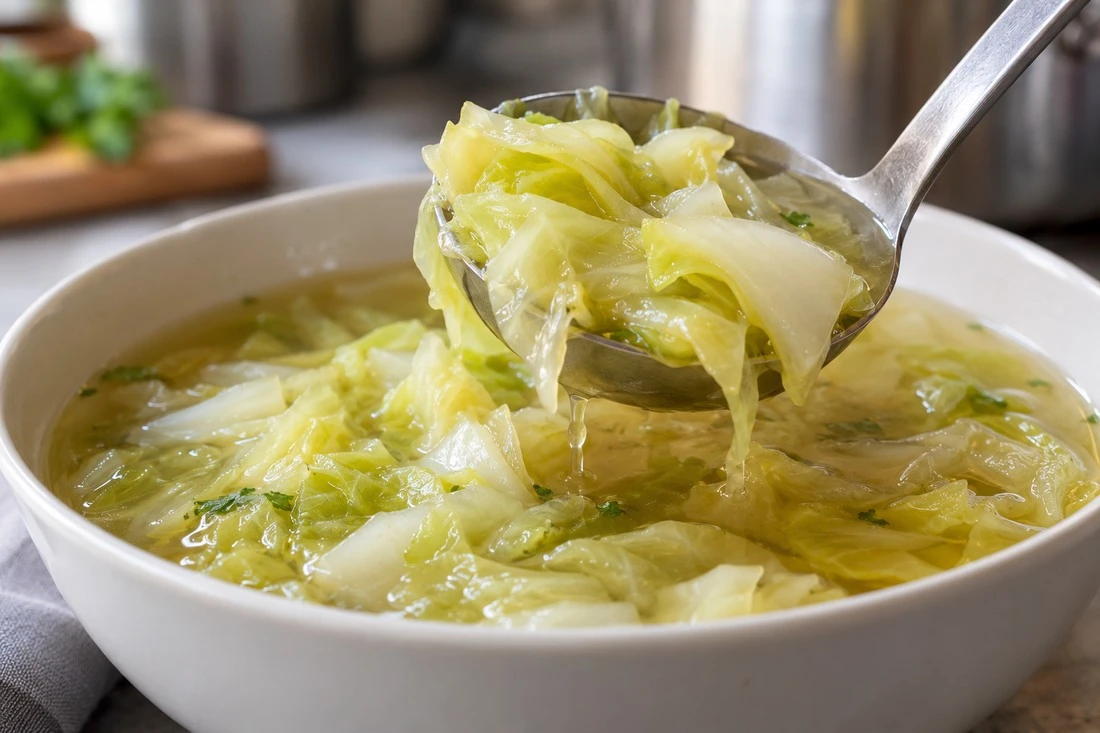
Cooked leaf ribbons remain visible in the broth.
Braised vegetables and cooked meal components can accept softer cabbage when the final portion remains attractive. Consider the second heating step as well as the initial cook. A cabbage side that looks good immediately after preparation may collapse after chilled storage and reheating. A meal manufacturer should examine the actual tray, sauce and heating instructions together. Changing only the cabbage supplier while keeping an unsuitable reheat cycle can leave the same complaint unresolved.
Pan frying is more demanding when pronounced browning is expected. Released water consumes heat and can keep the surface wet, so batch size and pan area matter. A tender cooked side with a few browned edges may be achievable, while a promise of fresh raw crunch would create the wrong expectation. Choose the desired result before deciding whether to cook directly from frozen or use a controlled draining stage. The equipment and product instructions should guide the trial.
For whole-leaf applications, thaw and handle according to the product instructions so the leaves can be separated without unnecessary tearing. Check thickness, flexibility and usable area before filling. A cabbage wrapper must tolerate forming, the full cook and any later reheating. Freezing may make a leaf easier to bend, but easy bending alone does not establish acceptable strength. Record the proportion that remains usable through the complete preparation.
Keep seasoned cooked cabbage separate in the purchasing description from plain frozen cabbage. Salt, oil, sauce and any accompanying ingredients change formulation, yield interpretation, allergen review and preparation instructions. A plain ingredient lets the buyer control those additions, while a prepared component needs its complete recipe and process assessed. The two formats may both suit frozen distribution, but comparing their pack weights as if each kilogram contained the same amount of cabbage can give a misleading cost result.
Check frozen condition and compare usable cooked yield
Inspect the closed pack first. Record its identity, lot, date, seals and visible condition before opening. Note loose ice, unusual clumping, damaged packaging and any evidence requiring a handling review. A clump can arise from several causes, including retained water and compression, so its appearance alone should not be used to reconstruct a temperature history. Temperature records and the condition of multiple packs provide a stronger basis for a supplier discussion.
Keep the yield calculation connected to a specific process. For a cooked cabbage component, one practical definition is the weight of usable prepared cabbage divided by the starting ingredient weight, multiplied by 100. State whether the starting material includes any separated loose ice and whether the prepared weight is taken after draining. Different definitions can produce different percentages from the same material. The order should preserve one agreed basis so later results remain comparable.
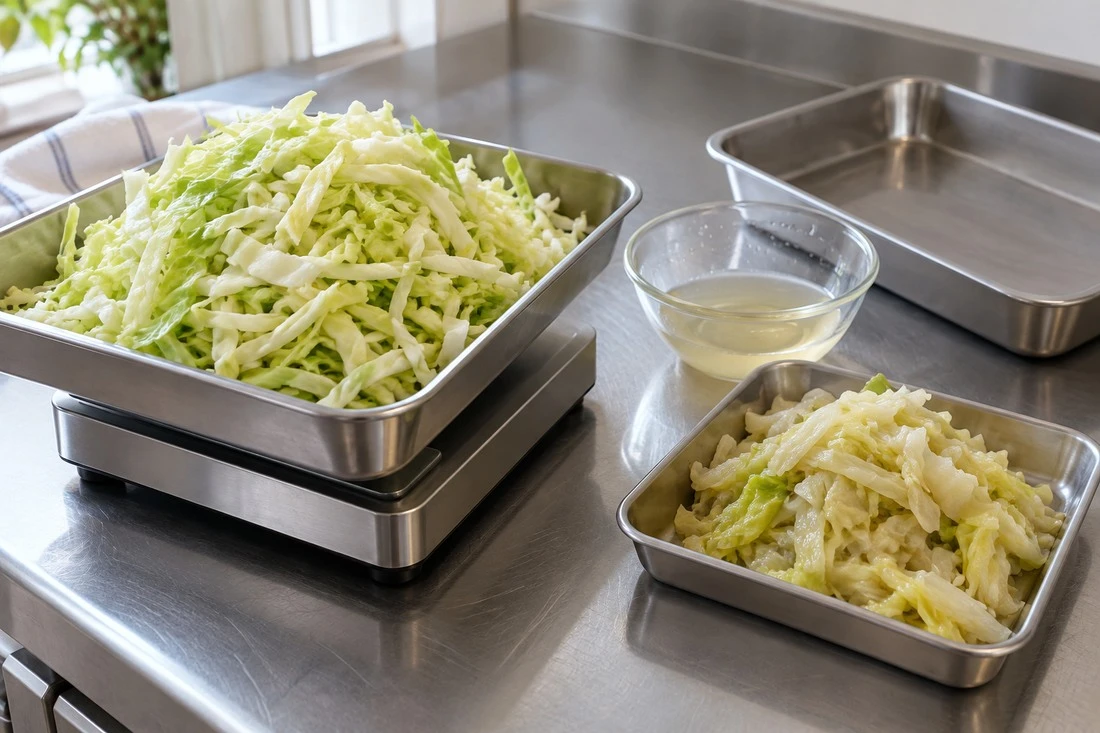
Separate vessels keep cabbage and drain liquid identifiable during a preparation trial.
For example, imagine a proposed trial beginning with 1,000 g of frozen ingredient and producing 720 g of accepted cooked cabbage after the defined draining step. The usable yield on that stated starting basis would be 72%. These are illustrative numbers, not GreenLand test results or an acceptance limit. If another route retains liquid as part of soup, a cabbage-only drained yield would answer a different question from the finished soup output.
Record rejects separately. Dense core fragments, discolored tissue and pieces too small for the application may reduce usable weight for different reasons. Combining them into total loss hides the corrective action. A core issue may require trimming changes; excessive small pieces may require cut or handling review. Some liquid loss is expected from the chosen process and should not automatically be described as a product defect. Agree the interpretation before the sample is approved.
Cost comparisons should follow the same basis. Ingredient price per kilogram is only the first input. Dividing that price by the accepted yield fraction gives a simple ingredient cost per kilogram of usable prepared cabbage, before labor, energy, seasoning, waste handling and packaging. A lower quoted price can still lead to a higher prepared cost if the accepted output is smaller. Use measured trials and commercial terms together when choosing between grades or forms.
Agree the commercial sample, packing and use instructions
A useful frozen-cabbage inquiry names the actual ingredient, proposed form and finished application. Include the destination, expected quantity, packing preference and the way the cabbage will enter the process. If the line uses a small filling depositor, explain its practical restriction. If cabbage must remain visible after soup holding, describe that result. These details allow the supplier to assess a workable form instead of replying to a broad request for premium cabbage.
Approve the sample in its frozen state and in the complete application. Retain the product and lot description, preparation method, photographs and measured results with the specification. Where a sample is prepared differently from normal production, make that difference visible before acceptance. A demonstration portion cooked gently in a shallow pan may not represent a large kettle or a tray reheated by the consumer. The approval should describe the process that matters commercially.
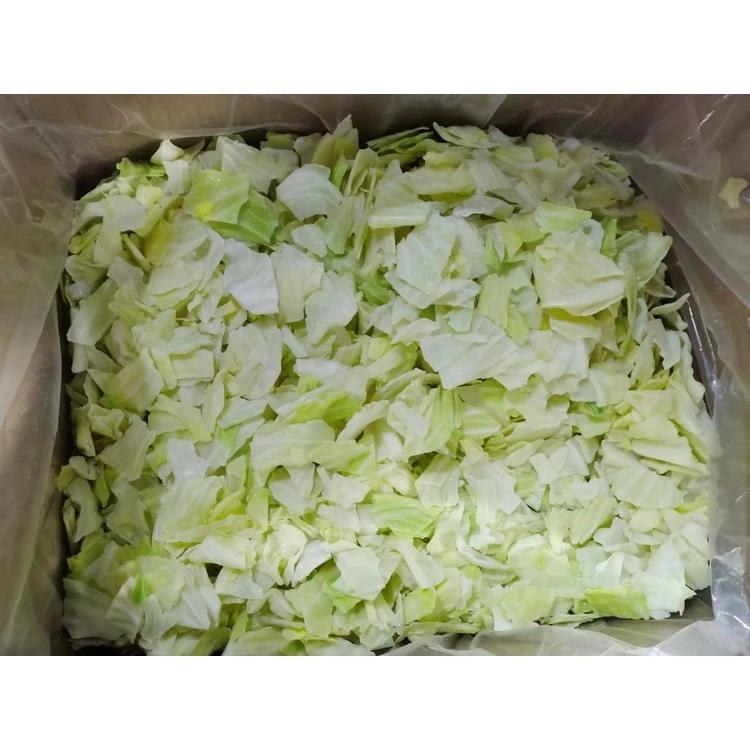
Packed cut leaves provide a form reference; the actual order defines cut, treatment and acceptance.
The written order can then define size distribution, core and thick-rib treatment, color, broken-piece allowance and the required preparation status. Each numerical criterion needs its own sample size, denominator and assessment method. A photograph can support a reference for acceptable appearance, while analytical or microbiological requirements need the relevant sampling and laboratory method. An attractive frozen sample cannot substitute for documents covering hazards that cannot be seen.
Discuss reports and destination requirements before shipment. Agree which documents are needed, which lot they represent and when they will be supplied. Confirm label language, cooking directions, net weight, lot coding and any private-label artwork against the accepted product. We help the purchasing team connect these requirements to the quotation and shipment file. Claims about origin, treatment, certification or ready-to-eat status require the actual order evidence supporting them.
The practical buying decision is whether the confirmed form produces the accepted cooked result at a workable cost and handling load. Once that is demonstrated, preserve the method for repeat orders and review changes in cut, packing or preparation before they enter routine production. A clear frozen specification and a clear kitchen instruction give both teams a consistent basis when the next lot arrives.
Source frozen cabbage with GreenLand-food
GreenLand-food is a professional frozen cabbage supplier and manufacturer in China, providing factory-direct wholesale supply for importers, food manufacturers, foodservice distributors and private-label programs.
Send your product form, specification, packing, quantity, application, destination, private-label needs and requested documents. We help your purchasing team confirm the sample, order details and supply plan for the intended use.