


How to Cook Frozen Cabbage for Soup and Prepared Meal Fillings
Oct 19, 2026
Leave a message

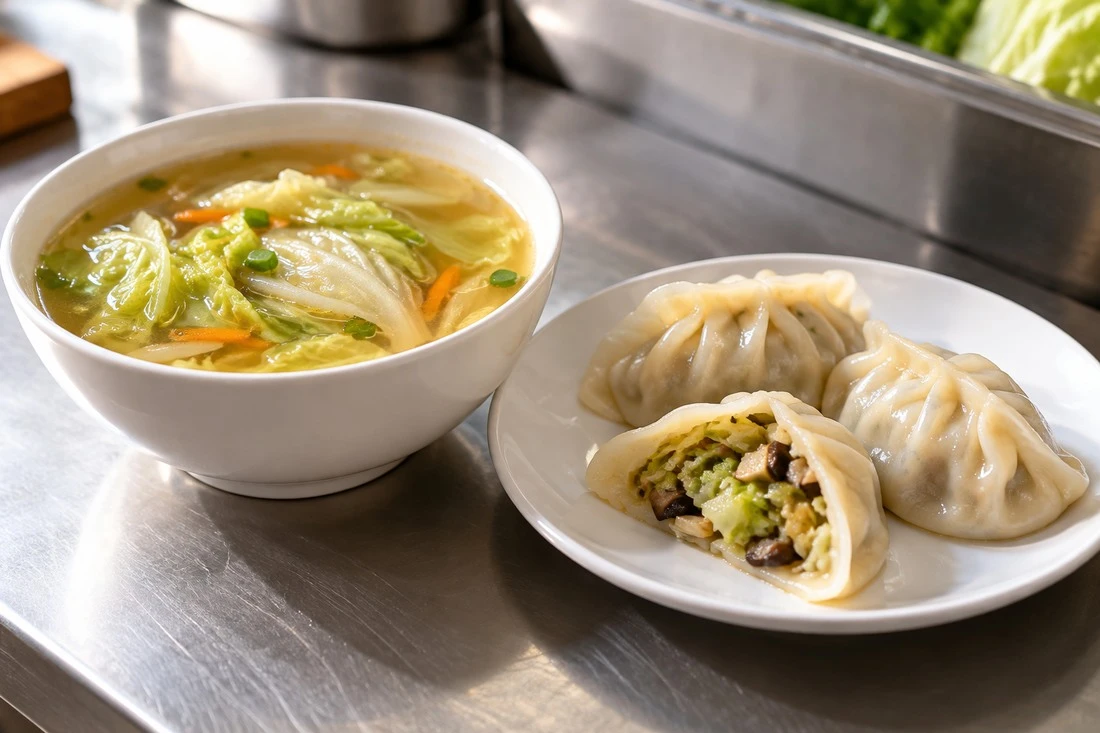
The useful cooking method depends on the supplied cut, previous treatment and finished food. Thin leaves, thick ribs and hard core fragments behave differently. A few extra minutes cannot make a poor cut behave consistently without also softening its tender pieces. We help buyers assess frozen cabbage in the actual soup or filling, including any holding and reheating, then connect the accepted result to the ingredient specification.
Choose a frozen cabbage cut for soup or filling
Identify the vegetable first. This article concerns standard round green or white heading cabbage. Napa cabbage and bok choy have different leaf and rib structures, so recipes using those ingredients can suggest a cooking approach without establishing the result for heading cabbage. Keep the product name, supplied cut and treatment statement together when requesting a sample. A carton marked only cabbage leaves too much room for a substitution that may be obvious only after cooking.
For soup, choose how visible the cabbage should remain at service. Broad leaf pieces can make the ingredient easy to recognize, while fine shreds distribute through a thicker soup. Very long strands can be awkward on a spoon or inconsistent in a small portion. Consider the serving vessel and the other solids in the recipe. A cut that looks attractive in a large stockpot can be inconvenient in a small single-serving cup.
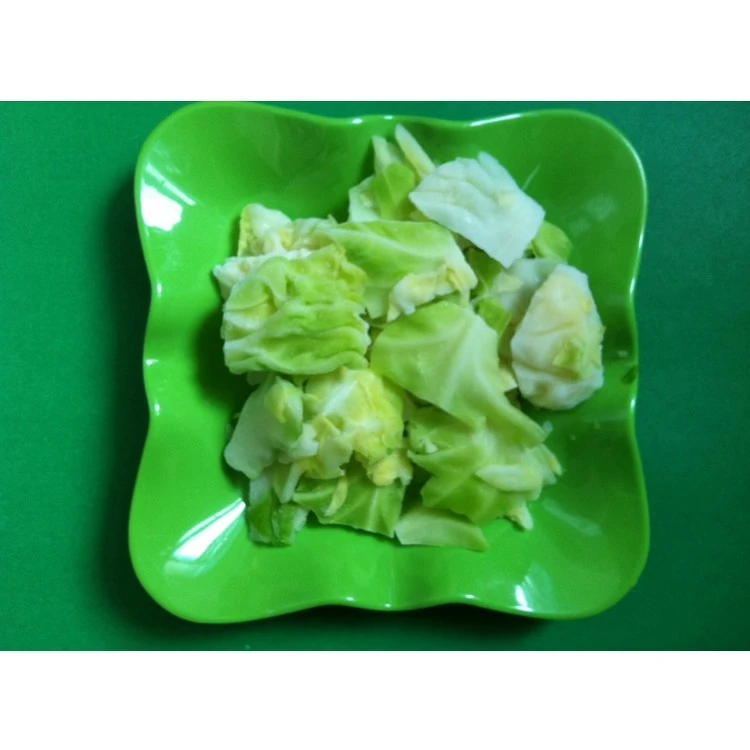
The genuine cut-leaf reference clarifies form; a specified shred program requires its own approval.
Fillings generally need a cut that distributes evenly through the mixture and travels through the forming equipment. Long ribbons may bridge an opening or trail across a wrapper seam. Large ribs or core fragments can interrupt the bite even when the surrounding leaf is tender. Extremely small leaf pieces may disappear into the filling or leave it looking like a paste. The aim is a consistent result for the chosen food, rather than the smallest possible cut.
The genuine product references on our frozen cabbage page show cut leaf pieces. They are useful for discussing the supplied form and visible preparation. Fine shreds for a depositor need separate confirmation and a representative sample. A commercial description can cover shreds or leaf cuts, but the actual order should state which form is approved and how it will be assessed.
Ask whether the ingredient is raw frozen, blanched or otherwise treated, and obtain its intended cooking instructions. Frozen appearance cannot answer that question. A quality blanch does not automatically make the ingredient ready to eat. If the customer requires a fully cooked component, the treatment, protection after cooking and use instructions need evidence appropriate to that requirement. Confirm the status before a recipe developer chooses the sequence.
For a first comparison, request enough material to repeat the complete recipe and inspect more than a display handful. Keep each sample's identity and lot information. If two cuts are compared, use the same recipe and equipment before changing other variables. This makes it possible to judge whether an apparent improvement came from the cabbage form or from a more favorable cooking load.
Add frozen cabbage to soup with the liquid budget in mind
Direct addition is often convenient because the frozen ingredient enters the intended cooking step without a separate thawing stage. Follow its instructions and use equipment capable of heating the actual load. Add a manageable portion to the prepared soup base and monitor recovery and mixing. A small saucepan and a large production kettle can react differently to the same percentage addition, particularly when the cabbage arrives as a compact clump.
Set aside part of the formula's adjustable liquid during development. Cabbage may carry surface ice and release water during heating, while the soup also loses water through evaporation. Starting with a measured broth quantity makes those changes easier to interpret. Adjust the finished recipe after the cabbage and other ingredients have reached their required cooked state. Adding liquid by eye at several stages makes a later yield comparison difficult to repeat.
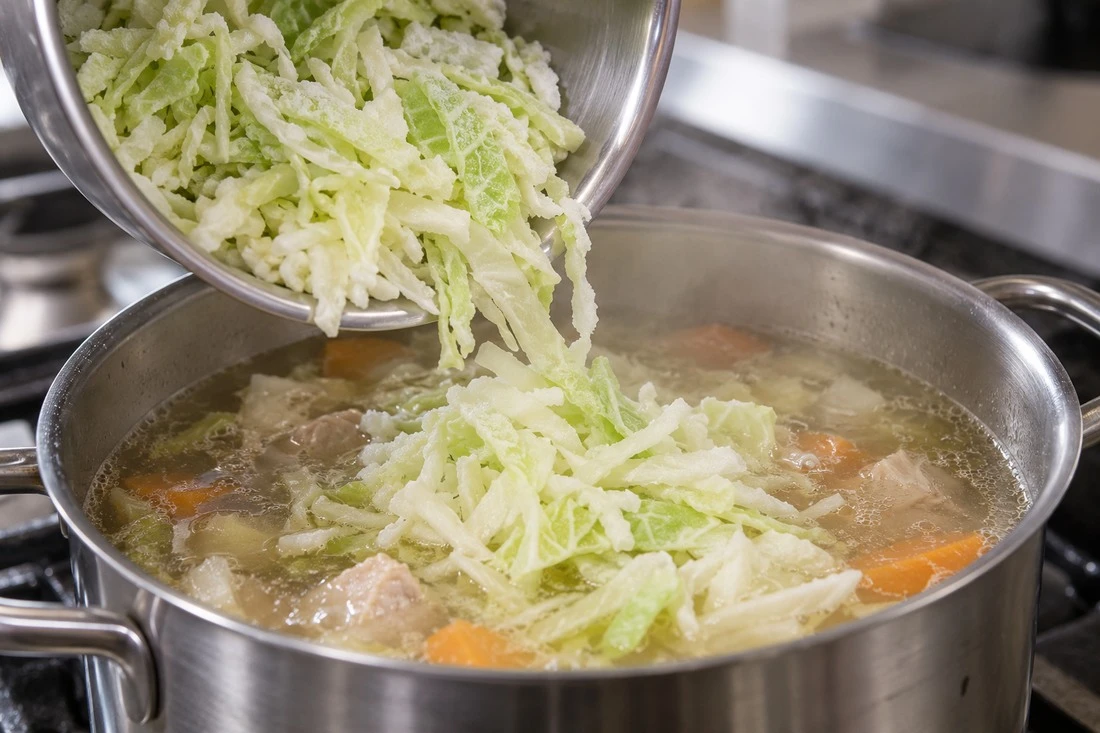
A defined frozen portion adds both cabbage solids and a cold load to the soup.
Sequence should follow the other ingredients as well as the cabbage. Dense potato pieces, beans, meat and thin cabbage leaves do not share one cooking requirement. An established recipe may prepare its base and slower ingredients first, then add cabbage later. That sequence needs confirmation with the actual frozen ingredient. A fresh-cabbage recipe's short final simmer should not become an untested instruction for a large frozen batch.
Check solids distribution during portioning. Floating leaves, settled ribs and a broth layer can produce different ingredient shares from the top and bottom of a kettle. Stir in a way that maintains distribution without breaking the cabbage excessively. Weigh or inspect portions from several points in the discharge where the process warrants it. A satisfactory whole-pot average can conceal inconsistent individual servings.
Broth clarity has its own specification. Loose leaf particles, vigorous agitation and repeated heating can change the appearance, while the recipe's starches, proteins and fat may cause clouding independently. Examine a cabbage-and-broth trial if the contribution is unclear, then return to the full recipe for approval. Straining every test soup can conceal fragmentation that the normal production process would retain.
Our broader guide to frozen vegetables for soups and stews covers selection across ingredients. For cabbage, record the final soup weight, cabbage visibility, broth character and portion consistency at the planned service point. These observations help determine whether the cut is suitable before the team alters seasoning to compensate for a variable water balance.
Keep leaf tenderness and rib doneness in the same window
A cabbage piece can contain a thin flexible leaf and a much thicker rib. Heat and texture changes do not occur at the same rate in both structures. If the leaf has already received substantial treatment before freezing, it may become very soft while a dense section remains noticeable. Examine the actual range of pieces rather than checking only the most attractive leaf from the pot.
Use representative thick pieces when judging the quality endpoint. Lift a portion onto a clean plate and compare the leaf, rib and any compact core material after appropriate cooking. Describe whether the rib has a pleasant bite, feels fibrous or remains hard relative to the rest of the dish. Tasting belongs only after the food has received the required cooking and handling; visual tenderness cannot establish microbiological safety.
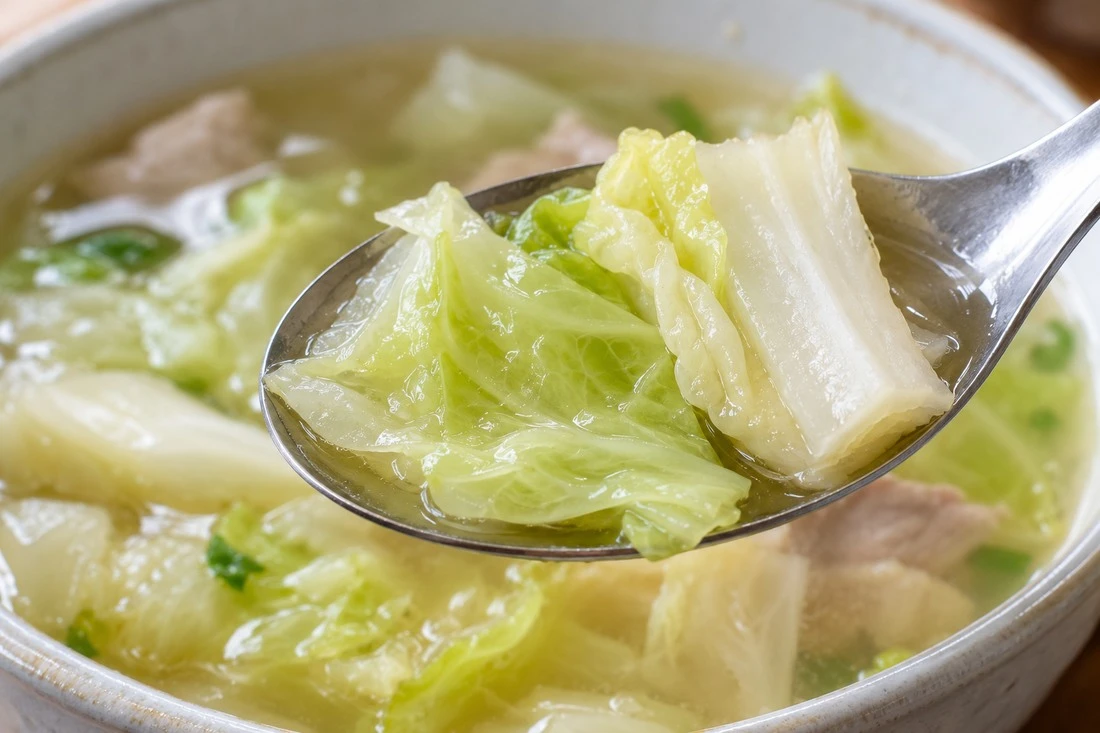
Thin leaf and thicker rib tissue should be assessed after the appropriate complete cook.
Hard core should be treated as a preparation issue when it falls outside the agreed form. Extending the cook until a solid stem fragment softens may destroy the useful leaf structure. The better response can be improved coring or a different cut specification. Photograph representative fragments beside the acceptable material and retain their measured share where appropriate. This gives the supplier a clear correction rather than a general complaint about tough cabbage.
The trial should use an endpoint the kitchen can recognize. Words such as tender need a reference and a defined observation point. For example, the team may approve the cooked rib texture immediately before soup packing and again after the normal reheat. If those stages produce different judgments, decide which stage governs ingredient acceptance. The product delivered to the diner is the relevant commercial result.
Avoid assuming that the largest piece sets a simple universal time. The heating process also depends on batch depth, circulation, starting condition and the rest of the food. A recipe with animal ingredients needs the appropriate complete-product controls. Use the operation's validated or otherwise justified heating procedure, then improve cabbage quality through size, sequence and handling within that procedure.
The NCHFP preservation guidance recommends frozen cabbage for cooked use. It is helpful background on suitability, while commercial cooking still belongs to the supplied SKU and finished recipe. We confirm the declared preparation with the buyer so a change in treatment or rib content can be reviewed before it changes normal kitchen performance.
Prepare cabbage for a filling with controlled drainage
Decide the cabbage's entry state before writing a filling percentage. A kilogram of frozen cabbage and a kilogram after thawing, cooking and draining represent different amounts of incoming ingredient and retained water. State which one the formula uses. If a supplier offers a prepared component, obtain its composition and preparation details so the buyer can compare it on the same basis as plain frozen cabbage.
A controlled thaw and drain can be useful when the approved method requires thawed material. Use protected refrigerated handling and the product instructions, with suitable food-contact containers and a defined process duration. Separate collected liquid from cabbage and record both. Do not leave an open bag on a warm bench simply to obtain a dry-looking ingredient. Product identity and handling records should remain with the portion during preparation.
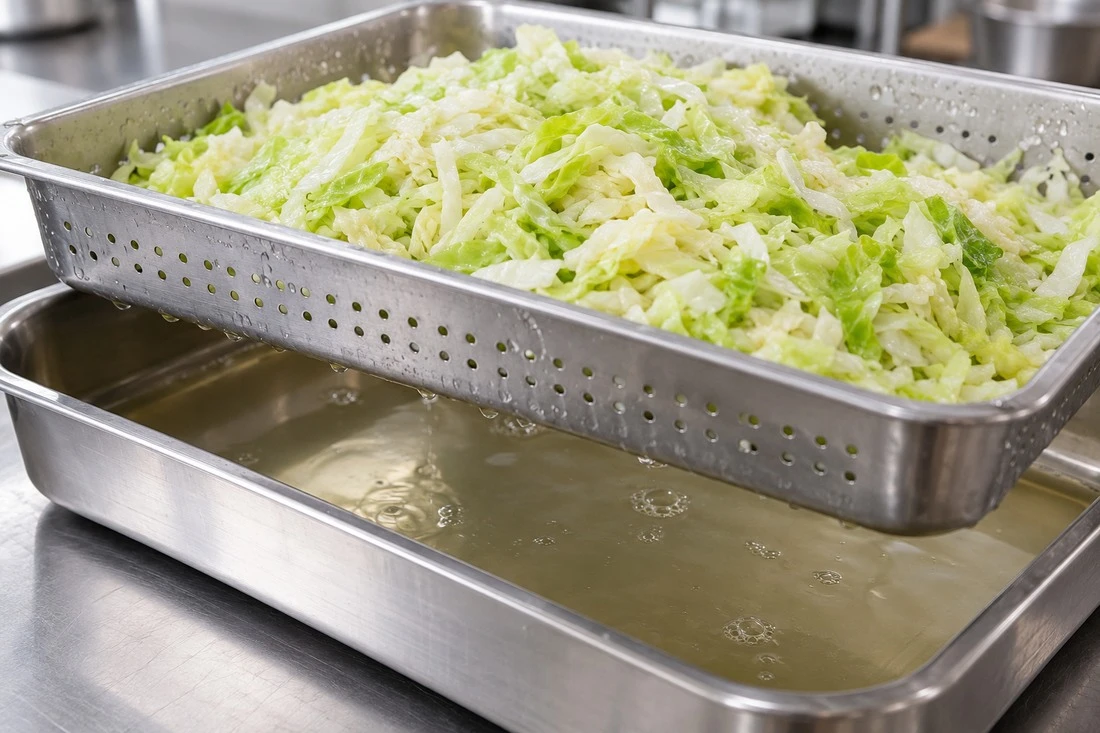
A perforated insert separates cabbage from free liquid before a filling trial.
Some fillings require the cabbage to be cooked before mixing. That route also needs a defined drainage endpoint and appropriate cooling where the next step requires a chilled component. A shallow layer, suitable drainage support and consistent holding time can produce a more repeatable ingredient than a deep hot heap. Cooling and subsequent handling must follow the site's food-safety plan and applicable requirements; changing a vessel is not proof that a cooling process meets them.
Squeezing is a process variable. Different pressure, duration and portion sizes can change retained water and break the leaf. For a hand-prepared product, a defined method and trained operators may be necessary. For a factory, equipment settings and discharge condition need to be recorded. Compare texture and output before adopting stronger dewatering. Removing more liquid can improve handling while also lowering yield or damaging the ingredient.
Avoid transferring a salting instruction from a fresh Napa recipe directly onto a treated frozen heading-cabbage component. The original ingredient, water distribution and seasoning balance differ. If salting forms part of the chosen process, assess its effect on drainage, flavor and the complete ingredient declaration. Salt leaving with drain liquid also complicates a simple calculation based only on the amount originally added.
Measure the cabbage entering the mixer after its defined preparation. Record any rejected material separately from drain liquid. A receiving specification can then refer to the actual process: starting frozen sample, preparation, drainage and usable cabbage weight. This gives purchasing a meaningful yield basis and gives formulation staff an ingredient they can reproduce across batches.
Mix a stable filling and assess it after cooking
Introduce the prepared cabbage at the stage where it can disperse without excessive breakage. A delicate cooked leaf may not tolerate the same mixing intensity as a meat base or a firm vegetable dice. Observe the mixture at discharge as well as in the bowl. Long mixing can make a sample look uniform while shortening the pieces until their intended texture is lost.
The other ingredients control much of the filling's behavior. Protein, starch, fat, sauce and added water interact with the cabbage, so a dry-looking vegetable does not guarantee a stable finished product. Use a simple reference formula during development, then test the actual commercial formula. Adding a thickener to hide unexplained free liquid may change mouthfeel or labeling without resolving the incoming variation.
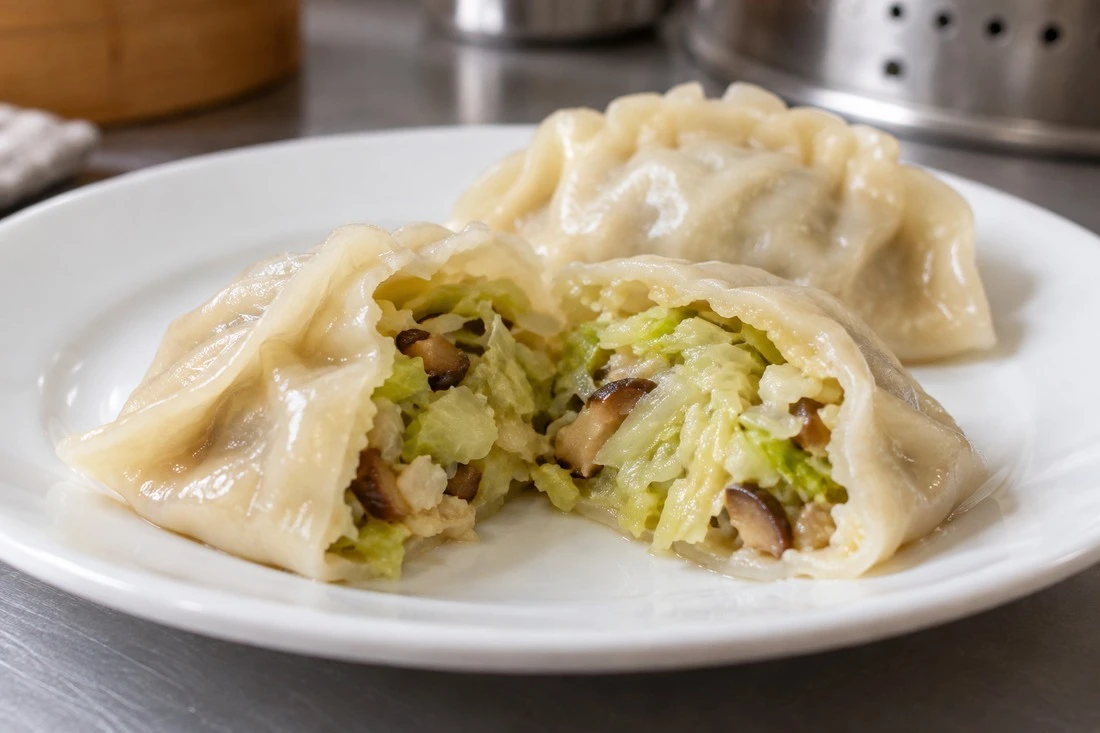
The cooked cross-section reveals cabbage distribution within the filling.
For dumplings or filled pastries, inspect forming and sealing. Cabbage strands across a seam, wet wrapper surfaces and inconsistent deposits can create defects before cooking. Sample pieces from the normal forming run and record the settings that produced them. A hand-filled demonstration can be useful for flavor screening but may miss the restrictions of an automatic depositor or a thin commercial wrapper.
Cook the filled food using its appropriate process, then cut representative pieces and examine the result. Check liquid pockets, cabbage distribution, recognizable leaf texture and the relationship between filling and wrapper. Record split or leaking products separately. If the outer food browns before the filling receives its required heating, the process needs review; surface color is not an acceptable substitute for the finished product's safety controls.
Measure output on a declared basis. A simple development record can distinguish prepared cabbage entering the mixer, total mixed filling, accepted formed units and accepted cooked units. Do not attribute every loss to cabbage. Residue left in the mixer, wrapper waste and filling leaks arise at different stages. The useful investigation follows those stages so the appropriate team can change the relevant condition.
When comparing suppliers, keep the cabbage addition basis constant and record any deliberate formula adjustment. One sample may need different water or sauce to reach the target texture. That can be commercially acceptable, but the comparison should include the adjustment's effect on flavor, declaration, processing and cost. The final approval is the complete food made from the agreed ingredient.
Include holding and reheating in the application trial
The first cooked sample is only one point in the product's life. Foodservice soup may stand before service; a chilled meal may undergo storage and reheating; a frozen filled food may be cooked by the consumer. Each route adds its own quality and safety requirements. Define the actual route at the start so the trial includes the stage most likely to reveal softening, water release or loss of cabbage visibility.
For soup, compare an initial serving with portions taken at the approved end of holding. Look at leaf integrity, broth appearance, flavor and solids distribution. Use the operation's required hot-holding controls and avoid extending the holding period merely to make the cabbage appear tender. If quality becomes unacceptable inside the necessary service window, review cut, preliminary treatment, batch size or preparation timing.
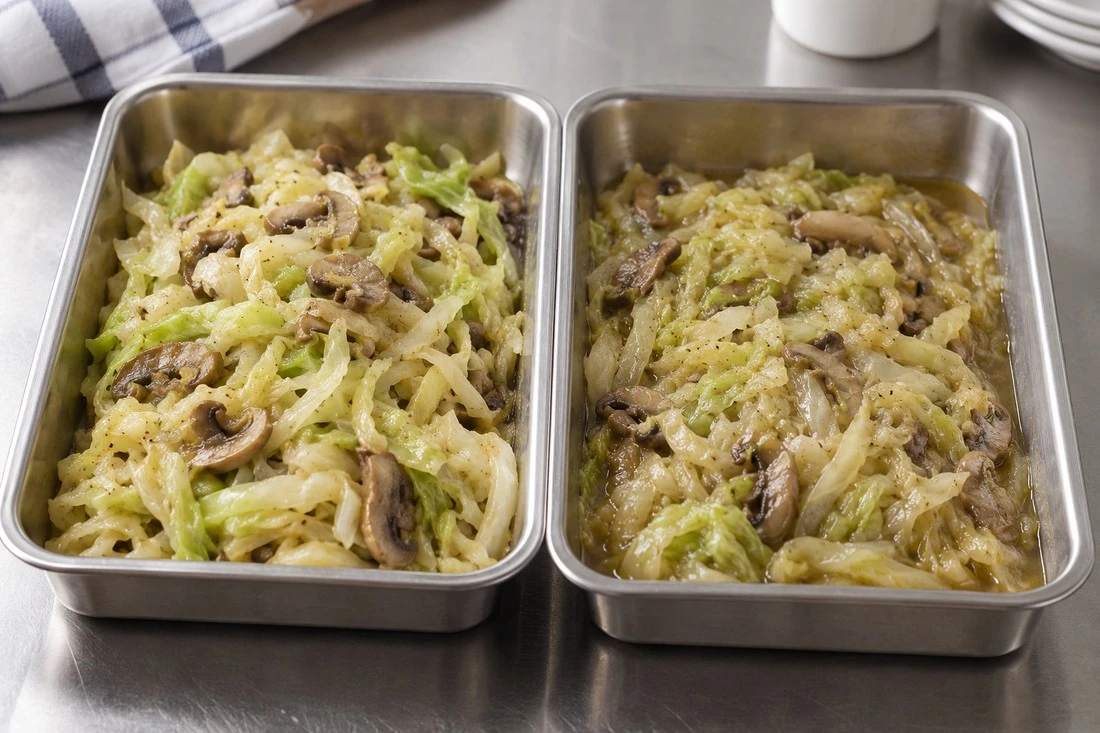
Compare leaf structure and free liquid under the intended holding and reheating route.
For chilled prepared meals, the cooling process needs its own controlled procedure and verification. A deep container can behave differently from a shallow tray, even when both hold the same total weight. Maintain the required protection from contamination after cooking. A photograph of neatly arranged trays cannot demonstrate safe cooling; actual time and temperature records under the intended load are needed where that process is used.
Reheat representative packed portions using the intended instructions and equipment. Examine the thickest or otherwise relevant parts under the site's heating controls. For quality, compare free liquid in the tray, wrapper condition, cabbage bite and sauce concentration. The meal's packaging can retain water that an open test pan would have evaporated, so an attractive stovetop result may not predict the sealed-tray result.
Agree when the sensory evaluation takes place. A filling examined immediately after heating can behave differently after the normal short standing period before eating. Keep that delay consistent between samples. If the buyer changes pack size or consumer instructions, repeat the relevant application review rather than assume the ingredient approval covers every new configuration.
Our guide to frozen vegetables for baking and ready meals extends the discussion across prepared foods. For cabbage, the key evidence is a set of identified samples taken through the actual route, with photographs, weights and quality observations connected to the process record. That makes repeat-order decisions more dependable than a single freshly cooked tasting.
Turn trial results into a repeat-order specification
Translate the accepted application into a concise ingredient agreement. Name round heading cabbage, the supplied form, treatment status, size distribution and preparation instructions. Add the core and thick-rib limits that the trial showed to be commercially relevant. Numerical limits should use a defined sample size and measurement method. Avoid a broad Grade A description when the production line needs a specific shred length or core allowance.
For a soup program, the acceptance record might prioritize recognizable pieces after the full holding route, manageable loose fragments and consistent portion distribution. A filling program may give greater weight to prepared yield, strand length, hard core and water migration. These are proposed areas for agreement rather than universal GreenLand tolerances. Set the actual criteria from the approved SKU and customer's process.
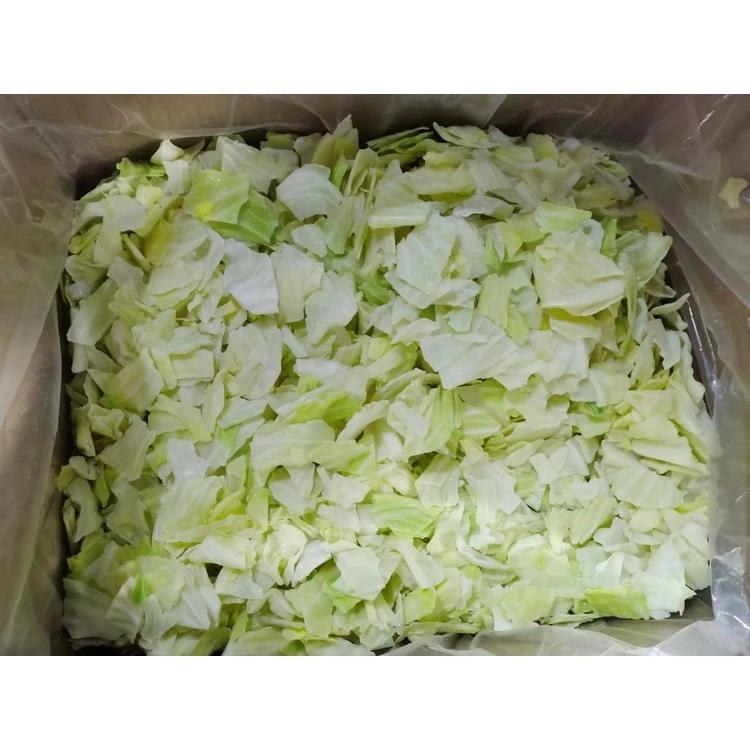
Packed cut leaves provide a form reference; the actual order defines cut, treatment and acceptance.
Keep an incoming inspection and an application test linked without forcing them to be identical. Frozen inspection is useful for condition, cut and visible defects. The cooked test reveals performance under the intended recipe. If a failure appears, retain unopened material where appropriate and preserve the lot information. That gives both teams a chance to investigate the ingredient and process together.
Confirm packaging around the production load. A larger bulk bag may suit a full kettle, while smaller inner packs can reduce partial-pack handling in foodservice. Specify net weight, case configuration, seal condition, lot code, date information and the required frozen storage conditions. MOQ, lead time and loading arrangements follow the confirmed form, quantity and destination rather than a standard assumption for every buyer.
Agree the supporting documents before ordering, including any lot-specific reports required by the destination or buyer QA program. The specification, label and reports should describe the same product. Analytical results need the represented lot and method; a photograph cannot establish an allergen declaration, microbiological result or treatment claim. Private-label instructions should be reviewed against the finished consumer preparation route.
We use the approved sample and written method as the basis for repeat-order discussions. A proposed change in cut, preparation, pack or source needs review when it could affect the accepted food. This preserves the useful result established in the trial: cabbage that cooks appropriately, stays within the recipe's water budget and remains suitable when the soup or filling reaches its intended point of use.
Source frozen cabbage with GreenLand-food
GreenLand-food is a professional frozen cabbage supplier and manufacturer in China, providing factory-direct wholesale supply for importers, food manufacturers, foodservice distributors and private-label programs.
Send your product form, specification, packing, quantity, application, destination, private-label needs and requested documents. We help your purchasing team confirm the sample, order details and supply plan for the intended use.