


Can You Freeze Eggplant Parmesan? Before or After Baking
Sep 24, 2026
Leave a message


Yes, eggplant Parmesan can be frozen either before its final bake or after it is cooked. The better point depends on how the dish will be served. An assembled, unbaked pan gives a kitchen more control over its final cheese and crust. Fully baked portions are convenient for reheating and portion control. In both cases, the main quality problem is water: eggplant, tomato sauce and mozzarella can release moisture during freezing and reheating. Cook the eggplant first, use a relatively thick sauce, cool the food promptly, pack it tightly and test the actual serving method.
For a restaurant or prepared-meal buyer, "freezer friendly" is too vague to be a specification. A catering tray held for a banquet, a single-serve microwave meal and a family-size retail bake have different targets for crust, sauce thickness and reheating time. This guide keeps those decisions separate and shows where a frozen eggplant ingredient fits into production. It is about the finished dish; our broader guide to freezing eggplant covers the vegetable itself.
Choose when to freeze the dish
Freeze an assembled but unbaked pan when the final service includes an oven finish. The kitchen can build a complete tray, cool its cooked components, wrap it and bake it on demand. This tends to preserve a better-looking cheese top than fully baking, freezing and baking again. It also lets the final operator decide how much browning is appropriate. The trade-off is a longer bake from frozen or after controlled thawing, and more variation if trays differ in depth.
Freeze after baking when predictable portions and quick service matter more than a freshly browned top. A fully cooked casserole can be cooled, cut, packed as single servings and reheated. It works well for controlled portions in meal service if the sauce, cheese and breading have survived a freeze-thaw trial. The top may soften; a short oven finish can restore some surface color, but it cannot completely recreate the original crisp breadcrumb layer.
There is a third practical option: freeze components separately. Cooked eggplant slices, sauce and cheese can be assembled later. This gives a commissary flexibility over final pan size and prevents a wet sauce from sitting against a crust for weeks. It creates more packing and assembly steps, so the labor saving should be measured rather than assumed. Some operators freeze only the cooked eggplant and use fresh sauce and cheese at assembly.

Unbaked assembly beside baked eggplant Parmesan.
Decide by the finished service test. Prepare two equal pans with the same ingredients and weights. Bake one and freeze portions; assemble the other and freeze it before baking. Run both through the actual storage period and reheating equipment. Compare the drained liquid, layer definition, center temperature, cheese appearance and eating texture. The winner may differ between a 30 mm single-serve tray and a deep family pan. Record the method with the accepted sample so production does not mix the two routes.
Food safety applies to both routes. A pan that has already been baked still needs prompt cooling and appropriate frozen storage. An unbaked pan containing cooked components should not be left at room temperature while many trays are assembled. Use the site's time and temperature controls for each stage, and follow the applicable local food code. FoodSafety.gov guidance for leftovers says to refrigerate or freeze perishables within two hours and reheat leftovers to 165°F/74°C; a commercial processor should also follow its validated process and destination rules.
Prepare eggplant and sauce to limit free water
Raw eggplant is a poor direct layer for a frozen Parmesan casserole. Its sponge-like flesh can absorb oil and release water as it cooks, and a raw slice will not develop the same structure as a properly cooked one. Slice to a consistent thickness, then roast, grill or fry until the pieces have lost some moisture and gained enough structure to hold a layer. Let them drain and cool before assembly. If a breaded style is required, cook the coating first and evaluate how it softens under sauce after freezing.
Slice thickness changes the finished dish. Very thin slices can disappear into the sauce; thick slices may remain chewy while the cheese is already hot. Start with a uniform cut that suits the tray depth, then verify after the full freeze and reheat cycle. Record the cut range and the cooked yield, not only the raw incoming weight. A kitchen that buys by raw kilograms but portions by finished slice count needs both values to cost the recipe accurately.
Salting is optional and recipe dependent. It can draw some surface moisture and season the eggplant, but it is not a substitute for cooking and draining. If you salt, keep the amount and rest time consistent, then blot or rinse and dry according to the recipe. Check the finished salt level after sauce and cheese are added. A trial with unsalted, well-roasted slices may perform better than a heavily salted slice that remains wet because the roast was too short.
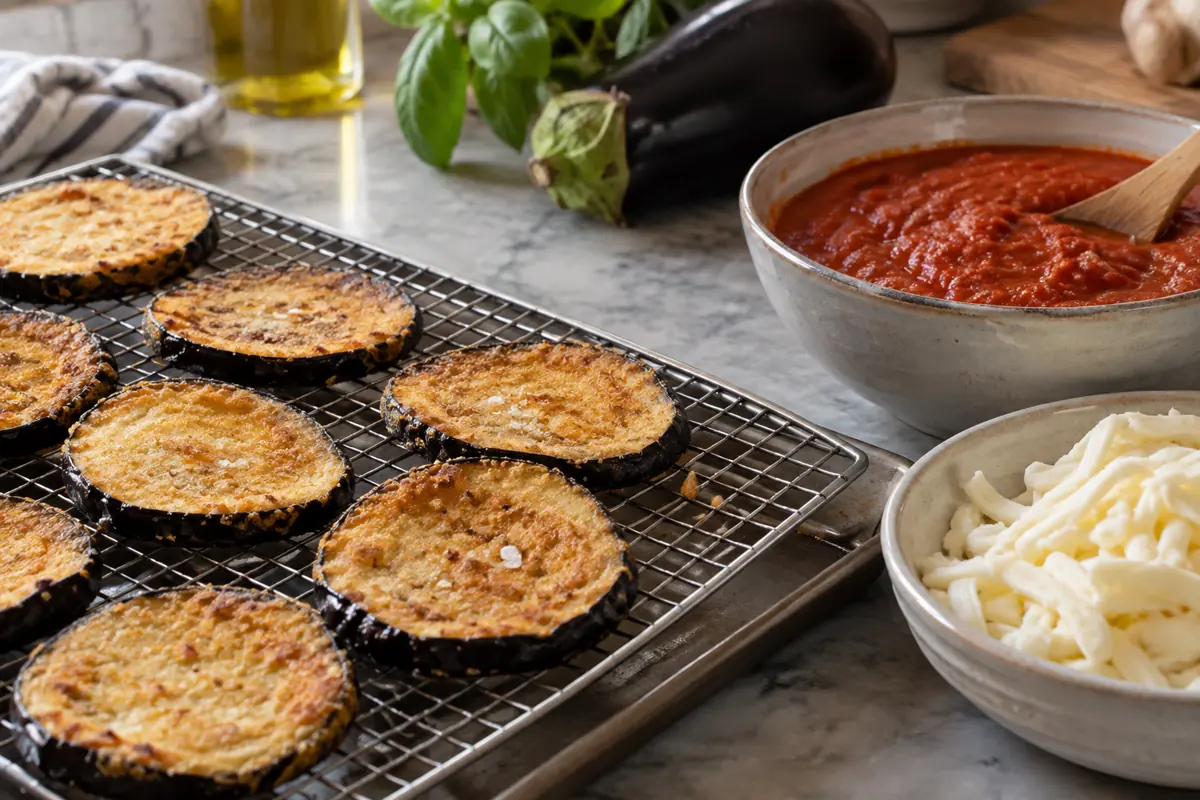
Pre-cooked eggplant slices with thick sauce and cheese.
The sauce should be thick enough to coat a spoon and hold distinct layers. A thin tomato sauce may look acceptable before freezing but pool at the bottom after reheating. Reduce it before assembly, measure the sauce weight per tray and avoid adding excess water from vegetables or cheese. Tomato solids, oil, starch and recipe acid balance all influence how the sauce behaves; test the actual formula rather than relying on a generic "thick sauce" description. If the recipe uses vegetables or meat in the sauce, cook and drain those additions as well.
Cheese choice also affects water release. Fresh mozzarella can carry more free moisture than a lower-moisture style. That does not make it unsuitable, but it may call for draining, a lower topping weight or a different cheese blend. Parmesan contributes flavor and browning without solving a wet center by itself. Weigh cheese by layer so staff do not compensate for an underfilled tray with a thick, uneven top. The target is balanced layers that heat together.
Cool every cooked component before wrapping the assembled dish. Packing hot sauce and eggplant traps condensation inside the container, which later becomes ice and can return as water during reheating. Use food-safe cooling procedures and shallow, manageable batch sizes. The food should not be left to drift slowly through unsafe temperatures just to avoid condensation. In production, cooling capacity and tray depth are part of the recipe design.
Freeze an assembled unbaked pan
Build the pan with consistent layer weights. A typical sequence is sauce, cooked eggplant, a measured cheese portion and repeated layers, ending with a topping appropriate to the final bake. Keep sauce off any intentionally crisp topping until final service when possible. Line or lightly grease the pan if the recipe needs clean removal. A deep pan can freeze slowly and bake unevenly; choose depth with the freezer and oven capacity in mind.
Use a rigid, freezer-suitable container or tray that can be sealed against air and leaks. If the pan will be baked in the same container, verify that the material and lid instructions permit the planned oven use. Cover the food surface closely where the package design allows, then seal the outer pack. Label the assembly date, batch, contents, allergens, cooking method and any use-by date required by the business. Avoid treating ordinary cling film as oven-safe unless the specific material is approved for that use.

Covered assembled eggplant Parmesan before final baking.
Freeze the assembled pan promptly after safe cooling. Do not stack warm trays so tightly that the freezer cannot remove heat. A blast freezer or suitable commercial freezer can help with larger batches, but performance depends on pan thickness, load, airflow and equipment. Log the actual product temperature where a validated process requires it. Once frozen, protect the pack from crushing and temperature swings. Surface frost and an ice layer in the tray are warnings to investigate package seal or handling, not proof of an unsafe product on their own.
For service, the pan may be baked from frozen if the recipe and container have been tested for that route. It will take longer than a chilled pan, and a browned surface is not evidence that the center is hot. A probe reading in the coldest part is more useful than a fixed time borrowed from a home recipe. Some kitchens prefer a controlled refrigerator thaw before baking to reduce edge overcooking. If thawing, keep the dish cold and follow the site's approved time limit; never leave a deep casserole on a counter to soften overnight.
Test the final topping. A little reserved cheese or breadcrumb added near the end of baking can improve appearance, but adding it changes the recipe and allergen declaration. If the product is sold as a fully assembled retail tray, the finishing instruction must be clear and achievable for the intended customer. A buyer should test the printed directions with an ordinary oven, the stated pan size and the permitted starting state rather than with ideal laboratory equipment alone.
Freeze baked portions safely
Fully bake the dish according to the validated recipe, then cool it promptly before cutting or packing. A hot, deep casserole should be divided or handled with a cooling procedure that reliably removes heat. USDA leftover guidance gives a two-hour limit for refrigerating or freezing perishables in a home setting; food businesses should use their local code and validated controls. Cooling is especially important when multiple hot pans are produced close together and refrigerated air cannot circulate around them.
Portion only when the layers are firm enough to cut cleanly. Chilling before cutting often improves appearance and lets a portion hold its shape. Use a consistent portion weight and tray fill, then seal each piece to reduce drying and odor transfer. A rigid shallow pack protects the layers better than loosely wrapped portions in a large bag. Leave room for the packaging behavior during freezing, but minimize unnecessary headspace that exposes the food to air.

Baked eggplant Parmesan in shallow portions.
Label the product as cooked and frozen, with the ingredient and allergen statement, batch code, storage condition and reheating instructions. State whether it may be reheated from frozen or should first be thawed under refrigeration. These routes may need different times. A frozen center can remain cold while the sauce at the edge boils, particularly in a microwave. Test the coldest location in the real pack and equipment. USDA recommends reheating leftovers to 165°F/74°C; the validated commercial instructions must meet the rules applicable to the product and market.
The FoodSafety.gov cold storage chart gives baked casseroles with eggs two to three months in the freezer as a home-use quality guide at 0°F/-18°C. That category is only a comparator; it is not an expiry or safety guarantee for every eggplant Parmesan formula. Sauce, breading, cheese and packaging can shorten or extend acceptable sensory life. Establish shelf life with the intended ingredients, process, pack and storage distribution. Examine portions after the proposed period for freezer burn, icy sauce, dry eggplant, oil separation and loss of layer definition. A sample that looks good on day one may fail after transport and a temperature fluctuation.
Do not refreeze a portion repeatedly during service. Repeated thaw and warm cycles increase quality loss and complicate safety control. Plan pack sizes around realistic demand, and document what staff should do with thawed but unused units. A cafeteria that needs ten portions at lunch should not have to thaw a forty-portion tray merely because that is the cheapest pack size. The packaging choice is part of the food-safety and waste calculation.
Thaw, bake and reheat without a wet top
The first moisture check is before the dish reaches the oven. Open a trial pack and look for free ice, separated sauce and liquid at the base. Record its amount if the project is commercial; visual memory alone is unreliable. A clear pool after thawing may indicate excessive raw eggplant moisture, thin sauce, wet cheese, poor cooling or storage temperature changes. Correct the cause instead of simply baking longer, which can dry the edges while the center remains loose.
Thaw in a refrigerator or use an approved cook-from-frozen method. A deep tray needs more time than a shallow portion, so write instructions by actual pack geometry. If a foil cover is used early in baking to prevent the top from scorching, remove it for the final browning step when the center is hot enough. A perforated or vented cover may help steam escape, but it can also dry the sauce; trial it with the real oven. A fan oven may brown a corner faster than the center heats, especially with a heavily loaded rack.

Reheated eggplant Parmesan with foil folded back.
Do not crowd pans so tightly that air cannot move around them. Consistent spacing, tray depth and load make bake times more repeatable. Rotate pans only if the procedure permits it and the oven has a known hot spot. For single servings, a combined microwave and oven finish may be practical, but it must be tested for both center temperature and top appearance. Microwave-only reheating often gives a softer coating, which may be acceptable for a sauced ready meal but should not be described as crisp.
After heating, allow a short rest so heat and liquid can redistribute, then assess the portion on a plate. Cut it open: the central eggplant should be tender, the cheese should have the intended melt, and the sauce should coat the layers rather than run away from them. Measure finished weight and any liquid left in the tray. If the portion is going into a hot holding line, include that hold in the evaluation. A casserole that is acceptable immediately from the oven can deteriorate during thirty minutes of service.
For a crisp-topped version, keep breadcrumbs or a final grated cheese layer separate until the final heat step where product format allows. A sealed frozen pan can protect quality in storage, but it also traps steam during reheating. The finishing method should release that steam at the right time. Avoid a blanket promise that any frozen eggplant Parmesan will become crisp; sauce-based layers are naturally moist. The target is a pleasant browned top and controlled free water, not the texture of an unsauced fried cutlet.
Foodservice batch and ingredient considerations
A production brief should start with the use case: tray size, portions, serving temperature, heating equipment, storage period and target texture. Then specify eggplant slice thickness, cooked yield, coating if any, sauce solids or viscosity target, cheese blend and weights per layer. The right ratio for a plated entrée may be too wet for a frozen retail portion. Build a reference tray and retain the recipe and photos with the approved sample.
For buying eggplant, form and preparation status matter. The GreenLand IQF frozen eggplant page is an ingredient source, not a finished eggplant Parmesan offer. A frozen cut can help with availability and portion planning, but it still needs an application trial. Check cut dimensions, whether the pieces are blanched or otherwise pretreated, surface ice, pack weight, and how they behave after cooking. Do not assemble a casserole from frozen raw pieces and assume the finished moisture will match roasted fresh slices.
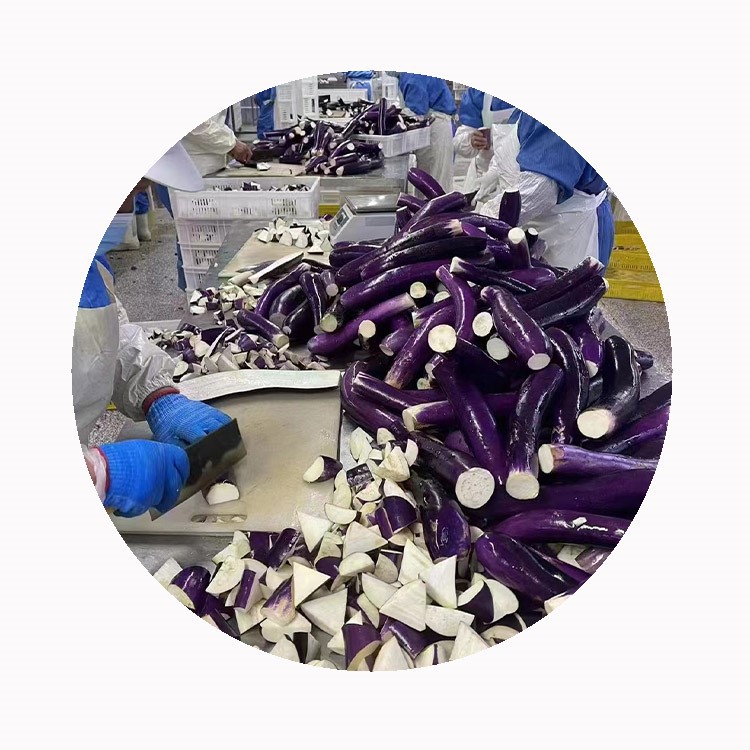
Cut eggplant pieces from GreenLand frozen eggplant product page.
If a frozen ingredient replaces fresh eggplant, compare equal cooked usable weights. Weigh the frozen input, cook it by the intended method, drain and weigh again, then assess slice integrity. A product that costs less per incoming kilogram may cost more per finished pan if it loses more water or breaks apart. Conversely, a consistent cut and lower prep labor may justify a higher unit price. Include labor, oil pickup, energy, trim, yield and waste in the comparison.
Ask the supplier for the lot specification, cut tolerance, processing status, ingredient declaration, allergen cross-contact information where relevant, packing, storage condition, batch traceability and destination documentation. A photograph can confirm the general form but cannot establish those properties. We can discuss feasible eggplant cuts and packing for the planned tray; the buyer's own sauce, cheese and heating method still determine the final casserole performance.
Run a small controlled pilot before committing to a standing purchase. Build several trays across the normal line, freeze them under the planned load, hold through the proposed quality life and reheat in the equipment used at service. Record both pass/fail and the reason: wet bottom, broken slice, weak cheese coverage, uneven heat or acceptable result. That record gives procurement and production the same decision basis. It also prevents a change in ingredient cut or sauce from being mistaken for a freezer failure.
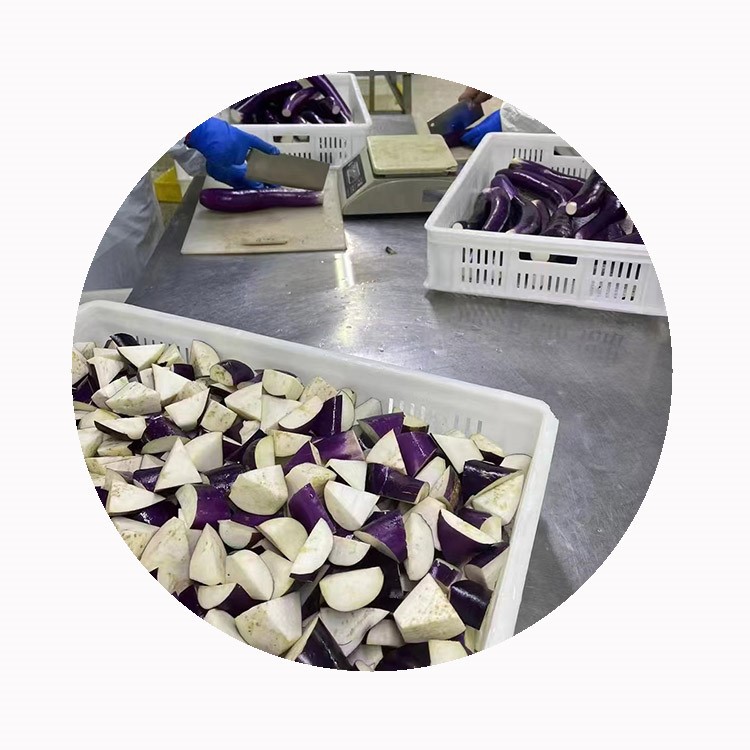
Cut eggplant pieces from GreenLand frozen eggplant product page in second view.
When requesting a quote, give us the application, target cut and quantity, destination, pack preference and any agreed quality standard. We can provide available frozen eggplant options and sample details for evaluation. The finished dish should be signed off only after the full freeze, transport, thaw and service trial. That is how an appealing fresh bake becomes a repeatable frozen menu item.
Recipe change control matters after that sign-off. A new tomato sauce may have the same color but a different water content; a new mozzarella may melt and release liquid differently. A change from roasted to fried eggplant can also alter oil pickup and layer strength. When one of those inputs changes, run at least a small freeze-and-reheat check before assuming the old instruction still applies. Keep the approved pan weight and photograph alongside the formula so a production team can spot underfilled or over-sauced trays before they enter the freezer.
The claim on the pack should match the experience. If the reheated top is soft, describe the dish as oven finished or browned only if the tested directions consistently achieve it. "Crispy" invites a comparison with a freshly fried cutlet that a sauced frozen casserole may not meet. A buyer who defines the acceptable result in terms of visible layers, no excess pooling and safe center heat has a more useful approval standard than one adjective. This also makes complaints easier to investigate by separating a recipe issue from storage or reheating conditions.
Plan a dependable frozen eggplant supply
GreenLand-food is a professional frozen eggplant supplier and manufacturer in China. We discuss factory-direct wholesale supply, product form, packing and shipment details against your application.