


Can Green Bean Casserole Be Frozen?
Aug 31, 2026
Leave a message
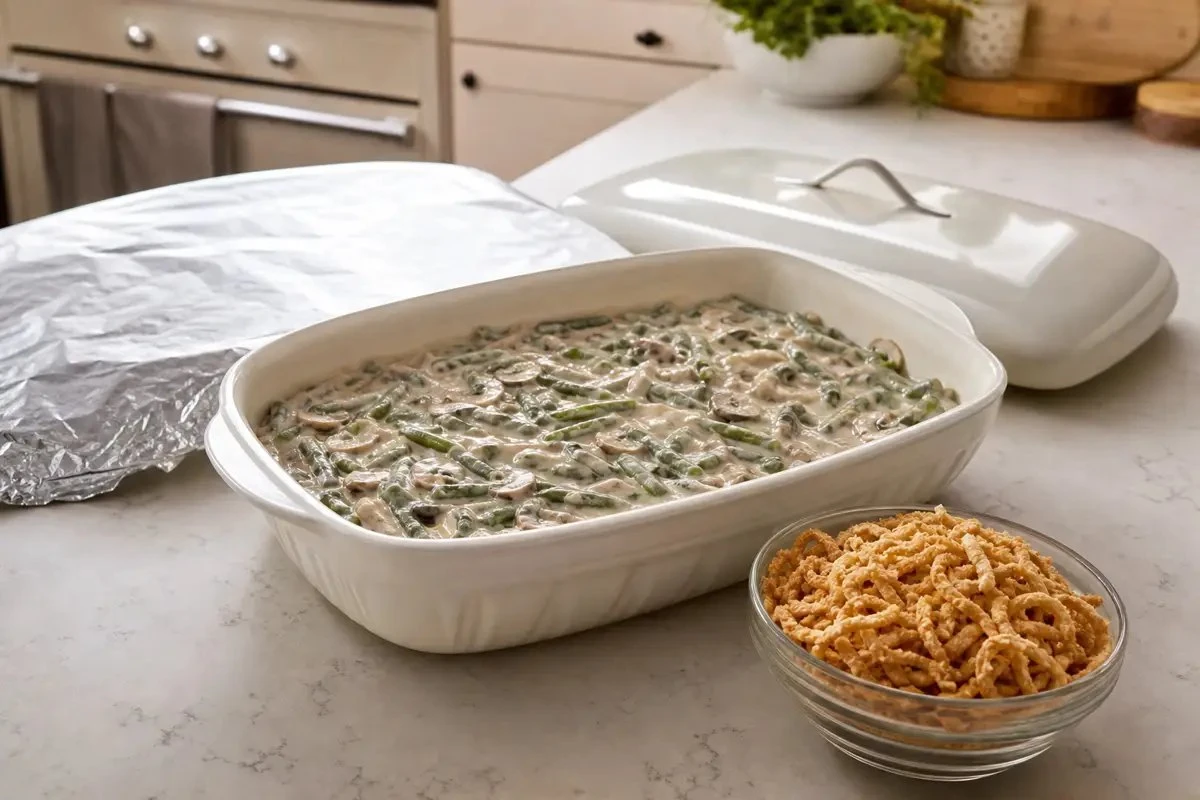
Freeze the base, protect the topping, and plan the second heat cycle
The default make-ahead route is an unbaked, cooled casserole without its surface onions or crumbs. Freeze it tightly wrapped in an approved container. Thaw under refrigeration for predictable heating, or use a bake-from-frozen route only when the specific recipe and dish support it. Bake until the center is hot, uncover as directed, and add fresh topping late.
The beans and sauce face one final bake instead of cooling, freezing, and receiving a full second cook.
Crispy onions or crumbs soften when frozen against a moist sauce.
Condensed-soup, roux, cream, and reduced dairy sauces do not all freeze and reheat identically.
Quality windows and frozen-bake directions vary; the center, dish, and formula control the process.
Freezing the assembled dish is a different question from using frozen beans
You can make green bean casserole with frozen green beans, and we cover that ingredient decision in a separate guide: Can You Use Frozen Green Beans in Green Bean Casserole? This page begins after the base ingredients have been chosen. Its job is to decide whether the assembled casserole should be frozen before or after baking and how to protect the finished texture.
A casserole contains several systems at once. Beans release water. Mushroom sauce contains starch, fat, protein, and sometimes dairy. Crispy onions or crumbs absorb moisture. The dish may be frozen in a deep center that thaws slowly, then reheated while the edges are already bubbling. A direction that ignores those components can produce a watery center, split sauce, soft topping, or overcooked beans.
Freezing before baking limits the beans to one main oven cycle after thawing. It also lets the cook add a fresh topping. Freezing after baking is still useful for leftovers and portion control, but it asks an already cooked bean and sauce to tolerate freezing and another full heating cycle. That is a convenience decision, not the same quality route.
Published recipes also differ. The Food Network make-ahead version is designed to freeze unbaked without the onion topping and bake from frozen. McCormick's guide favors freezing before baking, thawing in the refrigerator, and adding onions later. Follow the route validated for your formula rather than combining the frozen time from one recipe with the sauce from another.

Freeze before or after baking?
| Decision | Freeze before baking | Freeze after baking |
|---|---|---|
| Best use | Planned make-ahead meal | Leftovers or fully cooked portions |
| Bean texture | Usually better; one final bake | Softer risk from second full heat cycle |
| Sauce | Can finish during bake | May release water or split on reheat |
| Topping | Hold separately and add fresh | Remove or expect loss of crispness |
| Package | Whole dish or meal-size trays | Shallow individual portions are easier to reheat |
| Recommended default | Yes, when recipe supports freezing | Useful second choice |
The table compares quality and convenience, not safety guarantees. Use clean handling, prompt cooling, freezer-safe packaging, refrigerated thawing when specified, and a reheating process that makes the center hot. Follow authoritative local guidance for time and temperature requirements.
How to freeze green bean casserole before baking
- Confirm that the recipe is freezer-suitable. Use a make-ahead recipe that specifies freezing, or test your formula before a holiday. Do not assume every delicate cream or cheese sauce will return smoothly.
- Choose a freezer-safe dish. Check the manufacturer's instructions for freezing, thawing, and oven use. Thermal shock can break glass or ceramic; never improvise a freezer-to-oven move.
- Prepare and drain the beans. Follow the recipe's fresh, canned, or frozen bean method. Remove free water and avoid overcooking because the beans will bake later.
For preparation details, see Can Fresh Green Beans Be Frozen?.
- Make a stable sauce. Cook a scratch sauce to the recipe's specified thickness. If using condensed soup, use the stated liquid amount. A thin sauce before freezing will not become reliably thick merely because it is frozen.
- Assemble without the final topping. Mix the base evenly and spread it in the dish. If the recipe puts some onions inside, follow it, but reserve the crisp surface portion separately.
- Cool according to safe handling guidance. Do not wrap active steam into the package. At the same time, move the dish through cooling promptly instead of leaving it on the counter for hours.
- Wrap against air and moisture. Use a tight freezer-suitable cover, followed by an additional protective layer when appropriate. Keep the wrapping from touching decorative sauce surfaces if that matters to presentation.
- Label completely. Write the dish name, assembly date, whether it is baked or unbaked, thaw route, topping location, and the recipe's baking instruction. A mystery foil pan creates avoidable handling errors.
- Freeze level and undisturbed. Once firm, protect the dish from crushing. Store the reserved topping according to its package needs; many dry toppings are better held in the pantry and opened at bake time rather than frozen.
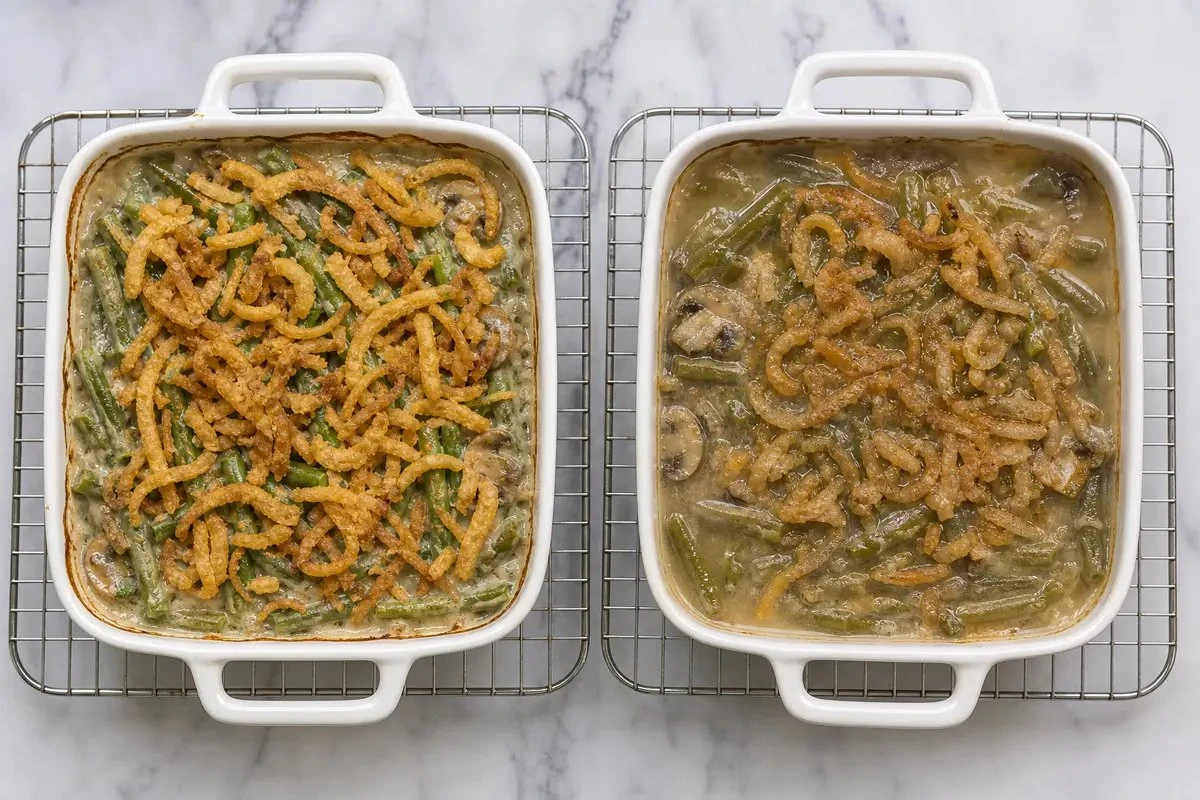
How to freeze baked casserole or leftovers
- Decide whether freezing will add value. If the casserole will be eaten within the refrigerator window specified by your food-safety authority, refrigeration may preserve texture better. Freeze when longer planning or portioning is the real need.
- Remove soggy surface topping where practical. It will not regain the same crispness. Plan to add a fresh onion or crumb finish during reheating.
- Cool promptly. Divide a large leftover casserole into shallow portions so it cools and later reheats more evenly. Do not repeatedly warm and cool the serving dish.
- Pack meal-size portions. Use freezer-safe containers with minimal excess air. A thin rectangular portion thaws more evenly than one deep compact mass.
- Label as fully cooked. Include the date, portion size, allergen-relevant components for shared kitchens, and intended thaw/reheat route.
- Reheat once, evenly. Thaw in the refrigerator when that is the chosen route, then reheat until the center is hot. Stir only if the portion format allows it without destroying presentation. Add fresh topping near the end.
Thaw overnight-or bake from frozen only by design
Refrigerator thawing gives the most predictable center and lets a glass or ceramic dish change temperature gradually. Keep the casserole covered while thawing, place it where leaks cannot contaminate other foods, and bake according to the recipe. Add or refresh the topping near the end.
Bake-from-frozen can work when the recipe was developed for it, as in some make-ahead versions. It needs more time and often a covered first stage. The dish must be approved for the temperature transition. Do not borrow a frozen bake time for a different pan depth, sauce, or quantity.
Whichever route you use, check the center rather than trusting bubbling edges. The perimeter heats first. Follow your recipe and local food-safety guidance for an appropriate center temperature, and use a clean food thermometer when required.
Troubleshooting frozen green bean casserole
| Result | Likely cause | Next-batch correction |
|---|---|---|
| Watery center | Undrained beans, thin sauce, condensation, or uneven thaw | Drain, use tested sauce, thaw evenly, uncover near finish |
| Split or grainy sauce | Delicate dairy emulsion or aggressive reheat | Use freezer-tested formula and gentler staged heating |
| Soft beans | Overcooked before freezing or frozen after full bake | Reduce pre-cook and freeze before baking |
| Soggy topping | Frozen in contact with moist sauce | Hold topping separately and add late |
| Dry edges, cold center | Deep frozen dish heated uncovered | Use recipe's cover stage and verify the center |
| Unknown handling route | Incomplete label | Label baked status, date, thaw, bake, and topping notes |
How long should it stay frozen?
The live recipes we reviewed do not agree on one universal window. Food Network's particular make-ahead recipe uses up to two weeks, while other recipe publishers suggest one or two months and sometimes longer for baked leftovers. Those numbers describe expected quality for specific formulas and handling, not a single safety expiration for every casserole.
For the best result, use the interval validated by your recipe, label the date, protect the dish from air, and avoid repeated thawing. A casserole intended for an important event should be tested once before the event. Sauce separation and bean softness are formula problems you want to discover during a trial, not while guests are waiting.
If the package is damaged, handling history is unknown, the dish has been held improperly, or you have safety concerns, do not rely on appearance or a generic freezer timeline. Follow guidance from your local food-safety authority and discard when appropriate.

Worked holiday timeline: freeze the uncertainty before the event
Two weeks before the meal, make a half-size trial in the same dish material and depth you plan to use. Drain the beans, prepare the exact sauce, assemble without the final onions, cool, wrap, label, and freeze. Keep a note of fill weight and depth. Do not change brands, liquid amounts, and pan geometry on event day if the trial is meant to predict the result.
Use the intended thaw route. If the recipe says refrigerator thaw, move the trial early enough to thaw fully while remaining refrigerated. If it gives a bake-from-frozen route, follow the covering and time instructions exactly and confirm the dish supports the transition. Check the center before adding topping. Note when the center becomes hot, when the sauce bubbles, and whether the perimeter is drying.
Add fresh onions near the end and taste a center portion after a short rest. If the sauce is slightly loose but the bean texture is good, adjust only a validated sauce variable on the next run. If the beans are too soft, reduce their pre-cook rather than underheating the final casserole. If the edges are dry before the center is hot, use a shallower dish or a more protective covered stage as the recipe permits.
Write the successful route on the freezer label for the full dish: thaw date, oven setting, initial covered time, center check, topping quantity, uncovered finish, and rest. The value of the trial is a calm event-day process. You are no longer asking whether casserole can be frozen in general; you have shown how this exact casserole behaves.
On the event day, keep one final variable in mind: oven load. A crowded holiday oven recovers more slowly than the mostly empty oven used for a trial. Leave air space around the dish, avoid repeated door opening, and begin the center checks early enough to correct without burning the topping. If several casseroles share the oven, rotate only as the recipe and dish safely allow, and record the changed finish time for the next production run.
For leftovers, label them as a new frozen batch rather than relying on the original make-ahead date. Note that the casserole has already been baked and held. Portion promptly, protect against air, and use the approved reheating route. A second label makes it much harder to confuse an unbaked make-ahead dish with a fully cooked portion that only needs reheating.
A small sensory scorecard improves the trial. Rate center heat, sauce thickness, visible water, bean color, bean bite, edge dryness, topping crispness, and overall flavor on the same simple scale. Photograph a center scoop and an edge scoop. If the score drops after a longer frozen interval, you can set a product-specific quality window from evidence instead of borrowing the longest number found online. Repeat the evaluation with the intended serving hold, because a casserole that looks right from the oven can loosen or dry while waiting on the table. Note serving temperature, cover position, and elapsed time as well.
Frequently asked questions
Can green bean casserole be frozen?
Yes. The best default is to assemble and cool the casserole, leave off the crispy topping, wrap it in a freezer-safe dish, label it, and freeze before baking. Thaw in the refrigerator or bake from frozen only when the tested recipe gives instructions for that route.
Is it better to freeze green bean casserole before or after baking?
Before baking usually preserves bean and sauce texture better and gives a fresher topping. Freezing after baking is useful for leftovers, but the beans face another heat cycle and the sauce may release more water. Portion leftovers before freezing for more even reheating.
Should fried onions be frozen on green bean casserole?
Hold the final crispy onion topping separately and add it near the end of baking or reheating. Onions frozen against a moist sauce absorb water and lose crispness. If onions are mixed inside the casserole by the original recipe, follow that recipe but reserve the surface topping.
Do I need to thaw frozen green bean casserole before baking?
Thawing overnight in the refrigerator is the most predictable route for even heating and sauce texture. Some tested recipes are designed to bake from frozen; follow their time, temperature, dish, and covering directions. Never move a dish straight from freezer to oven unless the dish maker approves that use.
Why is thawed green bean casserole watery?
Common causes are excess water on the beans, a thin or unstable sauce, a deep package that thaws unevenly, condensation, or repeated freeze-thaw cycles. Drain components well, cool before wrapping, use a freezer-suitable sauce, thaw in the refrigerator, and bake uncovered near the finish.
How long can green bean casserole be frozen?
For planning quality, many recipes use a window of roughly two weeks to two months depending on the formula and whether it is baked. Treat that as recipe-specific quality guidance, not a universal safety deadline. Label the date and follow the tested recipe and your food-safety authority.
Build the frozen dish around the final reheat
Tell us the bean format, sauce system, tray depth, frozen process, final reheat, target bite, pack, market, and trial volume. We can review the bean requirement, discuss sample testing, and confirm the proposed specification and documentation.
Request a quote Download the catalog