


Can Fresh Green Beans Be Frozen?
Aug 31, 2026
Leave a message
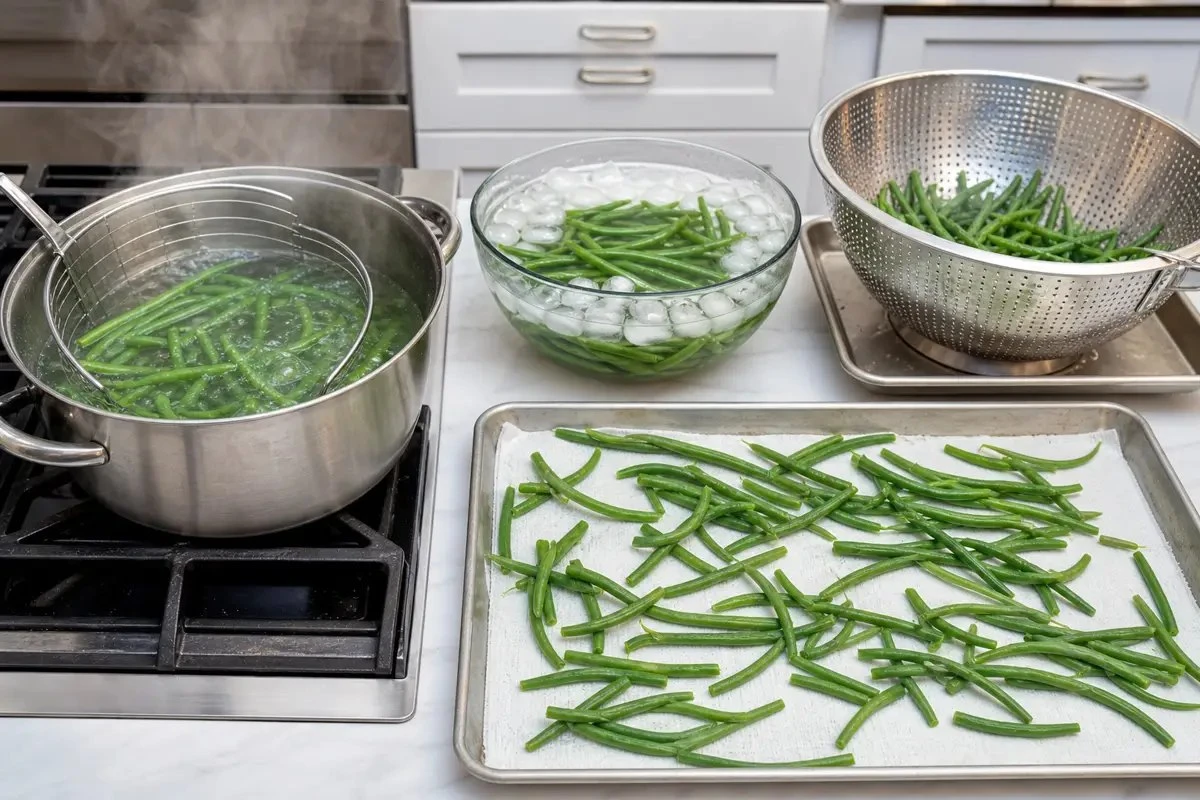
Freeze green beans after a measured blanch, not straight from the garden
The National Center for Home Food Preservation recommends washing, trimming, water-blanching green, snap, or wax beans for 3 minutes, cooling promptly, draining, packing, and freezing. The University of Minnesota Extension lists 3 minutes for water blanching and 5 minutes for steam blanching.
Freezing slows changes; it does not stop all enzyme activity without the recommended pretreatment.
Use 3 minutes in boiling water or 5 minutes in steam, with the clock tied to the proper process point.
Stop the heating promptly, then remove surface water to reduce ice and clumping.
It helps separation but does not reproduce industrial freezing rates, controls, or consistency.
What freezing does-and what it does not do
Freezing turns water in the bean into ice and greatly slows many chemical and microbial changes. It preserves a seasonal harvest for later cooking, but it does not sterilize the food. Good raw material, clean handling, an effective blanch, prompt cooling, suitable packaging, and continuous frozen storage all remain important.
Blanching is not mainly a cooking shortcut. The NCHFP blanching guidance explains that brief scalding slows or stops enzyme actions that would otherwise cause loss of flavor, color, and texture. It also cleans the surface, brightens color, and wilts vegetables enough for packing. Under-blanching can be worse for quality than no blanching because it may stimulate enzyme activity; over-blanching cooks the bean and sacrifices texture.
Ice crystals also affect texture. Slow freezing produces larger crystals that damage plant cells more extensively. A home freezer can preserve beans successfully, but a thick warm package freezes more slowly than beans spread in a thin cold layer. This is why prompt preparation, modest portions, good air circulation around new packages, and not overloading the freezer matter.
The result after thawing will not be identical to a raw garden bean. Frozen beans are best planned for cooked uses: steaming, boiling, skillet dishes, casseroles, soups, ready meals, oven roasting, or air frying. A crisp raw salad texture is not a realistic preservation target.

Blanching and packing choices at a glance
| Method | Green bean time | Key control | Best use |
|---|---|---|---|
| Boiling-water blanch | 3 minutes | Clock when water returns to boil | Standard reliable home method |
| Steam blanch | 5 minutes | Steam must surround the load | Alternative where guidance supports it |
| Dry pack after draining | Not applicable | Pack meal-size portions with stated headspace | Fast routine packing |
| Home tray pack | Prefreeze one layer | Transfer promptly after pieces firm | Looser portions for later measuring |
| No blanch | Not recommended by research guidance | Quality declines faster | A conscious short-term quality tradeoff, not the default |
At higher altitudes, blanching adjustments may apply. Use current instructions from a research-based source that covers your location, such as Colorado State University Extension. Do not invent an altitude correction from a recipe blog.
How to freeze fresh green beans with a water blanch
- Prepare the workspace and freezer first. Set out a large pot, blanching basket or colander, timer, cooling basin, clean towels, freezer-safe packages, labels, and a tray if you want loose pieces. Make freezer space before the beans are hot.
- Select, wash, and trim. Rinse beans in clean water, remove stem ends, discard damaged pieces, and leave whole or cut to the desired cooking length. Work in batches small enough for the water to return to a boil promptly.
- Bring abundant water to a vigorous boil. NCHFP general guidance uses about one gallon of water per pound of prepared vegetables, or two gallons per pound for leafy greens. The goal is quick heat recovery, not the smallest pot that physically holds the beans.
- Lower the beans and cover. Put the batch in a basket or directly into the water. The water should return to boiling within about a minute; if it takes much longer, the batch is too large for the pot and heat source.
- Start the three-minute timer when boiling returns. Keep the pot covered and maintain the prescribed blanch. Do not start timing when cold beans first touch the water, and do not extend casually "to be safe," because excess cooking softens the product.
- Cool promptly. Lift the beans out at the end of the timed blanch and move them immediately into a large amount of cold or ice water. Agitate so cold water reaches the full load. NCHFP advises cooling for the same amount of time as blanching.
- Drain thoroughly. Remove the beans from cooling water, shake well, spread on clean towels, and blot away surface moisture. Standing water becomes surface ice and encourages a solid frozen mass.
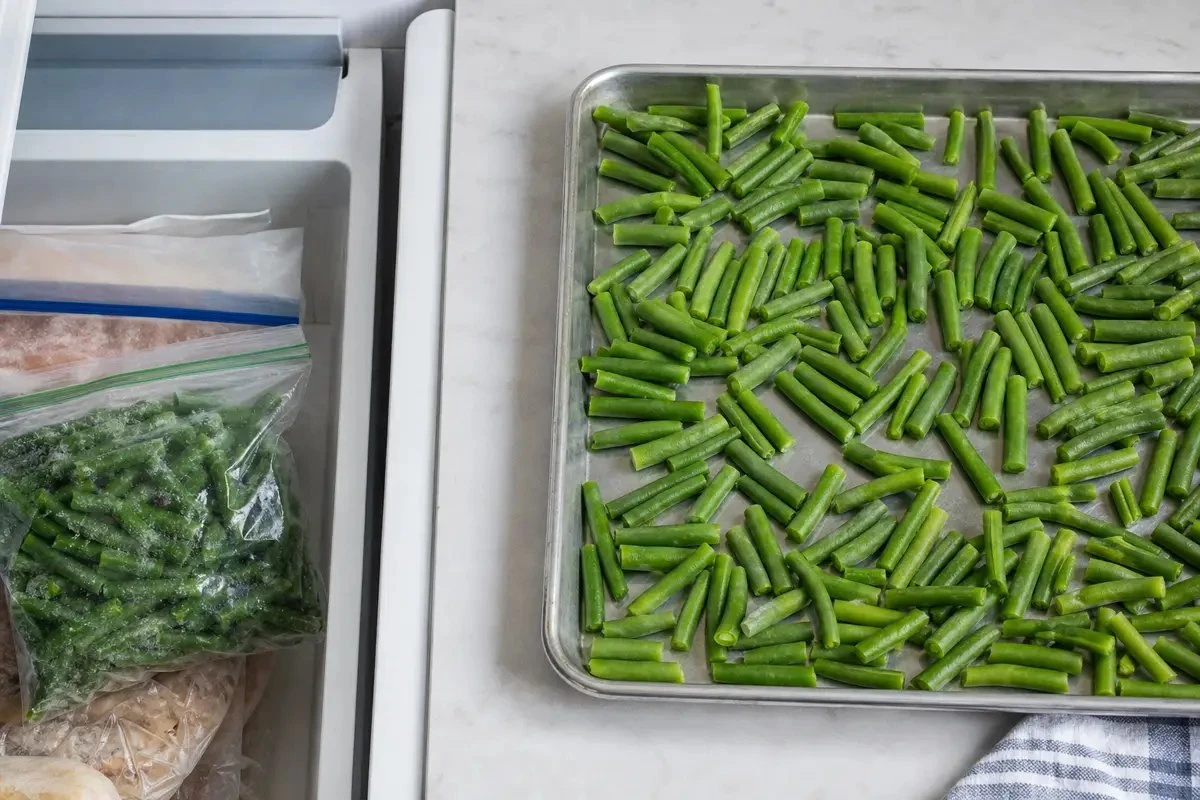
- Pack by the intended use. For dry pack, place meal-size portions into freezer-safe bags or rigid containers and follow the research source's headspace guidance. For loose pieces, spread drained beans in one layer on a tray and prefreeze until firm, then transfer quickly.
- Remove excess air and label. Mark the product, preparation date, whole or cut format, and portion amount. Flat, modest packages freeze and stack more predictably than one thick warm block.
- Freeze promptly and maintain the cold chain. Place new packages where cold air can circulate. Once frozen, consolidate them if needed. Avoid repeated thaw-refreeze cycles, which increase ice damage and reduce quality.
Steam blanching: a valid alternative with a different time
Steam blanching can be used for green beans when you follow a research-based process. The University of Minnesota Extension lists five minutes for snap, green, or wax beans. Arrange the beans in a basket above rapidly boiling water, keep the layer shallow enough for steam to circulate, cover, and begin timing when the lid is on and strong steaming resumes around the load.
Do not apply the three-minute water-blanch time to steam. Steam transfers heat differently, which is why the published time is longer. Likewise, a microwave is not an automatic substitute. NCHFP notes that microwave blanching may be uneven and does not necessarily save time or energy; use a tested method rather than assuming the center of a bowl reached the same process.
After five minutes, cool promptly in abundant cold water, drain, blot, pack, label, and freeze exactly as you would after a water blanch. If you cannot arrange a shallow steam layer or maintain a strong steam supply, the boiling-water method is easier to control.
Why "freeze without blanching" is a quality tradeoff
Skipping blanching is popular because it is quick, and unblanched beans can become physically frozen. The missing step is not about whether ice forms; it is about how the food changes during storage. Research-based preservation sources recommend blanching to control enzyme-driven loss of color, flavor, and texture.
If someone chooses an unblanched short-term experiment, label it honestly, keep it separate from the recommended batch, and compare after the same storage time and cooking method. Do not describe the shortcut as equivalent without evidence, and do not treat freezing as a kill step.
For reliable preservation of a garden harvest, the three-minute water blanch or five-minute steam blanch is the better default. It takes a little planning, but it protects the reason you are freezing the beans in the first place.
Troubleshooting home-frozen green beans
| Problem | Likely cause | Next-batch correction |
|---|---|---|
| One solid icy block | Poor draining or thick package | Blot well, tray-freeze, and pack smaller portions |
| Dull color or off flavor | No blanch, delayed processing, air exposure, or long storage | Use sound fresh beans, timed blanch, prompt packing |
| Very soft after cooking | Over-blanching or overcooking after freezing | Time precisely and shorten final cooking |
| Beans freeze slowly | Warm thick packages or overloaded freezer | Use thin portions and stagger loads |
| Dry pale surface | Air exposure or damaged packaging | Use moisture-vapor-resistant packaging and remove excess air |
| Unknown package | No date or format label | Label product, date, cut, and portion before freezing |

Cooking home-frozen green beans
Most home-frozen beans can go directly from the freezer into a cooking process. Boil or steam only until the center reaches the desired tenderness; remember that the beans were blanched before freezing. For a skillet, oven, or air fryer, remove loose surface ice and keep the load shallow enough for evaporation.
Do not expect every pack to behave exactly like a commercial bag. Home pieces may vary more in diameter and length, and a domestic freezer may create more clumping. Adjust by observing the actual product. A soup or casserole tolerates softer pieces; a dry sauté or roast needs better draining and looser separation.
Use the main frozen green bean cooking guide for method choices after freezing. This page stays focused on preservation so the blanching process is not buried beneath recipes.

Worked batch: turning a garden harvest into labeled cooking portions
Suppose you harvest or buy four pounds of beans. Do not put all four pounds into one pot and hope the same three-minute timer still applies. Sort out damaged pods, wash, trim, and divide the sound beans into batches that match your pot. If your pot holds one gallon of vigorously boiling water comfortably, use about one pound of prepared beans per blanch batch, consistent with the NCHFP's general water-to-vegetable guidance.
Set a large cooling basin beside the stove before the first batch enters. Lower one pound of beans into boiling water, cover, and watch for the boil to return. If recovery takes substantially longer than about a minute, reduce the next load; a crowded blanch is not repaired by pretending the clock began earlier. Start three minutes when boiling returns, maintain the boil, and move the beans immediately to cold or ice water at the end.
Cool for about the same duration as the blanch, agitating so no hot pocket remains. Drain in a colander, spread on clean towels, and blot. While batch one drains, bring the pot fully back to a vigorous boil before adding batch two. Replace cooling water or add ice as needed so it remains genuinely cold. A production rhythm is useful only when each batch still receives the intended heat and cooling conditions.
Divide the cooled beans by later use. Pack some in two-cup meal portions for soup and casserole. Put another portion on trays for loose freezing so small amounts can be measured for skillet dishes. Label every finished package with "green beans," the date, whole or cut format, blanch method, and approximate portion. Press out excess air without crushing the beans, follow the container's headspace needs, and freeze packages in a thin arrangement with air space around them.
For preparation details, see Can Green Bean Casserole Be Frozen?.
Once the packages are firm, move them into normal storage positions. Keep a simple batch note: bean source, preparation date, blanch batch size, water or steam method, timing, pack sizes, and any unusual condition. If one package later shows excessive clumping or poor color, the note helps separate a draining problem, blanching problem, packaging problem, and freezer-loading problem.
Finally, compare the preserved product in its intended use. Cook one portion directly from frozen without repeating a long preliminary boil. If the beans become too soft in a casserole, shorten the final recipe cooking rather than shortening the research-based blanch. The preservation step and the meal step solve different problems. Holding the blanch constant while calibrating the recipe gives you a safer, more repeatable way to improve texture.
Keep the authoritative instruction with your batch notes, especially if several people share the work. A handwritten phrase such as "three minutes" can be misread when it omits the water-return point, cooling step, or altitude context. Recording the source and full sequence prevents a future batch from drifting into a different process while still carrying the same label.
Do not reuse cooling water indefinitely. Each hot load raises its temperature and adds plant material. Refresh the basin so the next batch cools promptly, use clean tools, and keep finished drained beans away from raw unwashed produce. Small workflow details protect consistency when a long harvest session becomes repetitive.
Frequently asked questions
Can you freeze fresh green beans?
Yes. For the best retained color, flavor, and texture, wash and trim the beans, blanch them for three minutes in boiling water or five minutes in steam, cool them promptly, drain thoroughly, pack in freezer-safe containers, label, and freeze.
Do green beans have to be blanched before freezing?
Research-based home-preservation guidance recommends blanching because it slows enzyme activity that otherwise damages color, flavor, and texture during frozen storage. Unblanched beans may freeze, but their quality normally declines faster and the shortcut is not equivalent to the recommended process.
How long should fresh green beans be blanched before freezing?
Water-blanch green, snap, or wax beans for three minutes, starting the clock when the water returns to a boil. Steam blanching takes five minutes. Follow current NCHFP or local Extension guidance, and use altitude adjustments when an authoritative source specifies them.
Should blanched green beans be dried before freezing?
Yes. Cool the beans promptly, drain them thoroughly, and remove excess surface water before packing. Too much water promotes surface ice and clumping. For loose pieces, prefreeze drained beans in one layer, then transfer them to a freezer-safe package.
Is tray-freezing green beans at home the same as IQF?
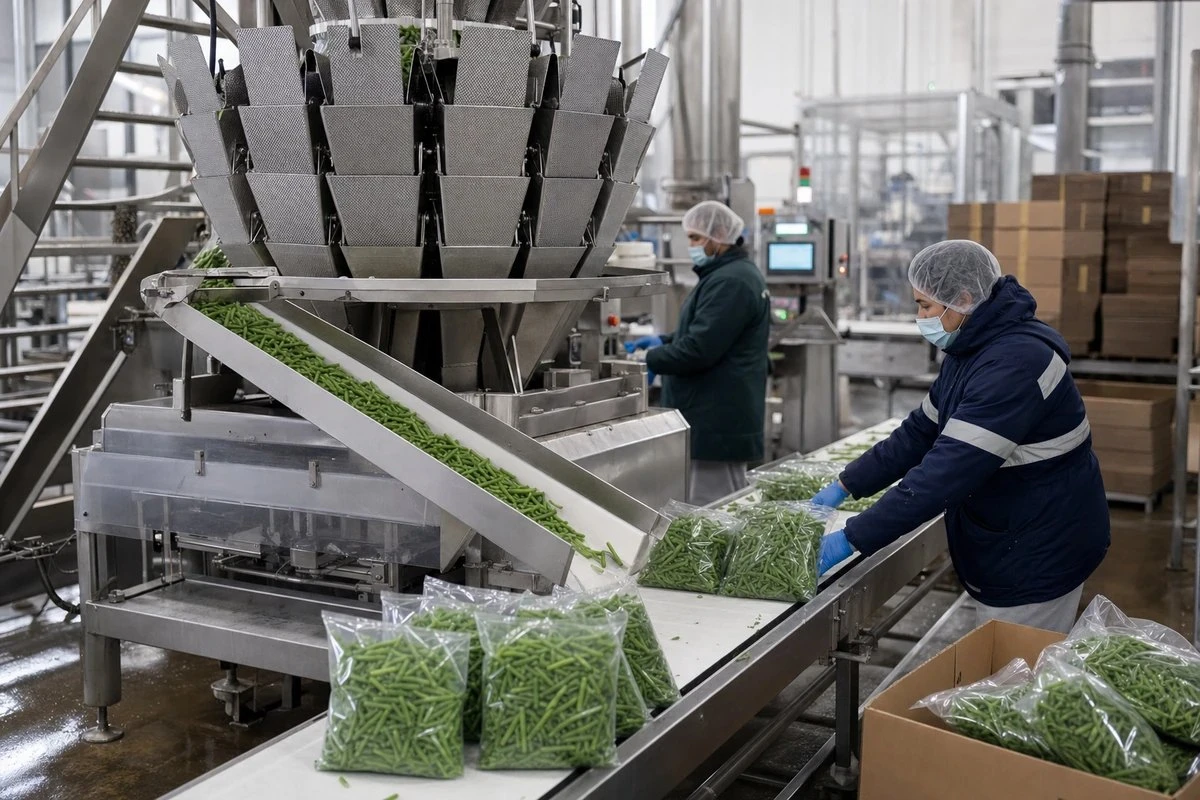
No. Home tray freezing can help pieces remain separate, but commercial IQF uses specialized rapid-freezing equipment, controlled processing, and a managed cold chain. The two methods share the goal of loose pieces, not the same freezing rate, consistency, or specification control.
Can frozen green beans be cooked without thawing?
Yes. Properly prepared home-frozen beans and commercial IQF beans can usually be cooked from frozen. Add them directly to boiling, steaming, skillet, oven, or air-fryer processes and adjust for format, frost, load, and the desired final texture.
For preparation details, see How to Cook Frozen Green Beans in an Air Fryer.
Need commercial IQF rather than a home-freezing method?
Tell us the whole or cut format, size, pack, destination market, application, quality targets, document requirements, and trial volume. We can review the requirement, discuss samples, and confirm the proposed specification and supply plan.
Request a quote Download the catalog