


Can You Eat Button Mushrooms Raw?
Sep 08, 2026
Leave a message
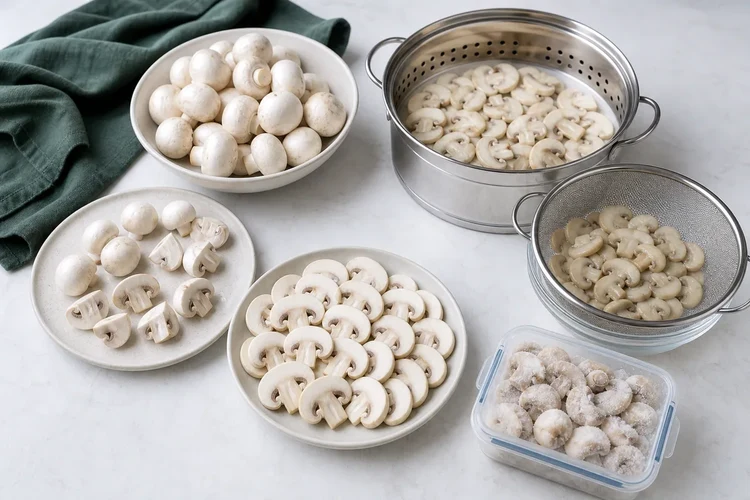
Cooking is the more cautious choice, especially for people more vulnerable to foodborne illness. Raw buttons also have a firmer, slightly spongy texture and a milder flavour than cooked ones. Some people prefer them only after cooking.
For buyers, the distinction between fresh mushrooms intended for raw preparation and frozen mushrooms intended for cooking is essential. A frozen button mushroom should follow its labelled cooking instructions. Freezing, washing or blanching does not automatically make it ready to eat. Below, we separate product identity, hygiene, eating quality and intended use so that the answer remains specific to button mushrooms.
Identify cultivated button mushrooms before discussing raw use
The familiar white button mushroom is Agaricus bisporus. Brown forms of the same species are sold under names such as cremini, brown button and, in some markets, chestnut mushroom. Larger mature forms are often sold as portobello. These commercial names describe related products, but the label and supplier information should establish the actual identity.
The Mushroom Council's white button profile describes both raw and cooked uses. That provides context for the common culinary practice. It should not be extended to every mushroom with a white cap, every product called a button, or every cultivated species. Different mushrooms can require different preparation.
A supermarket pack identifying white button mushrooms is a different starting point from mushrooms collected outdoors. Photographs and brief appearance descriptions cannot make wild identification safe. If the identity of a wild or mixed collection is uncertain, do not taste it to find out. Cooking also cannot be relied on to make a poisonous species edible.

Whole white button mushrooms are shown beside a size ruler. This familiar cap form helps explain the cultivated product discussed here, but appearance alone cannot confirm safe raw use; identity, handling history and the pack instructions still need checking.
For purchased buttons, look for the product name, seller and pack information. Choose mushrooms that are firm and in suitable condition for the intended use. A damaged or deteriorated pack is a poor choice for a raw preparation even if the species itself is commonly eaten that way. Product condition and product identity are separate checks.
Brown buttons can be used in many of the same dishes as white buttons, but common names need care. The phrase chestnut mushroom can also refer to a separate clustered specialty mushroom. If a recipe or supplier uses that name, confirm the species before applying advice intended for Agaricus bisporus.
For wholesale purchases, we prefer an identity statement that includes the common name and scientific name, followed by the supplied form. Whole fresh white buttons, frozen slices and blanched quarters are not interchangeable descriptions. The intended preparation should be recorded alongside the product so that the kitchen or customer receives instructions suited to what is actually in the pack.
Understand the limits of a raw mushroom safety claim
A food can be commonly eaten raw while still carrying a possibility of contamination. Mushrooms pass through growing, harvesting, packing, transport and kitchen handling. Good controls reduce risk at those stages, but a clean appearance cannot demonstrate the absence of harmful microorganisms. This is why the word edible should not be read as a guarantee that every raw portion is safe.
Health Canada's mushroom safety guidance explains that contamination can occur during production and handling. It also gives practical purchasing, storage and cleaning advice. For a raw serving, these steps matter because there is no final cooking stage to reduce microbial hazards before eating.
Washing removes visible dirt and can reduce some surface contamination. It does not sterilise mushrooms. Lemon juice, vinegar or a salad dressing should not be treated as a validated replacement for cooking. A mushroom can look cleaner, taste sharper and remain unsuitable for a person who needs a more cautious food choice.
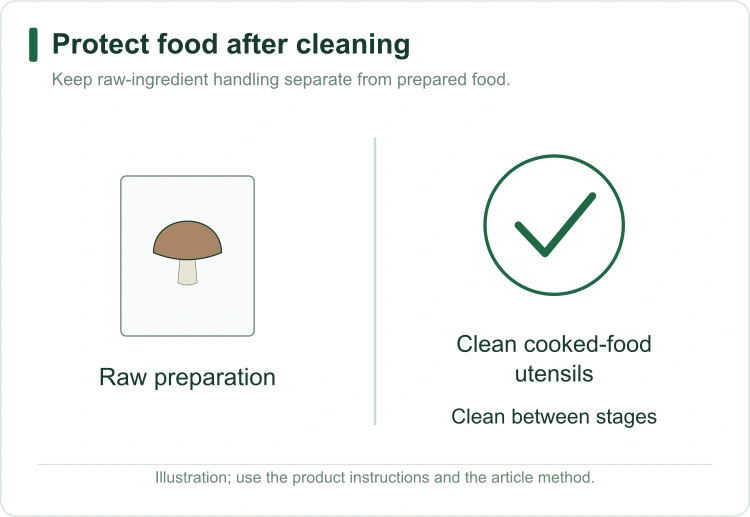
Cleaning is followed by careful handling. Keep prepared food and clean utensils away from contamination introduced by raw ingredients, their packaging or a previously used work surface.
People who are pregnant, older or immunocompromised should favour thoroughly cooked mushrooms and follow the advice relevant to their health needs. For a care setting or a foodservice operation serving vulnerable diners, the menu and preparation process should be chosen with that population in mind. A general recipe website cannot establish an appropriate raw-food policy for that setting.
| Situation | Practical approach |
|---|---|
| Correctly identified, sound fresh buttons for a typical adult | Raw use is common; clean and handle carefully |
| A diner needs a more cautious food choice | Serve thoroughly cooked mushrooms |
| Mushrooms are slimy, mouldy or have an abnormal odour | Discard them |
| Species or source is uncertain | Do not eat them based on this article |
| The pack says cook before eating | Follow the cooking instructions |
| The product is recalled | Follow the recall directions; do not try to rescue it by cooking |
A useful distinction is between reducing a known preparation risk and rescuing a suspect product. Cooking sound mushrooms is a normal preparation choice. Cooking spoiled, recalled or unidentified mushrooms is not a reliable correction. Keep those decisions separate when writing kitchen instructions, particularly where staff may otherwise assume that any doubtful ingredient can be made acceptable with extra heat.
Clean and prepare a small raw portion carefully
Prepare raw button mushrooms close to serving time. Wash your hands and use a clean board, knife and bowl. Keep the mushrooms away from raw meat, poultry and seafood, including their packaging and juices. A board used for another raw ingredient should be properly cleaned before it touches food that will be served without cooking.
Remove visible growing material and trim the dry or dirty stem end where necessary. Rinse under clean running water and drain or dry gently. The FDA's produce handling advice advises against using soap or detergent on produce. A specialised wash is not a substitute for clean handling or an assurance of sterility.
There is no need to peel every sound button mushroom for ordinary preparation. Peeling creates extra waste and handling, and it does not solve contamination elsewhere on the mushroom. If the surface is damaged or the product is deteriorating, decide whether it should be discarded rather than assuming removal of a thin layer restores an acceptable ingredient.
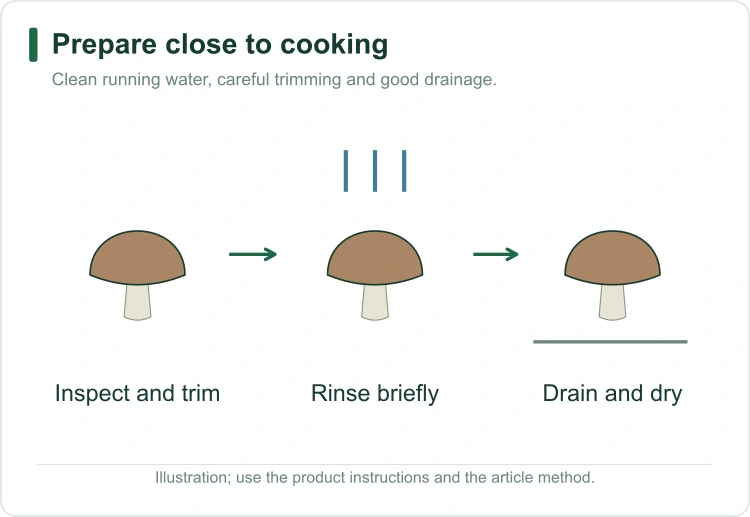
Prepare a small portion close to use with clean water and utensils. Rinsing removes dirt but should not be described as sterilising the mushrooms.
Use a sharp knife to make even slices. Thin slices are usually easier to distribute through a salad than thick chunks and make the firm raw texture less dominant. Slice only what you need. Cut surfaces can dry, darken or release moisture during storage, and a large prepared batch is harder to keep consistently appealing.
Drying after rinsing helps the salad itself. Water clinging to the slices can dilute dressing and collect at the bottom of a bowl. Gently blot or drain the mushrooms without crushing them. Add dressing according to the recipe and serve promptly under appropriate cold holding conditions, rather than leaving a dressed bowl at room temperature for extended grazing.
For an illustrative kitchen comparison, prepare a small weighed portion of thin slices and another of thicker slices from the same sound batch. Assess how each feels with the intended dressing. This is a texture trial, not a safety test. If the diner or setting calls for cooked food, carry out the comparison after cooking instead.
In foodservice, a written preparation method should identify the cleaning step, slice size, cold holding arrangement and discard policy. The process becomes easier to follow when staff know whether they are preparing an immediate plated salad or a batch for controlled service. A vague instruction to wash and slice leaves those important differences unresolved.
Compare the texture and flavour of raw and cooked buttons
Raw white buttons tend to taste mild, with an earthy note and a firm, slightly springy or spongy bite. The cap and stem can feel different: the cap may yield readily while a thicker stem remains more resistant. The exact impression depends on maturity, condition, slice thickness and the other ingredients in the dish.
Cooking changes both moisture distribution and structure. A sautéed mushroom becomes more tender, releases liquid and can develop browned surfaces once enough moisture has evaporated. The flavour often seems fuller because the preparation concentrates the mushroom and introduces browning, fat or seasoning. Those effects should be separated when comparing raw and cooked samples.
A fair comparison begins with the same batch and similar starting weights. Cook one portion with a measured amount of oil and minimal seasoning; leave the other portion raw only if raw service is appropriate. Record the finished weight of the cooked portion. A smaller cooked portion can taste more concentrated partly because it contains less water.
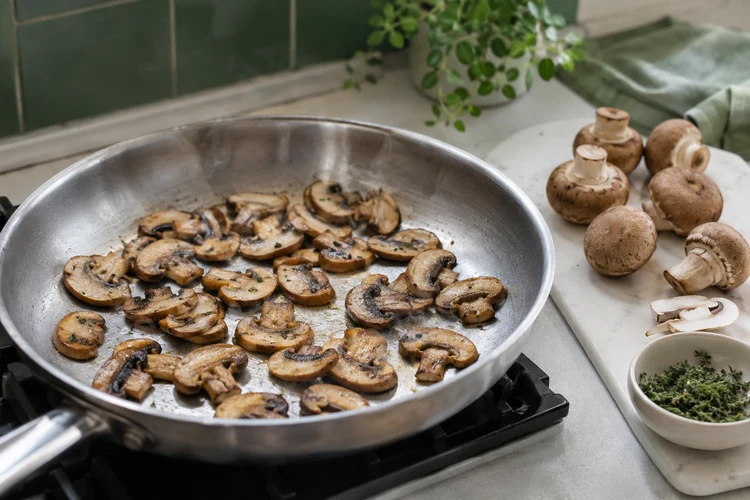
Brown buttons are another cultivated form of Agaricus bisporus. Cooking changes moisture, tenderness and flavour, while added fat and seasoning also influence the comparison.
For a sandwich, raw slices may contribute a light, firm texture but can slide between layers if cut too thickly. Cooked slices may settle into the filling more easily and provide a stronger savoury note. Moisture management matters in both cases: raw slices can wet a dressed filling over time, while cooked mushrooms should be prepared to the moisture level the bread can tolerate.
For a hot sauce or pie filling, cooked buttons usually fit the process better. Their released liquid becomes part of the recipe or is reduced before assembly. Adding raw mushrooms directly to a filling without accounting for that water can change the consistency during baking. The issue is recipe performance as well as the requirement to cook the mushrooms adequately.
Personal tolerance is another reason some people prefer cooked buttons. A small serving may be more comfortable than a large raw portion, but individual responses vary. Do not present a universal gram limit or claim that cooking prevents every digestive symptom. If mushrooms consistently cause a reaction, choose a different ingredient and seek appropriate advice if needed.
For product development, describe the desired result in practical terms: tender slices, a noticeable mushroom bite, limited liquid release or a pale appearance in a sauce. These observations can be assessed in a cooking trial. Broad promises such as easy to digest or superior nutrition are much harder to substantiate and are not needed to choose a useful product.
Treat agaritine and nutrition claims with proportion
Questions about raw buttons often lead to agaritine, a naturally occurring compound found in Agaricus mushrooms. Its presence has been studied, including how storage and preparation affect measured amounts. That research deserves a more careful explanation than either raw mushrooms are poisonous or cooking removes every concern.
A study of household processing and agaritine found that reductions varied with the cooking method. The finding supports a limited statement: preparation can change the measured agaritine content. It does not establish one guaranteed reduction for every pan, batch size or product, and it does not prove that an ordinary cooking step removes all of the compound.
Laboratory observations about a substance are also different from a demonstrated health outcome from a normal food portion. A study measuring composition cannot, by itself, calculate a person's cancer risk from a salad. Conversely, the absence of a precise consumer risk number is not a reason to claim that every amount and preparation has been shown harmless.
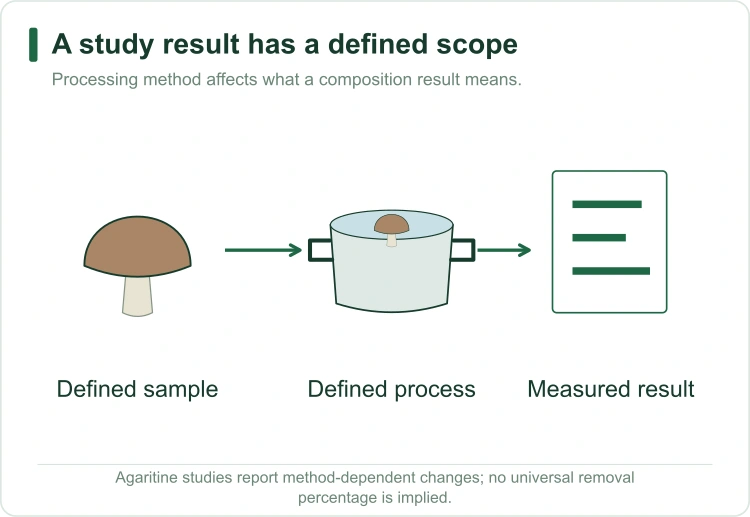
A composition study describes a particular sample and treatment. Its result should not be expanded into a universal removal percentage or a personal health-risk calculation.
For practical food preparation, cooking is a reasonable, cautious choice with familiar culinary benefits. There is no need to turn the meal into an improvised chemical treatment. Avoid advice to hold mushrooms for long periods, repeatedly rinse them or use an unverified process in an attempt to reach an invented agaritine threshold.
Nutrition claims need the same discipline. Raw and cooked mushrooms can differ in water content and in the amount of added oil or sauce. Comparing equal weights without noting preparation can confuse concentration with a change in the total batch. A cooked mushroom dish may contain more calories because of its recipe, while still serving a useful role in a balanced meal.
Claims about vitamin D need product-specific evidence too. Some mushrooms are produced or treated to increase vitamin D content, and the label may state this. A white button appearance alone cannot establish the amount. For a retail or private-label product, use the supplied nutrition information and any supporting analysis relevant to that actual product.
The buyer's useful questions are therefore concrete: what is the ingredient, how is it processed, what instructions accompany it, and what evidence supports the declaration? These questions keep the discussion connected to the food being sold. They also avoid using a single research result as a marketing claim that goes beyond what the study measured.
Keep frozen button mushrooms in cooked applications
Frozen button mushrooms are convenient for sauces, soups, pizza toppings, fillings and prepared meals, but they should be treated according to their intended use. A frozen product may have been cleaned, cut and given a heat treatment before freezing. Those steps do not automatically establish ready-to-eat status. Follow the manufacturer's cooking instructions.
Freezing changes mushroom structure. After thawing, slices may be softer and release liquid, making them a poor direct substitute for fresh raw slices in a crisp salad. That quality difference exists even where the product has been handled correctly. A buyer should evaluate frozen mushrooms in a cooked recipe that suits their moisture and texture.
We supply frozen button mushrooms for commercial food applications and review the cut and packing requirements against the intended process. Whole buttons, quarters and slices behave differently in a pan or filling. A thin slice can disperse through a sauce, while a whole mushroom creates a more distinct portion and needs an appropriate cooking method.

Sliced white button mushrooms are a distinct purchasing format from fresh whole mushrooms. Confirm the frozen product's preparation instructions and intended cooked use, then test slice integrity and released moisture under the actual recipe conditions before setting a repeat specification.
For a sautéed preparation, frozen mushrooms can release enough water to delay browning. Use manageable batches and allow the liquid to evaporate or incorporate it into the recipe as planned. For a soup or sauce, the released liquid may be easier to accommodate. The package method and a representative cooking trial should guide the process.
Do not taste thawed frozen mushrooms as though they were a ready-to-eat sample unless the product is explicitly validated and labelled for that use. Sample evaluation can include a frozen appearance check followed by the specified cooking step. The tasting stage belongs after that preparation, particularly when several staff are reviewing a new ingredient informally.
Our guide to freezing mushrooms discusses format and quality considerations in more detail. For this raw-use question, the essential point is narrower: fresh raw culinary use does not transfer automatically to a frozen product. Identity, processing and intended use all need to be read together.
If a finished food is served cold, the mushrooms can still be cooked as part of its preparation. A cooked-and-cooled salad is a different process from slicing fresh mushrooms directly into a bowl. Cooling, cold holding and handling then become part of the food's safety controls. The word cold describes serving temperature, not whether the ingredient has been cooked.
Specify safe intended use for retail and foodservice
A purchase specification should tell the next operator what the mushrooms are and how they are intended to be used. For a frozen ingredient, record the species, cut, process description, storage condition and cooking requirement. For a fresh product intended for raw preparation, the supplier and kitchen need controls appropriate to that use.
Packaging can help prevent misunderstanding. Instructions should be visible and consistent with the product's actual status. A serving photograph showing a cold salad can suggest raw use even where small print says cook thoroughly. Review images and wording together so the customer receives one clear preparation message.
For a foodservice trial, prepare the mushrooms in the intended recipe using the normal equipment. Record batch size, cooking method, finished texture and liquid release. If the mushrooms will be chilled after cooking, assess them after that full process as well. The result immediately out of the pan may not represent the served dish.
Microbiological requirements and supporting documents should be agreed for the actual product and market. A test report from one batch is useful evidence within a control system, but it does not replace hygienic handling or establish every future portion as safe to eat raw. Ask how the supplied product's intended use is defined and communicated.
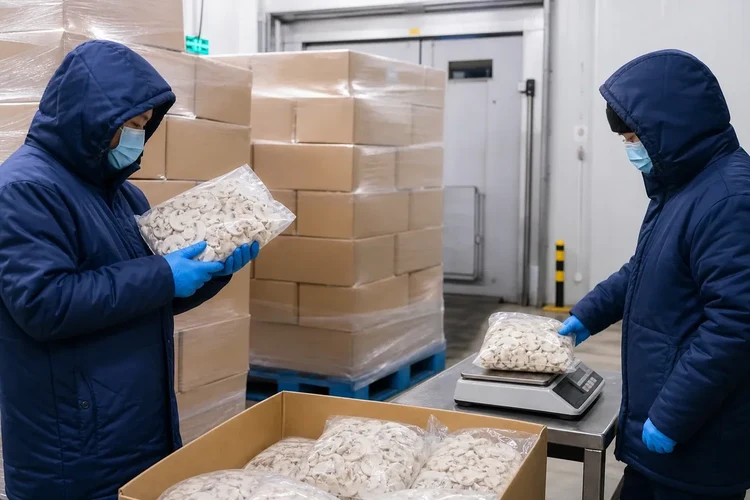
Illustration of a receiving review. The real purchase should connect product identity, storage condition, batch information and cooking instructions to the supplied lot.
A clear enquiry to GreenLand-food includes the destination, whole or cut format, pack size, expected volume and finished application. State whether the mushrooms will enter a soup, sauce, topping, filling or another cooked product. If the final food has a special preparation requirement, include that early so it can be reviewed before a sample is approved.
A useful final check is to read the consumer-facing pack and the kitchen instruction side by side. If the pack requires cooking, the recipe and serving photograph should lead the operator towards a cooked preparation. If the finished dish is served cold, the method should show the cooking, cooling and handling stages that occur before service.
This is particularly helpful when the same kitchen uses fresh buttons for one menu item and frozen slices for another. Keep their containers and preparation instructions identifiable so that familiarity with one product does not determine how the other is used. The approved sample record should name the actual format and the preparation used for tasting, giving purchasing and kitchen staff the same reference.
Choose button mushrooms for the intended cooking process
GreenLand-food is a professional frozen button mushrooms supplier and manufacturer in China, providing factory-direct wholesale supply for importers, food manufacturers, foodservice distributors and private-label programmes.
Send the whole or cut format, pack size, volume, destination and finished application. State the cooking process and any label or document requirements. We will review the proposed frozen button mushroom specification so the supplied product and its preparation instructions support the same intended use.
Use the product range and downloadable catalogue to review the wider selection, then send the specification and order details that matter to your application.