


What Are Chestnut Mushrooms?
Sep 08, 2026
Leave a message
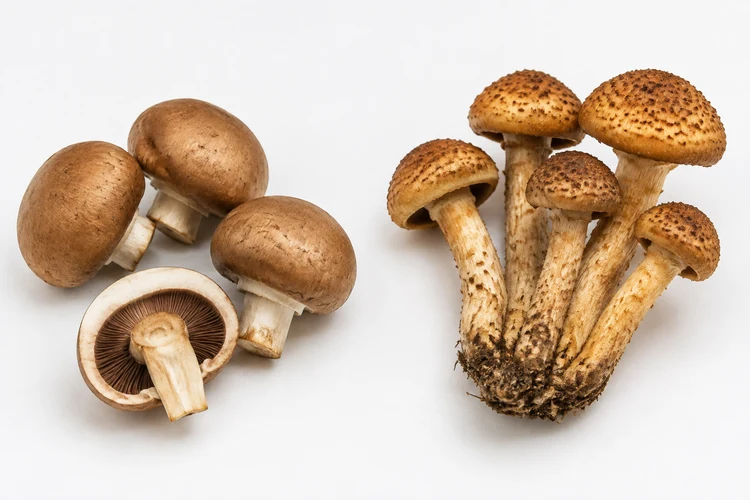
That naming difference matters before you compare flavour, follow a recipe or place an order. A tray of individual brown buttons and a branching cluster of slender-stemmed specialty mushrooms are not equivalent products, even when both labels say chestnut.
The quickest way to resolve the question is to check the scientific name, product photograph and supplied form together. This guide covers both uses of the name, with most ordinary supermarket cooking comparisons referring to brown Agaricus bisporus. It also explains what a buyer should confirm when a quotation, sample or ingredient list uses the name without further detail.
Check which chestnut mushroom the name describes
Common food names develop through local trade and everyday usage. They can be convenient within one market and ambiguous across borders. Chestnut mushroom is a good example: the name may describe the brown colour of a familiar cultivated button mushroom, or identify a separate specialty crop in a grower's range.
In British food writing, chestnut mushrooms generally refers to brown Agaricus bisporus. The CooksInfo entry for chestnut mushrooms documents that usage. A recipe asking for a supermarket pack to be halved and sautéed is often using the term in this sense, although the recipe's ingredient photograph and description should still be checked.
Specialty growers also use chestnut for Pholiota adiposa. Lykyn's chestnut mushroom guide describes that distinct cultivated mushroom. It commonly appears as a cluster with smaller golden-brown caps and longer stems. Its texture, trimming and presentation differ from a tray of brown buttons.
| Label wording | Likely interpretation | Confirmation needed |
|---|---|---|
| Chestnut mushrooms in a UK supermarket recipe | Brown Agaricus bisporus | Pack name and photograph |
| Cremini or brown button mushrooms | Brown Agaricus bisporus | Supplier identity statement |
| Chestnut cluster from a specialty grower | Often Pholiota adiposa | Scientific name and grower information |
| Chestnut mushroom powder or dried mix | Ambiguous without details | Species and full ingredient composition |
| Frozen chestnut mushrooms on a quotation | Insufficient description | Species, cut, process and sample |
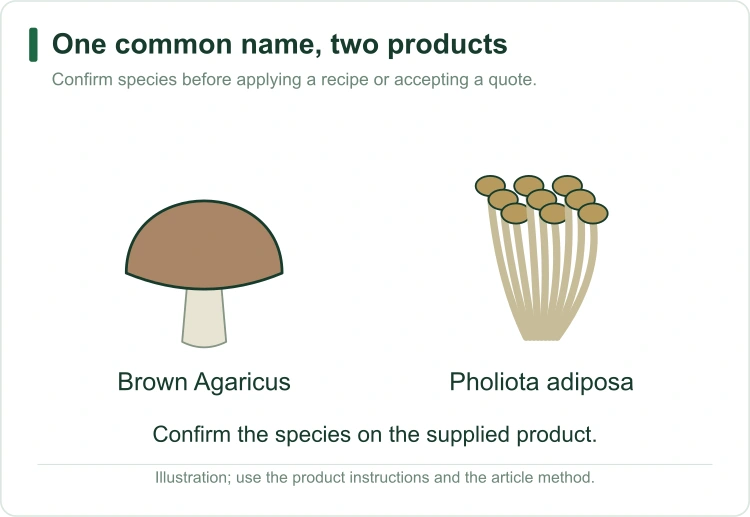
The common name alone is insufficient for a purchase. Use the scientific name, supplied form and reference photograph together to resolve regional naming differences.
Appearance helps explain the distinction, but this article is not a wild mushroom identification guide. A brown cap or a cluster does not establish that a mushroom collected outdoors is edible. Use commercially supplied, correctly identified food products. If a product contains an unexplained mixture of species, resolve that with the seller rather than selecting pieces by resemblance.
When a supplier uses a regional common name, ask for it to be retained alongside the scientific name instead of replacing one with the other. The common name helps the kitchen recognise the product, while the scientific name reduces ambiguity in purchasing and documentation. Both should refer to the same actual material.
At GreenLand-food, a request for frozen mushrooms is easier to review when it includes a labelled reference photograph. We then need the intended species and form confirmed. A picture can communicate size and presentation, but it should support the written identity rather than carry the entire specification.
Compare brown and white Agaricus bisporus
Brown chestnut mushrooms and white button mushrooms belong to the same species, Agaricus bisporus. Their colour and market presentation differ, but they share a familiar rounded cap and short stem structure. In many everyday cooked recipes, one can be used in place of the other with adjustments based on the actual size and condition of the mushrooms.
Brown buttons are often described as having a somewhat fuller earthy flavour and firmer bite. These are useful general sensory descriptions, not fixed measurements. Maturity, storage, cooking method and sauce can have as much practical influence as the colour difference. A strongly seasoned dish may make the distinction less noticeable.
White buttons can be useful where a pale appearance matters, such as a light sauce. Brown caps may create a darker visual contrast in the same dish. Cooking and the exposure of darker gills can change the sauce further. If colour is important for a commercial recipe, compare the finished dish rather than deciding from the uncooked tray.

White button mushrooms provide the pale-cap comparison for brown chestnut mushrooms sold as Agaricus bisporus. These are white buttons, rather than a photograph of the brown product; the commercial name, species and required colour should all be explicit on an order.
Maturity also matters. Smaller, closed-cap buttons and larger mushrooms with more open caps can behave differently when sliced. A larger piece may offer a stronger visual mushroom identity, while a small slice distributes more evenly through a filling. The name chestnut does not establish a standard cap diameter or maturity grade.
For a practical comparison, buy sound brown and white buttons of similar size. Slice them to the same thickness and cook equal starting weights with the same measured ingredients. Record the finished weight, liquid release, appearance and bite. This makes the comparison more useful than tasting one raw sample against a heavily browned sample of the other.
The Mushroom Council's white button profile is a useful reference for the familiar Agaricus product category. It does not mean every related product has the same processing specification. A frozen brown slice and a fresh white whole mushroom still differ in form, preparation and intended use.
For buyers considering substitution, define the reason for the change. If the objective is a browner appearance, a brown button may be appropriate. If it is a different stem texture or a clustered presentation, changing from white to brown Agaricus may not achieve it. The desired finished result should guide the selection.
Recognise the separate clustered Pholiota product
The specialty mushroom sold as Pholiota adiposa has a different structure from a brown button. Cultivated examples are commonly supplied as clusters of smaller caps on relatively long stems, often with a scaly or textured cap surface. The cluster itself can be an important part of the visual appeal in a plated dish.
A grower's product description should establish whether the cluster is supplied intact, separated into stems or further cut. That affects trimming time, portioning and the way it cooks. A photograph of an intact cluster does not tell the buyer how much of the connecting base will be removed before sale or kitchen preparation.
The Spore Genetics chestnut mushroom guide uses chestnut for the specialty species. This is useful evidence of the commercial naming overlap. For purchasing, however, the relevant statement must come from the actual supplier of the food, supported by its product documents and sample.
Texture deserves separate attention. Slender stems can remain more noticeable in the bite than the cap, especially if served in long pieces. Cutting the same mushroom into short lengths produces a different eating experience from retaining a small cluster. The best format depends on whether the dish is eaten with a fork, spoon or chopsticks.
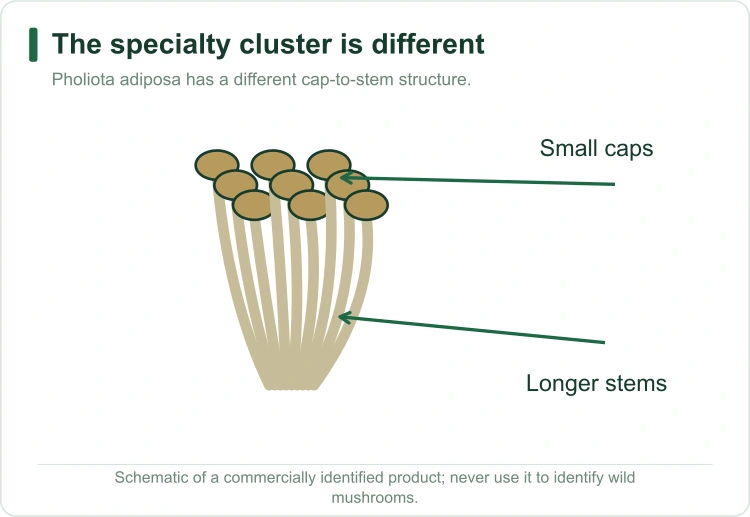
The longer stems and clustered form create different trimming and portioning questions. This illustration explains a supplied product and is unsuitable for identifying mushrooms collected outdoors.
Do not apply raw-use advice for white buttons to this product just because both are cultivated mushrooms. Prepare the identified specialty mushroom according to the supplier's instructions and cook it thoroughly. A common name shared across two products does not transfer preparation guidance between them.
When assessing a sample, inspect it before trimming and again after preparation. Record how the cluster separates, how much base is removed and whether the remaining stems suit the dish. These observations give the buyer a practical basis for comparing a whole-cluster offer with a prepared product sold at a different price per kilogram.
A replacement can be commercially reasonable when everyone understands it. It becomes a problem when a quotation for brown buttons is fulfilled with a separate clustered species, or the reverse, without approval. The species name, reference image and agreed form should make that difference visible before the order is confirmed.
Choose by texture, flavour and intended dish
For a sauce, soup or pie filling, brown Agaricus can provide a familiar mushroom flavour and a substantial cap texture. Slices distribute readily, while quarters or whole small buttons make more distinct pieces. The choice depends on the portion and how much mushroom identity the finished dish should retain.
A clustered specialty chestnut mushroom can contribute a different shape and stem-led bite. It may suit a plated vegetable preparation, a noodle dish or a mushroom assortment where individual forms remain visible. That is a possible application, not a claim that every supplied cluster will perform the same way. The actual size and preparation still need testing.
The phrase nutty flavour often appears in chestnut mushroom descriptions. Treat it as a sensory comparison, not an ingredient statement. The mushroom does not become a chestnut or automatically contain tree nuts because of its name. Conversely, a prepared product can contain added ingredients, so allergen information must come from the complete formulation and relevant handling controls.

Different species can contribute distinct shapes and textures to a cooked blend. Evaluate the complete portion so the selected components remain compatible after preparation.
A useful tasting method begins with a simple cooked preparation. Use a measured amount of neutral oil or a lightly seasoned broth, then compare the mushrooms at a similar serving temperature. Heavy garlic, cheese or chilli can conceal differences you are trying to assess. Once the product is understood, repeat the trial in the intended recipe.
| Desired result | Form worth testing | Main observation |
|---|---|---|
| Even distribution in a sauce | Brown Agaricus slices | Slice integrity and liquid balance |
| Distinct pieces in a stew | Small whole buttons or quarters | Tenderness through the centre |
| Visible mushroom variety | Confirmed specialty clusters | Portion shape and stem bite |
| Fine filling | An agreed chopped format | Particle size and moisture |
| Retail mixed mushroom pack | Defined species and percentages | Appearance and cooked compatibility |
Holding time can change the result. A mushroom that tastes pleasant immediately after cooking may soften further in a sauce or become less appealing after a long service period. Test the relevant holding and reheating conditions, not only the first pan. This is especially useful for foodservice and prepared-meal applications.
We recommend describing the approved sample in plain sensory terms: tender cap, noticeable stem bite, mild earthy flavour, acceptable liquid release. These descriptions connect the buyer's expectations to an observable result. An unsupported promise of premium taste is less useful when two teams need to decide whether a later batch is equivalent.
Understand fresh, dried and frozen chestnut formats
Fresh mushrooms retain the structure of the recently harvested product and may offer the best presentation for an intact cluster. They also require careful purchasing and storage because quality changes during distribution. A fresh format can be appropriate where turnover is rapid and the kitchen values the original cap and stem appearance.
Dried mushrooms concentrate flavour and reduce the weight associated with water, but rehydration does not restore every feature of the fresh product. The cap can become chewier, the stem may remain firm and the soaking liquid may become part of the recipe. A dried chestnut product therefore needs both species confirmation and a preparation trial.
Frozen mushrooms offer a different route for planned cooked use. Freezing can soften the structure and increase liquid release during cooking. The product may have undergone cleaning, cutting and a heat treatment before freezing, so the supplier's process description matters. Frozen status alone does not establish raw suitability or a universal cooking method.
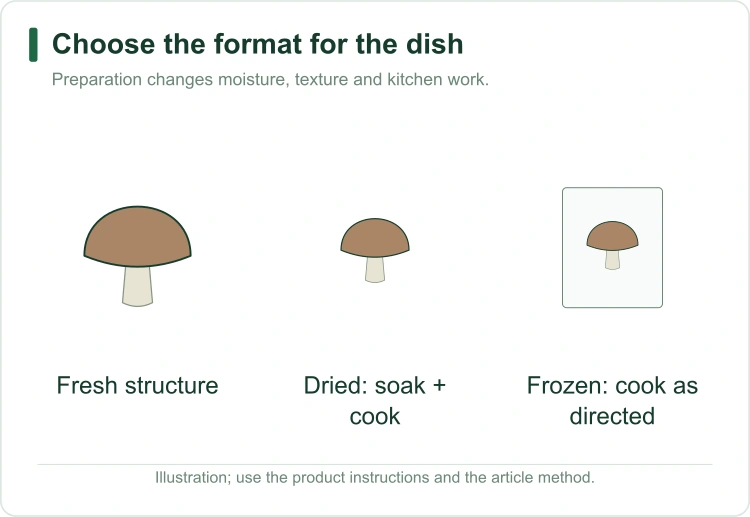
Storage format changes the preparation sequence and usable output. Compare equivalent cooked results rather than treating equal purchase weights as equivalent amounts in a finished dish.
The comparison should be made on usable cooked output. A kilogram of dried mushrooms, a kilogram of fresh mushrooms and a kilogram of frozen mushrooms are not equal starting points for a recipe. Water content and preparation losses differ. Price per kilogram becomes more informative when connected to the amount and quality of finished food.
For fresh mushrooms, Health Canada's handling guidance provides general purchasing, cleaning and storage advice. Product-specific instructions still take priority where the supplier has defined a particular pack and use. Avoid applying one generic shelf-life number to every species, package and supply chain.
For a frozen enquiry, confirm whether the product is whole, sliced, quartered or chopped, and whether the pack is intended to remain free flowing. Ask about acceptable clumping and the cooking instructions. A block suitable for a large soup kettle may be inconvenient for a kitchen portioning small sauté batches.
Our mushroom freezing guide covers wider format considerations. In a chestnut mushroom purchase, the first step remains identity. A well-handled frozen product of the wrong species cannot meet an order simply because its storage format is correct.
Write an unambiguous mushroom identity and cut specification
Begin with a complete product name. An illustrative line might read brown Agaricus bisporus, sliced, frozen, for cooking. If the required product is Pholiota adiposa, state that instead and define whether it is supplied in clusters or separated pieces. These examples show the structure of a specification, not a claim that every format is available.
Add the dimensions that matter to the application. For slices, define the thickness range and how broken pieces are assessed. For whole buttons, define the size grade. For clusters, describe the acceptable portion form and base trimming. A simple reference photograph can help, provided the written limits remain clear.
Specify the ingredient statement and process information needed by the buyer. A plain mushroom product differs from one containing seasoning, oil or other ingredients. If a heat treatment is part of production, its description should be accurate without implying ready-to-eat status unless that status is actually established.
A purchase specification should also identify packing and use. State the inner pack, outer carton, intended storage condition and whether the customer will cook from frozen. Where private-label packing is requested, confirm the language and preparation information needed on the consumer pack. The product name should remain consistent across the quotation, label and supporting documents.

White button mushroom slices beside a ruler illustrate why species and cut belong in separate specification fields. For a chestnut-mushroom order, confirm the brown Agaricus or clustered Pholiota identity first, then agree slice size, appearance and acceptable broken pieces.
For a blend, list each species and its agreed proportion. A mixture described only as chestnut mushroom blend can leave both identity and composition unclear. Piece sizes should be compatible with the recipe, and the blend should be assessed after normal transport and handling to see whether components remain acceptably distributed.
Include sample approval conditions. Record the cooking method used, the observations that matter and whether the reference is frozen appearance, cooked performance or both. If a future substitution is possible, require it to be reviewed before shipment. This prevents a commercial name from becoming an open permission to change the ingredient.
At GreenLand-food, we will review the requested species, cut, pack and destination before discussing a suitable frozen supply option. A concise but complete enquiry saves repeated clarification. It also allows us to identify where the buyer needs a product-specific confirmation rather than a broad catalogue description.
Review samples and documents before accepting a substitute
A substitute should be assessed against the reason the original product was chosen. If a recipe needs the rounded slices and mild flavour of brown Agaricus, a long-stemmed cluster may create a different dish. If presentation depends on an intact specialty cluster, ordinary brown buttons may meet neither the visual nor the portioning requirement.
Start with the identity documents and the sample label. Confirm that the name on the sample matches the quotation and proposed packing. Check the supplied condition and form before cooking. A correctly identified product can still differ in size, trimming or processing enough to require a recipe adjustment.
Then run a controlled preparation. Use the normal equipment and portion size, record starting and finished weights, and assess the result at the intended serving stage. For a frozen meal, that includes the relevant freezing and reheating process. For a foodservice sauce, it includes the planned holding period.
Consider labour as well as ingredient price. A cheaper whole cluster may need more trimming and portioning. A prepared slice may cost more per kilogram while reducing kitchen work. Neither is automatically the better purchase. The comparison needs usable yield, preparation time and the quality of the served portion.

Illustration of a frozen sample review. Confirm that the sample, quotation and proposed label describe the same species, cut, processing condition and intended use.
Documents should support the actual order: product specification, traceability information and any required certificates or test information. Confirm their holder, scope and relevance. A general company brochure cannot establish the identity or intended use of an individual mushroom item.
If the substitute changes the ingredient declaration, review the finished product label and menu description before use. A scientific species change can also affect the sensory result, so approval should involve the people responsible for the recipe as well as purchasing. One team's cost saving should not become another team's unexplained change in the pan.
If a replacement is approved, preserve both the original requirement and the agreed change in the order record. Name the substituted species, cut and preparation method, then record any recipe adjustment. An approval that says only chestnut mushrooms accepted leaves the original naming ambiguity unresolved for the next purchase.
For a retail blend, also inspect a normal opened pack after the handling expected in distribution. Long stems, small caps and heavier button pieces may portion differently when a bag is tipped or scooped. A carefully arranged display sample can conceal that issue. The relevant question is whether ordinary portions consistently deliver the appearance and cooked bite described to the customer.
Clarify the mushroom species before requesting supply
GreenLand-food is a professional frozen mushrooms supplier and manufacturer in China, providing factory-direct wholesale supply for importers, food manufacturers, foodservice distributors and private-label programmes.
Include the scientific name, a labelled reference photograph, required cut, pack format, volume and destination. If you are requesting a specialty species or a blend, we will review the specific availability and processing requirements. A common name alone will not be used to assume an equivalent product.
Use the product range and downloadable catalogue to review the wider selection, then send the specification and order details that matter to your application.