


Can You Eat Oyster Mushrooms Raw?
Sep 03, 2026
Leave a message
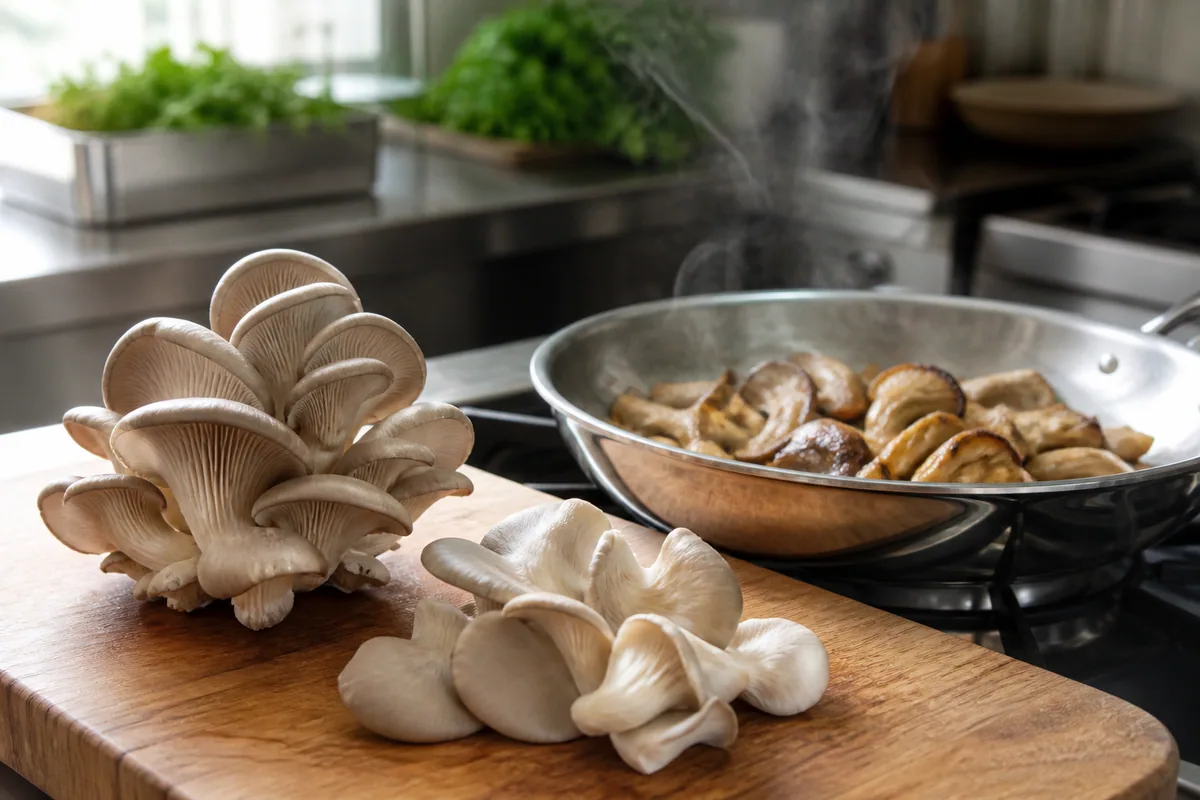
Cook oyster mushrooms before eating them
Use cultivated mushrooms from a reliable source, trim the tough cluster base, clean away debris and cook until hot and tender. Sautéing, roasting and simmering all work. Do not use an internet photograph to identify a wild mushroom, and do not assume a frozen oyster mushroom is ready to eat unless its package and validated product status say so.
Edibility, personal tolerance, correct wild identification and ready-to-eat product status are four different questions.
Key takeaways
- Cultivated grey oyster mushrooms and king oyster mushrooms are related culinary products but have different structures and best cooking methods.
- Cooking improves bite, aroma and digestibility; it is not necessary to invent a dramatic universal raw-toxin claim to recommend it.
- Discard slimy, moldy, sour or badly damaged mushrooms rather than trying to cook away spoilage.
- Commercial frozen oyster mushrooms must be approved for their declared use; freezing alone is not a universal kill step or ready-to-eat claim.
Quick comparison
| Situation | Practical decision | Reason | Best next step |
|---|---|---|---|
| Cultivated grey oyster, sound and fresh | Cook | Raw layered caps may be chewy and harder to digest | Sauté, roast or add to soup |
| Cultivated king oyster | Cook | Dense stem develops better bite and aroma with heat | Score, slice or cube, then sear or roast |
| Wild oyster-like mushroom | Do not rely on this page | Lookalikes and habitat details require expert identification | Use qualified local identification guidance |
| Frozen oyster ingredient | Follow product status and directions | Frozen does not automatically mean ready to eat | Cook or reheat by the approved process |
| Slimy, moldy or sour-smelling mushrooms | Discard | Spoilage is not repaired by cooking | Do not taste to test |
Cultivated oyster mushroom identity comes first
Pleurotus species commonly sold as grey, pearl or tree oyster mushrooms form layered fan-shaped caps with gills running down a short off-center stem. Cultivated clusters from a named supplier are a different decision from an oyster-shaped mushroom found on a log. Color alone is not identification, and photographs do not show every required feature. If the mushroom is wild, stop and use expert local identification before discussing raw or cooked preparation.
King oyster, Pleurotus eryngii, has a thick dense stem and a relatively small cap. It can appear in the same family discussion, yet it does not cook exactly like a delicate grey oyster cluster. A raw statement about one form should not be copied automatically to every Pleurotus product. Commercial buyers should write the species or accepted market identity into the specification.

Why raw oyster mushrooms are usually disappointing
The raw cap is moist, fibrous and layered. It can taste faintly metallic, grassy or dusty and may feel rubbery. Mushroom cell walls contain chitin, which people digest less easily than many cooked plant tissues. Individual tolerance varies, but a large raw portion is a poor first test. Cooking softens the tissue, evaporates water and develops savory aroma through browning. This is primarily a quality and digestibility recommendation, not a claim that every cultivated oyster mushroom contains one simple poison neutralized by heat.
Raw handling also leaves no cooking step between preparation and serving. Clean cultivation reduces soil compared with field mushrooms, but harvesting, trimming, packing and kitchen contact still matter. People who are pregnant, immunocompromised, elderly or serving very young children commonly need more conservative food-safety choices and should follow relevant medical and public-health advice. A cooked dish with sound material is the clearer default.
Clean gently and remove the cluster base
Separate the cluster and trim the dense base that holds caps together. Brush away substrate. If visible debris requires rinsing, rinse briefly under cool water and drain well; do not soak the layered caps. Excess water makes sautéing slower and can leave the mushrooms steaming in the pan. Examine the gills and folds for insects, substrate, decay and abnormal discoloration. Normal grey or beige variation is not the same as wet black breakdown.
Use the mushrooms promptly while their edges remain resilient. Dry edges can indicate age but are not automatically unsafe; slime, fuzzy mold, spreading soft decay or sour fermentation odor are stronger discard signs. Freezing or cooking does not turn decomposing raw material into a quality ingredient. For a foodservice pack, receiving checks should include temperature, odor, cluster integrity, visible substrate and remaining life.
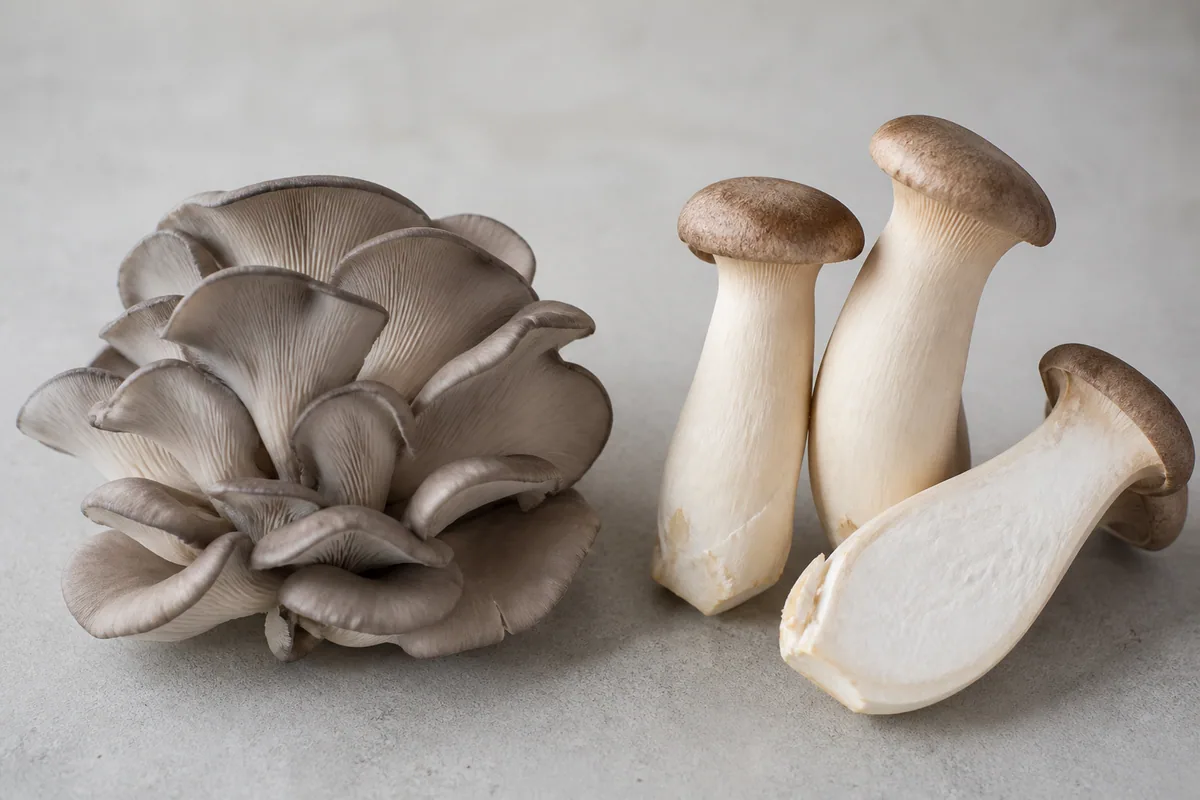
Sautéing gives the clearest texture improvement
Heat a broad pan before adding a thin film of oil. Tear or slice large caps into reasonably even pieces and cook in uncrowded batches. The mushrooms first release water; allow it to evaporate, then let the edges brown. Season near the end so the cook can judge natural aroma and moisture. The finished piece should be tender with lightly crisp edges, not wet and squeaky. Garlic, pepper, soy, butter, herbs and citrus can follow, but they should not hide an off odor.
King oyster needs a different cut. Slice the stem into rounds, planks or cubes, score broad faces if desired and sear long enough to develop color. A quick grey-oyster method cannot be applied to a thick king-oyster medallion by minutes alone. Judge core heat and tenderness. For large-batch kitchens, record pan load, oil, time and cooked yield so the result survives staff changes.
- Confirm cultivated identity and sound condition.
- Trim the dense base and separate caps.
- Clean lightly and drain all surface water.
- Heat a broad pan and avoid crowding.
- Cook through the water-release stage and brown the edges.
- Serve promptly or cool under an approved food-safety procedure.
Roasting, grilling and soup methods suit different structures
Roasting works well when the cook wants drier edges. Spread seasoned pieces in one layer on a hot tray and turn if needed. Grilling can suit large firm clusters or king-oyster planks, but thin grey-oyster edges burn quickly. In soup, add pieces early enough to cook through but not so early that they lose all identity. A battered or breaded product needs a full cooking instruction for both mushroom and coating, not only visual browning.
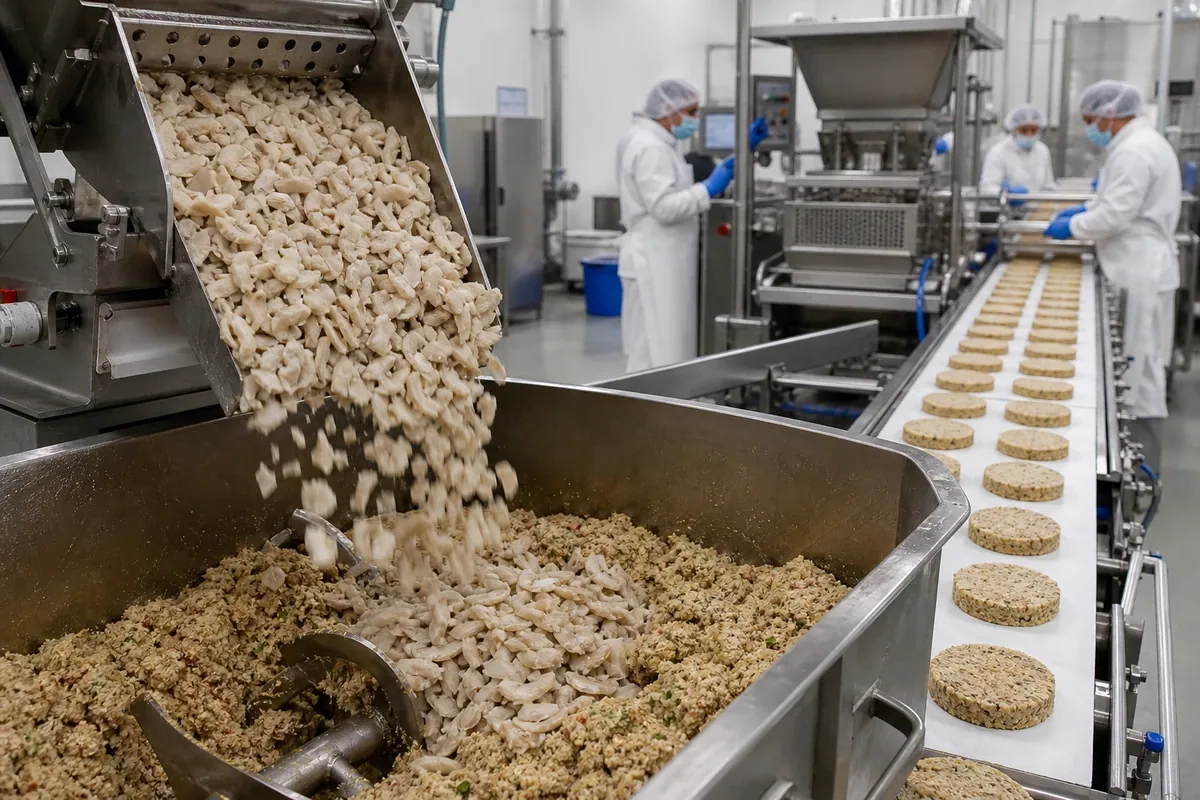
A home cook can taste a fully cooked piece to adjust seasoning. A processor should instead define an application trial. For soup, assess piece survival and broth color; for stir-fry, assess water release and bite; for a plant-based filling, assess shredding, binding and flavor after reheating. The correct frozen form may be whole cluster pieces, strips, slices or a controlled broken grade.
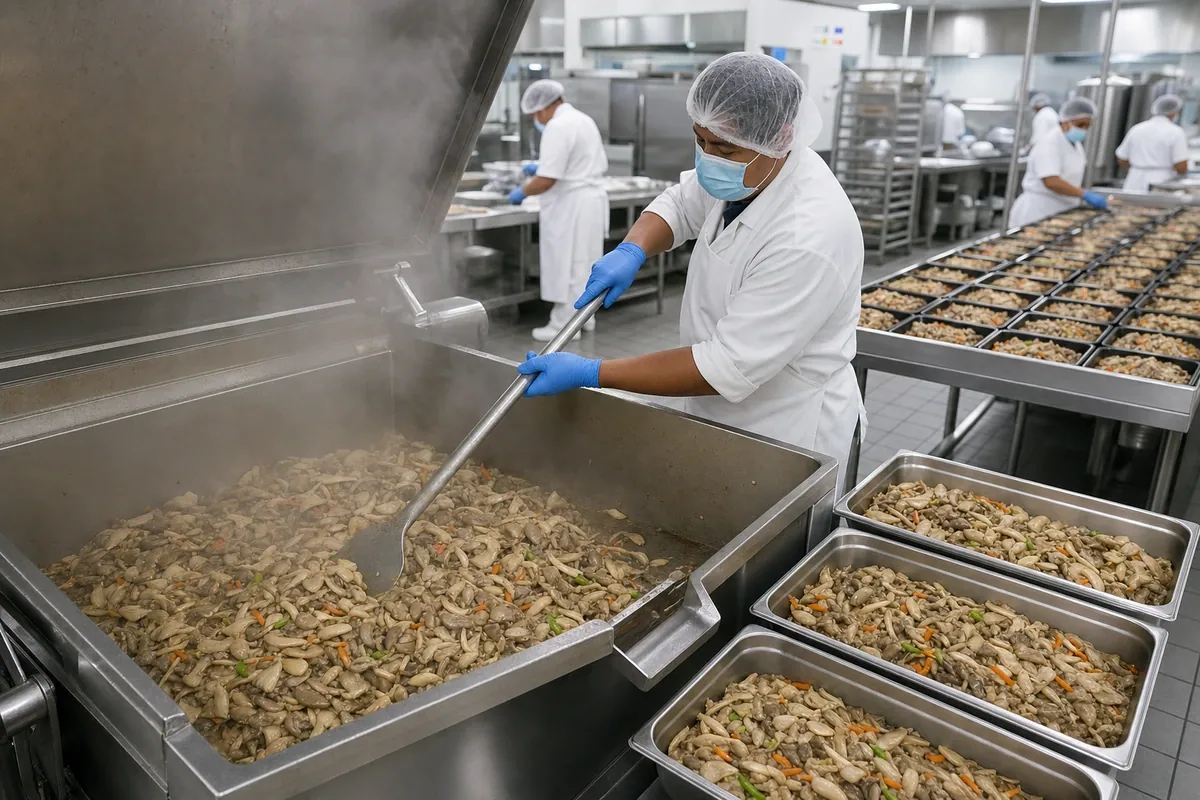
Frozen oyster mushrooms are ingredients unless proven otherwise
Freezing slows microbial growth while the product remains frozen, but it is not a universal kill step. A bag of IQF oyster mushrooms may be intended for cooking. Read the label and specification for ready-to-cook or ready-to-eat status, ingredients, blanching or grilling treatment and cooking directions. Do not serve a frozen ingredient raw in salad simply because it was washed before freezing. Thawing also releases liquid and softens the layered structure.
For many hot applications, small free-flowing pieces can cook from frozen. Use enough pan or kettle capacity to handle the initial water release. If a recipe needs drained weight, thaw under refrigeration in a covered container and measure drip. Never thaw a bulk pack at room temperature for convenience. The buyer's validation should cover the actual load, time, equipment and serving or hot-hold conditions.
Texture control begins before the freezer
Harvest maturity, cap thickness, cooling delay, pre-treatment and freezing rate all influence the result. Young, resilient caps generally handle movement better than very flat, fragile ones. Blanching may support process control and color but can soften flavor and bite; grilling can reduce moisture and add roasted notes. Fresh-IQF, blanched-IQF and grilled-IQF should be treated as different specifications.
At GreenLand-food, we discuss available oyster mushroom forms against the intended soup, stir-fry, ready meal, sauce or plant-based application. Buyers can request current-lot photos, sample cooking, drip evaluation, pack options and documents. Availability, pre-treatment, facility scope and microbiological limits are confirmed for the order; a website safety article is not a release specification.

Use one written cooking test for supplier approval
Weigh the frozen sample, cook it in the buyer's real equipment and record time to loosen, liquid release, cooked weight, color, aroma and bite. Hot-hold or reheat it for the same period used in production. A piece that looks intact while frozen may collapse after holding; a darker grilled piece may deliver better flavor in pizza but discolor a pale soup. Score what the customer will actually experience.
Keep the approved method, photographs and limits with the sample. State species, whole or cut form, pre-treatment, clumps, ice, broken pieces, drip, pack, shelf life and application. This turns the vague question "can oyster mushrooms be eaten raw?" into a commercial decision with a clear product status and a validated cooking step.
Worked decisions that a short answer cannot cover
A raw garnish is a poor place to test identity
A chef may be tempted to shave king oyster into a salad because the pale stem looks clean. That decision combines species identity, hygiene, personal tolerance and serving policy. A cooked tasting portion provides more information about flavor and texture with fewer uncertainties. If a concept truly requires raw mushroom, it needs a separate risk review, controlled sourcing and explicit customer communication.
Do not borrow the result from a truffle, button mushroom or enoki dish. Species, cultivation and preparation differ. The safest editorial answer remains simple: oyster mushrooms are best cooked.
Metallic or bitter notes are not always spoilage
Some raw oyster mushrooms have a mild metallic or grassy edge that disappears with heat. That is different from sour fermentation, ammonia-like odor, mold or slimy decay. A cook should learn the normal aroma of the supplied species and lot and reject clear abnormality.
Commercial sensory specifications can include normal color and aroma references plus disqualifying off-odors. Samples should be evaluated both frozen and cooked because frost can hide aroma while heating reveals it.
Worked foodservice test: pan load changes the verdict
Two kitchens can cook the same oyster mushroom and report opposite texture. In a shallow 500 g trial the water evaporates quickly and edges brown. In a 5 kg overloaded pan the product boils in released liquid and becomes pale and soft. The ingredient may not be the cause; equipment load is part of the method.
Record kilograms per pan, starting state, oil, heat recovery, drain decision and cook time. Supplier comparisons are meaningful only when the process is held constant.
Ready-to-eat is a documented claim, not a visual guess
A grilled appearance, blanching statement or clean photograph does not establish ready-to-eat status. The processor's hazard analysis, validated treatment, environmental controls, microbiological specification, labeling and cold chain determine that claim.
Buyers should ask directly whether the product is ready to cook or ready to eat and retain the answer in the signed specification. When in doubt, use a validated cooking process.
More detail for a repeatable decision
Separate normal variation from a reason to discard
Grey oyster caps naturally vary from pale beige to blue-grey, and gills are usually white to cream. Light dry edges may reflect age or air exposure. Those cues should be judged with firmness and odor. Wet collapse, widespread yellow-brown decay, slime, fuzzy growth or sour fermentation are not normal color variation.
A cluster base may carry clean cultivation substrate. Trim it rather than treating every speck as spoilage. By contrast, foreign debris, insects beyond the agreed tolerance or an unknown wild substrate require a different assessment. Clean cultivated identity makes preparation simpler but does not eliminate inspection.
For frozen product, surface frost can hide color. Look at pieces after controlled cooking. An earthy mushroom aroma is expected; rancid oil, chemical taint, fermentation or persistent ammonia-like odor is not. Keep reference photos and sensory language with the approved lot so staff do not improvise acceptability.
Cooking methods change the consumer question
A quick sauté emphasizes browned edges and resilient cap layers. A braise softens the mushroom more deeply and distributes flavor into the liquid. Roasting reduces surface moisture. Each method answers the raw-texture problem differently, so a recipe should state the intended result instead of giving one minute count for every pan.
Acid added early can influence browning and texture, while salt and crowded pans change water release. In a test kitchen, hold those variables constant before comparing suppliers. Otherwise a cook may call one lot watery when the real difference was pan load or sauce addition.
For cold dishes, cook first, cool promptly under a safe procedure and marinate under refrigeration. "Cold oyster mushroom salad" does not have to mean raw mushroom. A fully cooked and chilled preparation can deliver bright flavor while retaining a controlled heat step.
Personal tolerance and allergy language need restraint
Some people experience gastrointestinal discomfort from mushrooms, particularly large raw portions. That does not justify claiming every reaction is the same mechanism. Start with a modest cooked portion when a person is unfamiliar with the food, and seek medical guidance for allergy, severe symptoms or individual restrictions.
An allergy to one mushroom does not automatically establish an allergy to every species, but experimentation after a suspected reaction is not appropriate without professional advice. Product labels should use required ingredient naming and cross-contact declarations rather than vague "mushroom family" warnings invented by marketing.
The article's recommendation is culinary and precautionary: cook sound cultivated oyster mushrooms. It does not diagnose intolerance, guarantee safety for every person or replace the guidance of health authorities for vulnerable consumers.
A frozen specification should preserve the cooking decision
If the product will be cooked from frozen in soup, the specification should include a piece size that heats uniformly and survives stirring. If it enters a stir-fry, free flow and moisture release become more important. For a filling, controlled broken pieces may be efficient. The phrase oyster mushroom is only the first line.
State whether blanching, grilling or another treatment is allowed and whether additives are permitted. Review the ingredient statement and label. A buyer who approves grilled mushroom but receives fresh-IQF product will see a different aroma and water load even if the species is correct.
Link the cooking instruction to the pack size. A 500 g retail bag and a 10 kg foodservice block do not loosen at the same rate. Validate the actual equipment and maximum load, then give staff a direction that can be followed during busy service.
What to confirm before approving volume
A useful inquiry describes the ingredient and the job it must do. Send the product identity, form, target application, packing, quantity, destination and the quality points your team will measure. We will review current availability and an appropriate supply route where possible. Final size, process, ingredients, limits, microbiology, documents, shelf life, lead time and commercial terms remain subject to the approved specification and order confirmation.
- Confirm species or accepted cultivated market identity.
- State whole cluster, cap, strip, slice or broken form.
- Confirm fresh-IQF, blanched, grilled or other pre-treatment.
- Define drip, cooked yield, bite, broken pieces, clumps and ice.
- Record ready-to-cook or ready-to-eat status and cooking direction.
- Approve the lot in the actual hot application and holding cycle.
Frequently asked questions
Can you eat cultivated oyster mushrooms raw?
Some people eat small amounts, but cooking is the better default for texture, flavor, digestibility and handling clarity.
Are raw oyster mushrooms poisonous?
Do not reduce the advice to one universal poison claim. Correctly identified cultivated oyster mushrooms are edible; cooking is recommended because raw quality and tolerance are less predictable.
Can you eat king oyster mushrooms raw?
A thin raw piece may be edible for some people, but the dense stem tastes and feels much better after searing, roasting or grilling.
How long should oyster mushrooms be cooked?
Cook until hot, tender and past the wet raw stage. Exact time depends on cap thickness, pan load and method, so use texture and complete heating rather than one universal minute count.
Do oyster mushrooms need to be washed?
Brush away clean substrate and rinse briefly only when debris requires it. Drain well; soaking adds water and weakens browning.
Can wild oyster mushrooms be eaten raw?
Do not use this page to identify wild mushrooms. Correct identification and local expert guidance come before any raw or cooked serving decision.
Are frozen oyster mushrooms ready to eat?
Not automatically. Check the label and specification. Many frozen mushroom products are ingredients intended for cooking.
Why do oyster mushrooms become watery?
They naturally contain substantial water. Crowded pans, slow heat recovery, thawing and freezing damage can all increase visible liquid release.
What form works best for foodservice?
It depends on the dish. Strips or cap pieces may suit stir-fry, controlled pieces suit soup and grilled formats may suit pizza or ready meals.
Can GreenLand-food supply frozen oyster mushrooms?
We can discuss available forms, pre-treatments, packing, sample testing and documents. Final specification and facility scope are confirmed per order.
Reference points
- Mushroom Council oyster mushroom preparation
- USDA: Keep Food Safe
- GreenLand frozen oyster mushroom guide
These sources support the classification, method or supply boundaries used above. The applicable product label, specification, food-safety plan and destination-market rules still control a real batch.
Source Frozen Oyster Mushrooms for your real application
GreenLand-food is a frozen oyster mushrooms supplier and manufacturer in China, providing factory-direct wholesale support for importers, food manufacturers, foodservice distributors and private-label programs. Send the required form, specification, packing, quantity, destination, application and documents. We will review available order options and the next practical step.