


When to Pick Oyster Mushrooms for Best Texture
Sep 03, 2026
Leave a message
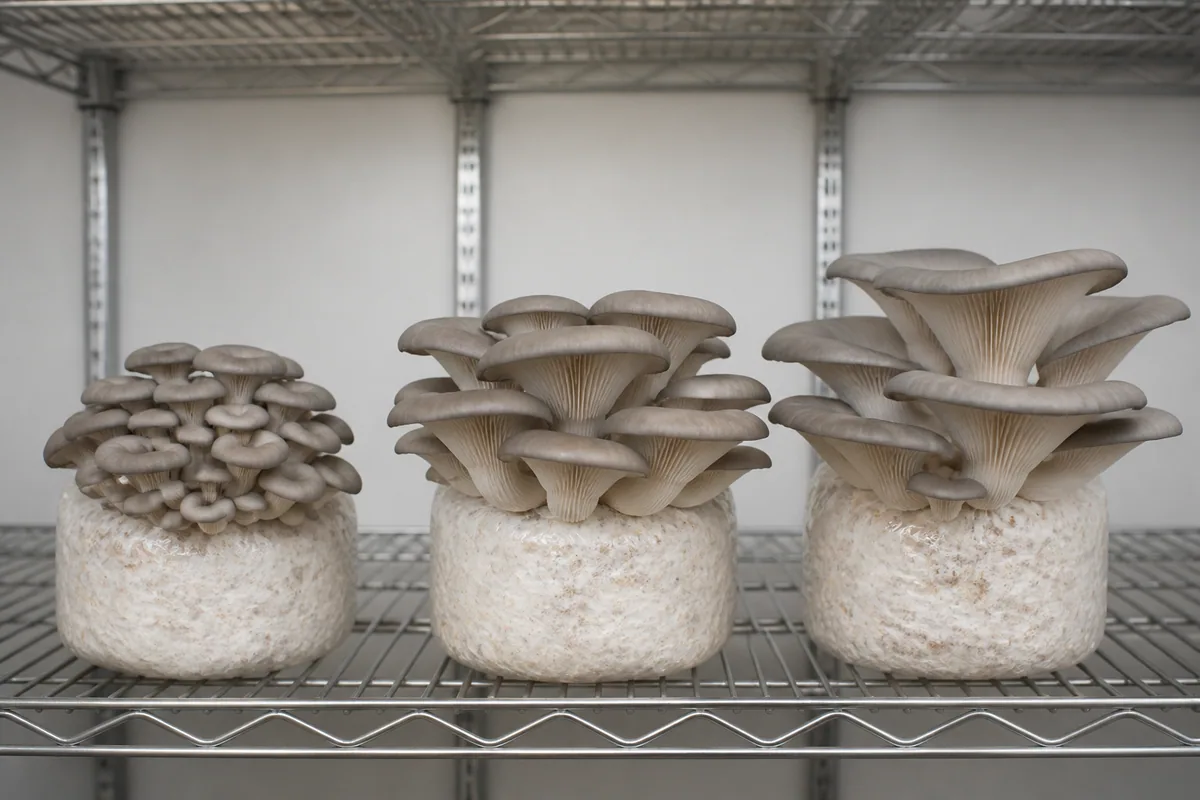
Pick while cap edges are still slightly rolled
Harvest when most caps in the cluster have broadened, feel resilient and retain a slight downward curl at the margin. Do not wait until many edges are flat or upturned and the cluster is dropping visible spores. Twist or cut the entire cluster cleanly, trim the dense base and move it to cooling without compressing the caps.
Strain, temperature, humidity and fruiting conditions change the schedule, so a fixed number of days after pinning is only a rough observation aid.
Key takeaways
- The largest cluster is not automatically the best-quality cluster; extra time can trade resilience for weight.
- Use the maturity of most caps, not one leading cap or a fixed day count, to select the harvest point.
- Overmature caps are more fragile, release more spores and can create higher trimming and breakage losses.
- For freezing, record harvest maturity with cap size, pre-treatment, drip and cooked texture so raw intake and finished quality remain connected.
Quick comparison
| Stage | Cap signs | Likely handling result | Processing decision |
|---|---|---|---|
| Too early | Small caps, tightly rolled margins | Good firmness but low weight and undeveloped shape | Wait if the cluster remains healthy and environment stable |
| Commercially useful | Caps expanded, margins still slightly rolled, low visible spores | Balanced yield, identity and resilience | Harvest whole cluster and cool promptly |
| Late | Mostly flat caps, some lifted edges | More breakage and shorter visual life | Harvest immediately; grade for suitable processing |
| Overmature | Upturned thin margins, heavy spores, dry or cracked edges | Fragile caps, trimming and acceptance risk | Separate or reject according to the specification |
Read the majority of caps, not the calendar
Oyster clusters develop unevenly. A front cap exposed to more air can flatten before small inner caps have expanded. Look at the cluster as a commercial unit: are most caps broad enough for the intended cut, are the edges still curved downward and does the surface remain fresh and resilient? A grower's "day four" can be another grower's "day six" because strain, block vigor, temperature, humidity, carbon dioxide and air movement differ.
Photograph the same cluster each day during a trial crop. Record pin date, room conditions, harvest weight, cap diameter range and defect observations. That turns a vague visual rule into a facility-specific harvest window. The record is particularly useful when a buyer requests smaller caps, low spore load or a cut that depends on strong margins.

The cap margin is the clearest maturity sign
Young oyster caps curl strongly around the edge. As they expand, the surface opens and the margin relaxes. The broadly useful harvest point arrives while a slight downward roll remains. When edges become fully flat, thin or wavy, the cluster is entering late maturity. Upturned margins and visible spore deposits indicate that the ideal visual window has passed for many fresh and frozen applications. Color should be judged against the strain; grey, blue-grey, tan and white oysters mature differently.
Surface condition matters with shape. A sound cap is resilient, not sticky or waterlogged. Dry cracking can indicate low humidity or excess exposure, while long stems and small caps can signal poor fresh-air exchange. Harvest timing cannot repair environmental defects. Record them separately so the farm does not call every small cap "early" or every long stem a maturity issue.
Harvest the cluster as one supported unit
Support the cluster with one hand and twist gently from the block, or use a clean knife according to the facility's procedure. Avoid pulling individual caps, which creates torn tissue and scattered debris. Remove the dense base and visible substrate without cutting away unnecessary usable stem. Place clusters in shallow clean containers with cap surfaces protected from crushing. Do not pile warm clusters deeply while staff continue harvesting.
Inspect the remaining block and remove decaying fragments so the next flush has a clean site. Tool sanitation, hand hygiene and growing-room procedures belong to the farm's food-safety system. The goal is not merely a pretty harvest photograph; it is a lot that moves to trimming, cooling and packing with traceable time and condition.
- Inspect most caps for expansion and a slight rolled margin.
- Check surface condition and visible spore load.
- Support the cluster and remove it cleanly as one unit.
- Trim the dense base and visible substrate.
- Place in shallow clean containers without compression.
- Record lot, harvest time, weight, maturity and move to cooling.
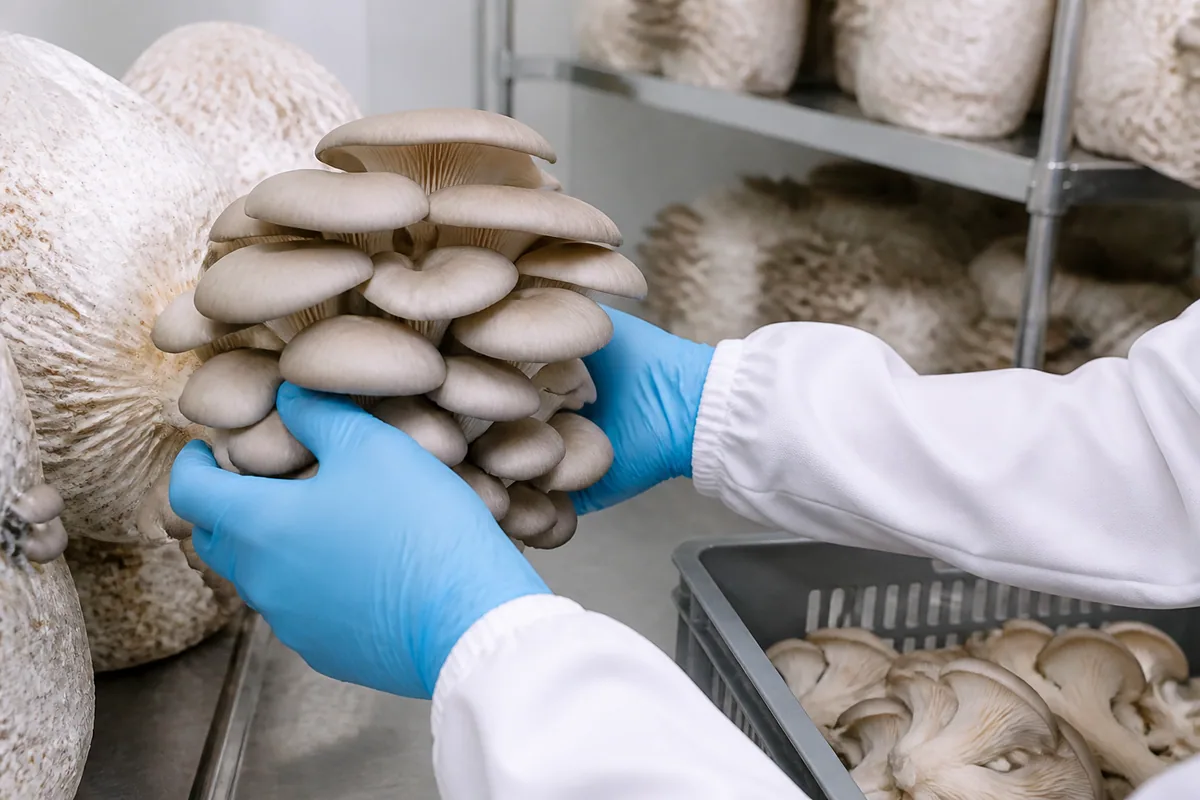
Waiting for extra weight can reduce saleable yield
One more day may increase gross harvest weight, yet the apparent gain can be lost through broken margins, detached caps, dry edges, discoloration and trimming. A fresh retail customer may reject a flat, spore-heavy cluster even if it is larger. A processor using strips may accept later maturity, but fragile tissue can create fines and inconsistent cut length. Saleable yield therefore means approved output after trimming and grading, not the number on the harvest scale.
Run a three-stage trial: harvest comparable blocks slightly early, at the target point and slightly late. Record gross weight, trim loss, cap breakage, usable cut yield and customer score. The ideal point is where contribution per block is highest after losses and claims, not where the cluster reaches maximum biological size.
Cooling protects the maturity decision you just made
Oyster mushrooms respire and warm clusters deteriorate quickly. Move harvested product out of the grow room, pre-cool under the facility plan and maintain a cold, humid-but-not-condensing environment. Condensation can make surfaces wet, while excessive dry air shrivels thin margins. Packing before core heat is removed can trap moisture and accelerate breakdown. Record harvest-to-cooling time during trials.
For fresh transport, ventilation, liner design, case depth and temperature recovery affect cap condition. For freezing, the raw material may move rapidly into sorting and pre-treatment. In both routes, a perfect cap at harvest can become a weak lot if it waits in a warm corridor. Buyer complaints should be traced across harvest, holding, processing and loading rather than attributed to maturity alone.
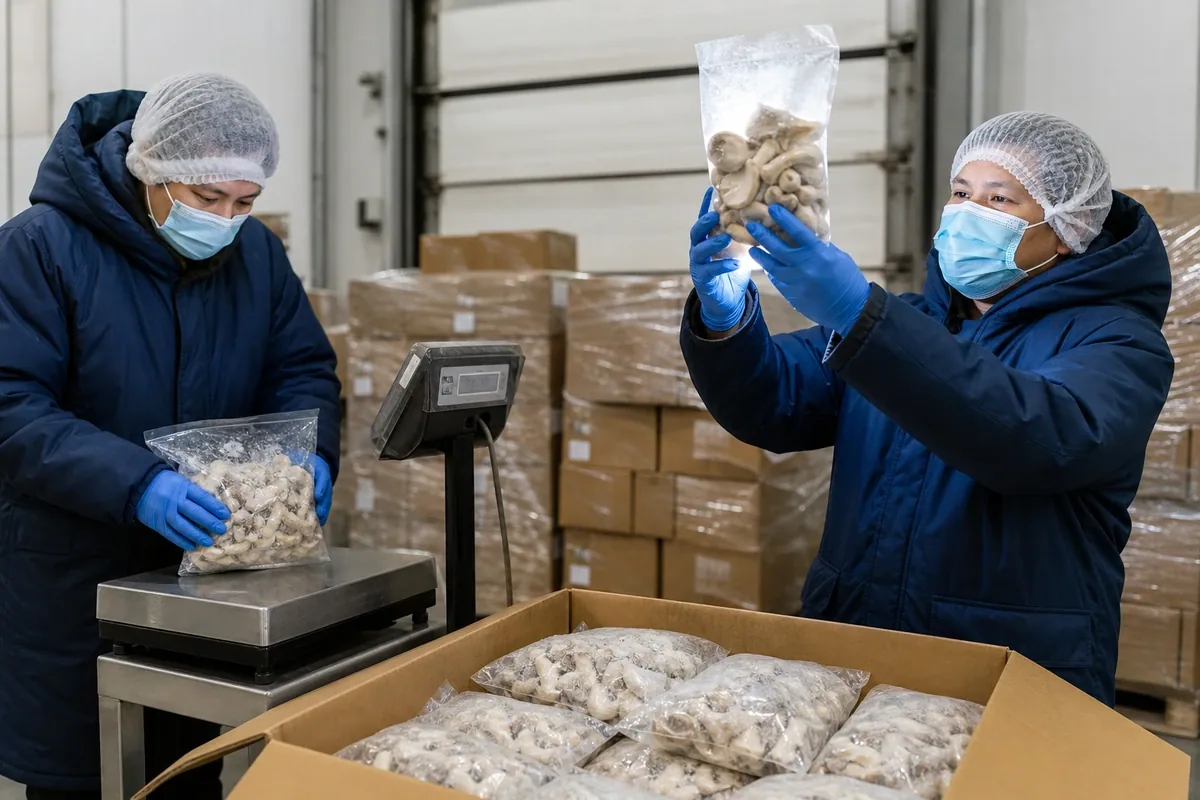
Maturity influences frozen drip and bite
Freezing forms ice within mushroom tissue. Thin overmature margins already have less structural reserve and can tear or collapse more readily after thawing and cooking. Very young dense tissue may hold shape but deliver small cap identity and lower yield. Blanching, grilling or other pre-treatment modifies the outcome again. Buyers should never infer frozen texture from a fresh harvest photograph alone.
A frozen trial should record raw maturity, whole or cut form, pre-treatment, frozen separation, thaw drip, cooked yield and bite after the actual heat process. For soup, late caps may fragment. For stir-fry, young caps may feel tougher. For plant-based filling, a later high-yield cut may be acceptable after shredding. Application determines the useful maturity window.
Turn visual maturity into a written receiving language
A commercial specification can define cap diameter bands, allowed small caps, maximum long stems, open or upturned margins, broken pieces, visible substrate, discoloration, spore deposits and abnormal odor. Photographic standards are useful because "young" and "mature" mean different things across teams. The photographs should show acceptable variation and reject examples under the same lighting and scale.
For frozen oyster mushrooms, connect those raw-material controls with finished-product limits for cut, broken ratio, clumps, ice, color, drip and cooked texture. At GreenLand-food, we can review available forms, pre-treatments, samples and documents against the buyer's application. Farm maturity requirements and facility scope are confirmed with the selected supply route, not promised universally from a general article.

A buyer trial should measure both yield and acceptance
Receive representative samples from at least two production lots. Photograph the frozen product, weigh a standardized portion and cook it in the real soup, sauce or pan. Record loosen time, liquid release, cooked weight, cap identity and margin breakage. If the product will be pumped, filled or hot-held, include those stresses. An intact piece immediately after sautéing may not survive 30 minutes in sauce.
Compare the numbers with raw-material photos when available. If a high-broken lot came from late flat caps, the maturity link is visible. If raw maturity was sound but the product clumped and collapsed, freezing or cold-chain variables deserve attention. A disciplined trial prevents harvest timing from becoming a convenient explanation for every finished-product problem.
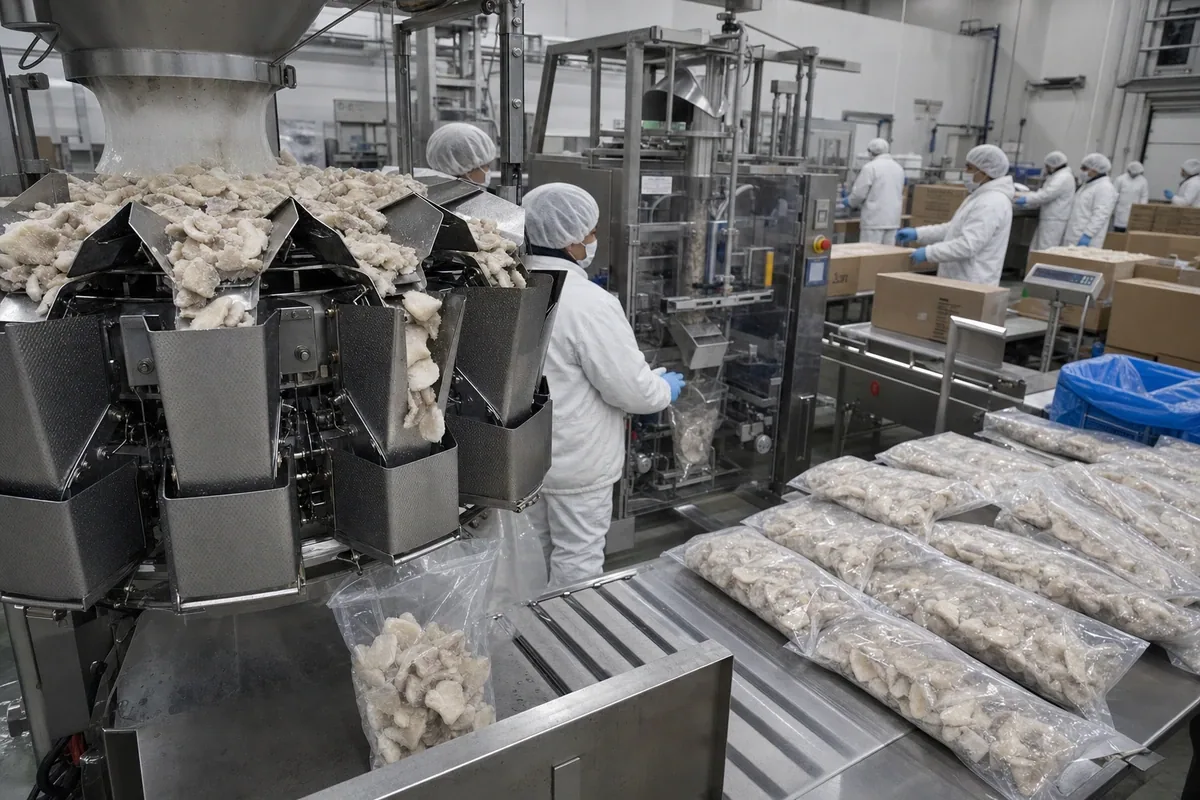
Worked decisions that a short answer cannot cover
Worked choice: fresh retail versus soup factory
A fresh retail punnet needs attractive layered caps, low spores and enough resilience for distribution. Harvest close to the rolled-margin target. A soup factory that dices the product may accept a slightly later, larger cluster if color, odor and cooked yield remain within limits. The same biological maturity can have different commercial value.
Write separate approval criteria for the two channels. Sending the same late cluster to both and calling it grade A hides a real application difference.
Spore release is both a timing and workplace cue
Visible white deposits under clusters often mean caps have passed the ideal point. Heavy spore loads can affect appearance, housekeeping and worker comfort. Ventilation and occupational procedures should be reviewed by the facility; harvest timing is only one control.
A few spores do not automatically make an edible cluster unsafe, but a buyer can set a low visible-spore tolerance for clean appearance and handling. Use photos rather than vague wording.
Small inner caps complicate the cluster decision
A cluster may have three ideal outer caps and many tiny protected inner caps. Waiting for the inner group can overmature the outer group. Harvest when the majority reaches the target and account for small caps in the yield specification. Strain and room adjustments may improve uniformity more effectively than delaying.
For cut processing, small caps might be acceptable; for whole-cluster retail they may reduce presentation. The buyer's channel should influence the grower's scoring method.
Claims need batch evidence, not memory
When a buyer reports excessive breakage, retain the carton, lot code, arrival temperature, frozen photo and cooked test. Ask for harvest and production records where contracted. A recollection that the mushrooms "looked mature" is not enough to assign cause.
Traceable evidence protects both sides: it can show an overmature raw lot, a pre-treatment shift, a temperature event or an overly harsh customer process.
More detail for a repeatable decision
Growing conditions can imitate a maturity problem
High carbon dioxide can produce long stems and small caps. Low humidity can dry or crack margins. Excess moisture can make surfaces wet. These are environmental responses, not merely early or late harvest. If a farm changes only harvest day, the underlying shape problem can persist. Record room conditions and compare blocks.
Air movement should support cap development without drying the cluster. A strong direct fan can create brittle edges on one side, while stagnant pockets can suppress broad cap formation. Map the shelf rather than judging the room from one sensor.
Strain choice also matters. Blue, grey, white and warm-weather oyster strains have different cap forms and development speeds. A buyer's photo standard should show the contracted type; applying a thick grey-cap expectation to a delicate white strain creates false rejection.
Harvest labor affects the usable cluster
A worker gripping only the cap edges can bruise the product even at ideal maturity. Support the dense center and minimize rubbing. Keep containers shallow and smooth. Training photos should show hand placement, base trimming and the maximum fill depth.
Speed targets need a quality counterweight. Pieces left on the block can decay before the next flush, but aggressive twisting can tear substrate and damage the block. Record both kilograms per hour and trim or damage rate during training.
The first full container should move to cooling instead of waiting for the room to finish. Staggered transfer can reduce warm holding without adding new equipment. A timestamp at harvest and at cold-room entry makes the improvement measurable.
Processing yield should be calculated after every loss
Begin with gross cluster weight. Subtract base trim, visible substrate, rejected caps and cutting fines. After pre-treatment, record drained weight; after freezing, record packed weight; after cooking, record served weight. This chain shows where the yield changed.
A later harvest may improve gross kilograms but increase base toughness and cap breakage. An early harvest can look perfect but deliver too little saleable cut. Plot saleable frozen and cooked yield against maturity stage over several lots.
Include labor. A fragile late lot may require slow trimming and extra sorting. A small-cap early lot may require more pieces per portion. The financially useful maturity point is the one that balances raw yield, processing efficiency and customer acceptance.
Receiving evidence helps resolve maturity claims
When frozen cartons arrive, photograph clumps, piece distribution and broken ratio before thawing. Confirm carton and inner-bag condition, lot code and temperature. If a claim occurs, retain a sealed sample where permitted.
Cook the retained product using the approved method. Compare the cap margin and thickness visible in pieces with the raw-material standard if records are available. A heavily broken lot with thick resilient tissue points to handling or freezing differently than thin flat fragments.
Share the evidence with dates and weights. The supplier can review harvest and processing records; the buyer can review receiving and cooking. This joint file is far stronger than arguing whether the mushrooms "looked old" from one phone image.
From harvest observation to a release decision
Create a one-page harvest record with strain, block lot, pin date, harvest date, cap diameter range, margin stage, visible spores, gross weight and cooling-entry time. Add three representative photographs: the cluster on the block, the trimmed cluster and the first packed container. The record is simple enough for daily use and detailed enough to explain why two lots with the same harvest date behaved differently.
Link that record to the frozen production lot. The processor can add pre-treatment, cut, freezing time, packed yield and finished defects. If a buyer later reports excessive drip or fragments, the team can review the full chain instead of treating harvest maturity as a guess. That traceability also reveals when raw caps were ideal and the damage entered during handling.
Set a release rule for borderline late clusters. A foodservice strip grade may accept them after a cooking trial, while a premium whole-cap program may not. The decision must be written before the lot arrives, not negotiated from photographs after production. Any downgrade must preserve safety, foreign-material and off-odor standards.
Review the data after several crops. If the ideal harvest window is routinely missed at night or on weekends, labor scheduling may matter more than biology. If one shelf consistently produces long stems or dry margins, correct the environment. The best harvest specification is one the farm can achieve repeatedly.
For the buyer, the final question is not merely when the mushroom was picked. It is whether the selected maturity, handling, process and cold chain produce the agreed cooked identity. A representative sample and a retained test method close that loop.
What to confirm before approving volume
A useful inquiry describes the ingredient and the job it must do. Send the product identity, form, target application, packing, quantity, destination and the quality points your team will measure. We will review current availability and an appropriate supply route where possible. Final size, process, ingredients, limits, microbiology, documents, shelf life, lead time and commercial terms remain subject to the approved specification and order confirmation.
- Define target cap diameter and acceptable small-cap share.
- Set limits for flat or upturned margins, spores, long stems and substrate.
- Use photos for acceptable and reject maturity examples.
- Record harvest-to-cooling expectations where relevant.
- Connect raw maturity with frozen cut, drip, breakage and cooked bite.
- Approve the product in its full production and hot-hold process.
Frequently asked questions
What is the best sign that oyster mushrooms are ready to pick?
Most caps should be expanded while their margins remain slightly rolled downward. Heavy flattening, upturning and visible spores indicate a later stage.
How many days after pinning should oyster mushrooms be harvested?
There is no universal day. Strain and growing conditions change the pace, so use cap development and facility records.
Should I wait until oyster mushroom caps are flat?
Usually no. Fully flat caps are entering late maturity and may be more fragile and spore-heavy.
Do bigger oyster mushrooms taste better?
Not automatically. Size, maturity, strain and cooking affect flavor and bite. Very late caps can lose resilience even if they weigh more.
Should the whole cluster be harvested at once?
Yes, in most cultivated production. Support and remove the cluster as one unit, then trim the dense base.
What happens if oyster mushrooms are picked too early?
They may have strong firmness but lower weight, small cap identity and underdeveloped shape.
What happens if they are picked too late?
Caps flatten or lift, spores increase and thin margins become more fragile, raising breakage and trimming risk.
Does harvest timing affect frozen oyster mushrooms?
Yes. Raw maturity influences cap strength and can interact with pre-treatment and freezing to change drip, breakage and cooked texture.
What should frozen-mushroom buyers ask about maturity?
Ask for cap-size and maturity references, raw-material photos when available, broken and drip limits, pre-treatment and an application sample.
Can GreenLand-food coordinate oyster mushroom sample testing?
We can discuss available product forms, pre-treatments, packing, samples and order documents. Requirements are confirmed against the selected product and facility.
Reference points
- Cornell Small Farms mushroom resources
- Penn State Extension mushroom resources
- GreenLand oyster mushroom texture guide
These sources support the classification, method or supply boundaries used above. The applicable product label, specification, food-safety plan and destination-market rules still control a real batch.
Source Frozen Oyster Mushrooms for your real application
GreenLand-food is a frozen oyster mushrooms supplier and manufacturer in China, providing factory-direct wholesale support for importers, food manufacturers, foodservice distributors and private-label programs. Send the required form, specification, packing, quantity, destination, application and documents. We will review available order options and the next practical step.