


Can You Freeze Canned Mushrooms?
Aug 28, 2026
Leave a message
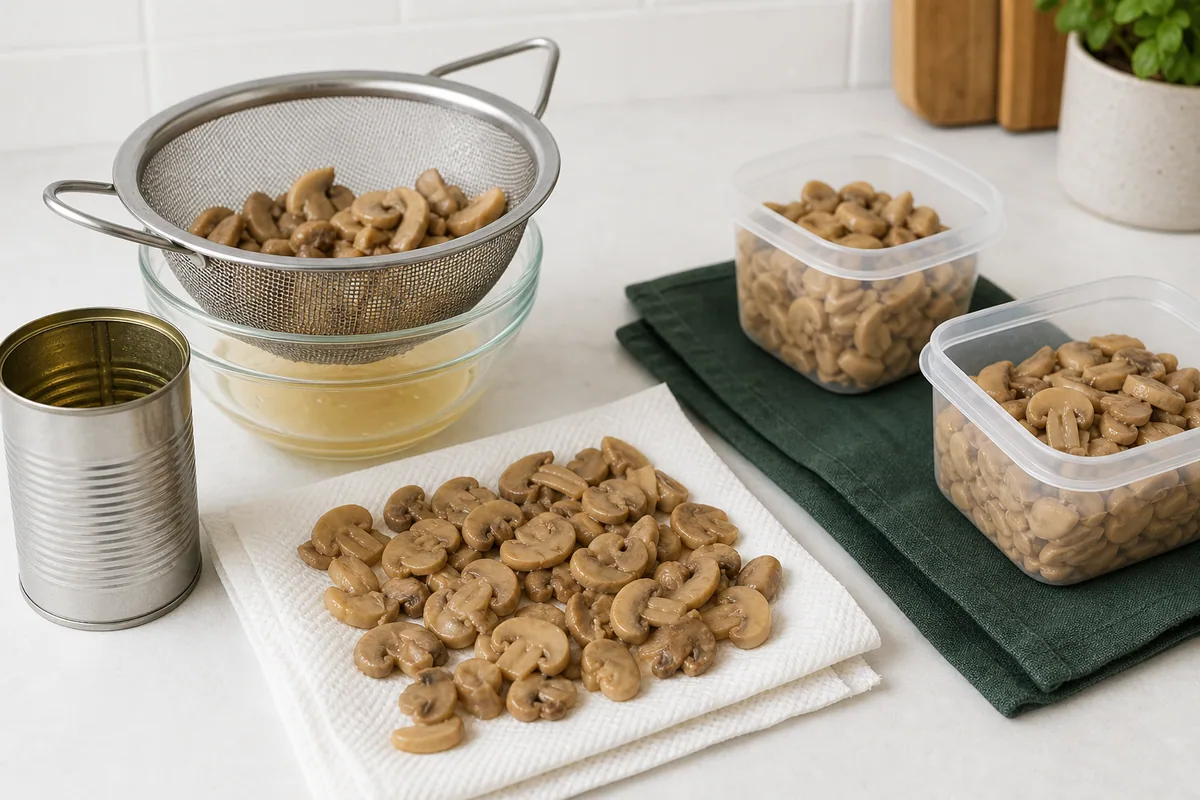
A conditional yes: freeze the contents, not the can, and accept a softer result
If a sound can has been opened and the mushrooms were handled cleanly, you may freeze the leftover contents in a freezer-safe container or bag. Drain them well, portion them, remove excess air, label and freeze promptly. About 1–2 months is a practical best-quality target for this already-cooked, moisture-rich product. If the can is bulging, leaking, badly dented at a seam, spurts liquid or smells abnormal, discard it without tasting.
Quality ranges assume sound mushrooms and proper cold storage. A label, destination-market rule, site procedure or documented temperature event can require a shorter decision.
Key takeaways
- Do not put an unopened or opened metal can into the freezer; move the food to a suitable container.
- Opened low-acid canned food has a short refrigerated window, commonly about 3–4 days, so decide early.
- Canned mushrooms have already been heat-processed; another freeze-thaw cycle makes them softer and wetter.
- Choose soup, gravy, sauce, filling or casserole, where the texture change is less important.
Quick comparison
| Situation | Freeze? | Reason | Action |
|---|---|---|---|
| Unopened sound can | No need | The sealed can is shelf-stable under its label storage instructions | Store in a cool, dry place and follow the label |
| Opened, handled promptly | Yes, conditionally | Freezing can prevent waste but reduces texture quality | Transfer, drain, portion and freeze promptly |
| Bulging, leaking, spurting or badly damaged can | No | Damage or gas can indicate a serious safety problem | Discard without tasting |
| Opened mushrooms already slimy or off-smelling | No | Freezing cannot reverse spoilage | Discard the entire leftover portion |
Why search results disagree between yes and no
The disagreement is mostly about quality. A strict cooking-quality guide may say "do not freeze" because canned mushrooms are already soft and freezing makes them softer. A waste-reduction guide may say "yes" because the food can still be useful in a cooked dish after texture declines. Both positions can be sensible when their assumptions are clear. The honest answer is not an unconditional yes or no: freezing is acceptable for sound opened product when texture is secondary, but refrigeration and prompt use usually give the better eating result.
Keep safety separate from preference. A freezer pauses microbial growth but does not sterilize food or repair contamination that occurred while the product sat warm after opening. If the mushrooms were left out too long, handled with dirty utensils or already show spoilage, freezing is not the remedy. If they were opened, refrigerated promptly and remain normal, freezing a portion may be practical. Your final dish determines whether the softening is acceptable.

Start with the can, not the mushrooms
Before opening, inspect the container. Reject a can that is bulging, leaking, rusted through, deeply dented at a seam or otherwise compromised. If liquid or foam spurts when opened, or the contents have an abnormal odor or appearance, do not taste them. Dispose of the product according to local food-safety advice. Botulism is rare but serious, and smell or taste cannot be used as a complete test.
A sound unopened can belongs in cool, dry shelf storage according to its label; it does not belong in a freezer. Freezing the sealed container can make the contents expand and compromise the package. Once opened, move leftovers into a clean glass or food-safe plastic container. This also prevents the food from remaining exposed in an open metal can and makes it easier to cover, date and portion.
Opened canned mushrooms have a short refrigerated decision window
Mushrooms are a low-acid vegetable. General USDA guidance for opened low-acid canned foods uses a short refrigerated window of about 3–4 days. That does not mean every opened pack remains acceptable until the final hour; the product must have been refrigerated promptly and kept cold. It also does not mean a home-preserved product follows the same assumptions as a commercially canned one.
If you will use the mushrooms in the next meal, refrigerate them and avoid the texture loss from freezing. If no suitable dish is planned within the short window, freeze them early. Do not repeatedly move the container between room temperature and refrigeration while deciding. In a restaurant or factory, apply the site's approved opened-container limit, labeling rule and temperature control; a general consumer range does not override a stricter validated procedure.

How to freeze opened canned mushrooms
Use this method only for a sound commercial product that has been opened and handled promptly. First, drain the packing liquid. A brief rinse can reduce salt or briny flavor if it suits the recipe, but drain again. Spread the mushrooms on clean absorbent material and pat away surface liquid. Excess water creates more ice and dilutes the final dish. Portion the mushrooms according to one recipe so you do not need to thaw a large block.
Place the portions in shallow freezer-safe containers or heavy freezer bags. Press out unnecessary air without crushing the pieces, seal, label with product and date, then freeze promptly at 0°F / -18°C or below. A single-layer pre-freeze can help pieces remain separate, but canned mushrooms are delicate and may still stick. Aim to use them within roughly 1–2 months for best quality. Longer continuous frozen storage may remain safe, but softness, oxidation and freezer burn continue to reduce usefulness.
- Open only a sound can and refrigerate leftovers promptly.
- Transfer the food out of the can.
- Drain well; rinse only if the recipe benefits.
- Pat the surface dry and divide into recipe portions.
- Pack in freezer-safe containers or bags and remove excess air.
- Label, freeze promptly and plan to use within about 1–2 months for best quality.
Thawing is optional for many cooked applications
For soup, gravy or a simmered sauce, a small frozen portion can often go directly into the hot cooking system. Stir as it loosens and account for released liquid before adjusting seasoning or thickness. For a casserole or filling, refrigerator thawing and draining may give better control. Do not thaw on the counter. If microwave thawing is used, cook the mushrooms immediately and follow the appliance and recipe instructions.
The pieces will not return to their pre-freezing texture. Canning already softened the tissue through heat, and ice crystals damage it again. That makes a creamy soup, minced filling, blended sauce, gravy or casserole more forgiving than a pizza topping expected to look intact. Sautéing thawed pieces over fairly high heat can drive off some water and develop flavor, but it cannot fully restore firmness.
When freezing is a poor choice
Do not freeze canned mushrooms for a cold salad, antipasto display or dish where clean whole shapes are the main appeal. Do not freeze pickled or marinated mushrooms using the same assumptions; acid, oil and other ingredients change storage and quality, so follow the specific product label. Do not freeze mushrooms that have already sat near the end of their refrigerated limit if their handling history is uncertain.
A very small leftover portion may be better added to the next omelet, sauce or soup than packaged and forgotten. Freezing has a handling cost and creates another date to manage. The practical choice is the route that uses a safe product while it still has enough quality for the intended dish. Waste reduction is useful, but it should not become an excuse to retain questionable food.
Canned, home-frozen and commercial IQF are not interchangeable
Canned mushrooms are fully heat-processed, shelf-stable before opening and soft in texture. Home-frozen fresh mushrooms may be raw, steamed or sautéed, with variable freezing speed and air removal. Commercial IQF mushrooms are processed and frozen against an agreed product specification and should remain individually usable under the declared cold chain. These three formats can all enter a soup, yet they deliver different color, flavor, water release, bite and portion control.
For preparation details, see Can Mushrooms Be Frozen?.
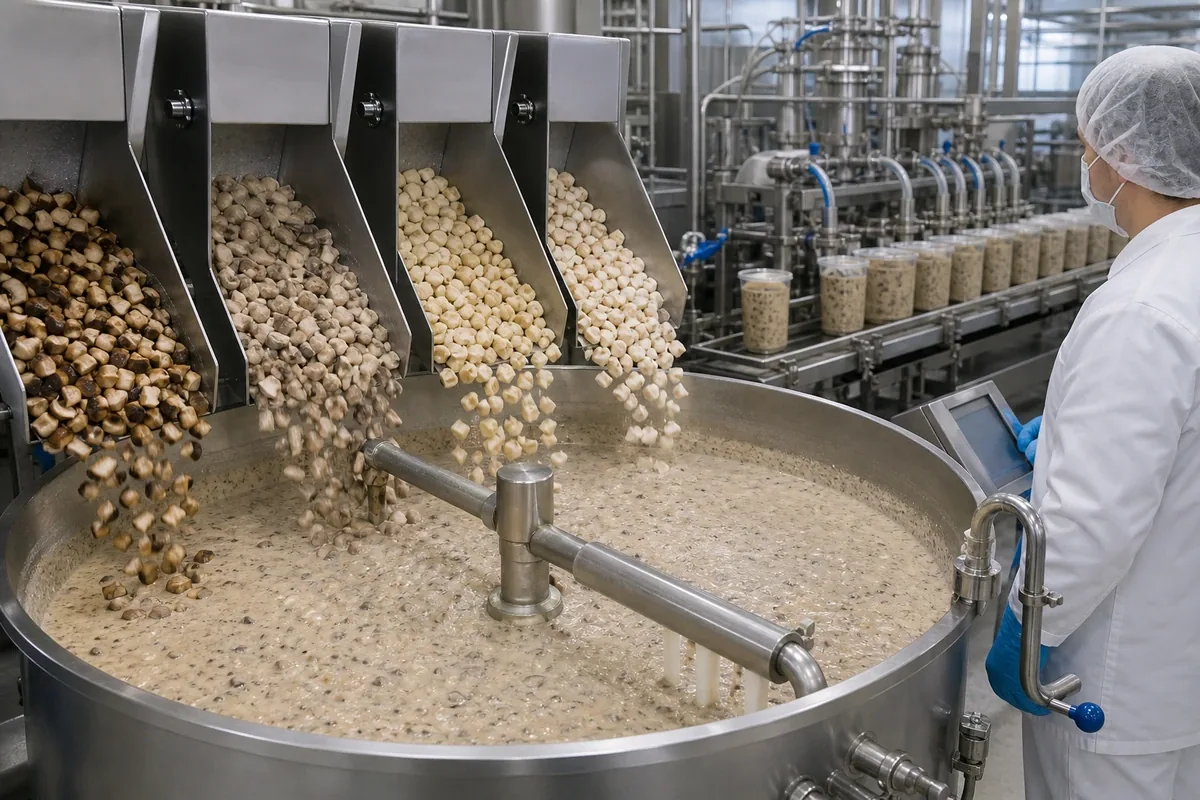
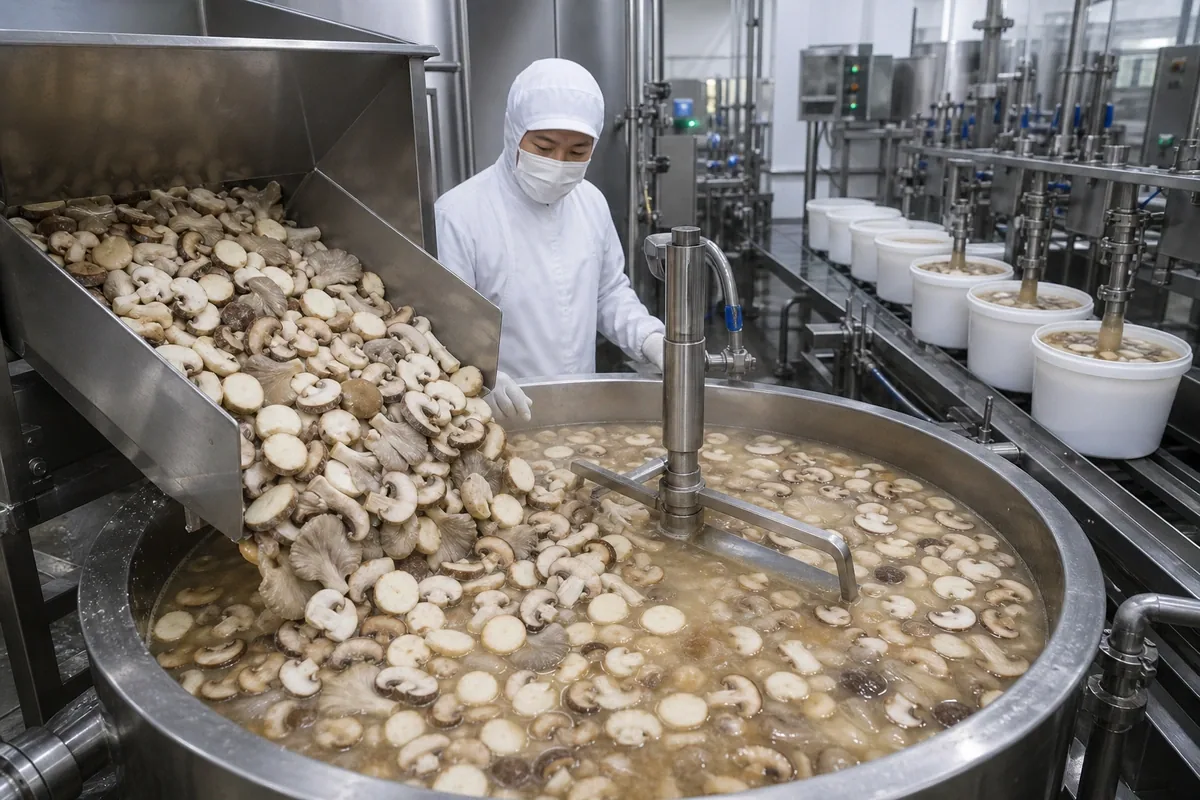
If a foodservice or factory project repeatedly freezes canned leftovers, the real problem may be pack size or ingredient selection. A smaller can, a recipe matched to the full opened pack or a commercial frozen format can reduce repeated handling. At GreenLand-food, we can discuss frozen mushroom species, cut, pre-treatment, packing and application. The GreenLand photographs in this article show frozen white button mushrooms as an alternative format. They are clearly different from canned mushrooms and require a separate specification and yield trial.

A commercial buyer should approve performance after cooking
For sauce or soup production, compare drained canned weight with frozen input weight and final cooked yield. Record salt contribution, water release, piece identity, color and flavor. A lower purchase price per carton can disappear if the product contributes excess brine, loses identity or requires extra handling. Conversely, the softness of canned pieces may be an advantage in a blended sauce where intact slices have no value.
For frozen supply, define species, whole or sliced form, slice thickness, cap-to-stem ratio, fresh-IQF or blanched route, clumps, ice, broken pieces, drip loss, pack size and declared shelf life. Approve the actual product in the real heating process. We can review these inputs and confirm an available solution order by order; we do not describe an IQF mushroom as canned, nor promise that one format will suit every formula.
Worked decisions that a short answer cannot cover
A one-can example shows when freezing makes sense
Suppose a 400 g can contains 230 g drained mushrooms and tonight's sauce needs 120 g. If another cooked dish will use the remaining 110 g within the approved 3–4 day refrigerator window, transfer the remainder to a covered container and refrigerate it. Freezing adds no benefit and costs texture. If the menu will not use it, drain and freeze that 110 g promptly as one recipe portion. Label the original product and opening date so the bag is not mistaken for raw or IQF mushrooms.
The same arithmetic at a restaurant scale may reveal a packaging problem. Opening several large cans and freezing leftovers every service adds labor, containers and traceability steps. A smaller can, a revised recipe batch or a frozen pack that can be portioned while still frozen may be more efficient. Compare cost per usable cooked kilogram, not only cost per unopened carton.
Texture should be tested in the actual dish
Freeze two drained portions from one sound can. Use one after a week and the other after a month. Thaw under refrigeration or add directly to the same recipe, then record water release, piece identity, chew and flavor. A soup may show no meaningful loss, while a pizza or visible garnish may expose every weakness. The test gives your kitchen a real internal limit instead of borrowing a generic month range.
If the recipe uses a thickener, add it after observing how much liquid the mushrooms release. If the pieces are minced or blended, softer texture may not matter. If sodium is controlled, record whether the product was rinsed and how that changes flavor and yield. One conclusion cannot be carried from a water-packed plain mushroom to a seasoned, marinated or sauce-packed product.
Label the secondary container so identity is not lost
A plain freezer bag of beige slices is easy to confuse with sautéed fresh mushrooms or a commercial IQF sample. Mark the product name, brand or supplier, original lot when available, opening date, freezing date and any added ingredient. In a business, follow the approved label and traceability procedure. Do not combine leftovers from different cans or lots merely to fill a container; that expands the traceability scope of any later complaint.
Use clean utensils and shallow containers. Keep the inner freezer organized so an unmarked bag does not remain past its useful quality. If a portion is moved from freezer to refrigerator, add the thaw date and use it promptly. The handling record is especially important when the mushrooms enter an allergen-containing sauce or prepared dish, because the final product label and shelf life then depend on the complete formula.
Compare the three formats on total process cost
Canned mushrooms offer shelf stability before opening and no frozen-storage cost, but they add brine, metal packaging and a short opened life. Home-prepared frozen mushrooms offer flexibility but variable labor and texture. Commercial IQF offers frozen portioning and a declared specification, but requires freezer capacity and cold-chain discipline. Put drained yield, preparation labor, waste, energy, pack disposal, salt, cooking yield and customer expectation in one comparison.
For a sauce factory, a softer canned piece may be completely acceptable. For a premium pizza, intact IQF slices may justify a higher ingredient price. For emergency pantry use, canned stock may be the logical choice. The format should follow the operation rather than an absolute claim that one technology is always better. GreenLand can discuss the IQF route; canned procurement and canning validation remain separate projects. A buyer changing formats should recheck the ingredient statement, sodium contribution, net and drained weight, storage space, opening or thawing labor, traceability, cooking time and final label. The change may also alter purchase MOQ and lead time. Run the comparison on a complete production batch before changing the commercial formula.
What to confirm before approving volume
A useful inquiry describes the mushroom and the job it must do. Send the product identity, form or cut, target application, packing, quantity, destination and the quality points your team will measure. We will review current availability and match an appropriate product and facility route where possible. Final size, process, ingredients, defect limits, microbiology, documents, shelf life, lead time and commercial terms remain subject to the approved specification and order confirmation.
- Confirm the can is sound before opening and document any damaged-container procedure.
- Use the full can within the approved recipe whenever possible.
- If freezing, transfer out of metal, drain, portion and date promptly.
- Choose cooked applications that tolerate softness and water release.
- For recurring volume, compare pack size or IQF alternatives through cooked yield.
- Keep product identity, process, pack, salt and shelf-life assumptions separate.
Frequently asked questions
Can canned mushrooms be frozen after opening?
Yes, if the can was sound, the food was handled promptly and you transfer it into a freezer-safe container. Drain and portion the mushrooms first. Expect a softer texture and use them in a cooked dish.
Can I put an unopened can of mushrooms in the freezer?
No. A sound unopened can is designed for shelf storage under its label conditions. Freezing can expand the contents and compromise the container. Store the can cool and dry instead.
How long do opened canned mushrooms last in the refrigerator?
General guidance for opened low-acid canned food is about 3–4 days at 40°F / 4°C or below. Refrigerate promptly in a covered glass or food-safe plastic container and use a shorter limit if the label or site procedure requires it.
How long do frozen canned mushrooms last?
Use about 1–2 months as a practical best-quality target. Continuous frozen storage can preserve safety longer, but the mushrooms become softer and more vulnerable to freezer burn and stale flavor.
Should I drain canned mushrooms before freezing?
Yes. Drain well and pat away surface moisture. Less free liquid means less ice, easier portioning and better control of the final soup, sauce or filling.
Do canned mushrooms need to be cooked before freezing?
No additional cooking is required simply to freeze them because commercial canned mushrooms are already heat-processed. Handle them cleanly, drain, pack and freeze promptly. Cook the thawed product according to the final recipe.
For preparation details, see Can You Freeze Mushrooms?.
What can I make with frozen canned mushrooms?
Use them in creamy soup, gravy, pasta sauce, casserole, pie filling, meatloaf, duxelles-style filling or another cooked preparation where a soft texture is acceptable.
Can damaged canned mushrooms be frozen instead of discarded?
No. A bulging, leaking, spurting or badly seam-damaged can may represent a serious safety problem. Freezing does not neutralize it. Discard without tasting and follow local disposal guidance.
Can I refreeze thawed canned mushrooms?
Although food thawed safely under refrigeration may sometimes be refrozen, another cycle further damages texture. Use a small thawed portion promptly in a cooked dish and avoid repeated freeze-thaw handling.
Are IQF mushrooms the same as canned mushrooms?
No. IQF mushrooms are a frozen ingredient supplied to a specified species, cut, pre-treatment, pack and cold chain. Canned mushrooms are heat-processed and shelf-stable before opening. Their texture, salt, yield and application behavior differ.
Reference points
- FoodSafety.gov cold storage chart
- USDA freezing and food safety
- FDA food tampering and damaged-package advice
These sources support the measured methods and quality-versus-safety boundaries. The applicable product label, specification, food-safety plan and destination-market rules still control a real batch.
Confirm the mushroom format against your real cooking process
We supply frozen mushroom ingredients for importers, distributors, food manufacturers, foodservice operators and private-label programs. Send us the species, cut, application, packing, quantity, destination and trial method. We will review an available specification and next step.