


Can You Freeze Portobello Mushrooms?
Aug 28, 2026
Leave a message
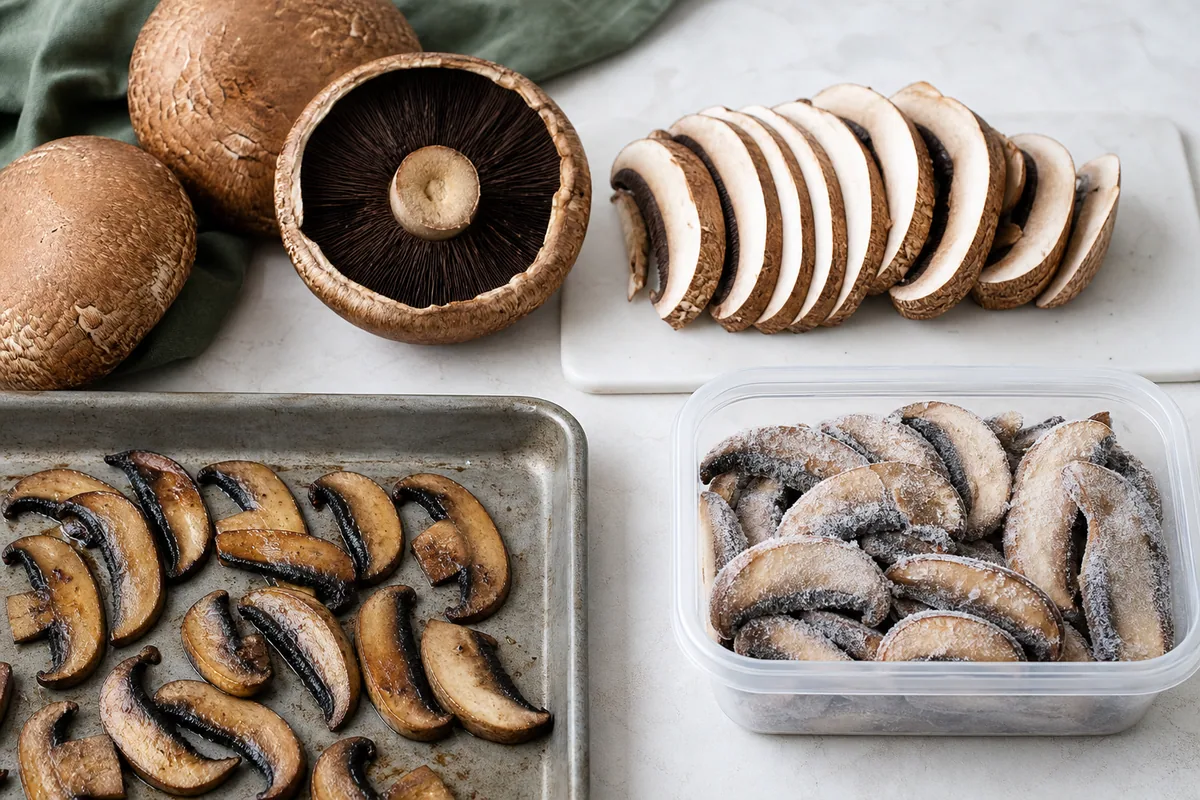
Freeze portobello for cooked flavor, not to preserve a fresh whole-cap bite
Choose firm, sound portobello mushrooms, clean them, trim the stems and cut the caps into even slices. Lightly sauté until part of the moisture has cooked away, or steam slices for about 3 minutes using the general NCHFP mushroom method. Cool promptly, drain, pre-freeze in one layer and pack airtight. Cook the frozen slices in pasta sauce, stew, soup, filling or another hot dish. Do not expect a thawed whole cap to grill like a fresh one.
Quality ranges assume sound mushrooms and proper cold storage. A label, destination-market rule, site procedure or documented temperature event can require a shorter decision.
Key takeaways
- Portobello is the mature brown form of Agaricus bisporus, but commercial white button product must not be labeled as portobello.
- Sliced, lightly sautéed portobello gives the best balance of convenience, flavor and manageable texture.
- Raw freezing is possible, yet the thawed result is softer and wetter; whole stuffed-cap presentation is the weakest fit.
- Cook small frozen portions directly in hot dishes when possible instead of thawing them on the counter.
Quick comparison
| Method | Expected texture | Best use | Verdict |
|---|---|---|---|
| Sliced and lightly sautéed | Soft but flavorful, with less free water | Pasta sauce, stew, filling, rice and pizza | Best general route |
| Sliced and steamed | Plain flavor, reasonably controlled color and texture | Soup, sauce and recipes that add seasoning later | Best neutral route |
| Raw sliced | Softer, wetter and more prone to darkening | Long-cooked sauce, soup or blended filling | Acceptable for convenience |
| Whole raw cap | Loss of firm, steak-like bite; slow, uneven freezing | Only recipes that later chop or blend the cap | Not recommended for grilling or fresh stuffed-cap use |
Why portobello changes more visibly than a small button mushroom
Portobello caps are large, mature and moisture-rich. Their broad flesh and dark gills create the thick, meaty bite people value when the mushroom is fresh. During freezing, water forms ice crystals that damage cell structure. After thawing or heating, part of that water escapes and the cap becomes softer. A whole cap freezes more slowly than an even slice, which allows larger crystals and a less uniform result.
That change is not automatically a failure. A soft slice can contribute excellent mushroom flavor to a stew, pasta sauce or filling. It is a failure only when the recipe was built around a firm grilled "steak," a dry sandwich cap or an intact stuffed presentation. Decide what the mushroom must do after freezing. If shape and chew lead the product promise, use fresh portobello. If earthy flavor and convenient portioning lead, a prepared frozen format can work well.

Portobello, cremini and white button share a species but not a trade identity
Portobello, brown cremini and white button mushrooms are commonly forms of Agaricus bisporus at different color and maturity stages. That botanical relationship does not make their commercial names interchangeable. Portobello implies a large mature brown cap with characteristic gills and flavor. White button or champignon describes a younger white form. A specification, carton and quotation should state the actual product rather than hide the distinction behind the Latin name.
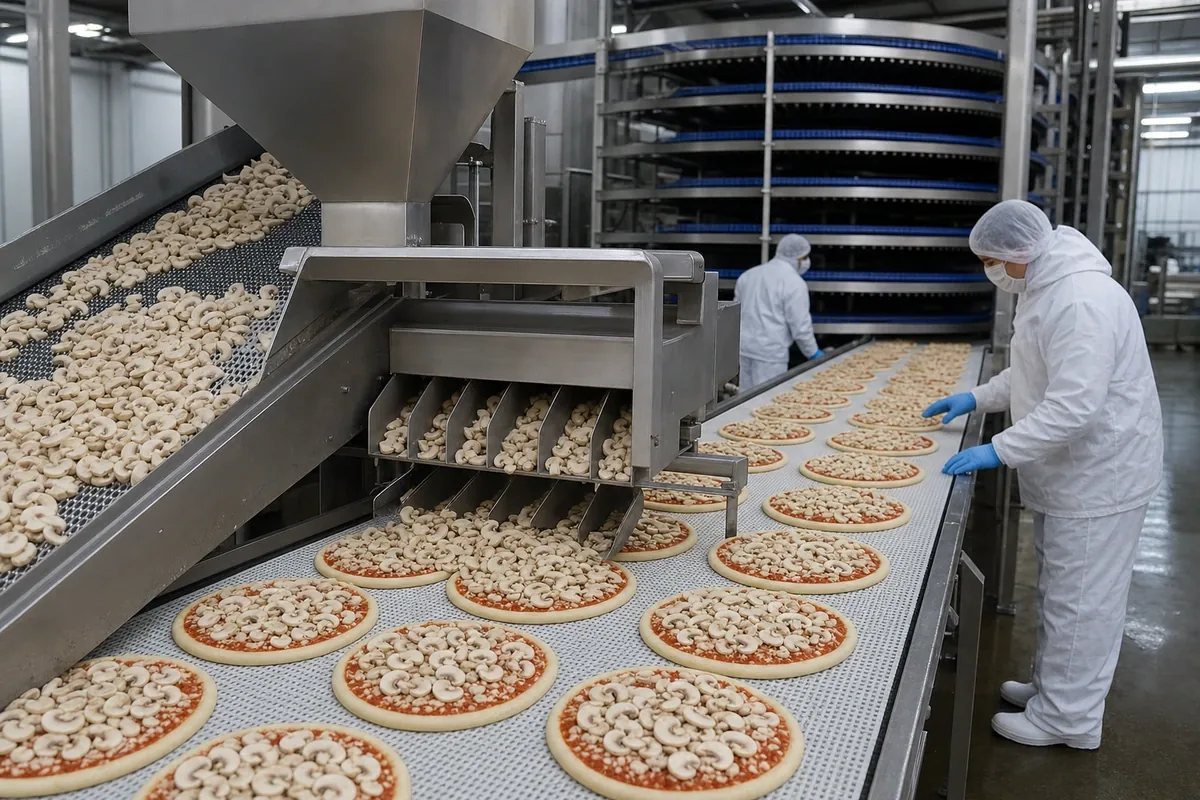
This matters in the images on this page. The two GreenLand product photographs show frozen white button mushrooms, not frozen portobello. We include them only to explain the product-identity boundary and related cut control. They must not be copied into a Portobello sales listing or captioned as large brown caps. If a buyer requests frozen portobello, we first confirm actual availability, origin, form and facility scope; we do not substitute white button without explicit buyer approval.
Choose the freshest caps and prepare them for the next recipe
Select caps that are firm, dry and free from slime, wet decay, mold and off odor. Freezing cannot improve damaged raw material. Brush away debris or rinse briefly under cold running water, then dry the surface. Trim the dry stem end. The stem can be sliced and frozen with the cap when its texture suits the recipe, or reserved for stock and finely chopped filling.
Dark gills are edible. Removing them is optional, not a food-safety requirement. Scraping the gills can reduce color bleed in a pale sauce and may make the frozen portion easier to use in a light-colored filling. Keeping them retains more of the characteristic portobello flavor and appearance. Make that choice before freezing, because a frozen cap is awkward to scrape cleanly. Cut slices to an even thickness-roughly 6–10 mm is practical for many home dishes-so they heat and freeze consistently.
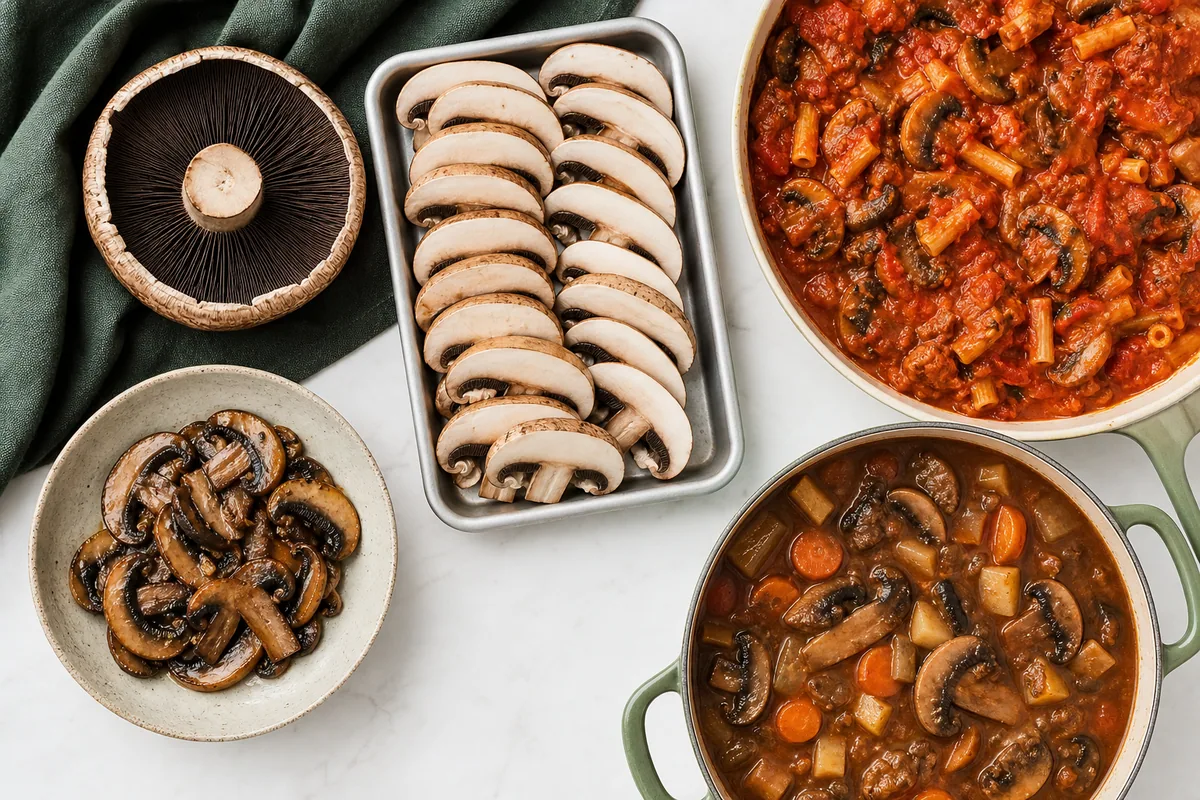
Best method: lightly sauté the slices
Heat a broad pan, add a small amount of oil or butter and cook the slices in uncrowded batches. The goal is not to finish them until dry and crisp; it is to release part of the raw water, develop flavor and reduce the amount that later floods the recipe. Turn the slices so both faces heat, then stop while they still hold clear mushroom identity. Overcrowding steams the batch in its own liquid and gives an uneven result.
Spread cooked slices in a shallow layer and cool promptly. Do not seal warm mushrooms in a deep container because condensation increases ice and slow cooling can create a food-safety problem. Once cool, drain any pooled liquid. Pre-freeze the slices on a lined tray until firm, then transfer them to an airtight freezer container or heavy bag in one-recipe portions. Remove excess air, label and return to the freezer immediately.
- Select firm, dry portobello caps.
- Clean, trim and decide whether to remove the gills.
- Cut even 6–10 mm slices.
- Sauté in small uncrowded batches until part of the moisture is released.
- Cool promptly and drain pooled liquid.
- Pre-freeze in one layer, then pack airtight in recipe portions.
Neutral method: steam slices before freezing
The National Center for Home Food Preservation gives a general mushroom method that allows steaming or heating in fat. Its anti-darkening treatment uses a five-minute dip in 1 teaspoon lemon juice or 1½ teaspoons citric acid per pint of water. It then specifies 3 minutes of steaming for mushroom slices, followed by prompt cooling, draining, packing with ½ inch of headspace, sealing and freezing. Follow the complete NCHFP instructions rather than estimating.
Steaming keeps the flavor more neutral than sautéing, which is useful when future recipes use different seasonings. Drain thoroughly; trapped surface water increases frost. A thick portobello slice still will not behave like a fresh grilled cap after thawing, but steaming reduces enzyme activity and gives a more controlled result than simply placing a whole raw mushroom in a bag.
Raw and whole-cap routes have narrow uses
Raw sliced portobello can be tray-frozen for convenience. It will usually darken, soften and release more liquid than a pre-cooked slice. That is acceptable in a long-simmered tomato sauce, blended soup or finely chopped filling, where the recipe absorbs the change. Use fresh, dry slices, freeze them quickly in a single layer and move them to airtight packing as soon as firm. Do not interpret "possible" as "same quality."
A whole raw cap is the weakest route when the goal is a stuffed or grilled portobello after thawing. Its thickness slows freezing, and the damaged structure cannot support the same resilient bite. Freezing an already assembled stuffed cap can work as a separate prepared-food project, but then the filling, cooling, allergens, reheating and total recipe-not the mushroom alone-control the result. Test that finished product rather than borrowing a rule from plain mushrooms.
For application details, see Can You Freeze Stuffed Mushrooms? Test the Filling and Cap Together.
Cook from frozen when the dish allows it
Small, individually frozen slices can often move directly to a hot pan, soup or sauce. Start with enough heat to evaporate released moisture, avoid crowding and adjust liquid only after the mushrooms loosen. In pizza or a dry filling, pre-cooking in a pan can remove water before assembly. In stew or sauce, the released liquid may contribute useful flavor and can remain in the formula.
If a recipe requires thawed weight or exact moisture, thaw in the refrigerator in a covered container and capture the liquid. Do not thaw at room temperature. Measure input weight, drained weight and cooked yield during a trial. These numbers are more valuable than a subjective comment such as "a bit soft." Another freeze-thaw cycle usually worsens softness, so portion sizes should prevent repeated refreezing.

Commercial buyers need identity, form and application in one specification
A serious frozen mushroom RFQ should state species and commercial identity, maturity or color type, whole/cap/slice/dice form, cap diameter, slice thickness, stem allowance, open-gill condition, fresh-IQF or blanched route, ingredients, broken pieces, clumps, surface ice, color, foreign matter, microbiology, pack and declared shelf life. For Portobello, add the mature brown cap requirement explicitly.
At GreenLand-food, we match available frozen mushroom forms to pizza, pasta, rice, soup, sauce, ready meal and foodservice applications. The current range is broader in white button, shiitake, oyster and other frozen mushrooms than in Portobello, so availability must be confirmed rather than implied. Send the required identity, form, cooking process, pack, quantity and destination. We will review whether an exact product or a clearly disclosed alternative can be discussed.

Approve the mushroom in the intended cooking process
For pizza, record slice thickness, topping weight, bake temperature, water pooling, surface color and whether the slice remains visible. For pasta sauce, compare the time to release liquid, final sauce viscosity and bite after hot holding. For soup, test whether the dark gills change broth color and whether the piece retains enough identity after pumping or retort. The right product can differ across those three uses even when the purchase name is the same.
Use a representative sample and one written method. Keep an approved photograph and measurable limits for size, broken pieces, clumps and cooked yield. Review the production specification, COA and label together so portobello, brown cremini and white button are not confused. A good trial closes the gap between a search answer-"yes, you can freeze it"-and a commercial decision-"this exact form works in our line."
Worked decisions that a short answer cannot cover
Removing gills is an application decision, not a ritual
A pale cream sauce can turn gray-brown when dark portobello gills disperse, so a chef may scrape the gills before slicing. A tomato sauce or beef-style stew may benefit from that color and flavor. Test both versions in the dish. Record trim loss because removing gills changes yield. If the stem is tough, slice it thinly for stock or filling rather than mixing it into a cap slice specification.
In commercial trade, "gills removed" needs a measurable boundary. Does it mean a clean scraped cavity, a maximum dark-gill area or only trimmed loose tissue? A photograph can help, but the specification should explain the acceptance method. The same applies to open veil, cap diameter and brown color. Descriptive culinary terms are not enough for repeat purchase.
Worked pasta-sauce trial
Prepare three equal 200 g portions: raw-frozen slices, steamed-frozen slices and lightly sautéed frozen slices. Cook each in the same pan with the same sauce load. Record the time until slices separate, liquid added to the sauce, final viscosity, cooked mushroom weight and bite after ten minutes of hot holding. The raw route may release the most liquid, while the sautéed route may deliver deeper flavor but slightly lower weight.
Choose the method against the formula. A sauce that is later concentrated can absorb extra mushroom water. A ready meal with a fixed fill weight and short reheat may need the more controlled pre-cooked route. If the product moves through a pump or depositor, check breakage after the equipment rather than judging only the pan sample. A useful trial reproduces the real line stresses.
Portion size prevents a second quality loss
Freeze the slices in the amount used by one recipe or service period. A flat household bag might hold 150–250 g; a restaurant may choose a pan or sauce-batch portion. Loose pieces are valuable only if the bag is returned to the freezer quickly and resealed. Repeatedly opening a large bag introduces humid air and allows freezer odors, while thawing the entire block encourages a second freeze-thaw cycle.
Label added oil, butter, garlic or seasoning on sautéed portions. The fat and flavor can limit future use and may become stale sooner than plain steamed mushrooms. If a whole stuffed cap is frozen as a prepared item, manage it as the complete recipe with its own cooling, allergen, package and reheating instructions. Do not rely on the plain-mushroom article to set that product's shelf life.
Audit commercial identity before comparing quotes
A quote titled "Agaricus bisporus slices" may describe white button, brown cremini or mature Portobello. Ask for declared commercial identity, raw-material photographs, cap diameter, maturity, color, gill condition and final cut. Compare the label, specification, COA and sample. If the supplied image is white button, do not approve it as Portobello because a botanical name matches.
Portobello availability can be narrower than white button availability. A transparent supplier may offer a clearly identified alternative for the application, such as white button slices for pizza, but the buyer must approve the substitution. Price comparisons are meaningful only after identity, cut, pre-treatment, pack, defects and cooked performance are aligned. At GreenLand-food, we keep that boundary explicit.
What to confirm before approving volume
A useful inquiry describes the mushroom and the job it must do. Send the product identity, form or cut, target application, packing, quantity, destination and the quality points your team will measure. We will review current availability and match an appropriate product and facility route where possible. Final size, process, ingredients, defect limits, microbiology, documents, shelf life, lead time and commercial terms remain subject to the approved specification and order confirmation.
- State mature brown Portobello identity; do not rely only on Agaricus bisporus.
- Define cap diameter, slice thickness, stem and gill requirements.
- Choose sautéed, steamed, fresh-IQF or another route against the recipe.
- Set broken-piece, clump, surface-ice, color and foreign-matter limits.
- Measure released liquid and cooked yield in the actual process.
- Confirm availability, facility scope, pack, documents and shelf life order by order.
Frequently asked questions
Can raw portobello mushrooms be frozen?
Yes, especially when sliced, but they become softer, wetter and more prone to darkening than pre-cooked slices. Use raw-frozen pieces in sauce, soup or filling rather than expecting a fresh cap texture.
Should portobello mushrooms be cooked before freezing?
Light sautéing is the best general route because it removes some water and builds flavor. Steaming is a good neutral alternative. Both give more controlled quality than raw whole freezing.
Can whole portobello caps be frozen?
They can, but the result is rarely good for grilling or fresh-style stuffed caps. Large whole caps freeze slowly and lose much of their firm, meaty structure after thawing.
Should I remove portobello gills before freezing?
It is optional. Remove them if a pale sauce or filling must avoid dark color bleed. Keep them if stronger portobello flavor and natural appearance matter.
How thick should portobello slices be for freezing?
Even slices around 6–10 mm are practical for many home recipes. The exact commercial thickness should be confirmed through a cooking trial because pizza, sauce and ready-meal lines need different identity and moisture control.
How long should portobello slices be steamed?
The NCHFP general mushroom method specifies 3 minutes for slices after the optional anti-darkening treatment. Cool promptly, drain, pack with ½ inch headspace, seal and freeze.
Do frozen portobello mushrooms need to be thawed?
Not always. Individually frozen slices can often go directly into a hot pan, stew or sauce. Thaw under refrigeration only when the recipe needs drained weight or tighter moisture control.
How long do frozen portobello mushrooms last?
Many home guides use a broad several-month quality window, often up to about 9–12 months for properly prepared mushrooms. Use the actual package or your own dated batch and prioritize quality before the maximum.
Are Portobello and white button mushrooms the same?
They are commonly forms of Agaricus bisporus, but their maturity, color, size, flavor and trade identities differ. A white button product must not be labeled or pictured as Portobello.
Can GreenLand-food supply frozen portobello mushrooms?
We confirm exact Portobello availability, form, origin, facility scope and pack for each request. Our established frozen mushroom range includes white button and other species; we do not imply that those products are Portobello.
Reference points
These sources support the measured methods and quality-versus-safety boundaries. The applicable product label, specification, food-safety plan and destination-market rules still control a real batch.
Confirm the mushroom format against your real cooking process
We supply frozen mushroom ingredients for importers, distributors, food manufacturers, foodservice operators and private-label programs. Send us the species, cut, application, packing, quantity, destination and trial method. We will review an available specification and next step.