


Can You Freeze Onions? Raw, Diced and Cooked
Sep 01, 2026
Leave a message
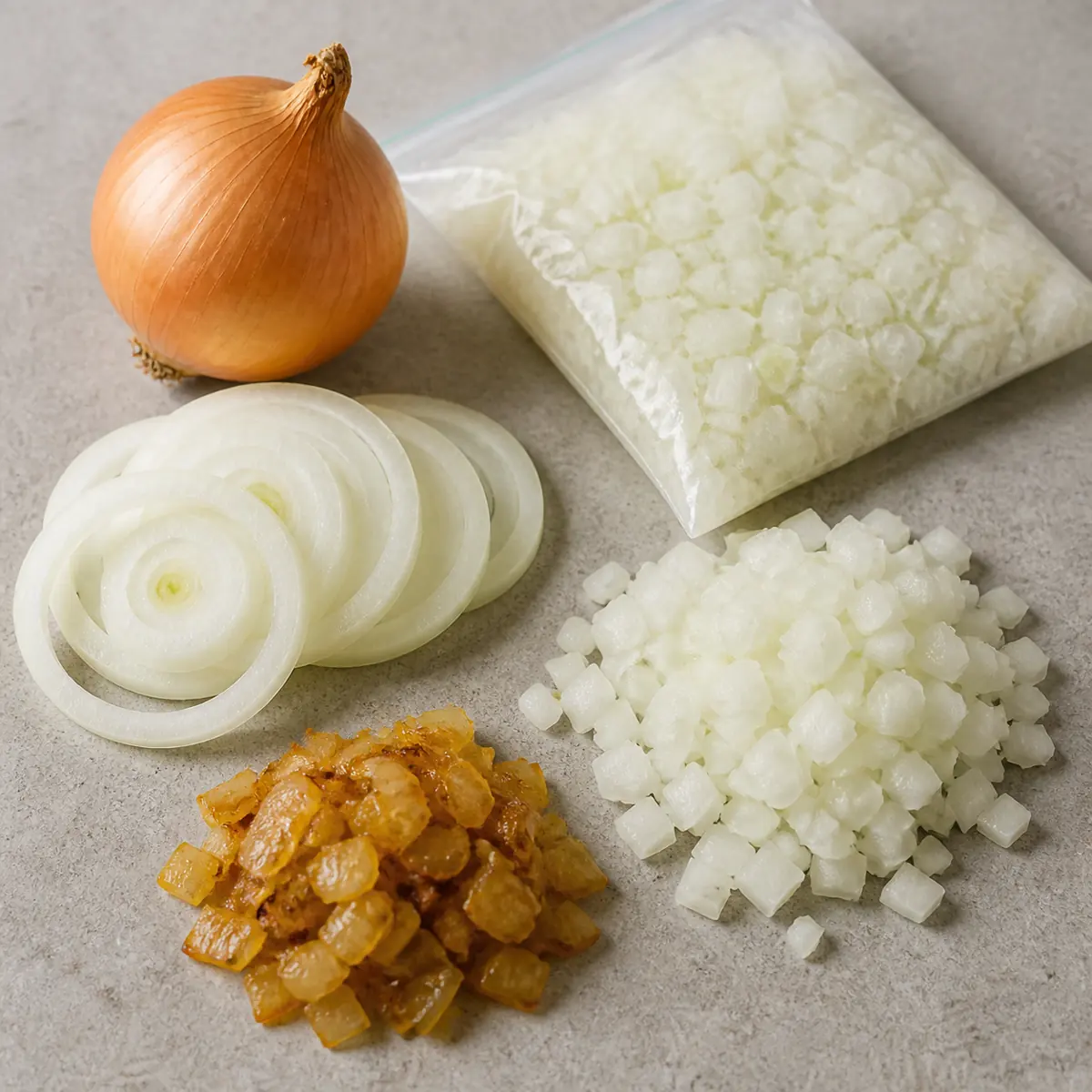
Yes-freeze onions raw or cooked, but plan to cook the raw frozen pieces
Raw onions can be diced, sliced or chopped, dried well and frozen in airtight portions without blanching when their next use is cooked. Cooked onions and caramelized onions can also be cooled, portioned and frozen. After thawing, raw onion will be softer and release more liquid, so it is a poor substitute for crisp fresh onion in salads or garnishes.
This page covers raw, diced, sliced, whole, cooked and caramelized forms in one place. It does not treat each keyword variation as a separate recipe, and it does not imply that a household freezer produces the same free-flowing result as commercial IQF processing.
Key takeaways
- Choose the future dish before choosing the cut: dice for soups and sauces, slices for cooked toppings, and cooked portions for quick finishing.
- Dry raw onion after cutting, remove excess air, and freeze a flat portion so pieces cool quickly and odors stay contained.
- Do not expect thawed raw onion to remain crisp; add it directly from frozen to a hot cooked application whenever practical.
- For purchasing, confirm variety, cut dimensions, free-flowing condition, packing, defects and cooking performance rather than relying on the word frozen alone.
Raw, diced and cooked onion compared
| Form | Preparation before freezing | Result after freezing | Best uses |
|---|---|---|---|
| Raw diced or chopped | Peel, cut evenly, dry, tray-freeze or flat-pack, then seal | Softer after thawing; may release liquid; usually easy to portion | Soups, sauces, curries, casseroles and sautéed bases |
| Raw sliced or rings | Separate layers, dry carefully and freeze without crushing | Shape remains visible, but fresh crispness is reduced | Pizza, hot sandwiches, fajitas and cooked toppings |
| Cooked onion | Cook to the intended stage, cool promptly and portion | Ready to reheat; browning level and seasoning stay with the batch | Gravy, soup, meal kits, stuffing and service prep |
| Caramelized onion | Cook slowly, cool in shallow portions and pack with little air | Soft, concentrated and convenient; portion control matters | Burgers, tarts, sauces and premium toppings |
| Whole small onion | Use an authoritative blanching method rather than the raw-dice shortcut | Less convenient and slower to freeze through | Stews or braises where a whole identity is required |

What freezing changes in a raw onion
An onion feels crisp because water is held within intact plant cells. Freezing turns part of that water into ice. The crystals disrupt cell structure, so a thawed piece cannot hold moisture exactly as a fresh piece did. The onion becomes more flexible, and liquid may collect in the pack or pan. This is a predictable physical change, not proof that the onion was spoiled. It explains why frozen raw onion works in cooked food but disappoints as a crunchy salad topping.
Flavor remains useful, although perception changes with storage, packing and the final recipe. Strong onion aroma can migrate to other foods if the package leaks air. A loose, thin layer freezes faster than a deep warm mass, and a low-air package slows dehydration and freezer burn. Start with sound onions. Freezing preserves their current condition; it cannot repair soft layers, mold, sour odor or water-soaked decay.
Can onions be frozen raw without blanching?
Yes, diced or chopped onions intended for cooking can normally be frozen raw without blanching. Nebraska Extension and the National Center for Home Food Preservation both describe raw diced onion freezing. Peel the onion, remove damaged tissue, cut it evenly and keep the work surface clean. Blot away obvious surface moisture. A tray-freeze step keeps the dice more separate, while a thin flat bag is faster when the whole portion will be used together.
The no-blanch answer is form-specific. It should not be stretched into a universal instruction for every onion product. The NCHFP guidance treats whole mature bulbs and onion rings differently and gives blanching directions for those forms. A ring intended for later frying also has different quality requirements from an ordinary soup dice. Match the method to form and end use instead of repeating a single shortcut.
For a closer explanation, see Is an Onion a Vegetable?.
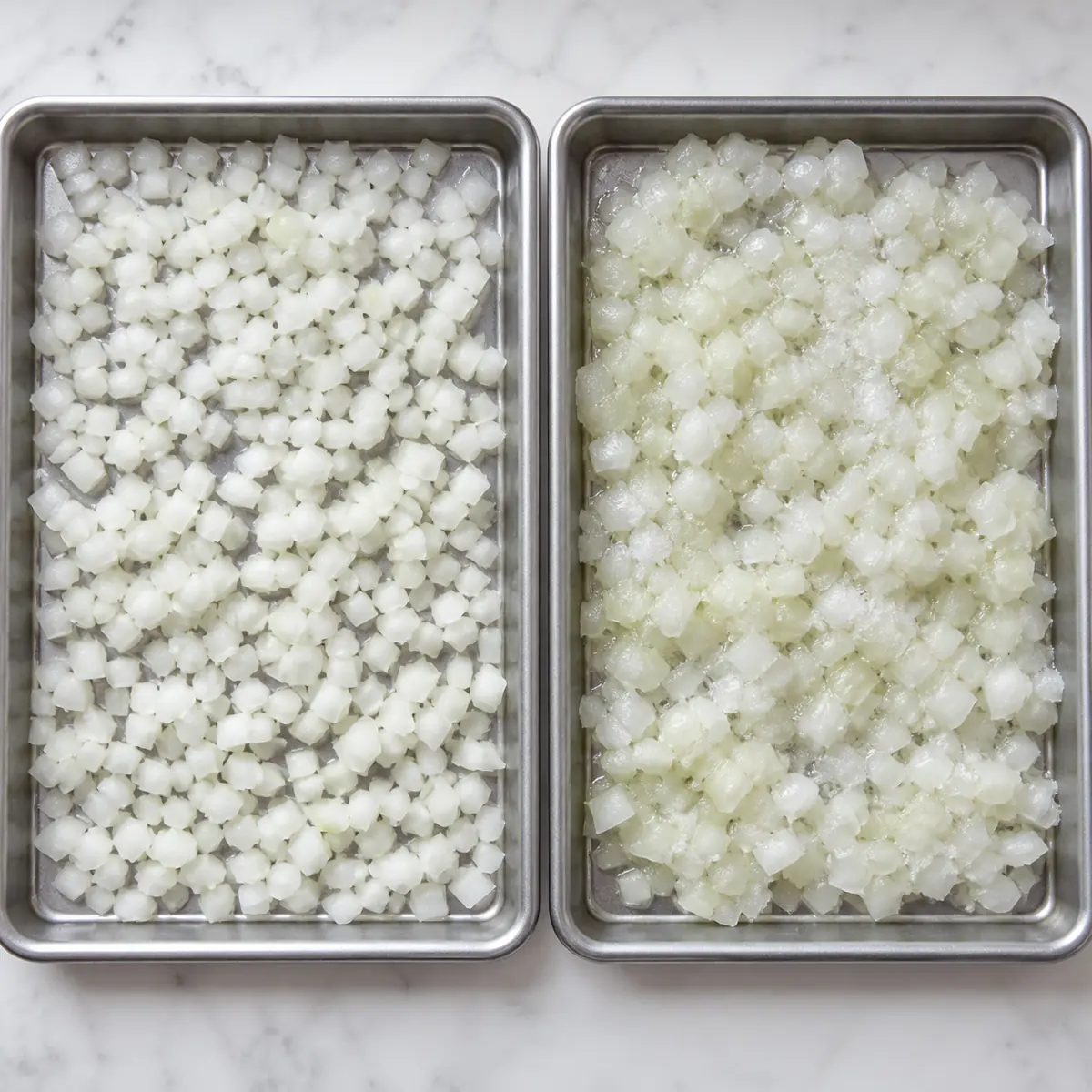
Can you freeze diced onion in a bag?
A freezer bag works well when it is strong, clean and genuinely suitable for frozen storage. Spread the dice into a shallow layer, press out excess air without crushing the pieces, seal, label and freeze it flat. Before the onion becomes fully hard, a gentle flex can divide the sheet into smaller portions. Alternatively, freeze the pieces on a lined tray first and transfer them after they are firm. The tray route gives better separation; the flat-bag route uses less space.
Pack only the amount you can keep cold during preparation. A large bowl of newly cut onion warms while the first trays are freezing, and a thick package takes longer to harden at its center. Home freezers also cycle and are opened frequently, so package protection matters. Use several modest packs instead of one oversized bag if you expect to take out only a cup at a time.
Sliced onions, rings and whole onions need a different decision
Sliced onion can be frozen raw for cooked toppings, stir-fries, fajitas and sauces. Separate thick nested layers so the pack does not become one solid block. Very thin slices are fragile and may break during packing. Rings intended for coating and frying need stronger shape control. Follow a measured ring method, drain thoroughly and test the coating and fry step from frozen; a moist ring sheds breading and cools the oil.
Whole onions are technically freezable, but they are rarely the most efficient home format. They freeze slowly, occupy space and still become soft after thawing. The NCHFP method calls for blanching whole mature bulbs until the center is heated, then cooling and draining before packing. Unless a later stew genuinely needs whole small onions, cutting before freezing usually produces a more useful portion.
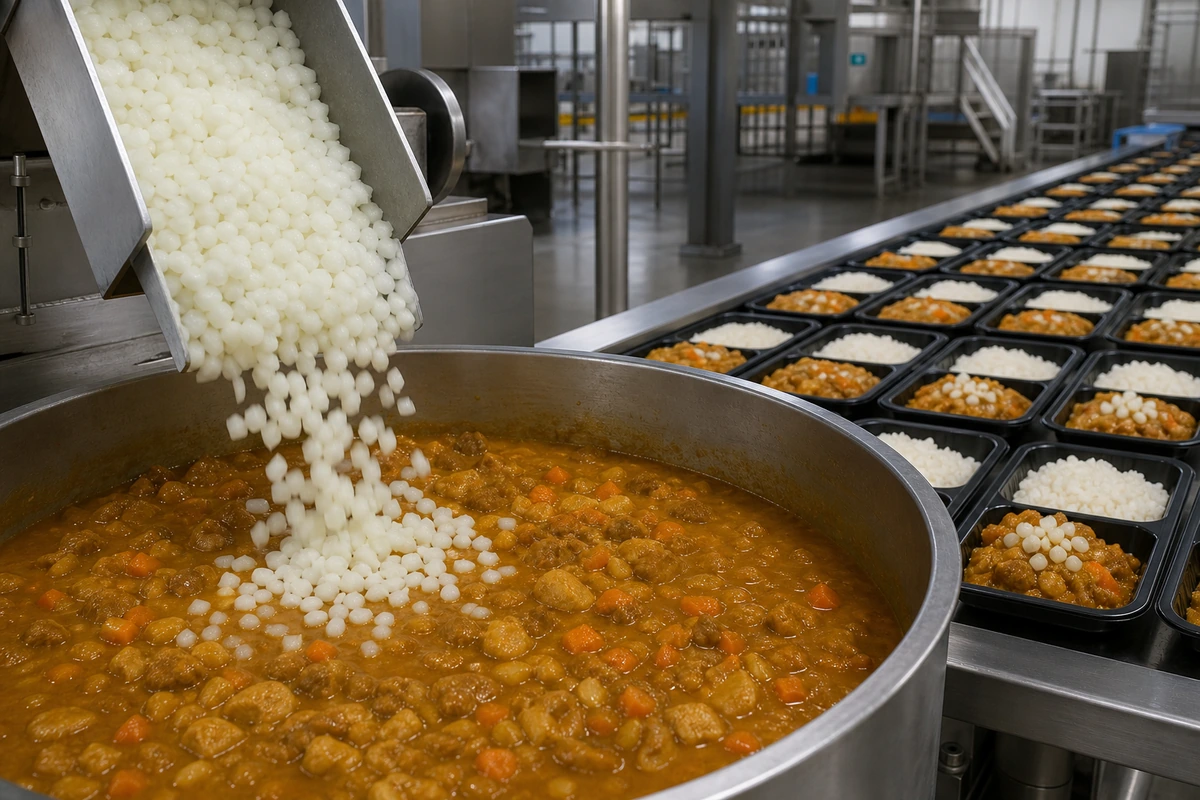
Cooked and caramelized onions: cool first, then portion
Cooked onions freeze well because softness is already part of the intended result. Stop the cooking at the stage you want later: translucent for a soup base, lightly browned for a savory filling, or deeply caramelized for a topping. Cool promptly in a shallow container rather than placing a deep, steaming pot into the freezer. Portion by the quantity a recipe uses, leaving less repeated handling at service.
Caramelized onions contain concentrated flavor and often some added fat. Small silicone molds or shallow packs create practical portions, but move the frozen pieces into a protective sealed pack once firm. Record whether salt, sugar, butter or oil was added. In a commercial kitchen that note is not trivial: seasoning and allergens affect formulation, labeling and the amount of further cooking needed.
Cook from frozen or thaw first?
For soup, sauce, curry, stew, chili and most skillet bases, add raw diced onion directly from frozen. Begin with a hot pan and allow released water to evaporate before expecting browning. If a recipe depends on a dry sauté, use a smaller pan load and cook in batches. Thawing in a bowl first creates liquid that must be managed and usually offers no texture advantage.
Thaw cooked onion under refrigeration when you need to spread, weigh or blend it accurately. A frozen caramelized portion can often go directly into a hot sauce. Do not thaw onion for hours at room temperature. Once a frozen pack has warmed and become wet, refreezing it creates larger clumps and raises handling concerns. Take only the planned portion and return the remainder to the freezer immediately.

Why frozen onion clumps, smells strong or will not brown
Clumping usually starts with wet cut surfaces, a deep initial pack, slow freezing or temperature fluctuation. Separate pieces on a tray, freeze smaller packs and keep the freezer cold and stable. Strong odor points to inadequate barrier packaging or an incomplete seal. Double protection can help in a household freezer, but the inner food-contact pack must still be appropriate and clean.
Poor browning is often a pan problem rather than an onion defect. Frozen onion releases water as it heats. An overcrowded pan turns that water into a steaming environment, keeping the surface below an effective browning temperature. Use a wider hot pan, cook a smaller load, wait for water to evaporate and add other wet ingredients later. For repeated foodservice use, weigh the onion and record pan load, time and yield so the method can be reproduced.
Variety, color and cut all change the frozen result
Yellow, white and red onions do not have identical solids, pungency, color or cooking behavior. A red onion selected for visible color in a pizza topping may bleed or darken differently from a yellow onion used in soup. Sweet onions can contain more water and may soften or release moisture differently. At home, use the variety already chosen for the dish. In purchasing, name the required variety or acceptable color range instead of accepting an unspecified onion and trying to correct the flavor in production.
Cut dimensions change both freezing speed and how the onion disappears into food. A fine mince spreads flavor quickly but can become paste-like during a long cook. A 10 mm dice remains more visible. Long strips work for fajita, pizza and sandwich applications but tangle during dosing. Ask how cut size is measured and what tolerance applies. A single average measurement hides fines, oversized pieces and broken rings that affect yield and visual consistency.
Build a useful onion cooking trial
Use a weighed frozen portion, a defined pan, controlled oil, heat setting and cooking time. Record the amount of free surface ice before cooking, the time until the pan stops steaming, the time until browning begins and the cooked yield. Score onion aroma before seasoning, sweetness after browning, harshness, color and piece visibility. A fair comparison uses the same pan load; otherwise the wetter or denser sample is penalized by a different heat environment rather than by its actual quality.
Repeat the trial in the intended sauce, soup, pizza or ready meal. An onion that browns well alone may release enough water to thin a sauce, while a dice that seems soft on a plate may integrate perfectly into a filling. When a product will be hot-held, frozen again in a prepared meal or reheated by the customer, evaluate that complete chain. Immediate sauté performance is only one stage.
Packing and freezer handling protect free flow
A strong inner liner limits water-vapor loss and odor movement. Carton strength protects the product from compression, but a tall stack of warm cartons at loading can still slow heat removal. Inspect whether pieces pour freely from a newly opened bag and whether a cluster breaks with gentle pressure. A solid wet block, torn liner or heavy snow can indicate packaging damage, temperature fluctuation or an upstream moisture problem that deserves investigation.
During kitchen use, close the bag promptly and return it to frozen storage. Repeatedly holding an open bag in a humid room lets frost form on cold pieces; the next cycle turns that frost into bridges. For frequent dosing, use smaller working packs or a controlled covered hopper rather than warming the full carton. The best free-flowing specification can be lost through poor opened-pack handling.
Plan yield, waste and labor with real numbers
Whole onion purchase price excludes peel, root, neck and damaged-layer loss. It also excludes staff time, knife safety, sanitation, tears, variable dice and the unused half that ages in the refrigerator. Frozen onion price includes processing and cold storage but delivers a more predictable net portion. Weigh a normal week of fresh receiving, trimming and cooked yield before deciding which route costs less.
The result can vary by operation. A small restaurant with skilled prep staff and a premium fresh garnish may keep whole onions. A central kitchen producing thousands of cooked portions may value an IQF dice because it removes a bottleneck and stabilizes recipe dosing. A hybrid model is common: fresh onion for raw or visible premium uses, frozen cut onion for cooked bases. The goal is not to declare one format universally superior; it is to assign each format to the work it performs best.
Make the freezer portion match a recipe
Labeling onion simply chopped is not enough six weeks later. Record raw or cooked, the cut, portion weight and any seasoning. Freeze the amount used by one common recipe-a soup base, one pizza batch or one pan of curry-so staff do not thaw and refreeze a larger block. When several portions look alike, keep red, white, sweet and caramelized onion clearly separated. Good labels preserve the reason the onion was prepared in the first place and make stock rotation far easier.
How do you freeze onions? A practical method
-
Choose sound onions and define the later use
Use firm onions without mold, wet decay or a sour odor. Decide whether the batch should become dice, slices, rings, a cooked base or caramelized portions. That choice controls cut size, blanching needs, packaging and the way the onion will be cooked later.
-
Peel, trim and cut evenly
Remove the dry skin, root debris and damaged layers. Use a clean sharp knife. Aim for an even dice when the pieces must cook at the same rate; keep slices thick enough to survive handling. Avoid soaking the onion, which adds water that later becomes surface ice.
-
Dry and portion
Blot obvious surface moisture and divide the onion by real recipe quantity. A thin layer loses heat faster than a deep block. Keep raw and cooked onion separate, and label cooked packs with any oil, salt, sugar or allergen-containing ingredient.
-
Tray-freeze or flat-pack
For loose pieces, spread onion in one layer on a lined tray and freeze until firm before transferring. For one-use portions, flatten onion in a freezer bag, remove excess air and seal. Do not leave uncovered onion in the freezer longer than necessary.
-
Protect, label and freeze promptly
Use freezer-suitable packaging, close it completely and mark the form, preparation and date. Place new packs where cold air can circulate. Do not stack a thick pile of warm cooked-onion containers; cool them promptly first, then freeze shallow portions.
-
Use the pack in a cooked application
Add raw dice from frozen to soups, sauces and hot pans. Allow released moisture to evaporate before browning. Thaw cooked portions under refrigeration only when accurate spreading or weighing requires it. Discard any pack with uncertain handling, damaged packaging or an off odor.
From a home bag to commercial IQF onion
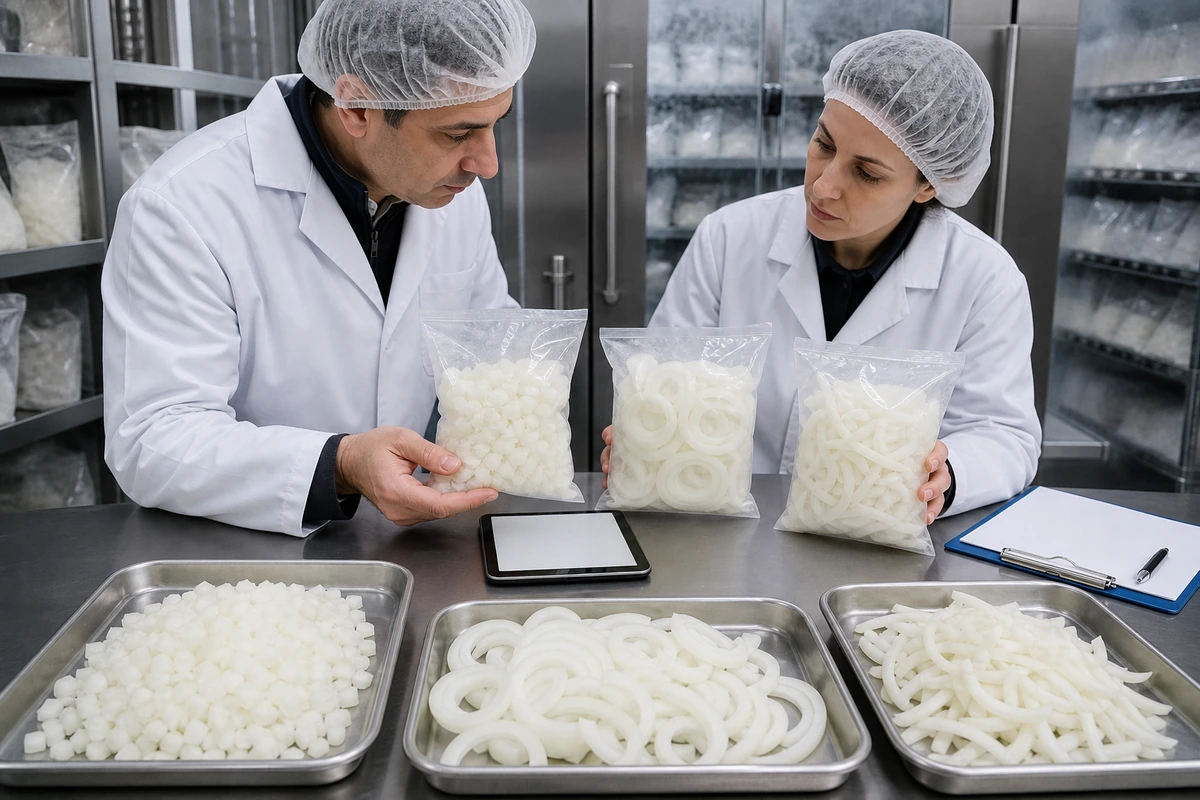
A household tray can separate a small batch, but commercial individual quick freezing is designed for faster, more uniform heat removal and repeatable free-flowing product. Buyers should not infer IQF performance from a home freezer experiment. State the onion type, intended cut and destination recipe. A 10 mm dice for soup, a strip for pizza and a minced onion for sauce are not interchangeable simply because all three are frozen.
Ask the supplier to identify the declared cut dimensions and tolerance, variety or color where relevant, pre-treatment, defect limits, foreign-material controls, packing, net weight and storage condition. Review the amount of fines, clusters, peel, root plate, discoloration and surface ice in a representative sample. Then cook a weighed portion in the real process and record yield, moisture release, flavor, color and dispersion.
For an importer or private-label program, the commercial check also includes MOQ, loading quantity, production window, label language, carton strength, pallet pattern, document set and destination requirements. Confirm which facility and certificate scope applies to the proposed item and order. A product photograph can begin a discussion, but it cannot substitute for a controlled specification, sample approval and lot-level verification.
Frequently asked questions
Can onions be frozen raw?
Yes. Diced, chopped or sliced raw onion can be frozen without blanching when it will be used in cooked food. Expect a softer texture and more released liquid after thawing.
Can you freeze diced onion without a tray?
Yes. Freeze it in a thin flat freezer bag when the portion will be used together. A tray step is better when you want the dice to remain more individually separated.
Should frozen onions be thawed before cooking?
Usually not for soups, sauces, curries and skillet bases. Add the planned portion from frozen and allow moisture to evaporate. Thaw under refrigeration when accurate weighing or spreading requires it.
Can cooked onions and caramelized onions be frozen?
Yes. Cool them promptly, portion by recipe use, seal with little air and label any added fat, salt, sugar or allergens. They reheat well in sauces, toppings and meal preparation.
Why are my frozen onions one solid block?
They were probably packed wet, too deeply, or exposed to temperature fluctuation. Dry the cut onion, freeze a thin layer and use strong airtight packaging.
Reference points
- National Center for Home Food Preservation - freezing onions
- Nebraska Extension - how to freeze onions
- USDA FSIS - freezing and food safety
These references support the measured handling points and method boundaries. Product labels, local food-safety requirements, site procedures and lot-specific specifications still control a real decision.
Confirm frozen onions against your real application
GreenLand-food is a frozen-food supplier supporting each manufacturer, importer, distributor and wholesale buyer. For factory-direct sourcing support, send the required form, cut, application, packing, quantity, destination and trial method. We will review available frozen onions specifications and the next practical step.