


Is an Onion a Vegetable?
Sep 07, 2026
Leave a message
The direct answer
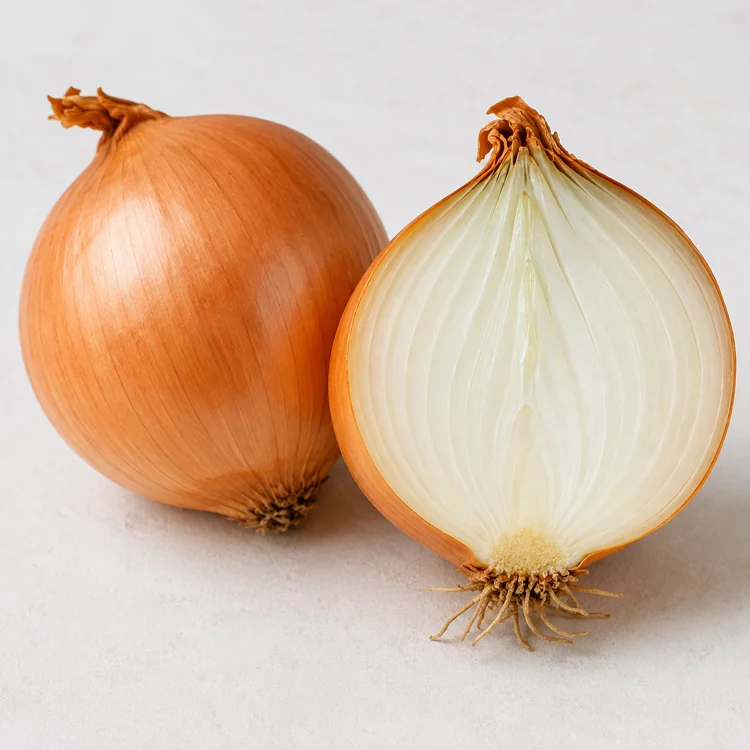
Yes: onion is a bulb vegetable. The edible bulb is mainly layered leaf bases, rather than the plant's roots or fruit. Its use as a seasoning does not change that classification. Cut, cooking method and freezing then determine its practical texture and role in a recipe.
Keep these distinctions in mind
Yes: an onion is a bulb vegetable
Yes, an onion is a vegetable. More precisely, the familiar round onion is a bulb vegetable: most of the part we eat consists of thick, fleshy leaf bases arranged around a short stem at the bottom. It is not a botanical fruit, and the whole bulb is not a true root, even though it grows at or below the soil surface.
An onion can also act as a seasoning in cooking. A few pieces may provide the aromatic base of a soup, while a whole roasted onion can be a substantial vegetable component. Those kitchen roles do not change its plant structure. Calling it a seasoning does not stop it being a vegetable.
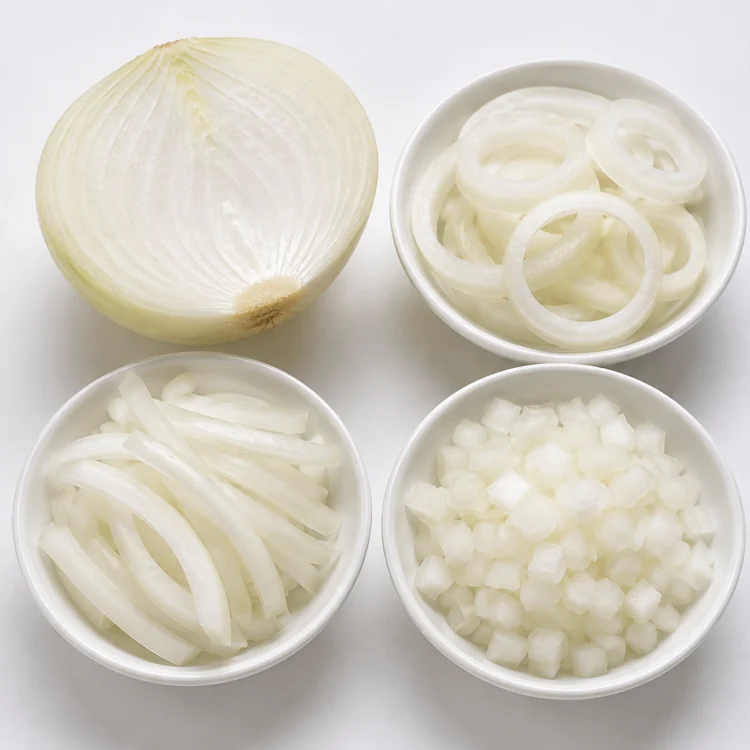
The distinction has a practical use beyond classification. The layered bulb produces rings, strips and dice, and those cuts behave differently when cooked or frozen. A buyer asking only for frozen onion has named the vegetable but has not yet described the ingredient the kitchen needs.
We connect the identity to the cut and application. Onion dice for a sauce, strips for a stir-fry and small whole bulbs for a braise need different specifications and sample tests. Understanding what the bulb is made of helps explain why one form remains visible while another softens into the dish.
The edible bulb is made largely of leaf bases
Cut an onion from top to bottom and the layers become clear. Much of the bulb consists of fleshy leaf bases that store reserves for the plant. At the bottom is a short, compressed stem region, commonly called the basal plate, from which the roots grow. The dry outer scales protect the more succulent inner material.
NC State Extension describes Allium cepa as a bulb-forming plant. That botanical description explains why a cross-cut onion separates into rings. Each ring is part of a layer, rather than a growth ring like those seen in a tree trunk.
The root end is therefore important structurally without making the whole onion a root. In preparation, leaving enough of the base intact can help a halved or whole onion hold together. Cutting it away too deeply may allow the layers to separate, which is useful for some cuts and undesirable for others.
The neck at the opposite end also has a practical role. In a dry storage onion, neck condition and dry outer scales help indicate whether the bulb has been appropriately prepared for storage. They do not prove every aspect of safety or shelf life, but they are useful quality observations.
For a processing line, raw bulb structure affects peeling, trimming and cut yield. A uniform, sound bulb can produce more predictable pieces than one with damage, irregular layers or excessive trimming needs. The specification for the frozen cut should therefore be supported by suitable raw material, not judged only from the finished package.
Why it is not a botanical fruit or a true root
A botanical fruit develops from the flower's ovary and contains or is associated with seeds. The onion bulb used in cooking is a vegetative storage structure. The plant can flower and produce seeds, but that does not turn the bulb into the fruit of the plant.
The true roots are the structures growing from the base. Their function and anatomy differ from the thick layered bulb. Grouping onions loosely with underground vegetables can be convenient in a market or kitchen, but it should not be mistaken for an exact botanical description.
| Part or term | Accurate description | Practical implication |
|---|---|---|
| Onion bulb | Fleshy leaf bases around a short basal stem | Produces layers, rings, strips and dice |
| Roots | Structures extending from the basal plate | Usually trimmed away in preparation |
| Dry outer scales | Protective outer layers | Removed for most peeled products |
| Neck | Upper region where the leaves converge | Relevant to trimming and storage quality |
| Botanical fruit | A reproductive structure from a flower | Does not describe the edible onion bulb |
This distinction prevents misleading explanations such as "all foods underground are roots." Potatoes, onions and carrots may share a produce display while representing different plant structures. The correct term becomes useful when discussing preparation and texture, rather than being a label to memorize without a purpose.
For commercial communication, plain wording is usually enough: bulb onion, peeled onion, onion dice or onion strips. Botanical detail can clarify identity, but it should support the product description rather than make a routine quotation harder to understand.
Vegetable, herb and seasoning are overlapping kitchen roles
The word vegetable describes a broad category of plant foods used in meals. Seasoning describes a function: an ingredient adds flavor. Onion can fit both. Finely chopped onion in a sauce base contributes aroma, sweetness and body, while roasted onion wedges are eaten as a visible vegetable portion.
"Herb" is used differently in botanical and culinary contexts. In everyday food discussion, it often refers to leafy aromatic plants used in smaller amounts. An onion's use for flavor does not require relabeling the bulb as a culinary herb. The clearer statement is that it is a vegetable commonly used as an aromatic ingredient.
Portion size still matters. A spoonful of onion in a large batch of sauce should not be presented as equivalent to a substantial vegetable serving. If a menu or label makes a nutrition or portion claim, it needs an appropriate calculation under the relevant guidance and market rules.
Onion's role also changes during cooking. A fresh cut can provide a sharp flavor and crispness; a gently cooked cut can become softer and milder; a browned preparation can contribute deeper savory and sweet notes. Those differences come from preparation, not a change in whether the ingredient is a vegetable.
For buyers, state the role in the recipe. A hidden aromatic base may need small, consistent pieces and predictable moisture release. A visible side dish may need shape retention and an attractive cut. Naming that role helps us recommend a meaningful sample test instead of offering the same onion format for every use.
Red, white, yellow and green onions
Red, white and yellow bulb onions differ in appearance and can differ in flavor and storage characteristics, with substantial variation among cultivars. Color alone is not a complete specification. A mild yellow onion and a more pungent yellow onion may suit different recipes despite sharing the same outer color.
Green onions are usually harvested for their tender white base and green leaves. The name can refer to bunching onion types or young bulb onions, depending on the market and product. They should not be assumed to be a miniature version of every dry bulb onion offered by a supplier.
Purdue's FoodLink onion guidance discusses the food uses of onions, green onions and scallions. For ordering, a photograph and a precise form description can resolve regional naming differences more effectively than relying on the common name alone.
| Onion form | Typical commercial concern | Useful description |
|---|---|---|
| Yellow or white bulb onion | Flavor, peeling yield and cut consistency | Peeled dice, strips, slices or whole bulbs |
| Red bulb onion | Color retention and appearance in the recipe | Exact cut and acceptable color range |
| Small whole onion | Diameter and intact layers | Size range, peeled condition and whole-bulb standard |
| Green or spring onion | Green-to-white balance and cut length | Species or product identity, parts included and ratio |
Confirm whether the order requires one color or permits a defined range. A sauce may tolerate variation that a retail vegetable mix cannot. The same principle applies to the green and white portions of spring onion: they perform differently and should not be left to an undefined mix.
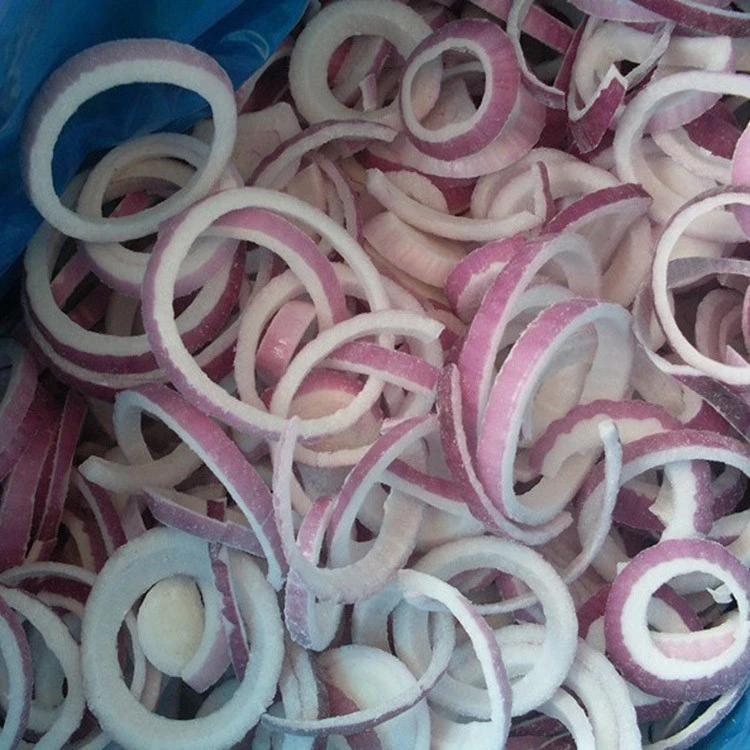
How the bulb structure creates rings, slices and dice
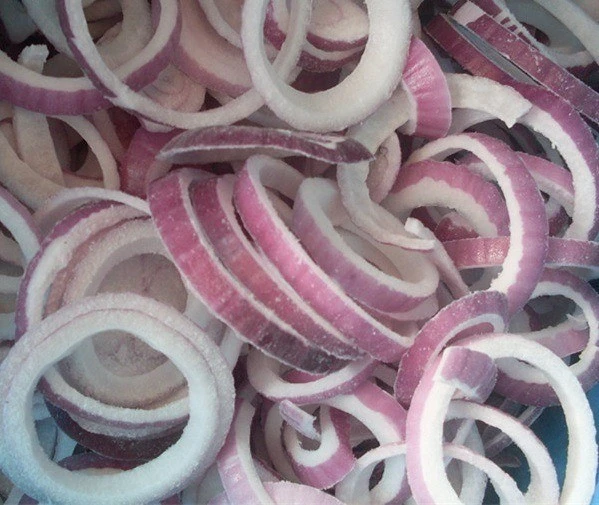
Crosswise slices reveal the bulb's layered circles and can be separated into rings. Lengthwise cutting creates strips or wedges that follow a different orientation through those layers. Dicing crosses the structure in more than one direction and produces smaller pieces that distribute through a recipe.
The cut determines how much surface is exposed and how the onion cooks. Small dice can soften quickly and spread through a sauce. Broad strips remain more visible. Thick wedges or whole bulbs need enough cooking for the center to reach the desired tenderness while the outer layers remain acceptable.
Uniformity is important because very small pieces and large pieces do not finish together. A broad size spread can leave fines overcooked while the largest cuts remain firm. A nominal measurement such as "10 mm dice" is only useful when the acceptable range and measurement approach are understood.
Ring integrity depends on more than the slicer setting. Bulb diameter, layer condition and handling affect the proportion of full rings, partial rings and fragments. A battered ring application therefore needs a different quality description from onion pieces that will be blended into a soup.
For a buyer, start with the shape required in the finished dish, then work backward to the raw cut. If the recipe later chops the onion again, a presentation grade may add unnecessary cost. If the onion remains visible, a tighter shape specification may improve portion consistency and reduce manual sorting.

What cooking and freezing change
Cooking softens onion tissue and changes its flavor. The result depends on the method: simmering, sweating, roasting and browning do not produce the same ingredient. A frozen raw or pretreated onion cut should not be described as caramelized simply because it will eventually be cooked in a pan.
For ingredient format details, see Can You Freeze Onions? Raw, Diced and Cooked.
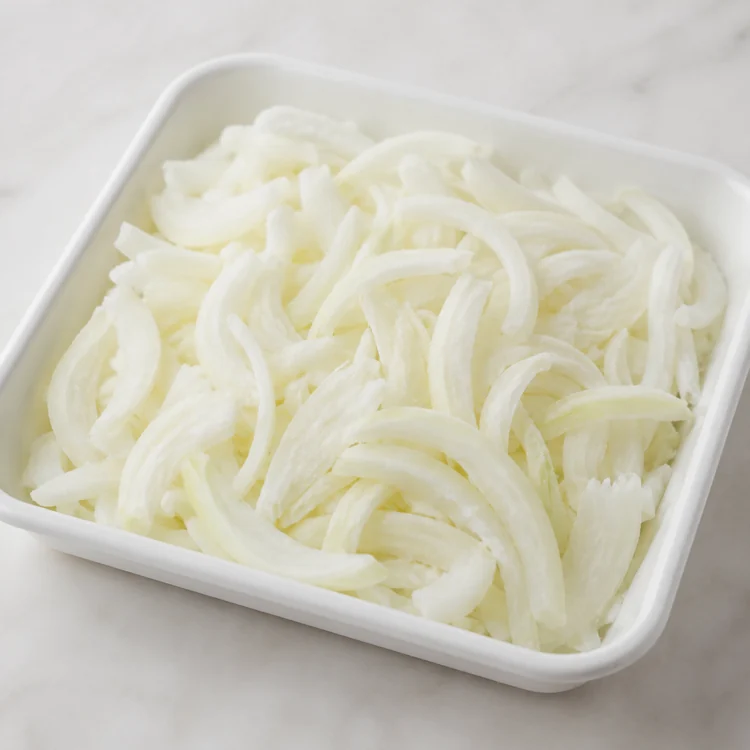
Freezing can alter the texture of the onion by affecting its cells. After thawing, it commonly becomes softer and releases more moisture than a comparable fresh cut. That makes frozen onion useful for many cooked applications, while it may not reproduce the crisp bite expected from a fresh raw garnish.
Our article on whether onions can be frozen covers preservation in more detail. For purchasing, the useful question is how the supplied cut behaves in the intended recipe. The answer should come from a sample cooked under the customer's conditions.
Frozen pieces also cool the pan when added. A heavy load can encourage steaming before browning begins. If the recipe needs a browned base, allow for the released water and the equipment's capacity. Simply extending the cooking time may change yield and labor enough to affect the original cost comparison.
The ingredient declaration and cooking instructions need to be clear. Frozen does not mean ready to eat, and a pale appearance does not establish whether the onion was blanched. We confirm the supplied form and process information with the buyer so the kitchen can use an appropriate preparation route.
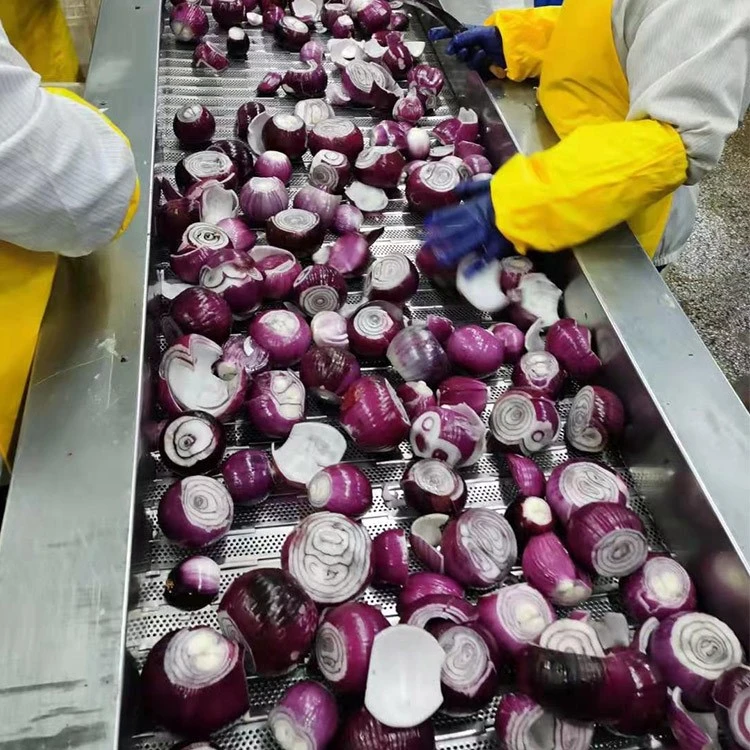
Match onion form to the recipe
For sauces, soups and fillings, dice often provide an easy way to distribute onion flavor. The useful grade depends on whether the pieces should disappear or remain visible. A smooth sauce may be blended later, while a chunky filling may need a consistent bite and a controlled amount of water.
For stir-fries and prepared vegetable mixes, strips can provide a recognizable shape. Their length and thickness influence portioning, cooking and appearance. Very long strips may tangle or distribute unevenly; very short pieces can look like an unintended mix of cuts.
For roasting or braising, wedges and whole bulbs create a different eating experience. Their centers need suitable cooking, and the layers must remain sufficiently intact for the intended presentation. Diameter and trimming quality become more important than the fine-particle percentage used for a diced product.
| Recipe | Form worth testing | Main acceptance point |
|---|---|---|
| Blended soup or sauce | Dice or another suitable economical cut | Flavor, moisture and cooked yield |
| Dumpling or pastry filling | Defined dice | Even distribution and controlled liquid release |
| Stir-fry or vegetable mix | Strips or slices | Visible shape and consistent cooking |
| Roasted vegetable tray | Wedges or suitable whole bulbs | Tender centers and intact presentation |
| Raw crisp garnish | Fresh cut suited to the recipe | Texture that frozen onion may not reproduce |
We do not select a cut from the product name alone. The final dish, equipment and any later reheating stage provide the context for a useful recommendation and sample.
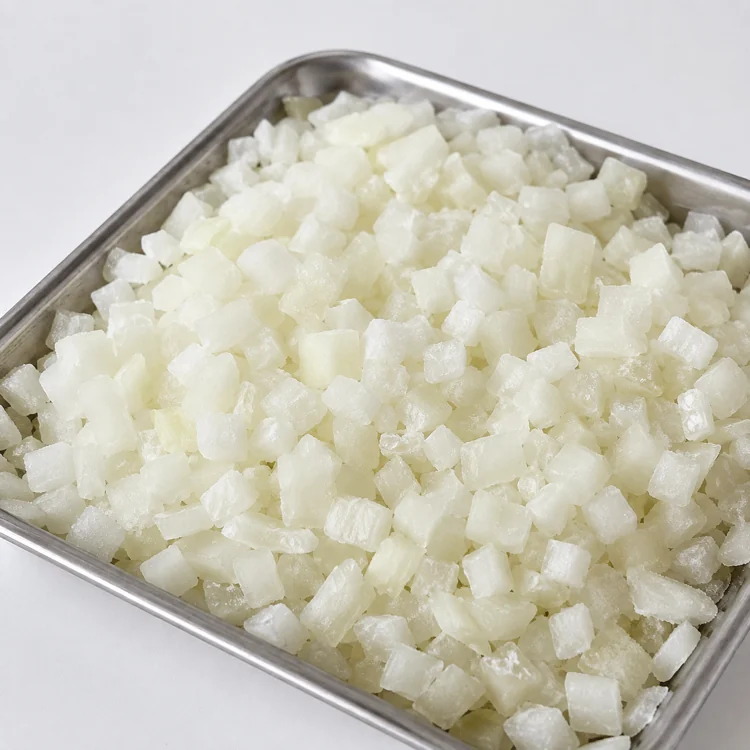
Specify the cut and the onion identity
A clear frozen-onion specification names the onion type, cut and intended application. It then defines the dimensional range and acceptable defects. "Good quality frozen onion" leaves too much open: one buyer may mean clean small dice, while another expects long uniform strips with little breakage.
Agree how fines, oversized pieces and residual skin will be assessed. A measurement is more useful when its sampling method is clear. The same applies to color and foreign matter: use an agreed standard and representative reference material rather than a vague promise of perfect appearance.
Confirm ingredients and any processing treatment relevant to labeling or use. The product's required cooking and storage conditions should accompany the specification. If the customer needs a particular certification or test, check that it applies to the proposed product and facility scope.
Our frozen onion range offers a starting point for discussing cuts and applications. We review the required form, packing and volume before confirming availability and timing. A custom cut or private-label pack may have different minimum quantities and lead time from an established bulk format.
Carry the agreed description into the quotation and purchase order. This avoids a situation where the technical team approves one cut but the commercial paperwork uses a broader label. The receiving team should be able to identify what was ordered without relying on an earlier informal conversation.
Judge quality before and after cooking
Inspect the frozen product for the agreed cut, separation, visible defects and package condition, then cook it using the intended recipe. Both stages matter. An attractive frozen dice can release more water than expected, while a less visually uniform cut may perform perfectly in a blended application.
Measure input weight and acceptable cooked output. If liquid is drained away, record it. If it remains in the sauce, account for its effect on the recipe. The same kilogram of onion can produce a different usable result in a dry filling and a soup where all liquid is retained.
Evaluate texture after the normal hold or reheat. A ready-meal onion component may receive heat during manufacturing and again in the consumer's kitchen. The first-cook sample should not be the only basis for approval when the final eating stage differs substantially.
Compare samples under controlled conditions. Use the same pan, load and recipe, then document any adjustment needed for a format change. A frozen-to-fresh comparison can be useful, but the process differences must be acknowledged rather than hidden in inconsistent cooking.
Keep the findings specific: too many fines, excess released water, uneven size, insufficient browning or unacceptable softness. Those observations lead to a practical review of the product or method. A general complaint that the onion is "not premium" gives much less information to the people who need to resolve it.
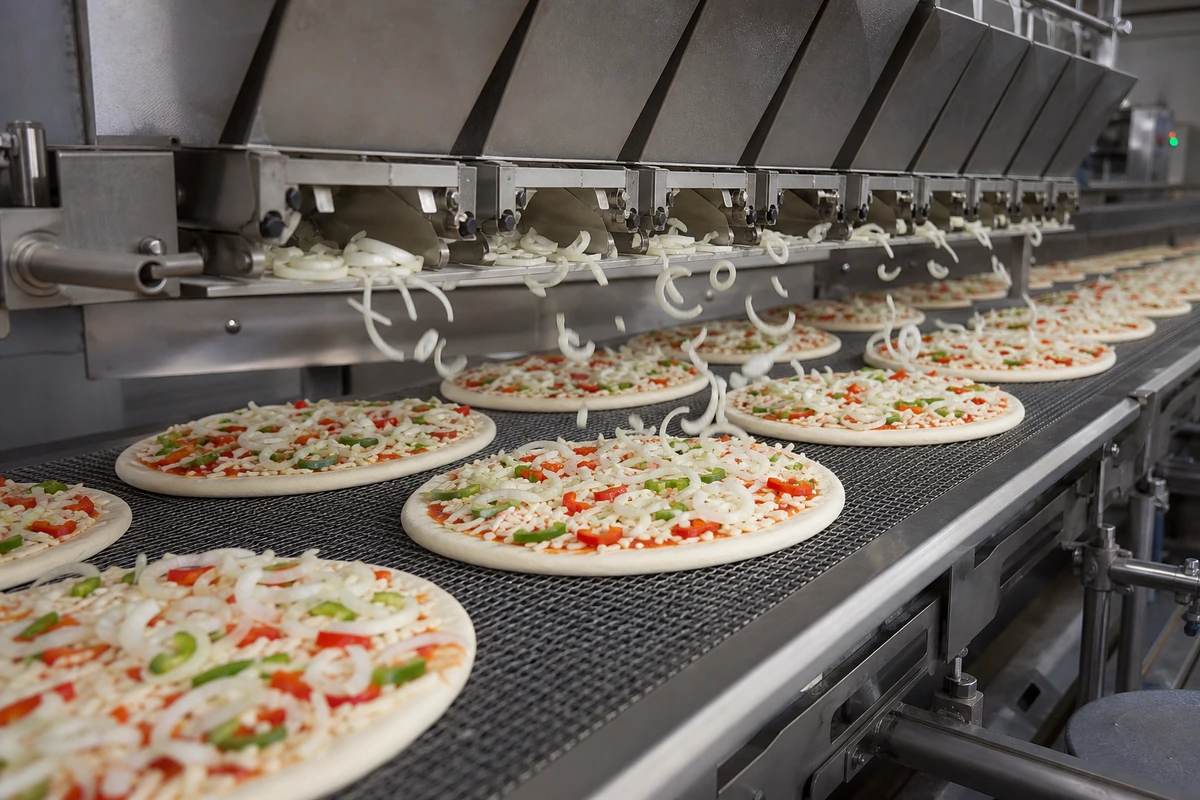
Packing, usable yield and commercial purchase details
Choose inner packs around the amount used per production run. Large packs can be efficient for continuous manufacturing, while smaller packs may reduce repeated handling in a restaurant. Consider freezer capacity, portioning and the ability to keep the remaining stock under its intended conditions.
Compare usable cost rather than only the price of a raw or frozen kilogram. Fresh onions require peeling and cutting labor and generate waste. Prepared frozen cuts can reduce those tasks, but their cooking yield and moisture contribution still need measurement. The practical advantage depends on the operation.
At arrival, check carton and inner-pack integrity, lot codes, quantities and the agreed temperature evidence. Store frozen onion according to its label, commonly at or below -18°C, and maintain traceability when packs are opened or transferred. Investigate deviations before affected stock disappears into routine production.
Request the product specification, ingredient information, relevant quality documents and destination-specific shipment papers. Confirm the loading plan, carton dimensions and private-label artwork requirements where applicable. Lead time and order quantity should be agreed against the actual cut and packing program.
An onion's classification is simple; the purchase description should be equally clear. Send the desired onion type, cut, application, packing, volume and destination, plus any required documents. That gives us a concrete basis to review supply and helps the buyer receive the vegetable in the form that the recipe actually needs.
Source frozen onion with GreenLand-food
GreenLand-food is a professional frozen onion supplier and manufacturer in China, providing factory-direct wholesale supply for importers, food manufacturers, foodservice distributors and private-label programs.
State the onion type, cut dimensions and whether the pieces should remain visible or soften into the finished recipe.
Send your product form, specification, packing, quantity, application and destination, together with private-label needs and requested documents. We will review the requirement and confirm the available sample, packing and commercial options for your order.