


Can You Freeze Passion Fruit Whole? Whole Fruit vs Pulp
Sep 23, 2026
Leave a message
Research This Article & Topic with AI
Verify key claims, compare reliable sources, and explore GreenLand-food's practical frozen food knowledge.
Article details and research questions are prepared in the links. Sign-in or sending may be required.

Key Takeaways
- Freeze sound, ripe fruit with a dry, intact shell; discard split, leaking or moldy fruit.
- Expect the thawed rind to soften and the pulp to become looser, while the seeds remain noticeable.
- Use thawed whole fruit in drinks, sauces, curds and bakery fillings rather than as a fresh garnish.
- Extracted pulp saves freezer space; puree gives the most consistent dosing and seed control.
- Commercial buyers should specify Brix, acidity, seed level, pack size, cold chain and intended process.
Can Whole Passion Fruit Be Frozen?
A ripe purple or yellow passion fruit can go into the freezer with its shell on. The rind acts as a natural outer package during initial freezing, and the aromatic pulp remains contained until use. Choose fruit that smells fresh and feels heavy for its size. A wrinkled but sound ripe fruit can still be suitable; a fruit with active mold, leaking juice, fermentation or a broken contaminated shell is not improved by freezing.
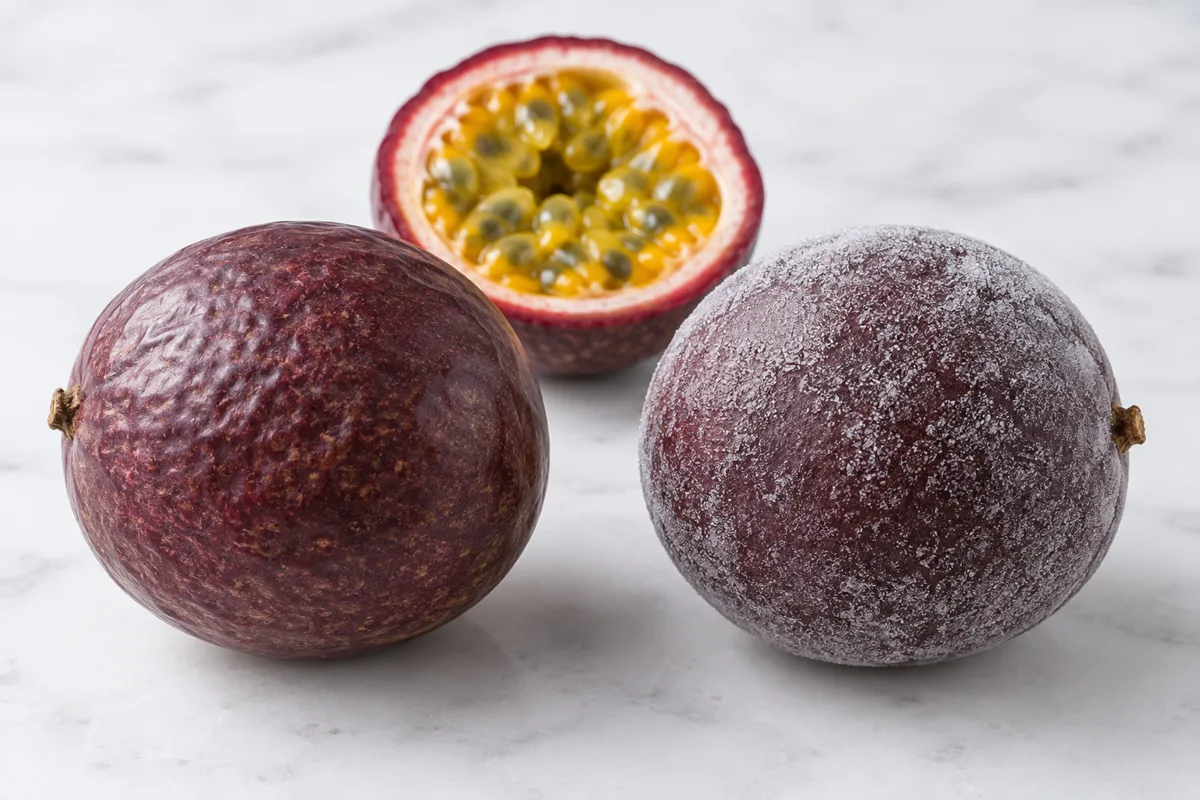
Freezing preserves the pulp for later use, but the shell loses the firmness and appearance of fresh fruit.
Whole freezing is most attractive when there are only a few fruits, the final recipe has not been decided, or the cook wants to avoid immediate scooping. It requires little preparation and prevents exposed pulp from contacting air before storage. The tradeoff is space: round whole fruit packs inefficiently, and every shell must still be cut and emptied after thawing.
The thawed shell will not return to market-fresh condition. Ice formation damages rind and pith cells, so the fruit becomes soft, dented or deeply wrinkled. That appearance is expected. Judge the pulp for its aroma, color and application, while observing the original handling history. Freezing preserves a usable ingredient; it does not keep the fruit suitable for a premium whole-fruit display.
For a home freezer, label the bag with the date and count, then plan to use the fruit while flavor remains bright and the package remains intact. For a café or manufacturer, whole freezing is rarely the most efficient format because shell weight, variable pulp yield and manual extraction complicate costing. A commercial frozen pulp or puree normally gives more usable fruit per carton and a clearer specification.
A side-by-side yield test makes the format decision concrete. Weigh ten whole fruits, extract every usable gram, and record shell waste, seed level and preparation time. Repeat with a specified frozen pulp or puree at the same finished-recipe dosage. The exercise shows whether a cheaper whole-fruit purchase remains economical after labor and waste. It also gives recipe developers a realistic conversion factor instead of assuming that a fruit count always produces the same cup of pulp.
Why a Whole Fruit Freezes Differently from Extracted Pulp
Passion fruit is not a uniform ball of juice. A tough rind surrounds spongy white pith, while the edible center contains juice-filled sacs around hard black seeds. Water expands and forms ice in the rind, pith and pulp at different rates. In a household freezer the fruit cools from the outside inward, so the shell may be rigid while the center is still passing through its freezing zone.

The rind, pith, juice sacs and seeds respond differently as the water in the fruit freezes and later thaws.
During thawing, damaged rind cells release their structure and the shell collapses. Inside, the gel around the seeds becomes looser and may separate into juice and thicker material. Stirring normally brings the edible pulp back together for a sauce or drink. The seeds remain physically present; freezing does not dissolve them or turn seeded pulp into a smooth puree.
Extracted pulp freezes in a thinner layer or smaller portion, so heat moves out more quickly and packaging uses less space. Puree can be standardized further by blending and, where the product design requires it, controlling seeds through screening. These advantages matter when a formulation expects a repeatable gram weight, Brix or viscosity. Whole fruit preserves flexibility, but it also preserves variability.
The freezing rate affects ice-crystal size and therefore drip after thawing. A domestic freezer cannot reproduce every industrial quick-freezing condition, but small packs, a cold freezer and good air circulation still help. Avoid placing a large warm load together or burying the fruit in an overfilled drawer. Commercial buyers should ask what format was frozen, how it was packed and how the supplier defines the frozen product, rather than assuming every passion fruit item behaves alike.
Color should be judged in context. Thawed passion fruit may appear darker than fresh pulp, and the seeds make a small sample look different from a screened puree. Evaluate color after dilution, heating or mixing with dairy, sugar and starch as the formula requires. The same rule applies to aroma: a cold, concentrated spoonful is not the final beverage. Warm bakery filling or an acidic drink can reveal different notes, so sensory approval belongs in the complete application.
How to Freeze Whole Passion Fruit at Home
Inspect each fruit before packing. Remove fruit with mold, insect damage, wet cracks or a fermented odor. If the shells need washing, rinse them under clean running water and dry them completely; trapped surface water becomes ice and encourages fruits to freeze into a solid mass. Do not puncture the shell, because an intact rind contains the pulp and reduces direct air exposure.

Dry fruit can be frozen on a tray for separation, then protected in a low-air package for storage.
For fruit that must remain separate, place the dry pieces on a tray with space between them and freeze until firm. Transfer them quickly to a freezer-grade bag or rigid container, press out unnecessary air without crushing the shells, and close securely. If the fruit will be thawed as one batch, it can go directly into the final package. Add the product name, date, count and intended use.
A numbered method keeps the job simple: one, sort sound ripe fruit; two, wash only if necessary and dry fully; three, pre-freeze in one layer when individual pieces are needed; four, pack with as little air as practical; five, label; and six, return the package to a stable 0°F / -18°C freezer. Avoid the door, where repeated temperature changes create frost and shorten quality life.
Package size should match the recipe. If a drink uses two fruits, bags of two or four reduce unnecessary thawing. If pulp yield must be known, weigh a sample of fresh fruit, extract it and record the edible percentage before freezing the rest. That small exercise reveals whether whole-fruit storage is economical. For larger volumes, scooping and portioning the pulp before freezing usually reduces both shell waste and labor at the moment of service.
Plan opened-pack use before approving the pack. A twenty-kilogram block may have an attractive delivered cost, but a small kitchen can create days of leftover thawed product. Portion cubes or smaller inner bags cost more per kilogram yet reduce exposure and waste. A high-volume factory may reach the opposite conclusion. State daily usage, thaw capacity, freezer space and allowable opened-pack time in the buying discussion so the pack recommendation reflects operations.
Thawing Whole Passion Fruit and Choosing the Right Use
Thaw whole passion fruit in a covered container under refrigeration so any leaking juice is captured. A fruit can also be cut while partly frozen when a recipe immediately processes the pulp, but use a stable board and a safe knife because the shell may be slippery and uneven. Do not leave a large bag at room temperature for an extended, unmeasured thaw.

Thawed seeded pulp performs best where it can be stirred, strained or blended into the final preparation.
Once soft enough, cut the shell and scoop the pulp with a clean spoon. Stir to recombine separated juice and gel. For a beverage or smooth sauce, press through a suitable sieve if the seed load is not wanted. For a coulis with visual seeds or a bakery filling, retain all or part of them. The choice belongs to the finished product, not to a blanket rule that seeds are good or bad.
The best uses tolerate a softer structure: lemonade and mocktails, yogurt bases, cheesecake topping, curd, glaze, syrup, sorbet, mousse, ice cream ripple and fruit filling. A thawed shell is poor decoration, and the pulp will not behave like tidy fresh scoops on a plated fruit display. For uncooked products, keep preparation surfaces clean and use the thawed fruit promptly under refrigeration.
Measure the complete thawed pulp, including released liquid, before adjusting a formula. Draining first concentrates solids and acid, while returning every drop gives a different viscosity. Product developers should record yield per fruit, seed percentage, Brix, pH or titratable acidity where relevant, and color after the planned hold. Those values convert a convenient home method into evidence for deciding whether a specified frozen pulp is preferable.
Finally, keep the naming precise on specifications, labels and purchase orders. Whole frozen passion fruit, seeded pulp, deseeded puree, sweetened preparation and concentrate are not synonyms. Each changes usable yield, seed perception, sweetness, acidity and dosing. Clear naming protects both sides of the transaction and prevents a sample approved for one format from becoming permission to ship another. That precision is the practical link between a home freezer question and reliable commercial sourcing.
Whole Fruit, Frozen Pulp and Puree Compared
Whole frozen fruit offers maximum flexibility at small scale, because the user decides later whether to strain, blend or keep the seeds. Its disadvantages are shell weight, irregular geometry, variable edible yield and extraction labor. It works for a household surplus or an occasional seasonal menu, but it is difficult to dose accurately by fruit count when size and pulp content vary.
Frozen pulp removes the rind before packing. It may be seeded, partly deseeded or seedless depending on the product, so the name alone is not enough. Pulp keeps more of the fruit's visible character and can suit toppings, beverages and sauces. Portion blocks or small packs let a kitchen thaw only what it needs, but the buyer must confirm whether added sugar, water or preservatives are present.

Whole fruit retains the shell, seeded pulp minimizes waste, and puree offers the most uniform dosing and seed control.
Puree is mechanically reduced to a smoother, more homogeneous form. It is often the easiest choice for dosing into beverage, dairy, bakery and dessert systems, especially when a pumpable or blendable texture is required. Puree is not automatically concentrated. Single-strength puree, sweetened preparations and concentrate have different solids, acidity and flavor strength, so substitution must be based on specification and trial rather than volume alone.
A useful comparison asks four questions: how much preparation labor is available, whether visible seeds are desirable, how precise dosing must be, and what freezer pack fits the production rate. Whole fruit gives flexibility but high handling; seeded pulp gives recognizable character; seed-controlled puree gives consistency. The correct choice is the format that delivers the required sensory profile and process behavior with acceptable waste.
Document the thawing trial as carefully as the frozen format. Record frozen weight, thaw time, covered temperature, drip or separation, usable weight, seed treatment and the exact quantity added to the formula. Photograph the pack before opening and the pulp after mixing. If the product enters a beverage, compare separation after the normal display time; if it enters a filling, compare viscosity before and after heating. These observations help quality, purchasing and product-development teams discuss the same evidence. They also expose hidden differences between a sample thawed gently in a laboratory and a carton handled during a busy production shift. When the approved method is practical for receiving staff and line operators, frozen passion fruit becomes easier to forecast, dose and repeat throughout the year. Keep one approved reference lot or retained sample under the defined storage condition when the quality plan allows it. A future delivery can then be compared for aroma, acidity, color, seed distribution and pack behavior instead of relying on memory. If a crop-season shift is acceptable, document the tolerance; if it changes the finished drink or filling, review dosage before full production. This record also supports better forecasts and cleaner supplier feedback.
Which frozen passion fruit form fits the job?
| Format | Main advantage | Main tradeoff | Typical fit |
|---|---|---|---|
| Whole fruit | Minimal preparation before freezing | Shell waste and variable pulp yield | Home surplus and occasional recipes |
| Seeded pulp | Recognizable fruit character | Seed level and separation must be specified | Toppings, drinks and sauces |
| Seed-controlled puree | Consistent dosing and smooth processing | Less whole-fruit character | Beverage, dairy, bakery and dessert systems |
| Concentrate or prepared base | High flavor or solids efficiency | Not a direct 1:1 puree substitute | Industrial formulation after dilution trials |
Commercial Passion Fruit Formats Are Specification Choices
Commercial frozen passion fruit may be offered as pulp blocks, portion cubes, puree, sweetened preparations or concentrated bases. A product photo can show color and physical form, but it cannot communicate the complete specification. Ask whether the product contains seeds, the percentage or distribution of seeds, whether sugar or water is added, and whether the material is single strength or concentrated.

Portionable frozen passion fruit cubes can support dosing and cold-chain handling without the shell waste of whole fruit.
Brix is useful, but it is not a complete measure of flavor. Passion fruit also carries substantial acidity and aroma, and crop maturity can shift the sweet-sour balance. A beverage developer should review Brix together with pH or titratable acidity and conduct a dilution trial. A bakery filling needs viscosity and bake behavior. A dairy application may need stability testing because acid can change proteins and hydrocolloids.
Pack form affects labor. Small cubes or pucks can be weighed while frozen and may reduce thawed leftovers. A large block is efficient for a high-volume line that uses a full unit, but awkward for a café that needs only 500 grams. Aseptic puree offers another logistics model and should not be described as the same product as frozen puree. Storage temperature, shelf life and opened-pack handling depend on the specific format.
At GreenLand-food, we review the intended application, seed direction, flavor balance, pack size, quantity, destination and required documents before matching a frozen passion fruit option. A buyer should test a representative sample in the actual formula and processing conditions. The sample approval should state the product form clearly so purchasing does not later substitute whole fruit, pulp and puree as if they were equal.
Buyer Checks for Seed Level, Flavor Balance, Packing and Cold Chain
Begin the RFQ with the final use. State whether the passion fruit will enter juice, smoothie, yogurt, ice cream, sauce, filling or retail repacking. Then define product form, seed requirement, added-ingredient declaration, target Brix or acceptable range, acidity information, color expectation and microbiological limits. Include any regulatory or customer standard that applies at destination.

A bulk pack review should cover cube separation, color, visible seeds, liner condition, net weight and frozen-state integrity.
Packing must match throughput. Confirm inner bag material, sealing method, net weight per unit, units per carton, carton dimensions, pallet pattern and lot coding. If portion cubes are requested, define approximate unit weight and acceptable clumping. A free-flowing sample in a studio photo may arrive as a block if temperature control fails, so receiving criteria should address evidence of thawing and refreezing.
Cold-chain questions include production storage, loading temperature, reefer set point, data records where required, transit route and the buyer's receiving tolerance. The receiving team should inspect carton condition, liner integrity, product temperature and signs of leakage or heavy ice. Quarantine uncertain lots until quality staff review the records. Do not judge acceptance from color alone.
For annual planning, connect seasonal fruit intake with frozen inventory. Forecast monthly usage, lead time, safety stock and freezer capacity, then select pack sizes that avoid partial-carton handling. Record approved sensory and analytical results against the supplier lot. This turns frozen passion fruit from a generic commodity into a controlled ingredient whose seed level, flavor balance and process performance can be repeated.
A successful supply decision should remain understandable at receiving and on the production floor. Record the approved form, appearance, seed direction, pack unit and thaw method in plain language, supported by photographs and analytical limits where useful. Train the team to place uncertain or temperature-abused packs on hold rather than blending them into normal stock. That discipline protects both product consistency and the value of the original format comparison.
Frequently Asked Questions
How long can whole passion fruit stay frozen?
Use it within a practical quality window while aroma remains bright and the package stays intact. A stable 0°F / -18°C freezer and low-air packaging protect quality; a commercial shelf life must come from the specific producer.
Should passion fruit be washed before freezing?
Wash only when needed, then dry the shell completely. Surface water creates frost and causes fruit to stick together.
Can I use thawed whole passion fruit as a garnish?
The pulp may be usable, but the shell becomes soft and wrinkled. Fresh fruit is better for a presentation that depends on a firm, attractive shell.
Is frozen passion fruit puree the same as frozen pulp?
No. Pulp may retain seeds and a coarser structure, while puree is more homogeneous and may have controlled seed content. Check ingredients, Brix, acidity and product definition.
Discuss Frozen Passion Fruit Supply with GreenLand-food
GreenLand-food is a professional frozen passion fruit supplier and manufacturer in China, providing factory-direct wholesale supply for importers, manufacturers, distributors and foodservice programs.
Send your required form, specification, quantity, pack size, destination, application, private-label needs and documents so we can review a suitable supply plan.