


How to Tell When Passion Fruit Is Ripe
Sep 07, 2026
Leave a message
Check the pulp before waiting for more wrinkles
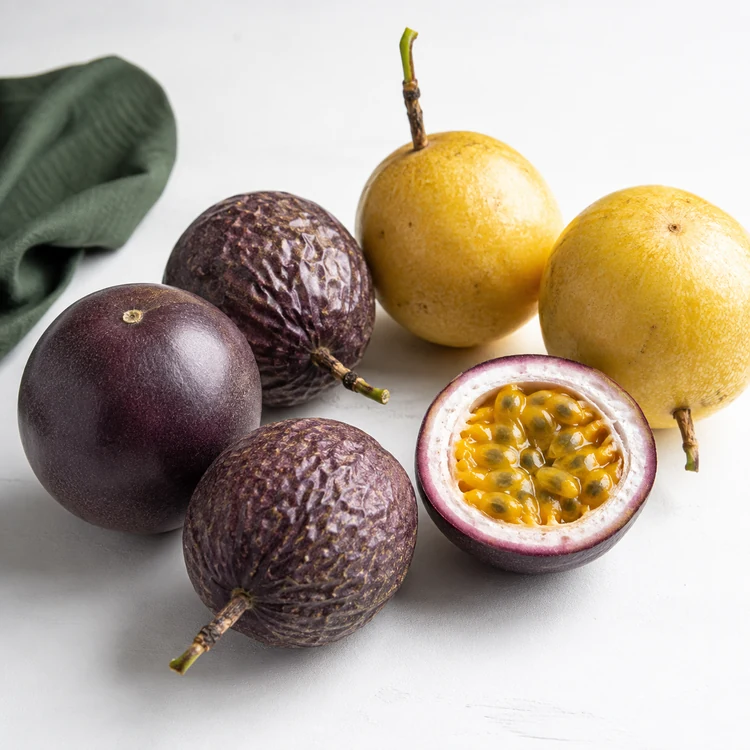
The shell may be smooth or wrinkled. Wrinkles usually reflect moisture loss, so waiting for every fruit to wrinkle can sacrifice saleable weight without improving the ingredient. For a single fruit, combine color, weight, condition and a cut-open check. For a delivery, inspect representative fruit from several cartons before deciding whether the lot is ready for processing. At receiving, keep uncertain maturity separate from definite damage or decay. A representative cut-open sample can resolve a color question; a wrinkled shell cannot establish internal quality, safety or usable pulp recovery for an entire delivery.
Compare skin color with the correct purple, yellow or hybrid reference; color is a screening clue that needs internal confirmation.
Record pulp recovery and flavor together when buying whole fruit for extraction, rather than selecting only by shell appearance.
For frozen pulp or puree, shift acceptance from rind color to composition, lot information and performance in the approved recipe.
Read color in the right variety
A ripe yellow passion fruit will not turn purple. That sounds obvious until a mixed delivery arrives with no cultivar description and the receiving team uses a photograph of a different type as its reference. Establish whether the fruit is a purple type, yellow type or a named hybrid before making a color decision. Skin color should be interpreted against that reference, under ordinary neutral light, rather than against a general instruction to buy dark fruit.
UF/IFAS describes purple and yellow passion fruit types within the crop. Their differences are a reason to specify the fruit, not a reason to rank one color as universally sweeter. Growing conditions, maturity and individual lots still affect the pulp. For beverage production, the useful question is whether the delivered fruit produces the agreed flavor and recovery in the recipe.
Some residual green can be a sign that a lot needs further assessment, but a photograph alone cannot establish harvest maturity. Separate uneven coloring from physical defects such as cracks, leaking areas and spreading decay. A sound fruit with incomplete color belongs in a different decision group from a fully colored fruit with a damaged shell. Mixing those groups into one average appearance score hides the action the receiving team needs to take.
Use weight, feel and aroma together
Choose a fruit that feels reasonably heavy for its size. The comparison should be between similar sizes and types: a large thick-shelled fruit can outweigh a smaller fruit while delivering less pulp per kilogram. Weight is a useful screening clue, not a direct measurement of pulp recovery. For purchasing, record both the whole-fruit weight and the recovered ingredient from a small cutting sample.
The shell should remain structurally sound. A little give is different from a localized soft collapse. Check the stem end and any impact points, where damage can be less visible from the side. Do not squeeze every fruit hard enough to create the bruising you are trying to detect. Handle samples gently and keep rejected fruit separate from fruit intended for food preparation.
A characteristic fruity aroma supports the assessment, particularly after cutting. It cannot establish microbiological safety or rescue fruit with a doubtful history. Cold fruit may release less aroma than a sample assessed at a defined tasting temperature, so compare like with like. If two lots are evaluated at different temperatures, a purchasing team can mistake the warmer sample's stronger aroma for a permanent difference in quality.

Wrinkles describe water loss, not a test certificate
The common advice to wait for a wrinkled shell is too simple for a commercial decision. Sound wrinkled passion fruit may contain excellent pulp, while a smooth, fully colored fruit may already be suitable. UC Davis identifies shriveling as a postharvest quality issue; its meaning should be considered alongside internal quality and storage history.
| Observation | What it can suggest | What to check next |
|---|---|---|
| Smooth shell with expected mature color | The fruit may already be usable | Cut a sample and assess the pulp |
| Light wrinkles with an intact shell | Some moisture has been lost | Compare aroma, recovery and condition |
| Very light fruit with deep shriveling | Significant dehydration may have occurred | Measure remaining pulp and inspect internally |
| Local collapse, leakage or visible mold | Deterioration or damage | Reject affected fruit; assess the surrounding lot |
For fresh retail, appearance can determine acceptance even when the pulp remains suitable for a different channel. That does not mean a processor should accept any unattractive fruit. Agree which external defects are cosmetic, which require internal inspection and which trigger rejection. A processing specification should never use the word "ripe" as permission to accept decayed raw material.
Will passion fruit ripen off the vine?
Mature passion fruit can continue ripening after harvest. Fruit picked too immature may fail to develop the desired eating quality, even if its appearance changes. The distinction is harvest maturity, not merely whether a fruit is attached to the vine today. UF/IFAS postharvest guidance supports treating color and internal development together when deciding harvest and handling practices.
If you have a small quantity of sound, mature fruit that is still completing its color change, hold it under conditions appropriate to that fruit and check it regularly. Do not promise that every hard green fruit will become sweet after a fixed number of days. A warm room, a closed bag or another ethylene-producing fruit cannot replace maturity that was missing at harvest. Avoid sealed, damp conditions that conceal deterioration.
For an incoming commercial lot, establish a separate hold-and-review decision rather than blending uncertain fruit into approved stock. Record the sample condition, the proposed review time and the person responsible for release. Inspect again before processing. If the lot repeatedly gives weak aroma or poor recovery, the useful response is a harvest specification discussion with the supplier, not a longer waiting period with no defined endpoint.
A small comparison can expose a misleading external signal. Select several sound fruit of the same type: some smooth and fully colored, some lightly wrinkled and some with less complete color. Keep the groups separate during cutting. Record the whole and pulp weights for each fruit instead of pooling everything into one bowl. The result may show that the most wrinkled group does not give the most useful pulp, or that color differences do not correspond neatly to the flavor differences in this particular delivery.
Treat that exercise as an investigation, not as permission to accept every fruit in a visual category. The value is in testing the receiving team's assumptions. If the groups perform similarly inside, a cosmetic restriction may be costing the processing program usable material. If a group consistently gives weak pulp, the next discussion can focus on its actual maturity and handling history. Either result is more informative than a rule that every acceptable shell must look the same.
Keep unusual findings with the lot record. A photograph of a sound cut fruit, a recovery figure and a short sensory description provide a useful reference for the next delivery. Avoid inventing a permanent tolerance from a handful of fruit; use the observations to refine the agreed sampling and acceptance method.
When to pick and how to handle fallen fruit
Picking decisions should reflect the cultivar, intended market and route to the customer. Fruit intended for immediate local use may be handled differently from fruit traveling through a longer fresh distribution chain. A full-color reference photograph is useful, but a harvest team also needs a practical definition of acceptable shell condition and representative internal quality.
Natural fruit drop can occur around maturity in passion fruit production. A fallen fruit is not automatically safe or premium. Ground contact introduces a separate handling question involving collection frequency, surface conditions, damaged shells and the farm's hygiene controls. Keep the maturity judgment separate from the decision about whether a particular fruit is suitable for the food channel.
For garden use, collect promptly and reject fruit that is split, moldy or deteriorating. For commercial receiving, ask how fruit was harvested and collected when that distinction matters to the program. Do not accept a vague statement that all dropped fruit is "naturally ripe" as an alternative to raw-material controls. The processing step should begin with sound fruit and a documented acceptance decision.
Cut one fruit before approving a batch
For a household bowl, opening one representative fruit often resolves uncertainty faster than squeezing every shell. For a large lot, one fruit is only the start. Select samples from different cartons and positions, including fruit near the limits of the acceptable color range. A top layer chosen for appearance may not represent the fruit underneath.
Wash sound whole fruit under running water before cutting, use clean equipment and prevent rind debris from entering the pulp. FDA produce-handling guidance applies even when the outer rind will not be eaten. Cleaning is a preparation control; it does not make visibly spoiled fruit suitable for use.
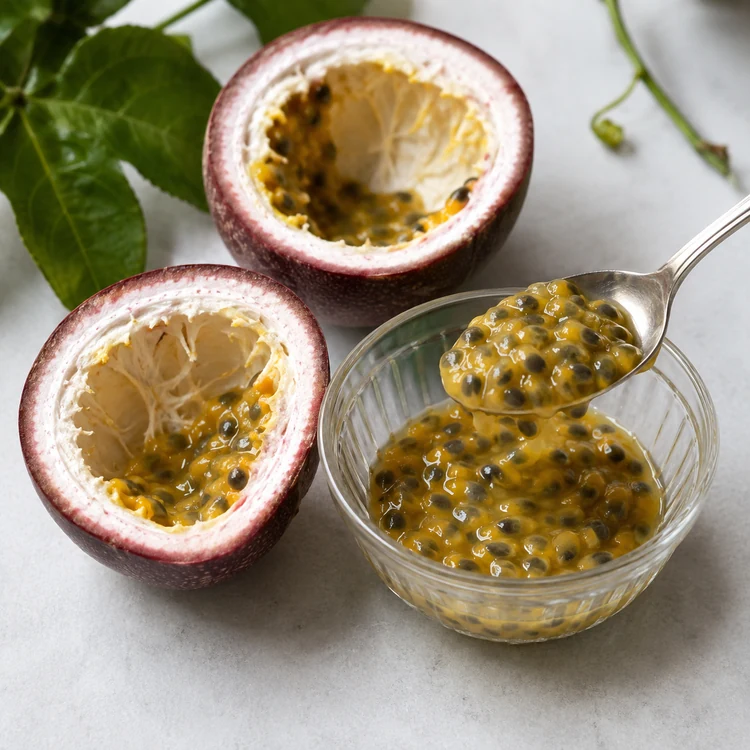
After cutting, look at pulp development, seed coverage, aroma and unwanted discoloration. Measure recovery into a tared bowl if ingredient yield matters. Taste only sound samples handled appropriately for the assessment. A consistent sampling form makes comparisons more reliable: identify the carton, record whole weight and pulp weight, and describe flavor in terms the production team understands. "Good" is less useful than "bright aroma, sharp acidity, acceptable at the approved fruit addition rate."
Maturity checks for juice, puree and seeded pulp
Different products expose different weaknesses. A seeded topping needs an appealing seed-to-pulp balance and a spoonable appearance. A strained beverage base may depend more on soluble solids, acidity and aroma. A puree used in a filling must also perform after mixing and the intended heat treatment. The same raw fruit can therefore pass one application trial and disappoint in another.
Brix helps describe soluble solids; it is not a complete sweetness score. Acidity changes the perception of sweetness, while aroma can make a drink seem more or less recognizably passion fruit at the same measured Brix. Where relevant, agree test methods for Brix and titratable acidity and assess them with sensory results. Do not treat a single number as proof of maturity, flavor or safety.
We supply different frozen passion fruit formats and confirm the intended composition before comparing samples. Whole-fruit color no longer tells the buyer much after extraction and freezing. At that stage, the useful evidence shifts to the ingredient description, lot information, agreed analytical results and performance in the actual recipe. Ask whether the sample contains seeds, added sugar or added water before drawing conclusions from its taste.
For application details, see How to Make Passion Fruit Puree.
A practical receiving and sampling sequence
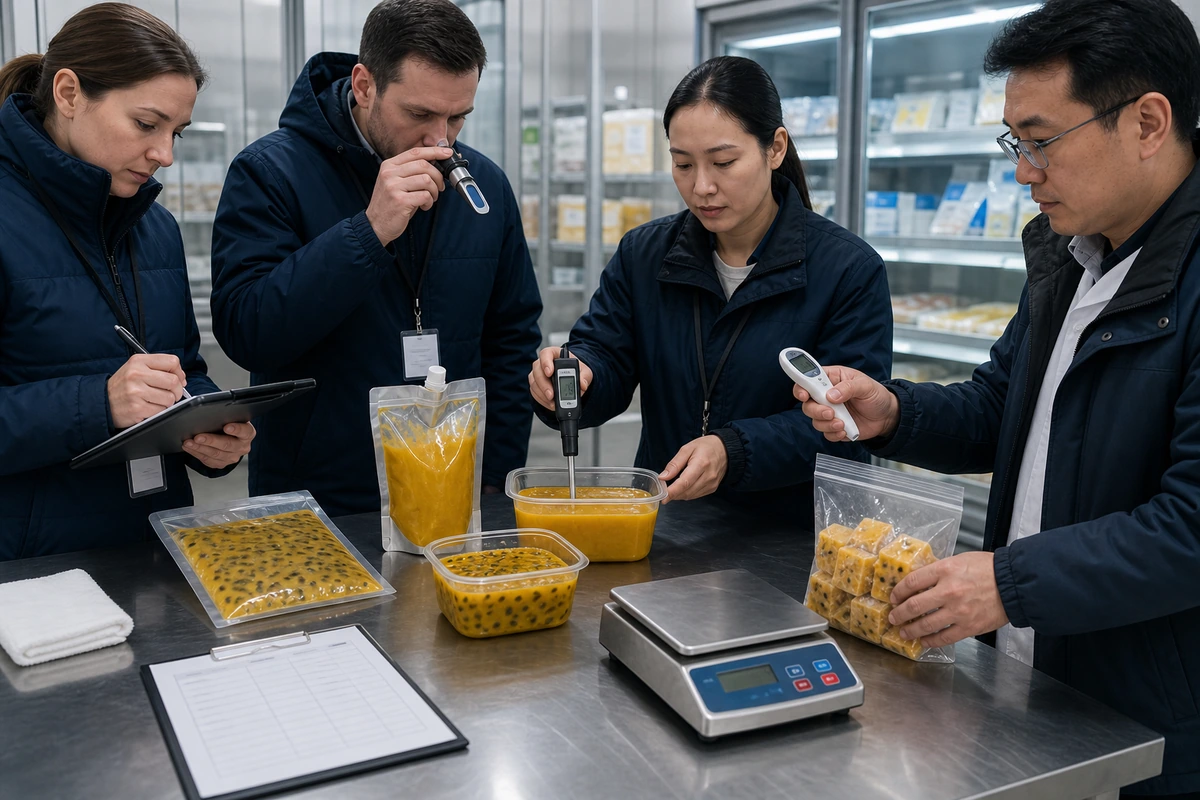
- Identify the delivery. Record supplier, lot, variety or type, harvest information where available, quantity and intended processing date. Keep different lots identifiable until each has been reviewed.
- Inspect the delivery condition. Check cartons, visible damage and the agreed transport conditions. Note wet packaging, leakage and uneven deterioration instead of averaging them into a single appearance judgment.
- Take representative samples. Follow the site's sampling plan across cartons and positions. Include normal fruit and fruit close to the acceptance limits, without choosing only the best-looking pieces.
- Assess external maturity and defects. Compare color with the correct reference, then record shell condition, weight and signs of dehydration. Separate uncertainty about maturity from definite spoilage.
- Open and assess the pulp. Record recovery and the agreed sensory or analytical checks. Use consistent preparation and assessment conditions so that lots can be compared fairly.
- Release, hold or reject. Write the decision and its reason. A held lot needs a review condition and deadline; a rejected lot needs physical separation from released ingredients.
This sequence is a practical quality framework, not a statistically validated sampling plan for every operation. A buyer and supplier should agree the sample size, acceptance criteria and escalation procedure for their actual shipment. Photographs help explain defects, but they should supplement measurements and records rather than replace them.
Holding ripe fruit without losing usable pulp
Once fruit is suitable for processing, unnecessary holding can reduce recovery and complicate stock rotation. Plan extraction around the approved lot and expected demand. Do not keep fruit simply to achieve a more wrinkled appearance when the inside already meets the specification. The condition of the pulp, the integrity of the shell and the handling history should drive the decision.
Whole-fruit postharvest recommendations depend on type, maturity and the intended storage system. They should not be transferred directly to extracted pulp. Once the fruit is opened, use clean covered containers, maintain appropriate refrigeration and apply a defined use period. For a domestic refrigerator, the general food-safety target is no warmer than 4°C; this is not a claim that every whole passion fruit requires the same commercial storage regime.
For storage and handling details, see Health Benefits, Nutritional Value, and Proper Storage of Frozen Passion Fruit.
For a processor, identify each extracted batch with its source lot and extraction time. Avoid topping up an older container with newly extracted pulp, because the mixture loses a clear age. Choose a container size that can be used within the approved production window. If output exceeds immediate demand, use an established preservation process rather than repeatedly moving the same pulp between warm preparation areas and cold storage.

Fresh fruit and frozen ingredients solve different jobs
Fresh whole fruit gives the buyer direct control over selection and extraction, but it also brings shells, sorting work and variable recovery. Frozen pulp or puree arrives further along that process. It can simplify ingredient dosing, although freezing cannot correct an unsuitable raw-material flavor or make an ingredient automatically ready to consume without further processing.
| Purchasing route | Work remaining at the receiving site | Main comparison point |
|---|---|---|
| Whole fresh fruit | Sort, clean, cut, extract and handle shells | Usable pulp per purchased kilogram |
| Frozen seeded pulp | Follow thawing or direct-use instructions; portion | Seed distribution and recipe performance |
| Frozen seedless base | Confirm composition, mix as instructed and dose | Solids, acidity, aroma and homogeneity |
Compare the cost of the required ingredient, not only the price on the carton. Whole fruit and prepared pulp have different loss points and labor demands. A fair trial includes preparation time, retained yield and the final product's acceptance. Our guide to understanding frozen passion fruit covers the broader ingredient formats; the maturity question remains whether the raw fruit supported the finished specification.
For ingredient format details, see Can You Freeze Passion Fruit Whole? Whole Fruit vs Pulp.
An acceptance reference should also distinguish a target from a rejection limit. The preferred color or aroma profile describes what the buyer wants to receive routinely. A limit describes the point at which the lot needs a different decision. If those are written as the same thing, receiving may reject harmless variation or accept a serious defect simply because the fruit matches the preferred color photograph.
For example, a processor might agree a reference pulp for a beverage trial and a separate rule for damaged shells. A sample can match the reference flavor while the delivery still fails the damage requirement. Conversely, a sound lot may need a formulation review because its acidity differs from the reference. Keeping those observations separate helps the commercial team discuss a quality adjustment without confusing it with food safety or physical damage.
Define how an unresolved result is handled. The receiving team should know whether to take another representative sample, request technical review or keep the lot on hold. The person tasting a sample should not be expected to renegotiate the purchase specification at the loading dock. Clear release authority and a practical reference make the word ripe usable across the farm, the warehouse and the recipe team.
Write a maturity specification buyers can use
A useful specification names the product and makes disagreements resolvable. For whole fruit, include the accepted type, size basis, color reference, defect definitions, packaging and the internal checks required for release. State whether weight is measured with any stems or attached material and whether a recovery test includes seeds. Without that definition, two teams can report different yields from the same fruit and both believe their arithmetic is correct.
For extracted frozen ingredients, replace shell-based language with measurable product attributes. Confirm seeded or seedless form, ingredient declaration, Brix and acidity where required, pack size, storage conditions, intended use and the documents needed for the destination market. Request a specification and lot-specific information appropriate to the order. Do not presume that an attractive photograph establishes every detail of the supplied batch.
Set tolerances through sample approval and the actual application. A buyer making a clear drink may reject visible seed fragments that a seeded dessert program expects to see. A retail pouch and a bulk processing block also create different thawing and portioning tasks. The specification should explain those decisions clearly enough that receiving, production and purchasing do not have to reinterpret "ripe passion fruit" independently.
Application trials and order confirmation
Prepare a reference recipe using an approved sample, then repeat it with the proposed supply lot at the same fruit addition rate. Record any adjustment needed in sugar, water or other ingredients. If a weaker sample needs more fruit to reach the target flavor, that difference belongs in the purchasing comparison. It should not disappear because the quoted ingredient price is lower.
For a practical trial, retain the input lot identification, recipe weights, mixing sequence and assessment conditions. Evaluate the product at the point customers will experience it: chilled in a beverage, after setting in a dessert or after the relevant cooking stage in a filling. A pulp tasted directly from a sample cup does not show all of these effects.
We can review the required passion fruit form, packing and order schedule against the application. Send the proposed annual or shipment quantity, destination, pack format and acceptance priorities. MOQ, lead time, documentation and loading arrangements need confirmation for the specific order. A clear maturity requirement helps upstream selection; a clear application trial tells everyone whether that selection has produced an ingredient worth buying again.
Questions about unusual ripeness signs
Can a frozen pulp sample approve a whole-fruit delivery?
It can help evaluate the resulting ingredient, but it cannot establish the shell condition or variability of a separate whole-fruit delivery. Use representative receiving checks for that delivery and keep the extracted sample linked to its actual source lot.
Should fruit from different cartons be mixed before sampling?
Keep carton and lot identity long enough to assess variation. Pooling everything immediately can hide a damaged or immature group. Follow the agreed sampling plan and combine released material only under a process that preserves the needed traceability.
Source frozen passion fruit with GreenLand-food
GreenLand-food is a professional frozen passion fruit supplier and manufacturer in China, providing factory-direct wholesale supply for importers, food manufacturers, foodservice distributors and private-label programs.
Tell us the product form, required specification, packing and quantity, along with the application, destination and delivery timing. Include seed or cut preferences where relevant, private-label requirements and the documents your team needs. We will review the sample, MOQ, lead time and loading arrangement for the proposed order.