


Cooked Lychee Off-Flavor: Investigate Heat-Generated Sulfur Notes Before Blaming the Fruit Lot
Oct 09, 2026
Leave a message

Research This Article & Topic with AI
Verify key claims, compare reliable sources, and explore GreenLand-food's practical frozen food knowledge.
Article details and research questions are prepared in the links. Sign-in or sending may be required.

For a beverage team, the useful question is where the change first becomes reproducible. A supplier retain, a freshly prepared baseline juice and a sample from the customer's actual process help establish that sequence. Chemical work can then investigate plausible contributors while coded sensory work determines whether the measured changes explain the objection in the drink.
The following reconstructed purchasing situation illustrates the decision. A beverage developer asks GreenLand why a lychee ingredient smells acceptable before heating but acquires a cooked onion-like note afterward. At GreenLand, we would request the incoming sample, actual thermal route, intended beverage use and the basis of the sensory and analytical reports being compared. This is a hypothetical application discussion, not a documented customer complaint or GreenLand laboratory case. It shows how a purchasing team can make the next trial informative before changing its fruit specification.
Locate when the off-note first appears
Keep the delivered fruit and the customer's finished beverage identifiable throughout the investigation. A label saying "lychee sample" is too broad when one cup contains drained fruit, another contains expressed juice and a third contains a diluted, sweetened beverage. Record lot identity, preparation, added ingredients, sampling stage and time of assessment. Those details determine what a comparison can tell the team. A clean fruit aroma at receiving and an objectionable aroma in a processed drink are compatible observations when the samples represent different states.
Begin with the specific defect reported by the application team. Ask assessors to describe the note in ordinary, consistent terms before presenting any compound names. Cooked cabbage, cooked potato, onion, garlic and a general sulfurous impression are useful descriptors when they fit the samples. They are sensory observations. Their intensity, frequency and persistence may differ, and they should not be collapsed into one "bad flavor" score without retaining that detail. A note noticed only when a warm container is opened may need a different comparison from a note that persists in a chilled serving.
Use neutral codes so that the panel does not know which cup represents the new supplier lot or the longest heat treatment. Present comparable portions in the same type of vessel and at the same assessed temperature. If one sample is covered and another has stood open, their headspaces have been treated differently. Record such deviations rather than interpreting the resulting smell as a fruit-lot difference. The objective is to reproduce the customer's objection under controlled presentation, while preserving the conditions in which it was first noticed.
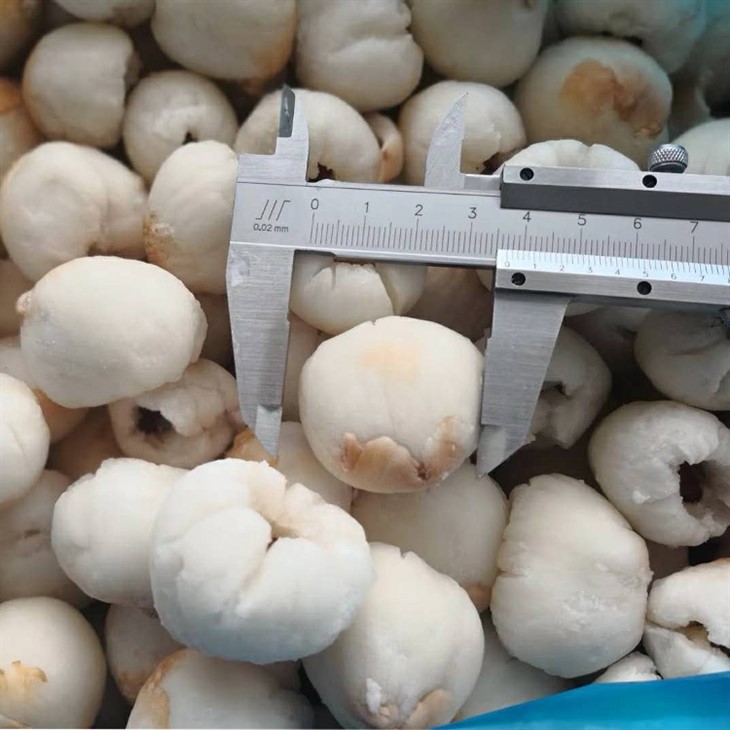
Actual supplied product form for input and application specification discussion.
A receiving retain can answer whether an abnormal note was already present in the supplied ingredient. It must be prepared through a defined baseline route suitable for assessment. Frozen fruit assessed while still very cold may release little aroma; a different thaw or blending procedure can create a misleading apparent improvement or deterioration. Use the agreed preparation for all incoming comparisons and retain the resulting juice alongside the original fruit. Avoid treating the label "raw" as a complete preparation method when thawing, draining and crushing have already occurred.
Next, establish the earliest process sample with the objectionable note. The change may be first detected after a thermal operation, but the material entering that operation may already have undergone extraction, blending or a waiting period. Sampling only before and after the final packaged product leaves those earlier stages unresolved. Select a small number of strategically placed samples around the suspected operation, with enough retained material to repeat preparation. This is more useful than collecting many unlabelled cups that cannot be traced back to a specific point.
Investigate other ingredients and equipment conditions when the process samples justify it. A water or beverage-base comparison can help distinguish an input contribution from a change specific to lychee. A clean process blank prepared through the relevant equipment can also reveal whether the route itself introduces an odor. Such controls are proposed diagnostic choices; their inclusion depends on the actual formulation and plant. They should be chosen to answer a stated question, with the same sampling discipline as the fruit samples.
For the reconstructed developer, the first useful outcome would be a repeatable contrast between a prepared incoming retain and the corresponding processed beverage. That finding would narrow the inquiry to a processing or formulation interaction without erasing the supplier's responsibility for incoming quality. If the incoming retain also shows the objection, its assessment remains a separate quality investigation. Both branches need their own observations and records. Purchasing can then ask for the evidence supporting each branch instead of demanding an immediate single cause.

Illustration of covered juice samples presented consistently for sensory comparison.
The lychee study investigated a cooked defect
An and colleagues investigated fresh lychee juice alongside heat-sterilized juice with cooked vegetable and onion or garlic impressions. Their 2019 Food Chemistry paper combined analytical measurements with sensory work. It identified several sulfur-containing odorants and 3-methylbutanal as contributors to the cooked defect, and omission tests supported their adverse contribution in the studied aroma mixture. Further work included other lychee varieties. The primary indexed abstract supports using a fresh-versus-processed comparison to investigate the complaint.
That finding supplies a research question for the beverage developer: could the actual thermal route change the odorant balance enough to produce the objection? It does not identify the chemistry of the customer's sample. The published experiment concerns a defined juice system, while a commercial ingredient may be whole frozen arils, fruit pieces, puree or a beverage blend. A process with different dilution, acidity, holding conditions or packaging may behave differently. Record those differences when deciding whether a targeted analysis is worth commissioning.
Keep the experimental processing conditions attached to the experiment when discussing it. A temperature mentioned in a paper is meaningful only with its duration, material, heating arrangement and sample preparation. Copying a number into a purchase specification would give it a role the study did not establish. The receiving standard should describe the incoming ingredient and agreed acceptance preparation. The customer's application protocol should describe its intended processing route and the finished beverage criteria. Connecting those documents gives the team a way to assess suitability without confusing their purposes.
The name of a contributor also needs its context. Dimethyl sulfide or methional can be a sensible target for specialist follow-up when the recorded defect resembles the study. An analytical result must still establish identity and quantity in the submitted material, using a method capable of examining the relevant sample. The team should request the laboratory's stated method, reporting units, identification basis and limits. A report listing a possible match from a library search is a different level of evidence from a result confirmed with appropriate reference material.
Fresh lychee aroma research provides another useful boundary. A study of the Sweetheart cultivar used olfactometry and aroma dilution work and reported both attractive overall sensory attributes and individual odorants described with cooked or sulfur-associated terms. The full primary paper shows why finding a named odorant does not by itself classify a sample as defective. Overall aroma depends on the mixture and the assessed product. The developer's objection must be evaluated in that mixture, with a relevant reference beverage.
This also changes the language of a supplier discussion. "Sulfur was detected" gives little usable direction when the analysis concerns specific volatile compounds and the sensory defect concerns their possible contribution. Ask which compounds were targeted, in which samples, and whether the difference tracks the objection. If a report uses total volatile abundance, request enough detail to understand its relation to the measured odorants. A larger overall signal can coexist with a poorer sensory result, but that possibility does not prove the customer's specific cause.

Illustration of a defined juice processing stage and sample collection.
At GreenLand, we would treat these papers as a basis for a disciplined application comparison. We would confirm the fruit form and lot information we can supply and ask the beverage team to document its own treatment conditions. We would avoid offering a guarantee that a frozen lychee ingredient stays unchanged through any heat route. The useful supplier response is an agreed sampling and trial plan that can distinguish an abnormal input from an otherwise acceptable ingredient used in a process that changes its aroma.
Chemical detection was paired with sensory evidence
Chemical detection, estimated odor activity and sensory contribution answer related questions. Detection establishes that an analytical method found a compound in the examined sample, subject to the method's identification and reporting limits. A concentration result then describes how much was measured on a stated basis. Neither result tells the purchasing team how noticeable the compound is in the beverage or whether removing it would improve the overall aroma. Those latter questions require additional interpretation and sensory evidence.
An odor activity value compares a measured concentration with a stated odor threshold. It helps prioritize compounds for investigation because a small concentration can matter when a threshold is low. Ask where the threshold was measured and whether its matrix and assessment conditions resemble the beverage. A value calculated from a threshold in water is useful context, but it cannot carry the entire approval decision for a sweetened or formulated lychee drink. Keep the concentration, threshold and calculated ratio together so that reviewers can see the basis.
Aroma dilution work explores how long a particular odor can still be detected as an extract is diluted. It helps locate potent odorants in a complex extract. The extract and its dilution sequence are analytical constructs, however. They are not the finished drink served to the buyer's customer. A high dilution factor deserves attention, while acceptance still depends on the actual product. This distinction prevents the team from turning an interesting analytical ranking into a commercial limit without the intermediate application work.
Omission work asks whether an aroma mixture changes when a selected contributor is removed. Its value is the comparison: a compound's proposed sensory role is challenged within an experimentally assembled mixture. A change in the recombined aroma provides stronger support for contribution than an abundant peak alone. The reconstructed mixture must also be meaningful enough to represent the relevant aroma. In a customer inquiry, the laboratory should explain what mixture it used, how it compared omissions and what its observations support.
For practical commissioning, agree the question before choosing the analytical package. A broad screen may help discover unexpected differences between baseline and processed juice. A targeted method may be better when the investigation already has a narrow hypothesis and needs reliable quantification. Ask the laboratory to advise on sample quantity, vessels, transport, storage and the number of independent preparations. The purchasing team should not improvise those requirements from an article; volatile analysis can be particularly sensitive to how a sample reaches the analyst.

Illustration pairing aroma analysis with coded sensory samples from a defined preparation.
Pair the chemical samples with coded sensory samples from the same preparation wherever the investigation permits. If the analyzed vial comes from one preparation and the tasted cup comes from another, an apparent association may be difficult to interpret. Keep replicate identity intact and record preparation dates. A result repeated across independent preparations is more informative than several measurements of one vial because it examines whether the process change itself is reproducible. The appropriate number of repetitions belongs in the agreed trial design.
Require language proportional to the evidence in the final report. "Detected after treatment," "increased under the trial conditions," and "supported as a contributor by sensory comparison" describe different findings. A scientist may have evidence for one of them and not the others. Purchasing benefits from that distinction because the next action changes with it. Detection alone may justify closer study; a reproducible application defect may justify withholding process approval; a confirmed incoming nonconformance may require disposition under the supplier agreement.
Build a process-stage comparison
Use one identified fruit lot to prepare material for the baseline and the relevant customer route. Split the prepared material at a point that allows a fair comparison. If the investigation is about the thermal step, the samples entering that comparison should have the same extraction and formulation history. If the investigation is about the complete application route, retain earlier samples so that a difference can later be located. A single comparison cannot resolve every stage unless its sampling plan deliberately preserves that information.
Write a preparation record that another technician could follow. Include fruit form, fruit mass, thawing approach where relevant, drainage treatment, juice recovery and added water or beverage base. Record the actual dilution used in the sensory comparison, together with soluble solids and acidity when these are part of the team's normal application assessment. Identical nominal fruit additions do not ensure identical beverages if one preparation discards thaw liquid and another incorporates it. The record should describe what was physically done.
For the thermal route, capture the available process record rather than relying on a shorthand such as "pasteurized." The material's heat exposure, elapsed time, cooling and any subsequent hold are relevant to reproducing the trial. A bench vessel may heat differently from commercial equipment, so label the trial as a bench approximation when appropriate. Have the customer's process specialist determine how to represent its route. The article's proposed sampling sequence does not establish a safe or validated thermal process.

Illustration of material retained at successive beverage preparation stages.
Sample after cooling under a defined condition as well as at the stage where the complaint was noticed, if those conditions differ. A team investigating an odor on opening may need a sealed-container comparison; a team assessing a chilled beverage may need a serving comparison. Use the same container type, fill level and time between sampling and evaluation within each comparison. Where packaging is suspected, include a relevant packaging comparison rather than attributing every post-heating change directly to the heater.
An accessible comparison table should place the incoming retain, prepared baseline, process-treated sample and finished diluted drink on the same descriptive attributes: lot, preparation, heat history, assessed concentration, sensory note and follow-up result. Leave unavailable fields visibly unresolved. A blank laboratory result is not a zero result, and a missing thermal record prevents confident reproduction. This table is most valuable as a shared record across R&D, quality and purchasing because each team can see the boundary of its own evidence.
| Sample | Preparation basis | Question it answers |
|---|---|---|
| Incoming retain | Agreed prepared fruit assessment | Was the objection present in the supplied material? |
| Baseline juice | Same extraction and formulation before treatment | What entered the suspected operation? |
| Process-treated juice | Recorded customer route and cooling | When did the change first recur? |
| Finished beverage | Defined dilution and serving condition | Does the drink meet its aroma reference? |
Introduce a second ingredient lot only after the original within-lot comparison is interpretable. Comparing an unheated old lot with a heated new lot changes two variables at once. A better lot comparison applies the same baseline and the same customer treatment to each lot. If the note emerges in both treated lots, the process deserves attention. If it emerges repeatedly in one lot under matched conditions, additional ingredient characterization becomes more relevant. Either observation still needs enough repetition to distinguish a consistent effect from preparation variation.
Consider the costs of the proposed response alongside sensory performance. Replacing the fruit source may add approval time, stock exposure and further trials while leaving the processing cause unresolved. Changing the process may require technical validation and capital or operational decisions. A controlled comparison gives the buyer a basis for allocating that effort. Record the application consequence in concrete terms, such as whether a reference drink's aroma remains acceptable after the intended route, rather than attempting to resolve a commercial decision through a chemical name alone.
Decide whether the input or process needs attention
An abnormal incoming observation deserves prompt attention even when a customer process also changes flavor. Keep the receiving retain, traceability information and agreed preparation available to the quality teams. Describe the finding against the actual specification and reference. If the complaint cannot be reproduced from the retained material, record that result and the conditions under which it was obtained. It narrows the evidence but does not erase the customer's original observation or establish that transport and receiving conditions were identical.

Actual supplied product form for input and application specification discussion.
When the input meets the agreed sensory preparation and the objection appears reproducibly after the customer's route, the next decision concerns application suitability. R&D can examine whether changes within its permissible formulation or processing range improve the drink. Any modification to a validated food process belongs with qualified process and quality personnel. Purchasing can continue to compare ingredient lots under the approved application protocol, while avoiding a new raw-fruit limit that has no demonstrated relation to the objection.
If both incoming and treated material show the note, determine whether the treatment intensifies an existing difference. Assess matched baseline and treated samples from the relevant reference lot as well as the questioned lot. This can reveal whether the input difference persists through processing or whether a strong common process effect dominates the final drink. A report that simply labels both cups "sulfurous" may hide this distinction. Preserve intensity and overall aroma observations so that the decision reflects the size and relevance of the effect.
A purchase specification can include an agreed prepared-sample sensory reference and an application trial requirement when both parties understand their execution. Define the material form, preparation, reference, assessment condition and decision authority. Keep specialist compound limits conditional on validated methods and an established connection to acceptance. A supplier certificate for a general product parameter cannot replace the customer's process qualification. Conversely, the customer's finished-drink defect should not become a supplier nonconformance without establishing which incoming requirement was breached.
We supply frozen litchi for buyers who need to evaluate fruit form and application behavior together. For an inquiry of this kind, tell us whether the development team uses whole arils, pieces or another prepared form, how it handles thaw liquid and which beverage stage it approves. We would confirm the available specification, packing and sample arrangement for the proposed supply. The buyer's own process conditions and final aroma acceptance remain essential inputs to that discussion.

Illustration of repeat beverage trials alongside retained input material.
Resolve quantity and sample timing early enough to make the investigation useful. An evaluation should leave sufficient material for receiving assessment, process trials and retained samples, with appropriate identification on each portion. Confirm destination, required documents and expected approval timing before planning a commercial order. Where private-label packing is requested, assess the ingredient application and packing requirements as connected parts of the inquiry. Avoid presenting a rushed small trial as assurance for a materially different commercial route.
Close the investigation with an accountable statement of what was observed, what was measured and what remains uncertain. A defensible result might establish that the objection first appeared after the defined thermal route while leaving the exact causal odorants unresolved. That can still support a practical application decision. A more complete study may connect targeted chemistry and sensory contribution to the change. In either case, the purchasing action should follow the evidence available: resolve incoming quality, qualify the customer process or gather the missing comparison before revising supply requirements.
Continue reading about lychee
Compare extraction and final drink dilution before planning an aroma investigation.
Match lychee flesh and fruit form to the application sample being evaluated.
Source frozen litchi with GreenLand-food
GreenLand-food manufactures frozen litchi in China. We fill factory-direct wholesale orders for ingredient buyers, food manufacturers and private-label programs.
Tell us how you'll use frozen litchi and where you need delivery. We'll review the product form and specification with you, then confirm packing, quantity, private-label details and requested documents. Include the intended trial conditions when application performance determines approval.