


How to Eat Lychee: Peel, Pit and Frozen Fruit
Sep 03, 2026
Leave a message
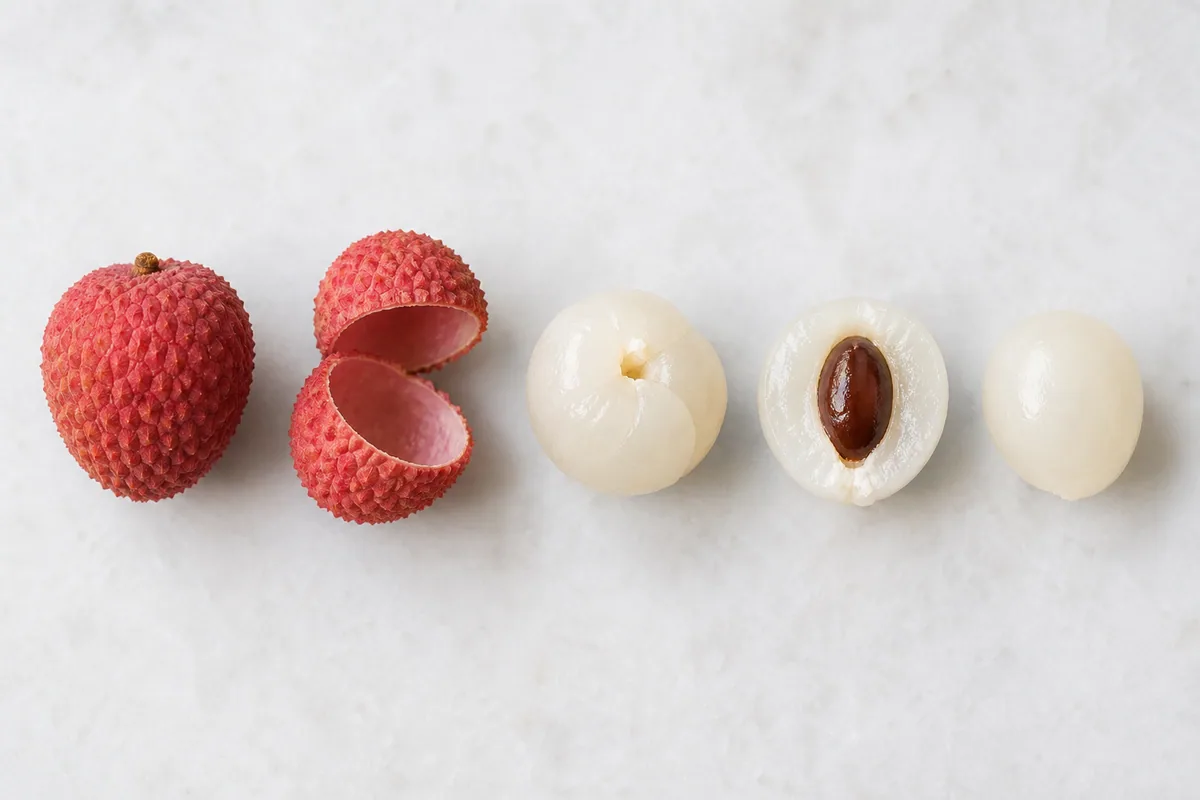
Peel the shell, remove the seed and eat the flesh
Press a thumbnail into the rough shell or make a shallow cut, peel the shell away, then split or bite the translucent flesh around the hard seed. Remove and discard the seed before serving. For children or plated dishes, pit the fruit completely first. Frozen whole in-shell lychee still needs peeling and pitting; IQF peeled and pitted lychee can be portioned after controlled thawing when its label permits the intended use.
Frozen does not automatically mean ready to eat. Follow the package direction and handle thawed fruit as perishable.
Key takeaways
- Lychee and litchi are spellings of the same fruit, Litchi chinensis.
- The shell protects the fruit but is not eaten; the hard seed must be removed.
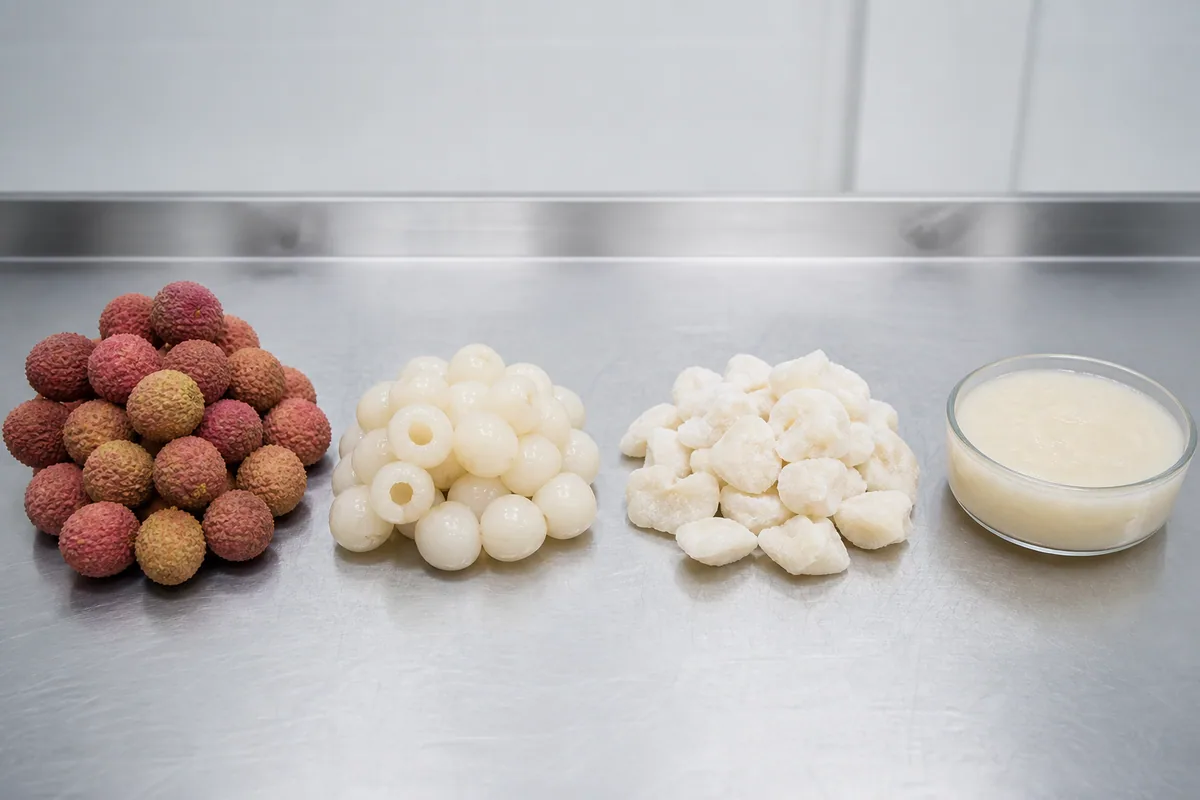
- Whole in-shell frozen, peeled-and-pitted IQF, broken fruit and puree are different products with different labor and appearance.
- Foodservice buyers should define piece count, Brix, intact arils, seed fragments, peel residue, browning, broken flesh and ready-to-use status.
Quick comparison
| Format | Preparation needed | Best uses | Main acceptance point |
|---|---|---|---|
| Fresh in-shell | Peel and remove seed | Fresh eating, garnish, desserts | Sound shell, aroma, flesh color and seed condition |
| Frozen in-shell | Thaw as directed, peel and pit | Retail novelty, visual presentation | Shell cracking, browning, thaw behavior |
| IQF peeled and pitted whole | Portion and use according to status/direction | Beverages, desserts, fruit bowls, foodservice | Intact arils, piece count, seed and peel residue |
| Broken peeled fruit | Thaw or process | Juice, puree, sauce, filling | Clean flesh, controlled broken grade, Brix |
| Lychee puree | Dose by weight | Beverages, yogurt, ice cream, sauce | Brix, acidity, ingredient statement, viscosity |
Choose sound fresh lychee before peeling
Fresh lychee has a rough, brittle or leathery shell ranging from pink-red to red-brown according to variety and storage. The fruit should feel full rather than hollow or leaking. A brown shell does not always mean the flesh is spoiled, but severe cracking, wet decay, mold, sour fermentation or leaking juice are reject signs. Smell the stem end; normal fruit is floral and sweet, not alcoholic or rotten.
Lychee deteriorates quickly after harvest. Keep it refrigerated according to reliable local guidance and use it promptly. Wash the outer surface before peeling because fingers move from shell to flesh. Do not let peeled fruit sit warm for long, especially in buffet or foodservice service.

Peel and pit in a simple sequence
Hold the fruit over a clean plate. Press a thumbnail into the shell near the stem or make a shallow cut that does not slice deeply into the flesh. Peel the shell away in sections. The edible aril should appear translucent white to light ivory. Bite around the seed, or split the flesh lengthwise with a small knife and lift out the glossy brown pit. Check the cavity for seed fragments before giving the fruit to a child or using it as a garnish.
Some cultivars have a small seed and thick flesh; others have a larger pit. A seed can cling tightly to the aril, causing tears during pitting. That is a natural variety and maturity effect, not automatically poor fruit. For a neat whole pitted presentation, work slowly and use a pitting tool or narrow knife while keeping the aril intact.
- Wash the outer shell and dry it.
- Crack or score only the shell near the stem.
- Peel away all red-pink skin.
- Split or bite the translucent flesh around the seed.
- Remove the hard seed and check for fragments.
- Eat promptly or refrigerate the peeled fruit in a covered container.
The seed and shell are not eaten
The tough shell has no culinary role in ordinary eating and can carry surface debris. The seed is hard, bitter and a choking hazard. Do not blend whole fresh lychee with the pit. When a recipe calls for whole lychee, it usually means whole edible flesh after peeling and pitting, not the entire in-shell fruit. Read the recipe context.
Lychee products require clear naming because whole can mean in-shell or whole aril. A commercial label or specification should say whole in-shell, whole peeled and pitted, broken peeled flesh or puree. This wording prevents a foodservice customer from ordering the wrong labor requirement.
Lychee tastes floral, juicy and gently acidic
Ripe lychee is sweet with rose-like, grape-like and tropical floral aroma. Its flesh is juicy and slightly springy, softer than a grape but firmer than a very ripe pear. Acidity keeps the sweetness fresh. Overripe fruit can become fermented, while underripe fruit may be pale and sharp. Chill suppresses aroma, so a cold fruit may taste more fragrant as it warms slightly in the mouth.
Use the fruit in salads, chilled desserts, tea drinks, mocktails, cocktails, yogurt, ice cream and sauces. Pairings such as lime, ginger, coconut, raspberry, rose, mint and tea can work, but heavy perfume-like flavoring can overwhelm natural fruit. Taste the actual product before adding syrup.
Whole in-shell frozen lychee still requires work
Freezing an in-shell fruit preserves the visual identity but does not remove peel or seed. Thaw under refrigeration or follow the pack direction. The shell may darken or crack, and the flesh becomes softer and releases more juice than fresh. Peel carefully and inspect the seed cavity. Use this format when visual whole-fruit experience matters and preparation labor is acceptable.
Do not thaw a bulk bag on a warm counter. Portion what is needed, keep the rest frozen and treat thawed fruit as perishable. Avoid repeated freeze-thaw cycles, which damage texture and increase leakage.
Peeled and pitted IQF lychee reduces preparation labor
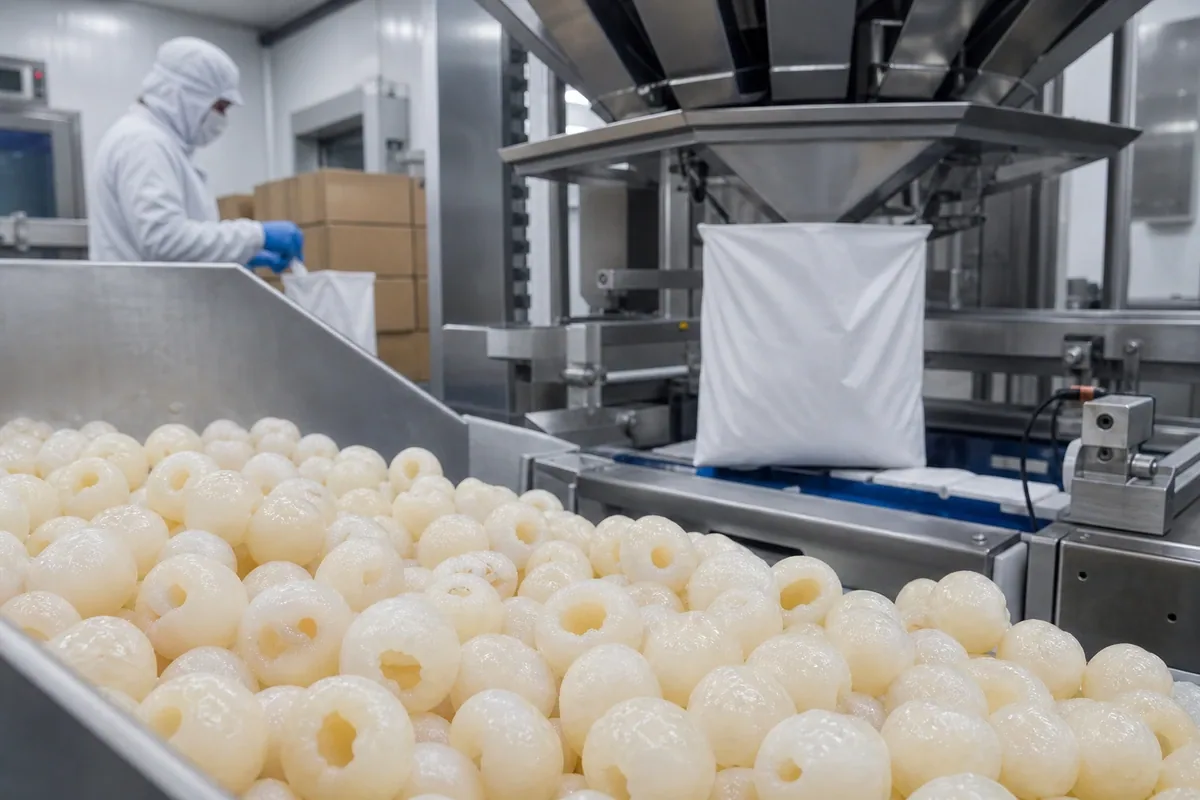
A whole peeled and pitted product contains the edible aril with shell and seed removed before freezing. Free-flowing pieces can be counted or weighed for tea drinks, desserts, fruit bowls and garnish. However, pitted does not mean every aril is perfectly unbroken. Define intact ratio, piece count, diameter, flesh color, seed fragments, peel residue, browning, juice loss and clumps.
GreenLand-food's current frozen lychee page describes whole peeled and pitted, in-shell and broken peeled grades, with Fujian crop and available Wuye or Lanzhu varieties. Brix and piece counts are confirmed against crop and order. A buyer should request the current lot and not copy one web number into a binding formula without confirmation.
Broken fruit and puree are rational processing forms
Beverage and sauce factories do not always need a perfect whole aril. Clean controlled broken fruit can reduce cost while keeping fruit identity, provided defect, foreign-material, seed-fragment and food-safety standards remain defined. Puree removes portion counting and spreads flavor evenly but requires viscosity, Brix, acidity and ingredient checks.
Choose by finished product. A fruit cup needs intact pale flesh; a smoothie can use puree; a jam or filling can use broken grade. Buying premium whole fruit and then milling it may waste visual value. Buying processing grade for a clear garnish creates customer complaints. Grade follows application.

Foodservice approval needs a thaw and portion test
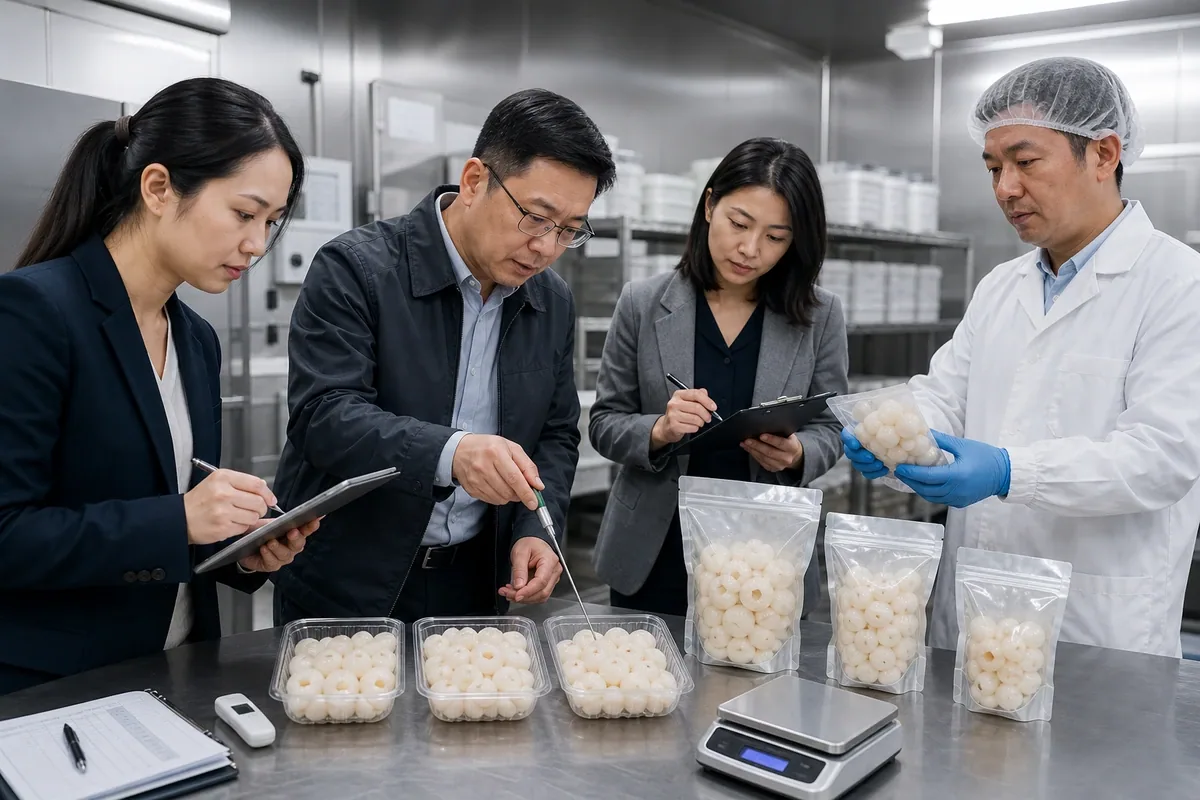
Take a representative frozen sample and count pieces per kilogram or serving. Thaw a measured portion under the planned refrigeration condition. Record time to loosen, drained yield, juice loss, intact arils, cavity damage, seed fragments, peel residue, browning and aroma. Put the fruit into the actual tea, dessert or fruit bowl and hold it for the real service time.
A lychee can look good immediately after thawing but become translucent and soft after hours in syrup. A sweet lot can unbalance a standardized drink. Keep the approved sample method with the specification. At GreenLand-food, we can review form, size, Brix, pack, quantity, destination and documents, but final serving validation remains the buyer's responsibility.
Worked decisions that a short answer cannot cover
Worked pit check: "pitted" still needs a tolerance
Mechanical and manual pitting can tear the cavity or leave rare fragments. A buyer should define the sampling method and allowed seed or shell residue according to the application. A whole-fruit garnish has a stricter visual target than puree, but hard-fragment control matters in every grade.
Inspect the cavity under good light and record findings per sample weight. A website photo cannot substitute for current-lot evidence.
Why thawed lychee becomes softer
Ice crystals damage cell structure and release juice as the fruit thaws. Faster industrial freezing can improve separation and reduce some damage, but it cannot make thawed flesh identical to fresh. Maturity and variety also affect firmness.
Evaluate texture in the beverage or dessert, where syrup, acid and holding time further change it.
Piece count is more useful than "large"
Large and premium mean little without a method. Pieces per kilogram, diameter and weight distribution support portion cost and visual consistency. Natural arils are irregular, so tolerances and sample plans remain necessary.
For a drink chain, record fruits per serving and cost per served cup. This translates the specification into operations.
Ready-to-use is not automatically ready-to-eat
A peeled and pitted product reduces preparation labor, but microbiological status depends on the process and intended use. Ask whether the product is ready to cook or ready to eat and follow the label. Freezing alone does not validate a ready-to-eat claim.
For uncooked beverage or dessert use, buyers need an appropriate hazard review, supplier controls and destination-market compliance.
More detail for a repeatable decision
Fresh fruit preparation should control cross-contact
The outside shell passes through orchards, packing and retail handling. Wash hands and the shell, then use a clean knife and plate. Avoid placing peeled flesh back on the unwashed cutting surface or among discarded shells. In foodservice, separate waste and ready fruit zones.
A shallow score is enough; cutting through the seed can leave fragments and transfer bitter material. Inspect every pitted cavity for plated desserts or children. A whole seed hidden in translucent flesh is a preventable choking hazard.
Keep prepared fruit covered and cold. If it is displayed on a buffet, use an approved time and temperature control. Sweet fruit juice supports rapid quality loss once the protective shell is removed.
Variety and maturity affect peeling and pitting yield
Some lychee has thick flesh and a small chicken-tongue seed; other fruit has a large round seed. The flesh may separate cleanly or cling to the pit. These differences change edible yield and labor even when whole-fruit size looks similar.
For a home cook, accept natural tears and eat the fruit. For a garnish factory, record intact arils and cavity damage. A large in-shell count does not prove high edible yield if the seed is also large.
Brix should be reviewed with aroma and texture. Very ripe high-Brix fruit can be soft and difficult to pit intact, while firmer fruit may be easier to process but less fragrant.
Frozen fruit needs a planned thaw endpoint
A garnish may need partial thaw so the aril is cold and firm; a puree line may thaw fully for blending. Define temperature and time. Leaving a bag until "soft enough" gives different drip and texture on every shift.
Thaw in a lidded food-safe container under refrigeration and retain the juice if the formula uses it. If the fruit must drain, specify screen, duration and whether yield is measured before or after.
Do not refreeze service leftovers casually. Freeze-thaw damage accumulates, and time out of temperature control must be assessed under the food-safety plan.
Menu wording should reveal the product form honestly
A dessert containing puree should not use a photograph of perfect whole arils unless whole fruit is actually served. A drink with flavored syrup is different from one made with fruit. Clear wording helps customers understand texture and helps buyers order the correct input.
For retail packs, peeled and pitted is a valuable convenience claim only when shell and seed controls support it. Ready to use should be consistent with ready-to-eat status and local labeling.
Product pages can show in-shell, whole pitted and processing grades side by side, with separate applications. This avoids turning every lychee form into a generic "whole frozen fruit."
Match the lychee form to the eating experience
For a fresh-fruit tasting, the peel-and-pit ritual is part of the experience. Choose in-shell fruit with sound flesh and provide a shell bowl and clear seed instruction. For a children's portion, remove every seed before serving and cut the slippery flesh to an age-appropriate size under responsible caregiver guidance.
For a tea shop, whole peeled and pitted frozen fruit removes preparation labor and supports countable portions. Test how long an aril remains attractive in tea, whether it floats or sinks and how much sweetness it contributes. A standard two-fruit serving is easier to cost when piece count is controlled.
For a dessert manufacturer, intact ratio and flesh color may drive premium appearance. For a puree or sauce factory, controlled broken fruit can be the better form. Both need strict seed, shell, off-odor, foreign-material and food-safety controls. Shape grade and safety grade are not the same concept.
For a retail frozen pack, give practical handling directions: keep frozen, thaw under refrigeration if required and use thawed fruit promptly. State whether the product is intended for cooking or validated for ready-to-eat use. Avoid suggesting that every frozen fruit can move directly from bag to mouth.
The best product is therefore not simply the easiest to peel. It is the form whose preparation, texture, status and portion fit the occasion. GreenLand-food can discuss available frozen forms; the buyer must confirm the final label, use and market requirements.
Putting the answer into practice
At home, the core method takes less than a minute: wash, crack, peel, split, remove the seed and eat the flesh. If the shell is difficult to open or the flesh smells fermented, do not force the fruit into a recipe.
In foodservice, those same steps become labor and control points. Peeled and pitted IQF product can remove shell waste and speed portioning, but the buyer still needs seed-fragment, peel-residue, intact-aril, browning, thaw and product-status specifications.
For a recipe, decide whether guests should see and bite a whole aril. If yes, use a suitable intact grade. If the fruit will be blended, consider broken fruit or puree. Paying for an invisible premium grade does not improve the final drink.
Fresh and frozen lychee both have legitimate roles. The best choice follows preparation time, expected texture, serving method, food-safety status and supply plan-not the assumption that one form is always more natural or convenient.
What to confirm before approving volume
A useful inquiry describes the ingredient and the job it must do. Send the product identity, form, target application, packing, quantity, destination and the quality points your team will measure. We will review current availability and an appropriate supply route where possible. Final size, process, ingredients, limits, microbiology, documents, shelf life, lead time and commercial terms remain subject to the approved specification and order confirmation.
- Specify in-shell, whole peeled and pitted, broken or puree form.
- Confirm variety, origin, maturity, Brix and piece count where relevant.
- Set intact ratio, peel residue, seed fragments, browning and broken flesh.
- Define clumps, ice, drip, pack and frozen storage.
- Record ready-to-cook or ready-to-eat status and serving direction.
- Approve a current lot in the actual beverage, dessert or foodservice hold.
Frequently asked questions
How do you eat a fresh lychee?
Wash the shell, peel it off, eat the translucent flesh and remove the hard brown seed.
Can you eat lychee skin?
The rough shell is normally discarded. Wash it before peeling so surface debris does not transfer to the flesh.
Can you eat the lychee seed?
No. Remove the hard seed; it is bitter and a choking hazard.
What does lychee taste like?
Sweet, juicy, floral and grape-like with gentle acidity and a rose-like tropical aroma.
Is litchi the same as lychee?
Yes. Litchi and lychee are common spellings for Litchi chinensis.
How do you eat frozen in-shell lychee?
Thaw as directed, peel the shell and remove the seed. Expect softer, juicier flesh than fresh fruit.
Is frozen peeled lychee already pitted?
Only when the product specifically says peeled and pitted. Confirm the label and still apply the agreed seed-fragment control.
Can frozen lychee be eaten without cooking?
Only if the product's validated status and package directions permit that use. Frozen alone does not automatically mean ready to eat.
What frozen lychee form is best for drinks?
Whole pitted fruit suits visible portions; broken fruit or puree suits blending and consistent dosing.
Can GreenLand-food supply peeled and pitted frozen lychee?
We can discuss whole peeled and pitted, in-shell and processing forms, with size, Brix, pack and current-lot confirmation.
Reference points
- University of Florida lychee handbook
- GreenLand frozen litchi safety guide
- GreenLand frozen lychee product
These sources support the classification, method or supply boundaries used above. The applicable product label, specification, food-safety plan and destination-market rules still control a real batch.
Source Frozen Lychee for your real application
GreenLand-food is a frozen lychee supplier and manufacturer in China, providing factory-direct wholesale support for importers, food manufacturers, foodservice distributors and private-label programs. Send the required form, specification, packing, quantity, destination, application and documents. We will review available order options and the next practical step.